
















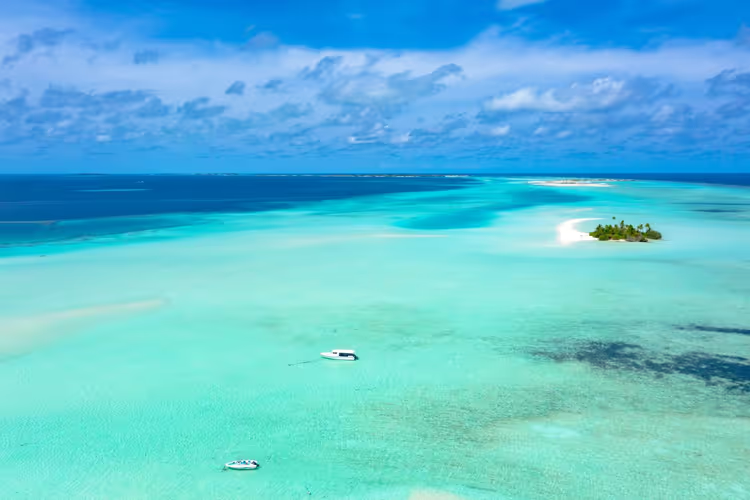
Hanifaru Bay: a bay on Baa Atoll where hundreds of manta rays feed
Up to two hundred manta rays gather in a bay on Baa Atoll in a single day. The site is protected, and the rules are strict: 45 minutes in the water, only with a guide and with an entry permit.
Hanifaru Bay (Hanifaru Bay) is a rare example of a natural anomaly that has been successfully preserved. If you are traveling to the Maldives for manta rays and whale sharks, getting the right moon phase and month matters more than choosing an expensive resort.
Here are the facts: what this place is, when to go, how much the excursion costs, and how to get to Dharavandhoo (as of 09/2026, season guide from IM Maldives).
Ad: this article contains affiliate links. We earn a commission if you book through them, at no extra cost to you.
What Hanifaru Bay is
💡 In short:
- Hanifaru Bay is a funnel-shaped bay on Baa Atoll, the core of a UNESCO biosphere reserve since 2011.
- Entering the water is allowed only with a licensed guide, who also buys the entry permit.
- Best months: June through October, ideally during a full moon or new moon.
- Season, rules and prices: 09/2026, verified against data from the Maldives Ministry of Tourism.
The bay lies in the central part of Baa Atoll, about two kilometers from the inhabited island of Dharavandhoo. Its shape is funnel-like: a long entrance narrows into a tight inner pocket, and the mantas stay right in that pocket.
Hanifaru is not a beach or an ordinary reef. Baa Atoll has been part of the UNESCO biosphere reserve network since 2011, and the bay itself has been designated a marine protected area with a core zone (according to UNESCO, 09/2026). Fishing and diving are prohibited here; snorkeling is open only in a limited time window.
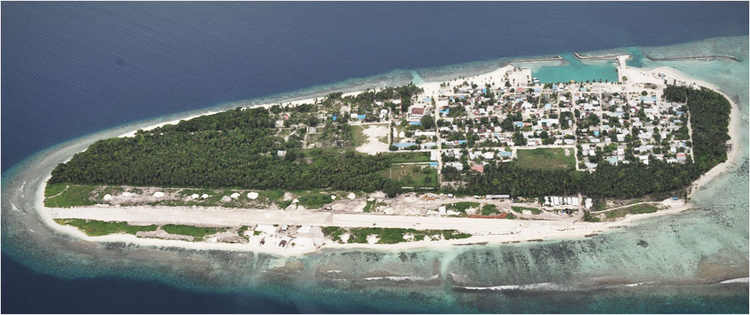 © Shiyam ElkCloner · CC BY-SAPhoto: Shiyam ElkCloner, CC BY-SA (https://creativecommons.org/licenses/by-sa/3.0), Wikimedia Commons
You are looking at an aerial photo: the bay appears as a narrow inlet next to a green island. On the left of the frame is Donfanu, on the right is the Hanifaru funnel itself.
Why manta rays gather here
The bay's geometry works like a natural pump. From May to November, the southwest monsoon drives plankton-rich water through the atoll, the current pushes it into the funnel, and the water cannot flow back out.
The result is a dense suspension that local guides call plankton soup. Mantas travel dozens of kilometers for it, and whale sharks sometimes enter the bay as well.
Researchers confirm the scale of the aggregation. According to the manta ray research program, Hanifaru remains the largest known feeding site for reef manta rays in the world, with more than two hundred animals feeding here simultaneously on peak days.
Manta Trust director Guy Stevens describes it like this: first one or two mantas appear in the bay, then a group of up to two hundred arrives and feeds for several hours in an area smaller than a football field.
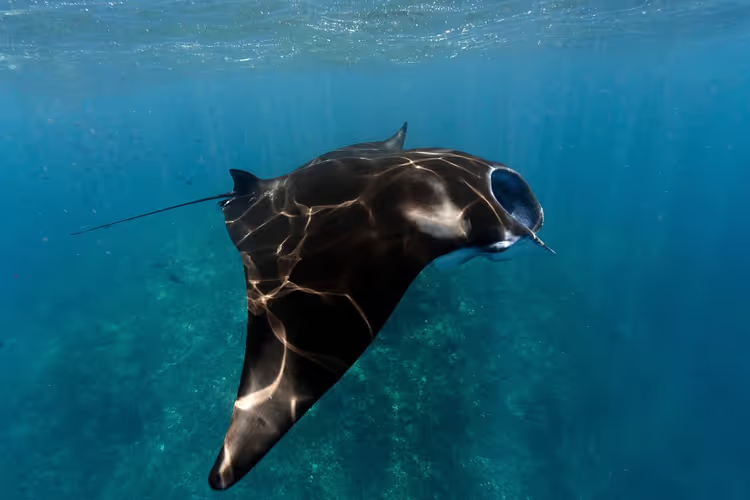
Feeding looks like a slow vortex. Mantas line up one behind another and circle, filtering plankton through their gills. When more than a hundred animals gather, the chain breaks and they spiral outward. You can watch all of this from the surface because the bay is shallow.
The animals have been monitored here for a long time. Program researchers have worked in the bay since 2011 and identify each manta by the spot pattern on its belly, so each new season they know exactly who has returned to the feeding ground.
Hanifaru has a second site. Local operators report that mantas have started gathering at Anga Faru, about three and a half kilometers from Dharavandhoo, and there they show up regardless of the moon phase. For now this is a supplement to the bay, not a replacement: the main aggregation still stays at Hanifaru.
Manta season: when to go
The season runs from May to November, with the highest chances of a large aggregation from June through October. Everything depends on the monsoon and tidal currents: the stronger the water flow, the more plankton gets pulled into the funnel.
The moon changes the schedule more than the calendar does. Strong tides occur at full moon and new moon, and on those days the plankton comes in a dense wall. Experienced operators on Dharavandhoo plan outings specifically around these dates (according to the lunar phase calendar, 09/2026).
Month | Full moon | New moon |
|---|---|---|
May | 05/01/2026 and 05/31/2026 | 05/17/2026 |
June | 06/30/2026 | 06/15/2026 |
July | 07/29/2026 | 07/14/2026 |
August | 08/28/2026 | 08/12/2026 |
September | 09/26/2026 | 09/11/2026 |
October | 10/26/2026 | 10/10/2026 |
November | check the calendar | 11/09/2026 |
Weather and visibility during manta season
The monsoon brings rain. Usually these are short downpours that pass within half an hour, but sometimes the weather turns bad for several days in a row. Daytime temperatures stay around thirty degrees, the water is just as warm, and humidity is high.
The plankton you came for slightly reduces water clarity. In the bay the water is greener than on the atoll's open reefs, but surface snorkeling does not suffer from this. On cloudy days there is less light, so shoot in the upper layer of the water.
Nobody can guarantee an encounter: the animals are wild, and the weather changes. A practical plan is this: book four to seven nights in the peak months and plan for several outings to sea.
What you will see underwater
On an ordinary day, a few mantas stay in the bay. On good days they number in the dozens, and on rare days you will catch a mass feeding.
The 2025 season record came on November 5: more than a hundred mantas were counted in the bay, joined by five whale sharks over the course of the day (as of 11/2025, record season report). In October and November of that season, groups of thirty to sixty animals were consistently present.
Reef mantas are not giants of the ocean. The wingspan of local animals is most often under five meters. Giant oceanic mantas are nearly twice as large and enter the bay rarely, as individual animals.
- Who it's for: if you're confident in the water and want to see mantas without a dive course.
- Not for: if you expect a guaranteed sighting. On an empty day you'll see water and plankton.
- The catch: in season the water is greener than usual because of plankton, so photos come out less clear (as of 09/2026, review from a local operator).
Whale sharks and dolphins
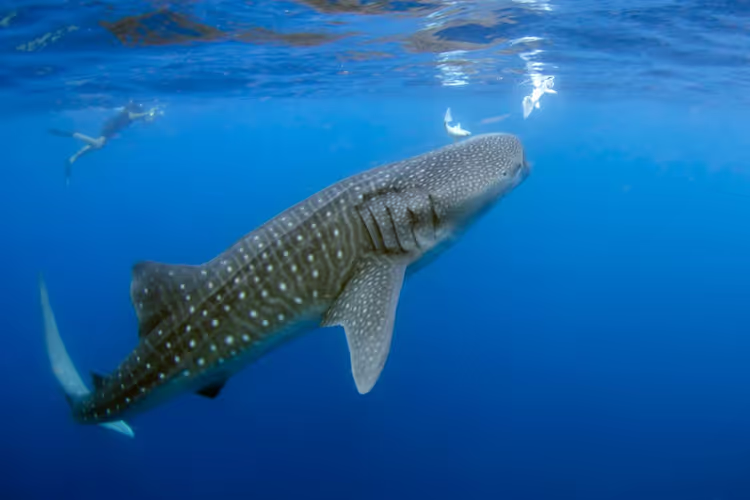
Whale sharks stay around Baa Atoll throughout the manta season, and in the bay they appear more often toward the end of it, from August to November. Only juveniles show up here: adult whale sharks are not recorded at Hanifaru. For growing animals, the plankton feeding ground is more convenient.
Outside the bay, the chance of a whale shark is even higher. Operators on Dharavandhoo in past seasons offered night snorkeling with whale sharks, but those trips depend on weather and whether the animals are around.
A small group of spinner dolphins also lives in the bay. During the day they usually head out to sea, so they're not seen very often. Researchers working in Baa Atoll document around five thousand reef manta encounters per season across the atoll (as of 09/2026, Save Our Seas Foundation).
Permit, rules and price
Everything here is strict, and that works in the animals' favor. Scuba diving in the bay is prohibited, only snorkeling is allowed. The water is open in 45-minute windows so the bay doesn't get overcrowded (as of 09/2026, visiting rules).
The daily limit is about eighty visitors and a few boats. Rangers on site enforce the rules and turn away violators. Touching mantas, chasing them, blocking their path and using flash photography are all prohibited. Violators are pulled out of the water, and the operator loses access to the bay.
Every guest is accompanied by a guide with a biosphere reserve qualification. The guide buys the entry permit, and its price for the current season is quoted by the rangers and the visitor center on Dharavandhoo: figures from different sources vary, so confirm it when booking. The permit is already included in the cost of the Dharavandhoo excursion.
How much a trip to Hanifaru costs
What | Price guide |
|---|---|
Guided excursion with permit | mid double digits in dollars per person |
Domestic flight from Male round trip | around two hundred dollars per person |
Night in a guesthouse on Dharavandhoo | from low three digits in dollars |
There is no fixed price here: rates change by season and by operator. In peak months guesthouses raise prices, and domestic flight tickets get more expensive closer to the departure date, so check specific amounts for your dates when booking.
You can compare excursion options in the GetYourGuide selection.
Tours and tickets in Maldives
Guided tours, skip-the-line tickets and activities — most offers can be cancelled free of charge.
See offers on GetYourGuideThe widget loads once you give your consent.
How to get to Dharavandhoo
The closest inhabited island to the bay is Dharavandhoo. The domestic flight from Male takes about thirty minutes, and a round-trip ticket costs roughly two hundred dollars per person.
There is also a water route: speedboats run from Male, but the schedule depends on weather and load. From the Dharavandhoo jetty to the bay the boat takes just a few minutes, and that is the main advantage of the local island.
A separate scenario is the resorts of Baa Atoll. They take guests to Hanifaru on their own boats and include the excursion in the package, but the trip from the villa takes longer.
Where to stay near the bay
Dharavandhoo is a local island, so an overnight stay costs several times less than a resort. Rooms in guesthouses stay in the low three-digit range in dollars per night.
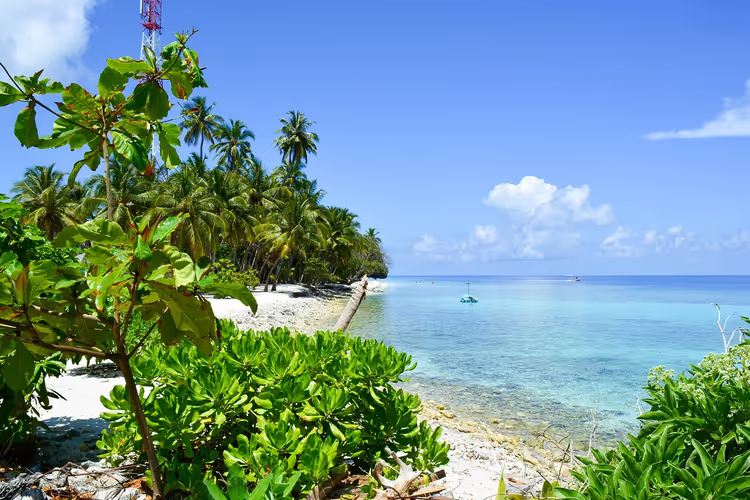
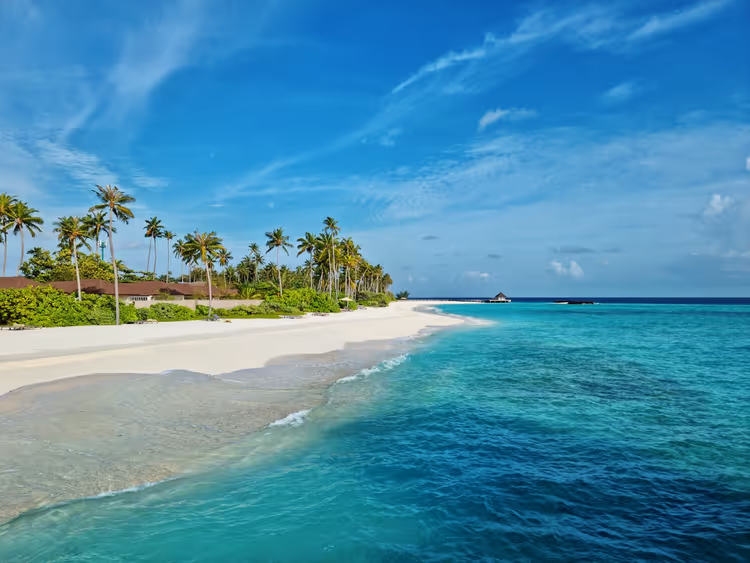
The island has its own beaches, cafes and small shops, so you will not be isolated. Some travelers choose a two-part plan: a few nights at a resort and two or three nights on Dharavandhoo, closer to the bay.
Among local options, sources mention Dimora Blu, Kiha Beach, Island Ufaa and Biosphere Inn. Dimora Blu is a small boutique guesthouse right on the shore, about ten minutes from Hanifaru by speedboat, with meals served at a beach restaurant.
If you want an overwater villa, look at the atoll resorts that work with the bay: Soneva Fushi, Four Seasons Landaa Giraavaru, Anantara Kihavah, Amilla, Dusit Thani, The Westin Miriandhoo. Their manta excursions are seasonal and booked in advance. You can conveniently compare prices across the atoll through the Baa Atoll hotel selection.
Practical snorkeling tips
Bring your own mask and snorkel: during 45 minutes at the surface, a good fit matters more than the brand. Take short fins; long freediving fins will get in the way of your neighbors in the tight bay.
Apply a protective rash guard and reef-safe sunscreen before boarding the boat. Take motion sickness tablets about an hour before departure, and keep your phone and documents in a dry bag.
An action camera is enough for filming: shoot wide, catch the manta against the bright surface, and forget about the flash.
Peak months sell out in advance. Operators in Baa Atoll historically sell out August and October for the next season as early as the beginning of the year (as of 11/2025, Maldives Travel Index news). Medical costs in the Maldives are high, so compare insurance options in advance.
⁉️🤔 Frequently asked questions
How much does it cost to get into Hanifaru Bay?
A guided excursion with an entry permit costs in the mid double digits in dollars per person if you stay on Dharavandhoo. At the atoll resorts the price is higher, but the excursion is already included in the package. You do not need to pay for the permit separately; the guide handles it. Travel adds costs: a domestic flight from Male costs around two hundred dollars round trip.
When should you go for mantas?
The season runs from May to November, with the best chances from June to October. Within the season, choose days around the full moon or new moon: tides bring more plankton into the bay. Plan for four to seven nights so you have several attempts.
Can you scuba dive in the bay?
No. Hanifaru is a marine protected area with a core zone, and diving in the bay is completely prohibited. Only snorkeling with a tube and accompanied by a licensed guide is allowed.
Is it realistic to see a whale shark?
There is a chance, especially toward the end of the season, from August to November, when whale sharks enter the bay more often. Only juveniles are seen in the bay. Nobody gives guarantees: the animals move freely around the atoll waters, and excursions depend on the weather.
How many days do you need for the trip?
For a relaxed pace, four to seven nights on Dharavandhoo is enough. That way you can go out to sea several times. Time your trip around one moon phase: full moon or new moon. If you go for just one day, the risk of seeing an empty bay remains high.
In short: what to book
If you are going for four to seven nights in peak season: book a guesthouse on Dharavandhoo and daily guided excursions. If you want an overwater villa: choose a Baa Atoll resort and a manta excursion with its dive center. If your calendar is flexible: align your dates with the full moon or new moon; the difference in the number of animals can be noticeable.
One rule outweighs any convenience: rangers protect the site, and mantas come here to feed, not to entertain tourists. Plan your trip around the season and the moon, and then booking a guided tour will remain a technical detail.

A small editorial team writing guides for independent travel. We travel ourselves, but we haven’t been everywhere, so we check prices, opening hours and how to get there against official sources.