







Holi in India: dates, cities and rules for a safe trip
Hotels in Braj and Jaipur sell out long before the festival. Flights to Delhi are also cheaper to book in advance.
The main question for you is not "where is it more spectacular," but "where will you be comfortable." Mathura and Vrindavan offer the strongest tradition along with the densest crowds, while Rajasthan offers a similar celebration with less chaos. Below we break down what Holi is, when it takes place, where to go, and how to prepare for the main day.
Ad: this article contains affiliate links, we earn a commission if you book through them, at no extra cost to you.
What is Holi in India
💡 In short:
- Holi is a spring festival that marks the arrival of spring and the victory of good over evil.
- There are two main days: Holika Dahan with bonfires and Rangwali Holi with colors.
- The festival is connected with Krishna and Radha, as well as with the myth of Prahlada.
Holi is one of India's most famous festivals, and for locals it marks the transition from winter to spring, renewal, and reconciliation. In the Krishna tradition, the festival is tied to the love of Krishna and Radha.
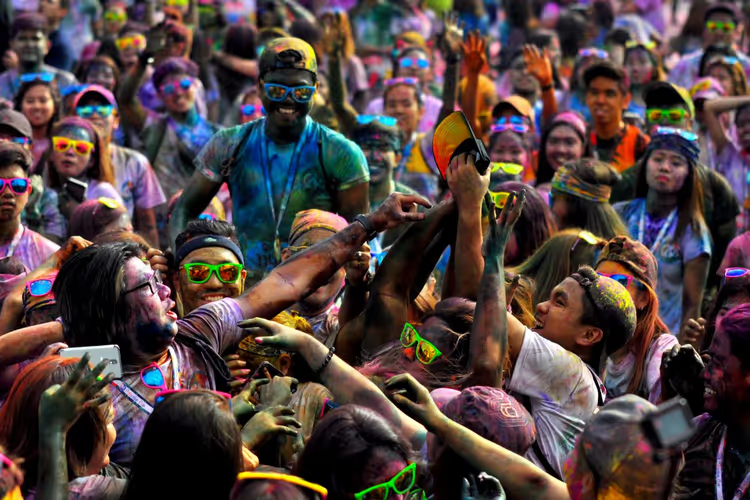
For a traveler, Holi is a mix of carnival and temple ritual: colored powder flies through the streets, music blares, and people douse each other with water. Temples hold separate ceremonies during this time, and families gather around the festive table. The crowd is friendly, but the event remains spontaneous, so it is better to plan the day with extra time.
The first evening is given to fire, the second day is given to color, and then local variations begin. In some cities Holi lasts two days, in others almost a week, and in the north of the country the festival is more prominent than in the south. In Braj people prepare for it in advance, while in large cities it unfolds in waves across neighborhoods.
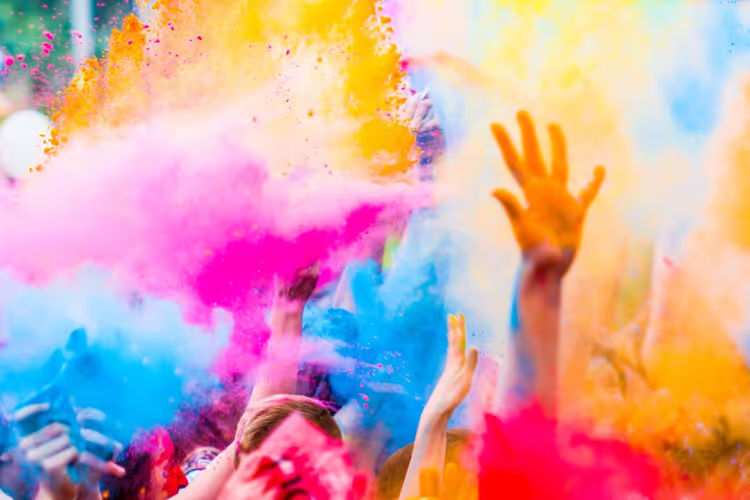
The meaning of the festival is deeper than it seems, because for many Indians it is a family and religious day. Hence the request you will see below: respect others' ritual and do not disturb people during ceremonies.
Without preparation, Holi throws you off balance, as some streets are closed, transport runs on altered routes, and in popular places hotels are fully booked months in advance.
When Holi takes place
Holi is tied to the full moon of the month of Phalguna, the last month of the Hindu lunar year, so in the Gregorian calendar the festival usually falls in March, and sometimes in late February. The exact date shifts every year because the lunar month is shorter than the solar one and does not align with the calendar month.
In 2027, Holika Dahan falls on March 21, and Rangwali Holi on March 22 (as of 09/2026, ABP Live). In the northern regions, rituals begin earlier, and the main day of colors follows immediately after Holika Dahan.
Another important detail for your itinerary: Holi takes more than one day, and we verify the dates along with local traditions against official tourism portals (as of 09/2026, Incredible India).
Phase | What happens | What it means for you |
|---|---|---|
Preparation | Temples, markets, and families prepare colors, sweets, and rituals. | A good time for markets, photography, and city walks. |
Holika Dahan | In the evening, bonfires are lit as a sign of purification and the victory of good. | Calmer than the second day, but very atmospheric. |
Rangwali Holi | The main day with powder, water, music, and visits. | The most intense day, better with local accompaniment. |
Local extensions | In Mathura, Vrindavan, or Barsana, traditions run for several days. | Very interesting, but book in advance and prepare for crowds. |
The weather during this period also matters: in northern India it is already warm in March, and it can be hot during the day, so light clothing and water are essential.
Check the date for your year, because a one-day difference changes everything: tickets, hotel, and your spot on the map. In some regions, local festivities start a week before the main day, and then your itinerary will need to shift.
If Holi defines your entire trip, put it at the center of your itinerary: then transfers and excursions revolve around the festival, not the other way around.
Where is the best place to celebrate Holi
Most of the famous Holi destinations lie in northern India, and the cities of Braj in Uttar Pradesh are most closely tied to the festival. Mathura, Vrindavan, Barsana, and Nandgaon celebrate for several days because the tradition is especially strong there. Prepare for dense crowds, narrow streets, and long walks on foot.
Barsana hosts Lathmar Holi, where women playfully "beat back" men from Nandgaon with sticks (Incredible India portal about Barsana). This day usually falls about a week before Rangwali Holi, and it draws a huge number of spectators.
Rajasthan offers a calmer alternative, because Jaipur, Udaipur, and Pushkar combine Holi with palaces, bazaars, and the desert. Delhi celebrates brightly, but there is more urban noise and less predictability. In southern India, Holi does not have the same public prominence, and spring traditions there look different.
Place | How Holi unfolds | Who it suits |
|---|---|---|
Mathura and Vrindavan | Spiritual and very intense, closely tied to the Krishna tradition. | Those interested in culture and ready for crowds. |
Barsana and Nandgaon | Lathmar Holi and strong local traditions. | Experienced travelers and photographers. |
Jaipur and Rajasthan | Festival of colors plus palaces, markets, and forts. | First-time visitors to India and those traveling with comfort. |
Delhi | Urban and lively festival, organized in places. | Those who have chosen a specific venue and thought through logistics. |
Shantiniketan in West Bengal | Spring cultural festival with music and dance. | Those drawn to art and calmer formats. |
If you are going for the first time, choose one city and do not try to cover Delhi, Braj, and Rajasthan all at once. Jaipur is convenient for getting to know India, while Mathura and Vrindavan offer the maximum tradition but require stamina. Your choice depends on what matters more: the festival atmosphere or comfort.
In Braj, add a buffer day, because festivities unfold in waves and some streets are closed to vehicles.
The myth of Holika and Prahlada
One of the main stories of Holi tells of Prahlada. He worshiped Vishnu despite his father's prohibition. Holika, whom fire was not supposed to harm, lured Prahlada into a pyre. Prahlada was saved, while Holika burned. That is why the bonfire on the eve of Holi recalls the victory of devotion over arrogance.
This myth explains an important point. Holi should not be understood only as colorful chaos. For many people it is a religious and family festival with deep meaning.
When you look at the bonfire, you are seeing not a show but a ritual. Locals come with their families and take the fire seriously. Keep your distance and do not disturb the ceremony.
Colors, gulal, and their meaning
The colored powder is called gulal. In the past, the colors were made from flowers, herbs, roots, and natural pigments. Today synthetic powders are also sold. That is why sensitive skin, contact lenses, cameras, and light clothing need protection.
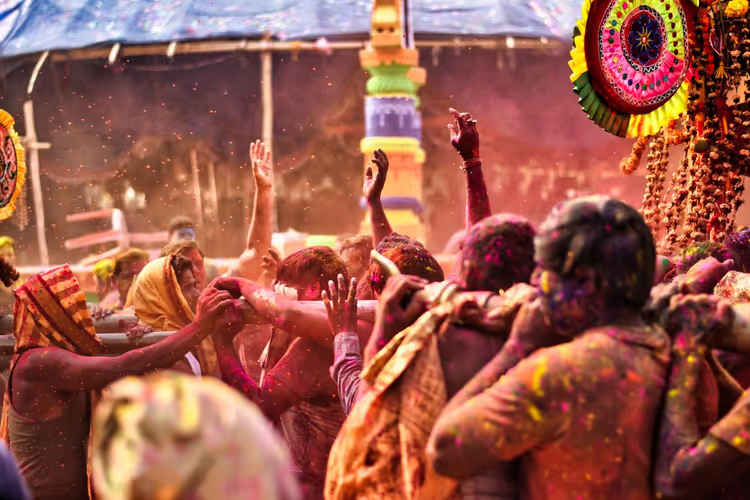
Color in Holi means more than just fun. It symbolizes spring, vitality, renewal, and the temporary erasing of social boundaries. Understanding this meaning changes the experience. You see not dirty shirts but a symbol of spring renewal.
How to protect your skin, clothing, and gear is covered in the safety section.
Synthetic powder stays on skin and hair longer than natural powder, so after the festival a warm shower with a mild cleanser helps.
Which India itinerary works for Holi
Holi fits well into a northern India itinerary. Most of the famous destinations are in Uttar Pradesh, Rajasthan, and around Delhi. If you already want to see Jaipur, Agra, Delhi, Varanasi, or Rajasthan, Holi will be a strong cultural highlight.
The festival should not get lost between transfers and hotel changes.
Delhi is convenient as an entry point. From the city it is easy to reach Braj. The distance from Delhi to Mathura is about 150 km, which on the map is a 2-3 hour drive. By train or car the journey takes about the same.
If you want to look at accommodation options along the route in advance, open hotels in Jaipur on Trip.com. It is better to choose a hotel near the center. Then you can walk back after the festival.
Trip format | Advantage around Holi | What to watch for |
|---|---|---|
Private trip | Itinerary, pace, and hotel adapt to you. | The best choice when comfort and safety matter. |
Small group | A shared program and guide support simplify the festival. | Dates must fall exactly within the Holi period. |
Classic northern route | Delhi, Jaipur, Agra, and Rajasthan connect well. | Do not plan many transfers right around the festival. |
Photo tour | Very strong subjects: rituals, colors, encounters. | You need respectful distance and gear protection. |
For a short trip, Delhi and one Braj city are enough. For two weeks, add Rajasthan and Agra. Leave southern India for another time: Holi is quieter there, and logistics are longer.
Safety and respect for tradition
Holi is an open and joyful festival, but at the same time it is a day of close contact, water, paint, and crowds. For a first trip, a local guide helps, someone who can tell you where it is calm, where it is better not to go, and when to leave the most intense spots.
- Clothing: wear old light clothes you do not mind ruining.
- Protection: keep your camera, phone, and glasses away from paint and water.
- Skin: before going out, apply cream or oil and choose natural colors.
- Respect: not everyone wants to be photographed, especially in temples.
- Accompaniment: in Barsana and Vrindavan, do not go out without a local guide.
- Pace: on the main day, do not schedule transfers or early flights.
Your outfit solves half the problems: a loose long-sleeved shirt and closed shoes are more comfortable than shorts, hair is better tied back, and jewelry should stay at the hotel.
One more habit helps. Keep wet wipes and water in your bag so you can quickly wash off some of the color after the festival, because it takes several days to come off completely.
Respect for tradition matters more than a beautiful shot. Ask permission before taking photos, remove your shoes in temples, and put your phone away, and then you will see the festival from the inside rather than through a lens. If you are unsure about the rules, ask a guide or locals.
How to plan a trip for Holi
Planning around Holi is more complicated than a regular vacation, because the date shifts, hotels fill up, traditions are local, and schedules change. That is why not only the festival itself matters, but also the itinerary, transfers, and buffer time.
A useful sequence of steps:
- Determine the year and the exact date of Holi on the calendar.
- Book your hotel in advance; in Braj this is critical.
- Leave a free day after the festival.
- Check local rules and ceremony start times.
Buffer time protects you from surprises, since local festivities begin before the main day. If you have an extra day, place it after Holi so you can leave without rushing.
Transfers also need thought, because on the main day roads are closed, taxis get more expensive, and drivers detour around crowds. Keep a backup option and do not schedule an early flight for the morning after Rangwali Holi, otherwise the trip will end in a rush.
⁉️🤔 Frequently asked questions
When is Holi in 2027?
Holika Dahan falls on March 21, 2027, and Rangwali Holi on March 22 (as of 09/2026, ABP Live). The dates change every year because the festival follows the lunar calendar. Before booking hotels and tickets, check the date for your specific year. In Braj, local festivities begin before the main day.
Where is the best place to celebrate Holi in India?
The strongest traditions are concentrated in the north. In Mathura, Vrindavan, Barsana, and Nandgaon, the festival lasts several days. Jaipur and Rajasthan offer a calmer format with palaces and markets. Delhi is convenient as an entry point, but there is more urban noise.
Is Holi suitable for first-time visitors to India?
Yes, if the trip is organized. For a first trip, take accompaniment and leave buffer time. In Barsana and very dense places, do not go out without a local guide. Then Holi remains a vivid cultural experience rather than stress. A calm hotel and a comfortable neighborhood also help.
How many days do you need for Holi?
Plan at least two nights in your chosen location. That way you can catch the Holika bonfires in the evening, the main day of colors, and a relaxed departure. If you are going to Braj, add one more night: festivities there last longer than one day. A buffer day after the festival removes the rush.
What clothing is suitable for Holi?
Take old light clothes you do not mind ruining. The color stays on fabric for a long time and does not always wash out. Tips on protecting skin and gear are collected in the safety section.
Can you take photos of Holi?
Yes, but with respect. Ask permission before a portrait and do not photograph people in a temple without consent. The best shots come in the morning, when the light is soft and the crowd has not yet grown.
In short: what to book
Holi forgives a lot, except poor logistics. Do not plan transfers on the main day and leave a free day after the festival. Then the festival will stay vivid, and the trip will stay calm.
- If you are going for the first time: Jaipur and Rajasthan.
- If you want strong tradition: Mathura and Vrindavan.
- If you have a short trip: Delhi and one Braj city.

A small editorial team writing guides for independent travel. We travel ourselves, but we haven’t been everywhere, so we check prices, opening hours and how to get there against official sources.