






Holy week in Sicily: 17 rites and 2026 dates
Holy Week in Sicily turns towns into stage sets for ancient rites. In 2026 you have a rare chance to see them back to back over fifteen days: Easter falls on April 5 (Vatican calendar, as of 09/2026). In Trapani, about twenty groups of statues are carried on shoulders for almost a full day. In Enna, 2,500 hooded penitents walk through the streets. We've put together the island's main Easter rites by town, with addresses, dates, and distances between municipalities. You'll see where to go on which day and where to stay.
Ad: this article contains affiliate links, we earn a commission if you book through them, at no extra cost to you.
When holy week takes place in Sicily
💡 In short:
- Easter in 2026 falls on April 5, Easter Monday on April 6 (official Easter calendar, as of 09/2026).
- The rites run from Palm Sunday, March 29, to the Sunday in Albis, April 12.
- All processions are free: no tickets are sold, you pay only for travel and lodging.
- Trapani and Erice are about 15 km apart, Enna and Pietraperzia about 30 km, so you can see neighboring rites on the same day (per the map).
- Dates and order of rites: 09/2026, verified on the Holy See calendar.
Date 2026 | Where to watch | Main event |
|---|---|---|
Palm Sunday, March 29 | Enna, Caltanissetta | first processions with palm branches |
Holy Monday, March 30 | Caltanissetta | Last Supper with Jesus and the disciples in the cathedral |
Holy Tuesday, March 31 | Trapani | procession of the painting of Our Lady of Mercy |
Holy Wednesday, April 1 | San Fratello, Castroreale, Trapani | the "Jews" come out, U Signuri Longu, meeting of the paintings |
Holy Thursday, April 2 | Marsala, Caltanissetta, Trapani, Petralia Sottana | Via Crucis, procession of the Mysteries, setting up the "sepulchers" |
Good Friday, April 3 | Trapani, Erice, Pietraperzia, Barrafranca, Castroreale, Caltanissetta | the main day: processions run all day and all night |
Easter Sunday, April 5 | Modica, Scicli, Prizzi, Sinagra, Caltagirone, San Biagio Platani, Petralia Sottana | meetings of statues and street celebrations |
Easter Monday, April 6 | Sinagra | procession of the saint and Easter fair |
Each town has its own script, so in one day you can catch one large procession and one small one. The municipalities are close to each other. Book lodging in advance: at Easter, hotels in the west of the island are snapped up months ahead, and prices on these days are higher than usual.
If you're traveling without a car, stick to the main hubs. Trains connect Palermo, Trapani, Enna, and Caltanissetta, while small towns like Prizzi or Barrafranca are reached by bus. A car gives you freedom: you move between rites in the evening and don't depend on schedules.
Trapani: the procession of the Mysteries
Holy Week in Trapani ranks among the most important in Italy. It combines faith, folk culture, and folklore. The rites open on Tuesday with the procession of the painting of Our Lady of Mercy. On Wednesday afternoon, two paintings meet. On Holy Thursday, churches set up "sepulchers": altars of the Last Supper decorated with gold, silver, and coral offerings (according to the Sicily tourism portal).
 © Emanuela Meme Giudic… · CC BYPhoto: Emanuela Meme Giudic…, CC BY (https://creativecommons.org/licenses/by/3.0), Wikimedia Commons
The main moment comes on Good Friday. The Processione dei Misteri brings together about twenty groups of statues depicting episodes of the Passion, an urn with the body of Christ, and the image of Our Lady of Sorrows. In 2026 the procession sets out on April 3 at 2:00 PM from Chiesa del Collegio dei Gesuiti and returns on the morning of April 4 around 8:30 AM (verified 09/12/2026 on the I Misteri di Trapani website).
Bearers carry the statues on their shoulders for almost a full day. They perform two signature movements: Annacata, a rhythmic swaying to funeral melodies, and 'a Vutata, turning the statues toward members of the Maestranza or toward the sick. This is the longest rite of the year.
The catch: the procession runs until Saturday morning, and you're on your feet all night.
Who it's for: for those who want the most famous Holy Week procession in Sicily.
How to get there: by train from Palermo to Trapani, then a 10-minute walk from the station to the historic center (per the map).
Erice: the small procession of the Mysteries
In the center of Erice, the procession of the Mysteries takes place on Good Friday. Seven groups of statues with episodes of the Passion are carried through the streets, along with the Addolorata, a statue of the Virgin in a black cloak. The procession is smaller than the one in Trapani, which takes place the same day at roughly the same time, but the impression is no less powerful (according to Visit Sicily).

The procession sets out from Chiesa di San Giuliano and moves through the streets of the medieval town. The atmosphere is intimate: the prayers of the faithful and the funeral music echo off the stone walls. You experience the Via Crucis here differently than in crowded squares, and you stand just steps away from the statues. Arrive for the start.
How to get there: a cable car and a bus run from Trapani to Erice, about 15 km (per the map).
Who it's for: for those who want to see a procession up close, without a crowd of thousands.
Marsala: Via Crucis on Holy Thursday
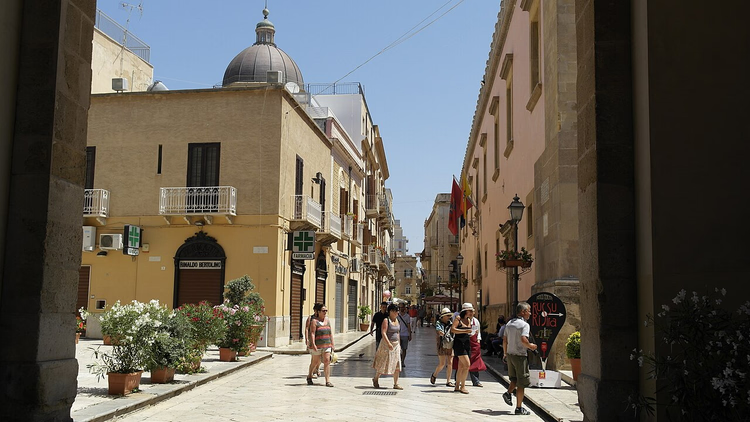
On Maundy Thursday, Marsala changes its appearance. Believers, tourists, and photographers fill the pedestrian center and wait for the Via Crucis. Actors in historical costumes play their roles with full commitment (according to the regional tourism office of Sicily).
 © trolvag · CC BY-SAPhoto: trolvag, CC BY-SA (https://creativecommons.org/licenses/by-sa/3.0), Wikimedia Commons
The drama moves through the streets for several hours. Christ's "falls" under the weight of the cross are repeated along the procession and make a strong impression. It's best to watch from the front rows: that way you see the actors' faces, not their backs.
How to get there: from Trapani to Marsala by train takes about 30 minutes, from the station to the center is a 15-minute walk (see map).
Who it's for: for those who value theatrical reenactment rather than crowded parades.
Enna: 2,500 hooded penitents
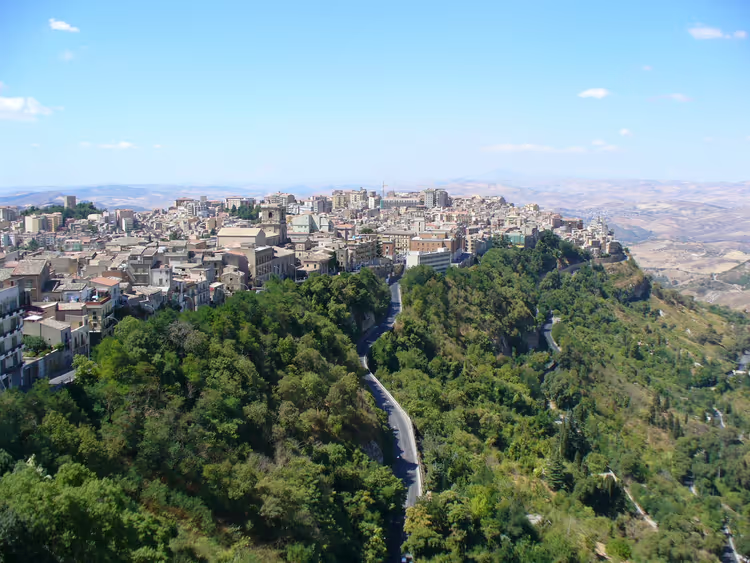
Holy Week in Enna is built around the confraternities (confraternite), which set the rhythm for all the rites. The celebrations begin on Palm Sunday and end on the Sunday in Albis, a week after Easter. In 2026 they run from March 29 to April 12. More than 2,500 hooded penitents, the confrati, walk through the streets, and 16 confraternities prepare the Mysteries in their churches (according to the official website of Holy Week in Enna).
 © Leandro Neumann Ciuffo · CC BYPhoto: Leandro Neumann Ciuffo, CC BY (https://creativecommons.org/licenses/by/2.0), Wikimedia Commons
On specific days, the confraternities go to the cathedral for Eucharistic adoration, which is called ura. On Good Friday, municipal authorities and clergy move through the city, accompanied by the penitents. An orchestra accompanies the procession with mournful melodies by local composers. On the Sunday after Easter, the final rite takes place, the Spartenza: the confraternities return their fercoli to the churches.
The catch: the Good Friday procession is long, and you'll have to stand on a slope, because the town lies on a hill.
How to get there: Enna is in the center of the island, by train from Palermo or Catania, then uphill on foot through the town (see map).
Pietraperzia: Lu Signuri di li Fasci
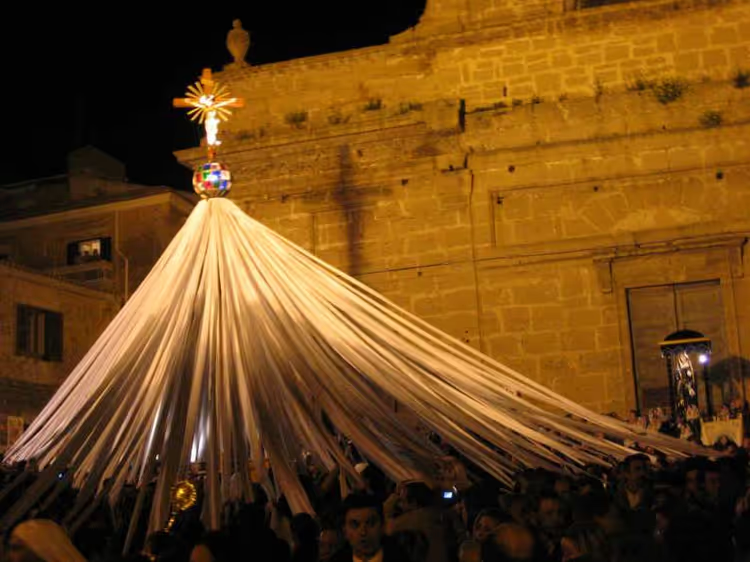
The Lu Signuri di li Fasci rite takes place on Good Friday in Pietraperzia. At sunset, in front of the Chiesa del Carmine, a beam about 8.5 meters high is placed on a cubic cypress base called the Vara. A round metal structure is fixed at the top, and believers tie about 200 white linen strips to it (according to the official website of the rite).
 © LuckyLisp · CC BY-SAPhoto: LuckyLisp, CC BY-SA (http://creativecommons.org/licenses/by-sa/3.0/), Wikimedia Commons
Before the procession begins, a crucifix is placed on top of the beam. The installation rite is called 'a ppassamànu, meaning "from hand to hand." At 8:00 PM, an appointed monk strikes the vara three times, and the cross is raised. It stays balanced on the strips and looks like a tall snowy mountain. At the base of the cross, a colored glass sphere is attached: it symbolizes the world and its diversity.
How to get there: from Enna to Pietraperzia is about 30 km by car or bus (see map).
Who it's for: for those who want to catch a rare rite that takes place only once a year.
San Fratello: the feast of the Judeans
In San Fratello, in the province of Messina, the Feast of the Judeans takes place on Wednesday, Thursday and Good Friday. The tradition goes back to the Middle Ages and blends faith with folklore. In 2026 the "Judeans" come out on Wednesday, April 1 in the afternoon, together with the Pietà procession (according to UNPLI news).
 © Matthias Süßen · CC BY-SAPhoto: Matthias Süßen, CC BY-SA (https://creativecommons.org/licenses/by-sa/4.0), Wikimedia Commons
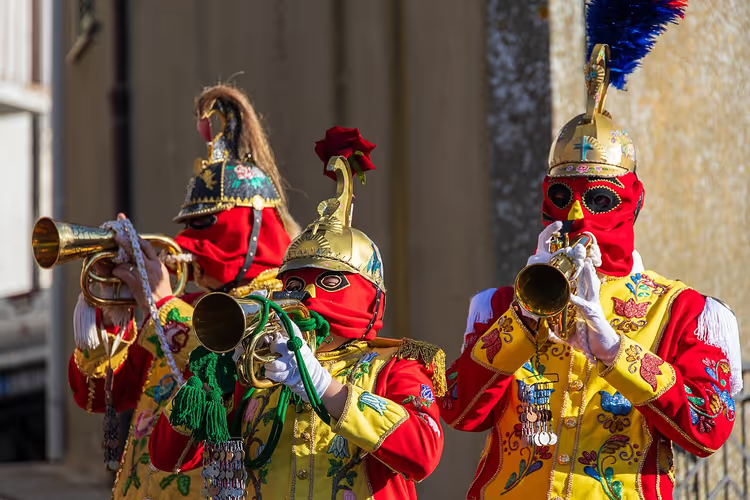
Their costume is red: a jacket and trousers with stripes of another color, and a red hood on the head. A long tongue of shiny leather hangs from the mask, the costume has a huge mouth and two very long eyebrows, so they look grotesque. On their feet are rough leather shoes, and in their hands bunches of chains and trumpets.
For three days the "Judeans" noisily disrupt the services and the Varette processions. They run, shout, blow trumpets, climb walls, walk along the edges of houses and balconies, jump and disappear. This chaos sometimes frightens tourists, but it is exactly what makes the feast feel alive.
How to get there: San Fratello lies on the slopes of the Nebrodi in the province of Messina, easiest by car (see map).
Who it's for: for those who come to Sicily for folklore, not only for quiet processions.
Prizzi: the dance of the devils
The rite U Ballu di diavuli is tied to Easter in Prizzi, in the province of Palermo. The tradition has medieval roots, and it preserves traces of pagan festivals about the triumph of life and the rebirth of vegetation in spring. From the morning of Easter Sunday, masked devils in red and Death in yellow-ochre walk the streets, joking and entertaining passersby (according to a Sicily guide).
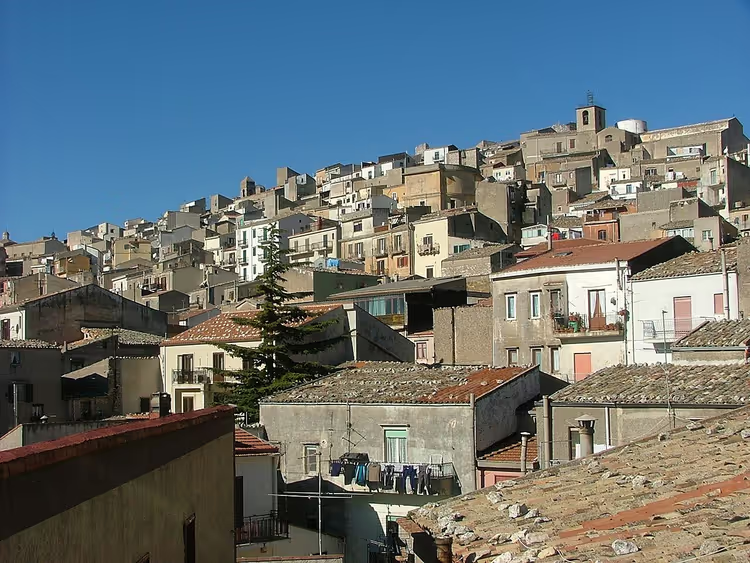 © Marco Walker · CC BY-SAPhoto: Marco Walker, CC BY-SA (http://creativecommons.org/licenses/by-sa/3.0/), Wikimedia Commons
The masked figures release their "victim" for a small offering: money or sweets. The climax comes in the afternoon, when the devils interfere with the meeting of the statues of Christ and the Virgin Mary in the main square. The statues are guarded by angels, who fight the devils. This movement is built on a precise rhythm, and it is called the dance of the devils. When the devils are defeated, the Risen Christ and the Madonna finally meet, and good triumphs over evil.
How to get there: Prizzi lies south of Palermo, about 60 km along a mountain road, easiest by car (see map).
Who it's for: for those who want to see a feast where an old folk game lives side by side with faith.
Modica: the Madonna Vasa Vasa
On Easter Sunday, Modica celebrates the feast of the Madonna Vasa Vasa. For residents and visitors it is the central event of the year. In the procession the faithful carry the statues of the Madonna and Christ, and through the streets it seems as if the two figures are searching for each other (according to Quotidiano di Ragusa).
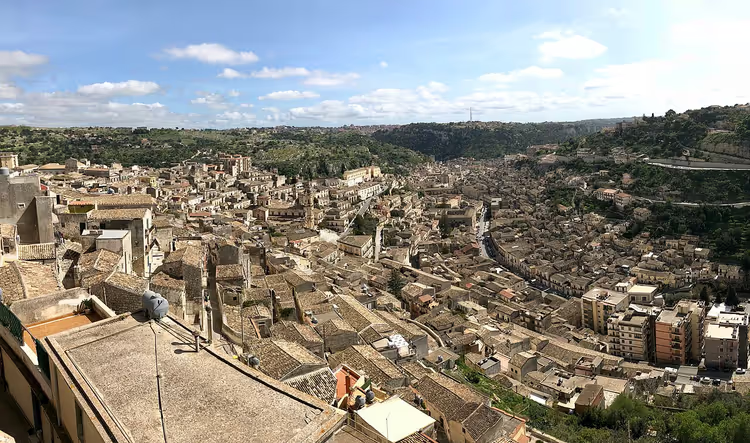 © Davide Mauro · CC BY-SAPhoto: Davide Mauro, CC BY-SA (https://creativecommons.org/licenses/by-sa/4.0), Wikimedia Commons
The procession ends at the Chiesa di Santa Maria di Betlemme. There the traditional "midday kiss" between the Madonna and the Risen Christ takes place. By that moment the square is packed so tightly that it is better to secure a spot in advance. Come in the morning.
How to get there: Modica is in the southeast of the island, by train to Ragusa or Noto, then by bus (see map).
Who it's for: for those who want to see the most emotional Easter moment in southern Sicily.
Scicli: U Gioia, the feast of the living
U Gioia is celebrated in Scicli, in the province of Ragusa. On Easter Sunday local young people walk through the town and carry a heavy banner of blue silk, called Venerable, into the Chiesa di Santa Maria la Nova (according to the Sicily tourism website).
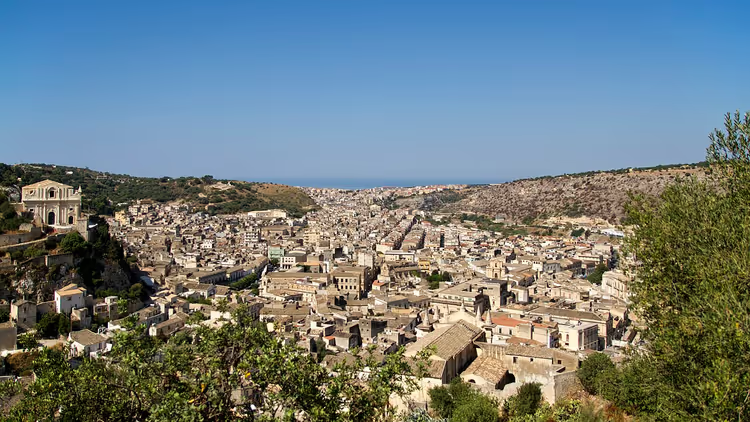 © trolvag · CC BY-SAPhoto: trolvag, CC BY-SA (https://creativecommons.org/licenses/by-sa/3.0), Wikimedia Commons
Anyone can carry the banner: there are no rules or confraternities here. After the days of mourning of Holy Week, the town greets the rebirth with cries of "Gioia!". The last bearer bows to the Risen Christ. Then the procession of Uomu Vivo, or U Gioia, begins, from the Chiesa di Santa Maria la Nova to the Chiesa del Carmine. The route is short, but the pace, stops and turns are unpredictable, so the procession keeps everyone on edge. The feast ends late at night, and the tired bearers keep shouting "Gioia!" until they enter the church.
- Who it's for: for those who are drawn more to the living energy of the town than to strict ceremony.
Piana degli Albanesi: Easter in the Byzantine rite
In Piana degli Albanesi, Easter is celebrated according to the Byzantine rite. All the rituals reflect the identity and cultural roots of the local people. Albanian customs, traditions and language have been passed down here for more than 500 years, and the sense of belonging to an ancient ethnic group is strong in this area (according to the island's tourism portal).
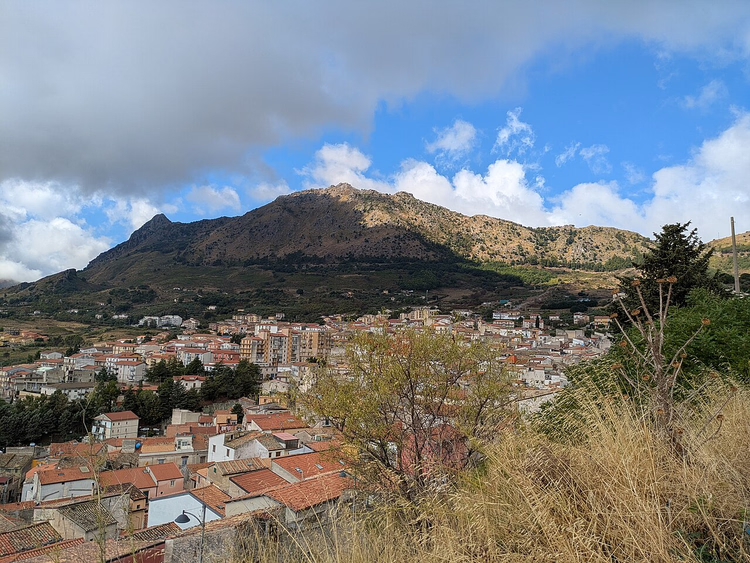 © Auregann · CC BY-SAPhoto: Auregann, CC BY-SA (https://creativecommons.org/licenses/by-sa/4.0), Wikimedia Commons
The women's costumes are richly decorated and are worn on major feast days. When you come here, you are not stepping into a show for tourists, but into a large family celebration that is nevertheless open to guests.
How to get there: Piana degli Albanesi is 20 km from Palermo, reachable by bus (see map).
Who it's for: for those interested in Greek-Albanian culture and the liturgy of the Eastern rite.
Caltanissetta: the Black Christ and the Varicedde
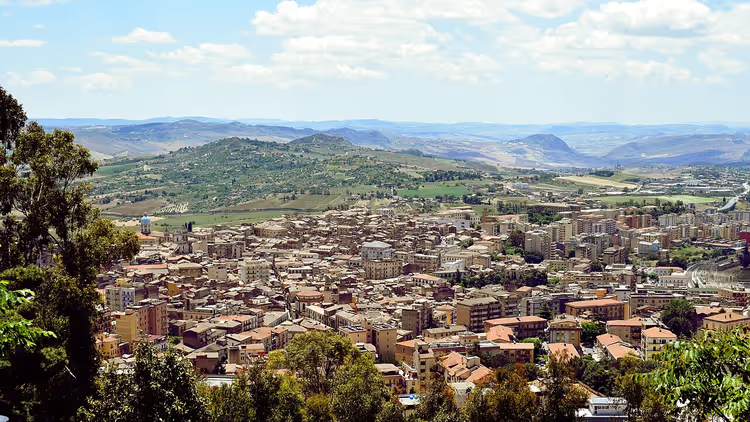
In Caltanissetta, several events take place during Holy Week. The processions start on Palm Sunday, and a Via Crucis with actors in costumes is performed in the historic center. On the evening of Holy Monday, the Last Supper is shown in the cathedral; on Holy Tuesday, the trial before Pontius Pilate and the Sanhedrin takes place. On the panoramic steps of Via Agostino Lopiano, which represent Golgotha, Christ is crucified and taken down from the cross: this moment is called Mortorio, or Scinnenza (according to the official Sicily tourism website).
 © AlessandroAM · CC BY-SAPhoto: AlessandroAM, CC BY-SA (https://creativecommons.org/licenses/by-sa/4.0), Wikimedia Commons
On Wednesday, the Capitano della Real Maestranza leads the guilds of artisans with banners, and during the Real Maestranza procession they carry the Varicedde, small statues of the Passion. On Holy Thursday, the procession of the Mysteries takes place: sculptors Francesco and Vincenzo Biangardi carved groups of statues for it. Only in the middle of the night in Piazza Garibaldi does the Spartenza take place, and each Mystery returns to its church for the whole year.
The evening of Good Friday in Caltanissetta passes in silence. From the Santuario del Signore della Città, an old chapel in the San Francesco district, a procession begins with a wooden crucifix from the 15th century. It is called the Black Christ because of its dark color, and it is venerated by the whole city. Tradition says that the crucifix was found by two herb gatherers, the fogliamari. Today the fogliamari walk barefoot in purple tunics, carry the throne with the Black Christ on their shoulders, and sing the Ladate, litanies in an ancient Sicilian dialect. The procession is led by the bishop, followed by the clergy, nuns and monks, confraternities and the faithful, and behind the Black Christ comes the crowd.
How to get there: Caltanissetta is in the center of the island, by train via Palermo or Catania (see map).
The catch: the rites are spread across the whole week, and in one day you won't see even half of them.
Sinagra: Cursa 'i Santu Liu
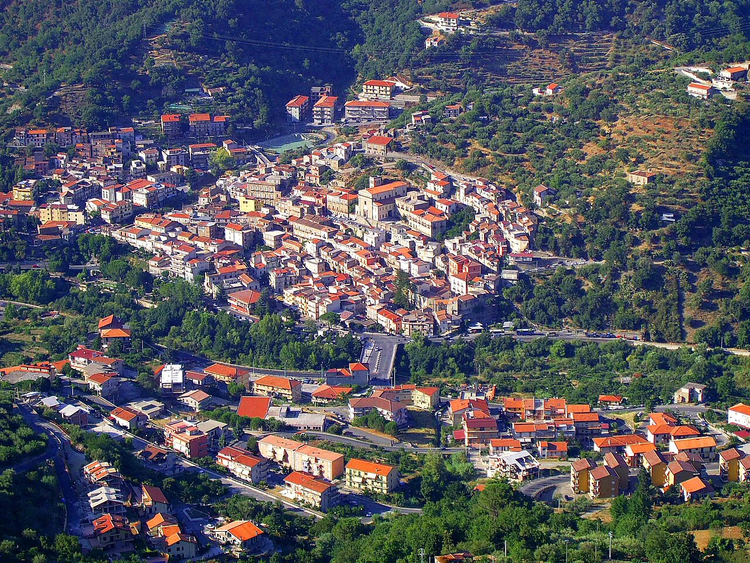
The Cursa 'i Santu Liu, the race of Saint Leo, has taken place on Easter Sunday in Sinagra for hundreds of years. The procession starts from the Chiesa di San Leone and climbs up the cliffs. The faithful carry the statue of the patron saint on their shoulders in a long, slow procession (according to the Visit Sicily portal).
 © Tadd Euro from Naples · CC BY-SAPhoto: Tadd Euro from Naples, CC BY-SA (https://creativecommons.org/licenses/by-sa/2.0), Wikimedia Commons
Toward evening, the procession reaches the bridge near the town center, and there its pace changes abruptly: the final run to the Chiesa Madre begins. The slow start symbolizes Leo's doubts about returning to Catania, where he was bishop. The final run represents his choice to stay with the people of Sinagra. On Easter Monday, the statue is carried through the streets again, and a traditional fair takes place in the square.
How to get there: Sinagra is in the province of Messina, not far from the coast, easiest by car (see map).
Who it's for: for those who want to see a rite created by the residents themselves, without spectator stands.
San Biagio Platani: Easter arches made of bread
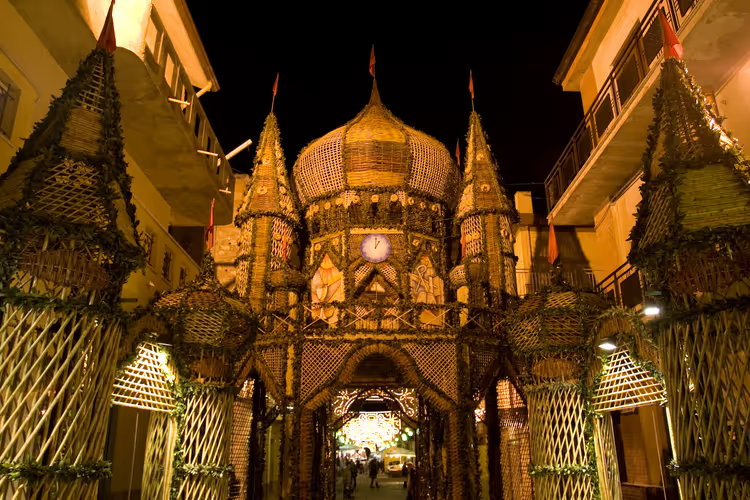
In San Biagio Platani, Easter opens with the Festival of Easter Arches, or Archi di Pane. Weeks before the holiday, two brotherhoods (confraternite) build structures from bamboo, willow, and agave stalks: Madunnara works for the Madonna, Signurara for Jesus (according to the island's tourism website).
 © Carlo Columba · CC BY-SAPhoto: Carlo Columba, CC BY-SA (https://creativecommons.org/licenses/by-sa/2.5/it/deed.en), Wikimedia Commons
The frames are decorated with citrus, laurel, and bread in various shapes and sizes. Arches, domes, and bell towers rise along Corso Umberto I, the town's main street. Evening lighting turns San Biagio Platani into a festive open-air parlor. The climax comes on Easter Sunday, when Christ and the Madonna meet in front of the Chiesa Madre.
How to get there: the town lies in the province of Agrigento, between Agrigento and Palermo; a car is the most convenient option (see map).
Who it's for: for those who appreciate crafts and want to see decorations made by hand from bread.
Caltagirone: the 'A Giunta meeting
On Easter Sunday, the streets of Caltagirone turn into a stage. During the Easter days, a Via Crucis is performed in the historic center: actors in period costumes portray the story of Christ. The procession ends at the Santa Maria del Monte staircase, where the most powerful scenes are shown: Christ falling under the cross, the meeting with Veronica, and the crucifixion (according to the Sicily tourism website).
 © Carlo Pelagalli · CC BY-SAPhoto: Carlo Pelagalli, CC BY-SA (https://creativecommons.org/licenses/by-sa/3.0), Wikimedia Commons
The climax of Holy Week falls on Easter Sunday and is called 'A Giunta. A large statue of Saint Peter and a statue of the Risen Christ search for the Madonna to announce the Resurrection. The action takes place in Piazza Municipio: the Madonna removes her black cloak and bows her head three times before her Son. Then comes the parting, 'A Spartenza, and the statues go their separate ways down different streets.
How to get there: Caltagirone is 70 km from Catania, by train or bus (see map).
Who it's for: for those who want to combine the ritual with a visit to the town's ceramic workshops.
Petralia Sottana: U 'Ncuontru
The main event of Holy Week in Petralia Sottana is the reenactment of the Passion. Actors perform the Via Crucis in the town's beautiful center. On Thursday, the faithful come to venerate the statue of the dead Christ, the Madonna, and the angels in the Chiesa di San Biagio, known locally as Collegio (according to the regional tourism portal).
The Good Friday procession ends at Golgotha. On Saturday, at the midnight mass in the Basilica, the Caduta du Tiluni takes place: the Madonna removes the large black veil from the main altar, and her mourning comes to an end. On Easter Sunday, three trumpet blasts announce the 'Ncuontru meeting at Chianu 'u Collegiu. The Risen Christ and the Madonna embrace, and then the statues are placed facing each other and carried through the old town to the Chiesa Madre.
- Who it's for: for those who want to see both the procession and the statue meeting ceremony.
Barrafranca: the U Trunu procession
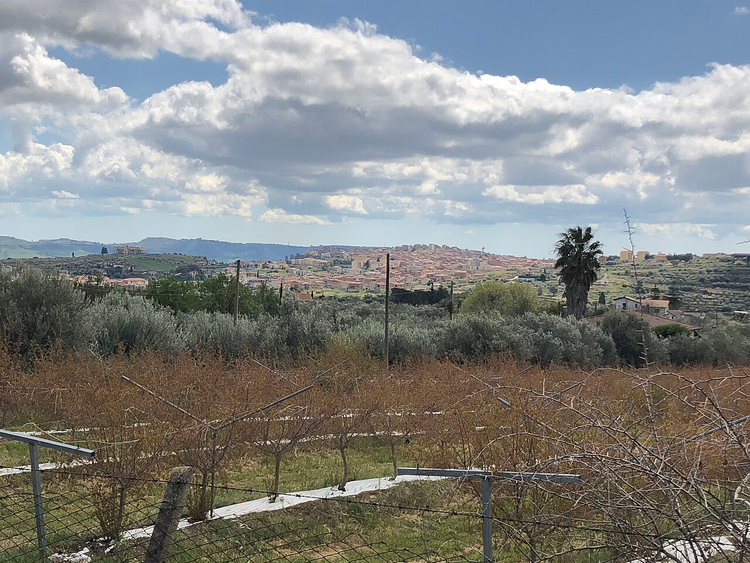
The procession of Crocifisso du Trunu, meaning the Throne, is the most anticipated moment of Good Friday in Barrafranca, in the province of Enna. After all the masses in the town's churches, the procession of the Holy Crucifix begins. The cross is mounted and carried on a structure that locals call U Trunu (according to the official Sicily portal).
 © Davide Mauro · CC BY-SAPhoto: Davide Mauro, CC BY-SA (https://creativecommons.org/licenses/by-sa/4.0), Wikimedia Commons
The structure has a central part called u'firrizzu with mechanisms that raise the cross as it leaves the church. The ferculum is held by two baiarde with numbers from 1 to 100: each number is assigned to a specific bearer. The statue of the crucifix is covered with golden offerings from the faithful, collected over the years. The sacred image stands at the center of the Spera, a wooden oval structure that is joined before the procession to the Munnu, a sphere on a trunk about two meters high, symbolizing the Earth. Every year, the faithful bring colored rosettes made of fabric and flowers, scocche, to the crucifix, and these offerings cover the Sphere and the World.
The procession is joined by Our Lady of Sorrows and the Urn of the dead Christ, and together they proceed to the Chiesa Madre. At the head of the procession is the Urn, followed by mourners, the Addolorata with John, the town band, and finally U Trunu.
How to get there: Barrafranca is in the province of Enna; a car from Enna is the most convenient option, about 25 km (see map).
Who it's for: for those who want to see a rare mechanical structure at the center of the procession.
Castroreale: U Signuri Longu
In Castroreale, everyone waiting for the U Signuri Longu procession, the Long Christ, is kept in suspense during Holy Week. The ritual is demanding: the person who carries the crucifix endures an enormous load. The crucifix was made of papier-mâché in the 17th century, the name of the craftsman is unknown, and today it stands in the Chiesa di Sant'Agata (according to the Sicily tourism portal).
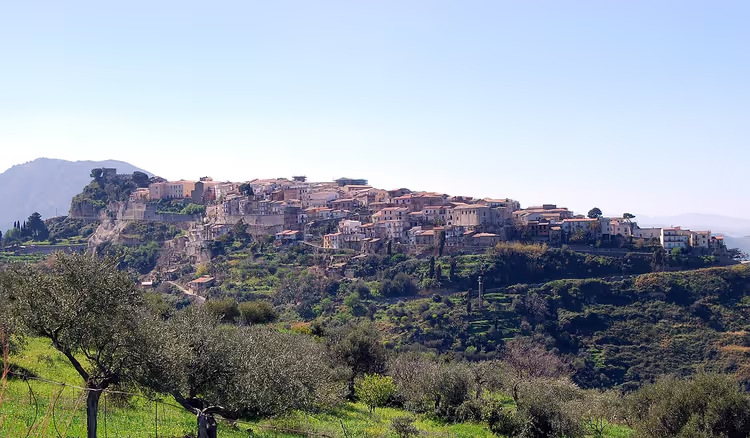
The cross is mounted on a cypress column. It is about thirteen meters long and weighs about 450 kg. On Holy Wednesday and Good Friday, sixteen men carry it on their shoulders using a system of wooden poles, and the mechanism is operated by members of the Maestranza. The cross is carried through the streets of the old town, and from a distance it seems to glide above the rooftops. The spectacle is accompanied by illuminations, brass bands, and fireworks.
How to get there: Castroreale lies in the province of Messina, not far from the Tyrrhenian coast, easiest by car (see map).
Who it's for: for those who want to see the most mechanically unusual Holy Week rite.
Tours and tickets
Guided tours, skip-the-line tickets and activities — most offers can be cancelled free of charge.
See offers on GetYourGuideThe widget loads once you give your consent.
How to plan a trip for Holy Week
Hotel rooms are best booked several months in advance: Easter weekend in Italy is peak season. If you are heading to the west of the island, base yourself in Trapani or Erice. For the southeast, Modica and Ragusa are convenient, and for the center, Enna works well. That way you avoid spending three hours on the road before every procession.
Getting between cities is easy by train: Trapani, Palermo, Enna, and Caltanissetta are on the line (see map). Buses run to small towns, but schedules are sparse, so many people rent a car. Keep in mind that on procession days the streets are crowded, and look for parking on the outskirts.
If you want to add island excursions to the rites, check out Sicily tours on GetYourGuide.
⁉️🤔 Frequently asked questions
When does Holy Week take place in Sicily in 2026?
Easter falls on April 5, Good Friday on April 3, and Easter Monday on April 6 (Vatican schedule, as of 09/2026). The rites start earlier, from Palm Sunday on March 29, and continue until the Sunday in Albis on April 12. The most powerful processions run from Maundy Thursday through Easter Sunday.
Do you need tickets for the processions?
No. All Holy Week rites in Sicily take place on city streets and squares, and admission is free. You only pay for travel, lodging, and food. Claim your spot early, because in the narrow alleys it gets packed by the time the procession starts.
Which procession should you choose if you only have time for one?
If it's your first time on the island, go to Trapani for the Processione dei Misteri. It runs from Friday until Saturday morning, and you will see about twenty groups of statues (as of 09/2026, I Misteri di Trapani). For a more intimate experience, Erice is a good fit, and for folklore head to San Fratello or Prizzi.
What to see on Easter Sunday?
In the morning, go to Modica or Scicli, where the statues of the Madonna and Christ meet in the streets. In the afternoon, head to Caltagirone or Prizzi, where the rite is performed in the square. Toward evening, the race of Saint Leo takes place in Sinagra, and the 'Ncuontru meeting happens in Petralia Sottana.
Can you see the rites without a car?
Yes, but with caveats. You can reach Trapani, Enna, Marsala, Caltanissetta, and Caltagirone by train. Buses run to small towns like Prizzi, Sinagra, or Barrafranca, but there are few departures. If you want to cover several rites in one trip, a car is more convenient.
In short: what's worth booking
Holy Week in Sicily is fifteen days of rituals you won't see anywhere else. Trapani has the largest procession, Enna the most numerous hooded penitents, and San Fratello the loudest folklore. Plan your route by day: from Palm Sunday stay in the center of the island, and from Good Friday move west.
If you have three days, go with Trapani and Erice. If you have a week, add Enna, Modica, and Scicli. Accommodation in these towns gets booked up first, so reserve early.

A small editorial team writing guides for independent travel. We travel ourselves, but we haven’t been everywhere, so we check prices, opening hours and how to get there against official sources.