


Easter in Greece: when it is celebrated in 2027 and where to experience it
In summer, the Greek islands are crowded, and in winter half the tavernas are closed. Between these two seasons there is a week when the country lives at its own pace. In 2027, Orthodox Easter falls on Sunday, May 2 (as of 09/2026, according to timeanddate.com).
For Greeks, Easter is more important than Christmas. A few days before the holiday, cities and villages shift their rhythm: evening processions, Lenten menus in tavernas, red eggs on the table, and lamb on the spit. You are welcomed here warmly, but you are asked to respect the ritual and the ceremony.
Below you will find the dates of Orthodox Easter through 2030, how Holy Week is structured, and the places where the holiday looks especially vivid. We have also covered the practical questions separately: when to book accommodation, what weather to expect in early May, and how to behave in a church.
Ad: this article contains affiliate links, we earn a commission if you book through them, at no extra cost to you.
 AIIllustrative image: AI-generated
When is Orthodox Easter in Greece in 2027
💡 In short:
- Orthodox Easter 2027: Sunday, May 2.
- Western churches celebrate Easter on March 28, five weeks between the dates.
- Holy Week runs from Palm Sunday to Bright Monday.
- Dates verified on 12.09.2026 using the Orthodox Easter calendar.
Orthodox Easter in Greece in 2027 falls on May 2 (as of 09/2026, dates on timeanddate.com). Western Easter in the same year is early, March 28, so five weeks pass between the two holidays.
The reason for the discrepancy lies in the calendars. The Greek Orthodox Church calculates the date of Easter using the Julian calendar, while Western churches switched to the Gregorian calendar in the late 16th century. Today the calendars differ by thirteen days (as of 09/2026, timeanddate.com), so the spring full moon falls on a different date.
Another condition is added to the full moon rule. Orthodox Easter must come after the Jewish Passover. Because of this, the dates sometimes diverge more, and sometimes both holidays coincide: that was the case in 2025.
Easter opens the season on the tourist islands. Hotels on Rhodes, Crete, and Corfu plan around this holiday, and airlines bring in the first tourists. If you are planning a trip, tie your dates to Holy Week.
You will find the full dates of Holy Week 2027 below. Palm Sunday falls on April 25, Maundy Thursday on April 29, Good Friday on April 30, Holy Saturday on May 1, and Bright Monday on May 3 (as of 09/2026, official holiday calendar).
Official dates of Orthodox Easter through 2030
Orthodox Easter always falls between April 4 and May 8. The dates for the coming years are listed in the table (as of 09/2026, timeanddate.com).
Year | Orthodox Easter | Western Easter | Difference |
|---|---|---|---|
2026 | April 12 | April 5 | 1 week |
2027 | May 2 | March 28 | 5 weeks |
2028 | April 16 | April 16 | dates coincide |
2029 | April 8 | April 1 | 1 week |
2030 | April 28 | April 21 | 1 week |
In years when the dates coincide, as in 2028, the holiday happens once for everyone. Then Greece has fewer reasons for long weekends, but more tourists from Germany and Austria.
The name "Pascha" (Greek Πάσχα) comes from the Hebrew "Pesach," and in Christianity it signifies resurrection and new life. The paschal candle and the red egg became symbols of this transition from death to life.
Important: the Greek Orthodox Church is one of the oldest in the world. It has no pope, no organ in the church, but it does have Byzantine chant, incense, and icons that are not decoration here but sacred objects. The Church and Catholicism split in the mid-11th century, and a thousand years of separate history is visible in every detail of the service.
It is convenient to plan your trip starting from the holiday date itself. Subtract three days from Easter Sunday and you get Maundy Thursday, the busiest day of the week. In 2027, that is April 29. Ferries and tickets for these dates sell out earlier than usual, so it is better to book flights by January.
For a Greek, a name day is more important than a birthday, so congratulations are heard here all year round. At Easter, however, everyone greets everyone: Kaló Páscha can be heard both in a mountain village and in an Athens alley.
How Easter is celebrated in Greece
Greek Easter is not one day or a long weekend. It is a whole week of rituals that stretches from Palm Sunday to Bright Monday, and sometimes longer, until the May Day festivities. You can only understand the holiday through Holy Week: Easter Sunday itself is just a bright point at the end of a long ceremony.
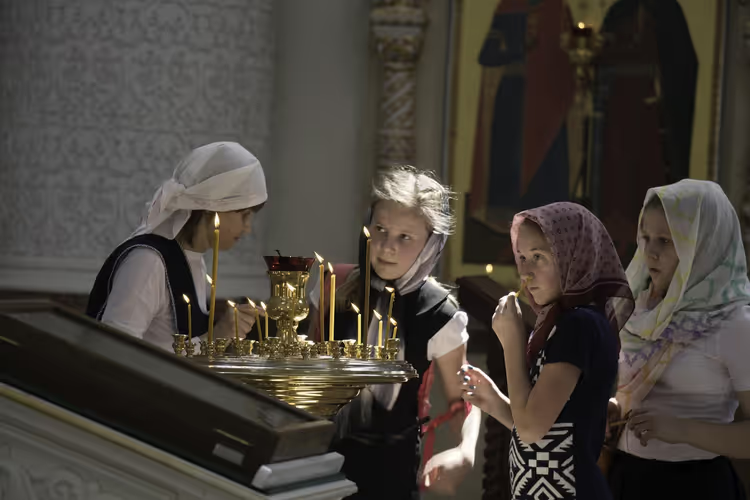
Customs in Greece are largely the same everywhere, but each region has its own nuances. On the islands, centuries of isolation produced local traditions you will not see on the mainland. Below we break down how Holy Week is structured and what happens on each day.
Lent and carnival
Before Easter, Greeks go through a long fast called Sarakosti. It lasts about seven weeks and begins on Clean Monday, right after carnival. Those who fast strictly give up meat, dairy, eggs and even oil, and the older generation takes this seriously. Younger people tend to be more relaxed about fasting.
During the fast, tavernas introduce separate menus of seafood, legumes and vegetables. Before the fast comes Apokries, a three-week carnival when life picks up again. The country's main carnival takes place in Patras: for weeks the city lives with parades, costumes and music, and hundreds of thousands of people come from all over Greece.
The smokiest day of carnival is called Tsiknopempti, Smoke Thursday. It falls about 11 days before Clean Monday. On this day, everything that can be grilled goes on the grill: meat is cooked on balconies, in gardens and right on the sidewalks. For many, Tsiknopempti is a loud farewell to meat before the fast.
On Syros, in Ermoupoli, smoke fills every little street on this day, and the whole city smells of grilling. Residents bring souvlaki outside and share it with neighbors. Tsiknopempti has long been part of the local calendar and a reason for the whole area to gather, and you will feel it even if you are just walking through the city.
Holy Week
Then comes Holy Week, Megali Evdomada, which forms the emotional peak of the entire holiday. Here is how it unfolds day by day, explained simply.
Palm Sunday opens the week. By this day, churches are already decorated with palm branches and laurel, and children carry home woven crosses. Families begin to gather: the first relatives arrive from the mainland and from abroad to their home villages. In some places, the walls of small churches are still whitewashed before Easter, and this is also part of the preparation.
Holy Thursday is the day of red eggs. On the same day, the rich Tsoureki bread is baked, and its aroma spreads through the whole area. From this day on, people greet each other with Kaló Páscha and Kalí Anástasi.
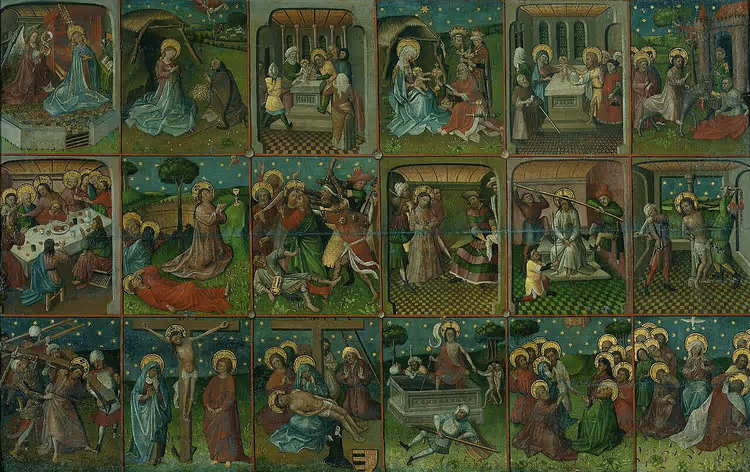
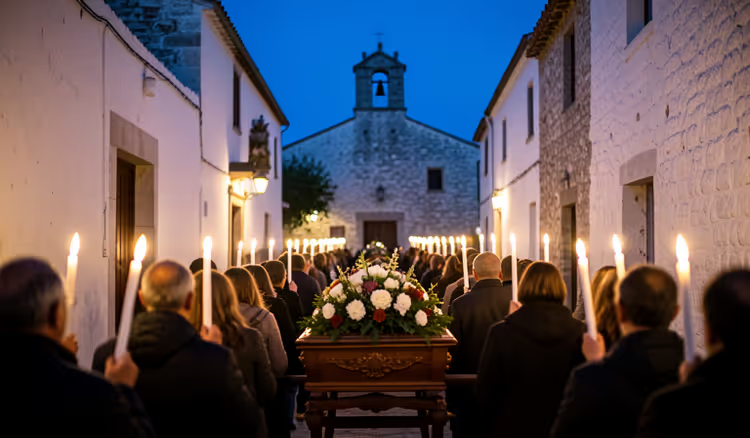
Good Friday is the most solemn day of the year for a believing Greek. In the morning, the Epitafios, a symbol of Christ's tomb, is decorated with fresh flowers. In the evening, around nine o'clock, the procession with the Epitafios begins: it is slowly carried around the church, accompanied by candles, incense, church hymns and a silent crowd. It is a sight you will remember for a long time, regardless of your attitude to religion.
Holy Saturday passes in restrained anticipation, especially in traditional towns. Children are excited, elders are quiet. Church bells ring from morning throughout the day, slowly and mournfully, and the parish children usually take turns at the rope. Tavernas play almost no music, and menus are noticeably shorter.
It is on Holy Saturday that something easy to miss happens. During the day, the Holy Fire from the Church of the Holy Sepulchre in Jerusalem is flown to Athens, where a delegation formally receives it. From there, the fire is taken to the Church of Agioi Anargyroi in the Plaka district of Athens, and then flown and ferried across the whole country. That is how, at midnight, the same fire burns all over Greece.
In the evening, churches fill up, and exactly at midnight the lights go out. The priest lights the Paschal candle and says Christós Anésti, Christ is risen. The flame passes from candle to candle and spreads through the crowd like a wave. Thousands of lights flare up at once, and the procession is often accompanied by fireworks and firecrackers. People embrace and answer Alithós Anésti, truly he is risen. This moment is impossible to forget.
Easter Sunday and Bright Monday
Easter Sunday is devoted to life, family and feasting. From early morning, spits turn all over the country: from Kastoria in the north to Crete in the south, lamb and traditional Kokoretsi are roasted. In the afternoon, people play Tsougrisma: adults and children knock red eggs against each other to determine their luck for the year.
The mood in Greece on this day is open and joyful. Tables are full, and conversations go on late into the night. Even without knowing the language, you will quickly be drawn into conversation, because Easter here is not a closed family holiday but a shared one for the whole area and the whole island. Wherever you find yourself on this day, it will stay in your memory.
Bright Monday closes the holidays and is considered the quietest day. People meet family for coffee or simply do nothing, which after weeks of services and rituals is pleasant even for the most devout Greek. On the islands, departures are already noticeable: those who came to see relatives return to Athens, Thessaloniki and other cities.
In some regions, the holiday continues after Monday. May Day in many villages turns into a folk festival with music and food. If your travel dates coincide with this period, add a couple of free days: Greece barely works at this time, and you will have nowhere to rush.
What changes in cities and on the islands
Easter changes the schedule of the whole country. On tourist islands like Rhodes, Crete and Santorini, life goes on all year round, but on small islands in early May the winter sleep still continues. Beach bars are closed, and most restaurants open only by Easter Sunday. If you arrive a week before the holiday, some places will be closed, but prices will remain low.
The holiday begins on the evening of Palm Sunday and peaks on the night from Saturday to Sunday. These same days, institutions and schools close, so in tavernas and on ferries you will find yourself mostly among Greeks. Book a table in advance: in villages, dinner after the midnight service is arranged by families.
On the mainland and in Athens, Easter feels different. Each neighborhood celebrates on its own, with its own parish and its own procession. For a visitor, this is convenient: you do not need to travel far, the nearest church is usually a short walk from your hotel, and you can easily catch the start of the service.
The ringing of bells on Holy Saturday deserves a special mention. After midnight, the character of the ringing changes, and this is best heard in small villages where the bell stands right by the main square.
Another reference point is street food. During Holy Week, there is almost no meat on the streets, but plenty of Lenten pastries and seafood. Greeks eat simply on these days, and you can easily follow their menu: salad, legumes, grilled vegetables.
The holiday keeps its rhythm after Sunday too. On Bright Monday almost everything is closed, so do not plan museums or trips for that day. Better to spend it at the table, like the locals, and save your energy for an evening walk.
Beautiful places to celebrate Easter in Greece
Easter can be celebrated in any corner of Greece, somewhere quieter, somewhere louder. If you want to feel the holiday especially closely, choose a small island or a region away from tourist flows. Many places have their own rituals worth traveling there specifically for Easter.
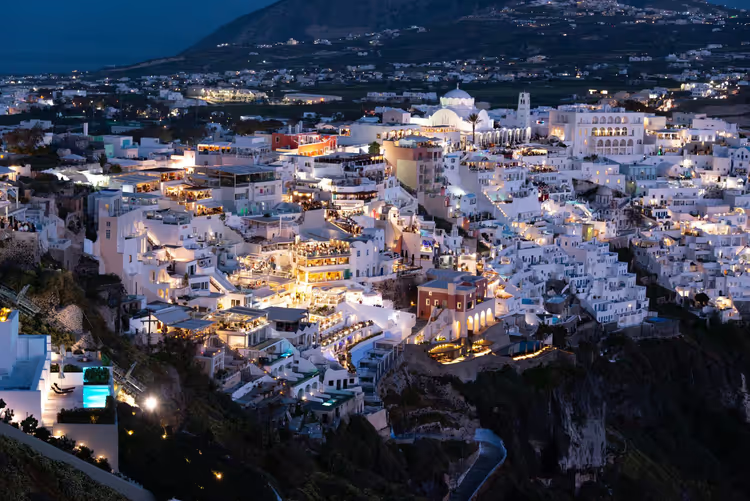
Easter on Corfu is familiar to many from footage of flying clay pitchers. But the list does not end there: below are examples of places where the holiday unfolds in its own way.
Easter on Santorini: a sea of candles in Pyrgos
The medieval village of Pyrgos on Santorini offers one of the most powerful Easter evenings in the country. On the evening of Good Friday, local associations place thousands of candles on the walls and roofs of churches and houses. As darkness falls, they are lit, and Pyrgos turns into a sea of fire. Below, toward the coast, three large crosses glow. This evening is hard to imagine until you see it yourself.
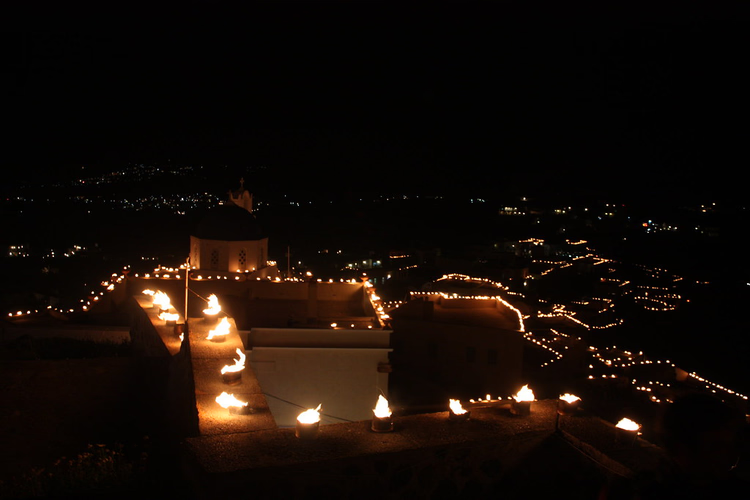 © Klearchos Kapoutsis · CC BYPhoto: Klearchos Kapoutsis, CC BY (https://creativecommons.org/licenses/by/2.0/), Flickr
If you want to catch the lights in Pyrgos, arrive in the village early: the streets are narrow and parking is scarce. Bring a warm jacket, as evenings at this elevation are cool and windy.
Easter on Chios: the rocket war in Vrontados
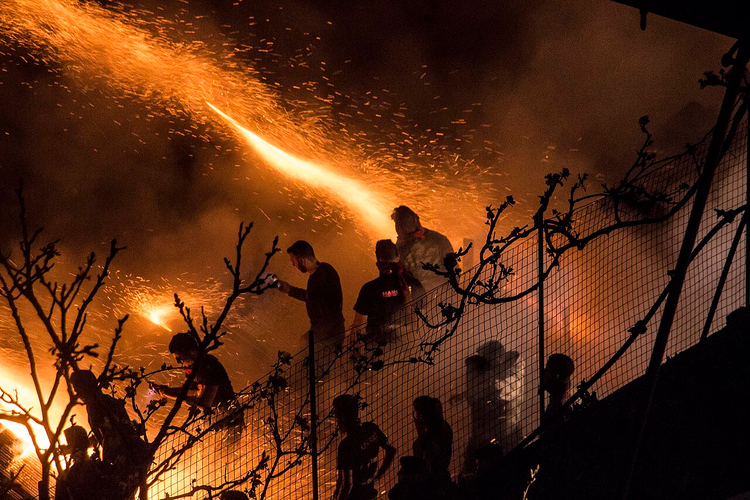
Those who want to see something unusual head to the village of Vrontados on Chios. On Easter night, two neighboring parishes launch thousands of homemade rockets at each other, aiming at the bell towers of two churches. The event is known as Rouketopolemos, the rocket war, and takes place here every year (as of 04/2026, Euro Weekly News). The next day, both sides count hits and declare themselves the winners.
The noise is deafening, and that is part of the tradition. Keep a safe distance from the bell towers, wear thick fabric clothing, and do not bring small children. The rockets here are homemade, so reasonable caution is a good idea.
 © Dimitris Tachynakos · CC BY-SAPhoto: Dimitris Tachynakos, CC BY-SA (https://creativecommons.org/licenses/by-sa/4.0), Wikimedia Commons
Easter on Corfu: Botides in the old town
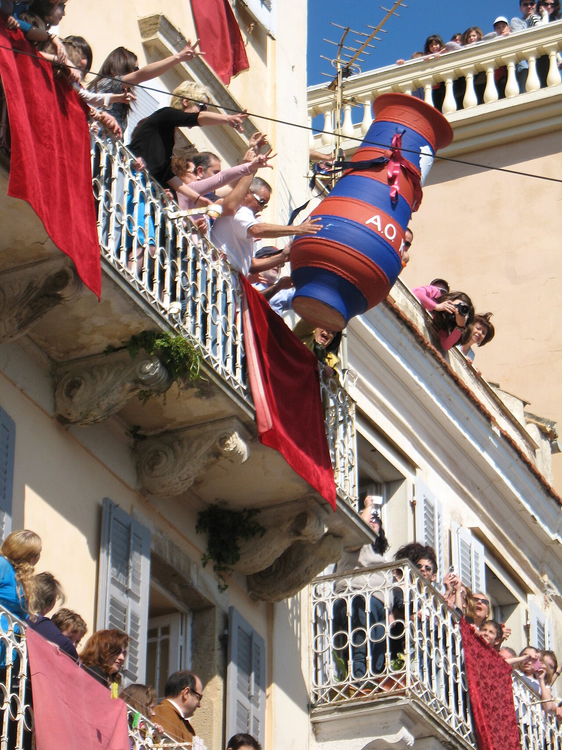
Corfu celebrates Easter with a mix of Orthodox depth and Venetian carnival spirit found nowhere else in Greece. Throughout Holy Week, processions through the town are accompanied by philharmonic orchestras. On Holy Saturday, residents throw large clay pitchers filled with water from balconies, the so-called Botides. The crash of broken ceramics on the old town's paving stones signifies the victory of life over death and continues a Venetian tradition.
 © Gkaridis0 · CC BYPhoto: Gkaridis0, CC BY (https://creativecommons.org/licenses/by/4.0), Wikimedia Commons
On Botides day, the center of Corfu is closed to traffic, and balconies are claimed in advance. If you want to film the pitcher throwing, arrive at least an hour early and stay clear of the drop zone.
Easter in the Peloponnese: paper lanterns of Leonidio
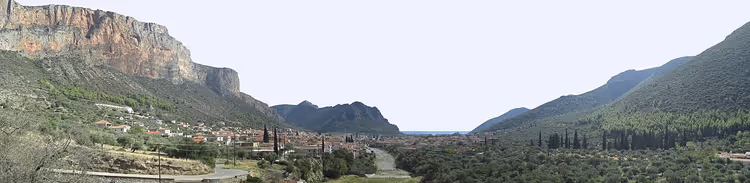
In the small town of Leonidio in the Peloponnese, after the midnight service, hundreds of paper lanterns rise into the sky. They are made by hand from tissue paper and climb high above the dark mountains. The tradition is more than a century old and is found nowhere else in Greece. The sight of glowing lanterns over the night gorge is worth timing your trip for.
 © AlMare · CC BY-SAPhoto: AlMare, CC BY-SA (https://creativecommons.org/licenses/by-sa/3.0), Wikimedia Commons
The lanterns are launched by the sea, so be patient: the exact time depends on when the service ends. Nights in early May are cool, and a windbreaker will come in handy.
Easter on Patmos: the holy sanctuary
Patmos, the island of John the Theologian, becomes one of the main sites of Orthodox pilgrimage at Easter. The Monastery of Saint John high above Chora has preserved the same rituals for centuries. The Good Friday procession through the narrow streets of Chora moves with an almost medieval solemnity. For a non-religious visitor, this is also an experience: people come to Patmos not for the beach, but for the atmosphere and the silence.
 © Francesco Bini · CC BY-SAPhoto: Francesco Bini, CC BY-SA (https://creativecommons.org/licenses/by-sa/4.0), Wikimedia Commons
Easter on Paros: the burning boat of Judas
Paros is known for another local tradition. Effigies of Judas are carried through the streets and then burned. In the port, a large boat with an effigy is set afloat, and it burns as it drifts out to sea. This is how Judas is symbolically punished here, emphasizing the victory of good over evil. The ritual looks unusual, but for locals it has a purely religious meaning and is deeply rooted in the Orthodox calendar.
When planning a trip to one of these islands, keep ferry dates and dock congestion in mind. Tours and tickets on GetYourGuide will help you lock in the cultural program in advance, before you even fly out.
Greek Easter customs
Greek Easter is built on rituals. Some of them are ancient, some live and change every year. Below are the main traditions of the Orthodox holiday in Greece.
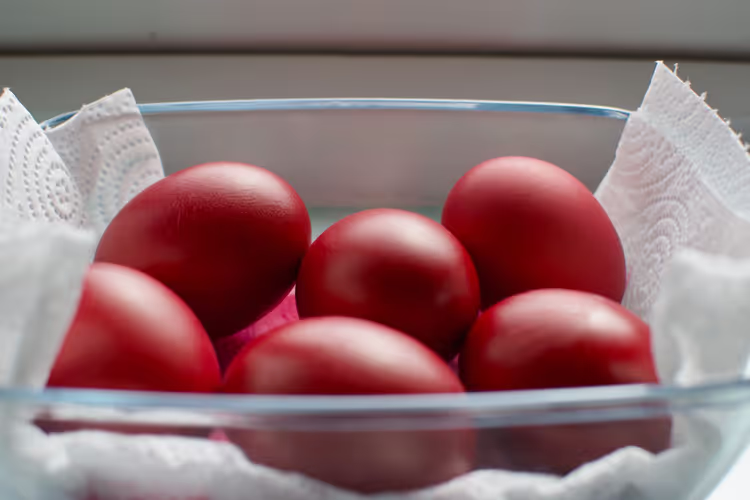
Red eggs (Kokkina Avga). Dyeing eggs on Holy Thursday is as natural for a Greek as decorating the house for a holiday. The red color recalls the blood of Christ, the egg recalls resurrection and new life. In the past, eggs were dyed with onion skins; today people more often use ready-made dye from the store.
Tsougrisma. Cracking red eggs against each other is most fun for children. Whoever's egg survives gets a year of good luck. Many families have their own "champion" egg that is kept until the next holiday.
Procession with the icon. In villages and on small islands, the main church icon is carried through homes and parishes. It is either carried by hand or driven around by the whole village in a car. This deeply local ritual surprises visitors and is joyfully received by residents.
The midnight candle. On the night of the resurrection, the holy fire brought from Jerusalem is passed from candle to candle. Believers try to carry the burning candle home and draw a cross with the soot above the front door, so the house is protected all year.
Lambádes. Festive Easter candles, usually white, are decorated with ribbons and flowers and are lit on the night of the resurrection. For children, candles are made with figurines and toys, and this is a separate ritual for the little ones.
Palm branches (Vaiá). On Palm Sunday, palm branches are woven into small crosses and blessed. The blessed crosses hang in Greek homes all year and serve as a reminder of the beginning of Holy Week.
Traditional Greek Easter dishes
Easter in Greece is also a culinary event, the best time to try Greek cuisine. During Lent, tavernas prepare plenty of meatless vegetable dishes: horta made from wild greens, beet salad, and legume dishes. On Easter Sunday, everything revolves around lamb.
 AIIllustrative image: AI-generated
Magiritsa. This is a thick soup made from lamb offal, scallions, dill, and avgolemono sauce. It is eaten after the midnight service, and it breaks the long fast. The first spoonful after Holy Week is memorable for a long time.
Tsoureki. A rich yeasted braid that is baked and gifted across the country at Easter. The secret of Greek Tsoureki is the spice mahleb made from cherry pits: it gives a light, distinctive aroma. A red egg is often baked into the dough for Easter. You can find this pastry year-round, but fresh from the bakery it is especially good.
Lichnarakia. Sweet cheese tarts made from shortcrust pastry with a creamy filling of mizithra cheese, with cinnamon and distinctive crimped edges. Almost every bakery prepares them for Easter, and it is hard to walk past them.
Koulourakia. Traditional butter cookies with orange and vanilla, braided and served with coffee or given as a souvenir.
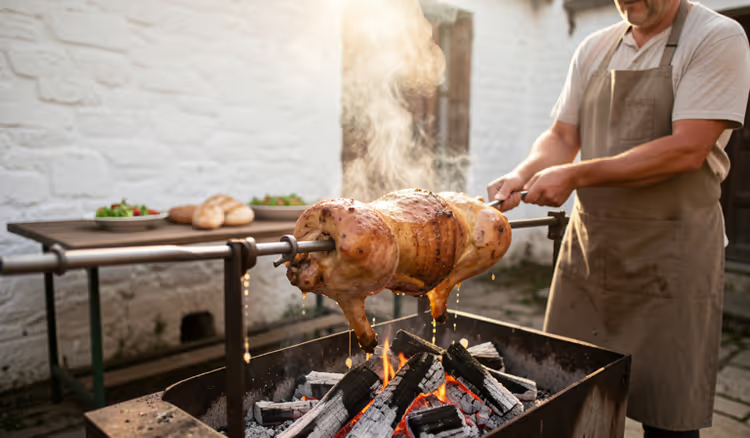
Easter lamb (Arni). The main dish of Sunday. From early morning, spits turn over the coals, the aroma spreads through the villages, and the long, slow cooking makes the meat tender. In northern Greece, goat is often chosen instead of lamb.
Kokoretsi. A dish not for everyone, but meat lovers appreciate it. Lamb offal, primarily liver, lungs, and heart, is wrapped around a spit, covered with intestine, and slowly roasted over an open fire. The result is a crispy and savory appetizer worth trying at least once.
During Lent, it is worth deliberately trying meatless dishes. On the islands, they serve fresh grilled octopus, creamy fava, and dolmadakia made from grape leaves with rice and herbs. Add gigantes, huge baked beans, and vegan spanakopita without feta. Lenten Greek cuisine is not a rejection of flavor, but a separate journey through the plant-based side of the country.
The Easter table in Greece follows one script. It starts with Magiritsa at night, then lamb with potatoes and green salad is served during the day. The bread at the table is dense, and the drinks are most often local wine and ouzo. The meal is meant for long gatherings, so you will sit at the table for several hours and try almost everything.
Lenten cuisine deserves special attention: it is cheaper and lighter than meat dishes, and in no way inferior in taste.
Sweets for the holiday are sold in every bakery. Besides Tsoureki and Koulourakia, honey cakes and nut pastries are brought to the table. Many people buy them the day before, because bakeries operate on reduced hours on Good Friday and Saturday. If you want to bring a souvenir, get packaged Tsoureki, it travels well.
Practical tips for Easter in Greece
To make Easter in Greece go smoothly, some things should be settled in advance. Easter, along with school holidays, is one of the main periods of domestic tourism, so in tavernas you will hear more Greek than other languages.
Book in advance. For Greeks themselves, Easter is high season. Ferries, accommodation, and cars on the islands are booked up weeks ahead. Blue Star and Hellenic Seaways routes to the small islands are especially busy. If you want to go for Easter 2027, book by January at the latest.
Compare accommodation options. Check hotels on Trip.com is convenient even before choosing an island: prices and availability are visible right away. On small islands, only some hotels open in spring, so check whether the hotel operates in early May.
Double Easter. In 2027, Western Easter falls on March 28, and Orthodox Easter on May 2. If you celebrate the holiday at home in late March and then travel to Greece, you can catch two Easters in one year. When the dates coincide, as in 2028, this is not possible.
Respect in church. During Holy Week, churches are open almost everywhere, but the usual rules apply: shoulders must be covered, short shorts are not welcome, and it is important to be quiet. Greeks are hospitable, but Easter is a sacred matter for them. Churches are often decorated until the last day, so do not be surprised by the bustling preparations around you.
Village instead of city. Easter in a small village or on a small island feels more intense than in a tourist center. In Athens, the holiday is beautiful, but more urban. This does not mean there is no authentic Easter on Kos, Rhodes, or Crete: head inland, away from the waterfront.
Weather in early May. Greek weather in spring is changeable. It is noticeably warmer than in Northern Europe and milder, but downpours in early May are quite possible. Sometimes a warm southern wind brings Saharan dust, and the sky turns hazy. After a day or two, a fresh northern wind restores clarity and clean views. The main advantage of the Easter weeks is that even the dry islands are in bloom.
Transport and ferries. Ferries to the small islands are completely full during the Easter days, and this applies not only to passenger seats but also to vehicle transport. Leave a time buffer between connections and check the schedule with the carrier, because it changes during the holidays. A rental car is best booked together with accommodation.
Money and shopping. Take some cash: in small villages, cards are not accepted everywhere, and there may be only one ATM on the whole island. Shops operate on reduced hours on Good Friday and Holy Saturday, so it is better to buy groceries in advance.
Where to stay. Small guesthouses in villages are booked faster than chain hotels by the sea. If you want to attend a specific ceremony, choose accommodation in the same village, then the walk to the church will take minutes and you will not have to look for parking.
The sea in early May. Few people dare to swim in early May: the water is still cool, although the air is already warm. If the beach matters to you, look at the southern islands, where the water warms up earlier. For walks and ceremonies, the weather is usually more comfortable than in summer, without heat and crowds.
Greetings in Greek are always appropriate. Keep a few phrases handy:
- Kaló Páscha is said before the holiday, it is a wish for a good Easter.
- Kalí Anástasi is said before midnight on Saturday and means a good Resurrection.
- Christós Anésti is said from midnight and in the following days, it means "Christ is risen."
- Alithós Anésti is the usual response, "truly he is risen."
- Chrónia pollá is a universal wish for many years, appropriate even after Easter.
How Easter is celebrated in Zagori, Athens, Nisyros, and Kimolos
Easter in Greece is easy to notice through the contrast between the big city and the village. Below are four regions where the holiday unfolds in its own way: mountainous Epirus, the capital, volcanic Nisyros, and tiny Kimolos. These examples show how the same ritual picks up local details.
Zagori and Epirus
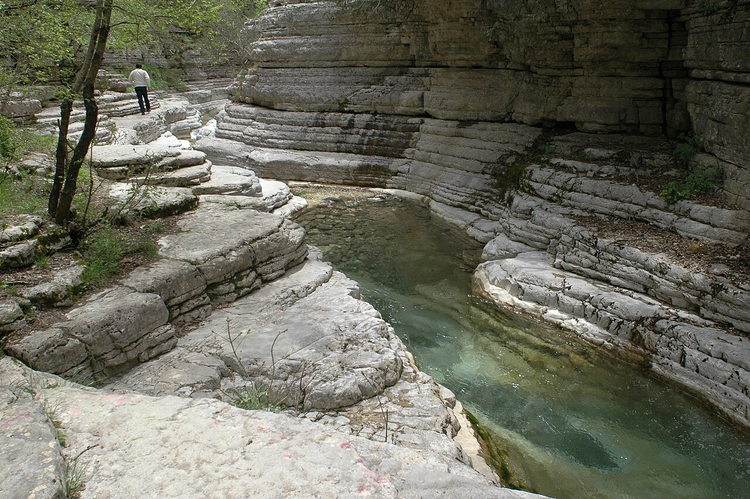
In Epirus, in the stone villages of Zagori, Easter is quiet and solemn. One base for the trip is Ano Pedina and the surrounding Zagorochoria, where it is worth staying for the entire Holy Week. Accommodation here consists of small guesthouses, such as Gioraldi Art Hotel in Ano Pedina. Hotels in Zagori on Trip.com will help you compare options before the trip.
 © Onno Zweers · CC BY-SAPhoto: Onno Zweers, CC BY-SA (https://creativecommons.org/licenses/by-sa/3.0), Wikimedia Commons
On Good Friday evening, the procession with the Epitafios goes through the village and circles the church several times. The crowd here is large, Byzantine chanting fills the air, and the atmosphere is very powerful. On Holy Saturday, tavernas do not play music, and only the steady ringing of bells can be heard. Menus are shortened, no meat is served, and conversations are quiet.
At exactly midnight, the village church goes dark, then one candle lights all the others, and the priest proclaims Christós Anésti. On Easter Sunday, meat is roasted in every Zagorochori, and Kokoretsi is prepared for those who enjoy it. Zagori suits those who want to see the holiday in the mountains rather than by the sea.
Athens
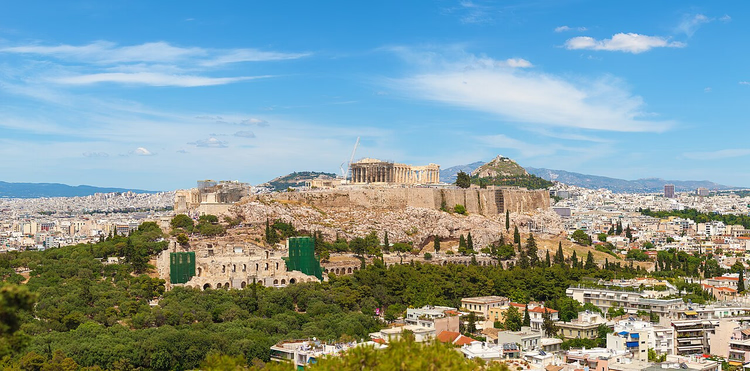
Athens Easter differs from the village version, and both options have their own charm. The city is organized: each neighborhood has its own parish and its own small procession on Good Friday. In some alleys candles burn, and above the city the illuminated Acropolis and fireworks glow in the darkness.
 © Thomas Wolf , www.foto-tw.de · CC BY-SAPhoto: Thomas Wolf , www.foto-tw.de, CC BY-SA (https://creativecommons.org/licenses/by-sa/3.0/de/deed.en), Wikimedia Commons
At midnight you can go to the nearest church, for example in the Thiseio neighborhood. Among locals holding lit candles, you will be welcomed as warmly as a neighbor. On Easter Sunday, almost all churches in Athens are open, and in the alleys of Plaka grills and tables are set up right on the street, where people from different countries sit together. For a visitor, the capital offers a good overview of Greek customs.
Nisyros
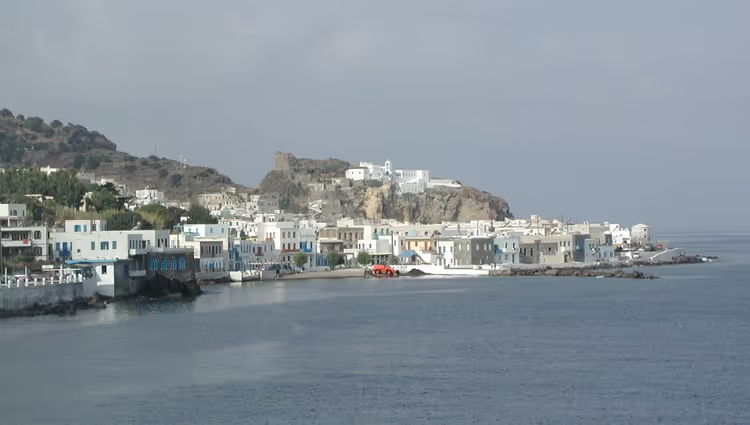
Volcanic Nisyros is small: fewer than a thousand people live here. At Easter, relatives arrive from Athens, and part of the diaspora even flies in from New York. Tavernas fill up, and the churches during Holy Week are fuller than on any other day of the year.
 © Alexandros Diamantidis at en.wikipedia · CC BY-SAPhoto: Alexandros Diamantidis at en.wikipedia, CC BY-SA (http://creativecommons.org/licenses/by-sa/3.0/), Wikimedia Commons
Off season, the island lives differently: people stick together and think less about profit. Those who compete in summer work together during the holiday. After midnight, Magiritsa is on the table, and the mood on the island is calm and friendly.
After Bright Monday, something begins that will seem unusual to a visitor from Northern Europe. The island's main icon is solemnly driven by bus through all the villages, accompanied by a honking procession of cars and motorcycles. Firecrackers and fireworks do not let up, and in the evening a large fireworks display is held in Mandraki, only not for New Year's but for Easter.
Kimolos
Kimolos is a small neighbor of Milos. In early May there are almost no tourists here, but there are very welcoming locals. The fireworks and firecrackers of Easter night can be clearly heard from the terrace, at a safe distance. Greeks are generous with noise these days, and that is part of the holiday's character.
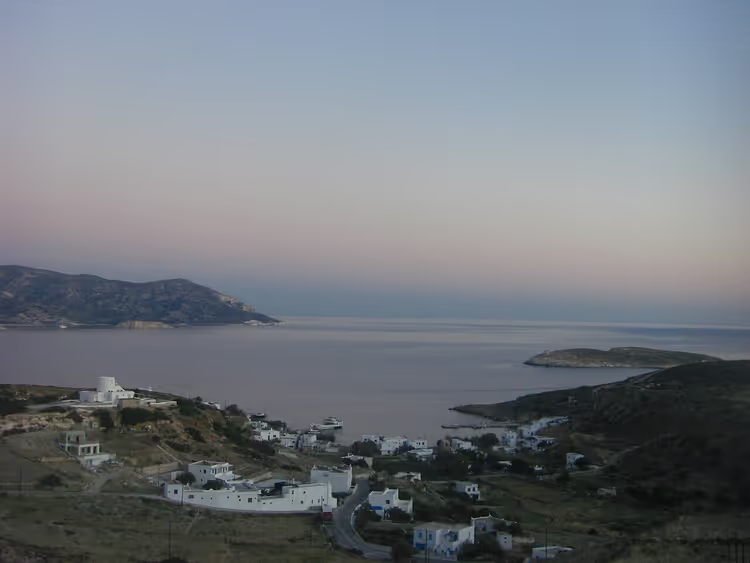
What is remembered most strongly is the children's service on Sunday morning. Locals greet visitors like old friends, and a child may receive a candle and a piece of Tsoureki from the priest just like that, out of a sense of community. After the service, everyone sits on the platia in small cafes, the sun shines, and the island lives in a festive mood.
That is exactly what makes Easter on a Greek island a special time. Here you do not observe the holiday from the outside; you quickly become part of it. Kaló Páscha!
How to choose between these places
All four options show the same Easter from different angles. In the mountain villages of Zagori you will see its strict side: processions, the silence of Holy Saturday, and dinner with family. In Athens, the same ritual is woven into the big city, with fireworks over the Acropolis and tables right on the street. On Nisyros, the holiday rests on community and faith, with almost no tourist program. Kimolos suits those who want a small island and very few people around.
If you are going for the first time, start with Athens. It is easy to reach, churches are nearby, and the city gives you a clear overview of the customs in one evening. The second time, choose a village or a small island: there the holiday unfolds more deeply, but it requires more travel time and patience with schedules.
Remember that on Nisyros and Kimolos few hotels are open in spring. Book accommodation and the ferry in advance, otherwise you will miss some of the rituals due to lack of availability. In the northern regions around Kastoria the picture is different: it is colder there during the Easter days, but there are more meat traditions.
In any of these places, the main thing is time. Easter does not end on Sunday afternoon; it lives on until Bright Monday and often longer. If your dates allow, stay a couple of days after the holiday: the islands become quiet, and the weather remains mild.
⁉️🤔 Frequently asked questions
When is Orthodox Easter in 2027?
Orthodox Easter falls on Sunday, May 2, 2027. Western churches celebrate Easter earlier, on March 28. There are five weeks between the holidays because the date is calculated using different calendars (as of 09/2026, checked against the calendar). Holy Week begins with Palm Sunday on April 25.
Why does Orthodox Easter fall on a different date than in Germany?
The Orthodox Church calculates the date according to the Julian calendar, which lags thirteen days behind the Gregorian. Additionally, there is a rule that Orthodox Easter must occur after the Jewish Passover. That is why the dates diverge more often than they coincide. Sometimes both Easters do fall on the same day, as in 2028.
Where is the most beautiful place to celebrate Easter in Greece?
Corfu is known for the Botides ritual with clay pots, Pyrgos on Santorini for its sea of candles, and Chios for the rocket war in Vrontados. If you want a quiet and authentic Easter, choose a small island or a mountain village like Zagori. There you quickly become part of the local community and see the ritual without crowds of tourists.
Is there an Easter bunny in Greece?
No. The Easter bunny is a Central European tradition, and it does not exist in Greece. Here the center of the holiday is the red egg, Tsoureki, and lamb on the spit. Chocolate bunnies are now also sold in Greek shops, but the heart of Easter remains the red egg.
What do people eat at Easter in Greece?
After the midnight service, people eat Magiritsa, a soup made from lamb offal with avgolemono sauce. On Easter Sunday, the main dish is lamb on the spit and Kokoretsi. The table includes Tsoureki with mahlab, Koulourakia, and red eggs for Tsougrisma. During Lent on the islands, octopus and fava are added.
Can a tourist attend Easter services?
Yes, services and processions are open to everyone. Greeks are happy when guests take part in the holiday and welcome them warmly. It is enough to dress modestly, cover your shoulders, and behave quietly. In church, remove your head covering if you are a man, and do not use flash during the service.
Are shops and restaurants open at Easter in Greece?
On Good Friday, many shops are closed or close earlier. In tavernas, the menu is shortened and no music is played. From Easter Sunday onward, there is festive activity everywhere, tavernas are open and tables are full. On small islands, some restaurants open only for Easter or right after it, so check in advance.
In short: what to book
Easter in Greece is a week that is best planned in advance, especially if you are going to a small island. First, determine the dates: in 2027 the holiday falls on May 2, and Holy Week begins on April 25. Then book the ferry and accommodation, ideally by January. If you have a choice:
- You want quiet and mountains: book Zagori and Epirus, where Easter is intimate.
- You want city and scale: choose Athens and Plaka with its street tables.
- You want an island and ritual: look at Corfu, Patmos, Chios, or Kimolos.
Check hotels on Trip.com and compare options in advance before buying tickets. Then you will have a buffer both in dates and in price. Kaló Páscha!

A small editorial team writing guides for independent travel. We travel ourselves, but we haven’t been everywhere, so we check prices, opening hours and how to get there against official sources.