
















Note to the Western Wall: visiting rules, text of the request and online service
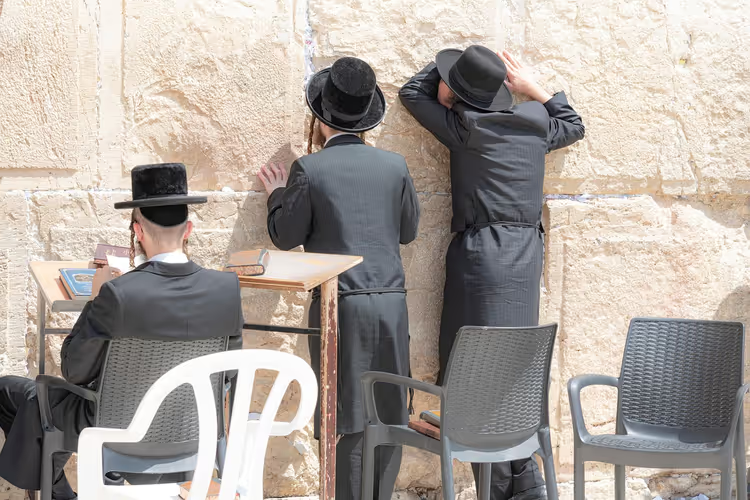
The Western Wall in Jerusalem is called the place where prayers are heard faster. Formally, it is part of the retaining wall of the Temple Mount, but in essence it is an open-air synagogue. Every day, people of different religions come here and leave notes with requests between the stones.
We have put together a practical guide: how to prepare your text, how to behave at the plaza, and what to do if you cannot travel to Jerusalem. Below are the rules that apply in 2026 and ways to send a note online.
In short: admission is free, men and women pray in separate areas, men need a head covering, women need covered shoulders and knees. You can write a note by hand or online.
Ad: this article contains affiliate links, we earn a commission if you book through them, at no extra cost to you.
Visiting rules for the Western Wall
💡 In short:
- Women cover their shoulders and knees, men wear a kippah or another head covering.
- Men and women pray in separate areas of the plaza.
- Bags are checked at the entrance, so bring as little as possible.
- Access and visiting rules: 09/2026, verified on the Western Wall Heritage Foundation.
The plaza in front of the Wall operates as an open-air synagogue, so the dress code here is stricter than in the tourist areas of the Old City. Covered shoulders and knees are required for both men and women. Men also need a head covering: your own cap works, and paper kippahs are handed out free at the entrance.
Men and women approach the Wall separately. There is a barrier between the zones, and the attendants will always point you in the right direction. If you are not familiar with local customs, that is fine: the staff explains the rules to every visitor.
What you cannot bring in. There is a list of prohibited items at the entrance: alcohol, musical instruments, balloons, pyrotechnics, posters, and sharp objects. A shofar is allowed only during the month of Elul, and dogs are permitted only if they are guide dogs.
On the plaza itself, eating, smoking, and lighting candles are not allowed. Bringing sacred scrolls is also prohibited. You may take out your phone and camera, but on Shabbat and holidays photography, writing, and any electronics are forbidden.
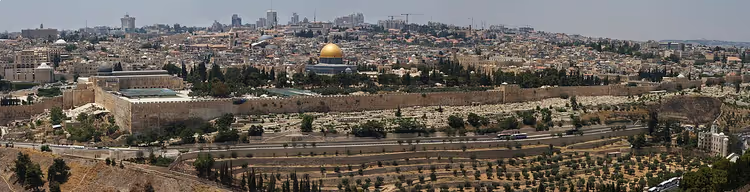
Plan your route in advance. From the City Hall light rail station to Jaffa Gate is a 5-7 minute walk, and from Jaffa Gate or Zion Gate the walk takes 15-20 minutes (as of: 09/2026, official website). Taxis and buses stop 5 minutes from the entrance, and parking adds another 10-20 minutes of walking.
Admission to the plaza is free, no ticket is needed, and it is open around the clock (as of: 09/2026, Western Wall Heritage Foundation website). The area has no shade at all, so in summer bring water, a sun hat, and sunscreen. Free cold water taps are located right on the plaza.
 © João Dias from Lisboa, Portugal · CC BYPhoto: João Dias from Lisboa, Portugal, CC BY (https://creativecommons.org/licenses/by/2.0), Wikimedia Commons
The catch: on Friday evening, on Saturday, and on holidays there are a lot of people, and the security check at the entrance takes time. Come early in the morning or after sunset. Visitors with limited mobility will find it easier to enter through the Dung Gate: that is the only place with ramps and level access to the plaza.
How to write a note correctly
The text of a note is considered a prayer, so write it calmly and mindfully. Start with gratitude for what you already have, and then briefly state your request. Phrasing without the word "not" works better: instead of "I am not sick," write "health for me and my loved ones."
The form does not matter. Language, type of paper, ink, and length of text are irrelevant. What matters is the meaning and sincerity. Mention the names of your loved ones and ask for their well-being. If you wish, add gratitude for what has already been fulfilled.
Do not ask for increased wealth and do not complain about people. It is believed that asking for excess can turn against you. Two or three sentences about what matters most are enough: health, family, resolving a difficult situation.
How to leave a note. Fold the paper several times and insert it into a crack between the stones. You must not remove other people's notes, chip off pieces of stone, or take sand from the plaza. It is customary to walk away from the Wall facing it, not with your back to it.
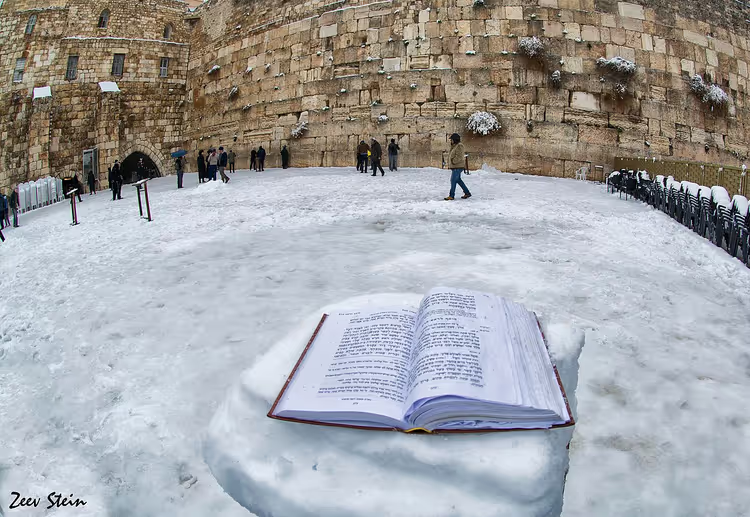
Paper for notes is provided free at the plaza. Bring your own pen: in the crowd, looking for one on site is inconvenient. If you come with a group, do not rush each other; there are usually a few free minutes at the Wall.
 © זאב שטיין · CC BYPhoto: זאב שטיין, CC BY (https://creativecommons.org/licenses/by/2.5), Wikimedia Commons
The catch: during prayer times and major holidays, a line forms at the stones. In that case, it is better to leave your note in a side section of the Wall, where it is less crowded. On Shabbat, writing at the plaza is forbidden, so prepare your text in advance at home or at the hotel.
Western Wall note online
If you cannot come in person, you can send a note through the website. The Western Wall Heritage Foundation accepts requests on its resource, and staff print them out and place them in the stones. According to the Foundation, hundreds of such notes arrive through the website every day (as of: 09/2026, Western Wall Heritage Foundation website).
The form takes a minute. You enter your name and text, send it, and that is all. You do not need to wait for a response, but some services send a confirmation. Payment for the service is not required; a voluntary donation is at your discretion.
The Rabbi of the Western Wall, Shmuel Rabinowitz, also receives regular letters. They are addressed simply to "Jerusalem, to the Almighty," and such envelopes end up in the Wall along with the rest. By tradition, the power of a request does not depend on whether you brought it yourself or sent it by mail.
The catch: online notes are subject to the same removal schedule as paper ones. Nobody tells you the exact date when your text will be taken out.
History of the Western Wall
The Western Wall is considered the only surviving part of the retaining wall of the Temple Mount. The First Temple stood on this site, built by King Solomon in the 10th century BCE. The Babylonians destroyed it in the 6th century BCE, and the Jews who returned from exile built the Second Temple.
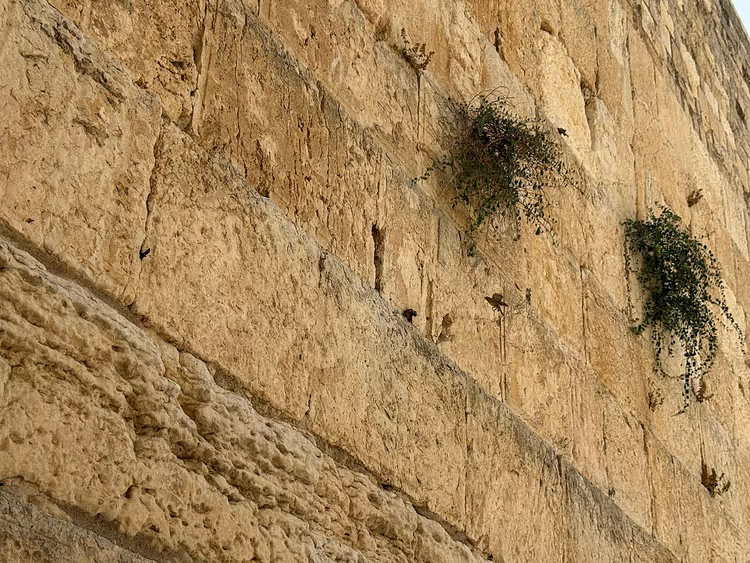
In the 1st century BCE, King Herod expanded the platform and reinforced it with massive walls. The total length of the western retaining wall reaches 488 meters. The section accessible for prayer at the plaza is about 57 meters. Above the plaza, the wall rises about 19 meters (as of: 09/2026, Western Wall Heritage Foundation website). The masonry consists of 45 rows of stones, 28 of which are above ground.
In the first century CE, the Romans destroyed the Temple, and only this wall survived from the entire complex. Since then, it has become the main place of prayer, and today you will see people from all over the world in front of it. Some of the upper rows were added later, during the Muslim period, so Herod's stones are easy to recognize by the wide border along the edge.
 © שלמה רודד · CC BYPhoto: שלמה רודד, CC BY (https://creativecommons.org/licenses/by/2.5), Wikimedia Commons
The plaza in its current form appeared only after 1967. Before that, there was a narrow alley in front of the Wall, 28 meters long and 3.6 meters wide (as of: 09/2026, Western Wall Heritage Foundation website). Today, an open-air synagogue officially operates on this site.
The tradition of placing notes goes back several centuries. It was first recommended by Rabbi Chaim ben Atar in the early 18th century. Before notes, pilgrims wrote names on the stones, drove in nails, and dismantled the masonry, until the rabbis forbade doing so.
The Heritage Foundation oversees the order and preservation of the Wall. It was founded in 1988 by the Ministry of Religious Affairs and is responsible for restoration, tours, and virtual services (as of: 09/2026, Western Wall Heritage Foundation website).
⁉️🤔 Frequently asked questions
Can you enter the Western Wall without a tour?
Yes, admission is free and no tour is needed. The plaza is open to everyone, regardless of religion. A guide is useful only for the history of the Old City. You can see the Wall on your own and leave a note at any time.
What language should I write the note in?
The language does not matter. Tradition does not require Hebrew, so write in your native language. What matters is the meaning and sincerity, not grammar. If in doubt, start with gratitude and briefly state your request.
When are notes removed from the Wall?
Notes are removed twice a year: before Rosh Hashanah and before Passover (as of: 09/2026, Western Wall Heritage Foundation website). They are collected in bags and buried in a genizah on the Mount of Olives alongside worn-out sacred books. If you left a note recently, it will wait until the next removal.
Is the Wall open on Shabbat?
Yes, the plaza is open on Shabbat as well. But on Shabbat and holidays, using electronics, taking photos, and writing are not allowed. You will have to leave your car far away, and public transport does not run at that time. There are more people on Shabbat than on weekdays.
Webcam and map of the Western Wall
A live stream helps you see the plaza before your trip. If you are not going to Jerusalem yet, turn on the camera and look at the prayer areas. The picture depends on the weather: on a clear day the masonry is clearly visible, and on holidays you can see how many people have come.
The Western Wall Heritage Foundation also has its own cameras (as of: 09/2026, Foundation website). The player below shows one of the public streams of the plaza.
The plaza is located in the Jewish Quarter of the Old City, on the western side of the Temple Mount. Coordinates for navigation: 31.7767, 35.2323 (according to the map, 09/2026). The nearest gates: Jaffa Gate, Zion Gate, and Dung Gate.
If you are walking from the Old City, follow the signs that say Western Wall.
Tours and tickets in Jerusalem
Guided tours, skip-the-line tickets and activities — most offers can be cancelled free of charge.
See offers on GetYourGuideThe widget loads once you give your consent.
In short: what is worth booking
If you are visiting Jerusalem for the first time, start with an overnight stay near Jaffa Gate. If you want to see the Old City with a guide, take a morning tour. If you cannot make it to the Wall in person, send a note online through the official service.
If you have one day, see the Old City and the Wall in the morning. If you have two or three days, add the Temple Mount and the Mount of Olives. If you are with family, plan your visit on a weekday before noon.
Available hotels in Jerusalem can be viewed on Trip.com and you can compare neighborhoods without rushing.

A small editorial team writing guides for independent travel. We travel ourselves, but we haven’t been everywhere, so we check prices, opening hours and how to get there against official sources.