
















Indonesia without a car: 15 ways to get around the islands
Indonesia is an archipelago of thousands of islands. Almost every day of the trip involves travel.
Between cities there are trains and buses, between islands there are ferries and boats, and within cities scooters and ride-hailing taxis come to the rescue. We've rounded up the main types of local transport you'll encounter on a trip and broken down what each one is, how much it costs, and when you should choose a different option.
Ad: this article contains affiliate links. We earn a commission if you book through them, at no extra cost to you.
How transport works in Indonesia
💡 In short:
- Within cities, use ride-hailing taxis or a scooter: it works out cheaper than a car with a driver.
- Between islands, plan on a ferry, and for long distances, a plane.
- Book trains on Java and intercity buses in advance, otherwise you'll be left with inconvenient overnight trips.
- Prices and schedules: as of 09/2026, checked on Ferizy and KAI.
Transport | Where you'll find it | Price | Who it's for |
|---|---|---|---|
Train | Java | low | long journeys |
Plane | nationwide | medium | when you're short on time |
Bus | nationwide | low | intercity routes |
Car with driver | nationwide | high | groups and day tours |
Ferry | between islands | low | taking a scooter with you |
Scooter | Bali, Lombok, other islands | low | independent travel |
Speedboat | between islands | high | saving time |
Fishing boat | Togian, Sulawesi | low | short crossings |
Taxi | cities | medium | at night and with suitcases |
Horse-drawn cart | Gili Trawangan | medium | short trips |
Motorcycle taxi | cities | low | daytime, beating traffic |
Minibus | cities | low | when you're not in a hurry |
Motorized rickshaw | Gorontalo | low | sightseeing around the city |
Cycle rickshaw | Yogyakarta, Makassar | low | short trips |
Horse | Bromo, Java | medium | where there are no roads |
1. Train (Kereta Api)
 © Ardzun · CC BY-SAPhoto: Ardzun, CC BY-SA (https://creativecommons.org/licenses/by-sa/4.0), Wikimedia Commons
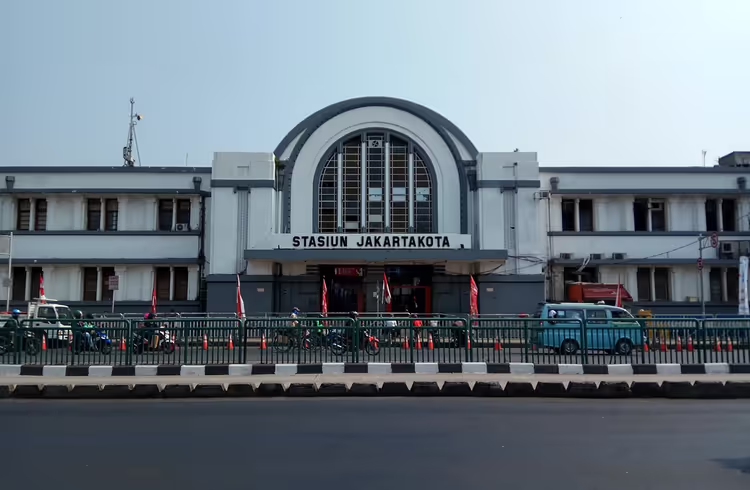
Indonesia has thousands of islands, and you can't reach every one of them by land. But on Java, the country's main island, the railways are well developed.
Here you can comfortably ride for several hours from Jakarta to Yogyakarta and spend most of the journey watching rice fields and volcanoes outside the window. A train trip is also a way to get to know the country, since local families nearby often strike up a conversation on their own.
Tickets are sold by the state operator KAI, so book long-distance routes at least a day ahead: during holidays, seats run out (as of 09/2026, official KAI website). Comparing dates is easy on Trip.com.
- The catch: you can't reach the east of the country by train, where there's no railway, and you'll have to look for a flight.
2. Plane (Pesawat)
 © Gunawan Kartapranata · CC BY-SAPhoto: Gunawan Kartapranata, CC BY-SA (https://creativecommons.org/licenses/by-sa/3.0), Wikimedia Commons
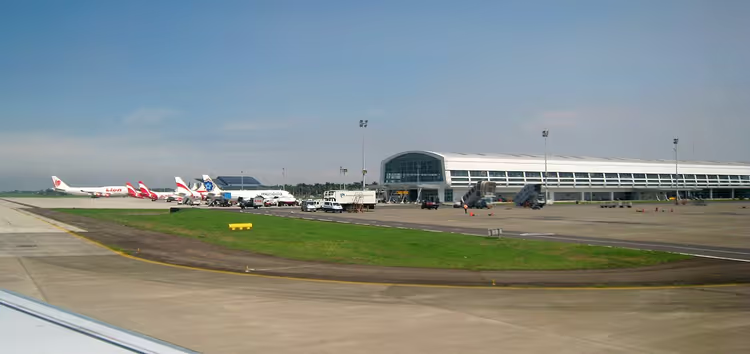
Indonesia is very large, so sometimes it's easier to fly. From Jakarta to Flores or Papua there's almost no other way, and the overland route eats up several days.
Domestic flights are operated by Lion Air, Batik Air, and AirAsia Indonesia. Buy tickets in advance: prices rise before holidays, and on popular routes only morning flights remain. compare tickets on Kiwi.com
- The catch: baggage on budget flights is often paid separately, and that noticeably adds to the cost of the flight.
3. Bus (bis)
 © Mujiono Ma'ruf · CC BY-SAPhoto: Mujiono Ma'ruf, CC BY-SA (https://creativecommons.org/licenses/by-sa/4.0), Wikimedia Commons
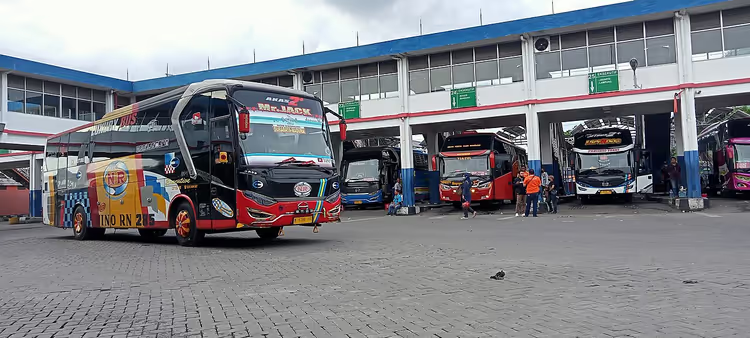
Cheap intercity buses run all over the country. The trip from Gorontalo to Manado on Sulawesi takes almost a whole day, and the bus from Surabaya to Denpasar even drives onto a ferry.
Tickets often need to be bought in advance. Some buses are new and air-conditioned, others are falling apart on the road, so before boarding take a look at the interior and assess its condition.
- The catch: a night trip saves a day, but not everyone manages to sleep on the road.
4. Private driver (Sopir)
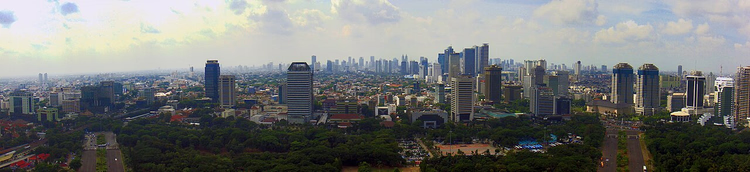 © musnahterinjak · CC BY-SAPhoto: musnahterinjak, CC BY-SA (https://creativecommons.org/licenses/by-sa/3.0), Wikimedia Commons
If public transport is overcrowded, runs off schedule, or is simply inconvenient, you hire a car with a driver. A driver is easy to find on the spot, near your hotel, or right on the street.
It's more reliable to book through tour operators rather than directly with individuals: that way you keep a booking confirmation and a contact phone number. tours and transfers on GetYourGuide
- Who it's for: day trips around the island and groups of three or four people, when a car works out cheaper than a taxi.
- The catch: the price is always negotiable, so agree on it before the trip.
5. Ferry (feri)
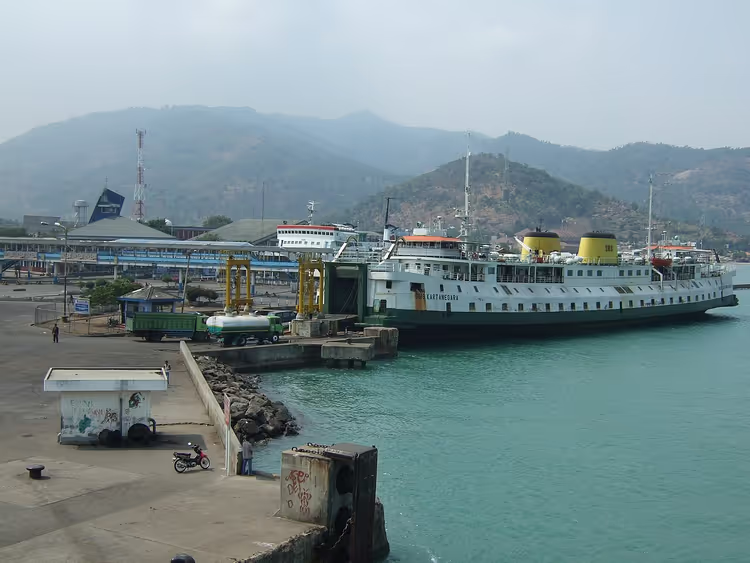 © Sakurai Midori · CC BYPhoto: Sakurai Midori, CC BY (https://creativecommons.org/licenses/by/2.5), Wikimedia Commons
State-run ferries run regularly between the major islands. On board there are usually several classes: Cabin, Business, Economy, and Tatami, and tickets are cheap.
The most popular route goes from Bali to Lombok, from Padangbai in eastern Bali to Lembar in western Lombok. The crossing takes several hours, comfort is minimal, but you travel together with locals and can bring your scooter along. An adult ticket costs about 3-4 EUR, transporting a motorcycle about 10 EUR (as of 09/2026, ASDP fares).
On the main routes, ferries run several times a day and almost without disruptions. The farther east you go, the less reliable the schedules. During monsoon season, a vessel sometimes departs once a week or once every two weeks.
The Padangbai-Lembar route is operated by ASDP. The state-owned company Pelni handles long-distance liners. Its vessels connect islands from Bali to Papua and from Kalimantan to Sumatra (as of 09/2026, Pelni).
- The catch: the crossing is often uncomfortable, and in the east of the country schedules get disrupted by weather.
6. Scooter (sepeda motor)
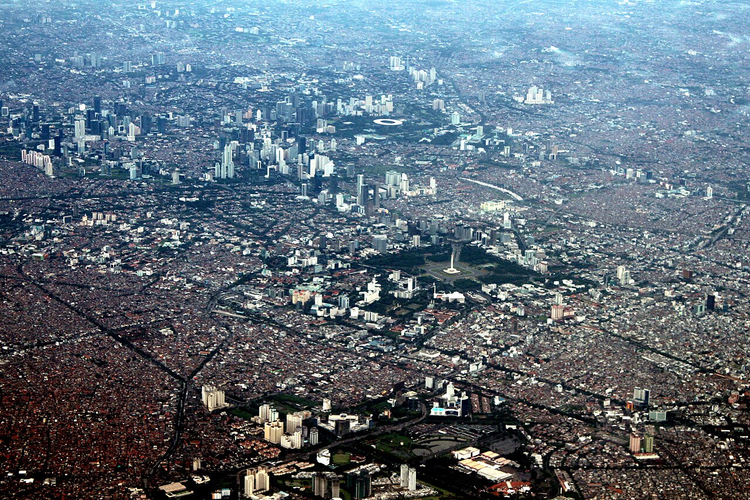 © Thank You (25 Millions ) views from Fresno, USA · CC BYPhoto: Thank You (25 Millions ) views from Fresno, USA, CC BY (https://creativecommons.org/licenses/by/2.0), Wikimedia Commons
The easiest way to get around on the spot is with a scooter. On Bali and Lombok, you choose your own route and travel times.
To rent one, you'll need an international driving permit, some cash, and usually a deposit: either a document or money. Take a helmet and check the brakes before you set off.
- The catch: traffic is dense and chaotic, and without a helmet the local police will fine you.
7. Speedboat (perahu motor / kapal cepat)
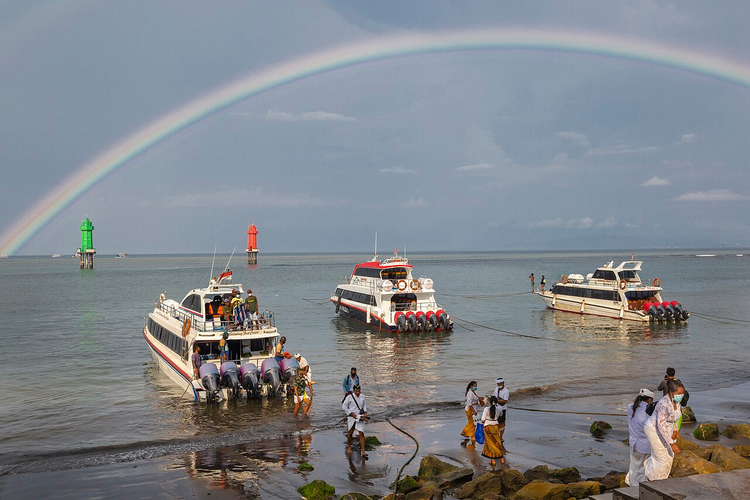 © Imadedana · CC BY-SAPhoto: Imadedana, CC BY-SA (https://creativecommons.org/licenses/by-sa/4.0), Wikimedia Commons
If you want to hop from island to island, you can't do without a boat. Speedboats are faster than ferries, but tickets cost noticeably more: the short stretch from Padangbai to Gili Trawangan costs as much as a full excursion.
In many areas, these boats belong to hotels and dive schools, so seats are sold directly on the spot. For popular routes, it's better to book tickets in advance.
- The catch: in windy weather the ride gets bumpy, and trips are sometimes cancelled.
8. Fishing boat (perahu)
In some island areas, primarily the Togian Islands off Sulawesi, connections between islands are handled by local fishing boats and small public ferries.
It's cheap, but slow and without amenities. You sit on a bench under a canopy and travel together with cargo and other passengers.
- The catch: in rough seas, it's better not to board a small boat: it isn't always stable.
9. Taxi (taksi)
There are plenty of taxis in Indonesia, and the main thing here is to know which company the car belongs to. On Sulawesi, Dian Taxi is the established brand, and on Bali, Blue Bird is reliable.
Blue Bird operates through its own MyBluebird app and through Gojek (as of 09/2026, Blue Bird). With the app, you order a car at a fixed price and don't have to haggle on the street.
In quiet areas and at night, catching a car is harder. In that case, it's better to book one in advance by phone or through the app.
- The catch: without a meter, the driver can quote a price three times higher, so insist on using the app.
10. Horse cart (bendi)
A bendi is a traditional horse-drawn cart. This type of transport is convenient for short distances, for example to get through the city center or along the beach.
The carts are especially well known on Gili Trawangan, where there are almost no cars.
- Who it's for: short, unhurried trips and kids.
- The catch: the ride isn't fast, and the horses' living conditions aren't always good, so it's not for everyone.
11. Motorcycle taxi (ojek)
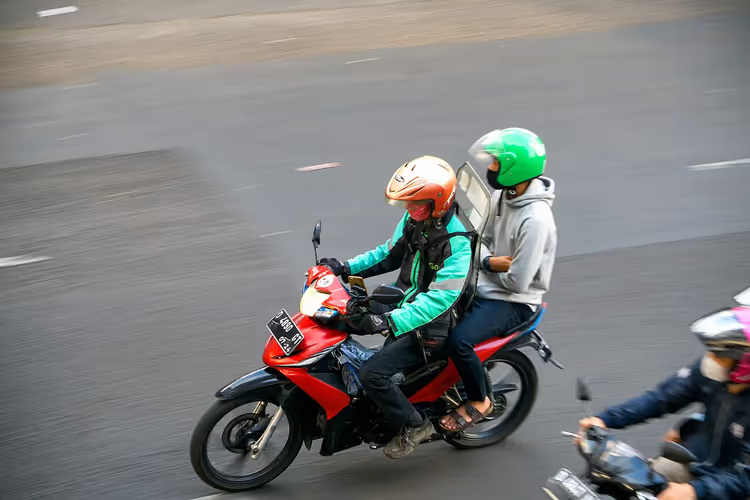 © Galeri ega · CC BY-SAPhoto: Galeri ega, CC BY-SA (https://creativecommons.org/licenses/by-sa/4.0), Wikimedia Commons
An ojek is a two-wheeled taxi, usually a scooter rider who picks up extra work in their free time, and the fare is negotiated.
During the day, for short distances within a city, it's cheap and fast: an ojek weaves through traffic. Agree on the price before the trip or book through an app.
The GO-JEK app, now called Gojek, brought order to this service: you see the price and the driver's details in advance.
- The catch: at night and in remote areas, this option is best avoided, especially for women.
12. Minibuses (Microlet, Pete-Pete, Bemo)
There is nothing cheaper than city minibuses in Indonesia. Each city has its own name for them: pete-pete in Makassar, mikrolet in Manado, bemo in Bali and Java.
They run both within cities and between neighboring towns. There are usually no real stops: you just stand by the road, wait for a minibus, and wave your hand.
- The catch: nobody really announces the route or the stop, so the first time it's better to go with a local or ask the driver.
13. Motorized rickshaw (Bentor)
A bentor is a cross between a motorcycle and a rickshaw. You'll find this vehicle mainly in Gorontalo on Sulawesi.
The passenger sits in front, and the driver sits behind. There's even a roof for rain, which is handy during the monsoon season.
At first the ride feels unusual, since the vehicle moves along the street with almost no protection. But once you get used to it, it's a fun way to see the surroundings.
- The catch: you're exposed to wind, rain, and exhaust fumes.
14. Cycle rickshaw (Becak)
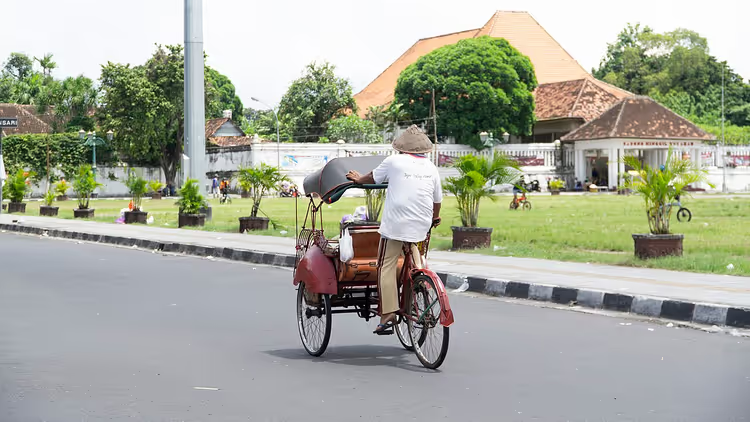 © Andreanrama · CC BY-SAPhoto: Andreanrama, CC BY-SA (https://creativecommons.org/licenses/by-sa/4.0), Wikimedia Commons
In a cycle rickshaw, the driver pedals while you sit in front and take in the city. In Yogyakarta and Makassar, drivers often doze in their carts at midday, and it's a popular photo subject.
The ride is short and inexpensive, but in the heat it's hard work for the person pedaling. Agree on the price before the trip.
- The catch: it's slow, so this option only works for short distances.
15. Horse (Kuda)
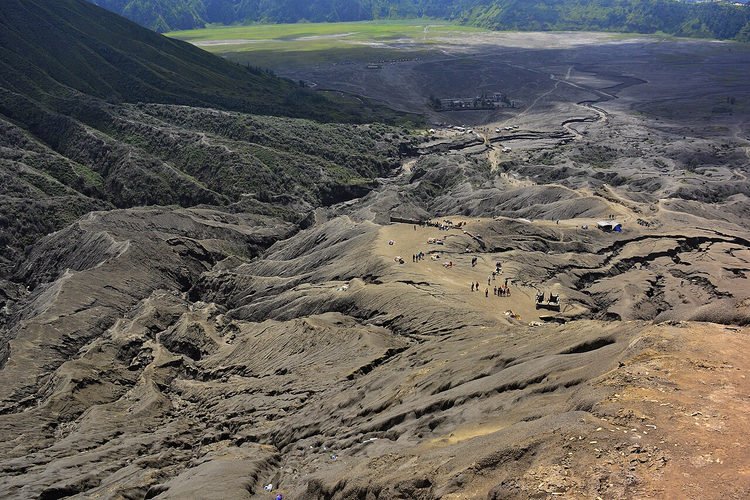 © Chafidwahyu · CC BY-SAPhoto: Chafidwahyu, CC BY-SA (https://creativecommons.org/licenses/by-sa/4.0), Wikimedia Commons
In some tourist areas, horses are used as transport. Where neither a scooter nor a car can go, a horse remains the only option, for example on Java on the way to the crater of Mount Bromo.
It's a slow and not particularly cheap way to get around. On top of that, how the animals are treated raises questions, so the decision is yours.
- The catch: the ride depends on the animal's condition, and not all tourists consider it ethical.
⁉️🤔 Frequently asked questions
How do you get between Indonesia's islands?
For distant islands, fly, and between neighboring ones, take a ferry or a fast boat. State-run Pelni long-distance liners connect islands from Bali to Papua, and on short crossings there are several operators. Book ferry tickets in high season in advance, otherwise only inconvenient overnight departures will be left.
Do you need a license to rent a scooter?
Yes, you need an international driving permit for a scooter. Many rental shops hand over the bike without one, but then you risk a fine or losing your insurance coverage in an accident. Also ask for a helmet and check the brakes before setting off.
Is it safe to use motorcycle taxis?
During the day within a city, an ojek is convenient and cheap, but the ride always involves risk on the road. At night and in remote areas, this option is best avoided, especially for women. It's safer to book through an app: you see the price and the driver's details in advance.
How much is the ferry from Bali to Lombok?
On the ASDP ferry on the Padangbai-Lembar route, an adult ticket costs about 3-4 EUR, and transporting a motorcycle about 10 EUR (as of 09/2026, ASDP fares). The crossing takes several hours. Ferries run several times a day, but during the monsoon season a departure can be delayed for several days.
How to get from the airport to the city?
In large cities, the cheapest option is an app-based taxi: Gojek, Grab, or Blue Bird. In Bali and Yogyakarta, haggle with drivers at the exit only if you know the local prices. Official airport taxis are more expensive, but the fare is fixed and you won't have to argue about the amount.
In short: what's worth booking
If you're going to Java, take the train: it's fast and cheap. For Bali and Lombok, choose a scooter if you're ready for heavy traffic, or an app-based taxi if you're not. Between islands, plan on a ferry, and for long distances, look at flights.
Domestic flights are easy to compare on Kiwi.com, and book ferries and trains at least a day before your trip.

A small editorial team writing guides for independent travel. We travel ourselves, but we haven’t been everywhere, so we check prices, opening hours and how to get there against official sources.