















Indonesia in 2 weeks: a route through Java and Lombok without rushing
Two weeks for Indonesia, and you want it all. Java, Bali, Lombok, volcanoes and beaches at once. That won't work in 14 days: the islands are huge, and half your time would go to repacking your suitcase. We suggest a relaxed option covering two islands, Java and Lombok, with no rushing and no daily transfers.
Start with Java: the Ijen and Bromo volcanoes, Tumpak Sewu waterfall, the Borobudur and Prambanan temples. Then a flight to Lombok: Kuta beaches, the Rinjani climb, and a boat to the Gili Islands. We deliberately left Bali out; it is more touristy and already well documented. Below, day by day: what to see, what to book in advance, and how much it costs.
Ad: this article contains affiliate links, we earn a commission if you book through them, at no extra cost to you.
14-Day itinerary: in short
💡 In short:
- Take at most two islands in 14 days. Java plus Lombok, no Bali.
- East Java (Ijen, Bromo, Tumpak Sewu) is easier to cover with an organized 3-4 day tour.
- Domestic flights and multi-day treks sell out early in high season. Book before you fly.
- The best month for this itinerary: the dry season, roughly May through September.
- Visa, entry documents and season: 09/2026, as of Auswärtiges Amt.
Days | Highlights | Book in advance |
|---|---|---|
1-2 | Yogyakarta: palaces and neighborhoods | hotel |
3-4 | Borobudur and Prambanan at sunrise | sunrise tour |
5-8 | Ijen, Tumpak Sewu, Bromo | East Java tour |
9-11 | Kuta beaches on Lombok | hotel, scooter |
12-13 | Rinjani climb | guided trek |
14 | Gili and Senggigi | boat tour |
The itinerary is built as a loop from Jakarta. Fly into the capital, then connect straight to Yogyakarta. At the end, return via Jakarta again. That makes domestic flight connections simplest.
Days 1-2: Yogyakarta and its neighborhoods
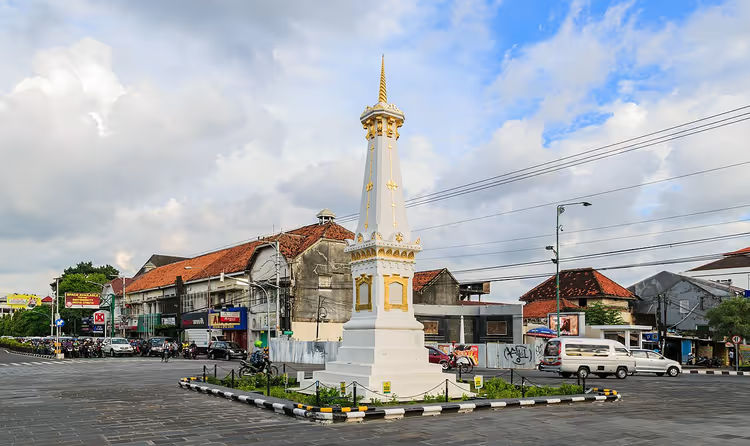
The first day goes to travel and jet lag. Arrive, get to your hotel, sleep it off. A good starting base: Harper Malioboro Yogyakarta, modern rooms and a pool to recover after the flight.
 © CEphoto, Uwe Aranas · CC BY-SAPhoto: CEphoto, Uwe Aranas, CC BY-SA (https://creativecommons.org/licenses/by-sa/3.0), Wikimedia Commons
On the second day, explore the city on foot and with Grab. Taman Sari, the sultan's water palace, with bathing pools and underground passages. Kraton, the sultan's still-functioning palace nearby. Jalan Malioboro, the main shopping street, liveliest in the evening. Kotagede, the old silversmith quarter on the outskirts.
Yogyakarta is your entry point to cultural Java. It is a good place to catch up on sleep, eat well, and prepare for early starts: there will be plenty of those ahead. One relaxed day in the city pays off, because the temple tour begins before dawn.
Days 3-4: Borobudur and Prambanan at sunrise
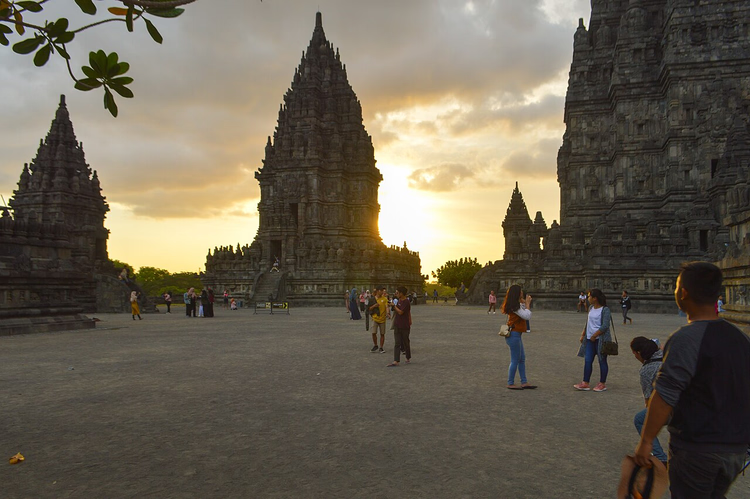
The main excursion from Yogyakarta is two temples in one long day. Leave before dawn to beat the crowds and the heat. Borobudur is the world's largest Buddhist temple, a stepped mountain of platforms and stupas. At sunrise there are fewer tourists and the light is soft. Sunrise tours sell out in advance, so book your slot online: the on-site line is longer. Prambanan is the largest Hindu temple in Indonesia, with rows of sharp towers. The Sewu temple stands nearby. From a distance the complex resembles Angkor Wat in Cambodia. From Yogyakarta to Surabaya, a scenic railway follows: the train departs around 06:45 and takes about 4 hours. Buy tickets in advance; seats sell out.
 © Francisco Anzola · CC BYPhoto: Francisco Anzola, CC BY (https://creativecommons.org/licenses/by/2.0), Wikimedia Commons
Days 5-8: volcanoes and the waterfall of East Java
This is the core of the itinerary and the most complex logistics. Night trips to the volcanoes on your own are exhausting. It is easier to take an organized 3-4 day tour that links Ijen, Tumpak Sewu and Bromo into one trip. We would recommend a group 4-day option: East Java tour on GetYourGuide.
 © Thomas Hirsch (= user Ravn ) · CC BY-SAPhoto: Thomas Hirsch (= user Ravn ), CC BY-SA (http://creativecommons.org/licenses/by-sa/3.0/), Wikimedia Commons
Ijen volcano
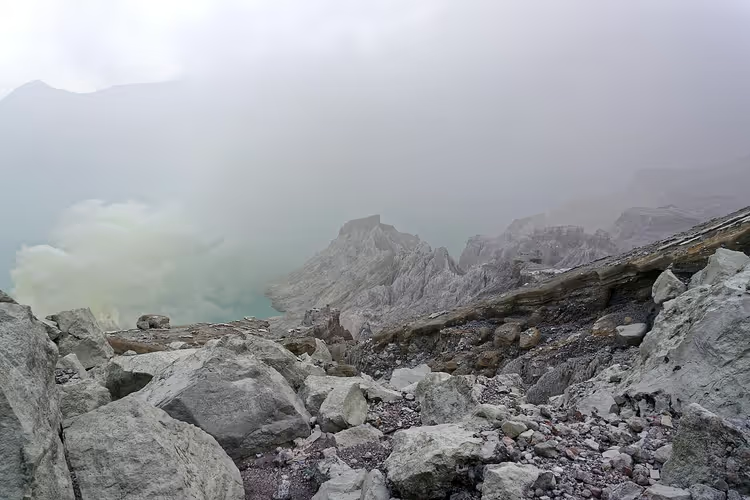
An active volcano with an acidic crater lake and the smell of sulfur. In places you need a mask: workers carry sulfur right along the trail. The famous "blue flame" is visible only in the dark. This phenomenon exists in only two places on Earth. Access to it is often closed, so check the status with your operator in advance. Start around 00:00 if you are going for the blue flame, and around 05:00 without it. The climb to the sunrise viewpoint takes about an hour on an easy trail.
 © Jakub Hałun · CC BY-SAPhoto: Jakub Hałun, CC BY-SA (https://creativecommons.org/licenses/by-sa/4.0), Wikimedia Commons
Tumpak Sewu waterfall
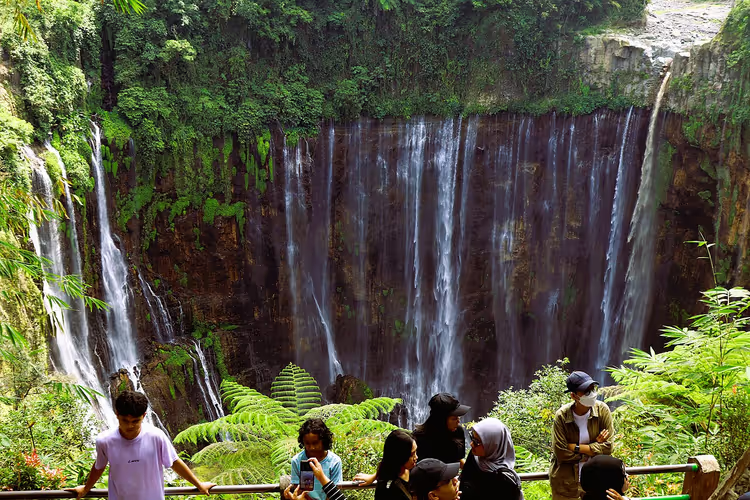
Possibly the most spectacular waterfall in the world. Dozens of streams fall in a semicircle like a curtain. First the viewpoint at the top, then the descent to the "secret" cascades below. Start early, around 05:00, and you will have the trail almost to yourself. The whole route takes about 2 hours. Some sections are tough: the trail crosses streams and spray, so water shoes and a dry bag for your gear will come in handy.
 © Thank You (25 Millions ) views from Fresno, USA · CC BYPhoto: Thank You (25 Millions ) views from Fresno, USA, CC BY (https://creativecommons.org/licenses/by/2.0), Wikimedia Commons
Mount Bromo
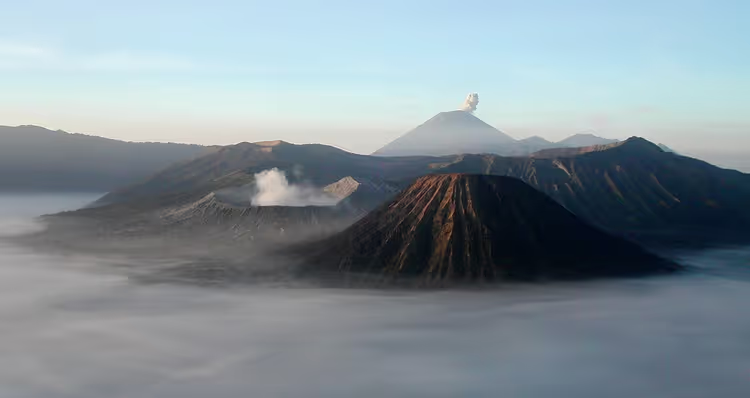
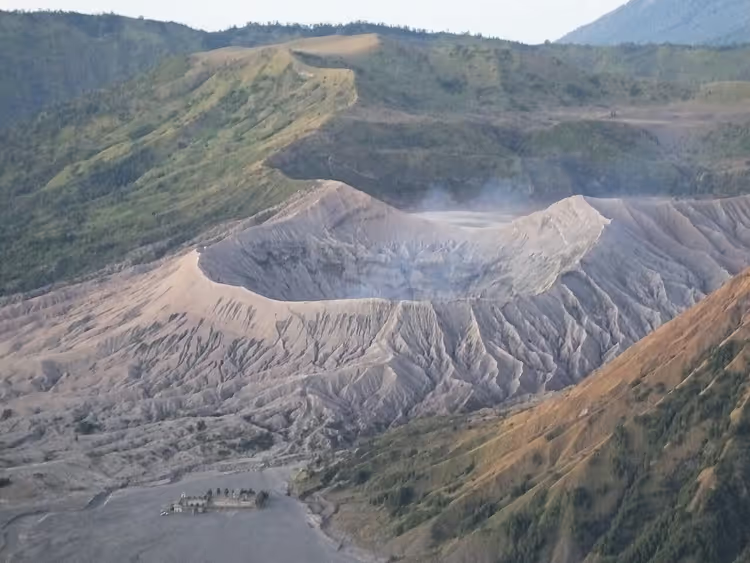
An otherworldly landscape: several smoking cones in the middle of a sea of sand. First sunrise from the viewpoint, then a jeep down and a short climb to the crater rim. Important: Bromo-Tengger-Semeru National Park is closed until further notice (as of 09/2026, according to German Foreign Office travel warnings). Before planning the climb, check the current status with your operator: if Bromo is closed, tours are built around Ijen and Tumpak Sewu instead. The start for Bromo is usually around 02:30, and the walk itself is easy and short, about an hour.
 © Hugo van den Bos · CC BYPhoto: Hugo van den Bos, CC BY (https://creativecommons.org/licenses/by/2.0), Wikimedia Commons
Days 9-11: Kuta beaches on Lombok
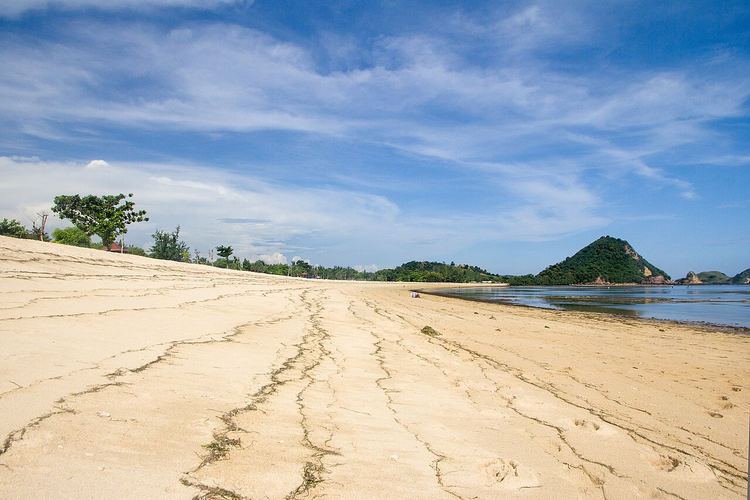
After Surabaya, fly to Lombok. From the airport to your hotel, Grab or Gojek work fine; further around the island, transport gets trickier. Good bases in the Kuta area: Amber Lombok Beach Resort and Origin Lombok.
 © Alexey Komarov · CC BYPhoto: Alexey Komarov, CC BY (https://creativecommons.org/licenses/by/3.0), Wikimedia Commons
Rent a scooter through your hotel and ride along the coast. To the west: Selong Belanak, a long surfer beach with warungs and surf schools, where buffalo are sometimes brought out in the morning between 9 and 10. Mawi and Semeti Hills, beautiful bays popular with surfers, but the road there is rough. Mawun, a quiet bay where plastic washes up on the sand after heavy rains. To the east: Bukit Merese, green hills with a viewpoint overlooking the cliffs. Pantai Sari Goang, a scenic shore reached by a trail from Butterfly Park. Aan Beach, a long sandy beach (as of September 2025 there is major construction there: a large hotel is being built nearby). For sunset, head up to Bukit Merese.
Set aside a spare day. You can visit the "pink" beaches near Sunut: their color depends on the season, moon phase, and tide, so ask locals how vivid it is right now. If there is not much pink, just relax on the coast or start the Rinjani trek.
Days 12-13: climbing Rinjani
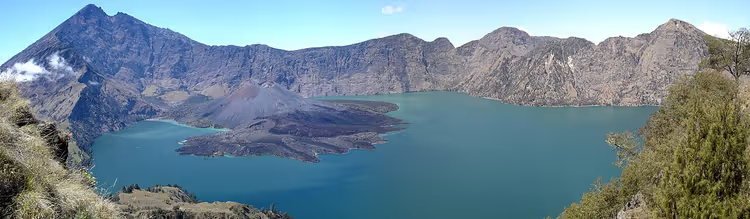
Rinjani is the second-highest volcano in Indonesia and a physically demanding trek. You should only go with a guide and on a pre-booked tour. Our pick: two-day Rinjani summit trek on GetYourGuide. There are group and private options, for 2 or 3 days, to the summit or only to the crater rim. Day one: meet your operator in Sembalun, a short briefing, and a gear check. Leave your main luggage at the office or at your hotel. After breakfast, transfer to the trailhead and register at the national park entrance. The climb to the Sembalun crater rim takes 5-7 hours, about 10 km, with roughly 1,500 meters of elevation gain, and the trail is not difficult. In the evening, dinner and sunset over the crater lake.
 © Thorsten Peters · CC BY-SAPhoto: Thorsten Peters, CC BY-SA (http://creativecommons.org/licenses/by-sa/3.0/), Wikimedia Commons
Day two starts at 01:30. The summit push begins around 2:00, and by sunrise you are at the top: about 3.5 hours, 2.5 km, but the trail is loose and tough. Then descend to camp, have breakfast, and hike back to Sembalun, another 4-5 hours. After the climb, transfer to Senggigi, about 2 hours, and rest at your hotel.
Day 14: Gili Islands and the Senggigi coast
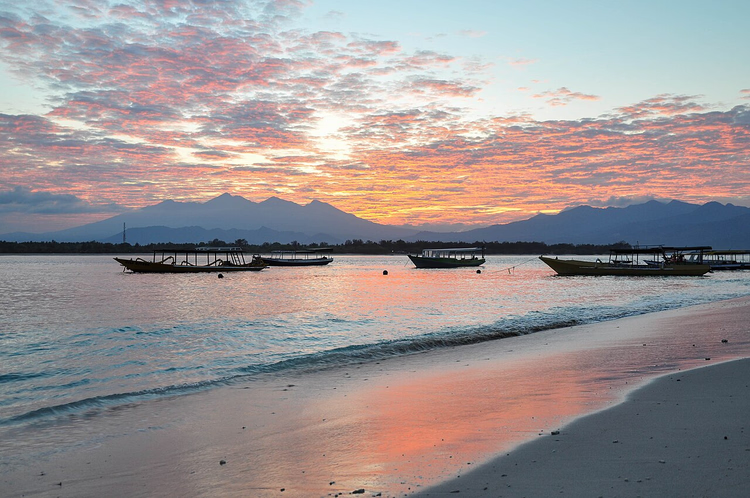
The final day is all about the sea with no heavy plans. A good base in the north: Holiday Resort Lombok in Senggigi.
 © Jorge Láscar from Melbourne, Australia · CC BYPhoto: Jorge Láscar from Melbourne, Australia, CC BY (https://creativecommons.org/licenses/by/2.0), Wikimedia Commons
From here it's easy to take a private boat to the three Gili Islands (Trawangan, Meno, Air). The itinerary includes snorkeling at the famous underwater stone circle and swimming with sea turtles. Tip: ask to be taken to the stones and turtles first. It gets crowded there later. Book the tour through the hotel in advance.
The Senggigi coastline itself is also worth exploring. Anjungan Setangi, an unfinished structure with a great view. Nipah Beach, a quiet snorkeling beach, at its most beautiful near 7 Secrets Resort. Pantai Pandanan, another calm beach with fish. Don't rush: if you see a beautiful spot, pull over.
Tours and tickets
Guided tours, skip-the-line tickets and activities — most offers can be cancelled free of charge.
See offers on GetYourGuideThe widget loads once you give your consent.
How much a two-week trip costs
Indonesia is more expensive than most of its Southeast Asian neighbors. The reason is the tours: to comfortably reach the volcanoes and Rinjani, you need organized, often private excursions. Plus domestic flights and above-average hotels.
Below is a rough budget for two people, based on our calculations for this route. Keep the exchange rate in mind: about 20,000 IDR per euro (as of 09/2026). Figures are rounded and depend on the season and hotel class.
Item | Total for two | Per person |
|---|---|---|
Flight (Europe, Jakarta) | about €1,600 | about €800 |
Domestic flights (3 times) | about €300 | about €150 |
Hotels (10 nights, the rest in tours) | about €550 | about €275 |
Local transfers (Grab, scooter) | about €100 | about €50 |
Java tour | about €760 | about €380 |
Rinjani climb | about €420 | about €210 |
Activities and entrance tickets | about €250 | about €125 |
Food | about €300 | about €150 |
Other (tips, mobile data, laundry) | about €50 | about €25 |
Total | about €4,300 | about €2,150 |
The bulk of the budget comes from two "expensive" blocks: the Java tour and Rinjani. These are the hardest to save on, but they are exactly what makes the route.
What to book in advance
Two weeks fly by quickly, and the best places and slots sell out. This way you don't waste time on the ground comparing operators and searching for available rooms.
First, lock in your flights: international and domestic flights are easy to compare on Kiwi.com. Also book the transfer from Lombok airport to the trailhead in advance, you can arrange it on GetYourGuide.
Book the hotels and the Java and Rinjani tours from the sections above first: in high season they sell out fast. Car rental on Lombok is rarely useful; a scooter and Grab are usually enough.
Good to know: domestic flights and multi-day treks get more expensive and sell out first in high season. Spontaneous overnight stays only work out well in low season.
Visa, season, and connectivity
Visa. EU citizens can get a visa on arrival or an e-VoA online. It costs 500,000 IDR, about €24-25 (as of 09/2026, entry information from Auswärtiges Amt), is valid for 30 days, and can be extended once for another 30. A fee increase for 2026 is under discussion but not yet in effect; check the exact price on the official immigration portal. The e-VoA is more convenient: you apply before departure and skip the queue.
Entry form. Since October 2025, the digital arrival card "All Indonesia" is mandatory (it replaced the previous customs and health forms). Fill it out no earlier than 72 hours before arrival; you get a QR code at the end. The form is free only on the official portal; third-party "paid" sites are a scam.
Season. The best time is the dry season: on Java roughly from May to September, on Lombok from April to September. The rainy season runs roughly from November to April, with peak rainfall in December and January. July and August are the most expensive. Keep local holidays in mind: many Indonesians travel on those days.
Money. The currency is the Indonesian rupiah (IDR). The exchange rate is high: a euro bill runs into tens of thousands of rupiah; check the exact figure before your trip. Many places only accept cash or charge a small fee, so you should keep cash on hand. ATMs are mostly fee-free. Check that your card doesn't charge foreign transaction fees.
Connectivity. The local coverage leader is Telkomsel; the network is surprisingly good even between islands. Get a SIM right at the airport, even if it's a bit more expensive: official stores in town mean long queues. It's easier to arrange an eSIM for the trip in advance: a package of about 20 GB is enough for two weeks, and 5 or 10 GB works for light users.
⁉️🤔 Frequently asked questions
Is two weeks enough for Indonesia?
Yes, if you don't try to do everything at once. In 14 days you can comfortably cover two islands, for example Java and Lombok. Three or more islands in that time turn a vacation into constant moving. Extra days are better added to one region rather than a third island.
Do I need a visa in advance?
No, but the online e-VoA is more convenient than a visa on arrival. The fee is 500,000 IDR (about €24-25), valid for 30 days, extendable once (as of 09/2026, official Indonesia e-Visa portal). Separately, since October 2025 the digital "All Indonesia" card with a QR code is mandatory; it is filled out 72 hours before arrival.
Is Mount Bromo currently open?
As of September 2026, Bromo-Tengger-Semeru National Park is closed until further notice, according to Auswärtiges Amt. The status changes quickly, so check access with a tour operator before your trip. If Bromo is closed, the route is built around Ijen and Tumpak Sewu.
Is an organized Java tour worth it?
For East Java, yes. The night trips to Ijen and Bromo and the transfers between points are hard to arrange on your own. A 3-4 day tour saves nerves and time, and the guide knows when sites are less crowded.
Do I need to pay the Love Bali tourist levy?
Only if you go to Bali. The levy is 150,000 IDR, about €7-8 per person (as of 09/2026), paid on the official portal. On the Java plus Lombok route it is not required.
In short: what to book
The plan is simple: two islands, dry season, early wake-ups for volcanoes, and one relaxed finish by the sea. Java gives you temples and volcanoes; Lombok gives you beaches and Rinjani. Book flights, the Java and Rinjani tours, and the first hotels in advance; the rest can be sorted on the ground.
If it's your first time: take a group tour of East Java and one trek to the summit of Rinjani. If you have extra time: add days on Lombok, not a third island. And to avoid losing slots, compare flights and domestic connections on Kiwi.com in advance.

A small editorial team writing guides for independent travel. We travel ourselves, but we haven’t been everywhere, so we check prices, opening hours and how to get there against official sources.