
















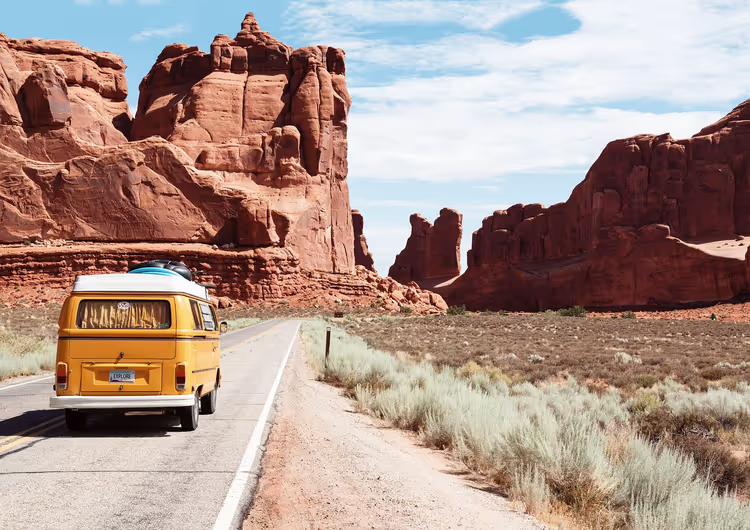
Israel by car in 10 days: route and rules for drivers
Israel is easy to drive across in ten days. The country is small: stretches between the main points are usually no longer than 200 km, and from Tel Aviv to Jerusalem it is only about 60 km (on the map). On one loop you will see the Mediterranean Sea, Galilee, Jerusalem and the Dead Sea.
The difficulty is not in the distances but in the details: local drivers often drive aggressively, and parking in Tel Aviv and Jerusalem is hard to find, especially in the evening. Starting in 2025, foreign visitors need an electronic ETA-IL to enter (as of 09/2026, official website).
Below is a working ten-day plan: driving stretches, overnight stays, and practical sections on speed, parking, and headlights. Pick up the car on day three, when you leave Tel Aviv heading north.
Ad: this article contains affiliate links, we earn a commission if you book through them, at no extra cost to you.
Israel road trip itinerary for 10 days
💡 In short:
- Loop: Tel Aviv, Haifa, Akko, Tiberias, Nazareth, Jerusalem, Dead Sea, Masada.
- Pace: 2 nights in Tel Aviv, 2 in Galilee, 3 in Jerusalem, 1 at the Dead Sea, 1 back in Tel Aviv.
- One stretch is usually up to 200 km, the whole loop is about 700 km (on the map).
- Opening hours and ticket prices: 09/2026, checked on the Israel Nature and Parks Authority website.
Day | Main focus | Book tickets in advance | On foot |
|---|---|---|---|
1 | Arrival, Tel Aviv | No | Little |
2 | Jaffa and Neve Tzedek | No | 6-8 km |
3 | Haifa, Akko, Tiberias | No | 4-5 km |
4 | Galilee and the Sea of Galilee | Boat trip | 3-4 km |
5 | Nazareth and drive to Jerusalem | No | 3-4 km |
6 | Old City of Jerusalem | Yes, time slots | 6-9 km |
7 | City of David and museums | Yes, time slots | 5-7 km |
8 | Dead Sea | No | Little |
9 | Masada and Tel Aviv | Yes, cable car | 2-3 km |
10 | Departure | No | Little |
Distances and walking amounts in the table are given on the map.
Day 1: arrival in Tel Aviv
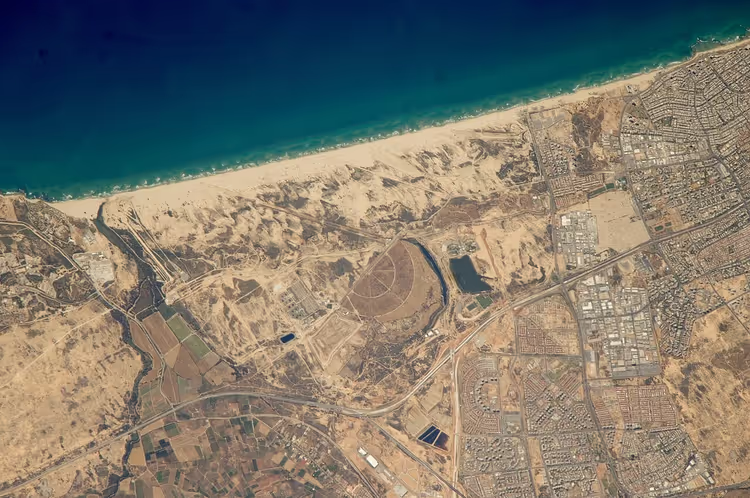
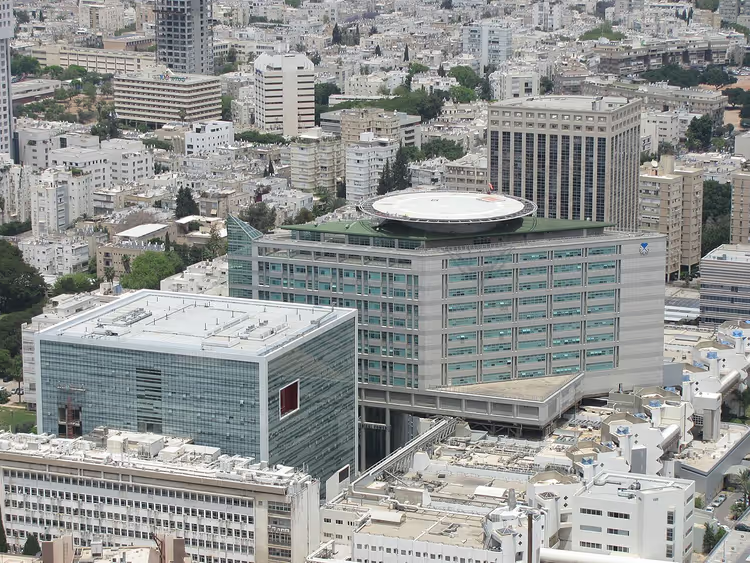
Keep the first day free: Ben Gurion Airport receives flights at any time of day, and the drive to your hotel in Tel Aviv takes about 25 minutes (on the map). Do not rent a car for the first two days. Parking in Tel Aviv is difficult, and the city is easy to get around on foot.
 © AlexJilitsky · CC BY-SAPhoto: AlexJilitsky, CC BY-SA (https://creativecommons.org/licenses/by-sa/3.0), Wikimedia Commons
- Drive: from Ben Gurion Airport to Tel Aviv, about 20 km (on the map).
- Overnight: Tel Aviv, 2 nights.
- Tip: do not plan any tours on the first day, you need rest after the flight.
Day 2: Tel Aviv, Jaffa and Neve Tzedek
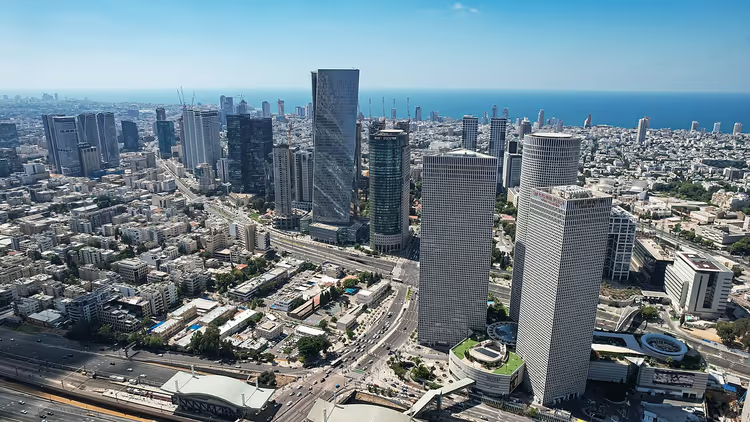
Spend the day in three neighborhoods that are nothing alike. In the morning, walk along the Tel Aviv promenade, in the afternoon head to old Jaffa, and in the evening come back to Neve Tzedek. This quarter grew up around artists' workshops and has kept its narrow streets and galleries.
 © Ynhockey · CC BY-SAPhoto: Ynhockey, CC BY-SA (https://creativecommons.org/licenses/by-sa/4.0), Wikimedia Commons
Ready-made routes covering all three spots can be found among Tel Aviv tours on GetYourGuide.
- Drive: from Tel Aviv to Jaffa, about 5 km (on the map).
- On foot: 6-8 km per day.
- Who it's for: those who want to stretch their legs after the flight and see the city without a car.
Day 3: Haifa, Akko and a night in Tiberias
In the morning, pick up the car and drive north from Tel Aviv along the coast. The first stop is Haifa: the city lies on the slope of Mount Carmel, so the panorama opens up right from the road. Next is Akko, whose old city is a UNESCO World Heritage Site. Spend the night in Tiberias on the shore of the Sea of Galilee, so that in the morning you can head straight out to Galilee.
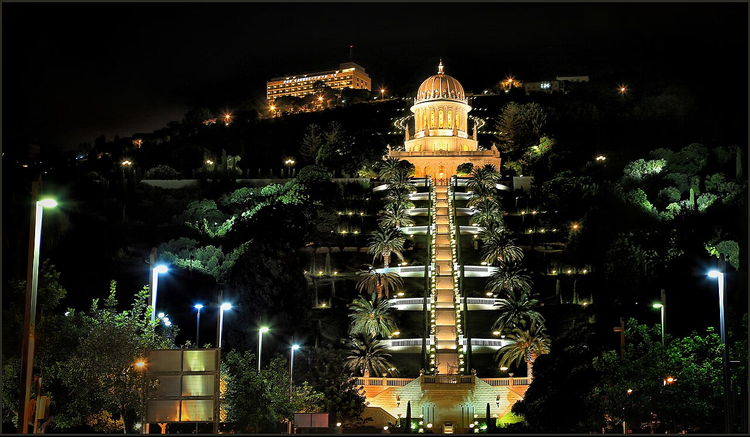 © Dani Lavi 0007 · CC BY-SAPhoto: Dani Lavi 0007, CC BY-SA (https://creativecommons.org/licenses/by-sa/4.0), Wikimedia Commons
- Drive: from Tel Aviv via Haifa and Acre to Tiberias, about 180 km (on the map).
- Highlights: the Bahá'í Gardens in Haifa, the old port in Acre, the Sea of Galilee waterfront.
- Overnight: Tiberias, 2 nights.
Day 4: Galilee and the Sea of Galilee
This day is all about the places around the lake. In Tabgha you can see the site of the miracle of the loaves and fishes, with Capernaum and the Mount of Beatitudes nearby. At Yardenit on the Jordan River there is a designated area for baptism. In the evening, take a boat ride on the Sea of Galilee; the water here is calm almost all the time.
- Drive: from Tiberias via Tabgha and Capernaum to Yardenit, about 40 km (on the map).
- Highlights: Tabgha, Capernaum, Mount of Beatitudes, Yardenit, a boat ride on the lake.
- Tip: bring sunscreen; there is almost no shade around the lake.
Day 5: Nazareth and the drive to Jerusalem
In the morning, explore Nazareth, the city of the Annunciation. Its main site, the Basilica of the Annunciation, stands over the grotto. Then you drive south to Jerusalem. Along the way the landscape changes: green Galilee gives way to the hills of Judea.
- Drive: from Tiberias via Nazareth to Jerusalem, about 200 km (on the map).
- Highlights: Nazareth and the Basilica of the Annunciation.
- Overnight: Jerusalem, 3 nights.
Day 6: the Old City of Jerusalem
The Old City takes a full day, and that is the right plan. Enter through Jaffa Gate and walk through the quarters and markets. This is where the holy sites of three religions stand: the Western Wall, the Church of the Holy Sepulchre, the Dome of the Rock, and the Al-Aqsa Mosque. It is best to book timed tickets for viewing platforms and tours in advance so you do not wait in line at the entrance.
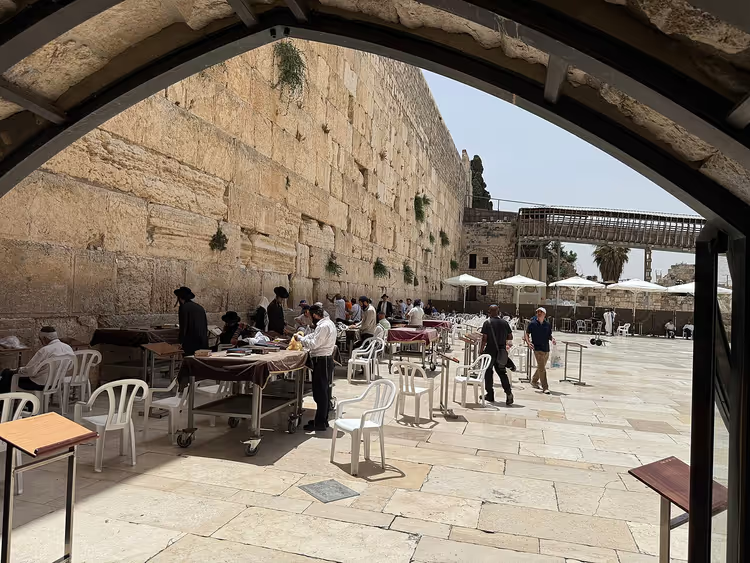 © שלמה רודד · CC BYPhoto: שלמה רודד, CC BY (https://creativecommons.org/licenses/by/2.5), Wikimedia Commons
Timed entry slots and admission tickets are available in the Jerusalem selection on Tiqets.
- On foot: 6-9 km on stone streets.
- Who it's for: those who are ready to walk all day and get up early.
Day 7: Jerusalem beyond the city walls
There is plenty to see outside the Old City walls too. In the City of David you can walk through Hezekiah's Tunnel, which was carved into the rock. After that, the Israel Museum with the country's largest collection, and the Yad Vashem memorial. By car you can reach all three sites in one day without changing transport.
- Drive: within the city, about 15 km (on the map).
- Highlights: City of David, Hezekiah's Tunnel, Israel Museum, Yad Vashem.
Day 8: the Dead Sea
From Jerusalem you descend to the lowest place on earth. In the Dead Sea the water is so salty that it keeps you floating on the surface without any effort. Only enter the water wearing shoes so you do not cut yourself on the salt. Many hotels on the shore have their own spas with therapeutic mud.
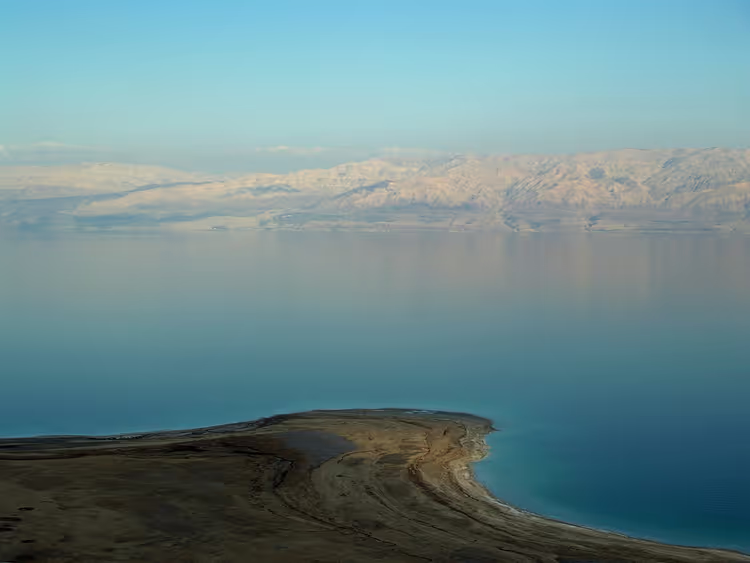 © David Shankbone · CC BY-SAPhoto: David Shankbone, CC BY-SA (http://creativecommons.org/licenses/by-sa/3.0/), Wikimedia Commons
- Drive: from Jerusalem to the Dead Sea, about 90 km (on the map).
- Overnight: Dead Sea, 1 night.
- Tip: do not dive or rub your eyes; the salty water stings badly.
Day 9: Masada and the return to Tel Aviv
The Masada fortress stands on a plateau above the Dead Sea. You can go up on foot via the Snake Path or by cable car; the ride one way takes about 3 minutes (as of 09/2026, official website). In summer, go up at opening time; the plateau gets very hot during the day. Then you drive back to Tel Aviv.
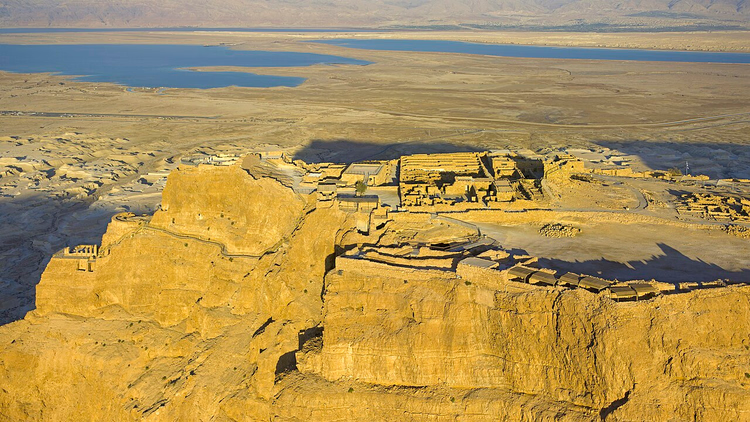 © Godot13 · CC BY-SAPhoto: Godot13, CC BY-SA (https://creativecommons.org/licenses/by-sa/4.0), Wikimedia Commons
- Drive: from Masada to Tel Aviv, about 130 km (on the map).
- Overnight: Tel Aviv, 1 night.
Day 10: departure
Leave the last day unplanned: swim at a Tel Aviv beach in the morning, stroll along the boulevard, and then head to the airport at a relaxed pace. Return the car early so you do not rush at the counter.
- Drive: from Tel Aviv to Ben Gurion, about 20 km (on the map).
- Tip: allow extra time for returning the car and security screening.
Driving in Israel: speed, parking, and headlights
The driving style here differs from the German one: drivers often change lanes abruptly, especially in cities. After a couple of days you get used to the rhythm and drive the route calmly.
Speed limits
Section | Limit |
|---|---|
City | 50 km/h |
Rural road | 80 km/h |
Road with a median barrier | 90 km/h |
Highway 1 (Tel Aviv, Jerusalem) | 100 km/h |
Expressways | 110-120 km/h |
These values apply unless signs indicate otherwise (as of 09/2026, Speed limits in Israel).
Headlights in winter
In winter, low beams are also used during the day: local rules require it. So do not turn off your headlights in tunnels or on the highway, even when it is light out.
Parking in Tel Aviv and Jerusalem
Free spaces in the center are scarce, and you will spend time looking for one. Curb markings tell you the rules: a blue-and-white stripe means paid parking, a red-and-white stripe means no parking. Private lots are more expensive, but they almost always have space.
It's best to book a rental car in advance; in summer, availability dries up fast: compare car rental prices.
⁉️🤔 Frequently asked questions
How many days do you need for a road trip around Israel?
Ten days covers the full loop without rushing. If you have less time, cut back on Galilee and keep Tel Aviv and Jerusalem: those are the two main stops on the route.
Do I need a visa and ETA-IL for the trip?
EU, UK, and US citizens do not need a visa, but starting in 2025 an electronic ETA-IL is mandatory. You apply online before the trip, and the authorization is valid for up to two years or until your passport changes. Apply in advance and check the rules on the official website before your flight.
Can I drive in Israel with an EU license?
Yes, a national driver's license is enough for a short trip. An international driving permit is not required, but it makes inspections easier. Take your license, passport, and rental agreement with you: documents are more often requested at the rental counter than on the road.
Where should I stay along the route?
It makes sense to change your base as you move along the route: two nights in Tel Aviv, two in Tiberias, three in Jerusalem, one at the Dead Sea, and one back in Tel Aviv. That way you spend less time driving in circles. Book accommodation in Jerusalem in advance: in high season, rooms in the center are almost impossible to find.
How much does a day on the route cost?
It is hard to give an exact figure: it depends on the season, the hotel, and the car. The main expenses are car rental, accommodation, and tickets to museums and nature reserves. Plan your budget in advance and check entrance fees before the trip (as of 09/2026, nature reserves website).
Find hotels
Compare prices across booking sites and filter for rooms with free cancellation.
Compare prices on Discover CarsThe widget loads once you give your consent.
In short: what to book
If you have ten days, take the full loop: Tel Aviv, Galilee, Jerusalem, and the Dead Sea. If you want fewer transfers, cut back on Galilee and extend your stay in Jerusalem.
Book the car first, because without it the route falls apart into buses and trains: car rental prices on DiscoverCars.
For stays in Tel Aviv, pick a hotel closer to the sea and the center: hotel selection on Trip.com.
Tours along the route and timed-entry tickets should also be checked in advance: tickets and excursions on GetYourGuide.

A small editorial team writing guides for independent travel. We travel ourselves, but we haven’t been everywhere, so we check prices, opening hours and how to get there against official sources.