













Israel: ETA-IL approval, season and practical travel rules
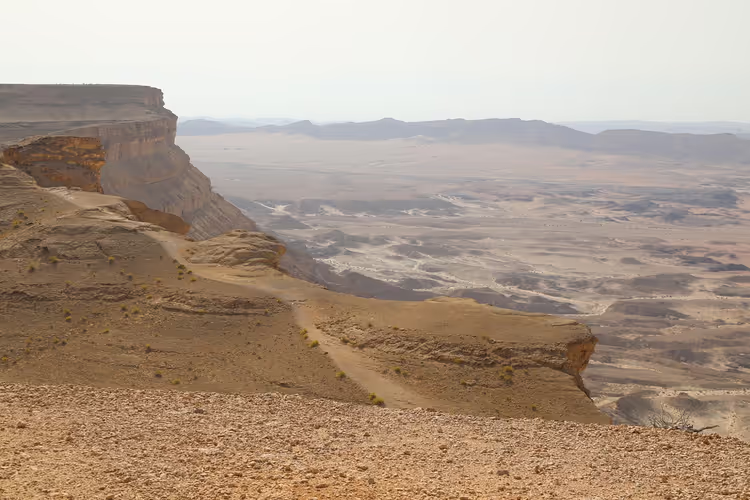
Israel lies between the Mediterranean Sea and the desert. In winter you can swim in Eilat, while Mount Hermon sometimes has snow at the same time. Planning a trip like this is easier when you know three things: entry authorization, passport validity, and the right season.
Since 2025, citizens of Germany and most EU countries do not need a visa, but they do need electronic authorization ETA-IL. You apply online, and we cover validity and stay periods in the ETA-IL section (as of 09/2026, Israel Population and Immigration Authority). Next we get into the practical side: seasons, money, getting from Ben Gurion Airport, Bethlehem rules, and frequently asked questions.
Ad: this article contains affiliate links, we earn a commission if you book through them, at no extra cost to you.
What to know before you go
💡 In short:
- Apply for ETA-IL in advance: the airline checks your authorization when you board the flight.
- Check your passport validity before buying tickets.
- Best time to travel: April to June and September to November.
- Cash in shekels comes in handy at markets and small cafes.
- Entry rules and validity: 09/2026, verified on the official website of the Population and Immigration Authority
Seasons and climate: when to go
Israel does not have a single climate. On the Mediterranean coast and in Galilee it is subtropical, in the south it is hot desert, and in Jerusalem in the mountains it is mild. From May to September there is practically no rain, so the swimming season on the Mediterranean and Red Sea stretches almost all summer. In winter, snow falls mainly on Mount Hermon, while Eilat has beach weather at the same time.
Plan your trip for April to June or September to November. In spring the country is green, excursions in the Negev are comfortable, and the beaches are not yet crowded. In autumn the water is warm and the heat eases off. July and August are hard to handle: Tel Aviv is humid, and the air near the Dead Sea is scorching.
For the Dead Sea, choose the cooler months, when bathing in the salty water is not exhausting. Arrive at opening time: in the morning there are few people on the shore, and the shade from the umbrellas is still free.
Facts about Israel
What | As of |
|---|---|
Capital | Jerusalem |
Official language | Hebrew (Arabic has had special status since 2018) |
Currency | New Israeli shekel (NIS) |
Borders | Lebanon, Syria, Jordan, Egypt, Palestinian territories |
Maritime borders | Mediterranean and Red Sea |
Climate | Subtropical on the coast, desert in the south |
Most residents practice Judaism, about one sixth are Muslim, and there are Christian and Druze communities. This mix explains why a synagogue, a mosque, and a church stand side by side in one city. For a traveler this means a simple rule: respectful clothing in religious quarters makes your day easier.
Two seas and a salt lake define the country's natural borders. The Mediterranean in the west gives Tel Aviv its sandy beaches, the Red Sea in the south stays warm all year round. The Dead Sea in the east is essentially a salt lake, and it draws visitors with its therapeutic mud.
ETA-IL, visa, and passport
Electronic authorization ETA-IL has replaced the visa for tourist trips. You fill out the application on the official portal, and the decision usually arrives by email within a few days, so do not leave it until the last evening before your flight. The authorization is tied to your passport: if you get a new document, you have to apply again.
The rule on validity is simple. The authorization is valid for up to two years or until your passport expires, whichever comes first. Your passport must be valid for six months after your return, and stays under ETA-IL are limited to 90 days (as of 09/2026, official portal). Citizens of Germany and most EU countries do not need a visa. For other nationalities the conditions are different: check them with the Israeli embassy in your country.
Vaccinations are not required for entry. Bring a printout of your hotel booking and return tickets: border officers occasionally ask you to confirm the purpose of your trip and length of stay. Keep the authorization both on your phone and on paper, so you do not have to search for the email while roaming.
Money, tips, and bargaining
The easiest way to pay in the country is in new shekels, currency code NIS. Cards are accepted almost everywhere: hotels, supermarkets, cafes, and gas stations. Still keep cash on you, because markets and small shops often only take cash.
Tipping in restaurants is the norm here, not just a courtesy. Waiters usually do not include service in the bill, so add about a tenth of the total. Hotel porters and housekeepers get a couple of coins. Taxi drivers do not get tips; instead ask them to turn on the meter, otherwise the price will be inflated.
Bargaining is not possible everywhere. At open-air markets, haggling is not only allowed but expected. In stores, prices are posted by law, and the seller is unlikely to budge. In restaurants and public transport, rates are fixed.
You can partially recover purchases when leaving. VAT on goods is refunded at Ben Gurion Airport, but hotels, food, and services are not eligible for refunds (Israel Tax Authority). Keep your receipts and original packaging.
Transport: from the airport and within the country
Ben Gurion Airport is connected to cities by rail. The train leaves directly from the terminal, tickets are sold by machines, and you get to Tel Aviv faster than by taxi in traffic (Israel Railways). Important to remember: on Shabbat, trains and intercity buses do not run, from Friday until Saturday evening.
Option | Where it goes | The catch | The catch |
|---|---|---|---|
Train | Tel Aviv, Jerusalem, Haifa | not affected by traffic | does not run on Shabbat |
Bus | most cities | inexpensive | slow at rush hour |
Sherut | Jerusalem, Tel Aviv | takes you almost to the door | waits to fill up |
Transfer | any address | fixed price | costs more |
A sherut, a shared minivan on a fixed route, drops passengers off at their addresses. Rent a car if you plan trips to the Dead Sea, Galilee, or the Negev: public transport barely reaches those areas. Buses and trains run between cities, Jerusalem has a tram, and in Tel Aviv long stretches along the sea are easier to cover on foot.
Tours and tickets in Tel Aviv
Guided tours, skip-the-line tickets and activities — most offers can be cancelled free of charge.
See offers on KiwitaxiThe widget loads once you give your consent.
Connectivity: SIM cards and internet
Internet in Israel is fast, but roaming with European carriers is expensive. A convenient option for your trip: a virtual SIM card. You can install it before departure, and internet works as soon as you land. It is easy to choose a plan in advance: Compare connectivity options for Israel. Regular SIM cards are sold at the airport and in carrier stores; you need a passport to buy one.
Wi-Fi is available in hotels, cafes, and trains, but do not count on a signal during desert excursions. Download offline maps in advance and save your hotel address in Hebrew: taxi drivers do not always read Latin script.
Insurance and medical care
Medical care in Israel is expensive, so every traveler needs a policy. Check whether it covers treatment and medical evacuation, and clarify the conditions for travel to this region: some policies restrict high-risk zones. You can compare insurance options online before your trip.
A travel first-aid kit is no different from a European one: painkillers, anti-diarrhea medication, band-aids, SPF cream. In summer add electrolytes, because the heat at the Dead Sea and in the Negev is harder to handle than on the coast.
Palestinian territories: Bethlehem and other cities
A trip to Bethlehem from Jerusalem takes half a day and does not require a separate visa. Bring your passport: documents are checked at the checkpoint, and no additional permits are needed. Dress modestly, with shoulders and knees covered, otherwise you may not be allowed into the Church of the Nativity.
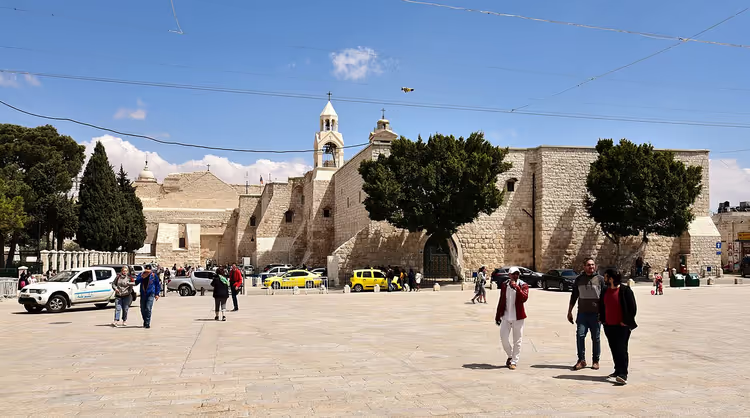 © Bahnfrend · CC BY-SAPhoto: Bahnfrend, CC BY-SA (https://creativecommons.org/licenses/by-sa/4.0), Wikimedia Commons
The line at the checkpoint can be long, and it grows on Fridays and holidays, so leave in the morning. Sun protection and a hat will serve you well even on a cool day.
One more detail for those driving. Rules for Israeli and Palestinian areas differ, so check with your rental company whether entry into these territories is allowed under your rental agreement.
Safety: what to check before booking
The situation in the region changes, so before buying tickets open the Reise- und Sicherheitshinweise of the German Foreign Office and reread them a couple of days before departure. It also lists which areas the ministry advises against visiting.
In cities, follow the usual rules: keep your documents with you, follow police instructions, and avoid large gatherings. On hot days, move long walks to the morning, drink more water, and do not leave belongings in the car if you are driving a rental.
⁉️🤔 Frequently asked questions
Do I need a visa to travel to Israel?
Citizens of Germany and most EU countries do not need a visa, but they do need electronic authorization ETA-IL. You apply online on the official portal before departure. For other nationalities the conditions differ, so check them with the Israeli embassy. Without authorization, the airline may not let you board the flight.
How long is the ETA-IL authorization valid?
The authorization is valid for a limited period and no longer than your passport. Exact validity and stay periods are given in the ETA-IL section (as of 09/2026, Population and Immigration Authority portal). If you change your passport or last name, you have to apply again.
When is the best time to go to Israel?
The best months: April to June and September to November. In spring it is green and not hot, in autumn the water is warm and the weather is mild. In July and August the coast is humid and the desert is very hot. For swimming in the Dead Sea, choose winter or the shoulder season.
Can I visit Bethlehem from Jerusalem?
Yes, it is a day trip without a separate visa. Bring your passport, wear clothing that covers your shoulders and knees, and allow time for the checkpoint check. The line can be long on Fridays and holidays, so leave in the morning.
What currency should I use and do I need cash?
The easiest way to pay is in new shekels; cards are accepted almost everywhere. Keep cash for markets, small shops, and tips. Ask taxi drivers to turn on the meter, and you can reclaim part of the VAT on goods at the airport when leaving.
In short: what to book
If your base is Tel Aviv or Jerusalem, book accommodation near the sea or the Old City in advance: hotels in Tel Aviv on Trip.com. For a route through the Dead Sea, Galilee, and the Negev, car rental via DiscoverCars is more convenient.
The decision matrix is simple. For a short trip to one city: a central hotel and an airport transfer. For a circular route: a rental car and overnight stays booked in advance. For a winter trip: days at the Dead Sea and in Eilat.
Before departure, apply for ETA-IL, check your passport validity, and reread the current entry rules on the official portal.

A small editorial team writing guides for independent travel. We travel ourselves, but we haven’t been everywhere, so we check prices, opening hours and how to get there against official sources.