














Driving through Tuscany: three spring routes from Florence to Elba
In April, Tuscany looks better than in August. The fields and vineyards are turning green, trattorias have no lines, and lodging costs noticeably less than in high season.
We put together three routes through the region: cultural, nature, and coastal. Florence and Siena are only 70 km apart by highway (on the map), so you can easily change your plan on the go.
Short answer for those in a hurry: plan your trip for mid-March through all of May. It's already warm during the day, rain showers are brief, and the cities welcome you without the summer crowds.
Ad: this article contains affiliate links. We earn a commission if you book through them, at no extra cost to you.
Where to go in spring and what to plan ahead
💡 In short:
- Plan your trip from mid-March through late May: after that it gets hot and crowded here.
- Rent a car: between Florence, Siena, Val d'Orcia, and Maremma, public transport runs infrequently.
- Split your vacation between two bases so you don't have to move with your suitcases every day.
- Prices and opening hours: as of 09/2026, verified on the official Maremma Park website.
The season in Tuscany runs from March through October, but spring here is short. Warm weather arrives in late March, and by mid-June it's already hot during the day. You want to hit the window between those dates, and it lasts roughly two months.
A car solves almost everything. Trains connect the major cities, but buses to the villages of Val d'Orcia and Maremma run infrequently. Pick up a car at the Florence or Pisa airport and drop it off there as well. For parking in historic centers, look outside the walls and walk the rest of the way.
Route | Duration | What it's built around | Who it's for |
|---|---|---|---|
1. Cultural | five to seven days | Florence, Siena, San Gimignano, Volterra | those coming for museums and cities |
2. Nature | four to six days | Val d'Orcia, Pienza, Montepulciano, Bagno Vignoni | those who want scenery and wine |
3. Coastal | six to eight days | Maremma, Castiglione della Pescaia, Massa Marittima, Elba | those who need the sea and birds |
1. Cultural route: Florence, Siena, San Gimignano, Volterra
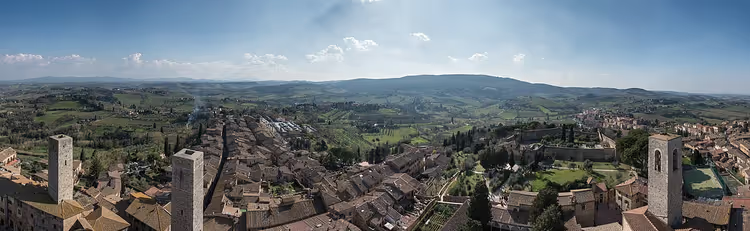
The first loop runs from north to south and passes through four cities in the region. Allow five to seven days for it. Don't try to cover everything in two days: you'll wear yourself out and remember nothing but your shoe soles.
 © Giorgio Galeotti · CC BYPhoto: Giorgio Galeotti, CC BY (https://creativecommons.org/licenses/by/4.0), Wikimedia Commons
Florence
Start in Florence, where trains and flights to Amerigo Vespucci Airport arrive. Dedicate the first day to the Cathedral of Santa Maria del Fiore: the climb up Brunelleschi's dome runs on timed slots, and without a reservation you'll just stand in line. Tickets are sold on the Opera del Duomo website. Save the Uffizi Gallery and Piazzale Michelangelo with its city panorama for the second day.
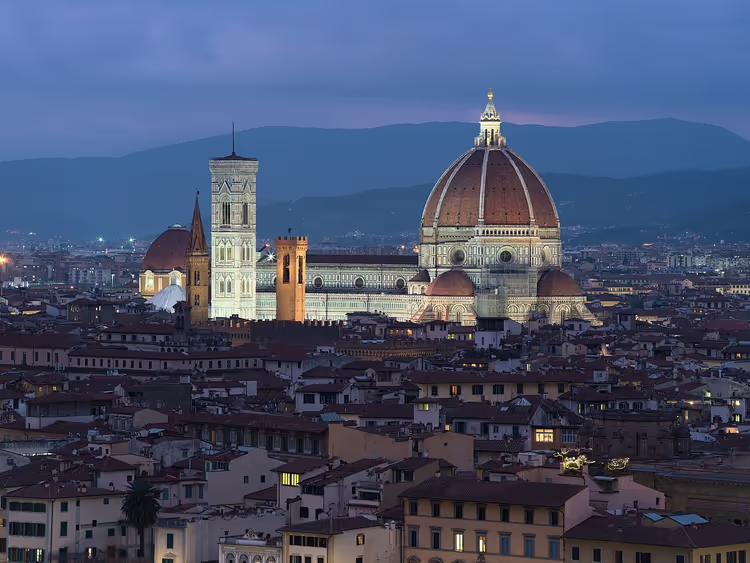 © Dllu · CC BY-SAPhoto: Dllu, CC BY-SA (https://creativecommons.org/licenses/by-sa/4.0), Wikimedia Commons
Siena
From Florence to Siena it's about 70 km by highway (on the map). Stroll through the old town, climb up to the Cathedral of Santa Maria Assunta, and step out onto Piazza del Campo.
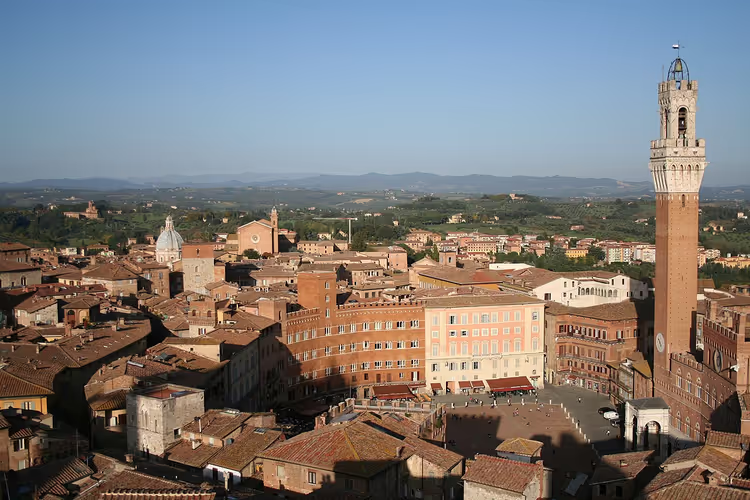 © Massimo Catarinella · CC BY-SAPhoto: Massimo Catarinella, CC BY-SA (https://creativecommons.org/licenses/by-sa/3.0), Wikimedia Commons
- Who it's for: those willing to leave the car outside the walls and walk.
- Where to stay: Grand Hotel Continental Siena in the center, rates at Grand Hotel Continental Siena on Trip.com.
- The catch: there is almost no free parking near the historic center.
San Gimignano
San Gimignano has preserved its medieval towers, and the town is a UNESCO World Heritage site. In spring the streets here are almost empty. Wine tastings are offered by Fattoria San Donato and La Rocca.
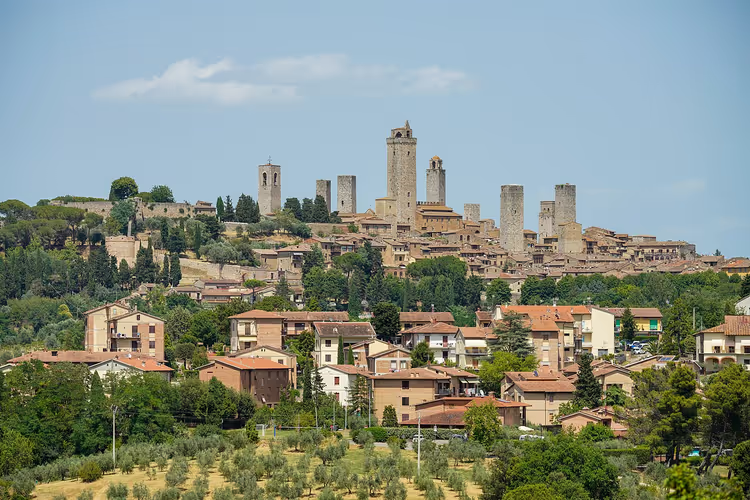 © WikiRomaWiki · CC BY-SAPhoto: WikiRomaWiki, CC BY-SA (https://creativecommons.org/licenses/by-sa/4.0), Wikimedia Commons
Volterra
Volterra is smaller and quieter than its neighbors; people come here for the Museo Etrusco Guarnacci and the city walls. Lodging stays in the mid-price range, and Hotel La Locanda is a convenient place to stay.
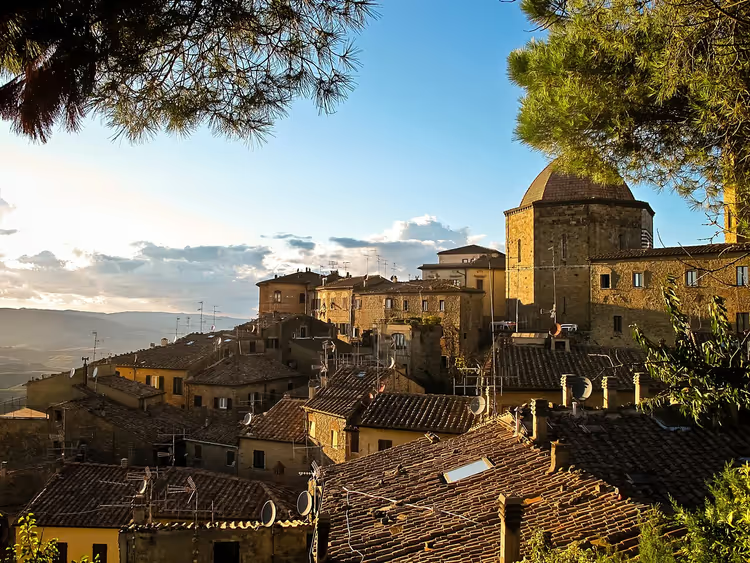 © Andrés Nieto Porras from Palma de Mallorca, España · CC BY-SAPhoto: Andrés Nieto Porras from Palma de Mallorca, España, CC BY-SA (https://creativecommons.org/licenses/by-sa/2.0), Wikimedia Commons
Getting between the cities is easiest by car or bus, and you can extend the loop with a visit to Chianti.
2. Nature route: Val d'Orcia, Montepulciano, Pienza, and Bagno Vignoni
The second loop heads south of Siena and takes four to six days. There are fewer towns and more scenery here, and between the villages you drive along empty roads.
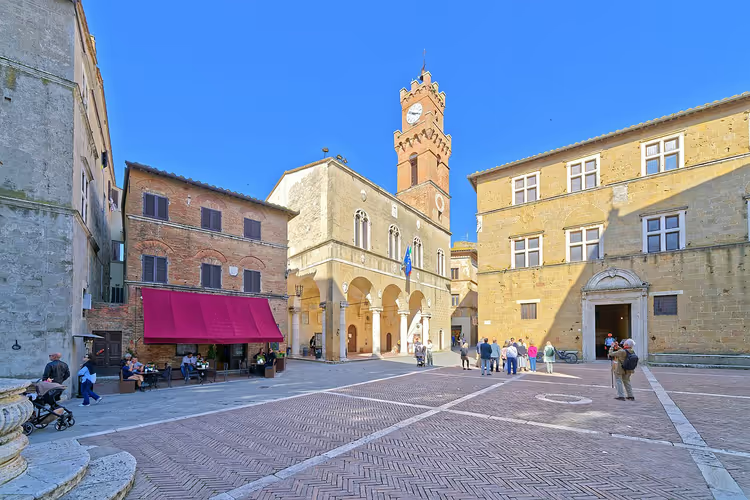 © Holger Uwe Schmitt · CC BY-SAPhoto: Holger Uwe Schmitt, CC BY-SA (https://creativecommons.org/licenses/by-sa/4.0), Wikimedia Commons
Val d'Orcia
Val d'Orcia, south of Siena, is a UNESCO World Heritage Site and home to one of the most recognizable landscapes in Italy. In spring it's quiet, green, and noticeably less crowded than in July. In April and May the fields are covered in poppies (As of 09/2026, Corriere della Sera).
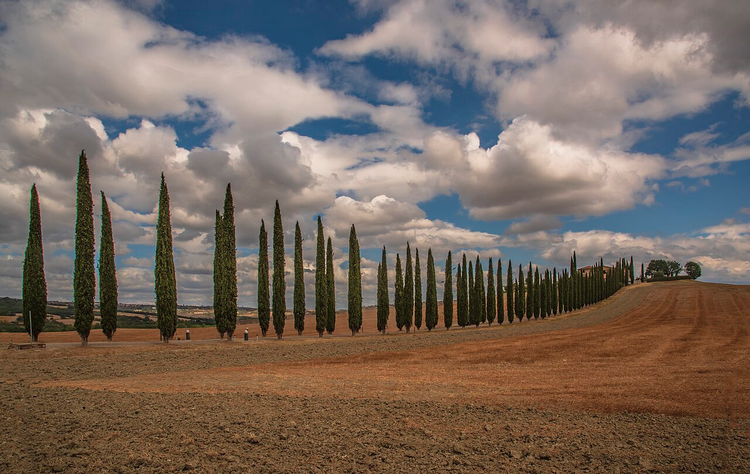
Pienza
Pienza was built according to a single Renaissance plan and is known for its pecorino cheese. It's worth staying at the family-run Relais Il Chiostro di Pienza.
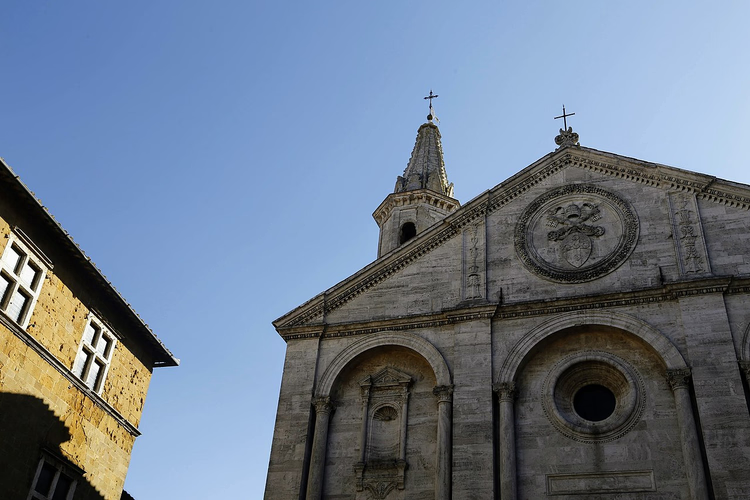 © Assianir · CC BY-SAPhoto: Assianir, CC BY-SA (https://creativecommons.org/licenses/by-sa/3.0), Wikimedia Commons
- Where to stay: Relais Il Chiostro di Pienza, rooms at Relais Il Chiostro di Pienza.
- The catch: the town is tiny, a couple of hours is enough to see it.
Montepulciano
Montepulciano sits on a hill and is famous for its Vino Nobile di Montepulciano wine. Tastings are offered at Cantina Contucci and Bindella, and the town itself looks well kept and elegant.
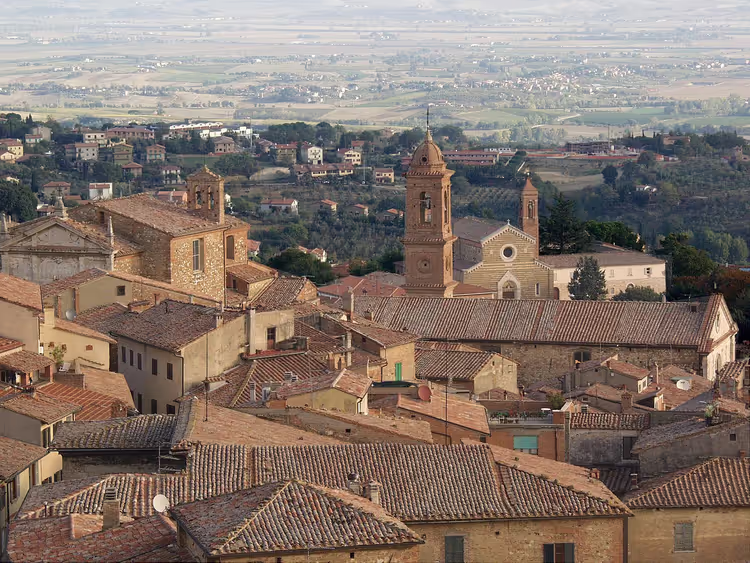 © [https://www · CC BY-SAPhoto: [https://www, CC BY-SA (https://creativecommons.org/licenses/by-sa/2.0), Wikimedia Commons
Bagno Vignoni
Bagno Vignoni has hot thermal springs, and access to the natural pool is free. Come early in the morning or toward evening, when tour groups leave.
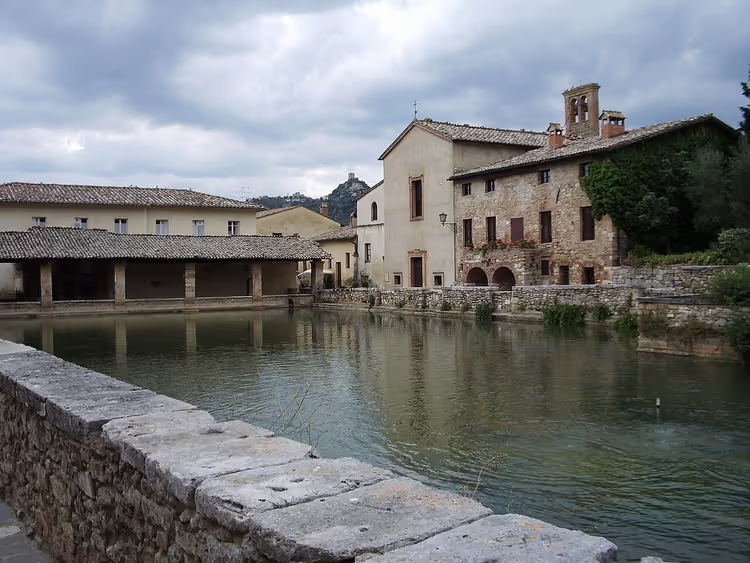
For a walk, choose a loop from Pienza to San Quirico d'Orcia of about 15 km (on the map) with sweeping views.
3. Coastal route: Maremma, Castiglione della Pescaia, Massa Marittima, and Elba
The third loop runs along the coast and takes six to eight days. In spring it's warm here but not yet hot, the beaches are half empty, and prices are lower than in summer.
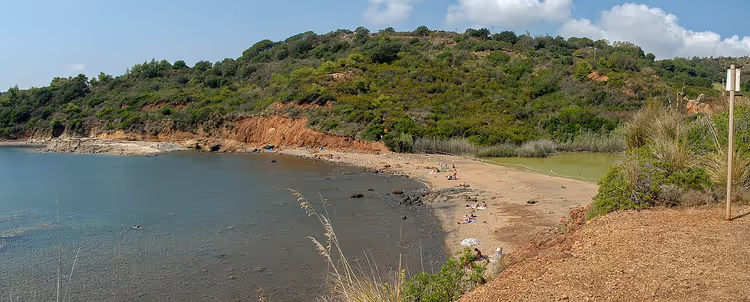 © Mihael Grmek · CC BY-SAPhoto: Mihael Grmek, CC BY-SA (https://creativecommons.org/licenses/by-sa/3.0), Wikimedia Commons
Maremma Park
The Maremma Park starts at Alberese and protects dunes, pine forests, and salt marshes. Trails are open from 8:30 until one hour before sunset; the visitor center in Alberese is open daily from 8:30 to 15:00. Tickets cost 10 € for long routes and 5 € for short ones (as of 09/2026, official website). Dogs are not allowed.
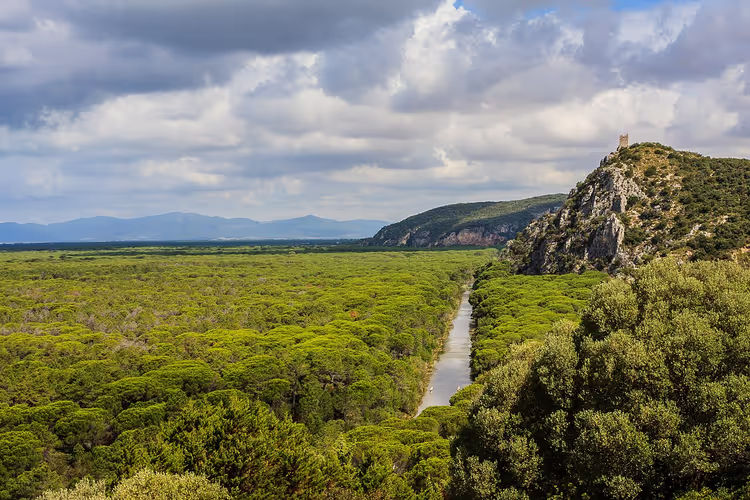 © Francesco Mocellin · CC BY-SAPhoto: Francesco Mocellin, CC BY-SA (https://creativecommons.org/licenses/by-sa/4.0), Wikimedia Commons
Castiglione della Pescaia
Castiglione della Pescaia has a preserved old town, a long sandy beach, and fish restaurants. Hotel L'Approdo, with sea views, is a good place to stay. While you're there, stop by the Diaccia Botrona nature reserve: flamingos stop there.
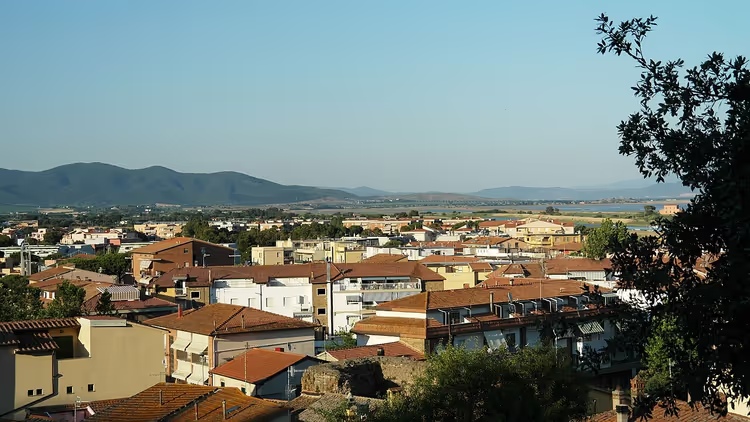 © trolvag · CC BY-SAPhoto: trolvag, CC BY-SA (https://creativecommons.org/licenses/by-sa/3.0), Wikimedia Commons
- Where to stay: Hotel L'Approdo, Hotel L'Approdo prices on Trip.com.
Massa Marittima
Massa Marittima rises above the valley and works well for a day trip from Castiglione. The cathedral and the old mining quarters recall the days when the town lived from metal mining.
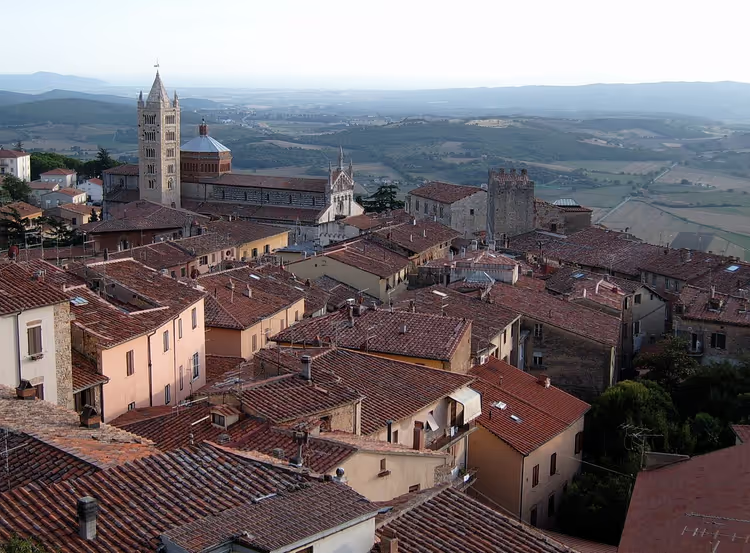 © Markus Bernet · CC BY-SAPhoto: Markus Bernet, CC BY-SA (https://creativecommons.org/licenses/by-sa/2.5), Wikimedia Commons
Elba
A ferry to Elba runs from Piombino; check schedules and fares at Toremar. Portoferraio or Marciana Marina are convenient bases, and in spring the island is still quiet.
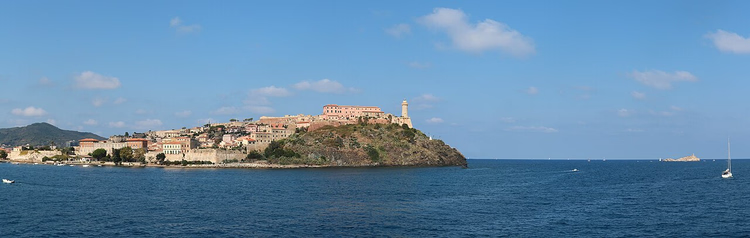 © Ingo Mehling · CC BY-SAPhoto: Ingo Mehling, CC BY-SA (https://creativecommons.org/licenses/by-sa/4.0), Wikimedia Commons
In practice, bring hiking boots and binoculars: spring is a great time for birdwatching here.
Practicalities: car, lodging, and budget
The easiest way to get here from Germany is over the Brenner Pass. From Cologne it's about 1,200 km and 11-12 hours of driving. It's faster to fly to Florence or Pisa, then take a regional train from Pisa to Lucca, Siena, and Grosseto.
For day trips to villages and wineries, you'll almost always need a car. Compare car rental prices in advance; there's more availability in spring.
Lodging: agriturismo in the countryside is cheaper than city hotels. In towns, expect mid-range to upper price levels and book ahead.
Food: lunch at a trattoria is reasonably priced, and a carafe of local wine is often already included in the bill.
Find hotels
Compare prices across booking sites and filter for rooms with free cancellation.
Compare prices on Discover CarsThe widget loads once you give your consent.
⁉️🤔 Frequently asked questions
When is the best time to go to Tuscany in spring?
The optimal window falls between mid-March and late May. In April and May the fields are already green, it's warm during the day, and museum lines are noticeably shorter than in summer.
Do I need a car for these routes?
Yes, a car is almost essential for this kind of trip. Trains connect Florence, Siena, and Pisa, but public transport rarely serves the villages of Val d'Orcia and Maremma. Renting at the Florence or Pisa airport will cost less than relying on taxis, and you'll find parking near the walls of the old towns.
How many days should I allow for each route?
The cultural route takes five to seven days, the nature route four to six, and the coastal route six to eight. If you're short on time, pick one loop and don't try to cover the whole region at once. You'll see more and tire less from all the driving.
What to see in Maremma Park and how much does entry cost?
The park protects dunes, pine groves, and marshy lagoons between Alberese and the sea. Entry costs €10 for the long hiking trails and €5 for the short ones (as of 09/2026, Maremma Park website).
When do poppies bloom in Val d'Orcia?
Poppies bloom in April and May and last until early June (as of 09/2026, bloom overview for Italy). During these weeks the hills with cypresses look like postcards. Arrive early in the morning: by midday the light turns harsh, and cars gather at the turnoffs to the fields.
In short: what to book
If you're visiting Tuscany for the first time, go with the cultural route based in Florence and Siena. If nature matters more, choose Val d'Orcia with an overnight stay in Pienza. If you want the sea, head for Castiglione della Pescaia and Elba.
Book your car and accommodation in advance: spring prices are still moderate and the selection is wider. Start with a hotel search on Trip.com to estimate your trip budget.

A small editorial team writing guides for independent travel. We travel ourselves, but we haven’t been everywhere, so we check prices, opening hours and how to get there against official sources.