















Israel: where tourists overpay and where they save in 2026
A trip to Israel costs more than many people expect, and a day by the sea in Tel Aviv quietly eats up your evening budget. We broke down what makes up this amount and where you are overpaying.
Since January 2025, ETA-IL authorization has been mandatory even for visa-free tourists: it costs 25 NIS and is valid for up to two years (as of 09/2026, official website). Without it, you simply will not be allowed to board, and many people only remember this on the last evening before departure.
Ad: this article contains affiliate links, we earn a commission if you book through them, at no extra cost to you.
How much a day in Israel costs
💡 In short:
- Accommodation and food eat up more than half of your daily budget.
- Transport and entrance tickets cost less than people tend to think.
- Prices and opening hours: 09/2026, verified on the Israel Museum website and in the Masada guide.
Israel is expensive not because of one expense category, but because the total adds up from four parts: accommodation, food, transport, and tickets. If you keep the first two under control, the rest will hardly surprise you.
Level | Accommodation | Food | Getting around | Tickets |
|---|---|---|---|---|
Budget | hostel dorm bed | supermarket and falafel | bus and train | walking tours for tips |
Mid-range | three-star hotel | cafes and markets | train between cities | national parks pass |
Comfort | five-star hotel | restaurants | taxi and private guide | guided tours |
Accommodation in Israel is more expensive than in most Western European countries, and it is what determines your daily total. A dorm room in a hostel is the fastest way to cut costs, while a mid-range hotel adds comfort and noticeably raises the daily amount.
Check your travel dates against the Jewish calendar. During holidays, accommodation prices spike and available rooms almost disappear.
Flights and airports
The cost of a flight depends primarily on where you are flying from. The Open Skies agreement with the European Union opened the Israeli market to competition, and European low-cost carriers drove down prices on their routes. When flying from the US, a stopover in Europe often makes the ticket noticeably cheaper.
The south of the country is now served by Ramon Airport near Be'er Ora, while the former airports in Eilat and Ovda were closed to civilian flights in 2019 (as of 09/2026, airport guide). If you are heading to the desert, look for flights to Ramon specifically.
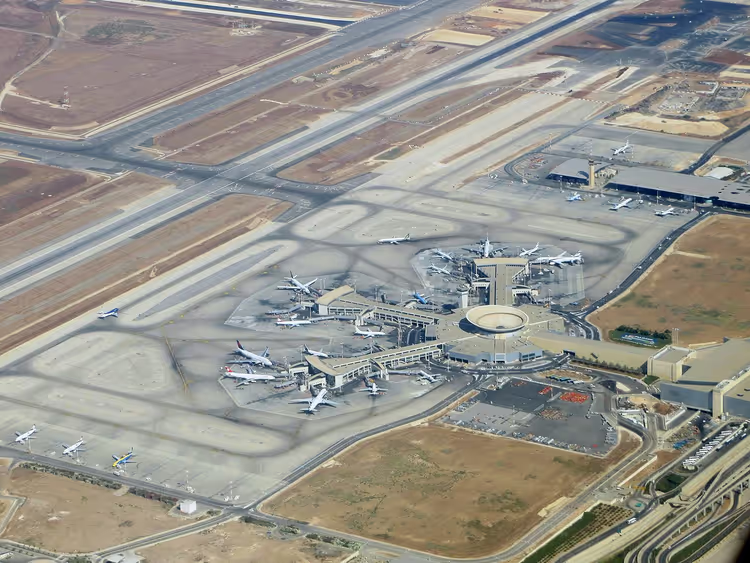 © Chris Hoare · CC BYPhoto: Chris Hoare, CC BY (https://creativecommons.org/licenses/by/2.0), Wikimedia Commons
For Ben Gurion, keep an eye on airport news: Terminal 1 periodically opens for international low-cost carrier flights. This determines which hall you depart from and arrive at, so check your terminal in advance and do not confuse it with Terminal 3.
High season hits your budget twice. In July and August, everything gets more expensive, and the heat becomes oppressive. If you have a choice, shift your trip to May or October.
Accommodation: hostel, hotel, or apartment
Hostels in Israel are not just dorm rooms: many offer private rooms with their own bathroom. You can also cook for yourself, and that is a significant saving, because after a week of cafes you will likely crave simple home-cooked food.
If you are going to Tel Aviv to lie on the beach, book a nicer hotel, and if you are traveling around the country all day, a hostel will be enough. You can spend the difference on tickets and tours.
Look for available rooms in advance. During holidays and the peak of summer, options disappear within weeks. You can compare options and prices by date on Trip.com.
- Who it's for: those who count every night and are willing to cook for themselves.
- Not for: those who expect a quiet room with a view without paying extra.
Transport: bus, train, or car
Public transport in Israel is cheaper than in Western Europe: buses and trains reach almost all cities. Tel Aviv, Jerusalem, Haifa, and Nazareth are conveniently connected, while the Golan Heights and the Negev are harder to reach but still doable.
Fares are calculated by distance, the fare system is called Derekh Shava, and a short trip within the city costs less than ten NIS (as of 09/2026, Ministry of Transport). Trains use their own fares, so check those separately.
 © Eurovaran · CC BY-SAPhoto: Eurovaran, CC BY-SA (https://creativecommons.org/licenses/by-sa/4.0), Wikimedia Commons
A car is worth renting for the Negev and the Golan. Keep in mind that gas in Israel is expensive, which noticeably raises the cost of a route. Taxis within Tel Aviv are convenient, but on short distances the total adds up quickly.
It's better to compare car rental prices in advance: see options.
Food: falafel, market, or restaurant
Street food in Israel is good and solves the lunch question: falafel at a small eatery is the cheapest hot meal. A cup of coffee at a cafe costs a moderate amount, beer at a pub is pricier, and restaurants are expensive, with alcohol especially so.
Check the menu first, then sit down, that way you avoid an unpleasant bill. The most budget-friendly option is the supermarket, where you also get to see local products and what life in the country is like.
The market helps too: lunch at Shuk HaCarmel in Tel Aviv is reasonably priced, and it's easy to try several dishes at once. In the evening, it's cheaper to cook dinner yourself at the hostel.
Tickets and attractions
Many important sites in Israel aren't impressive on their own, and without the history they look like ordinary rocks. That's why a guided tour often pays off better than a separate ticket, but you don't need to pay for everything.
The cheap option is pay-what-you-want walking tours, which run in Jerusalem and Tel Aviv. You leave a tip at the end, and you decide the amount yourself.
Entry to national parks is paid. For Masada, they sell a combined ticket that includes the cable car ride. Exact prices and hours are updated on the INPA website. A multi-park pass is sometimes cheaper than individual tickets.
The Israel Museum in Jerusalem costs 62 NIS for an adult and 45 NIS for a student (as of 09/2026, official website). The audio guide is included in the ticket. Visitors under 18 get free entry on Tuesdays and Saturdays.
It's easier to choose tours and tickets in advance: options on GetYourGuide.
Tours and tickets in Jerusalem
Guided tours, skip-the-line tickets and activities — most offers can be cancelled free of charge.
See offers on GetYourGuideThe widget loads once you give your consent.
⁉️🤔 Frequently asked questions
Do I need a visa to travel to Israel?
Citizens of the EU, US, UK, and dozens of other countries don't need a visa, with stays of up to 90 days. But starting in 2025, ETA-IL authorization is mandatory. Apply for it online before buying tickets: it costs 25 NIS and is valid for up to two years (ETA-IL portal).
How much does entry to the Israel Museum cost?
Adult and student prices are listed above in the tickets section. The audio guide is already included in the price. Visitors under 18 enter free on Tuesdays and Saturdays. Check current hours and tickets on the museum website.
When to go to avoid overpaying?
Try to avoid July and August, when everything gets more expensive and the heat is intense. Prices also rise during Jewish holidays. May and October usually offer mild weather and calmer prices.
Can you get by without a car?
In the big cities, yes. Tel Aviv, Jerusalem, Haifa, and Nazareth are connected by buses and trains. For the Negev and the Golan Heights, a car is almost essential. Fares are calculated by distance (rates).
Which is cheaper, a hotel or a hostel?
A hostel is almost always cheaper, especially with a shared room. Many hostels offer private rooms with a bathroom and a kitchen. If you are out on trips all day, paying extra for a hotel is rarely justified.
In short: what is worth booking
If you are short on time: book a central hotel and tickets in advance. If you are on a budget: stay in a hostel and travel by bus. If you are traveling across the country: rent a car and avoid planning your trip for July.
Check your dates against the holiday calendar and apply for ETA-IL in advance. Then compare accommodation and tours: see hotels on Trip.com and tickets on GetYourGuide.

A small editorial team writing guides for independent travel. We travel ourselves, but we haven’t been everywhere, so we check prices, opening hours and how to get there against official sources.