
















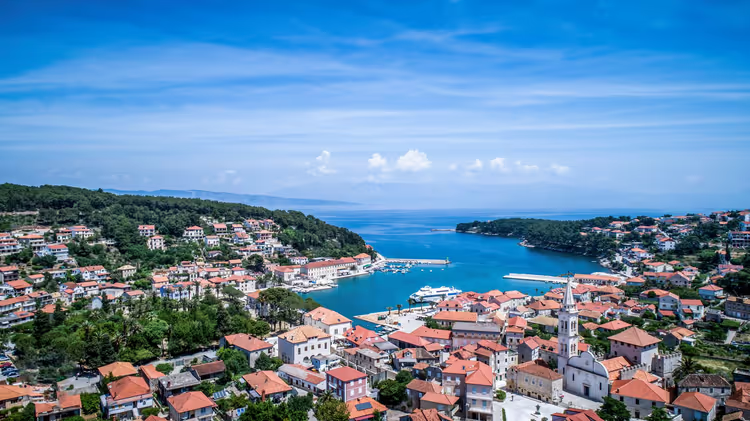
Istria or Dalmatia: how to choose a region for your vacation
From Munich to Pula is about 600 km by highway (on the map). That is one day behind the wheel. To Dubrovnik the same route stretches to almost twice that, and for that reason alone the choice between Istria and Dalmatia is rarely purely a matter of taste. Both regions offer the sea, pebble beaches and old towns. The difference is in the drive, the landscape and how you spend your evenings.
We compared both destinations across seven criteria: the drive, landscape, beaches, towns, cuisine, islands and practicalities such as prices and crowds. You will get an answer matched to your type of vacation, not a generic verdict of "both are nice".
💡 In short:
- Istria is closer: from Munich it is one day behind the wheel.
- Dalmatia is farther, but it offers islands, turquoise water and ancient cities.
- Regions and islands: as of 09/2026, verified on the Croatian National Tourist Board website.
Ad: this article contains affiliate links, we earn a commission if you book through them, at no extra cost to you.
The drive: Istria wins here
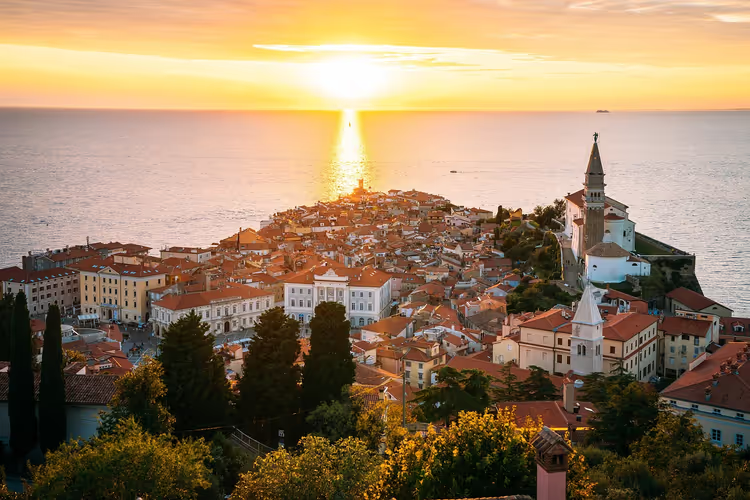
The debate about the regions almost always starts with one argument, and that is travel time. Istria is noticeably closer, and for many visitors from Germany and Austria the drive settles everything before the first glance at the sea. From Munich to Pula you can make it in one day, with two breaks and kids in the back seat. From Vienna or Graz the trip is even shorter, there Istria is almost next door.
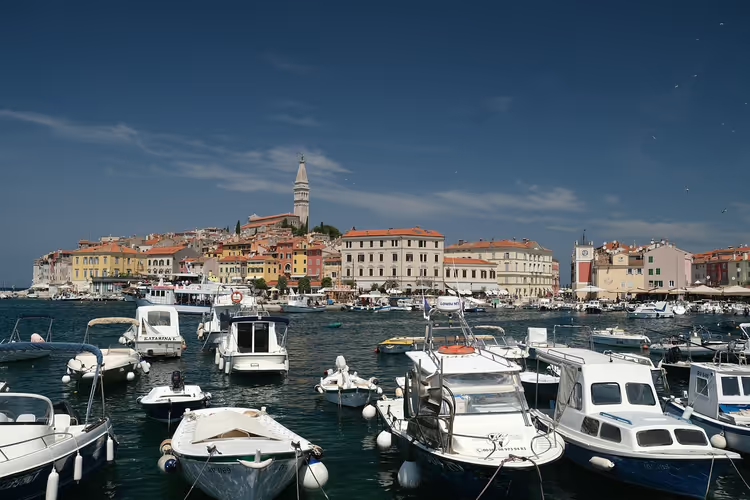
Dalmatia demands more patience. From Munich to Zadar you drive about nine hours, to Split roughly ten, and to Dubrovnik easily twelve or more (on the map). Since 2022 you can bypass Neum via the Pelješac Bridge, so border crossings are optional. In practice this means one simple thing: Istria works even for a long weekend, while southern Dalmatia is either reached by plane or folded into a big road trip. Also factor in the Slovenian vignette and toll sections in Croatia, they add costs on any car.
If you fly, the gap shrinks. Split and Zadar are well connected to German and Austrian airports in summer, Dubrovnik too, and Pula has its own airport, but with fewer flights. On the ground, however, you will almost certainly need a car, especially in Dalmatia with its scattered islands and bays that public transport barely reaches.
Editor's tip: if you have only one week of vacation and you are driving your own car, count two days on the road out of seven. That arithmetic pushes you toward Istria on its own.
Landscape and beaches: two different worlds
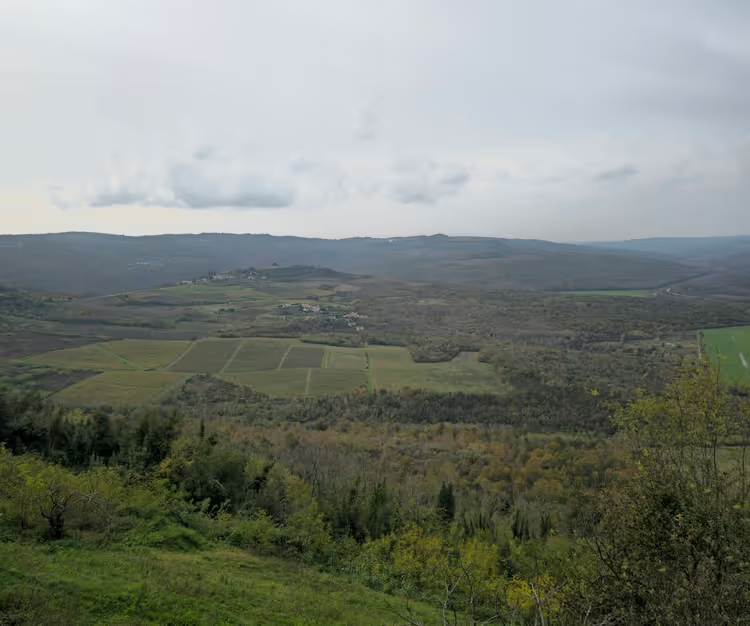
In terms of landscape, Istria and Dalmatia look like two different countries, and you notice it immediately out the car window. Istria resembles Tuscany: soft hills, cypresses, olive groves and medieval hilltop villages such as Motovun and Grožnjan. Greenery reaches all the way to the sea, and the coast is cut by rocks and bays.
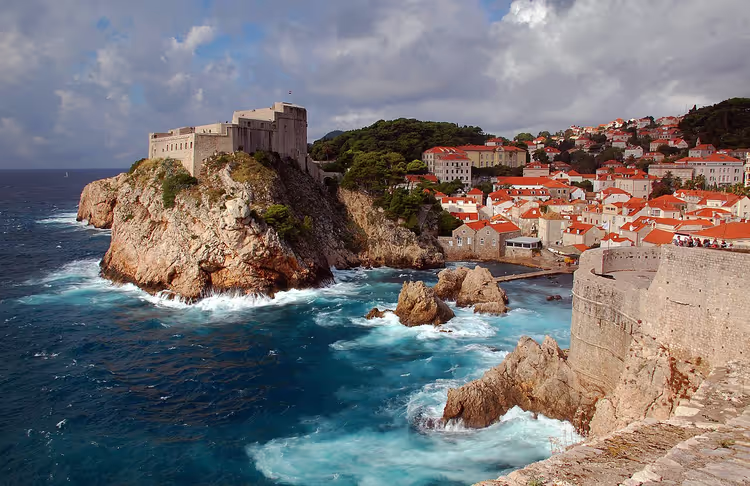
Dalmatia is sharper and drier. The Velebit mountains drop to the Adriatic as a steep wall, the water glows turquoise, and beyond it islands line up to the horizon. The vegetation here is Mediterranean and more sparse: pines, maquis, lavender and fig trees instead of the lush forests of the north. In high summer the sun burns without mercy, and shade becomes scarce. If you handle heat poorly, choose your travel dates carefully.
The main myth about Croatia is tied to beaches. In both Istria and Dalmatia the shore is mostly pebble and rocky, sandy beaches are rare across the whole country. Anyone arriving for Caribbean sandbars will be surprised in both regions. In Istria it is often concrete platforms or fine pebbles, well equipped and convenient for families. Premantura and the Kamenjak nature park (Kap Kamenjak) are considered the most beautiful part of the peninsula.
Dalmatia answers with more dramatic bays. Zlatni Rat on Brač lies just 2 km from Bol, about a 20-minute walk along the waterfront (as of 09/2026, Brač island tourist office). The pebble spit changes shape with the wind and current, and you will find it different every time. On Vis there are hidden beaches that are usually reached by boat.
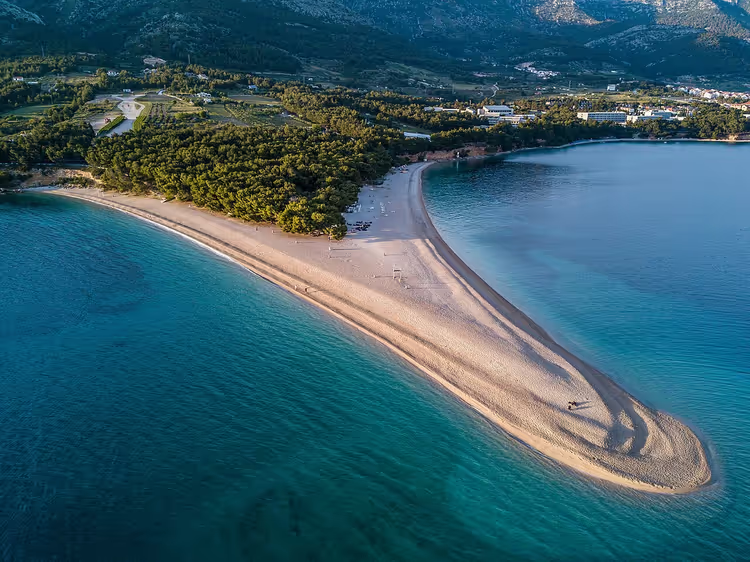 © Miran Hojnik · CC BYPhoto: Miran Hojnik, CC BY (https://creativecommons.org/licenses/by/2.0), Wikimedia Commons
The practical takeaway is the same for both regions: bring water shoes. On rock and coarse pebbles bare feet hurt. In return you get clear water, because sand does not stir up from the bottom, and in many bays you can see all the way down.
Towns and culture: antiquity versus Venetian charm
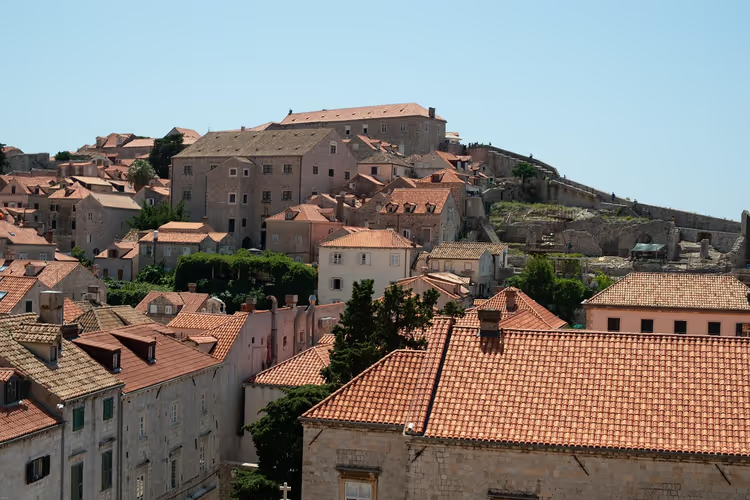
If history fascinates you, the main monuments stand in Dalmatia. In Split, the Roman palace of Diocletian works as the living center of the Old Town: you walk along ancient walls while cafes buzz nearby. Dubrovnik, with its complete ring of city walls, is a UNESCO site and remains one of the most beautiful old towns in Europe. Add to that Trogir, Šibenik with its cathedral and Zadar with the Sea Organ. The result is a chain of sights where each one deserves its own trip.
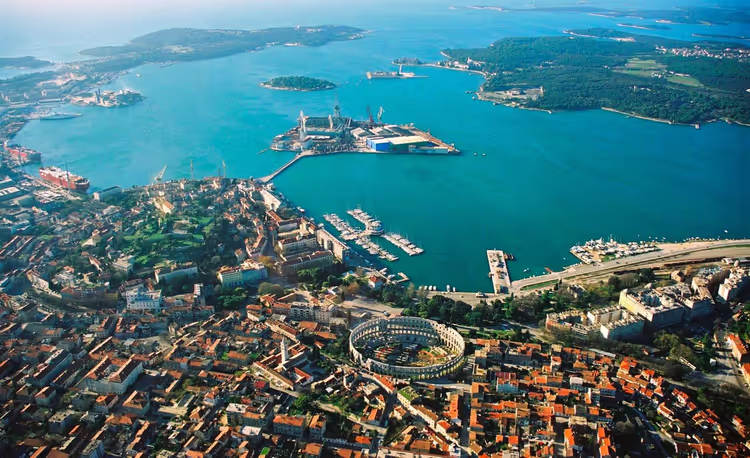 © Orlovic · CC BY-SAPhoto: Orlovic, CC BY-SA (http://creativecommons.org/licenses/by-sa/3.0/), Wikimedia Commons
Istria plays quieter and smaller, but with more charm. Rovinj, with pastel houses that seem to grow straight out of the water, is considered the most photogenic town on the entire Adriatic. Pula has a Roman amphitheater that rivals the Colosseum and still hosts concerts. And the towns in the interior of the peninsula, Motovun, Grožnjan and tiny Hum, breathe a Venetian spirit without the flood of cruise tourists that swamps the coastal towns of Dalmatia.
The difference is also in the feeling. In Dalmatia you more often stand before grand monuments and feel the weight of history. In Istria you wander crooked lanes, step into a gallery in Grožnjan and find details instead of a checklist tick. The peninsula's Venetian past is visible everywhere: in the architecture, in the names and even in the local speech, since Italian is the second official language here. For a big cultural itinerary choose Dalmatia, for intimacy and craftsmanship without the cruise noise head to Istria.
Cuisine and wine: truffles or fish
For many, the culinary debate is settled by the choice of region, and Istria has a strong hand here. In recent years, the peninsula has become one of the most interesting gastronomic areas in the Mediterranean. The key word here: truffle. In the Motovun forest along the Mirna river valley, white and black truffles are harvested, and this is one of the main habitats of the white truffle in Europe (as of 09/2026, Istria tourist board). Add to that locally pressed olive oil, which regularly wins international awards, and the pastas Fuži and Pljukanci, most often served with truffle or game ragù.
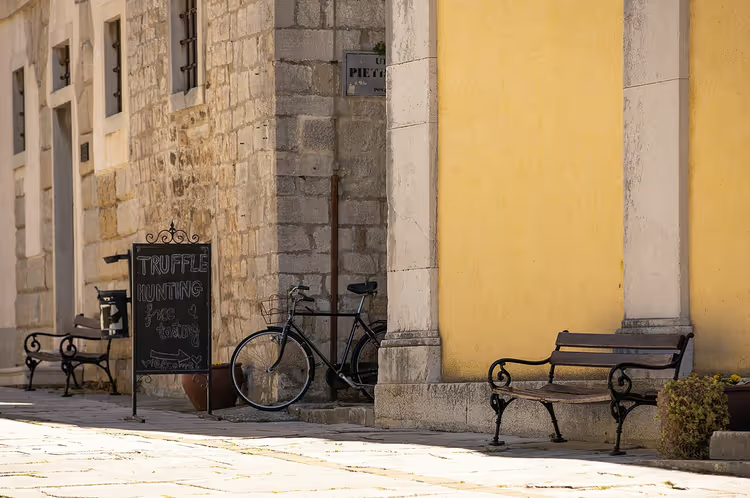 © Jernej Furman from Slovenia · CC BYPhoto: Jernej Furman from Slovenia, CC BY (https://creativecommons.org/licenses/by/2.0), Wikimedia Commons
When it comes to wine, Istria bets on the white Malvazija Istarska, fresh and mineral, and the red Teran. The wineries here are small and often family-run. You can drop in for a tasting without a reservation, and the experience is noticeably less polished for tourists than in heavily promoted regions. Inland, the number of restaurants focused on local ingredients is growing, and it is best to book a table in advance.
Dalmatia counters with what has defined the region for centuries: fish and seafood straight off the boat. A true Peka, meat or octopus cooked under a hot metal bell, requires ordering in advance and patience. The wines here are fuller: Plavac Mali from the Pelješac peninsula and the island of Hvar, as well as the rare Pošip. If you love truffles and olive oil, head to Istria; if you appreciate fresh fish, shellfish, and full-bodied red wines, you will enjoy Dalmatia more.
Islands: this is where Dalmatia has no competition
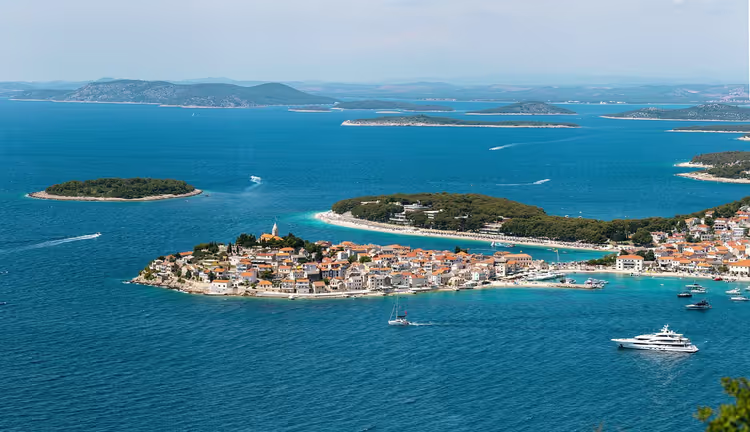
There is one area where the choice is not close at all, and that is the islands. Dalmatia wins by a wide margin. More than 1,200 islands, islets and reefs stretch along its coast, and the inhabited ones are among the most interesting places in the Adriatic (as of 09/2026, Croatian National Tourist Board).
Hvar wins you over with lavender and nightlife, Brač is home to Zlatni Rat, the country's most famous beach, Vis was a closed military zone for decades and therefore remains almost undeveloped, and Korčula is called the birthplace of Marco Polo and is compared to a miniature Dubrovnik). Standing apart are the Kornati Islands, a national park of 89 uninhabited islands and reefs best explored under sail (as of 09/2026, official park website). Island hopping by ferry here becomes a vacation program in itself, and schedules are consolidated with the Jadrolinija ferry operator.
Istria has little to counter with. Brijuni near Pula remains a charming national park with a small zoo and Tito's former summer residence, but that is about where the list ends. You can stay overnight only in one of a few hotels, and there is no real sense of island hopping. If you dream of days on ferries, changing ports and nights in quiet bays, you need Dalmatia.
For island trips, check Dalmatia tours and excursions on GetYourGuide in advance.
Prices and season
On price, Istria is usually slightly cheaper, especially away from well-known spots like Rovinj. Dalmatia's stars, and above all Dubrovnik, are among the most expensive places in Croatia: a coffee on Stradun and a city wall ticket quickly add up to a noticeable sum. But the rule works in both regions. If you head inland or a couple of towns away from the main points, you will pay noticeably less.
Apartments in the Istrian countryside or in a Dalmatian village often cost half as much as accommodation on the first line by the sea. We deliberately do not give fixed prices: they vary widely by season and change from year to year. In high season, plan for the general Adriatic level and book in advance if you are traveling in July or August.
Families and crowds
For families, Istria wins by a small margin. Short driving distances, a dense network of family resorts and spacious campsites around Poreč and Rovinj, gentler developed beaches with water slides and entertainment. The short drive is especially valued when a tired child is in the back seat. Dalmatia is not hostile to children, on the contrary, Zadar or the island of Brač offer great experiences, but the long journey and sometimes rocky beaches require more preparation and patience.
 © Edwardwexler at English Wikipedia · CC BY-SAPhoto: Edwardwexler at English Wikipedia, CC BY-SA (https://creativecommons.org/licenses/by-sa/3.0), Wikimedia Commons
On crowds, everything depends on the location. Dubrovnik, Split and Hvar can be overcrowded in high season, especially when cruise ships come into port. Istria is visited no less, it is in fact the most visited region of Croatia, but tourists spread more evenly across campsites and coastal towns, while the green inland remains almost empty. You will find quiet in both regions, but you will have to look for it in different places.
This is exactly where car rental in Croatia comes in handy: your own car lets you get twenty kilometers away from the crowd.
Istria and Dalmatia at a glance
To see the arguments side by side, here is a short summary by main criteria.
Criterion | Istria | Dalmatia |
|---|---|---|
Drive from Munich | 600 km, 7-8 hours (by map) | 9-12 hours |
Landscape | Green, hilly, with a Tuscan feel | Dry, rocky, turquoise sea |
Beaches | Pebbles and platforms, family-friendly | Dramatic bays, rocky in places |
Towns and culture | Intimate: Rovinj, Pula | Monumental: Split, Dubrovnik |
Cuisine | Truffles, olive oil, pasta | Fish, seafood, peka |
Wine | Malvazija Istarska, Teran | Plavac Mali, Pošip |
Islands | Almost none, except Brijuni | More than 1,200 (croatia.hr) |
Prices | Lower on average | Higher in top spots |
Families | Very convenient | Convenient, needs more planning |
Crowds | Spread more evenly | Very busy in top spots |
The table does not replace personal impressions, but it shows the main point: the regions hardly outdo each other, each has its own strengths. So what matters next is not the debate about which is better, but the question of what type of traveler you are.
Which region suits whom
Instead of a general answer, here is an honest recommendation by trip type. Find yourself.
You have little time and are driving? Istria. The short drive gives you back two days of vacation, and for a long weekend or a week the south is simply too far.
You dream of island hopping and turquoise water? Dalmatia, without a doubt. Hvar, Brač, Vis, Korčula and the Kornati Islands exist only here. Once you have taken a ferry from island to island, you will not want to stop.
You are traveling with small children? Istria will make things easier: short drive, gentle beaches, family campsites and resorts. For a first relaxed trip to Croatia with children, this is a reliable choice.
You want grand history and world-class culture? Dalmatia. Diocletian's Palace in Split and the walls of Dubrovnik in such concentration are found nowhere else.
Food, wine and enjoyment away from the crowds matter to you? Istria. Truffles, award-winning olive oil and small wineries where you can still talk to the winemaker himself.
You want both and have two weeks? Then combine them. Start in Istria, work your way down the coast and go deeper into Dalmatia; the regions are directly connected by highway.
If you prefer being active to lying on the beach, both regions are great for cycling. In Istria, the route goes through vineyards from Poreč through Motovun, past those very truffle forests and hilly villages. In Dalmatia, a bike path along the coast connects Split and Brela with panoramas and bays you cannot see from a car. Book bikes and helmets in advance in July and August.
In the end, it comes down to a simple truth. Istria offers a closer, greener and more gastronomic Croatia for calm weeks without a long drive. Dalmatia offers a southern, dramatic Croatia for those seeking islands, ancient cities and that very turquoise sea, and who are willing to spend extra hours behind the wheel. You cannot go wrong with either region; the hardest part is deciding in what order you will get to know them.
⁉️🤔 Frequently asked questions
Which is closer to Germany: Istria or Dalmatia?
Istria is noticeably closer. From Munich to Pula you can make it in one day (on the map). To Zadar you drive about two to three hours longer, and Dubrovnik is even farther. If you have a short vacation or a long weekend, choose Istria. Dalmatia requires more travel time or a flight.
Where are the beaches better for swimming?
The water is clean in both regions, because the bottom is rocky and sand doesn't cloud it. Istria's shoreline is more evenly developed: platforms, fine pebbles, entry without rocks. In Dalmatia the bays are more beautiful, but often require water shoes and careful entry. With kids, choose Istrian beaches.
When is the best time to visit each region?
Dalmatia is hotter and drier in summer, and shade is harder to find. Istria is milder thanks to its greenery and hills. July and August are crowded and more expensive everywhere, so book ahead. May, June, September, and early October give you warm sea without peak crowds and prices.
Do you need a car if you fly?
Almost certainly yes, especially in Dalmatia. Islands and bays are scattered, and public transport barely reaches them. It's convenient to pick up a car right at the airports in Zadar, Split, and Dubrovnik. In Istria distances are shorter, but without a car you'll still miss half the interesting places.
Can you combine both regions in one trip?
Yes, and that's the best option if you have two weeks. The highway connects Istria and Dalmatia directly, and the drive from Pula to Split takes a few hours. Start in the north, then work your way down the coast. That way you'll see both the green north and the island south without flights.
Where is it cheaper to vacation?
Istria is usually slightly cheaper, especially away from Rovinj and the coast. Dubrovnik is among the most expensive places in the country. In both regions, accommodation inland costs noticeably less than on the first line by the sea. In high season, book ahead; the price difference is significant.
In short: what to book
You can't boil the choice down to a single line, but you already have your answer. If a short drive, greenery, and cuisine matter most, book accommodation in Istria: Rovinj, Poreč, and the surrounding area offer the best balance. If you're going for islands and ancient cities, build a Dalmatia route from Zadar to Dubrovnik. With two weeks, combine both regions in one trip.
A quick matrix: with kids, choose Istria; for turquoise water, head to Dalmatia.
It's easier to search for accommodation by region: hotel options in Istria and Dalmatia on Trip.com.

A small editorial team writing guides for independent travel. We travel ourselves, but we haven’t been everywhere, so we check prices, opening hours and how to get there against official sources.