
















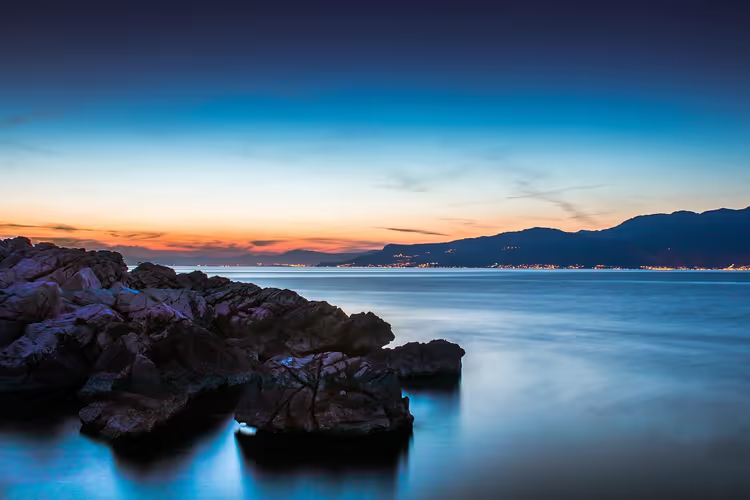
Brac island: Zlatni rat beach, Vidova gora and Pustinja Blaca hermitage
Brač covers 396 km² and remains the largest island in Dalmatia. Its coastline stretches for more than 180 km, and almost every bay ends in a pebble beach. A strait between 5 and 13 km wide separates the island from the mainland.
If you are coming here for a week, the Zlatni rat beach, the Blaca hermitage, and the climb up Vidova gora will be enough. Let's break down what to see, where to stay, and how to get around the island without a car.
Ad: this article contains affiliate links, we earn a commission if you book through them, at no extra cost to you.
Brač island: key trip information
💡 In short:
- Season: May-June and September.
- Base: Bol for the beach and windsurfing, Supetar for the ferry and logistics.
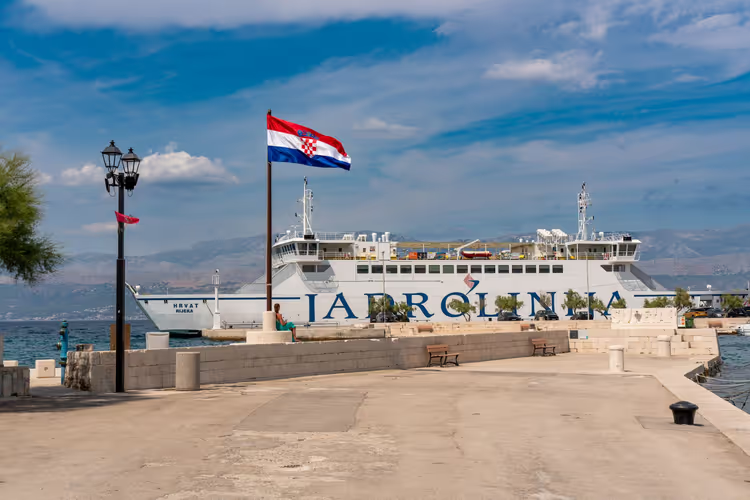
- Transport: Jadrolinija ferry from Split, then bus, bicycle, or moped.
Island history
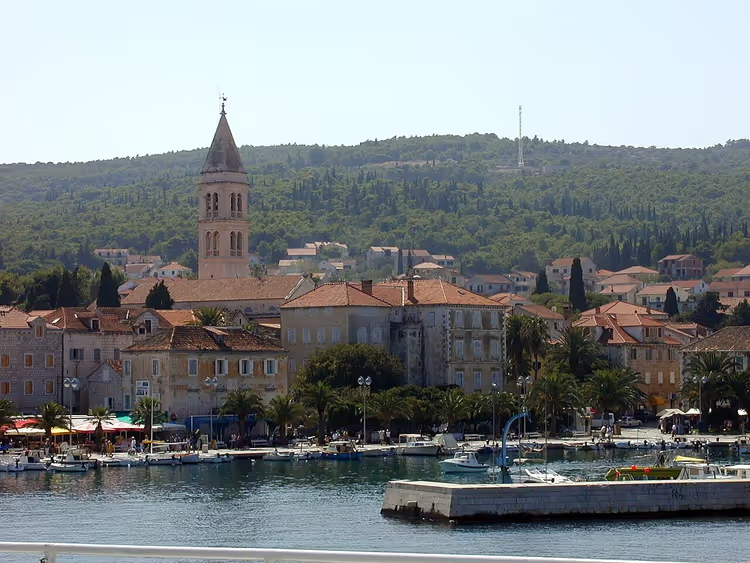
Brač has been inhabited since the Neolithic: Illyrians, Greeks, and Romans all left their mark here. Later the island was held in turn by Byzantium, Venice, and Austria.
The white limestone from Brač was used for Diocletian's Palace in Split. You will see traces of these eras right on the streets: Roman villas, Romanesque churches, and Austrian fortifications stand side by side.
 © Unknown author · CC BY-SAPhoto: Unknown author, CC BY-SA (http://creativecommons.org/licenses/by-sa/3.0/), Wikimedia Commons
Beaches and coastline
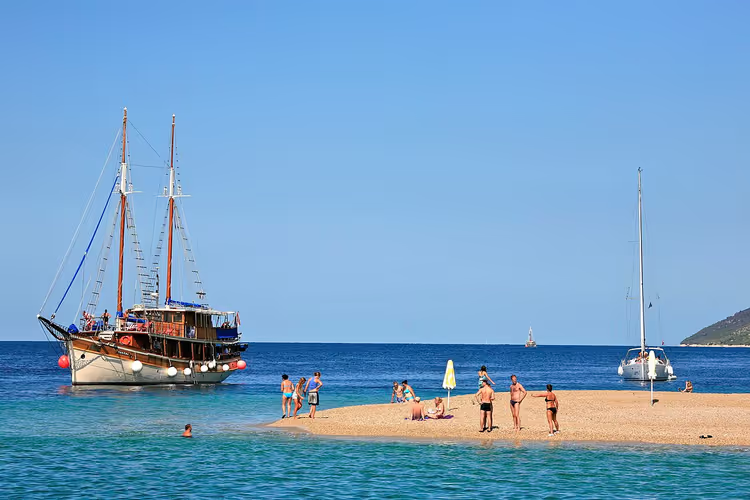
The coast consists of pebble beaches, lagoons, and rocky inlets. The shoreline is varied, so even in August you can find a quiet bay away from the hotels.
Every coastal town has hotels, restaurants, and wellness centers. We have put together a separate selection of the country's best beaches: beaches of Croatia.
 © Alex Proimos from Sydney, Australia · CC BYPhoto: Alex Proimos from Sydney, Australia, CC BY (https://creativecommons.org/licenses/by/2.0), Wikimedia Commons
What to do on the island
Consistent winds have made Bol and Zlatni rat a base for windsurfing and kitesurfing. Beyond the water, you will find tennis courts, football pitches, and water attractions for children.
The gastronomy is built on seafood, wine, and olive oil with protected status. In the coastal villages you will find both family-run konobas and restaurants with sea views.
 © Miran Hojnik · CC BYPhoto: Miran Hojnik, CC BY (https://creativecommons.org/licenses/by/2.0), Wikimedia Commons
What to see on the island
Town of Bol
Bol is the second largest town on Brač and sets the tone for the southern coast. Hotels, a marina, and sports equipment rentals are concentrated here. From the town pier to Zlatni rat is about 2 km (on the map), so accommodation near the waterfront will save you from taking the bus.
 © Jules Verne Times Two * http://julesvernex2.com · CC BY-SAPhoto: Jules Verne Times Two * http://julesvernex2.com, CC BY-SA (https://creativecommons.org/licenses/by-sa/4.0), Wikimedia Commons
Zlatni rat beach
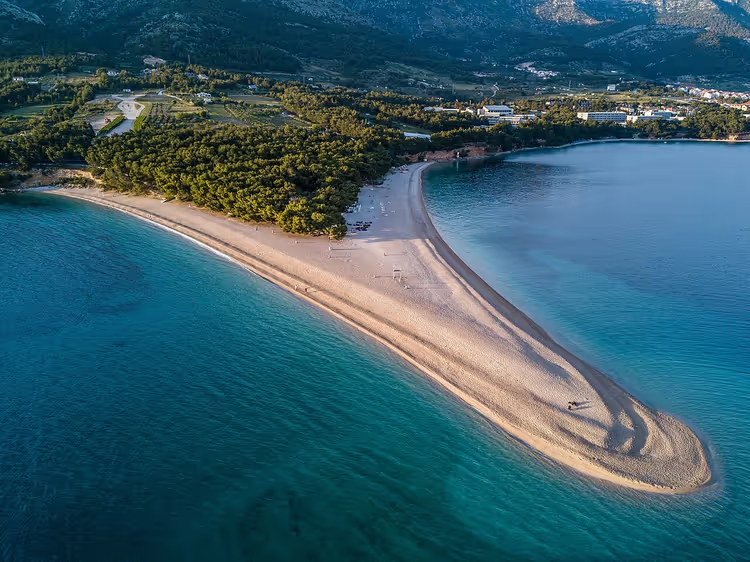
Zlatni rat stretches as a narrow spit two kilometers west of Bol. The tip extends almost 480 m into the sea and changes shape under the influence of wind and current.
The shore is pebbly, entry is free, and behind the pine grove the pools of a Roman villa have been preserved. In the afternoon, waves pick up at the spit.
Vidova gora
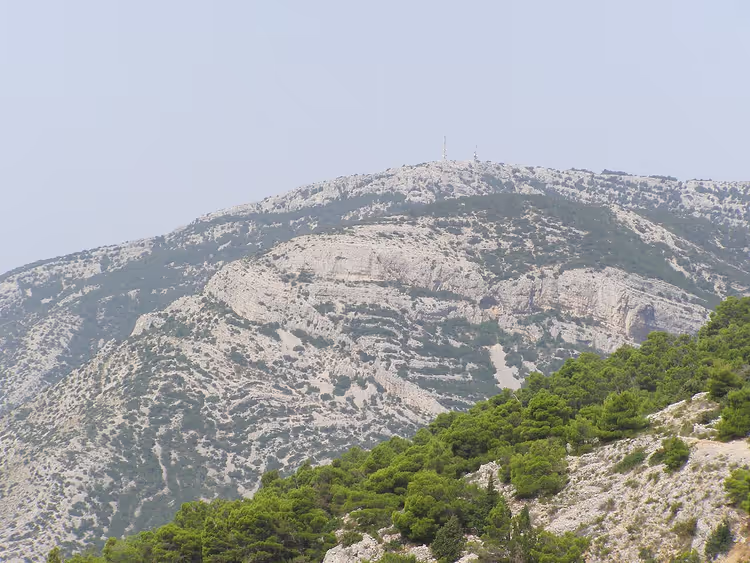
Vidova gora rises to 780 m and remains the highest point of all Adriatic islands. From the summit you will see the Zlatni rat spit and neighboring Hvar. A road leads to the top, and a hiking trail climbs there from Bol. For the hike, bring water and shoes with good tread.
Natural beauty
Pines grow right on the rocks, grass pushes through under the stones, and vineyards and olive groves stretch below. The southern slope of Brač is steep, so reaching the bays here is harder. On this side there are only two settlements, Bol and Murvica.
 © Jules Verne Times Two · CC BY-SAPhoto: Jules Verne Times Two, CC BY-SA (https://creativecommons.org/licenses/by-sa/4.0), Wikimedia Commons
Stone carving school in Pučišća
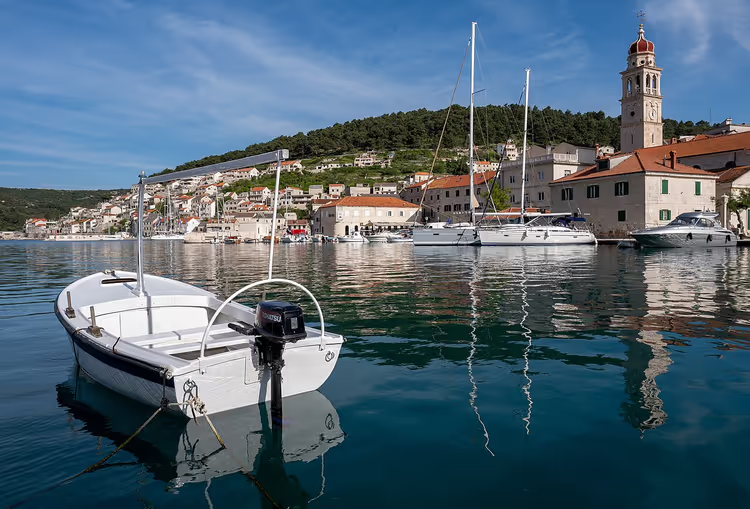
The Klesarska škola stone carving school operates in Pučišća: students make sculptures, jewelry, and interior objects from local limestone. The ivory-colored stone is quarried right here, in the island's quarries. Stop by the workshop if you want to see the work in person.
 © Jules Verne Times Two · CC BY-SAPhoto: Jules Verne Times Two, CC BY-SA (https://creativecommons.org/licenses/by-sa/4.0), Wikimedia Commons
Town of Supetar
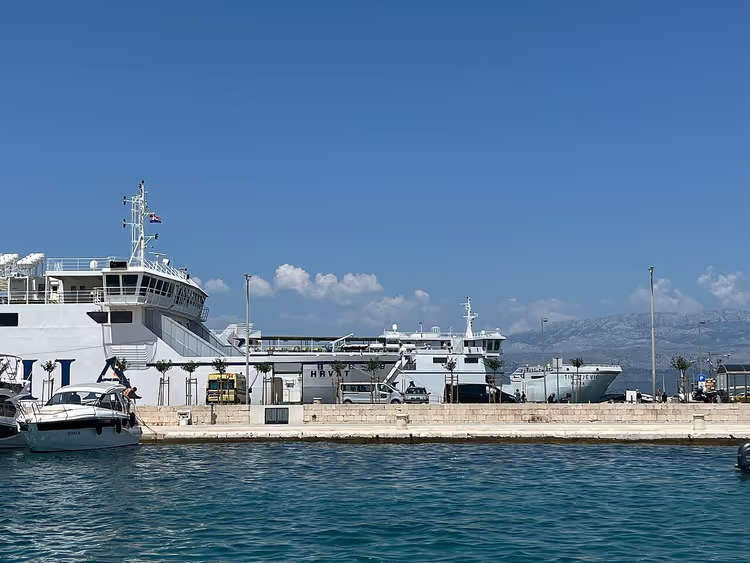
Supetar is considered the largest town on Brač: more than 3,300 people live here. The ferry from Split arrives here, and it is a convenient starting point for the north and west of the island. Nearby lies the village of Škrip with houses of rough stone, narrow streets, and an olive oil museum.
 © WeatheredAviation · CC BYPhoto: WeatheredAviation, CC BY (https://creativecommons.org/licenses/by/4.0), Wikimedia Commons
Pustinja Blaca
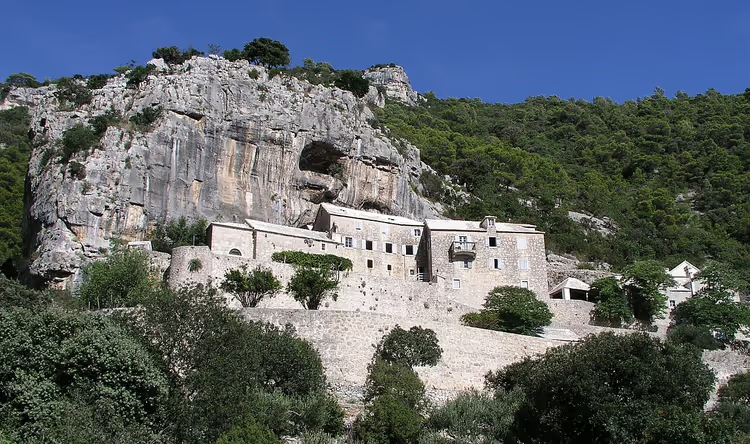
Pustinja Blaca stands on the southern slope of the island. The hermitage was founded in 1551 by two Glagolitic monks, and the community lived on until 1963, when the last priest died.
Today it is a museum: a library of thousands of books, telescopes, a printing press, and a collection of paintings. Since 2007 the complex has been on the UNESCO tentative list.
 © Honza Beran · CC BYPhoto: Honza Beran, CC BY (https://creativecommons.org/licenses/by/2.5), Wikimedia Commons
Dragon's cave
The Dragon's cave (Zmajeva špilja) lies near the village of Murvica, on the southern slope of Vidova gora. Inside, it is divided into four parts, and a chapel is set up in one of them. The walls are covered with carved figures of a dragon, a lion, the moon, and the Madonna with angels. Scholars debate who created these images and when, so many legends surround the place.
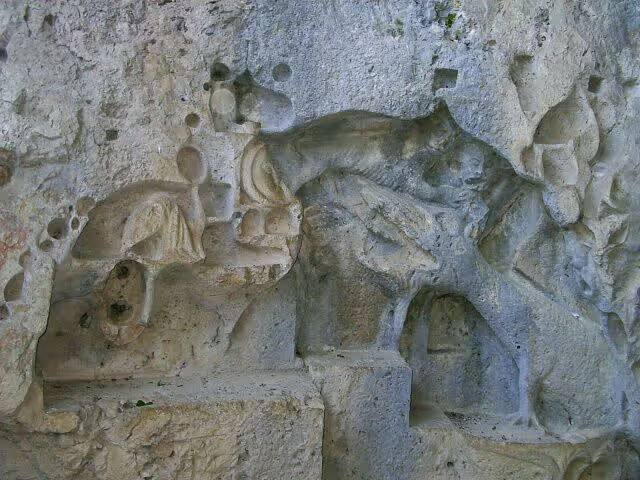 © Martin Brož · CC BYPhoto: Martin Brož, CC BY (https://creativecommons.org/licenses/by/3.0), Wikimedia Commons
Tours and tickets in Brac
Guided tours, skip-the-line tickets and activities — most offers can be cancelled free of charge.
See offers on GetYourGuideThe widget loads once you give your consent.
How to get around the island
You can bring a car on the ferry or rent one on the spot. From Supetar to Bol is about 35 km (on the map), and the road winds through the hills.
Many people rent a bicycle or moped to reach the more remote bays. Buses connect the main towns but run infrequently, so check the schedule in advance.
The roads on the island are smooth and well maintained, and there is little traffic, so driving will not take much out of you.
⁉️🤔 Frequently asked questions
How many days should you set aside for Brač?
Three to four days is enough to see Zlatni rat, climb Vidova gora, and reach Pustinja Blaca. If you want to visit all the bays and stop by Pučišća and Škrip, plan for a week. Allow a day for travel there and back: the ferry and transfers eat up time.
How to get to Brač island?
A Jadrolinija ferry runs from Split to Supetar, and in summer there are departures almost every hour. Book a car spot in advance: in July and August the deck fills up. The island also has a small airport with seasonal flights, but most visitors arrive by sea.
When is the best time to go to Brač?
The most comfortable months are May, June, and September: the sea is warm and the beaches are less crowded. In July and August it is hot and busy, accommodation prices are higher, and ferry spots sell out quickly. Swimming on the southern coast is usually possible until October.
Do you need a car on Brač?
A car is not essential. Buses run from Supetar to Bol and other towns, but there are few departures, so check the schedule in advance. In the resorts it is easy to rent a bicycle or moped. But if you want to visit the remote bays, a car or scooter will save you time.
Is Zlatni rat beach paid?
No, entry to Zlatni rat is free, as it is for most beaches on Brač. Only sun loungers and umbrellas at certain clubs are paid. Come in the morning: after 11:00 in high season the spit gets crowded.
In short: what to book
For the beach and water sports, choose Bol. For the ferry and trips around the island, Supetar is more convenient.
- If you want the beach and windsurfing: base yourself in Bol.
- If logistics and the ferry matter: stay in Supetar.
- If you are looking for quiet: look at Pučišća and the north of the island.
Available rooms and prices for your travel dates are easy to check on Trip.com.

A small editorial team writing guides for independent travel. We travel ourselves, but we haven’t been everywhere, so we check prices, opening hours and how to get there against official sources.