
















15 Tourist mistakes in Venice: what you get fined for and how to avoid it in 2026
Venice is beautiful and extremely fragile. Millions of people come here every year, and the city is tired of guests who don't know the rules. It's easy to get hit with a fine of up to €500 for a single mistake (as of 09/2026, Comune di Venezia). Feed the pigeons in Piazza San Marco, you pay. Sit on bridge steps with a sandwich, you pay again.
The problem is called overtourism, and Venice is fighting it seriously. Since 2024, there's been an entry fee for day-trippers on certain days. Security guards, "NO PICNIC" signs, and very real fines have appeared. Much of this list seems obvious, but the obvious is exactly where tourists get caught.
Below are 15 mistakes that anger Venetians and hit your wallet. We've compiled the bans, rates, and practical tips for 2026: where to swim, how much a gondola costs, how to get into the basilica, and why you don't go to Murano on Sunday. Read on to save your nerves, money, and good relations with locals.
Ad: this article contains affiliate links, we earn a commission if you book through them, at no extra cost to you.
What not to do in Venice: in short
Venice is a living city, not a photo backdrop. Almost all the bans here are about respect for residents and for the place itself. Break them and you'll get a warning or an on-the-spot fine.
💡 In short:
- Don't feed pigeons or sit on bridges and steps: fines from €25 to €500.
- Don't swim in the canals or draw on walls: it's prohibited and dangerous.
- Don't trust low prices in shop windows: check the coperto and service charge.
- A gondola runs on a fixed rate: €90 for 30 minutes during the day, haggling is pointless.
- Plan ahead: the entry fee is cheaper in advance, and vaporettos are almost empty in the morning.
- Prices and rules: 09/2026, verified on the Comune di Venezia website and the official access portal.
1. Don't arrive on a large cruise ship
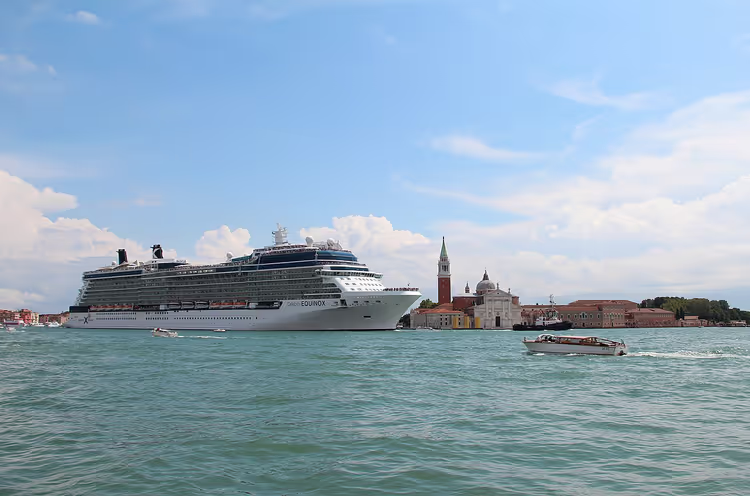
Let's start with a difficult point. Large cruise ships and Venice are incompatible. Each such giant accelerates the destruction of a city that is already slowly sinking. They have no need to pass right next to Piazza San Marco through the Giudecca Canal. It's a noisy attraction, and it harms the entire lagoon.
 © Jean-Pol GRANDMONT · CC BYPhoto: Jean-Pol GRANDMONT, CC BY (https://creativecommons.org/licenses/by/4.0), Wikimedia Commons
Since August 1, 2021, Italy has banned large vessels from entering the historic center. This applies to ships heavier than 25,000 tons: they're sent to the industrial port of Marghera on the mainland (according to NZZ, 09/2026). At the time, the city was close to being placed on UNESCO's "in danger" list. From 2027, the rules will change again, but the giants won't return to the lagoon itself.
How to get there instead: come by car. Daily parking at Tronchetto is located at the old cruise terminal, close to the center. From there, a short People Mover elevated train line runs to Piazzale Roma, and from there vaporettos and walking routes begin. This way you'll see the city from the water without becoming part of the problem. Coming in for the day from nearby ports like Trieste or Ravenna is a fairer option than docking under Venetians' windows. The city only benefits from that.
2. Don't throw trash on the street or into the canal
This seems obvious, but it's worth a reminder. In Venice, trash ends up both on the pavement and straight into the canal. Cigarette butts get it especially bad. A single cigarette butt takes about 15 years to decompose (according to biorama). Now multiply that by thousands of visitors a day.

There are plenty of trash cans in the city. They stand in all the busy squares, next to gelaterias, and inside vaporettos. So the excuse "there's nowhere to throw it away" doesn't work. Carry your wrapper to a trash can, put out your cigarette, and take the butt with you. Trash can lids often have signs prohibiting feeding pigeons, so you can read the next point while you're at it.
Venetians live in an open-air museum. Every discarded cup is a personal insult to them. You're here for a couple of days, but they have to keep living here. Act like you're a guest, not at the beach.
Good to know: Venice sorts its trash, and in the historic districts it's collected by hand in the mornings. A free translation app will help you decipher the Italian signs about rules and fines. A couple of seconds of attention saves both nerves and money.
3. Don't feed the pigeons in St. Mark's Square
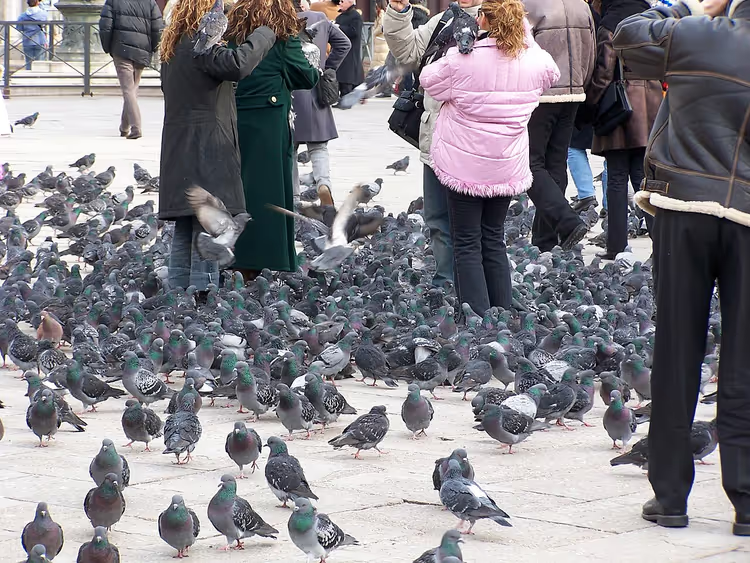
The pigeons in St. Mark's Square look like part of a postcard. In reality, they're a problem, and feeding them has been banned since 2008. That's also when the bird seed sellers were removed from the square. Pigeons damage marble and monuments with their droppings, and there are simply too many of them. A pretty photo with a bird on your hand isn't worth it.
 © User:Agadez/Template:Credits · CC BYPhoto: User:Agadez/Template:Credits, CC BY (https://creativecommons.org/licenses/by/3.0), Wikimedia Commons
The fine for feeding pigeons and seagulls in the center ranges from €25 to €500 (as of the Comune di Venezia, 09/2026). Signs with the ban are posted right in the square, and when there are large crowds of tourists, it's monitored. The birds will get along just fine without your crumbs. With thousands of visitors a day, your handful of feed solves nothing except earning you a new fine.
Important: the ban doesn't only apply to pigeons. Seagulls in the lagoon can't be fed either; they're already bold enough and snatch food out of people's hands. Put your snack away in your backpack when you're standing in an open square. And if a pigeon does land on your shoulder, just calmly brush it off instead of reaching for a treat. Otherwise you'll end up without lunch and with a ticket.
4. Don't hang love locks or draw on walls
Venice is a city for lovers, and the temptation is strong: leave your mark here. But a love lock on a bridge or initials on an old wall is property damage. In Venice, that can get you reported to the police, and deservedly so. A scratch on 15th-century stone can't be restored.
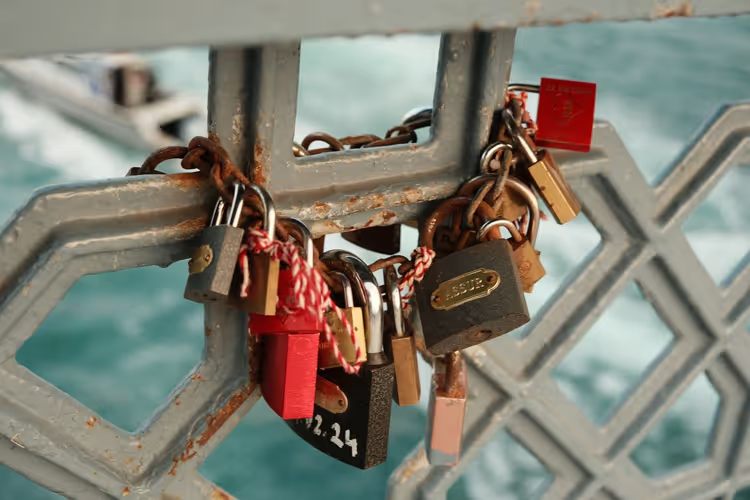
Every such "sign of love" is later removed by the city at its own expense. Locks overload old railings and rust, and writing eats into the plaster. There's zero romance in it, but a fine and a ruined vacation are very real. The city runs the EnjoyRespectVenezia campaign precisely against such "souvenirs."
The same goes for writing on historic plaster. Initials and hearts on walls, bridges, and wells are an act of vandalism, not a cute little gesture. Restorers later remove them by hand, layer by layer, so as not to damage the original. It's especially strictly monitored around St. Mark's and on the Rialto Bridge, where cameras and security are always present. If you really want to capture the moment, do it at the hotel or at home, not on a 16th-century facade. Venice remembers everyone who fell in love with it, even without your markings.
The right way: leave memories in photographs, not on facades. If you want a real symbol, buy Murano glass from a craftsman or a glass of wine at sunset for two. That will outlast any lock and won't cost you a citation. You can also declare your feelings in a gondola under the Bridge of Sighs; that's more fitting than any graffiti. And let the walls remain as they've stood for centuries.
5. Don't swim in Venice's canals
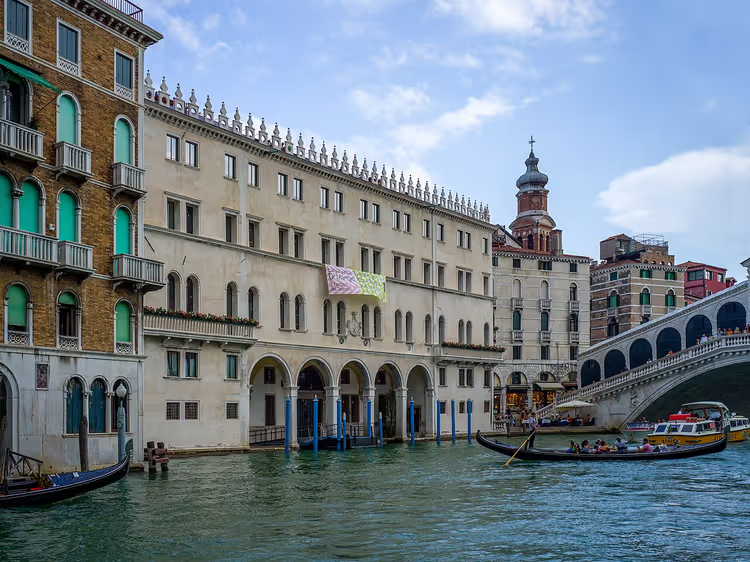
The water in the canals is usually murky, but there are always daredevils. Some jump in to cool off in the heat, others on a dare. You shouldn't do it, and it's not just about water cleanliness. It's genuinely life-threatening.
 © This Photo was taken by Wolfgang Moroder . Feel free to use my photos, but please mention me as the author and send me a · CC BY-SAPhoto: This Photo was taken by Wolfgang Moroder . Feel free to use my photos, but please mention me as the author and send me a, CC BY-SA (https://creativecommons.org/licenses/by-sa/3.0), Wikimedia Commons
A boatman in a narrow canal can barely see a swimmer's head over the stern. A motorboat propeller causes severe injuries. Plus, Venetians consider it outright disrespectful to walk around the streets half-naked. Drunk skinny-dippers once paid a €3,000 fine (as of Spiegel). The water in the canals is tidal and stagnant; swimming in it is simply unhygienic.
There's also a legal side. Swimming in the canals is explicitly prohibited by city regulations, and violators face a fine, not just disapproving looks from Venetians. Police and city guards watch for this especially closely in summer. So save your desire to cool off for the beach at Lido.
Where to swim: go to Lido, a long sandy island right in the lagoon. The water there is clean and genuinely warm in summer. Another option is a day trip to Chioggia and Sottomarina, about an hour by car, with wide beaches and family-friendly infrastructure. You can paddle through the canals themselves on a SUP, but only with an instructor, like the team at SUP in Venice. Surfboards, however, are strictly prohibited: tourists have already been fined for electric foil boards. The lagoon is not a sports arena.
6. Don't sit down to rest on bridges and steps
A full day on your feet is tiring, and you'll want to sit down. Just don't choose the steps of bridges or the wooden high-water platforms on San Marco for that. They're the worst spots in the city. You're literally in everyone's way there.
The passageways between locals and tourist crowds are already narrow. A picnic on the steps blocks foot traffic and is simply annoying. Some bridges already have handwritten "NO PICNIC" signs, and on San Marco guards walk around and shoo away anyone sitting. One couple brewed coffee right on the square and paid almost €1,000 in fines (according to Welt). On the Rialto Bridge, people sitting are watched especially closely.
Where to rest: look for a bench in a quiet area like Cannaregio or sit down at an inexpensive cafe away from the square. The Giardini della Biennale city gardens also help with fatigue. By the way, Venice has several hundred bridges, so a quiet corner is always nearby. You also can't sit on monuments, statues, and wells, and that's monitored separately. Bring a foldable mat only for the waterfront, not for the steps.
7. Don't ride a bike or anything on wheels around Venice
You may not even see it, but people do try. Sometimes people attempt to ride through the city of pedestrians and gondolas on wheels. So here's the thing: it's completely forbidden. Bicycles, e-bikes, scooters, skateboards, and roller skates are all illegal in Venice's alleys.
With so many bridges, steps, and people, riding here isn't enjoyable anyway. Some of these vehicles also make unnecessary noise, and locals value the quiet of narrow streets. For wheelchair users, bridge steps are a real problem, but accessible routes along the wide waterfronts are becoming more common. Look for them in advance if you're traveling with someone with limited mobility, and plan transfers on vaporettos that are wheelchair-accessible.
You can get through the narrow streets with a stroller, but the bridge steps are tough. A baby carrier backpack works much better, especially in high season. And one more rule: in Venice, you clean up after your dog immediately. Locals don't forgive this, and on crowded squares pets are also watched closely. Bring bags and water for your dog, there's little shade in the center.
8. Don't drink cappuccino with the orchestra on St. Mark's Square
Cafes with waiters in tailcoats are already expensive in Venice. And on San Marco, the bill includes live music from small orchestras on open stages. Cappuccino with violins ends up costing several times more than usual. A cup of coffee can easily run into double digits.
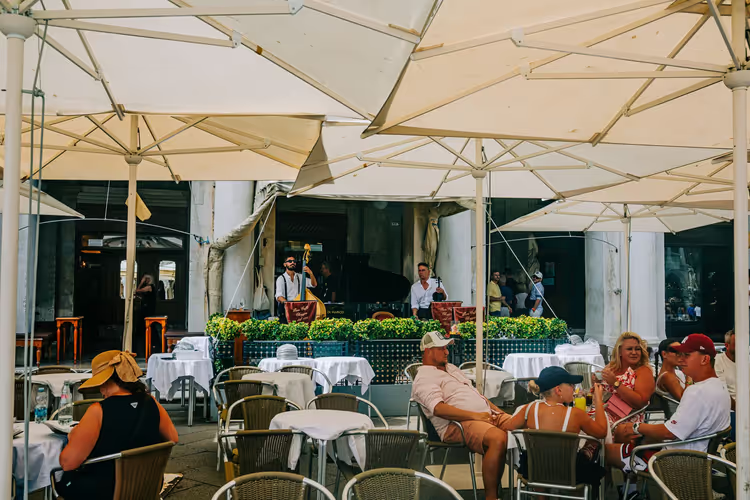
The famous Caffè Florian and its neighbors charge for the atmosphere, not the coffee. On top of the drink price, a separate music cover charge per table is often added. For some people, that moment is priceless, and that's fine. It all depends on your budget and mood on a given evening. Sitting here once in a lifetime for the view of the basilica is an understandable choice.
How to save: you can hear the music across the whole square without ordering at a table by the stage. If you want coffee, have an espresso at the counter in a side alley for a couple of euros, like the Italians themselves do. In Italy, coffee at the bar counter is almost always cheaper than at a table. The price difference is huge, and the taste is often even better. Spend what you save on an extra gelato or a glass of wine at sunset.
9. Don't trust the low prices on restaurant window menus
A pizza under ten euros on the menu at the entrance looks tempting. But it comes with a coperto (cover charge) of a couple of euros per person and a service fee. A bottle of water sometimes costs as much as a glass of wine. And tips on top of that are no longer necessary.
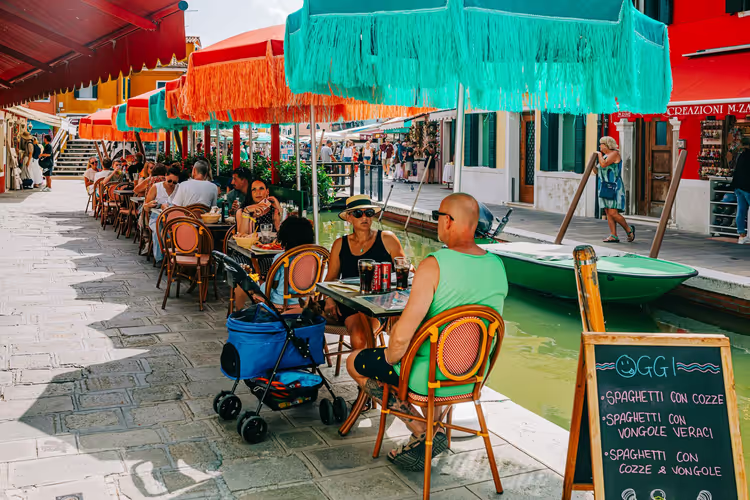
Tourism near hotspots like San Marco does strange things to prices. Read the fine print on the menu before entering a pizzeria, trattoria, or osteria. Bars are almost always cheaper, but they often reheat food in the microwave. A bottle of wine or a cold Aperol Spritz sometimes works out cheaper than a small coffee, and it comes with a snack. Another trap: fish "by weight." Confirm the price per hundred grams before ordering, or the bill will surprise you.
Tip: walk a couple of streets away from the main squares, to the Dorsoduro or Cannaregio districts, where prices are fairer and lines are shorter. Look for a bacaro sign, local wine bars with cicchetti snacks. And to understand Venetian cuisine from the inside, try a cooking class in Venice on GetYourGuide. It's delicious and far more interesting than another overpayment at a window display.
10. Don't board the vaporetto at the Ferrovia pier
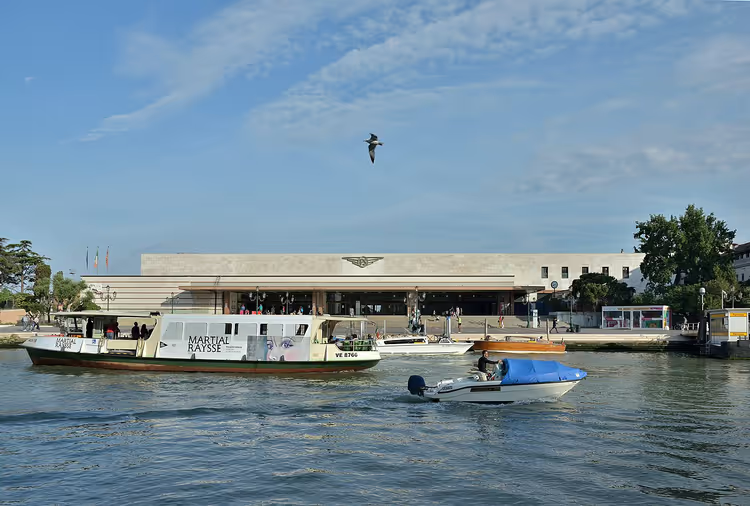
You've just arrived by train at Santa Lucia station and want to get on the water quickly. And you immediately run into a crowd. At the Ferrovia pier there are long lines, and every vaporetto is packed with tourists. You can forget about a seat.
 © This Photo was taken by Wolfgang Moroder . Feel free to use my photos, but please mention me as the author and send me a · CC BY-SAPhoto: This Photo was taken by Wolfgang Moroder . Feel free to use my photos, but please mention me as the author and send me a, CC BY-SA (https://creativecommons.org/licenses/by-sa/3.0), Wikimedia Commons
Editor's tip: the pier at Piazzale Roma is literally around the corner from the station. Boats often leave from there almost empty, and the lines are noticeably shorter. There's also a big supermarket nearby where you can conveniently grab water and a snack at a normal price. Start your lagoon routes from here, not from the first pier you see. This is especially helpful at rush hour and on cruise ship arrival days.
For transport, get a pass rather than single tickets: one vaporetto ride is expensive, and a pass pays for itself after a couple of transfers. A convenient option is the 7-day ACTV pass on GetYourGuide. It works on the Lido, on the islands of Murano, Burano, and Torcello, and on buses in Mestre. With it, you don't count every trip and can plan your day more freely.
11. Don't go to Murano and Burano on Sunday
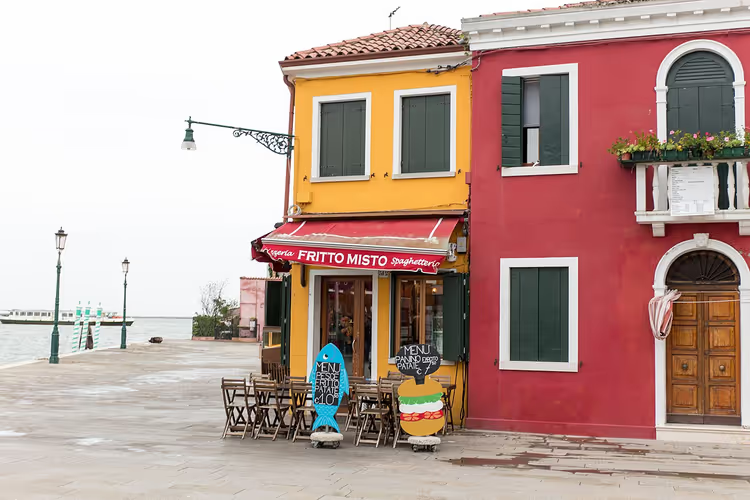
Murano and Burano are islands worth setting aside a separate day for. Just don't try to get there on Sunday at ten in the morning. At that hour, the piers are packed. At best, you'll squeeze in standing and ride that way for almost an hour on a rocking vaporetto.
 © GodeNehler · CC BY-SAPhoto: GodeNehler, CC BY-SA (https://creativecommons.org/licenses/by-sa/4.0), Wikimedia Commons
Weekdays are much better for lagoon trips. Get up early, and you'll find an almost empty boat and a sunrise over Venice. The atmosphere at that time is completely different, and photos without crowds happen naturally. The crowds come later, closer to noon. Murano is traditionally known for glassblowing, Burano paints its houses in bright colors, and quiet Torcello preserves an ancient basilica with mosaics.
Plan the order of the islands by time. Start with the farthest, Torcello or Burano, and leave Murano for the return trip, closer to the city. Vaporetto lines here run less frequently than city routes, and gaps between departures can be half an hour, so check the schedule in advance. It's better to eat on Burano away from the main waterfront, not at the first cafe by the pier. And check the opening hours of glass workshops: many are closed on Sundays and at lunchtime, and you risk seeing only souvenir shops instead of the artisans at work.
How to plan: if you don't want to depend on schedules and transfers, take a ready-made day tour to Murano, Burano, and Torcello on GetYourGuide. A guide will take you through three islands in a day and show you a glass workshop without wandering. It's worth the early wake-up and saves you hours in lines.
12. Don't look for Scala Contarini del Bovolo with a GPS
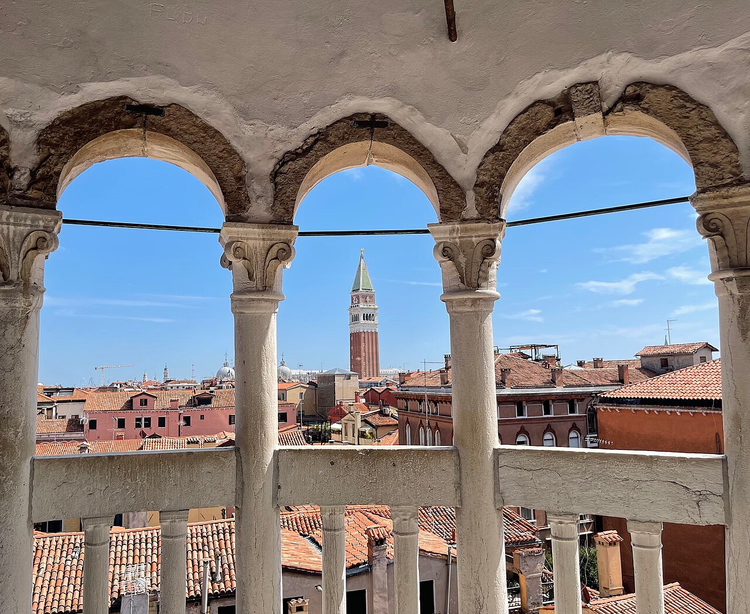
To understand Venice, you first need to get properly lost in it. The labyrinth of canals and alleys is part of the pleasure, not an obstacle. Finding the charming spiral staircase Scala Contarini del Bovolo without hints is hard. But it makes for a great little adventure.
 © Petra Venezia · CC BY-SAPhoto: Petra Venezia, CC BY-SA (https://creativecommons.org/licenses/by-sa/4.0), Wikimedia Commons
The snail-shaped tower hidden in a courtyard doesn't reveal itself right away, even with a map. Give yourself at least half an hour to wander, with your phone in your pocket. Along the way you'll see quiet courtyards, bridges without tourists, and artisan shops the crowds never reach. That's the real Venice, not just the route from the train station to San Marco. Getting lost on the island isn't scary: sooner or later any alley will lead you to a canal or a sign.
Download an offline map in advance in case you get completely turned around. But try to keep your phone in your pocket: half of Venice's charm is exactly in taking the wrong turn. Signs to the Rialto and San Marco are on almost every corner, so you can't get lost for good. And in the evening the crowds thin out and the city becomes truly quiet.
Tip: if time is limited, buy your ticket in advance and skip the line. A ticket to Scala Contarini del Bovolo on GetYourGuide is available online. The upper terrace offers a view over the city's rooftops. But still try to find your way to the staircase on foot, it makes the experience more vivid.
13. Don't haggle with a gondolier over the price
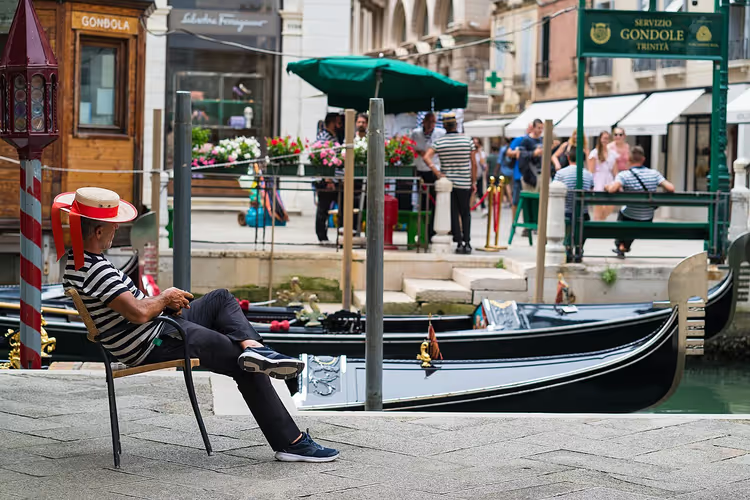
With a gondola, it's simple: rates are fixed and you pay upfront. Haggling is pointless here, prices are set by the city, not by an individual gondolier. So drop any attempts to lower the amount. Instead, pick a scenic route in advance.
 © Nan Palmero from San Antonio, TX, USA · CC BYPhoto: Nan Palmero from San Antonio, TX, USA, CC BY (https://creativecommons.org/licenses/by/2.0), Wikimedia Commons
The official rate is €90 for 30 minutes during the day and €110 in the evening after 7:00 PM (as of 09/2026, gondola rates on the Venice city website). The price is for the whole boat, not per person: a gondola fits up to five guests, so it works out cheaper with a group. Longer rides are calculated proportionally by time, so another 20 minutes during the day will cost roughly €60. Payment is in cash. If you want to see the Rialto Bridge, start from the dock near the Hard Rock Cafe, and for the Bridge of Sighs the closest point is San Zaccaria near the Hotel Danieli.
How to save: a gondolier will always offer a longer, pricier route, since an hour costs twice as much as half an hour. If your budget is tight, book a shared gondola on GetYourGuide in advance. You share the boat with other guests, and the price per seat is noticeably lower. Less privacy, but the experience is the same. And a traditional traghetto across the Grand Canal costs just a couple of euros.
14. Don't go to St. Mark's Basilica with a backpack
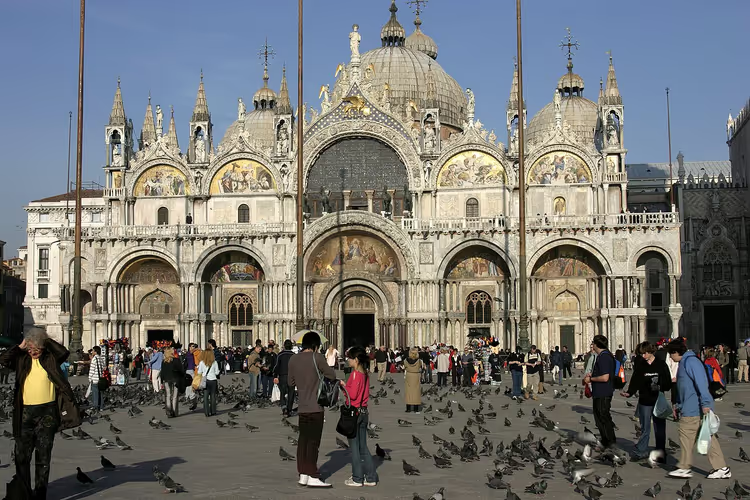
There's almost always a line in front of St. Mark's Basilica. It's a shame to stand in line for half an hour and get turned away at the entrance. And there are only two reasons, both easy to anticipate. It comes down to clothing and luggage.
 © Nino Barbieri · CC BY-SAPhoto: Nino Barbieri, CC BY-SA (https://creativecommons.org/licenses/by-sa/2.5), Wikimedia Commons
You won't be allowed in with bare shoulders, a miniskirt, or a tank top. You can't go in with a suitcase either, even if you're on your way to the train station. Backpacks are banned: they need to be checked in the alley to the left of the square, with a map posted right at the basilica entrance. The luggage storage is free. Dress modestly, cover your shoulders and knees, and leave large bags at the hotel.
Entry to the basilica is paid, with a timed ticket, and the line in high season stretches on for a long time. In summer it's especially long in the middle of the day, so go at opening time. Photography is not allowed inside, so put your phone away right away. Allow about twenty minutes for the visit even without going up to the mosaics and the terrace.
How to skip the line: for a separate fee you can enter St. Mark's Basilica without waiting on GetYourGuide. This saves you time and ensures you won't get caught by the dress code or luggage ban at the door. Going up to the golden mosaics and the terrace with the bronze horses is paid separately. Go in the morning, when the light is soft and there are fewer tour groups.
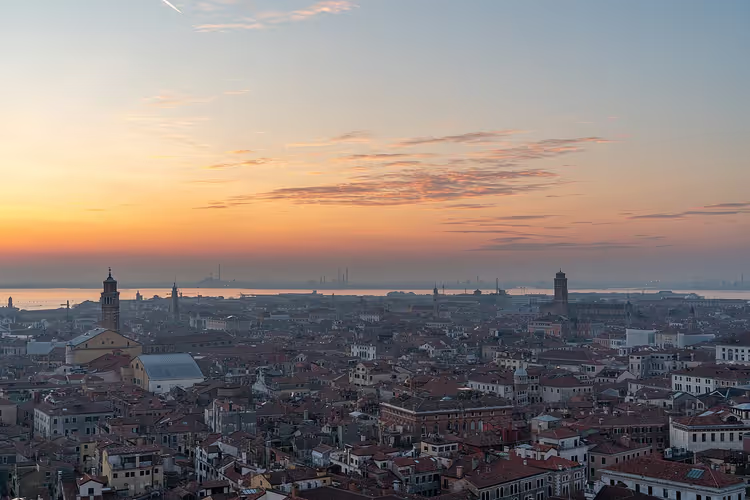
15. Don't miss the sunset over Venice
If it was sunny during the day, a beautiful sunset awaits you in the evening. Missing it is the big mistake of the day. The best views open up across from St. Mark's Square. That's where that iconic panorama of the city on the water is shot.
 © Paul Colin Hennig firstdorsal.eu · CC BY-SAPhoto: Paul Colin Hennig firstdorsal.eu, CC BY-SA (https://creativecommons.org/licenses/by-sa/4.0), Wikimedia Commons
Head to the small island of San Giorgio Maggiore or to the Zitelle church on Giudecca. Along the Fondamenta San Giovanni promenade there are several inexpensive cafes and bars with a view of the city's silhouette. The crowds there are noticeably smaller than at San Marco. Grab a glass, claim your spot early, and wait for the sky to change color. From the bell tower of San Giorgio Maggiore, which has an elevator, the sunset view is even wider than from the famous Campanile.
Arrive half an hour before sunset, the best spots by the water fill up fast. Check the sunset time for your travel date: in summer it's around nine in the evening, in winter already around five. The light ten minutes before and after the horizon is what artists call the golden hour, when the walls of buildings turn warm. On the west side, the Accademia Bridge over the Grand Canal is also great. And if the sky is overcast, don't be upset: Venice is beautiful on a cloudy evening too, just differently, in muted gray-pink tones.
For the mood: a sunset boat ride with an aperitif on GetYourGuide helps amplify the experience. You take in the panorama right from the water, glass in hand, while the city glows in warm light. It's the best ending to a day in the lagoon. And a great excuse not to sit all evening in an expensive cafe on the square.
Venice 2026: entry fee, safety, and suitcases
Beyond the don'ts on this list, visitors to Venice always have three questions. Is it dangerous here, how much does it now cost to enter the city, and is it true that wheeled suitcases are banned. Let's go through them in order, with facts for 2026.
Venice is one of the safest cities in Italy. Violent crime is practically nonexistent here. The main risk is pickpockets in the crowds near San Marco, on the Rialto Bridge, and in packed vaporettos. Wear your backpack in front and keep valuables close to your body. Be skeptical of overly helpful "helpers."
The second underestimated danger is overpaying. Inflated bills near the hot spots, gondolas above the official rate, menus without listed prices. In winter, add acqua alta to that: during high water, wet walkways become slippery. Watch your step and hold on to the handrails.
Now about the entry fee. Since 2024, day-trippers pay to access the historic center on peak days. In 2026, the fee applied for 60 days between April 3 and July 26, from 8:30 AM to 4:00 PM (according to the portal cda.ve.it, 09/2026). It costs 5 € if you book four or more days in advance, and 10 € if you book later (as of 09/2026, Comune di Venezia on the fee). Those staying overnight in the city and children under 14 don't pay, but must confirm their exemption eligibility.
Payment is one-time: one person, one day, regardless of how long you're in the city. You book on the official portal, where you also get a QR code. If you're planning a trip on peak dates, get your ticket in advance, and not just to save money. That way you'll definitely get into the center without delays at the checkpoint.
The fee dates are announced in advance each year, usually weekends and holidays in high season. Inspectors check QR codes on the approaches to the historic center, not on every bridge. Residents of the Veneto region, people with disabilities, and their companions are also exempt. Trying to get through without a ticket on a check day can result in a fine of several hundred euros, so don't risk it.
Good to know: the myth about a ban on wheeled suitcases is not confirmed. There is no enforceable, fineable ban on suitcases in Venice. The story goes back to old proposals from 2014-2018, when fines of up to 500 € for loud hard-shell suitcases were discussed. It never became law, and the city later clarified this directly. But out of respect for residents, carry your suitcase over bridges by hand rather than dragging it up the steps, especially early in the morning and late at night.
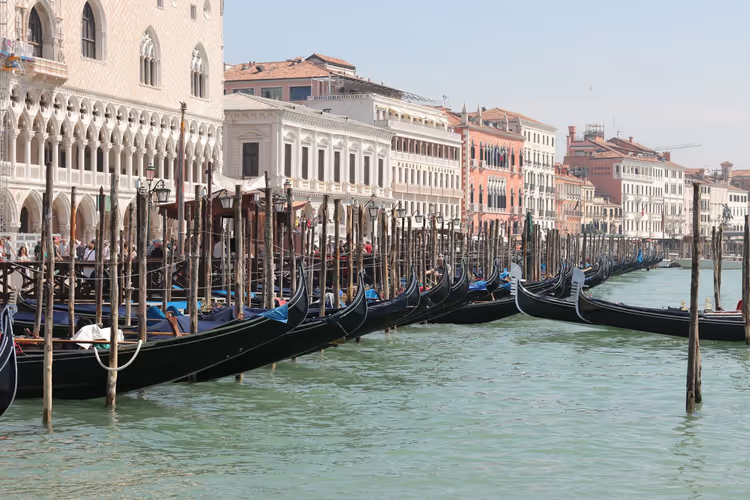
And lastly, almost a joke, but locals take it seriously. Don't sing along with gondoliers or shout "O Sole Mio" after them. This Neapolitan song is not liked in the Venetian lagoon. Respect for someone else's home, that's the main rule of the city.
⁉️🤔 Frequently asked questions
Is Venice dangerous for tourists?
Venice is very safe, violent crime is rare. With ordinary attention to your belongings and prices, you have nothing to worry about.
Is it true that wheeled suitcases are banned in Venice?
No. There is no enforceable ban on suitcases, this is a persistent rumor from old proposals that were never approved.
What can't you do in Venice?
Quite a lot is prohibited: feeding pigeons, swimming in the canals, sitting on bridges, steps, and monuments, riding a bike or rollerblading through the center, littering. Some of these violations carry substantial fines, from 25 to 500 € depending on the offense (as of 09/2026, Comune di Venezia).
Can you swim in the canals of Venice?
No, swimming in the canals is prohibited and punishable by a fine. The water is not meant for that, and motorboats in the narrow canals make swimming genuinely dangerous. For the sea, head to Lido or Sottomarina, where the water is clean and there's a sandy beach.
How much does a gondola ride cost?
The official rate in 2026 is 90 € for 30 minutes during the day and 110 € in the evening after 7:00 PM (as of 09/2026, Comune di Venezia). The price is for the whole boat, which fits up to five people, paid in cash. Bargaining is pointless: the city sets the rates, not the individual gondolier.
Do you have to pay to enter Venice?
On peak days, day-trippers pay an access fee for the center: 5 € with early booking and 10 € later (as of 09/2026, cda.ve.it portal). In 2026 the fee days ran from April 3 to July 26. Dates change from year to year, check the current calendar on the cda.ve.it portal.
In short: what to book
Venice forgives a lot, except disrespect and carelessness. Follow the simple rules, check the menu, and respect the quiet of the residents. Then the city will show you its best side: sunrise over the lagoon, quiet alleyways, and sunset from the water.
If you have one day: get an ACTV day pass and don't waste time in line at Ferrovia. If you're going for a couple of days: book skip-the-line entry to the basilica and an evening lagoon cruise. And to avoid overpaying for spontaneous tours, plan your itinerary in advance and check out tours and tickets in Venice on GetYourGuide.

A small editorial team writing guides for independent travel. We travel ourselves, but we haven’t been everywhere, so we check prices, opening hours and how to get there against official sources.