















Japanese cuisine: 11 dishes worth trying
Japanese cuisine seems complicated until you see the logic behind it. The menu in Tokyo is longer than it looks, and half the names explain nothing. Below are eleven dishes worth trying, and the order in which it's convenient to do so.
Rice has been the foundation of the Japanese table for more than two thousand years, while meat entered the everyday diet only at the end of the nineteenth century (Japan-Guide). This is the main rule of this cuisine: fish, rice, noodles, and vegetables define everyday meals, while meat is more often a reason to celebrate. A week in Japan is easy to live on ramen, sushi, and supermarket onigiri. But one evening with a hot pot will stay with you for a long time.
Below we'll look at what to order at a ramen shop, how sukiyaki differs from shabu-shabu, and whether Kobe beef is worth paying for. The geography is simple: Tokyo, Kyoto, Hiroshima, Kanazawa, Nara, and the lakes at the foot of Mount Fuji.
Ad: this article contains affiliate links, we earn a commission if you book through them, at no extra cost to you.
How Japanese cuisine works
💡 In short:
- Start with ramen and okonomiyaki: this is the cheapest entry point into Japanese cuisine.
- Get one hot pot for two: sukiyaki and shabu-shabu are eaten slowly.
- Set aside one evening for kaiseki or Kobe beef, if your budget allows.
- Dish composition and classification: 09/2026, verified against a gastronomic review and Japan's tourism portal.
Japanese cuisine is built on simple ingredients: rice, fish, noodles, vegetables, and soy. Chefs almost never use strong spices, so you can taste the product itself. Seasonality matters more than the menu here, and the quality of the ingredient matters more than the sauce. Below are eleven dishes in order.
1. Ramen
In Japan, ramen is wheat noodles in a hot broth. The dish came from China and became the country's cheapest fast food: you'll find these places on every corner and inside subway stations.
In Tokyo and Kyoto, the main train stations have entire ramen streets where shops stand side by side. Tokyo alone has several thousand of these spots, and a meal at each takes just a few minutes. Regions cook differently, so the same ramen in Osaka and Sapporo will be a different dish.
Broth type | Base | Flavor |
|---|---|---|
Shoyu | soy sauce | clear, salty |
Miso | fermented soybeans | rich, with a slight sweetness |
Shio | salt and fish broth | light and delicate |
Tonkotsu | pork bones | thick and fatty |
You place your order at a vending machine by the entrance: choose the dish, pay, get a ticket, and hand it over at the counter. A couple of minutes later, a steaming bowl sits in front of you with noodles, pork, bean sprouts, scallions, nori, and an egg. Slurping loudly is normal here, it helps the noodles cool faster. Talking at the counter isn't the custom: you eat and give up your seat.
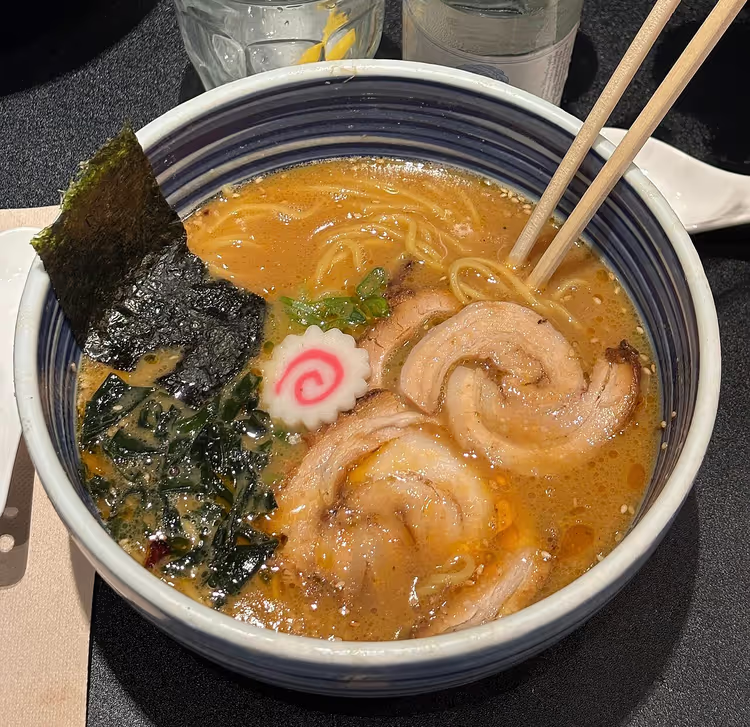 © Mariaaa05 · CC BY-SAPhoto: Mariaaa05, CC BY-SA (https://creativecommons.org/licenses/by-sa/4.0), Wikimedia Commons
- The catch: tonkotsu broth is simmered on pork bones, so it's thick and fatty. If that's too heavy for you, go with shio or shoyu.
2. Hoto
Hoto is cooked in Yamanashi Prefecture, at the foot of Mount Fuji and the lakes of Kawaguchiko, Saiko, Motosu, and Shoji. The noodles are kneaded like dumpling dough, so they're noticeably thicker than udon and soba. Long simmering in miso broth with pumpkin, sweet potato, and other vegetables makes the dish dense and filling.
 © Sitao Xiang · CC BY-SAPhoto: Sitao Xiang, CC BY-SA (https://creativecommons.org/licenses/by-sa/4.0), Wikimedia Commons
Hoto is served in a cast-iron pot that holds heat down to the last spoonful. In the old days, this was peasant food: simple to make, and after a day in the fields, a hot meal warmed you better than anything else. Today the dish remains traditional for these parts and is served in many restaurants around the lakes.
- Where to try it: Hoto Fudo in Kawaguchiko.
- Who it's for: for a cold day after a walk along the lake shore.
3. Okonomiyaki
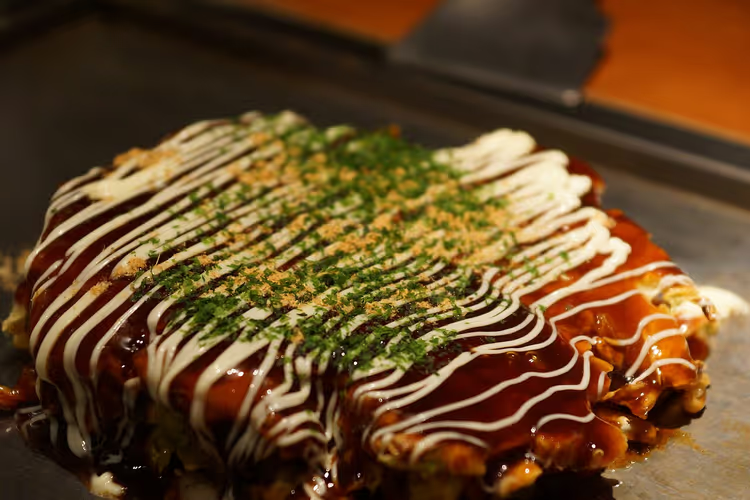
Hiroshima is considered the center of okonomiyaki, Japan's "pizza" from a hot griddle. The name translates roughly as "grill what you like." The batter is made from cabbage, flour, water, egg, yam, and dashi, and on the griddle it turns into a thick pancake.
Then come noodles, bacon, seafood, mushrooms, and scallions. On top, the dish is covered with thick okonomiyaki sauce and bonito flakes, thin shavings of smoked fish that wiggle from the heat. Japanese mayonnaise or a spicy sauce can be added if you like.
In Hiroshima there's a building called Okonomimura: several floors, each with dozens of tiny eateries. About ten people fit at the counter, you sit around the griddle and watch the cook assemble the dish in layers and flip it with a spatula. You eat straight off the griddle while it's hot. There are many such places all over the city, so you'll find a spot without waiting in line.
 © ume-y · CC BYPhoto: ume-y, CC BY (https://creativecommons.org/licenses/by/2.0), Wikimedia Commons
- How to eat: you order at the counter, not through a waiter with a menu.
- The catch: the sauce is sweet and thick, it takes some getting used to.
4. Shabu-shabu
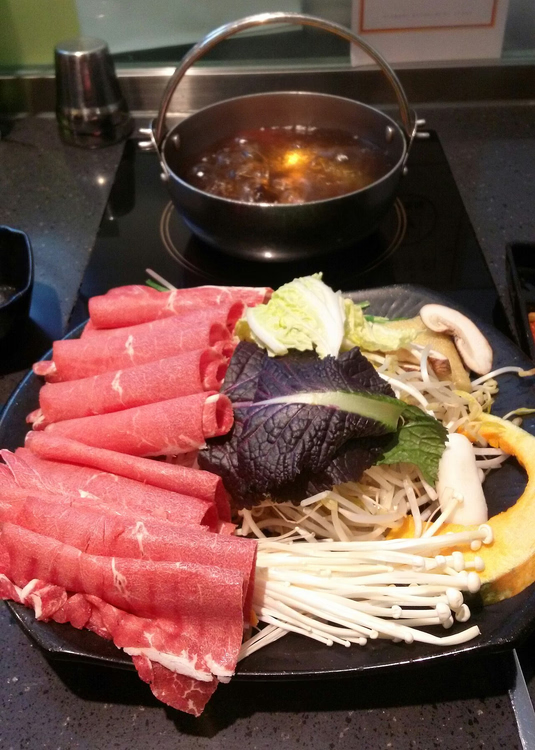
Shabu-shabu is called Japanese fondue: thin slices of meat and vegetables are dipped into boiling broth and held for a couple of seconds. The name repeats the sound the meat makes as it enters the water. You cook it yourself, so you set your own pace.
Cooked pieces are dipped in ponzu sauce or sesame sauce and eaten with rice (according to a culinary reference). The meat passes through the broth for just a few seconds, so the quality of the cut is immediately obvious. Order beef, not the cheapest meat: the price difference is small, but the taste difference is huge.
There are two seating formats. In one, you share the pot with your neighbor at the table; in the other, each guest has their own pot built into the tabletop. In Kyoto, Moritaya at the station is a good place for this kind of dinner: easy to combine with a train transfer.
 © Teacher83 · CC BY-SAPhoto: Teacher83, CC BY-SA (https://creativecommons.org/licenses/by-sa/3.0), Wikimedia Commons
The meat cooks in the broth in seconds, so it's served at the table already sliced and chilled. Vegetables, mushrooms, and tofu go into the pot first, since they give the broth its flavor.
- Who it's for: for a leisurely dinner for two.
5. Sukiyaki
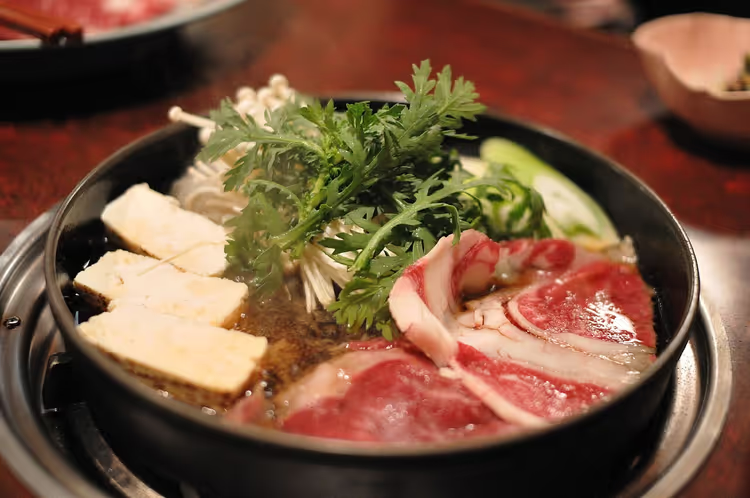
Sukiyaki is made in the same hot pot, but here the broth is sweet and soy sauce based. Thinly sliced beef, vegetables, and tofu go into it, and udon noodles are often added instead of rice. Before eating, you dip each piece into a beaten raw egg: the hot meat sets the egg, and the flavor becomes softer (as described in Japanese dishes).
It used to be made only with beef, but now many places offer pork or fish, and those are noticeably cheaper. We recommend going with the beef version: that's the one that shows why the dish is so loved in Japan. If you're not ready for a raw egg, ask for it to be served separately and not mixed in.
In Nara, look for Washokuya Happoh: guests are seated in small private rooms, you call the waiter with a bell, and dishes are served through a window in the paper door. It makes for a very quiet dinner where no one bothers you.
 © ajari · CC BYPhoto: ajari, CC BY (https://creativecommons.org/licenses/by/2.0), Wikimedia Commons
- The catch: the final step with the raw egg puts off many first-timers.
6. Sushi
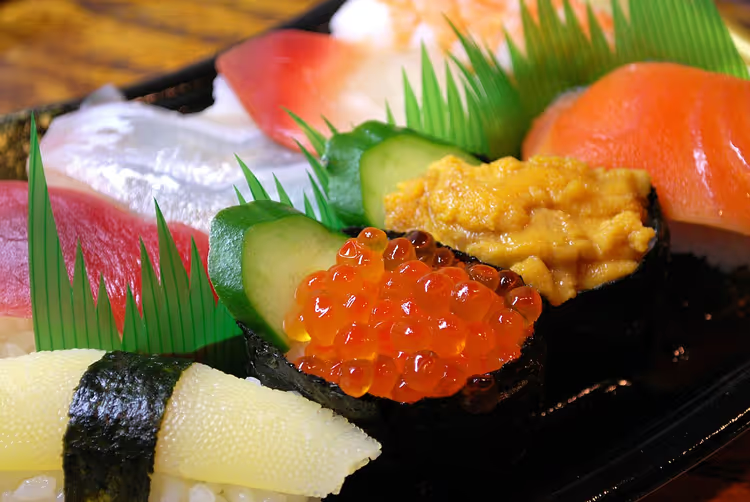
Sushi is better known outside Japan than any other dish in this article. Inside the country, it's simpler than in Europe: vinegared rice, fresh fish, and sometimes a strip of nori. There's no crispy batter or cream cheese inside, and that's for the better.
Quality comes down to proximity to the sea and the skill of the chef, who shapes each piece by hand. Formats vary: a conveyor belt in a department store, a small place with a dozen seats, a counter right in front of the kitchen. If a seat at the counter is free, take it: you'll be able to watch the chef slice the fish and assemble the nigiri.
In Kanazawa, for fresh sushi we suggest Kourin Sushi. At the counter, they'll help you choose and show you what's in season, even if you don't speak Japanese. Asking the chef for his recommendation is easier than reading a long menu.
 © Yumi Kimura · CC BY-SAPhoto: Yumi Kimura, CC BY-SA (https://creativecommons.org/licenses/by-sa/2.0), Wikimedia Commons
- The catch: at popular places, you'll stand in line longer than you'll spend eating. Get there when they open.
7. Kobe beef
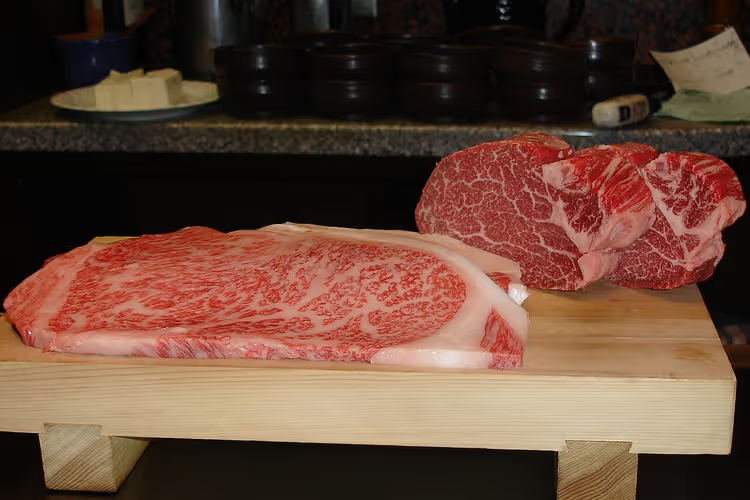
Kobe beef comes from farms in Hyogo Prefecture: it comes from Tajima cattle descended from the Kobe region. You can recognize a cut by its fine marbling, the fat is distributed along the muscle fibers, so the meat melts in your mouth. People often talk about beer and daily massages for the cattle, but most farms don't actually do that.
 © Orlando G. Calvo · CC BY-SAPhoto: Orlando G. Calvo, CC BY-SA (https://creativecommons.org/licenses/by-sa/3.0), Wikimedia Commons
The fattening takes the longest: a steer takes almost three times longer than regular beef to reach the right condition. Antibiotics and growth hormones are not used on certified farms, so the animals are smaller and the meat yield is lower. That's where the price comes from, measured in hundreds of euros per kilogram.
Real Kobe beef is sold with certification from the Kobe Beef association; without it, the sign on the door means nothing. In Kyoto, go to Premium Pound Sanjo Kiyamachi for this kind of dinner: tenderloin and steak are cooked on a teppan right in front of you and served with fried garlic, soy sauce, and wasabi. Book a table in advance, seating is limited.
- The catch: the price. One dinner here costs as much as several days of eating ramen.
8. Kaiseki
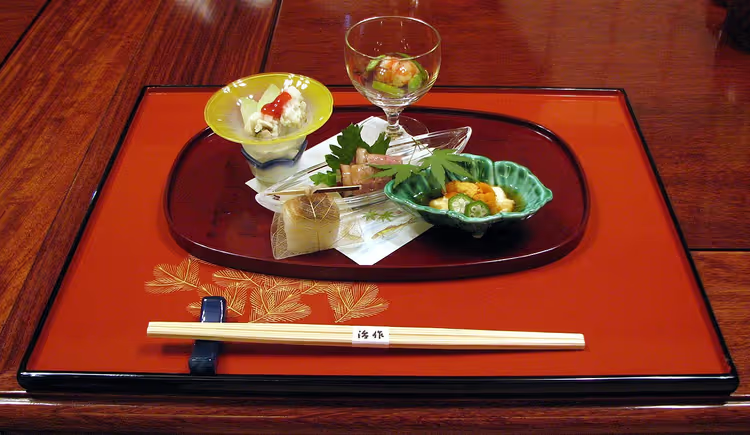
Kaiseki is called Japan's haute cuisine. It started as a light snack served with the tea ceremony, and today it's the most expensive branch of Japanese gastronomy, where product quality comes above all else.
The menu consists of many courses served in order: Sakizuke (appetizer), Hassun (second or third set), Futamono (covered dish), Takiawase (vegetables with fish or meat), Mukōzuke (sashimi), Yakimono (grilled fish), Tome-wan (miso or vegetable soup), and Mizumono (dessert, usually fruit). Every chef has their own style, but this framework is almost always preserved. Training such a chef takes years.
Kyoto has the most kaiseki restaurants, and you need to book them in advance: good places are reserved weeks ahead. One well-known spot, Kamikura, operates in Kyoto. If your budget is tight, look for lunch menus: during the day, the same level costs noticeably less.
 © Unknown author · CC BY-SAPhoto: Unknown author, CC BY-SA (https://creativecommons.org/licenses/by-sa/3.0), Wikimedia Commons
- Who it's for: for those who want to understand Japanese taste without compromise.
9. Mochi
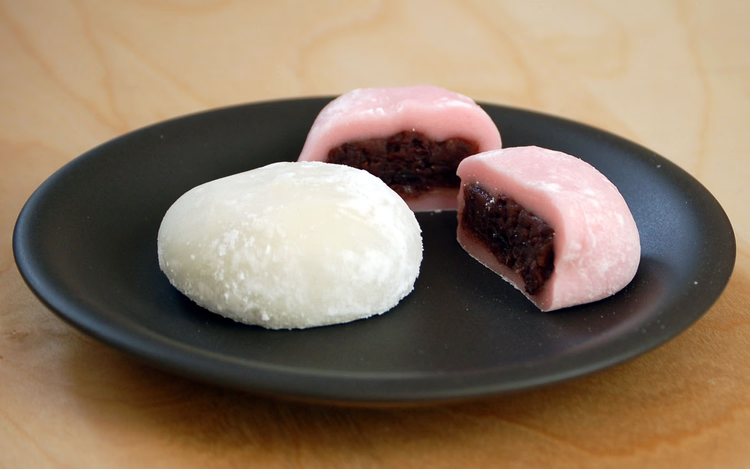
Mochi is made from glutinous rice: it's steamed, then pounded for a long time in wooden barrels until the mass becomes dense and stretchy. The work is hard, so today mochi is often made in factories. They contain no gluten.
 © Lyzzy · CC BYPhoto: Lyzzy, CC BY (https://creativecommons.org/licenses/by/2.5), Wikimedia Commons
The finished mass is shaped into balls and eaten with sweet or savory fillings. The strawberry version will please almost everyone, while the sweet anko bean paste isn't to every European's taste. Chew slowly: the sticky mass has caused accidents, and the press periodically reports on this.
You can buy mochi all over the country. Popular places have dedicated counters where the balls are sold individually, so you can try several kinds in one visit.
- The catch: sweet bean paste is an acquired taste, its flavor is hard to predict.
10. Tonkatsu
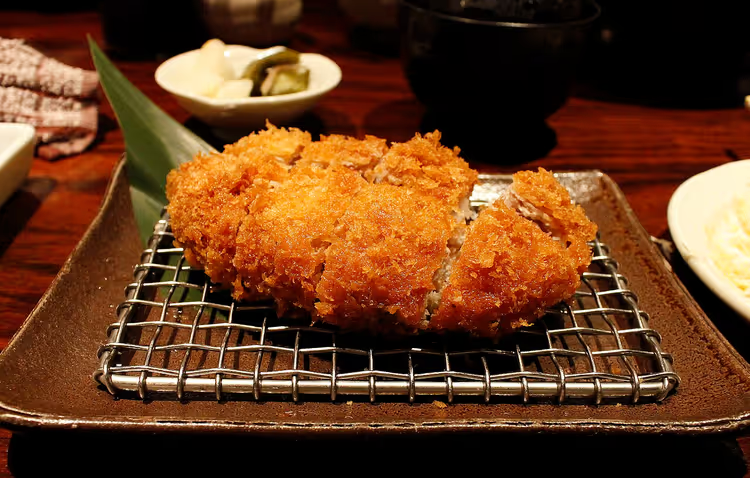
Tonkatsu is made from a pork cutlet in panko breading, deep-fried until crisp. The dish resembles a Viennese schnitzel, only the breading here is coarser. It's served with shredded cabbage, and on lunch menus it often comes over rice as katsudon or with curry. In Tokyo, you'll find a place like this near any major station.
 © Minseong Kim · CC BY-SAPhoto: Minseong Kim, CC BY-SA (https://creativecommons.org/licenses/by-sa/4.0), Wikimedia Commons
11. Yakitori
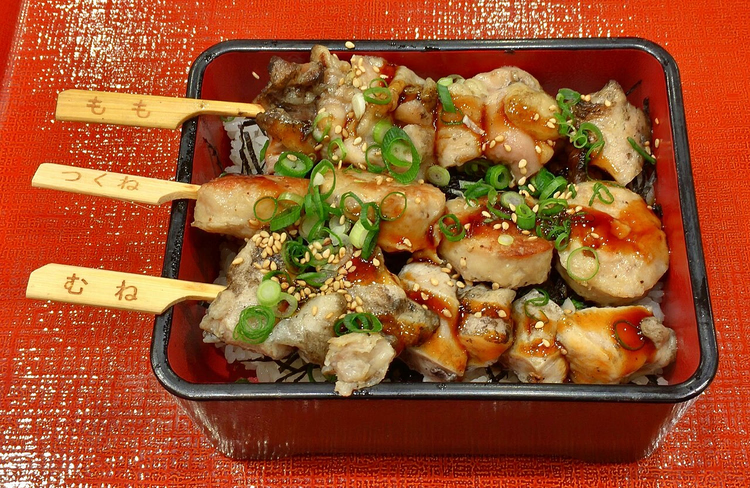
Yakitori is chicken skewers on bamboo sticks, grilled over charcoal and seasoned with salt or tare sauce. Almost the whole chicken is used: breast, thigh, skin, and offal. At markets and street stalls, it's the fastest snack. Grab several skewers at once while they're hot: there are almost no spices here, so the pure meat flavor comes through.
How much it costs to eat in Japan
The cheapest way to eat is almost the same as in Europe: the supermarket and the 24-hour convenience store near the station. Bento, ready-made lunch boxes, are in every supermarket: rice, fish or tofu, and several small portions. These sets are convenient to take on the road between cities: train, bento, and the view out the window. Onigiri are sold in the same places around the clock: a rice ball with fish, vegetables, egg, or tofu wrapped in a sheet of nori (according to the guide to Japanese food).
For hot food, the cheapest options are in the underground passages of train stations and at metro stations. Ramen shops, curry places, and noodle counters sit side by side there, and lunch takes about fifteen minutes.
Fruit is a separate expense category. Because of import restrictions and the local tradition of gifting perfect fruit, an apple in the supermarket costs as much as a full meal. On the other hand, it's hard to be misled about price: a plastic model of the dish stands at the restaurant entrance, and you'll get exactly the same thing on your plate.
If you want to try a lot at once and not choose restaurants yourself, check out food tours in Japan on GetYourGuide.
⁉️🤔 Frequently asked questions
How much money per day goes on food in Japan?
It's hard to give an exact figure, it depends on the city and your habits. A cheap day consists of onigiri with coffee for breakfast, ramen or bento for lunch, and dinner at a place near the station. But one evening of hot pot or kaiseki can cost as much as a whole week of eating like that.
Do you need to book restaurants in Japan in advance?
At popular places, yes, especially where there are few tables: Premium Pound in Kyoto, Kamikura, and kaiseki restaurants at train stations. Reservations are usually made several weeks ahead, sometimes through your hotel. Ramen, yakitori, and okonomiyaki don't require reservations: you show up, wait your turn, and eat quickly.
What should you try if you don't eat raw fish?
The options are wide: tonkatsu, yakitori, sukiyaki, shabu-shabu, hōtō, and okonomiyaki are all fully cooked. At a sushi restaurant, go for baked and cooked items, such as eel or tamago omelet. Kobe beef is also grilled, there's nothing raw on that menu.
Where in Japan is the food most interesting?
Different cities are known for different dishes. Hiroshima is strong in okonomiyaki, Kyoto in kaiseki and hot pots, Kanazawa in fresh sushi, Nara in beef at old establishments. And hōtō is worth trying at the lakes at the foot of Mount Fuji.
In short: what's worth booking
- If your budget is tight: go for ramen, okonomiyaki, and bento from the supermarket.
- If you want one evening at a restaurant: book a table for sukiyaki or shabu-shabu.
- If you're traveling for the experience: plan kaiseki in Kyoto or a Kobe beef dinner.
- If you're at the Fuji lakes: look for hōtō in Kawaguchiko.
Everything else can be sorted out on the spot, and almost everywhere a short line will do instead of a reservation. And if you don't want to plan it yourself, book a food tour on GetYourGuide a couple of days ahead, even when you're already on the road.

A small editorial team writing guides for independent travel. We travel ourselves, but we haven’t been everywhere, so we check prices, opening hours and how to get there against official sources.