

















Where to stay in Indonesia: hostel, villa or eco resort
Accommodation in Indonesia varies widely in price. A hostel in Canggu and a private resort on Sumba are separated by a factor of ten or more in cost. On some islands you'll find hundreds of villas, while on others the only option is a modest homestay with a local family.
Indonesia consists of roughly 17,000 islands, so there is no single housing market here (according to the country's official tourism portal). Hotels are more expensive on Bali, while on Java or Sumatra the same level of comfort costs noticeably less. Rates from old guidebooks won't help you: some properties have closed, some have raised prices, and new fees have been added.
We break down the types of accommodation, real costs, taxes, check-in procedures, and booking timelines. You'll see where to look for hotels and how much to budget. We verified tax and fee rates on 09/12/2026 on the official website of Indonesia's tax authority.
Ad: this article contains affiliate links, we earn a commission if you book through them, at no extra cost to you.
Accommodation in Indonesia: the essentials
💡 In short:
- Most likely you'll fly into Jakarta (CGK), Denpasar on Bali (DPS), or Surabaya (SUB).
- The best time to travel: the dry season from April to October; from November to March there are short but heavy rains.
- Book in advance for the high season: July, August, and December.
- Tax and fee rates: 09/2026, verified on the official tax authority website.
Direct flights from Europe to these airports are rare. More often you'll fly with a connection in Doha, Dubai, or Singapore, and that affects both the ticket price and travel time. Once you're there, you'll need a transfer from the airport to your hotel.
The daily budget varies greatly by island. Simple accommodation and food at a local warung eatery are cheapest on Java and Sumatra. On Bali the same level costs more, and on Raja Ampat or Sumba you're already paying "island" prices. A comfortable hotel and dinners at restaurants require a different budget, while luxury with a private driver runs into hundreds of euros per night.
A homestay is worth choosing to get to know local life: an Indonesian family rents out rooms, prepares breakfast, and shows you their daily routine. You'll find this kind of accommodation in almost every village, and it's often cheaper than a hotel.
If you're looking for accommodation while already traveling, a local eSIM or SIM card will come in handy. Roaming costs more, while mobile internet in the country is inexpensive. Below we break down each type of accommodation separately, from hostels to luxury resorts.
Types of housing in Indonesia
The choice of housing in Indonesia is wider than catalogs suggest. Below we break down the main formats, from a dorm bed to a resort on a private island.
 © musnahterinjak · CC BY-SAPhoto: musnahterinjak, CC BY-SA (https://creativecommons.org/licenses/by-sa/3.0), Wikimedia Commons
Type of housing | Who it's for | Price level |
|---|---|---|
Hostel | solo travelers | lowest |
Homestay | those who want to experience family life | low |
Mid-range hotel | short stop in a city | mid-range |
Boutique hotel | couples and design lovers | above average |
Villa | a family or group of friends | mid-range and up |
Eco-resort and bungalow | divers and nature lovers | from low to high |
Luxury resort | honeymoon and carefree vacation | high |
Hostels
You'll find hostels on almost any island, just like in the rest of Southeast Asia. Here you sleep cheaply and easily meet other travelers. Big party dorms are concentrated in tourist hubs: Kuta, Seminyak, and the Gili Islands. Small hostels are run by families, and there you get a calmer atmosphere. It's convenient to check availability in hostels and hotels all at once on Trip.com.
- Who it's for: solo travelers and couples on a tight budget.
- The catch: in a dorm you share a room and bathroom with strangers, and parties in tourist areas make it hard to sleep.
 © Jorge Láscar from Melbourne, Australia · CC BYPhoto: Jorge Láscar from Melbourne, Australia, CC BY (https://creativecommons.org/licenses/by/2.0), Wikimedia Commons
Homestay
The option closest to local life is called a homestay. A private host welcomes you, and you get your own room or a spot in a small dorm. This way you support an Indonesian family and learn customs from the inside. If you want, join in daily activities, talk with your hosts, and try home cooking.
You'll find homestays even in remote villages. Stuck in an isolated place without a booking? Ask at the nearest warung, meaning a simple eatery or local shop. Neighbors here know each other well, so you'll quickly be offered a place to stay. Often several families are ready to host you for the night at once.
Village houses are rarely designed for guests, so be prepared for a simple standard: a fan, a shared bathroom, sometimes only a light blanket instead of a comforter. It's customary to pay for the night, even if you were invited with genuine warmth. Sometimes the price is stated directly, sometimes it's left unspoken, but your gratitude should be tangible.
Mid-range hotels and boutique hotels
Big cities have plenty of anonymous mid-range hotels. They have almost no atmosphere, but for a short stop they're convenient and inexpensive. On Bali, such hotels are in Denpasar, Kuta, and Seminyak. If you need air conditioning, a TV, and a kettle in your room for little money, you've come to the right place.
Boutique hotels stand apart. They're distinguished by interesting architecture and luxury-level service with local character. But you pay more for the design: rooms here cost noticeably more than mid-range.
- Who it's for: those who value a short stop and predictable service.
- The catch: standard hotels have no view or character, and windows often face an inner courtyard.
Luxury hotels and resorts
The most luxury is concentrated on Bali, in Jakarta, and on Sumba. Branches of international chains operate there: Banyan Tree, Four Seasons, Ritz Carlton, and Raffles. A night in such a hotel costs several hundred euros. Nearby are independent resorts on small and private islands, such as Bawah Reserve and NIHI Sumba.
Such hotels are often chosen for a honeymoon, when you want privacy and ready-made service. You get a personal butler, a private beach, and transfers, but you also pay accordingly.
 © Thank You (25 Millions ) views from Fresno, USA · CC BYPhoto: Thank You (25 Millions ) views from Fresno, USA, CC BY (https://creativecommons.org/licenses/by/2.0), Wikimedia Commons
Camping and glamping
Indonesia's wild nature isn't made for pitching a tent in the forest. Finding a suitable spot without experience is hard, and animals, downpours, and landslides can easily ruin your trip. That's why camping on equipped sites is developing in the country.
You'll find such sites in national parks and in the mountains, as well as on online booking platforms. In some places camping costs literally a few euros per night. If a tent seems too rough for you, go glamping: on Bali and other islands you'll be offered a safari tent, a yurt with a real bed, or a bubble hotel dome.
- The catch: the weather in the tropics changes quickly, and some sites close during the rainy season.
Beach bungalows and eco-resorts
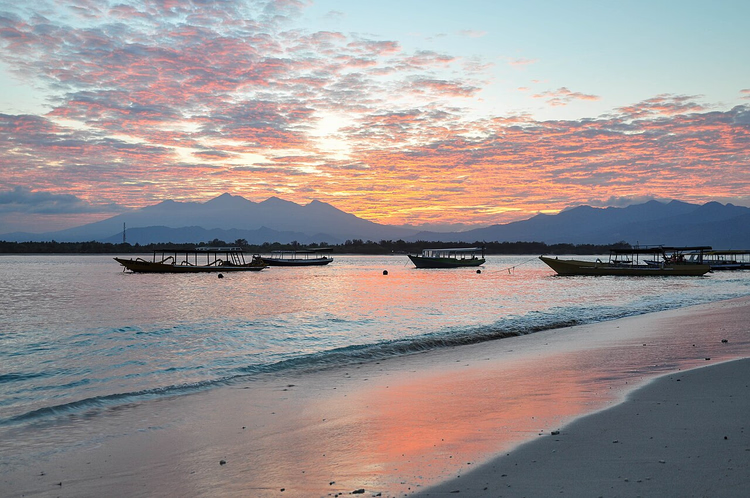
Simple huts, stilt bungalows, or resorts with an environmental focus await you right by the sea. You pay truly little in remote areas of Sulawesi and the Maluku Islands. On Bali and Java, simple beach resorts are also inexpensive, but you won't always fit into a backpacker budget.
At least once, spend a night in a traditional lumbung hut with a thatched roof and a small living area. On small islands and in the diver's paradise of Raja Ampat, you sleep in a wooden bungalow right above the reef. Almost all such resorts follow environmental standards, and the most famous example remains Misool Eco Resort on the island of the same name. In Komodo, Le Pirate Island offers a similar format.
Villas on Bali
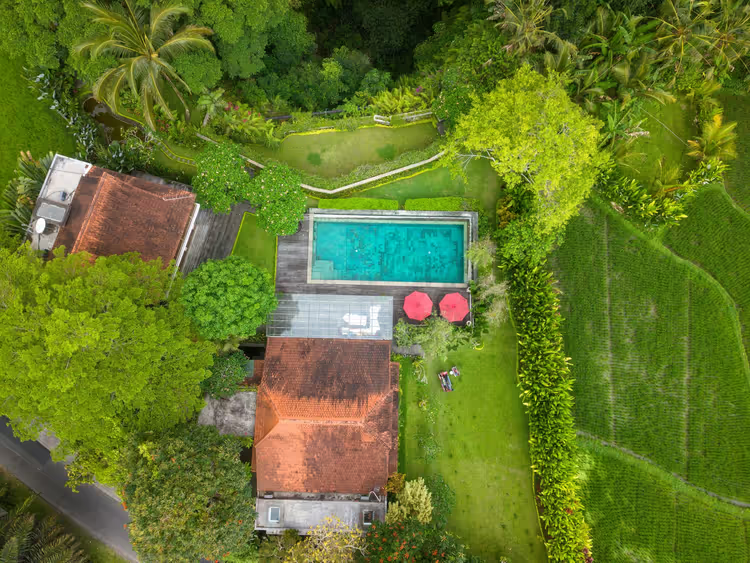
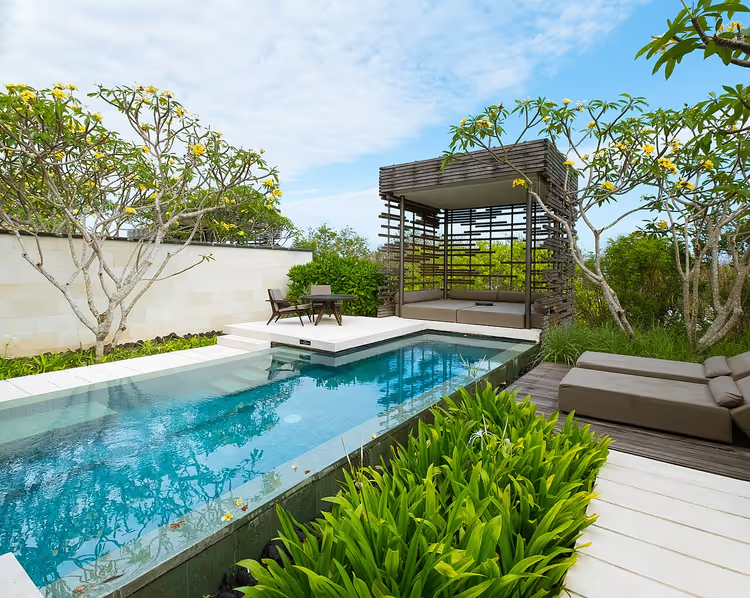
The word villa scares people with its price, but on Bali a villa is often a better deal than a hotel. For a family or group of friends, it's a way to get a private pool, a kitchen, and complete privacy. The average bill for a villa is often comparable to the price of a simple hotel, especially if you split it among several people.
Villas are cleaned daily, and for an extra fee you can add a cook, driver, and massage. Look for such options on rental platforms or directly with the owner. If you're traveling alone and don't want to take a whole house, go for a traditional joglo, a wooden house originally from Java.
 © a.canvas.of.light from Melbourne, Australia · CC BYPhoto: a.canvas.of.light from Melbourne, Australia, CC BY (https://creativecommons.org/licenses/by/2.0), Wikimedia Commons
Villa prices vary more than hotel prices and depend on the area and season. In Canggu and Ubud there are more options, while in the south of the island prices are higher. Compare several options at once, because the difference between neighboring villas can be significant.
All-inclusive hotels
Bali has many all-inclusive hotels. The same format is offered by wellness, yoga, and dive resorts on remote islands. It's convenient if you're staying on a small island with no restaurants nearby. With a wellness or Ayurveda program, you'll get a separate menu anyway, so the package becomes almost mandatory.
In tourist hubs, it's up to you whether to leave the hotel or not. Keep in mind that alcohol in Indonesia is expensive.
- The catch: a package with wine and spirits is often not worth it, and it's easier to pay for drinks separately.
Sharia-compliant hotels
Sharia-compliant hotels, or Syariah, are found almost everywhere in the country. Strict sharia rules apply only in certain places like Banda Aceh, but hotels for Muslims exist almost everywhere. They serve only halal food, don't pour alcohol, and provide prayer rooms.
A couple will be checked into such a hotel only with a marriage certificate. This rule also applies to guests of other faiths. On booking platforms, such hotels are marked, and the conditions of stay are stated in advance.
Villas and houses for long stays
If you're staying for months, renting a house is cheaper than a hotel night. Owners often rent villas and apartments monthly, and the price can be negotiated. Some joglo and bamboo houses are rented only directly, without platforms.
For a long stay, internet, a washing machine, and distance from noisy streets matter. Check these in advance, because descriptions don't always mention such details.
How much accommodation costs in Indonesia
The nightly rate depends on the type of accommodation, location, and season. Bali, parts of Lombok, and remote islands like Raja Ampat and Sumba are the most expensive. On Java or Sumatra, you can stay for noticeably less. A convenient way to compare options across the country is Trip.com.
Budget lodging on Java or Sumatra will cost you a few euros, and a dorm bed is slightly more. In Jakarta, prices are higher, and on Bali they rise again. For a double room in a solid mid-range hotel in Jakarta or Yogyakarta, you already pay tens of euros per night. A pleasant room in a small guesthouse on Bali costs less and usually includes a light breakfast, a private bathroom, and air conditioning. Villas for two with a private pool cost about the same as a good hotel or more.
Taxes are almost always added to the base room rate. The main tax remains PPN (VAT), and some hotels also charge a service fee. At expensive hotels, the fee is already included in the rate; at cheap ones, it is calculated separately. If you see a net rate label, taxes and fees are already included in the listed price.
Fees, taxes, and visas
A visa and local fees are a separate line in your budget. Since 2025, the PPN rate has been set at 12%, but for ordinary goods and services it is calculated from an 11/12 base, so you effectively pay 11% (according to Indonesia's tax authority). A 30-day visa on arrival is arranged online in advance, and the Bali tourist levy is paid once per trip.
Fee | Amount | Where to arrange |
|---|---|---|
PPN VAT for hotels and services | effectively 11% (as of 09/2026, official tax authority website) | |
Visa on arrival, 30 days | 500,000 IDR (as of 09/2026, evisa.imigrasi.go.id) | |
Bali tourist levy | 150,000 IDR (as of 09/2026, Love Bali portal) |
You can extend the visa once, so the length of stay can actually be stretched to two months (according to the immigration service). The Bali levy has applied since 2024 to all foreign tourists, including children, and it is checked at the entrance to certain sites (according to the Love Bali portal).
Location and season
To save money, stay away from hyped areas like Munduk in Bali. You'll pay the least where locals live. At the same time, make sure it's easy to get around from there: Gojek and Grab don't work everywhere. Seclusion will turn into long trips for food.
Within a single hotel, direct beach access, a sea view, and pool access push the price up. A larger room costs more than a standard one. Remote islands add what are called island prices: building materials and food have to be shipped in from far away.
Season changes everything. In high season, prices rise and bargaining is pointless. There's no single high season across the country, but in July, August, and December there are noticeably more tourists. Come during the rainy season and outside major national holidays, and you'll pay less.
Extra costs at the hotel
Wi-Fi is free almost everywhere, but its quality depends on the island. A bottle of water in the room is usually included, but breakfast isn't included everywhere. Alcohol in the minibar and hotel bar, however, is expensive because Indonesia taxes it heavily. Air conditioning often costs extra, while a fan is cheaper. Hot water also isn't always guaranteed: at eco-friendly resorts it depends on solar heating, and on cloudy days you may be left without it.
Long stays and non-refundable rates
If you're staying in one place longer, negotiate a weekly or monthly rate. This works best in low season, when the hotel isn't full. Many hotels offer a "four nights for the price of three" deal, and these offers are posted on their websites.
Since the pandemic, hotels have split rates into refundable and non-refundable. By giving up the option to cancel, you save a noticeable amount. Only go for this if the trip is definitely happening and you have cancellation insurance.
How to avoid overpaying
Read reviews from other guests and check the dates: old reviews won't help you. A suspiciously low price almost always means either a remote location or a lack of renovation. If you're fine with a basic room, the price difference will work in your favor.
 AIIllustrative image: AI-generated
Price benchmarks by accommodation type
Type | What you get | Price benchmark |
|---|---|---|
Hostel bed | a spot in a dorm, shared bathroom | a few euros |
Homestay | a room, breakfast, time with a family | usually cheaper than a hotel |
Mid-range hotel | air conditioning, private bathroom, TV | tens of euros |
Boutique hotel | luxury-level design and service | noticeably more than mid-range |
Villa with pool | privacy, kitchen, daily cleaning | from the level of a good hotel |
Luxury resort | beach, service, transfers | hundreds of euros per night |
On Lombok, Flores, and Sulawesi, accommodation is cheaper than in Bali, but there's also less choice. The fewer hotels there are on an island, the higher the chance you'll be offered the only available option at an inflated price. Book in advance for small islands.
A private guesthouse or homestay is almost always a better deal than a hotel. You pay less, get personal treatment, and often breakfast. A basic room with a fan costs less than a room with air conditioning, and in the heat the difference isn't as noticeable as it seems.
Certain parts of Bali are so hyped that prices there are comparable to Europe. Munduk, Ubud, and the south coast are more expensive than the eastern villages. On Java and Sumatra, the same hotel category costs several times less, and it's easier to find accommodation on a modest budget.
What gets added on top of the rate
Many hotels show prices without taxes, and you pay extra at the front desk. This applies to both major chains and budget guesthouses. Ask in advance what's included in the final total so you don't overpay at the end of your trip.
A service charge sometimes appears as a separate line item, and sometimes it's already hidden in the rate. Next to the price, check whether breakfast is included and whether the room has air conditioning: these add-ons change your budget noticeably. Exchange rates fluctuate, so calculate your expenses in rupiah rather than euros, and you'll spot an inflated price faster.
At expensive hotels, fees for late checkout and airport transfers are added to the rate. Check this in advance, because a transfer from Denpasar airport can cost as much as a night in a guesthouse.
What to expect at Indonesian hotels
Daily life at an Indonesian hotel differs from what you're used to in Europe. Below we cover check-in, deposits, room amenities, and the typical small things worth knowing in advance.
 © musnahterinjak · CC BY-SAPhoto: musnahterinjak, CC BY-SA (https://creativecommons.org/licenses/by-sa/3.0), Wikimedia Commons
Check-in and deposit
At check-in you show your passport, and at larger hotels also the card you booked with. Within the first day, the hotel registers you in the local system. At a private homestay, it's worth reminding the host about this formality.
Some hotels ask for a cash deposit against possible damage. The amount is stated at reception, and the money is returned at checkout after the room is inspected. Ask about the deposit in advance so you have the right amount in cash. At large chains, they block the amount on your card instead of taking cash.
Can an unmarried couple stay in one room
A law banning unmarried couples from sharing a room is under discussion, but the authorities assure that it will not apply to foreigners. The situation is different if you share a room with an Indonesian partner: officially it is prohibited, although some hotels turn a blind eye.
In conservative regions such as Banda Aceh and at sharia-compliant hotels, be especially careful. Same-sex couples are almost never turned away in Bali, but in conservative areas it's better to choose accommodation in advance.
Room amenities
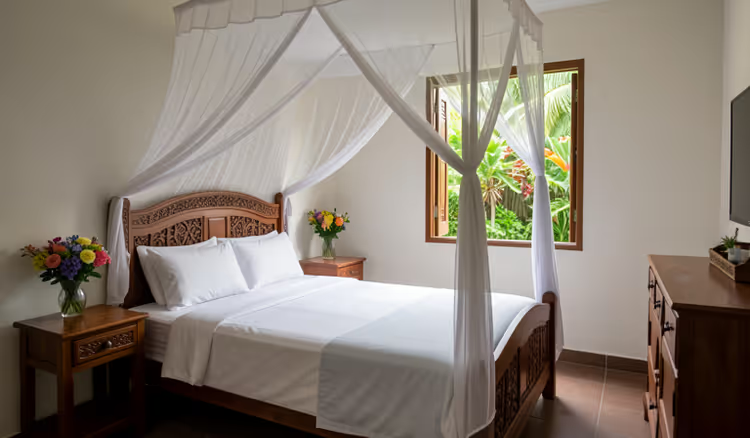
Beds at Indonesian hotels are noticeably softer than at Thai ones. At cheap homestays you'll get a sheet instead of a blanket, but in the heat that's not a problem. Bring mosquito repellent, because depending on the season and region there can be a lot of them.
Check in advance whether the room has a mosquito net. If not, a compact travel net will come in handy. At expensive hotels you'll be given a spray or plug-in repellent, while at simple ones you'll have to look after yourself.
Bathroom and toilet
In most bathrooms you'll find a regular toilet, a mandatory bum gun (handheld bidet sprayer), and a shower. A sign or basket nearby will remind you not to flush toilet paper, otherwise the pipes will clog. At very cheap homestays there is sometimes a traditional bathroom with a water tank and a scoop, naturally with cold water. Sometimes there is also a toilet without a seat.
Internet and connectivity
Wi-Fi is free almost everywhere and works reasonably well, but in villages, jungles, and on remote islands you should expect outages. Either use that time for a digital detox, or buy an Indonesian SIM card with data right after you land. You can arrange an Indonesian eSIM in advance and avoid hunting for a shop on arrival. Don't forget a VPN if data security matters to you.
Breakfast
Whether breakfast is included in the price depends on the hotel. At small guesthouses it is usually free, while at large hotels you pay extra for the buffet. The traditional options are banana pancakes, bubur ayam (rice porridge with chicken), or nasi goreng. They come with fresh fruit and good coffee, sometimes made from local beans.
Yogurt, muesli, bread, and cheese are more likely to be found at international hotels. Breakfast at a nearby cafe is often cheaper, especially at expensive resorts. In Bali it's worth trying a floating breakfast: for an extra charge, breakfast is brought to you on a floating tray in the pool.
Cleanliness and insects
Cleanliness at Indonesian hotels doesn't always meet the standard you'd expect at home. Large hotels clean daily, while homestays may not offer daily housekeeping. The humid climate and proximity to the sea quickly lead to mold and wear.
Add geckos and insects to that. The closer you are to nature, the more uninvited guests you'll find in your room. This is part of local life, not a sign of dirt.
Ramadan
Many regions of the country observe Ramadan, and this affects your plans. Check in advance whether the hotel restaurant is open during the day and where breakfast will be served. Sometimes guests are seated at a separate table from those fasting, and sometimes only room service is available. After the evening prayer, many hotels put on a generous buffet, and guests can usually join. Ask at reception about the iftar dinner.
What changed after the pandemic
Indonesia opened its borders to tourists late and did so with restrictions for a long time. There was no tourism revenue, so some hotels went years without renovation. Many employees changed professions, and hotels in some places are short-staffed.
In popular areas, renovation is ongoing, and prices are noticeably higher than before the pandemic. Hotels need to make up for the downtime and pay off loans. On the plus side, you can feel that the staff is genuinely happy to see tourists.
 © Thank You (25 Millions ) views from Fresno, USA · CC BYPhoto: Thank You (25 Millions ) views from Fresno, USA, CC BY (https://creativecommons.org/licenses/by/2.0), Wikimedia Commons
Is it safe to stay at hotels in Indonesia
Overall, Indonesian hotels are safe, but German authorities remind travelers of the risk of terrorist attacks. In the past, large hotels in metropolitan areas have been targeted. The country lies in an active seismic zone, so at check-in, study the evacuation routes in case of an earthquake, volcanic eruption, or tsunami.
Keep valuables in the safe and don't let your card out of your sight when paying. At a hostel or small guesthouse, a good lock for your luggage and locker will come in handy. Don't leave expensive items in plain view.
What to bring to your room
Pack for a tropical climate and a simple standard of accommodation. A short list will save you an evening once you're there.
- Mosquito repellent and a compact mosquito net if the room doesn't have one.
- A small lock for your suitcase and hostel locker.
- A quick-drying towel and clothes you don't mind getting dirty.
- A first-aid kit with anti-diarrheal medicine, painkillers, and band-aids.
- A power bank and a spare cable, because cheap rooms have few outlets.
Toiletries and repellents are easy to buy locally: local shops keep prices low. Bring high-SPF sunscreen, because the sun in Bali is strong all year round. If you're heading to the mountains, add something warm: nights on Java's volcanoes are cold.
Small things that surprise guests
Towels at cheap homestays are provided on request, not automatically. Tap water is not safe to drink; drink bottled water. Outlets here are the European type, but voltage sometimes fluctuates, so it's better not to leave expensive electronics plugged in.
Air conditioners and fans often run all night, and you can hear them. If you're a light sleeper, ask for a room away from the road and the kitchen. Ground-floor rooms are more often damp.
Hosts take care of you in different ways: some will offer tea, others will leave the key and not appear until morning. Ask directly if something is missing, and you'll usually get help.
About climate and health
Heat and humidity are harder to handle in the first few days, so don't plan long treks right away. Drink more water than you would at home. Direct sun can burn you within an hour if you're not used to it, so sunscreen and a hat are useful even on a cloudy day.
In the rainy season, roads get washed out, and a trip to a waterfall may fall through. Keep a backup plan for the day. A first-aid kit handles most minor issues, and insurance covers serious cases.
In regions with malaria and dengue fever, protect yourself from mosquitoes especially carefully. Check with a doctor before your trip whether you need preventive medication.
Where to search for and book accommodation
Almost all accommodation options in Indonesia are listed on major platforms. Booking and Agoda remain the most popular: the reservation is confirmed immediately, and you leave your card as a guarantee. Payment often happens on site, and you'll be notified after confirmation.

Loyalty to a platform pays off. Both systems offer discounts and bonuses for regular bookings, so returning guests pay less. If you like a particular chain, consider booking directly: Marriott and Accor run free loyalty programs. It's convenient to compare prices and dates on Trip.com.
Homestays can also be booked directly. Some families work through Homestay.com, others through Airbnb, which is becoming increasingly popular in the country. Villas and apartments can be found on FeWo-Direkt or Vrbo. Some properties, such as the bamboo villas at Hideout Bali, are only rented through their own website.
In remote areas, Google Maps comes to the rescue. You set the area you need, and the map shows hotels, cafes, and restaurants. A click sometimes reveals contacts and the portals through which the room is booked. Always read reviews before booking, especially for private hosts.
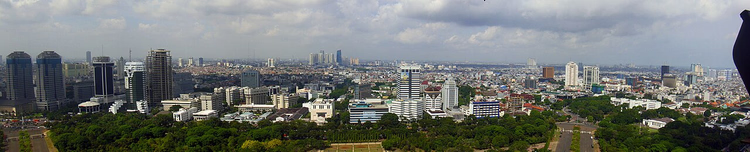 © musnahterinjak · CC BY-SAPhoto: musnahterinjak, CC BY-SA (https://creativecommons.org/licenses/by-sa/3.0), Wikimedia Commons
Booking accommodation on the spot
If you don't like planning far ahead and travel spontaneously, you can look for accommodation right on the spot. This approach has its advantages.
You almost always get a room cheaper because you negotiate directly with the staff. If a room is still free after lunch, the hotel will gladly give it to you at a discount. On the spot you immediately see the area, the facilities and the cleanliness, while online photos show only the best side.
But there are exceptions. For a late arrival, it's better to book at least the first night, especially if you're traveling with children. In popular areas like Canggu and on very small islands, book in advance. You need to be careful in high season, during major holidays and in remote areas: there are few available rooms, and good hotels get snapped up long before.
High season in Indonesia usually hits in July and August, and also around Christmas. That's when both foreigners and Indonesians themselves travel. Without an early booking, you risk ending up with a poor room or paying more.
When and how far in advance to book
The timing depends on the destination and the season. In July, August and December, popular resorts fill up quickly, so don't put off booking. Keep holidays and school breaks in mind: Bali also gets Australian school holidays on top of that.
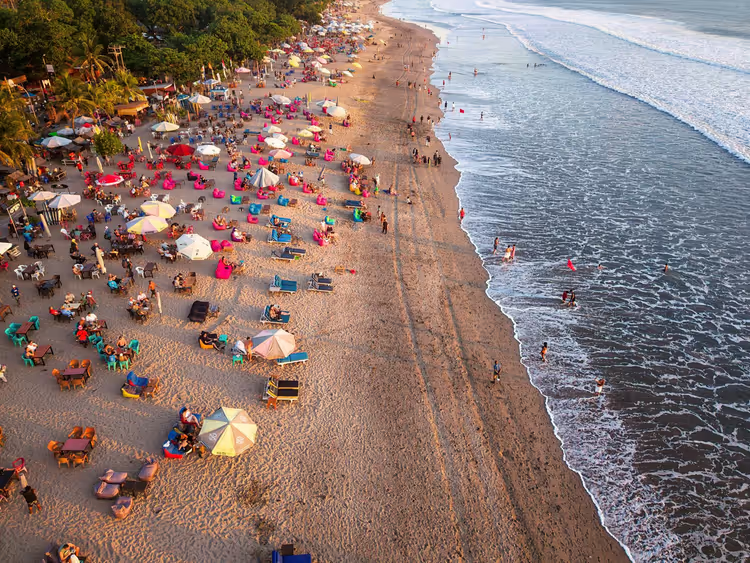
The general rule is simple: where there are few hotels, you book in advance. If your budget is limited, also plan ahead, because cheap options get taken first. Extra money gives you flexibility, and you can easily find something at the last minute.
The rainy season and low season are great for saving money and spontaneous trips. Bring a raincoat, but you'll almost always find a good room.
How to pay in Indonesia
The country uses the Indonesian rupiah, abbreviated IDR or Rp. Prices are often written with the letter k, meaning thousands of rupiah. Don't confuse this notation with a regular amount: k means a thousand, not a hundred.
In expensive hotels, prices are sometimes listed in dollars. Officially, payment is made in rupiah or by card, but dollars are accepted in some places, though at a poor exchange rate. When booking online, the card serves as a guarantee, and you settle the bill on the spot.
Some hotels charge a fee for card payments, so sometimes it's better to pay in cash. ATMs dispense a limited amount at a time, and in remote areas the bills run out quickly. Check in advance whether there's an ATM nearby and when it gets refilled, especially on the small islands around Bali.
If you pay by card, choose to be charged in rupiah. That way you avoid double conversion and extra fees. For large amounts, a Wise transfer works well: the rate is better and the fee is lower.
Related reading
Indonesia: tips and preparation
All the key travel topics: visa, tickets, season, health and insurance.
The best Bali hotels
A selection of unusual hotels on the island for those still choosing accommodation.
Honeymoon in Bali
Hotels and places for couples, sorted by area of the island.
Villas and bamboo houses
Private options for a family, a couple or a group of friends.
It's easier to compare accommodation by price and dates at once. Below is a selection of hotels for your travel dates.
Read recent reviews from the last year: old ratings don't reflect the current state of the hotel. On Bali, distances on the map are deceptive, the road takes longer than it seems, and without a scooter you depend on taxis.
What to check in the listing
Descriptions on the islands often don't mention that you need to drive to the beach, not walk. Check the location on the map and see whether there are cafes and an ATM nearby. Ask whether breakfast is included and whether there's hot water. If the listing has no photos of the bathroom, it's most likely very basic.
Bargaining on the spot
Bargaining on the spot works, but with a caveat. In low season you easily get a discount; in high season the owner barely budges. Keep cash on hand: small homestays don't accept cards, and the nearby ATM may be empty. Ask questions before paying: does the fan work at night, is there hot water, does the window close against mosquitoes. Answers on the spot are more accurate than any photos.
In small towns, owners are happy to show available rooms, and you choose based on what you see. In tourist centers this approach works less well: everything is booked, and prices are fixed. Compare two or three options before paying.
Plan ahead if you're traveling in high season, during holidays or to a remote area. In these cases, options disappear quickly, and prices rise every day. Bali requires extra lead time because of Australian school holidays: in December and January the island is packed, and you need to book several weeks in advance.
If you're moving from island to island along a route, book at least the first and last night. In between, you can freely look for accommodation as you go. The rule is simple: the fewer hotels on the island and the higher the season, the earlier you book.
The rainy season lowers prices, but it doesn't stop them from rising during the New Year holidays. In late December, even cheap homestays raise their rates. Plan separately for local long weekends: on those dates there are almost no available rooms left.
Scooter, taxi and transfers
If you plan to get around a lot, renting a scooter is cheaper than taxis. But you need a license to ride, and on Bali drivers are often stopped. Order taxis through the Gojek and Grab apps: the price is shown upfront. For the airport, take an official taxi or a pre-booked transfer.
On money overall: pay small things in cash, and large amounts by card. Withdraw money from ATMs of major banks, where the rate is fairer, and don't agree to be charged in euros. The exchange rate at money changers near the airport is usually worse than in the city, so exchange money in small amounts.
Find hotels in Bali
Compare prices across booking sites and filter for rooms with free cancellation.
Compare prices on Trip.comThe widget loads once you give your consent.
⁉️🤔 Frequently asked questions
What types of accommodation are there in Indonesia?
The choice is wide: hostels, homestays with local families, mid-range hotels, boutique hotels, villas, and luxury resorts. Style, comfort, and prices differ noticeably between Bali and Java. In remote areas, beach bungalows and eco-resorts are more common. For a short stopover, a standard hotel works well, while for a longer stay a villa is a better value.
What is a homestay in Indonesia?
In a homestay, you live with an Indonesian family or in a private home. You usually have your own room, sometimes a spot in a small dorm. This way you get closer to daily life, try home cooking, and get tips from your hosts. It is often cheaper than a hotel. The standard can be basic: a fan, a shared bathroom, cold water from a tank.
Should you book in advance or look on arrival?
It depends on the destination. In high season and in popular areas like Canggu, book in advance, otherwise the good hotels will be taken. In low season, you can easily find accommodation on the spot and negotiate the price. In big cities like Jakarta, we do not recommend looking for a hotel after you arrive.
Is it safe to stay in hotels in Indonesia?
In tourist areas, hotels are considered safe. Keep valuables in the safe and watch your card when paying. The country is in a seismic zone, so when you check in, study the evacuation routes. In a hostel, a good lock for your luggage and locker will come in handy.
How do you pay for accommodation in Indonesia?
Payments are made in Indonesian rupiah, and cards are accepted almost everywhere except small homestays. Some hotels charge a card fee. When booking online, the card serves as a guarantee, and you settle the bill on site. When paying by card, choose to be charged in rupiah and do not agree to conversion into euros.
How much does a night in a hotel in Indonesia cost?
The price depends on the type of accommodation and the island. Simple lodging and homestays cost a few euros, a mid-range hotel in Jakarta runs into tens of euros, and luxury on Bali goes into the hundreds. On remote islands, so-called island surcharges are added to the price.
Do you need to pay tax on top of the hotel price?
Often yes. Many hotels show the price without PPN and service charge, and you pay the difference at the front desk. The final amount comes out higher than advertised. Look for the net rate label: with it, taxes and fees are included. If in doubt, clarify what the price includes before confirming the booking.
When is the best time to go to Indonesia to save money?
The rainy and low season is cheaper than the dry season. From November to March, downpours are short but heavy, and there are more available rooms. The only exception: late December, when prices rise because of the holidays. The dry season from April to October is better for beaches, and in July and August accommodation is more expensive.
What should you do if the hotel does not confirm the booking?
Contact the hotel directly and ask for written confirmation. Check whether the property accepts cards and clarify the check-in time. If the property has closed, the platform usually offers a replacement. On small islands, it is better to have a backup option nearby.
In short: what to book
Choose based on your situation. You need a low price: take a hostel or homestay on Java and Sumatra. You are traveling with family: look for a villa with a pool on Bali and split the cost among everyone. You are planning a honeymoon: look at a luxury resort on Bali or on a private island. You want quiet: consider eco-resorts on Sulawesi and the Maluku Islands.
Calculate the final price with taxes and fees, not just the rate on display. That way you choose accommodation based on your budget, not on the first number in the listing.
Before booking, compare prices and dates on Trip.com.
Get an Indonesian eSIM in advance and check the terms of your insurance in case you have to cancel the trip.

A small editorial team writing guides for independent travel. We travel ourselves, but we haven’t been everywhere, so we check prices, opening hours and how to get there against official sources.