
















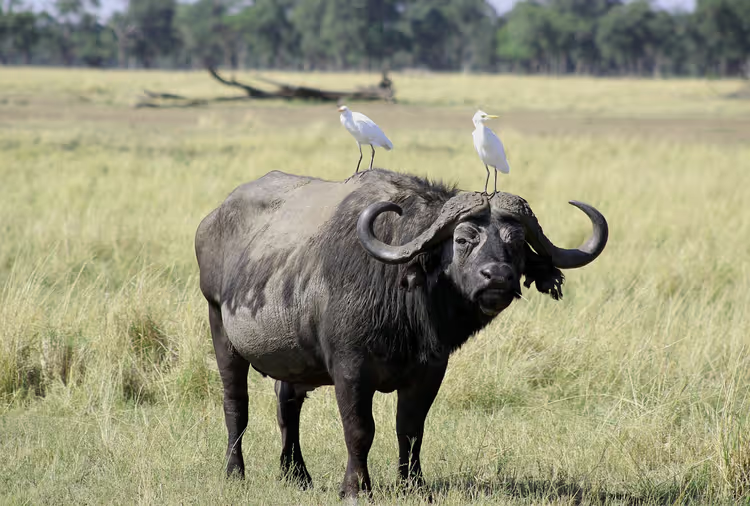
Kenya: 10 stops from Maasai Mara to the reefs of Diani Beach
Planes to Kenya land in Nairobi. Almost all tourists leave the capital on the very first day, and that makes sense: parks, mountains, and the ocean are more interesting than city neighborhoods.
The classic loop includes the Masai Mara, Lake Victoria, Mount Kenya, and the coast. Between stops, you'll have transfers on good asphalt and dirt roads, 4-6 hours each (on the map).
The ten stops below show what to see, when to go, and how much time to allow for each place. Park prices and rules were checked on 09/13/2026 on the reserve's official website.
Ad: this article contains affiliate links, we earn a commission if you book through them, at no extra cost to you.
How a Kenya trip works
Kenya is big, and roads between parks eat up half a day. The logical order is: fly into Nairobi, southwestern parks, Lake Victoria, Samburu, Mount Kenya, the equator, Amboseli, Iten, and final days on the coast. A licensed driver-guide takes you through the reserves, so renting a car without a driver makes no sense.
💡 In short:
- Fly into Nairobi, then head to the Masai Mara: about six hours by road (on the map).
- Plan your safari from July to October if you want to catch the Great Migration.
- Leave two or three days for the coast at the end of the route.
- Prices, migration season, and park rules: 09/2026, checked on the Masai Mara reserve website.
1. Nairobi slums: a Kibera tour
 © Kreuzschnabel · CC BY-SAPhoto: Kreuzschnabel, CC BY-SA (https://creativecommons.org/licenses/by-sa/3.0), Wikimedia Commons
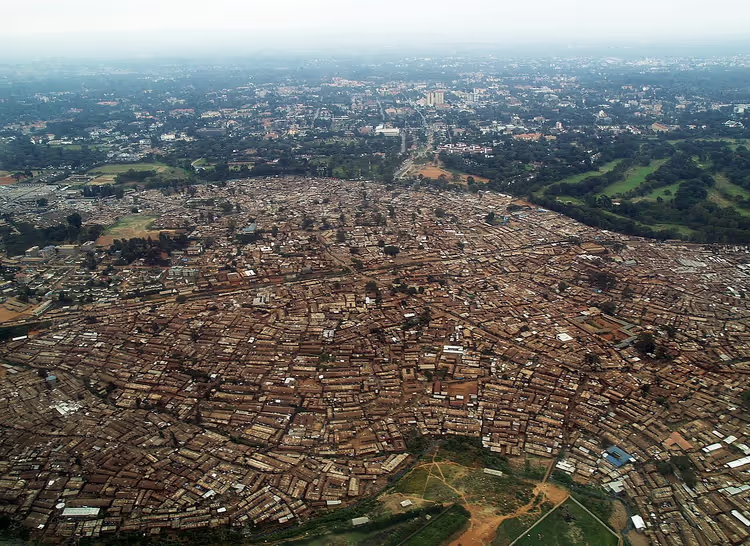
The capital barely makes it into tourist itineraries: airport, transfer, return flight. If you have a free day, spend it on Kibera, the city's largest informal settlement. Tours are run by local residents, and part of the proceeds stays in the community.
Don't walk around here alone: poor neighborhoods live by their own rules. It happens that "gray" guides lure tourists into rough areas, and they come back without money or belongings.
- Getting there: taxi from central Nairobi to the meeting point, then on foot with a guide only.
- Who it's for: those who are ready for hard sights and want to understand how half the city lives.
- The catch: don't walk around Kibera alone, and pushy requests for money are common here.
2. Masai Mara: the reserve and the Great Migration
 © Daniel Case · CC BY-SAPhoto: Daniel Case, CC BY-SA (https://creativecommons.org/licenses/by-sa/4.0), Wikimedia Commons
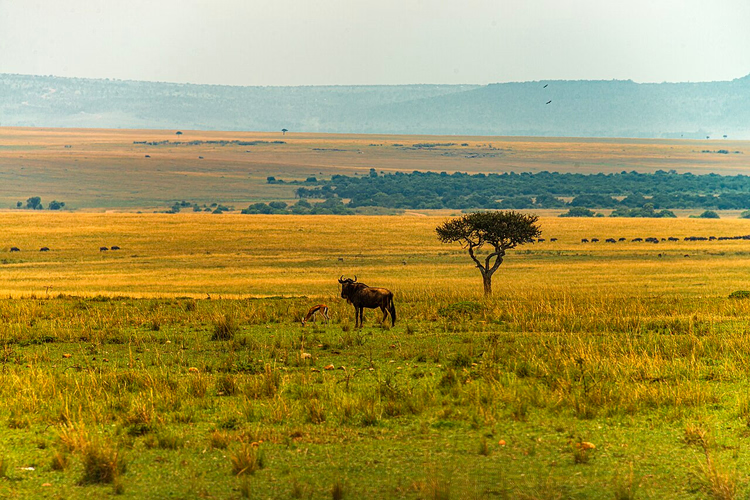
The Masai Mara holds the title of the country's calling card. Herds of zebras and antelopes, cheetahs and leopards, giraffes that come up to vehicles, a river with crocodiles, and rhinos: it's all closer than it looks in National Geographic footage.
The best time to go is from July to October. During these months, herds come into the Mara from the Serengeti, and the event is called the Great Migration (as of 09/2026, Masai Mara reserve website). The drive from Nairobi takes about six hours, part of it on dirt roads.
A safari budget starts in the three figures in dollars per person per day. That's the basic option with a simple camp, food, vehicle, and park fees. For ready-made programs with transfers, look at Masai Mara safari tours on GetYourGuide.
- Cost: entry for foreigners depends on the season: from July to December a high rate applies, and in the first half of the year the ticket is cheaper (as of 09/2026, masaimara.ke website).
- Who it's for: for a first trip to Africa and for photographing predators.
- The catch: the transfer from Nairobi and back eats up a day, and budget programs mean camps with no frills.
3. Masai tribe show
 © Arnold Tibaijuka · CC BY-SAPhoto: Arnold Tibaijuka, CC BY-SA (https://creativecommons.org/licenses/by-sa/4.0), Wikimedia Commons
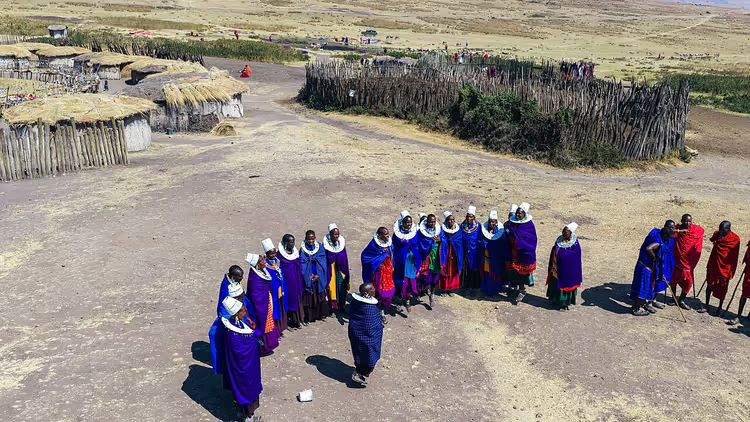
The Masai greet tourists with songs and high jumps. Almost every village around the reserve puts on such performances, and there's little authentic about them: it's a staged show with an entrance fee.
- Cost: villages charge a visit fee and ask separately for photos; the amount is set on the spot.
- Who it's for: those who want to see Masai songs and jumps near the reserve.
- The catch: most villages operate as a tourist program, and real daily life is rarely shown.
4. Lake Victoria and fishing near Kisumu
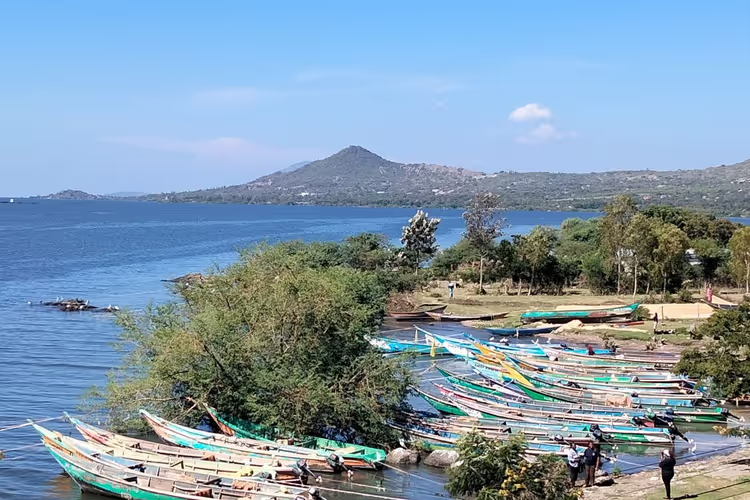
The western part of the country includes a portion of Lake Victoria, the world's second-largest freshwater lake by area. Kenya shares it with Uganda and Tanzania. The waters are home to hundreds of fish species, so fishing here is not an exotic activity but an ordinary trade.
Arranging a trip out on the water is easiest through a hotel in Kisumu or in a fishing village. The boats are wooden, people fish from them with simple tackle, and the catch is cooked on the shore. For you, it's a chance to try fish that was swimming in the lake that morning.
- How to get there: from Nairobi to Kisumu it's about six hours by road (according to the map).
- Who it's for / Not for: for those who want to add some water to their safari; people don't come here for large animals.
5. Samburu: dry plains and crocodiles
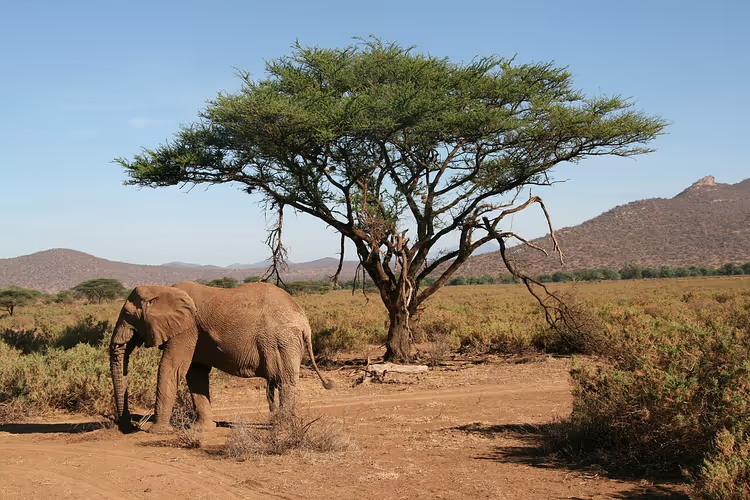 © ”Daniel Fafard ( Dreamdan )” · CC BY-SAPhoto: ”Daniel Fafard ( Dreamdan )”, CC BY-SA (https://creativecommons.org/licenses/by-sa/3.0), Wikimedia Commons
Samburu looks different from the green Maasai Mara. The perimeter is dry hills and plains, red dust, and sparse shade. The Big Five are harder to see here, but the Ewaso Ng'iro River is home to large Nile crocodiles.
Tours are led by local Samburu people. You can ask them to show you a real village, without welcome songs and dances. There are far fewer tourists here than in the Mara, so the pace of the trip is more relaxed.
- How to get there: from Nairobi it's about six hours by road through Nanyuki (according to the map).
- Who it's for: for a second safari, when the jeep queues in the Mara have become tiresome.
- The catch: seeing the entire Big Five here is harder than in the Mara.
6. Mount Kenya: climbing point Lenana
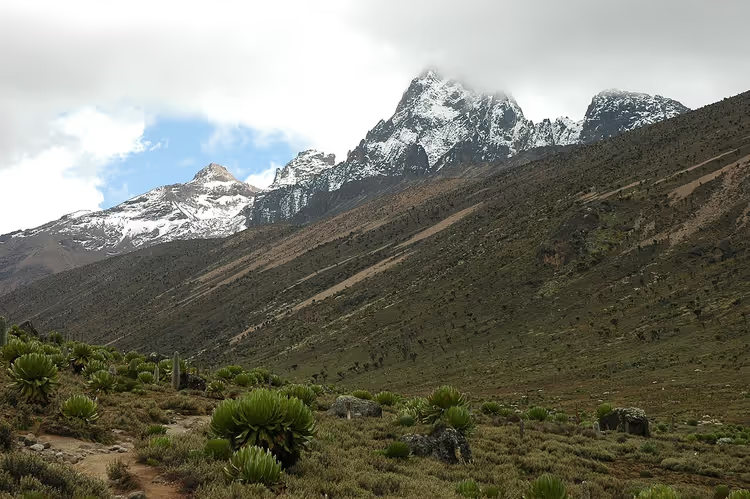 © Ruud Zwart · CC BY-SAPhoto: Ruud Zwart, CC BY-SA (https://creativecommons.org/licenses/by-sa/2.5/nl/deed.en), Wikimedia Commons
Mount Kenya rises to almost 5,200 meters above sea level (as of 09/2026, Mount Kenya Hiking guide). You don't have to be a mountaineer: the Sirimon, Chogoria, and Naro Moru routes lead to the trekking summit of Point Lenana. They differ in steepness, views, and elevation gain.
The climb takes several days, with overnight stays in camps and huts. Groups of tourists hiking without a guide are not uncommon here, but a guide makes acclimatization easier.
- Cost: the price includes a licensed guide, porters, national park entry, and overnight stays (as of 09/2026, Mount Kenya Hiking guide).
- Who it's for: for those who have a few days for acclimatization and basic fitness.
- The catch: it's cold at altitude, and the climb requires day-by-day discipline.
7. The equator: the sign at Nanyuki
 © Ninara · CC BYPhoto: Ninara, CC BY (https://creativecommons.org/licenses/by/2.0), Wikimedia Commons
The equator crosses Kenya almost through the middle, and it's shown to tourists on the road from Nairobi to the north. The most convenient stop is at Nanyuki: there's a yellow sign there, and a line is painted across the asphalt (as of 09/2026, Kenya Peaks guidebook). The stop takes twenty minutes, which is enough for photos.
- How to get there: the A2 highway through Nanyuki; ask your driver to stop along the way.
- Cost: free.
- The catch: apart from the sign and souvenir stalls nearby, there's nothing else to see.
8. Amboseli National Park and Kilimanjaro
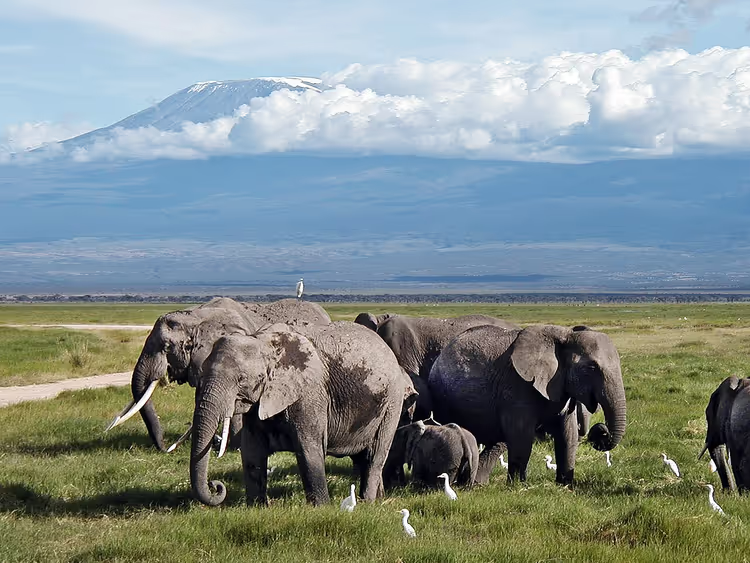 © M. Disdero · CC BY-SAPhoto: M. Disdero, CC BY-SA (https://creativecommons.org/licenses/by-sa/2.5), Wikimedia Commons
From Amboseli you can see Kilimanjaro. The summit belongs to Tanzania, but Kenya got the best views, and locals like to remind you of that. The climate here is dry and the grass is short, so the animals are easy to spot: elephants, hippos, and flamingos in the marshes.
The park is compact, so you can cover several sectors in a day and be back at camp by sunset. For one-day programs with transfer from Nairobi, check out Amboseli safaris on GetYourGuide.
- Cost: rates are lower than in the Maasai Mara because the park is managed by the Kenya Wildlife Service (as of 09/2026, Amboseli park website).
- Who it's for: photographers and anyone who wants to see elephants against the backdrop of a snow-capped peak.
9. Iten: home of Kenyan runners
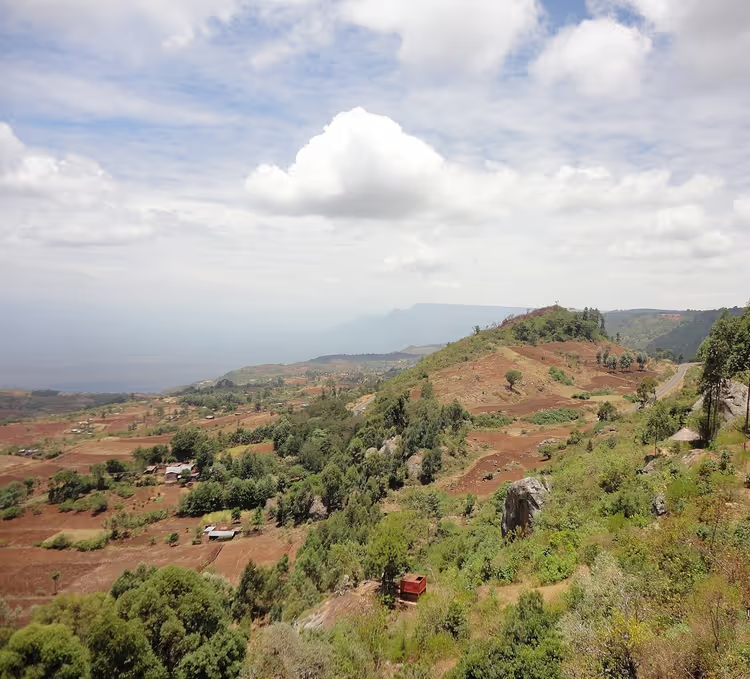 © Toby Tanser · CC BY-SAPhoto: Toby Tanser, CC BY-SA (https://creativecommons.org/licenses/by-sa/3.0), Wikimedia Commons
Iten is called the home of champions. Elite runners from around the world train in this small town on the plateau, and the local dirt track is open to everyone: you can do your own workout alongside champions (according to the running tourism guide, 09/2026).
There isn't much to see in the village itself, so the trip suits people who are into sports or run themselves. For everyone else, half an hour on the track and a view of the Kerio Valley is enough.
- Getting there: less than an hour from Eldoret on paved roads (per the map).
- Who it's for / Not for: for runners; if sports leave you cold, your time is better spent at a park.
- The catch: there is almost no tourist infrastructure.
10. Diani Beach: the ocean at the end of the route
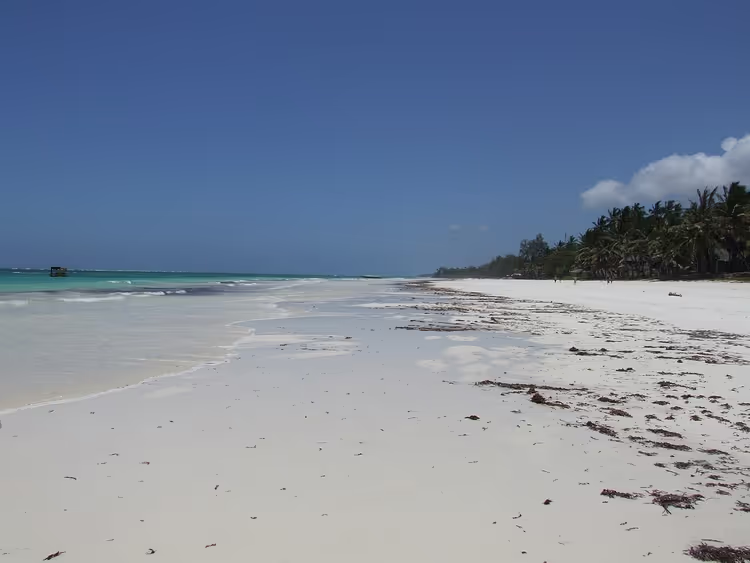 © Nicor · CC BYPhoto: Nicor, CC BY (https://creativecommons.org/licenses/by/3.0), Wikimedia Commons
After the parks and mountains, it's nice to head to the coast. Diani Beach is considered Kenya's best resort: white sand, turquoise water, steady air and ocean temperatures year-round. Rains arrive in May, so pick the dry months.
For a fee, local fishermen will take you out to the reef. The coral increases with every meter from the shore, and with a mask you'll see fish. Diving here is considered some of the most interesting on the coast.
- How to get there: a flight from Nairobi to Mombasa or to Diani Airport, then 30-40 minutes by road (per the map).
- Cost: the reef trip and boat are paid to the fishermen on the shore, and the amount is agreed before departure.
- The catch: at low tide, locals offer to show you octopuses in "traps," and such a walk often ends in extortion.
Tours and tickets in Nairobi
Guided tours, skip-the-line tickets and activities — most offers can be cancelled free of charge.
See offers on GetYourGuideThe widget loads once you give your consent.
⁉️🤔 Frequently asked questions
When is the best time to go to Kenya?
For safari, choose the dry season from July to October: during these months the herds migrate through the Maasai Mara, and your chances of seeing predators are highest (as of 09/2026, Maasai Mara reserve website). January through March is also dry, but there are fewer animals. May and November are not suitable because of the rains.
How much does a safari in Kenya cost?
A daily budget starts in the three figures in dollars per person. It includes the park fee, a vehicle with a guide, accommodation, and food. The most expensive part is the Maasai Mara entry fee, especially in the second half of the year. Group tours are cheaper than private ones.
Can you travel around the country on your own?
A driver gets you to the parks and cities, and inside the reserves you go only with a guide. Walking around Nairobi and Kibera on your own is not safe, especially in the evening. In a crowd, put away your camera and phone. It's better not to plan overnight transfers between cities.
How many days do you need for Kenya?
For a loop of Nairobi, Maasai Mara, Amboseli, and the coast, allow at least ten days. Climbing Mount Kenya adds several more days for acclimatization. If you're short on time, pick one park and Diani Beach so you don't spend the whole trip in the car.
What should you bring on safari?
From our travel experience: bring neutral clothing that covers your arms and legs, sunscreen, and mosquito repellent. Binoculars will be more useful than a second lens. Keep a supply of water in the car and a power bank for your camera.
In short: what's worth booking
Kenya comes together as a route of three blocks: parks, mountain, and ocean. With a week, take Maasai Mara and Diani Beach. With two weeks, add Amboseli and Samburu. Book safari programs and accommodation inside the reserves in advance: in high season, spots go months ahead.
- If it's your first trip to Africa: Maasai Mara and Lake Victoria.
- If you want mountains: Mount Kenya and the Point Lenana route.
- If you're going for the beach: Diani Beach in the dry season.
- If you love running: Iten and training on the dirt track.

A small editorial team writing guides for independent travel. We travel ourselves, but we haven’t been everywhere, so we check prices, opening hours and how to get there against official sources.