
















9 National parks of California: entrance fees in 2026 and a road trip route
Starting in 2026, foreign visitors pay a separate fee in the national parks of the USA. You'll find the amount and ways to save below, in the section with life hacks.
California has nine such parks, and they stretch across hundreds of kilometers (list of California parks).
Below is a breakdown of all nine parks: entry, driving, the best trails, and honest catches. You'll decide which one to visit first and where to save on tickets).
Ad: this article contains affiliate links, we earn a commission if you book through them, at no extra cost to you.
How to get into California's national parks
💡 In short:
- Build your route around a rental car: on foot and by bus you won't cover even half the parks.
- Plan for four or five parks instead of nine: transfers eat up a day each.
- For Yosemite and the Sequoia and Kings Canyon pair, foreign visitors pay a separate fee, details in the life hacks section.
- Entry prices and fees for foreign visitors: as of 09/2026, verified on the official NPS website
A trip through California's parks almost always means a car. Buses connect only some locations, and schedules are sparse. On foot you won't cover even a couple of parks, because distances here are measured in hundreds of kilometers.
Yosemite and Kings Canyon have a separate regional airport in Fresno. From there you'll still drive to the parks in a rental car.
 © Christian Mehlführer, User:Chmehl · CC BYPhoto: Christian Mehlführer, User:Chmehl, CC BY (https://creativecommons.org/licenses/by/3.0), Wikimedia Commons
The state has nine national parks in total (official NPS list). Each one takes at least a day, and large ones like Yosemite and Death Valley easily eat up two. In one trip it's realistic to cover four or five locations, so you don't turn your vacation into a race. Between Yosemite and Death Valley it's about 500 km (on the map), and that's a full day behind the wheel, so plan your overnight stays in advance.
Life hacks for a parks trip
Most US parks are free to enter, but California's key parks charge a fee. A standard car ticket costs from $20 to $35 (as of 09/2026, Park Service rates). You pay per vehicle, not per passenger.
Starting in 2026, a fee for foreign visitors is added to the ticket. In the eleven most visited parks, including Yosemite and the Sequoia and Kings Canyon pair, you pay an extra $100 per person over 16 (as of 09/2026, non-resident fee rules). An annual pass is a better deal: $250 for non-residents versus $80 for US citizens and residents.
Free days in 2026 apply only to US citizens and residents. Death Valley and most other parks in the state don't charge this fee; there you pay only for entry.
 © Tuxyso · CC BY-SAPhoto: Tuxyso, CC BY-SA (https://creativecommons.org/licenses/by-sa/3.0), Wikimedia Commons
Slow down on park roads. In high season there are many tourists who are looking around rather than at the road. Sudden braking and maneuvers are common here.
Parks remain wild nature. Stay away from remote trails, don't wander until dark, and wear sturdy high-top footwear: venomous snakes do occur, though rarely. In the mountains you'll want warm clothes and a rain jacket.
Study the trail maps in advance. This saves time and keeps you away from routes that are beyond your ability. EU and Swiss citizens do not need a visa; ESTA under the Visa Waiver Program is enough. Apply for it before your flight and compare insurance options in case your flight is canceled.
You cannot spend the night just anywhere. Pitch a tent only in designated campgrounds. Hotels inside the parks cost several times more than outside them, and demand is high.
Below is a short overview of all nine parks. Only the most visited ones charge an entry fee for foreigners (as of 09/2026, list of parks with fees).
Park | Foreigner fee | Known for |
|---|---|---|
Yosemite | yes | El Capitan and waterfalls |
Sequoia | yes | General Sherman tree |
Kings Canyon | yes | General Grant sequoia |
Pinnacles | no | rock spires and condors |
Joshua Tree | no | Mojave and Colorado deserts |
Death Valley | no | heat and moving rocks |
Channel Islands | no | islands, whales, and seals |
Lassen Volcanic | no | thermal areas and Lassen Peak |
Redwood | no | coastal redwoods |
1. Yosemite
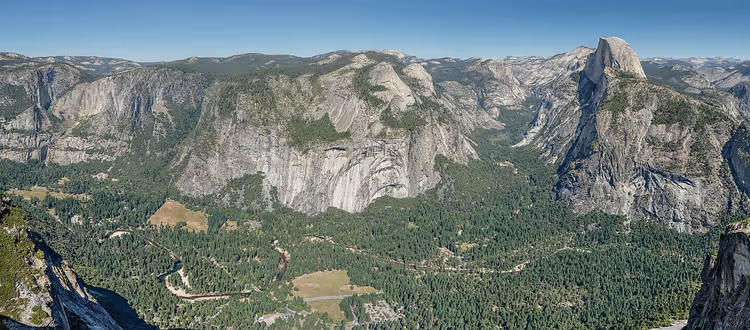
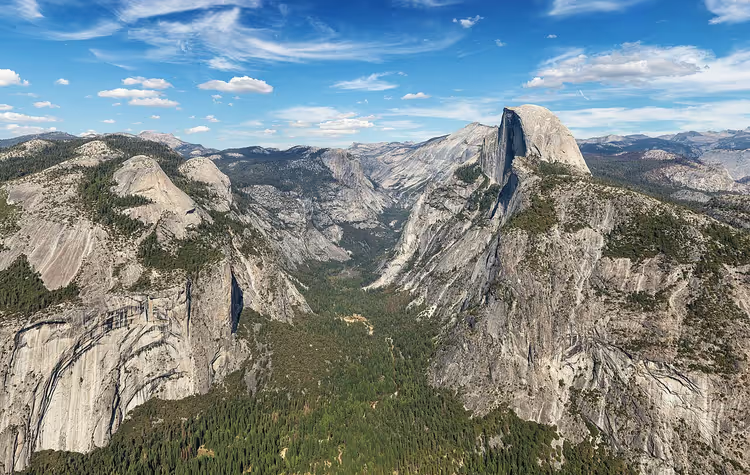
Yosemite opens our list as one of the most famous parks in the US. The glacial valley with granite walls, alpine meadows, and waterfalls cannot be fully explored on foot even in a week.
The must-see list includes El Capitan, Half Dome, Sentinel Dome overlook, and two waterfalls, Yosemite Falls and Bridalveil Fall. The main ascent, Yosemite Falls Trail, runs about 6 km one way (as of 09/2026, valley trail map). Waterfall spray makes the Mist Trail slippery, so wear non-slip shoes for it.
 © Thomas Wolf , www.foto-tw.de · CC BY-SAPhoto: Thomas Wolf , www.foto-tw.de, CC BY-SA (https://creativecommons.org/licenses/by-sa/3.0), Wikimedia Commons
A full visit here takes two days, so book a hotel near the park in advance. Yosemite tours are worth considering if you do not want to drive yourself.
- Cost: $35 per car for 7 days plus the foreigner fee from the tips section (as of 09/2026, official Yosemite website).
- Payment: card only; cash is not accepted in the park.
- Reservations: the entry reservation system was canceled for 2026, so you pay only for the ticket (NPS news about reservations).
2. Sequoia
Sequoia sits right next to Kings Canyon, and one ticket covers both parks (Sequoia park data). The foreigner fee described in the tips section also applies here.
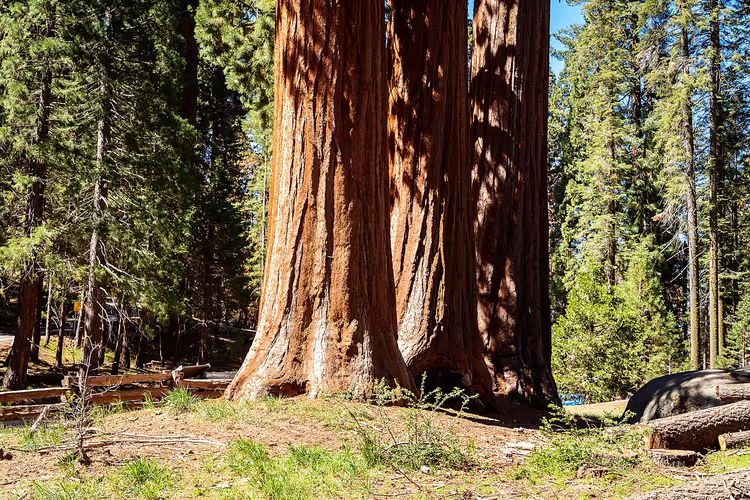
The main goal, the Giant Forest, holds five of the ten largest trees on the planet by volume. The General Sherman sequoia is considered the largest: it stands close to 85 meters tall and is up to 2,700 years old (as of 09/2026, General Sherman sequoia page).
 © dconvertini · CC BY-SAPhoto: dconvertini, CC BY-SA (https://creativecommons.org/licenses/by-sa/2.0), Wikimedia Commons
Trails are not the point here. Among these giants you simply wander and feel how short human life is. Allow at least half a day, otherwise you will not have enough time for the Giant Forest itself.
3. Kings Canyon
Travelers often drive past Kings Canyon, drawn to neighboring Sequoia. That is a mistake, because the world's second-largest sequoia, General Grant, grows here. You already have your ticket; no extra payment is needed.
The scenery here is completely different. A glacier carved a deep valley, with rocky peaks rising along its edges and alpine meadows lying between them. The park's best route, a section of the Pacific Crest Trail, takes you along a ridge with views over the entire valley.
 © Lucas·G · CC BY-SAPhoto: Lucas·G, CC BY-SA (https://creativecommons.org/licenses/by-sa/4.0), Wikimedia Commons
There are noticeably fewer people here than in Yosemite, so you can find quiet on almost any trail.
4. Pinnacles
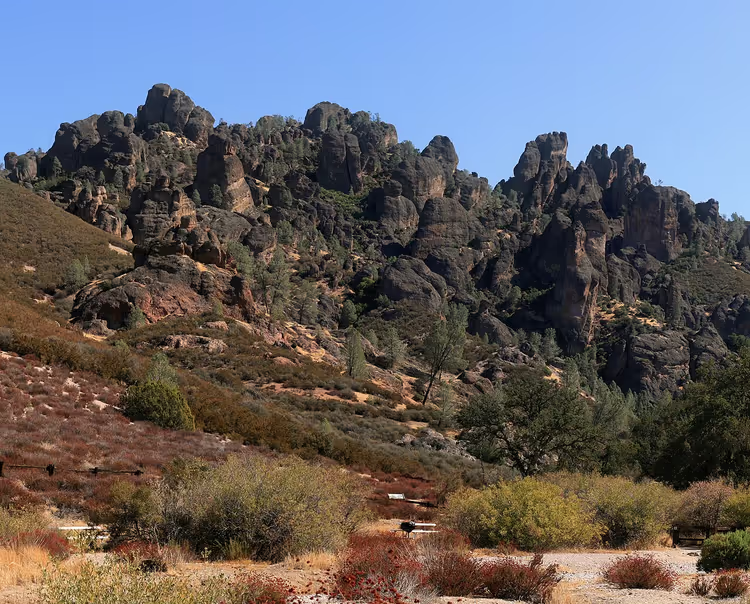
Pinnacles, one of the youngest US national parks, is a good fit if you want solitude. The park combines desert areas with dense forest, and climbers love its rock spires.
California condors circle over the open landscape, which draws birdwatchers here. The park also has caves and grottoes with bat colonies, but visitors are not always allowed in.
 © Brocken Inaglory · CC BY-SAPhoto: Brocken Inaglory, CC BY-SA (https://creativecommons.org/licenses/by-sa/3.0), Wikimedia Commons
- Who it's for: those who want to avoid crowds and see rare birds.
- Not for: those who need waterfalls and lakes, since the climate here is dry.
5. Joshua Tree
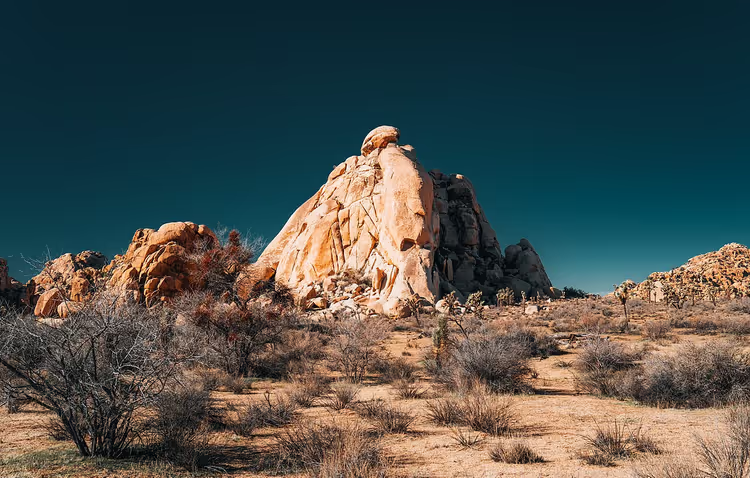
For Wild West imagery straight out of a western, head to Joshua Tree. The park is named after the desert Joshua tree and spans two deserts, the Colorado and the Mojave. Keep in mind that nights in the Mojave are colder than you would expect from a desert.
Piles of boulders and Skull Rock spark the imagination. Among the park's scenic spots are the Fortynine Palms oasis, Hidden Valley, the abandoned Lost Horse Mine, and Ryan Mountain (Joshua Tree park data).
 © Sergiy Galyonkin · CC BY-SAPhoto: Sergiy Galyonkin, CC BY-SA (https://creativecommons.org/licenses/by-sa/4.0), Wikimedia Commons
Your trip here can easily stretch into a full day. Bring plenty of water, since shade is almost nonexistent in the desert.
6. Death Valley
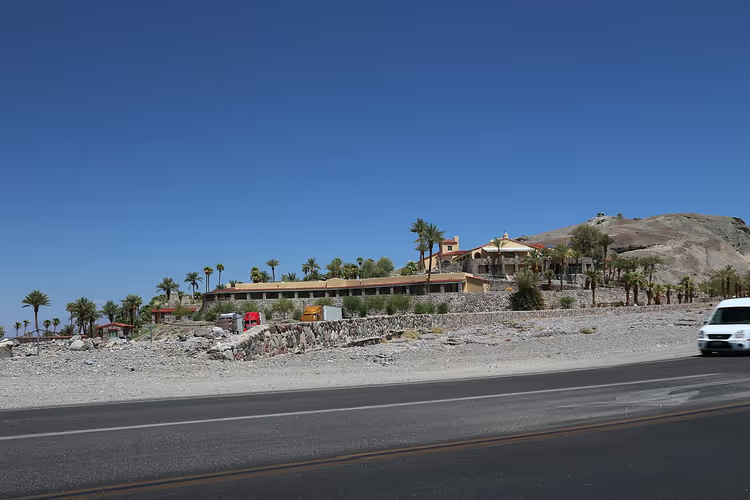
The sixth park on the list got its grim name for a reason. Death Valley is considered the hottest place on the planet, so in summer it's dangerous here during the day, and you go through water fast.
The park lies below sea level and gets almost no rain. The moving rocks on the dry lake bed of Racetrack Playa add to the mystique (Death Valley geology). The karst cave Devil's Hole completes the picture (park information).
 © logopop · CC BY-SAPhoto: logopop, CC BY-SA (https://creativecommons.org/licenses/by-sa/3.0), Wikimedia Commons
Another local record is sports-related: the Badwater ultramarathon runs through the valley, one of the toughest races in the world. It's beyond the reach of ordinary travelers, but it gives you a good sense of the local heat.
Day tours to Death Valley come in handy if you're not up for long stretches behind the wheel. Don't plan this park for summer: move your visit to spring or fall.
7. Channel Islands
Channel Islands is known as the island park near Santa Barbara. The only way to get here is by water: by ferry or on a boat tour (water regulations).
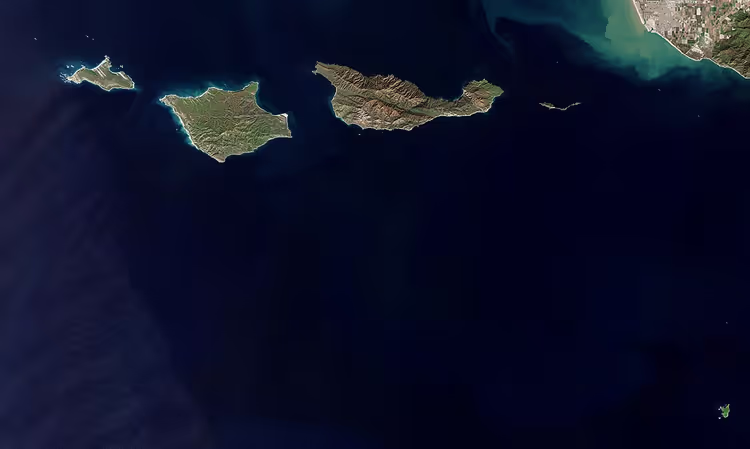 © Copernicus Sentinel-2, ESA · CC BY-SAPhoto: Copernicus Sentinel-2, ESA, CC BY-SA (https://creativecommons.org/licenses/by-sa/3.0/igo/deed.en), Wikimedia Commons
Colonies of fur seals and harbor seals live here, pelicans nest, and blue whales can be spotted in the ocean. Bring binoculars: from the water you'll see animals closer than from shore.
8. Lassen Volcanic
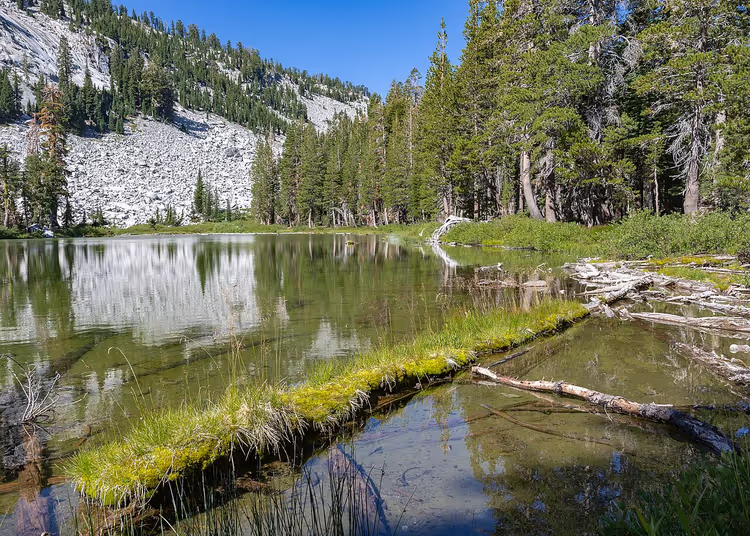
Lassen Volcanic takes you from ocean coolness to volcanoes (Lassen park page). The park is known for its thermal fields and Lassen Peak, which is called the world's largest lava dome.
Fumaroles and mud pots steam here, and trails pass right between them. You'll smell the sulfur long before you reach the viewing areas.
 © Frank Schulenburg · CC BY-SAPhoto: Frank Schulenburg, CC BY-SA (https://creativecommons.org/licenses/by-sa/4.0), Wikimedia Commons
In winter the park is almost closed by snow, so plan your visit for the warm months. In summer it's cooler here than in the valleys, and you'll easily find a quiet trail.
9. Redwood
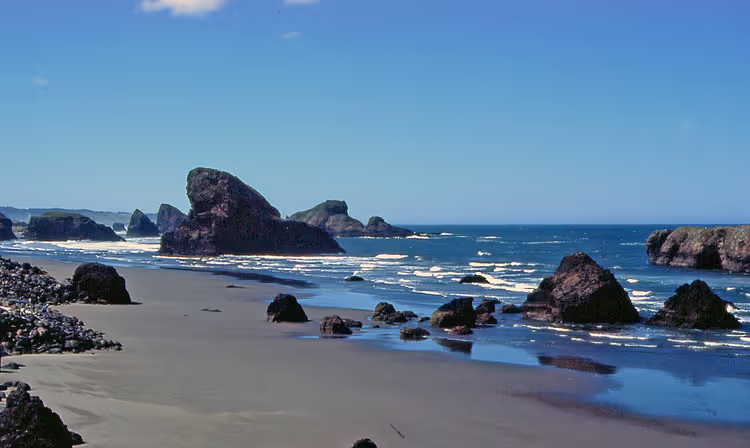
Redwood is for anyone who finds the giant trees of Sequoia not enough. Here you won't find a mountain thicket, but a coastal forest strip wedging into the ocean (Redwood park page).
 © W. Bulach · CC BY-SAPhoto: W. Bulach, CC BY-SA (https://creativecommons.org/licenses/by-sa/4.0), Wikimedia Commons
The park is interesting for birdwatchers: rare bird species live in the coastal forests. Combine your walk with the ocean, since the trails lead to deserted beaches where you'll rarely meet other people.
⁉️🤔 Frequently asked questions
Do foreigners need a visa to visit US parks?
EU and Swiss citizens do not need a visa. They enter under the visa waiver program with an electronic ESTA authorization. Apply for ESTA in advance, before buying plane tickets.
How much does park entry cost in California?
A standard vehicle pass costs from $20 to $35 (as of 09/2026, National Park Service fees). We covered the foreign visitor fee in the tips section.
Can you visit the parks without a car?
Partially. We explained why it's difficult without a car in the section on how to get to the parks. The Channel Islands are accessible only by water, so there you depend on the ferry.
When is the best time to visit California parks?
The most comfortable time is the shoulder season and spring. In summer, Death Valley is dangerously hot, and Yosemite has a lot of traffic. In winter, some high-elevation roads and Lassen park are closed by snow, so check road status before heading out.
Does an annual park pass work?
Yes. The America the Beautiful annual pass covers entry and the foreign visitor fee. Prices for it are listed in the tips section. For a group, it pays off faster than buying tickets for each park (as of 09/2026, annual pass terms).
In short: what to book
Build your route around time. For a week, take Yosemite, Sequoia with Kings Canyon, and Death Valley. For quiet, head to Pinnacles or Redwood, and for the ocean and whales, to the Channel Islands.
Book your car in advance (car rental), otherwise you'll lose hours on transfers. Before the trip, compare flights and hotels near the parks.

A small editorial team writing guides for independent travel. We travel ourselves, but we haven’t been everywhere, so we check prices, opening hours and how to get there against official sources.