
















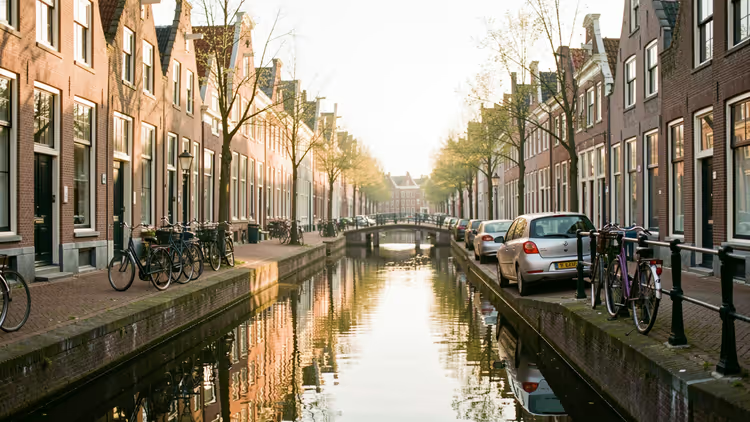
 AIIllustrative image: AI-generated
Netherlands in a week: a circular road trip route from Amsterdam by car
Netherlands looks like a flat country with no mountain switchbacks or panoramic lakes. But distances here are short, and a UNESCO site like Kinderdijk is an hour's drive from the major cities.
Clear pricing and short legs make the Netherlands an easy country for a first road trip.
We put together a one-week loop route from Amsterdam: a full list of stops, a day-by-day plan, seasonal tips, and the honest catches of the road.
Ad: this article contains affiliate links, we earn a commission if you book through them, at no extra cost to you.
How to plan a Netherlands road trip
💡 In short:
- Build a loop from Amsterdam so you pick up and return the car in one place.
- Get the car at Schiphol Airport, not in the center: that way you avoid narrow streets and paid parking.
- Leave 2-3 towns per day, and walk through the center of big cities.
- Check environmental zones and hotel parking in advance.
You can drive across the country from north to south in about three hours (on the map). Major cities are an hour's drive from each other, so the legs won't wear you out. The main concern for a driver here is not distance, it's parking.
In Amsterdam, Utrecht, and Rotterdam, the center is partially or fully closed to cars. Park on the outskirts or at a hotel outside the city, and walk into the center. That saves you time and money.
Before you set off, check the environmental zones in big cities: older diesel cars are not allowed in. The rental company usually provides a car with the right emissions class, but confirm this when booking.
All the stops for a Netherlands road trip
Below is the full list of places the route is built from. Treat it as a menu and assemble your own loop based on your interests and timeframe.
North and west: Amsterdam, Haarlem, Alkmaar, Edam, Volendam, Friesland, Giethoorn.
Center and coast: Utrecht, Kinderdijk, Maasland, Noordwijk, Scheveningen.
South: Maastricht, Thorn, Someren, Hilvarenbeek, Tilburg with Beekse Bergen park, Heeze.
Nature and museums: De Groote Peel National Park, De Biesbosch National Park, Hoge Veluwe park, Nederlands Openluchtmuseum.
Big cities on the route: Rotterdam, Delft, The Hague.
Day 1: Amsterdam
Amsterdam
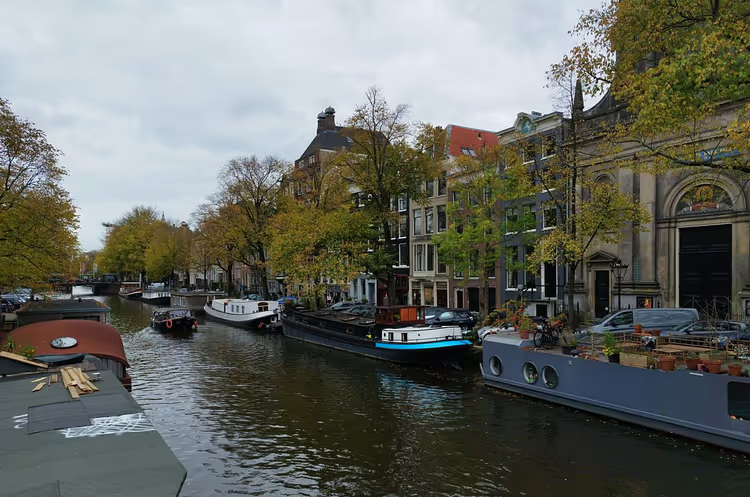
Amsterdam opens the route and sets the pace. The city is touristy, but it still remains one of the most charming in Europe, and one day here is enough for the essentials.
Start with the canal ring and a walk through the center. In the evening, check out the Jordaan district with its narrow streets and workshops, where you'll feel the city without the crowds.
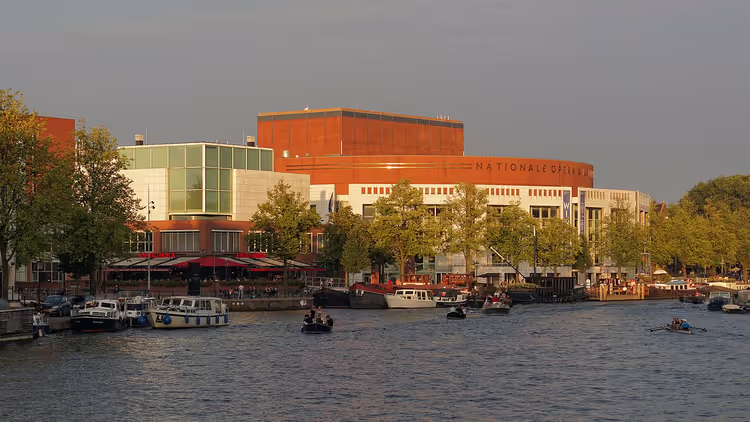 © C messier · CC BY-SAPhoto: C messier, CC BY-SA (https://creativecommons.org/licenses/by-sa/4.0), Wikimedia Commons
Book museums in advance: in high season the lines get long. If you're only here for a day, pick one major museum and don't try to cover everything.
At sunset, it's easy to go up to a viewing platform or just sit by the water. Stay outside the historic center: it's quieter and parking is cheaper.
Who it's for: first-time visitors who want to see the canals and the old center.
The catch: the center is crowded during the day, so head away from Dam Square.
Day 2: Amsterdam, Utrecht, and De Groote Peel
Utrecht
Pick up the car in the morning at Schiphol Airport. That way you won't have to navigate through central Amsterdam in a rental car. If you have little experience driving abroad, this is the best way to start.
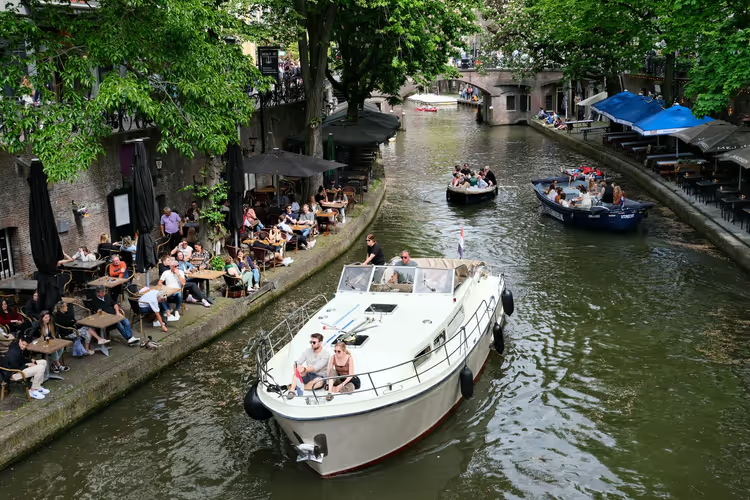
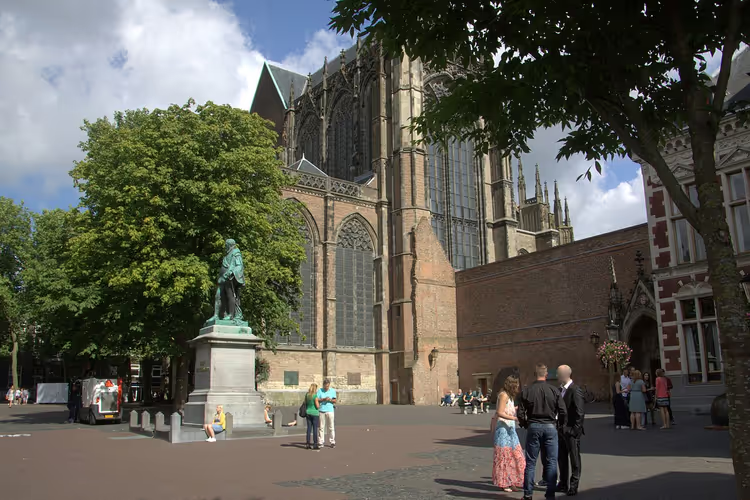
You'll reach Utrecht in about 45 minutes (on the map). Utrecht is called an underrated alternative to the capital: a medieval center, colorful shopfronts, markets, and its own canal system. The city is not small, but not overwhelming either, and a couple of hours is enough to see it.
 © Jan dijkstra · CC BY-SAPhoto: Jan dijkstra, CC BY-SA (https://creativecommons.org/licenses/by-sa/4.0), Wikimedia Commons
De Groote Peel National Park
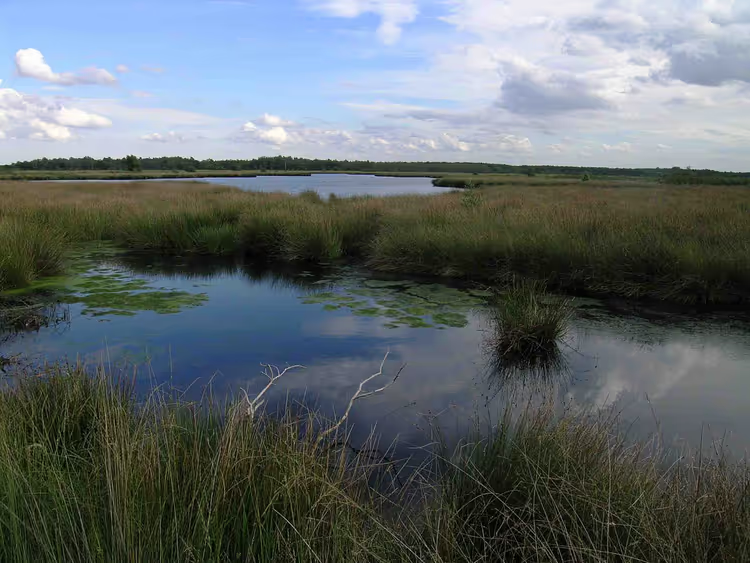
Next, head south to De Groote Peel National Park (about 1 hour 45 minutes from Utrecht, on the map). This is a free park with marshes, wooden boardwalks, and highland cows along the route, and it's a good place to stretch your legs after the drive.
 © The original uploader was DirkvdM at English Wikipedia . · CC BYPhoto: The original uploader was DirkvdM at English Wikipedia ., CC BY (https://creativecommons.org/licenses/by/1.0), Wikimedia Commons
Thorn
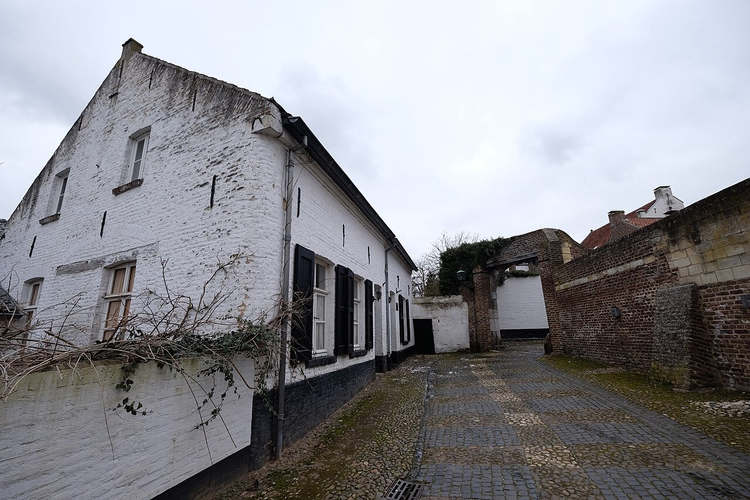
From the park to Thorn is about another 40 minutes (by map). Thorn looks like a perfectly maintained film set: even facades, cleanliness, and a complete absence of clutter. The town has the atmosphere of a movie location, and it's the best evening stop of the day.
 © Ben Bender · CC BY-SAPhoto: Ben Bender, CC BY-SA (https://creativecommons.org/licenses/by-sa/3.0), Wikimedia Commons
For the night, it's convenient to head back toward Utrecht or stay in Tilburg. Hotels in Utrecht on Trip.com will show options near the center and the train station.
How to get there: all of the day's legs take from 40 minutes to 1 hour 45 minutes by map.
Who it's for: people who like nature and quiet towns without crowds.
The catch: the park has few shelters, so walking in the rain is uncomfortable.
Day 3: Tilburg, Beekse Bergen park, and Kinderdijk
 © Norbert Reimer from Mettlach-Orscholz, Saarland · CC BY-SAPhoto: Norbert Reimer from Mettlach-Orscholz, Saarland, CC BY-SA (https://creativecommons.org/licenses/by-sa/2.0), Wikimedia Commons
Tilburg
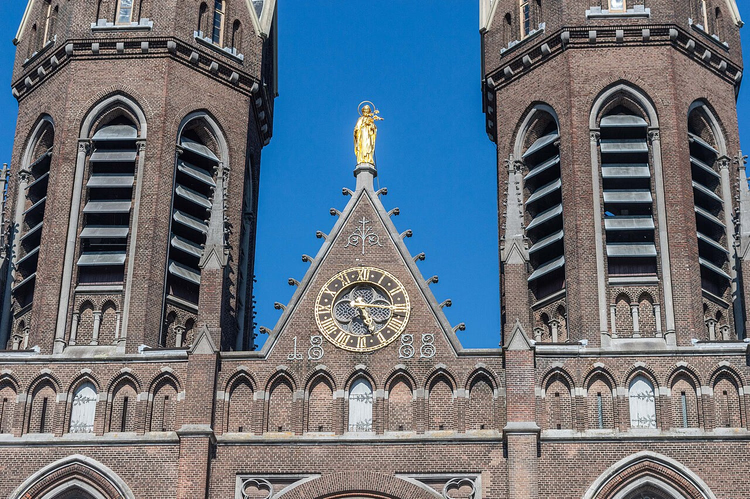
From Thorn to Tilburg is about an hour (by map). Tilburg is known for its textile industry, and several museums dedicated to the trade operate here. If you're interested in industrial history, allow an extra hour for the city.
 © Tristan Surtel · CC BY-SAPhoto: Tristan Surtel, CC BY-SA (https://creativecommons.org/licenses/by-sa/4.0), Wikimedia Commons
Beekse Bergen park
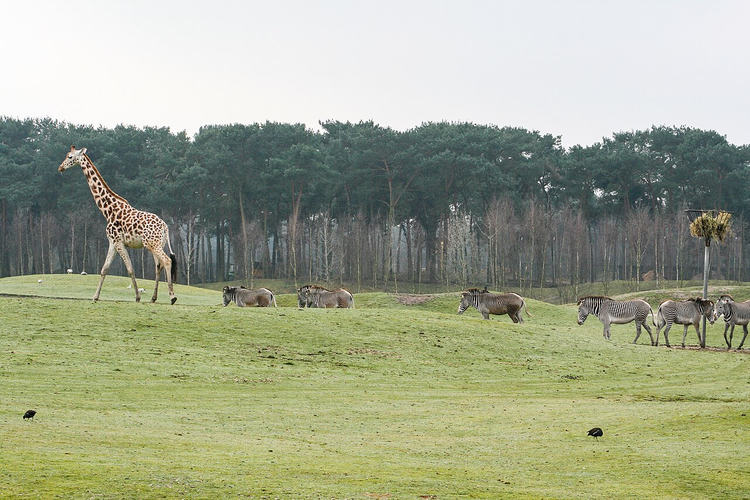
With kids, it's worth making a stop at Beekse Bergen park. It's a safari park you drive through: camels and giraffes come right up to the windows. The format is convenient because you don't need to get out of the car on long stretches.
 © Szilas · CC BY-SAPhoto: Szilas, CC BY-SA (https://creativecommons.org/licenses/by-sa/4.0), Wikimedia Commons
Beekse Bergen park tickets on GetYourGuide
Kinderdijk
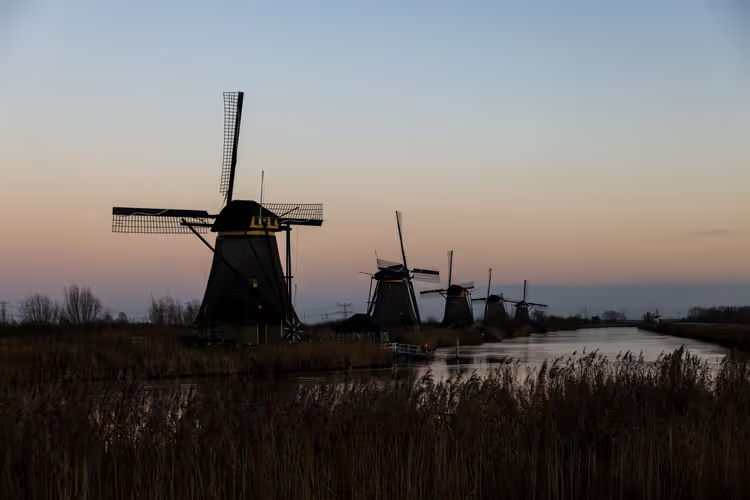
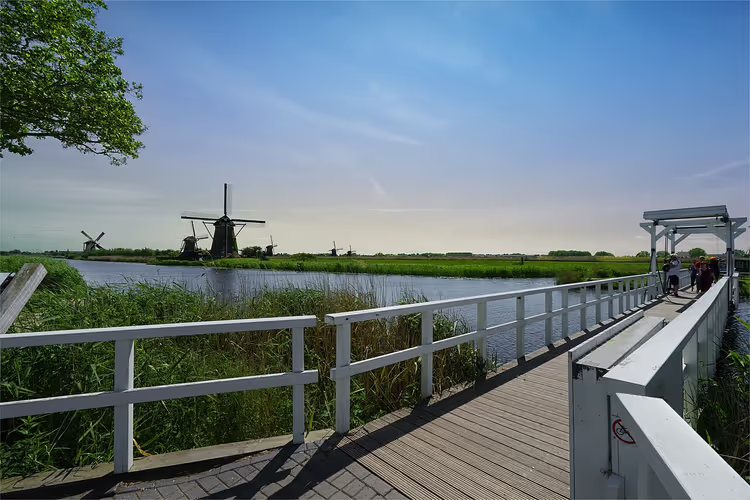
From Tilburg to Kinderdijk takes about an hour (by map). Kinderdijk is a UNESCO site and the best place in the country to see 18th-century windmills. Smooth walking and cycling paths run along the dikes.
At certain hours, one of the mills is opened up inside, and visitors are allowed in. Check the exact schedule and tickets on Kinderdijk's official website before your trip. Book a time slot in advance if you're going on a weekend.
Cost: tickets and schedule on the official website.
Who it's for: anyone who wants to see a classic Dutch landscape.
The catch: everything is outdoors, so the experience loses its charm in the rain.
Day 4: Rotterdam and Delft
Rotterdam
From Kinderdijk to Rotterdam is a short leg. Rotterdam is a modern, dynamic city, and its port is one of the largest seaports in the world. Compared with the old towns, it looks like a different country.
Walk along the waterfront and take a look at the old dock district. After the water and warehouses, it's especially pleasant to return to the cozy historic center.
 © Qwertzu111111 · CC BY-SAPhoto: Qwertzu111111, CC BY-SA (https://creativecommons.org/licenses/by-sa/4.0), Wikimedia Commons
Delft
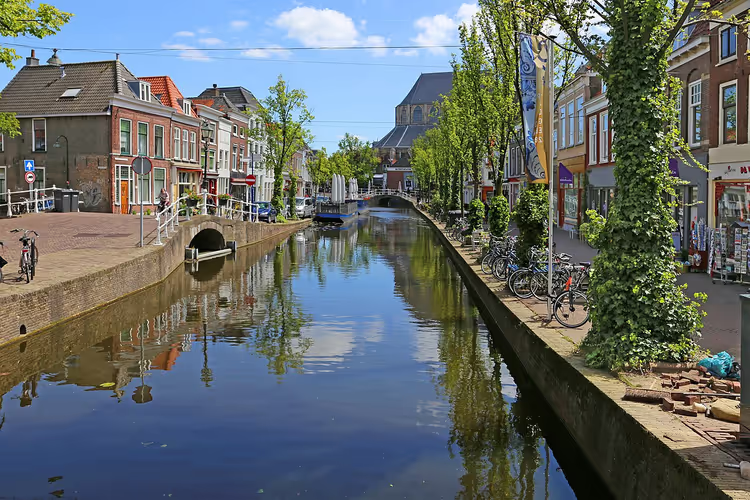
Delft sits just 15 minutes north of Rotterdam (by map), but it's a completely different world. Canals ring the city, with cafes and small boutiques along them. Delft resembles a scaled-down copy of Amsterdam, and it's easy to cover on foot in half a day.
 © W. Bulach · CC BY-SAPhoto: W. Bulach, CC BY-SA (https://creativecommons.org/licenses/by-sa/4.0), Wikimedia Commons
Look for a hotel in Delft or again in Rotterdam. Hotels in Rotterdam on Trip.com make it easy to filter options near the port and the train station.
How to get there: between the cities it's 15-30 minutes by map.
Who it's for: anyone who wants to combine a port city and cozy canals.
Day 5: The Hague and Scheveningen beach
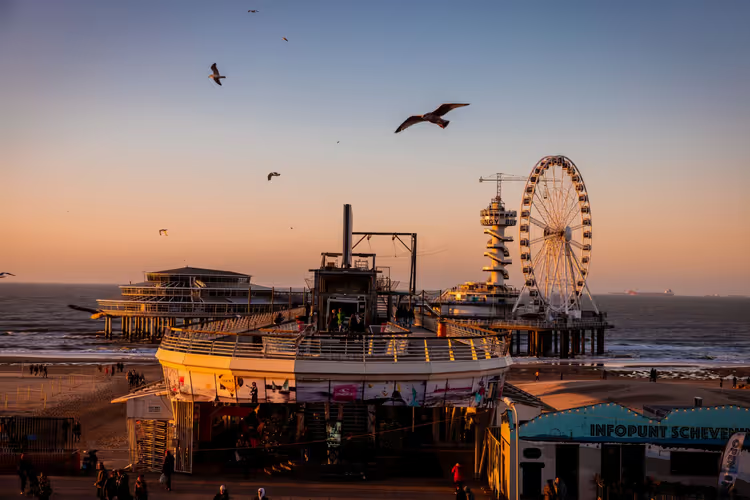
The Hague
The Hague is the country's third-largest city and the international capital of peace and justice. The city reveals itself in the details: shop windows, signs, and streets here are all neatly kept.
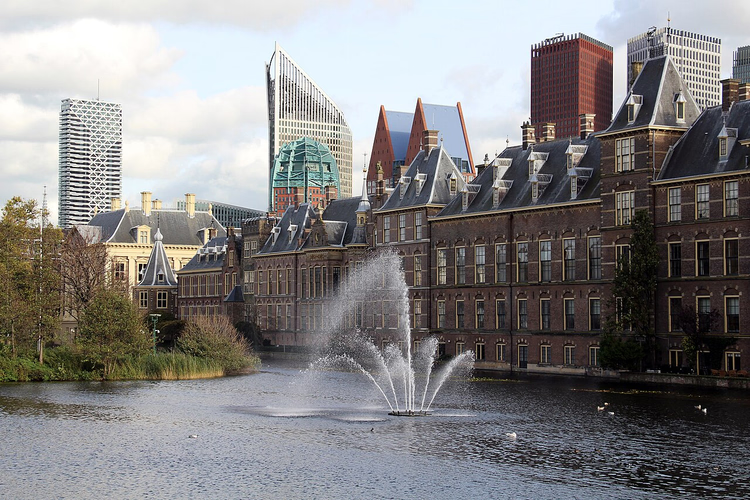 © Fred Romero from Paris, France · CC BYPhoto: Fred Romero from Paris, France, CC BY (https://creativecommons.org/licenses/by/2.0), Wikimedia Commons
This is home to the Mauritshuis museum with paintings by Dutch masters. A ticket after 4:00 PM costs €4 from January 1, 2026 (official website, as of 09/2026), and a combined ticket with the Prince William V Gallery will run you €24 (tickets, as of 09/2026). Car enthusiasts will enjoy the Louwman Museum with one of the oldest private car collections.
Scheveningen Beach
Then head out to the sea, to Scheveningen. This is a classic North Sea beach with a promenade, kiosks, and a Ferris wheel. In the evening it gets loud and crowded, but the sunset over the water is worth your attention.
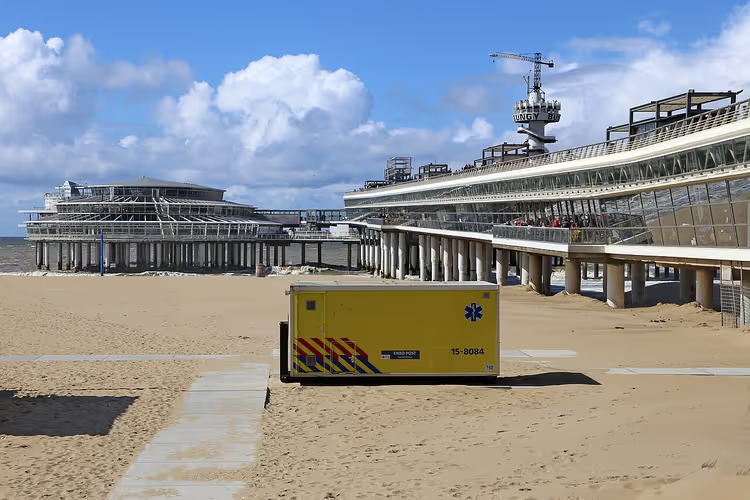 © W. Bulach · CC BY-SAPhoto: W. Bulach, CC BY-SA (https://creativecommons.org/licenses/by-sa/4.0), Wikimedia Commons
Cost: the beach is free.
Who it's for: anyone who wants to combine museums and the sea in one day.
The catch: it's often windy at the North Sea, so bring a jacket even in summer.
Day 6: Noordwijk and Haarlem
Noordwijk
From The Hague to North Holland is about 40 minutes (on the map). Along the way you'll pass the dunes of Noordwijk. Part of the Atlantic Wall, the World War II defensive line, runs through here, and there's a small museum with finds from that era.
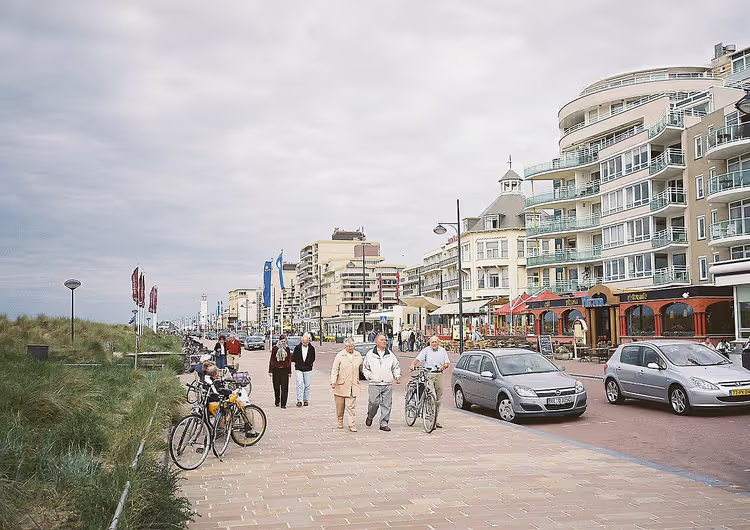 © Maschinenjunge · CC BY-SAPhoto: Maschinenjunge, CC BY-SA (https://creativecommons.org/licenses/by-sa/3.0), Wikimedia Commons
Haarlem
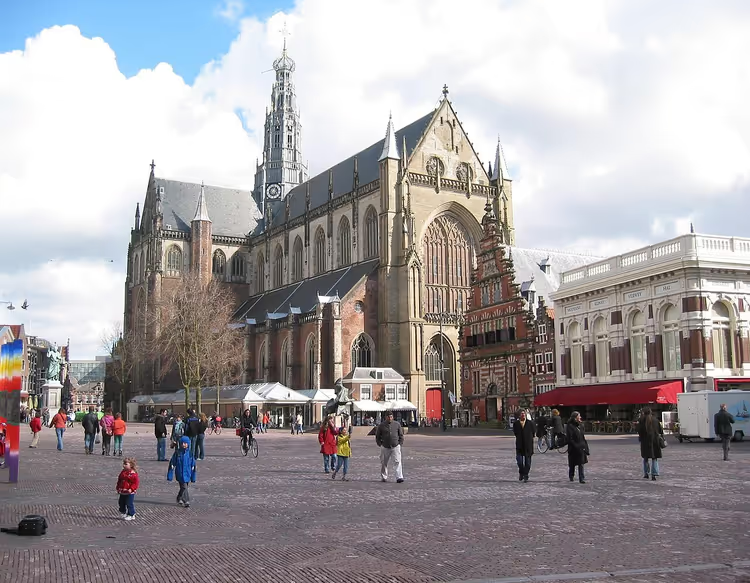
Next, head to Haarlem, which sits 30 minutes west of Amsterdam (on the map). The city is made up of cobblestone streets, medieval architecture, and houses with distinctive gabled facades.
Haarlem is also a center of bulb flower growing, and in spring the tulip fields bloom near the city. If you're traveling in April or May, make a detour to the fields.
Hotels in Haarlem on Trip.com are useful if you want a base between the capital and the coast.
How to get there: 30-40 minutes from The Hague and Amsterdam on the map.
Who it's for: anyone who loves unhurried old towns and flower fields.
The catch: central Haarlem has little parking, so it's best to leave the car at your hotel.
Day 7: Alkmaar, Volendam, and Edam
Alkmaar
The last day heads north to Alkmaar. The city is called the cheese capital of the Netherlands, and cheesemaking has defined the local culture here for centuries.
 © Txllxt TxllxT · CC BY-SAPhoto: Txllxt TxllxT, CC BY-SA (https://creativecommons.org/licenses/by-sa/4.0), Wikimedia Commons
The cheese market on Waagplein square runs on Fridays from 10:00 to 13:00, from March 27 to September 25, 2026, and admission is free (official Kaasmarkt website, as of 09/2026). In July and August, evening markets are added on Tuesdays.
Volendam
From Alkmaar, head east toward Lake Markermeer. In Volendam you can have lunch at De Lunch: the village grew out of the fishing trade and today thrives on its marina and seafood cuisine.
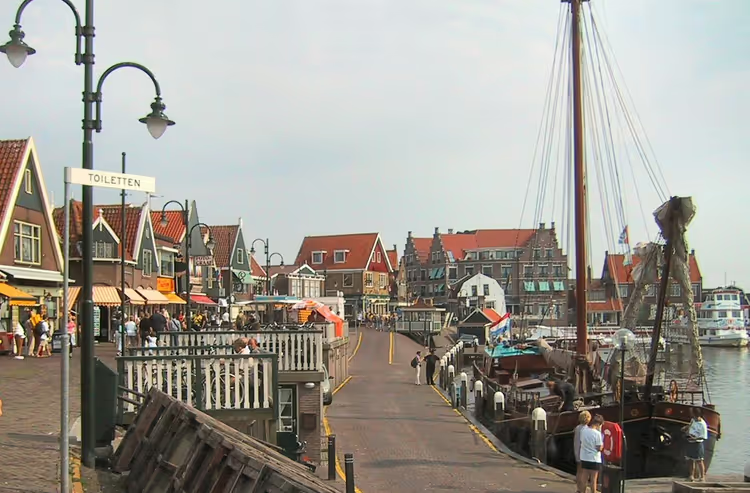 © Hullie · CC BY-SAPhoto: Hullie, CC BY-SA (http://creativecommons.org/licenses/by-sa/3.0/), Wikimedia Commons
Edam
If you still haven't had enough cheese, stop in Edam for the Kaasmarkt Edam market. The selection here is entirely about cheese, and it's a convenient place to pick up a vacuum-packed souvenir.
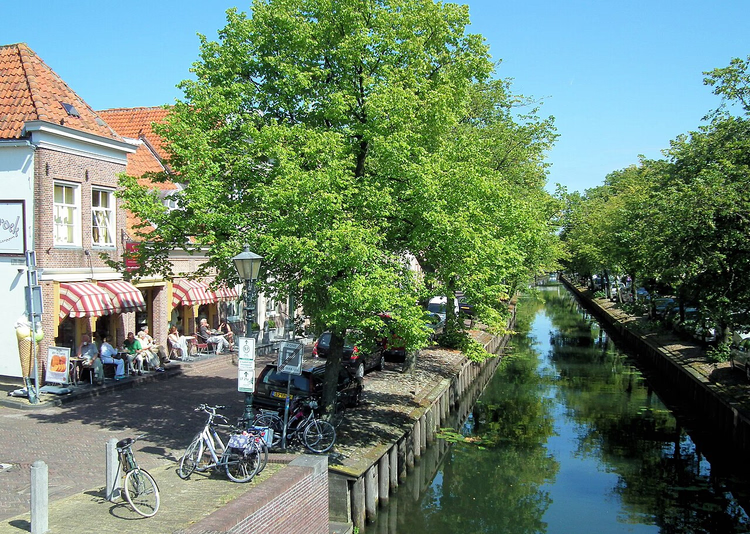 © Microtoerisme · CC BY-SAPhoto: Microtoerisme, CC BY-SA (https://creativecommons.org/licenses/by-sa/3.0), Wikimedia Commons
North Holland tours on GetYourGuide
Cost: the cheese market is free, as of 09/2026.
Who it's for: anyone coming for cheese, the sea, and local character.
The catch: the market only runs in the warm season, from March 27 to September 25.
Route map
The whole loop is easy to open on a map: Open the route on the map. The order of cities matches the day-by-day plan, so you can check the drives before booking your overnight stays.
When to go to the Netherlands
The weather in the Netherlands is changeable, and that's part of the local culture here. Winters are dark and cold, summers are warm, but rain is possible in any month. In a single day you can see all four seasons.

Spring and summer
Peak season starts in April and lasts through June. The country emerges from gray weather, everything blooms, and people head outside. July and August bring the most daylight, but also the most tourists.
In spring you'll catch the tulip fields, which is exactly why many people rent a car. They're worth traveling for specifically in April and May; at other times the landscape will be different.
Fall and winter
Fall and winter suit those who want to save money. Hotels and guesthouses cost less, and museum lines are shorter. Bring a good raincoat and umbrella, and the weather won't ruin your trip.
We recommend not being afraid of the off-season: some days may well turn out sunny. Plan around the weather rather than the calendar, and you'll see the country without the summer crowds.
Who it's for: anyone not tied to school holidays.
The catch: in November and February it gets dark early, and daylight hours are short.
How many days you need for the route
The Netherlands is small in area, so there won't be any long drives. You can cross the country from north to south in about three hours (on the map), and the major cities sit close to one another.
A week is enough to complete the loop from this plan without rushing. If you have three or four days, cut the south and focus on the western loop: Amsterdam, Utrecht, Kinderdijk, Rotterdam, The Hague.
Allow more time if you want to add Giethoorn and Friesland. These spots lie off the main loop and will require a separate day.
How to plan: one day for a major city and half a day for a small town.
Who it's for: anyone who doesn't want to change hotels every day.
The catch: in three days you'll only see the west; the rest will have to wait for next time.
Is driving in the Netherlands difficult for a tourist
Roads in the Netherlands are smooth and well marked. During the day, motorways have a 100 km/h limit, more is allowed at night, and the legal blood alcohol level is 0.05% (according to travelinformation.eu, 2026). Check the current rules before you set off.

There are two challenges: narrow old streets in small towns and heavy bicycle traffic. Cyclists have priority here, so check your mirrors twice when turning.
Large cities have environmental zones where older diesel cars are not allowed (verified on the traffic rules portal, 2026). Check the access class with the rental company and don't stray from permitted streets in the center. Online maps work fine for navigation, but keep an eye on the signs.
Who it's for: confident drivers who want to explore villages, not just cities.
Not for: people who dislike heavy traffic and paid parking.
Car rental in the Netherlands
A road trip through the Netherlands works with your own car or a rental. If you're flying into Amsterdam, pick up the car right at Schiphol Airport.
 AIIllustrative image: AI-generated
Starting and finishing in the same place makes the route a loop and avoids the one-way drop-off fee. The airport has a wider selection of cars than the city center, and you can pick up the car before or after exploring the city.
Compare car rental prices on DiscoverCars before your trip: in high season, the cheap classes sell out fast. Check that the rate includes insurance and a second driver if you won't be the only one behind the wheel.
When to book: a couple of weeks before the trip in high season.
Who it's for: people who want a flexible route without trains and schedules.
The catch: parking is paid in city centers, and hotel spots should be booked in advance.
What to bring on the road
The weather changes quickly, so pack rain protection. A compact umbrella folds into your bag and saves you in a short downpour.
A raincoat is more convenient than an umbrella when you're walking around the city taking photos. Rubber boots let you walk on wet grass in parks, and wool socks keep you warm on a chilly damp day.
Bring a waterproof backpack for electronics and clothes. If you're traveling with a small child, add a rain cover for the stroller.
An eSIM for the Netherlands is useful for staying connected: it's active right after purchase and doesn't require finding a store. Keep maps downloaded to your phone in case of weak signal.
Who it's for: people traveling in spring, fall, or winter.
The catch: without a raincoat, an off-season trip can get wet.
⁉️🤔 Frequently asked questions
How many days do you need for a loop from Amsterdam?
A week is enough to cover the whole plan without rushing. In three to four days you can do the western loop: Amsterdam, Utrecht, Kinderdijk, Rotterdam, and The Hague. If you want to add Giethoorn and Friesland, plan one more day.
Is it hard for a tourist to drive in the Netherlands?
No, the roads are smooth and clear, and motorways have a 100 km/h limit during the day. The hardest parts are narrow streets in old towns and heavy bicycle traffic. Keep environmental zones in large cities in mind and book hotel parking in advance.
When is the best time to visit the Netherlands?
Peak season is April and May, when the tulip fields bloom. Summer is warmest, but also the most crowded. In fall and winter, hotels are cheaper and lines are shorter, and rain is possible at any time of year.
What should you definitely see on the route?
Kinderdijk with its windmills, old Utrecht, Rotterdam as a port-city contrast, and The Hague with the Mauritshuis museum. In the north, don't miss Alkmaar with its cheese market and Haarlem with tulip fields nearby.
Can you drive into central Amsterdam in a rental car?
Technically yes, but it's inconvenient: narrow streets, paid parking, and cyclists. It's easier to pick up the car at Schiphol Airport and leave the city, then explore the center on foot. That saves you time and stress.
Find hotels
Compare prices across booking sites and filter for rooms with free cancellation.
Compare prices on Discover CarsThe widget loads once you give your consent.
In short: what's worth booking
The route is built around the western loop, and you add the north and east to taste. Below is a short matrix to help you choose the backbone of your trip.
If you have a week: take the full loop from the plan, starting and finishing in Amsterdam.
If you're flying into Amsterdam: book your car at Schiphol Airport in advance.
If you're going for quiet: add Giethoorn and Friesland.
If you want to see tulips: plan your trip for April or May.
Book accommodation outside the historic center and check parking before you pay. That way you can drive through the country comfortably and return to your starting point.
Want a base between the capital and the coast? See hotels on Trip.com and guided tickets on GetYourGuide will cover the two main tasks.
It's convenient to compare car rental in advance: car prices on DiscoverCars change in high season.

A small editorial team writing guides for independent travel. We travel ourselves, but we haven’t been everywhere, so we check prices, opening hours and how to get there against official sources.