





Night trains and direct routes: how to travel around Europe without flying
A direct train from Hamburg to Copenhagen takes about four and a half hours (as of 09/2026, DSB). You step onto the platform in the very heart of the Danish capital, not out of town next to a runway. This has long been normal in Europe: the railway links dozens of cities, and the stations sit right where you want to walk.
The plane only wins on hours until you get stuck in traffic on the way to the airport and queue through security. The train gives that time back to you for the city. Below are 31 European cities that are easy to reach by rail from Germany: journey times, night routes, the main sights and practical details for each destination.
Ad: this article contains affiliate links, we earn a commission on them, and the price for you stays the same.
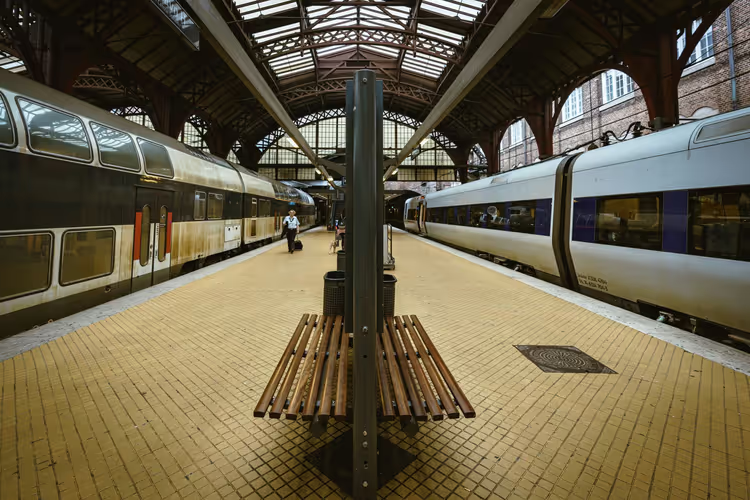
North of Germany: 3 cities by train
North of Germany lies Denmark, and beyond it Sweden. Thanks to direct and night trains, these cities are now within easy reach even for people living in the middle of the country.
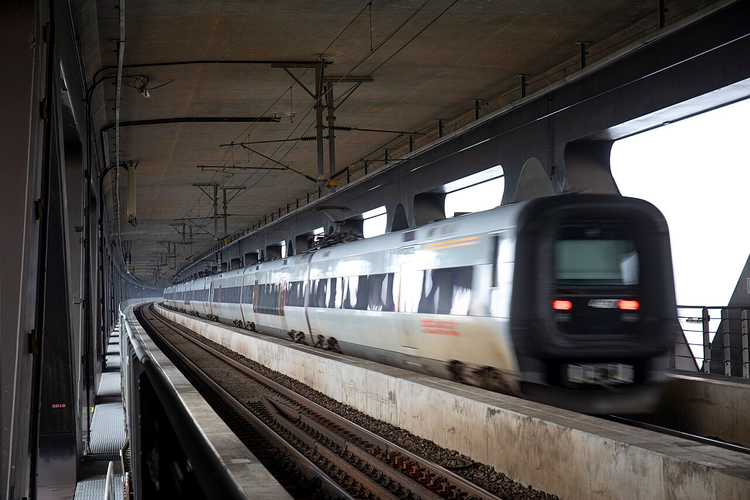 © Jenny Andersson / News Oresund · CC BYPhoto: Jenny Andersson / News Oresund, CC BY (https://creativecommons.org/licenses/by/2.0), Wikimedia Commons
💡 In short:
- Allow 4-6 hours to get to a neighbouring country: that is a typical train journey from Germany.
- A night train saves you a hotel night: you fall asleep in one city and wake up in the centre of another.
- Tickets are cheaper 2-3 months before the trip.
- Timetables and journey times: 09/2026, checked on the official DB website
Tickets and savings. Long-distance routes come with the Sparpreis fare: the earlier you buy, the lower the price (as of 09/2026, Deutsche Bahn). A night train also saves you a hotel night, so it often pays for itself. For regional travel within Germany there is the single Deutschlandticket, which costs 63 € a month and covers regional trains, buses and city transport (as of 2026, on the DB website). Compare tickets to Austria and Italy on the ÖBB and Trenitalia websites: the difference from German prices can be noticeable. On popular routes, places in the sleeper cars go first, so book them as soon as you have settled on your dates.
Aarhus: the Aros museum and the rainbow panorama
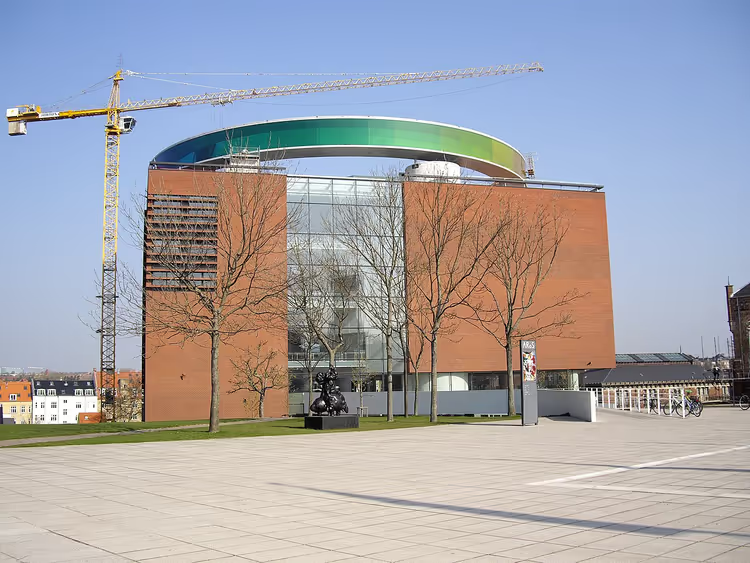 © Jon Wickmann · CC BYPhoto: Jon Wickmann, CC BY (https://creativecommons.org/licenses/by/3.0), Wikimedia Commons
Aarhus is Denmark's second-largest city, and visitors know it far less well than Copenhagen. Yet it sits on the Baltic coast and breaks down into lively neighbourhoods full of museums and cafés. The main draw is the Aros museum of contemporary art, with a rainbow panorama by the artist Olafur Eliasson on its roof.
From Hamburg the train to Aarhus takes just under four hours (as of 09/2026, DSB). Direct trains run to Hamburg from most parts of Germany, so the journey usually comes together without awkward changes. If you want to stay near the station, look at options around the station and in the centre: in Aarhus these are the handiest bases for exploring on foot.
- Getting there: about 4 hours from Hamburg, usually with no changes.
- What to see: the Aros museum with its rooftop rainbow panorama and the neighbourhoods by the harbour.
- Who it's for: anyone after a quiet trip to the sea without the tourist crowds.
Copenhagen: a direct train from Hamburg and a night connection from Berlin
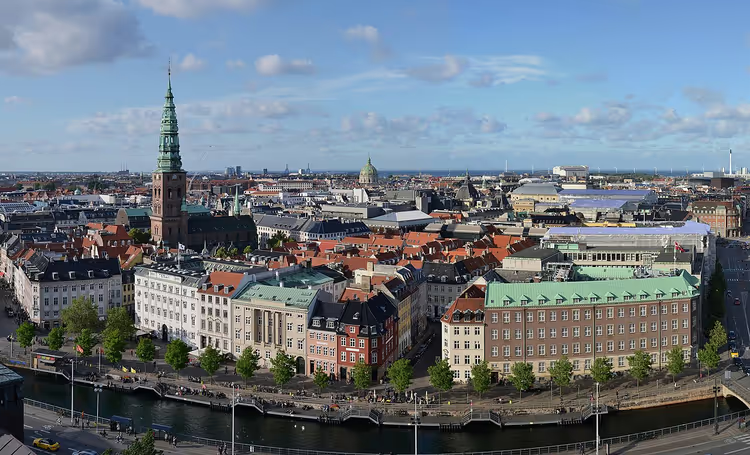 © Pudelek · CC BY-SAPhoto: Pudelek, CC BY-SA (https://creativecommons.org/licenses/by-sa/4.0), Wikimedia Commons
Copenhagen has long been a hub for short breaks, and getting here by train is perfectly doable. Several direct trains leave Hamburg every day, with a journey time of about four and a half hours (as of 09/2026, DSB). From south-eastern Germany it takes longer: from Dresden you will spend almost a whole day travelling.
If you have no time for a daytime journey, take the night train. From Berlin it sets off at around 7 pm and arrives in Copenhagen at around 6 in the morning (as of 09/2026, DSB). You save a hotel night and start your day in the centre, since the main station stands in the middle of the city.
- Getting there: direct trains from Hamburg in 4.5 hours; a night train from Berlin.
- Where to stay: accommodation in Copenhagen is expensive, so book ahead and look at options near Fisketorvet.
- Who it's for: anyone planning a short weekend trip from northern Germany.
Stockholm: 11-15 hours with one change
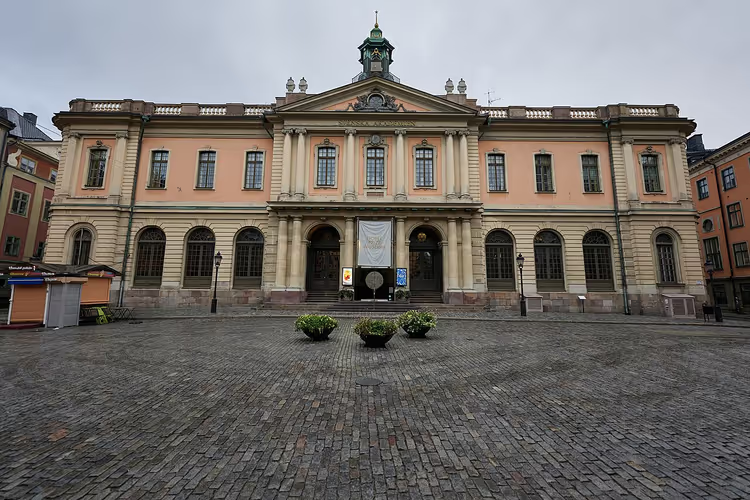
Stockholm is often underrated, yet it sits on the water and has a cosy Old Town of cafés and cinnamon buns. The palace, the Vasastan district, the Vasa Museum and the ABBA museum are easy to reach on foot or by tram. The city is spread across islands, so you will see water on almost every walk.
The journey from Hamburg takes 11 to 15 hours with at least one change (as of 09/2026, SJ). A convenient way to do it: first an IC train from Hamburg to Copenhagen in roughly 4.5 hours, then an SJ high-speed train from Copenhagen to Stockholm in 5.5 hours. On the Swedish high-speed trains you get roomy seats, a restaurant car and free internet.
- Getting there: 11-15 hours from Hamburg via Copenhagen.
- What to see: the Old Town, the Vasa Museum, the ABBA museum, the Vasastan district.
- Who it's for: anyone willing to make a long journey for a city built on islands.
East of Germany: 8 cities by train
Eastern Europe is still an underrated destination for Germans, even though Poland and the Czech Republic are right next door. Direct and night trains run here from Berlin and Dresden, and tickets are often cheaper than heading west.
Szczecin: a red line through the old town
 © Szczecinolog · CC BY-SAPhoto: Szczecinolog, CC BY-SA (https://creativecommons.org/licenses/by-sa/4.0), Wikimedia Commons
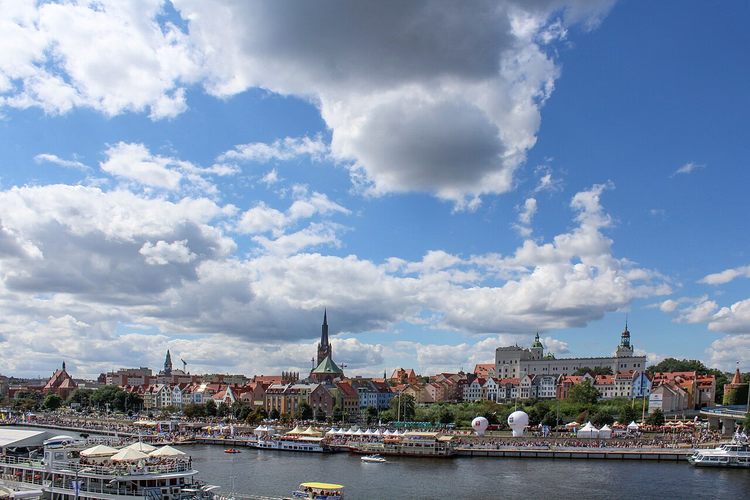
Szczecin lies on one of Germany's oldest railway lines, built in 1842. The train pulls in right in the city centre, and from there all you have to do is follow the red line painted for the tourist loop. The route winds between historic buildings and modern architecture and brings you back to the station at the end.
From Berlin the journey involves a change in Pasewalk or Angermünde (as of 09/2026, German railways). It is an easy trip without a car, and you cross the border without leaving your seat. The places people come for include the philharmonic hall, Muzeum Dialogu and the Kunsthaus Trafo exhibition space.
- Getting there: from Berlin with a change in Pasewalk or Angermünde.
- What to see: the philharmonic hall, Muzeum Dialogu, Kunsthaus Trafo.
- Where to stay: See hotels in Szczecin on Trip.com.
Wrocław: gnomes, the station and the old town
 © Jg44.89 · CC BY-SAPhoto: Jg44.89, CC BY-SA (https://creativecommons.org/licenses/by-sa/4.0), Wikimedia Commons
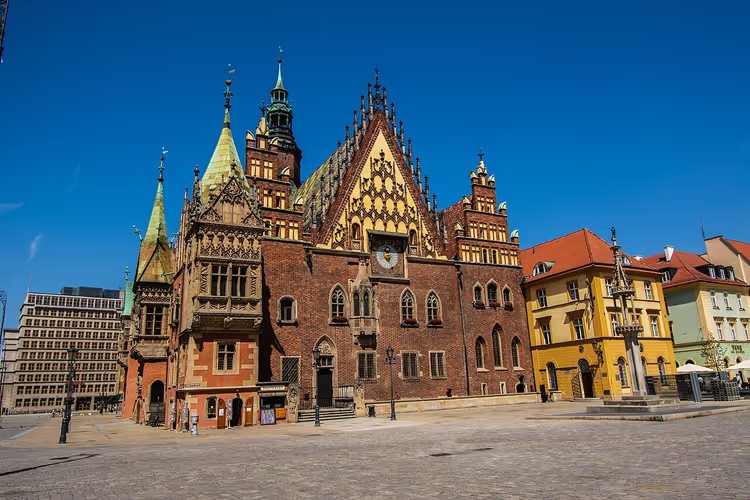
Wrocław is a city for people who love well-kept old centres and bronze gnomes. Admire the neat façades and track down at least a few of the figures hiding by the walls and on the pavement. Before you buy a ticket, memorise the Polish spelling of the name: Wrocław Główny means the main station, and that is what to enter in the search.
From Berlin there is a convenient direct connection from Lichtenberg, taking about six hours (as of 09/2026, DB). Three direct trains leave Dresden every day. The station itself is an architectural sight in a city packed with beautiful buildings. Going by rail is also more relaxing than hours of driving on busy Polish motorways full of lorries.
- Getting there: direct from Berlin in about 6 hours, 3 direct trains a day from Dresden.
- What to see: the old centre and the bronze gnomes.
- Where to stay: Hotels near Wrocław station on Trip.com.
Gdańsk: sea, history and the Tricity
 © Diego Delso · CC BY-SAPhoto: Diego Delso, CC BY-SA (https://creativecommons.org/licenses/by-sa/3.0), Wikimedia Commons
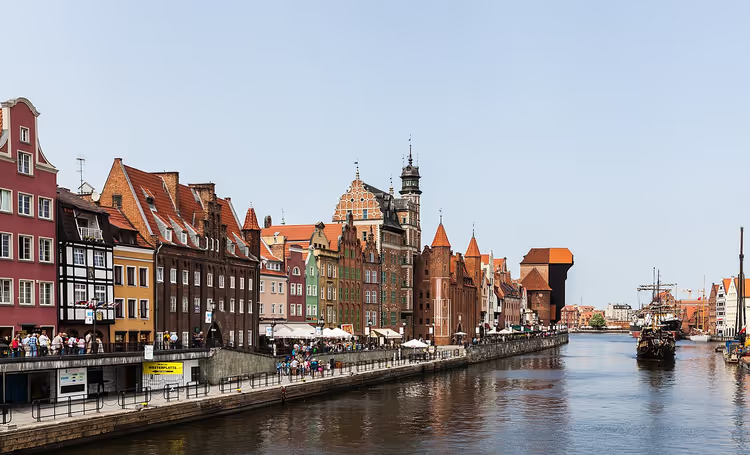
Gdańsk is Poland's sixth-largest city, and it sits on the Bay of Gdańsk. Together with the resort of Sopot and the port of Gdynia it forms the Tricity, so you can easily combine the city with a day on the Baltic. For history there is one of the country's most powerful museums: Muzeum II Wojny Światowej, about the Second World War.
One direct train a day runs from Berlin to Gdańsk, taking about six hours (as of 09/2026, the DB timetable). Several more times a day you can travel with a change in Poznań, and the journey time is roughly the same. After a walk around the centre, head to the sea: the beach at Sopot adds a proper holiday to the trip.
- Getting there: direct from Berlin in about 6 hours, or with a change in Poznań.
- What to see: Muzeum II Wojny Światowej, the old centre, the resort of Sopot.
- Where to stay: See hotels in Gdańsk on Trip.com.
Prague: through Saxon Switzerland
 © Alvesgaspar · CC BY-SAPhoto: Alvesgaspar, CC BY-SA (https://creativecommons.org/licenses/by-sa/4.0), Wikimedia Commons
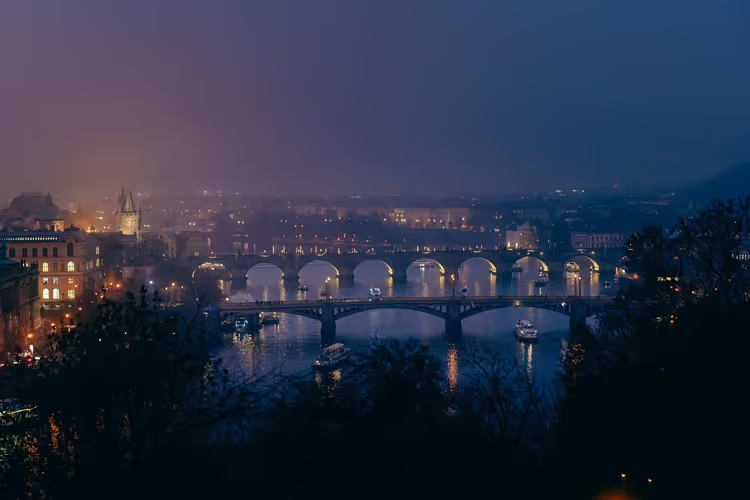
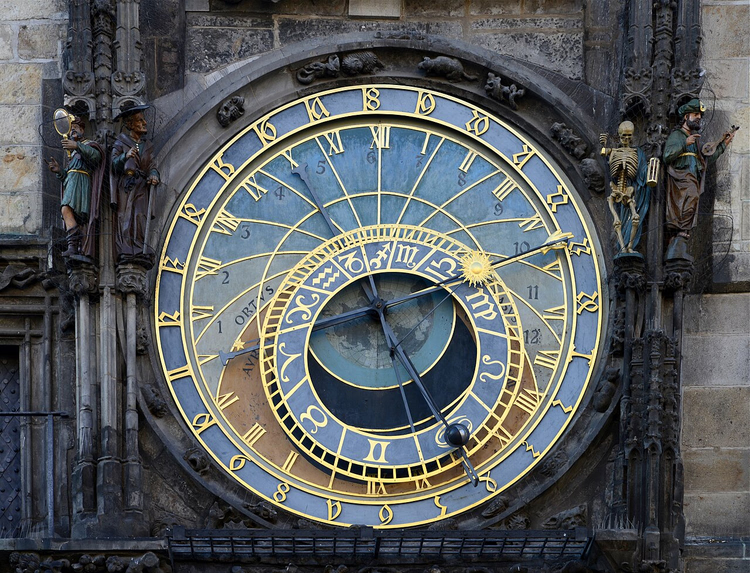
Prague is a pleasure before you even arrive: the train from Dresden runs through Saxon Switzerland, and this line is considered one of the most beautiful in Europe. You spend almost the whole journey at the window, and you arrive without hunting for parking in a jammed centre. The main station (Hlavní nádraží) is central and worth a look in its own right, if only for its Art Nouveau hall.
From the station you step straight onto the main walking route: from the Wenceslas monument by the National Museum to Wenceslas Square, and on to Charles Bridge across the Vltava. All the main sights of the old town are within walking distance of each other.
- Getting there: direct from Dresden through Saxon Switzerland.
- What to see: Wenceslas Square, Charles Bridge, the main station.
- Where to stay: Hotels in central Prague on Trip.com.
Budapest: a night train right to the centre
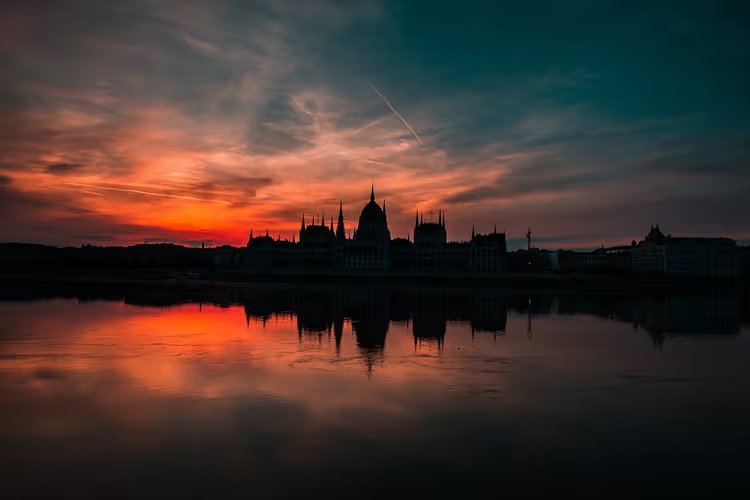
A night train takes you from Prague straight to Budapest, and you can board it in Berlin too. In the morning you arrive in the city centre rested and head straight out to explore. That way you do not lose a day to travel or pay for an extra night.
Budapest offers colourful neighbourhoods with ornate façades, ruin bars and vintage shops tucked into courtyards. You can unwind in the thermal baths, and it is worth climbing up to Fisherman's Bastion above Pest. Plan at least two days for the city, otherwise you will not fit in either the baths or a walk along the embankment.
- Getting there: by night train from Prague, also boarding in Berlin.
- What to see: ruin bars, thermal baths, Fisherman's Bastion.
- Where to stay: See hotels in Budapest on Trip.com.
Warsaw: by day or in a sleeper car
 © Kapitel · CC BY-SAPhoto: Kapitel, CC BY-SA (https://creativecommons.org/licenses/by-sa/4.0), Wikimedia Commons
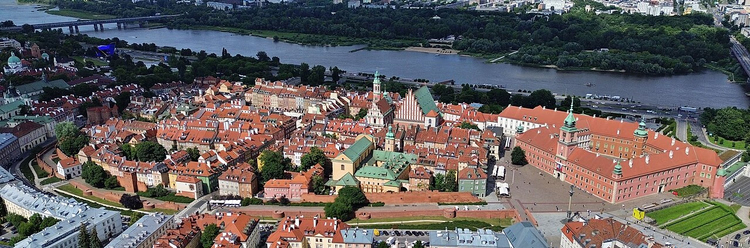
Warsaw works both for a short daytime trip and for an overnight journey. A modern centre sits alongside a rebuilt old town here, so you will find both museums and long walks along the boulevards. It is a convenient choice for families: the city is flat, the transport is easy to figure out, and distances in the centre are walkable.
The night train solves the time problem: you fall asleep in Germany and wake up in Warsaw. Convenient daytime trains run here too, so decide what matters more: saving a night or an unhurried journey in daylight.
- Getting there: by daytime train or night train.
- Who it's for: families and anyone who wants to combine a city with museums.
- Where to stay: Hotels in Warsaw on Trip.com.
Ljubljana: a small capital with dragons
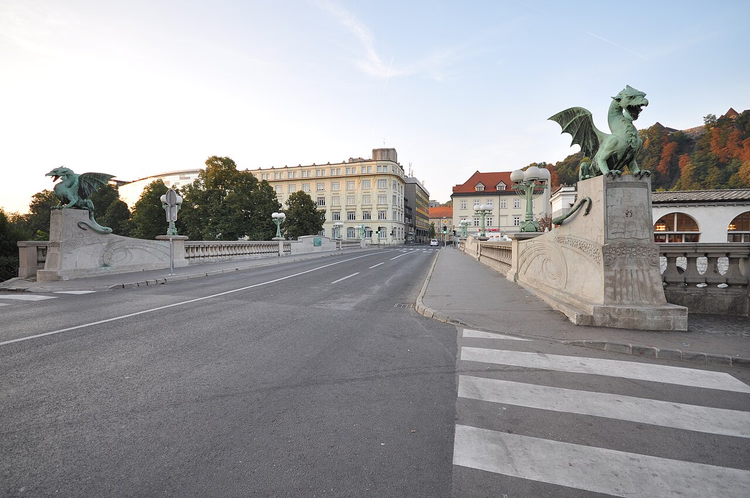
Ljubljana turns out to be a pleasant surprise in many ways. It is small and cannot boast world-famous monuments, which is exactly why it is calm and free of crowds. One day is enough to see the whole city without wearing yourself out.
The train from Munich takes a few hours, and the ÖBB night train drops you in the city and carries on to Croatia (as of 09/2026, Austria's ÖBB). The must-dos: spot the dragons all over town, climb up to the old castle and stroll through the pedestrian centre with its bridges and bars on the banks of the Ljubljanica.
- Getting there: a few hours from Munich, and there is a night train.
- What to see: the castle, the bridges, the pedestrian centre, the city's dragons.
- Where to stay: See hotels in Ljubljana on Trip.com.
Zagreb: a night train from Munich
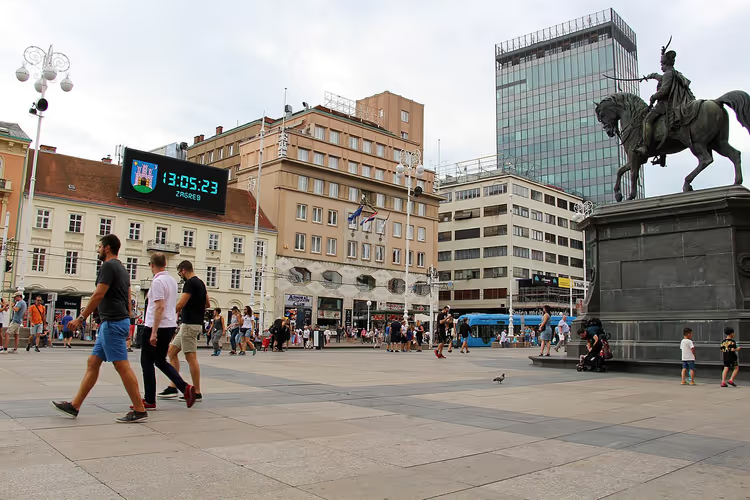 © Fred Romero from Paris, France · CC BYPhoto: Fred Romero from Paris, France, CC BY (https://creativecommons.org/licenses/by/2.0), Wikimedia Commons
Zagreb is easy to reach by rail, and it makes a good starting point for a trip around the Balkans. From Cologne you get to Munich in roughly 4.5 hours, then take the night train from Munich to Zagreb in roughly 10 hours (as of 09/2026, HŽPP). In the morning you arrive at the main station (Glavni Kolodvor) with time to drop your bags at the hotel, have breakfast and wander round the market.
A funicular links the lower and upper towns, and the upper town is home to St Mark's Church, the symbol of Zagreb. In the lower town you will find shops, cafés and busy streets. Take a look at the Grič tunnel too, which served as a shelter for people during the war.
- Getting there: from Cologne via Munich, then by night train.
- What to see: St Mark's Church, the funicular, the Grič tunnel.
- Where to stay: Hotels in Zagreb on Trip.com.
A few more things worth knowing when heading east. The red line in Szczecin runs for about seven kilometres through the centre. It is cheaper to travel to Wrocław with a change in the border town of Görlitz and set Wrocław Główny as your destination: a ticket with Deutsche Bahn through Poland often costs less than buying a direct one. Zagreb's upper town preserves austere 18th and 19th century façades shaped by Austro-Hungarian influence, and its funicular is considered the shortest and steepest in the world. Locals are convinced that the necktie was invented by Croatian soldiers about 350 years ago, which is why there are so many tie shops in the centre. In Ljubljana, the main Prešeren Square is known for its own microclimate: the weather here is often different from the next neighbourhood along.
The eastern direction is convenient because no flight is needed: you board at the station and a few hours later you are in another country. For a day trip to Szczecin or Wrocław, a morning train out and an evening train back will do. If you want to see more, plan at least two nights in one city and one journey between them. Buy tickets in advance, and for weekends book your hotel straight after buying the train.
South of Germany: 14 cities and mountains by train
There are so many countries south of Germany that it is hard to choose. Austria, Switzerland and Italy are quicker to reach by train than you might think, and instead of endless traffic jams on the mountain passes you get night routes and a view from the window.
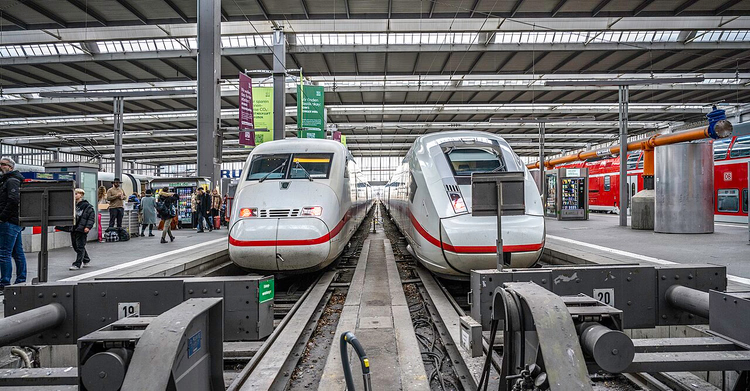
Innsbruck: mountains right by the station
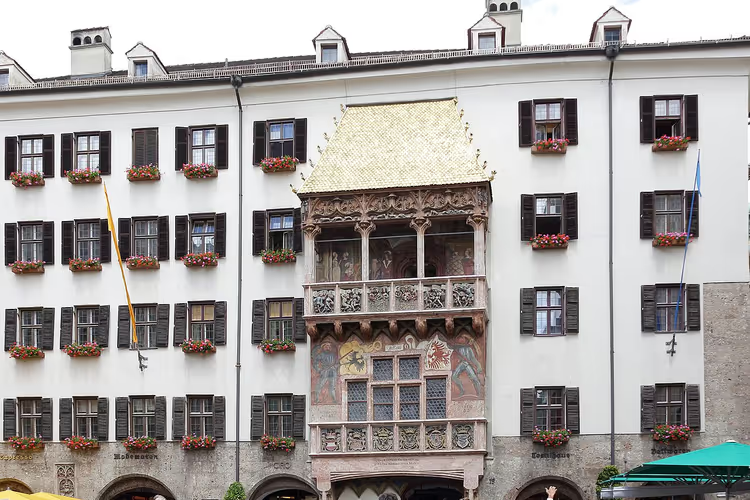 © Michael aus Halle · CC BY-SAPhoto: Michael aus Halle, CC BY-SA (https://creativecommons.org/licenses/by-sa/3.0), Wikimedia Commons
Innsbruck works for both a winter and a summer trip: you can leave the car at home. The city is very walkable, with sights spread out from the Golden Roof (Goldenes Dachl) to the Bergisel ski jump. The cable car takes you up into the mountains in a matter of minutes for a panorama of the valley.
Trains to Innsbruck usually run via Munich, and from there the journey is short. Tickets for the Austrian Railjet through ÖBB sometimes cost noticeably less than through DB, so it is worth comparing prices (as of 09/2026, ÖBB). The station is central: in ten minutes you can walk to the banks of the Inn and the old town, and ski buses also leave from the station.
- Getting there: via Munich, with the station in the city centre.
- What to see: the Golden Roof, the Bergisel ski jump, the cable car into the mountains.
- Where to stay: Hotels in Innsbruck on Trip.com.
Hall in Tirol: a small town next to Innsbruck
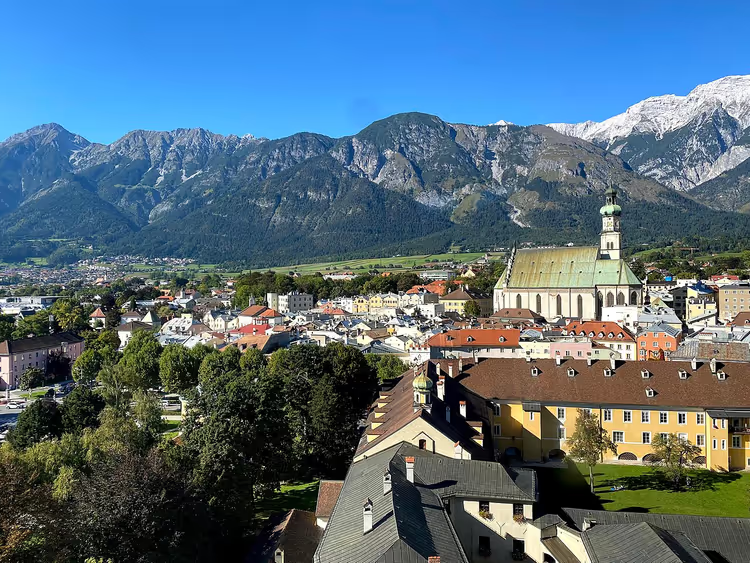 © -wuppertaler · CC BY-SAPhoto: -wuppertaler, CC BY-SA (https://creativecommons.org/licenses/by-sa/4.0), Wikimedia Commons
Hall in Tirol is a small town next to Innsbruck, and it has its own station. The mill wheel that struck the first guldiner survives here, and the town itself is ringed by the Karwendel mountains. From Innsbruck it takes just ten minutes.
From Germany, people usually travel here via Munich (as of 09/2026, the ÖBB website). Most long-distance trains from Frankfurt, Berlin or Stuttgart run via Munich, so the change in Innsbruck fits in without any extra detours. Once there, it is worth riding an e-bike up to Walderalm and trying a Kaspressknödel. Book lovers will want to drop into the hundred-year-old Riepenhausen bookshop.
- Getting there: 10 minutes from Innsbruck, from Germany via Munich.
- What to see: the mill wheel, the Riepenhausen bookshop, the Karwendel mountains.
- Where to stay: Hotels near Innsbruck on Trip.com.
Vienna: the night train and the centre
 © Tournasol7 · CC BY-SAPhoto: Tournasol7, CC BY-SA (https://creativecommons.org/licenses/by-sa/4.0), Wikimedia Commons
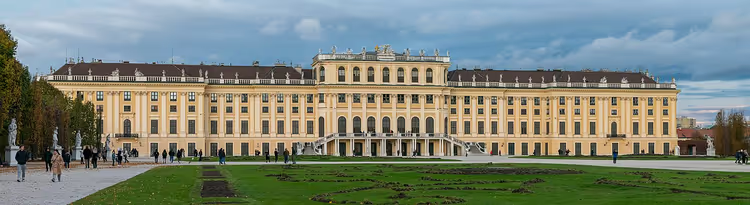
Vienna is easy to fall for on day one: leafy streets lined with Gründerzeit houses, palaces and parks, the big zoo at Schönbrunn and the Prater. In summer you can add the Danube, where you can swim. Whether you have a couple of days or a week, the city gives you enough for dozens of walks.
Vienna is quick to reach from Dresden, and from Munich you are practically there already. There is a night train too: in the evening you board the ÖBB Nightjet in Berlin and arrive in the morning in one of the world's most liveable cities (as of 09/2026, Nightjet). There are also good options from Hamburg and Cologne. In Schönbrunn's park, the Palmenhaus, a glass pavilion of tropical plants, is open all year round.
- Getting there: from Dresden or Munich, or on the Nightjet from Berlin.
- What to see: Schönbrunn, the Prater, the centre with its Gründerzeit houses.
- Where to stay: Hotels in Vienna on Trip.com.
Graz: Austria's second city
 © Ralf Roletschek · CC BY-SAPhoto: Ralf Roletschek, CC BY-SA (https://creativecommons.org/licenses/by-sa/3.0/at/deed.en), Wikimedia Commons
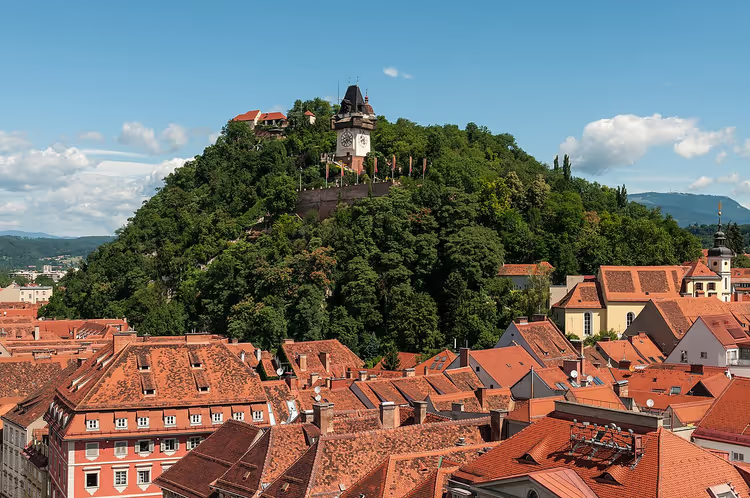
Graz is Austria's second-largest city, but it feels more like an overgrown village: a compact old centre, plenty of greenery and Italian touches in the architecture. See the Clock Tower, Eggenberg Palace and the modern Kunsthaus Graz. The events are a reason to come in themselves: the Christmas market, the Klanglicht festival and the La Strada street theatre.
Long-distance trains arrive at the main station in the west of the city, with hotels nearby such as Hotel Daniel (as of 09/2026, ÖBB). Graz has a population of about 300,000. If you want to stay closer to the old centre, look at the historic Hotel Wiesler: it is a 10-15 minute walk from the station. The Main Square is just four tram stops away, and with light luggage you can walk it. Graz is two hours from Vienna, direct trains from Germany run from Munich, Stuttgart and Frankfurt, and there is a night train from Berlin.
- Getting there: 2 hours from Vienna, direct trains from Munich, Stuttgart, Frankfurt and Berlin.
- What to see: the Clock Tower, Eggenberg Palace, Kunsthaus Graz.
- Where to stay: Prices at Hotel Daniel Graz on Trip.com.
Zurich: a city by the lake
 © Dennis G. Jarvis · CC BY-SAPhoto: Dennis G. Jarvis, CC BY-SA (https://creativecommons.org/licenses/by-sa/2.0), Wikimedia Commons
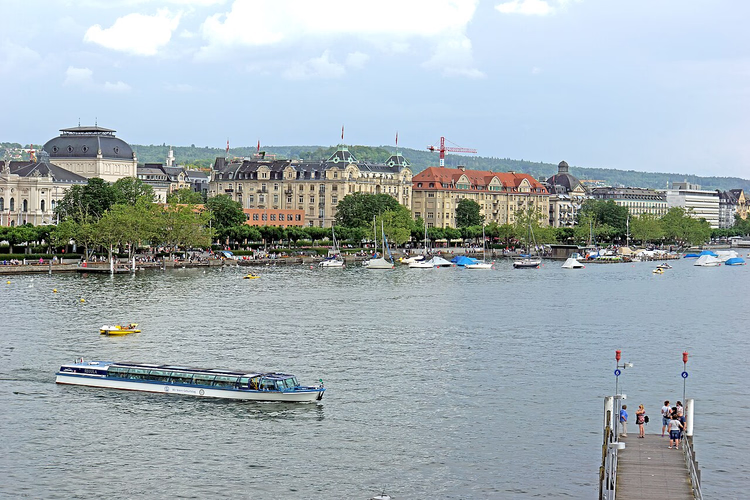
Zurich is good at any time of year, and the train delivers you to the centre with no airport transfers. The journey from Salzburg on an Austrian railways Sparschiene ticket works out especially cheap, and DB offers similar fares from German cities (as of 09/2026, SBB). Mountain scenery rolls past the window, so you will not be bored.
If you can, plan your trip for a Wednesday: the HaBe Märt market is held in the main station hall. From 10 am to 8 pm there are food trucks, stalls and a bar with live entertainment (as of 09/2026, Swiss railways). Near the city, see the Rhine Falls, the Botanical Garden and Lake Zurich, and have lunch at Hiltl, the world's first vegetarian restaurant, which opened back in 1898. Zurich's main station is the largest in Switzerland, and its arrivals hall is worth a look in its own right.
- Getting there: direct trains from Germany, buy tickets in advance.
- What to see: the HaBe Märt market on Wednesdays, the Rhine Falls, Lake Zurich.
- Where to stay: Hotels in Zurich on Trip.com.
Basel: three countries side by side
 © Norbert Aepli, Switzerland ( User:Noebu ) · CC BYPhoto: Norbert Aepli, Switzerland ( User:Noebu ), CC BY (https://creativecommons.org/licenses/by/2.5), Wikimedia Commons
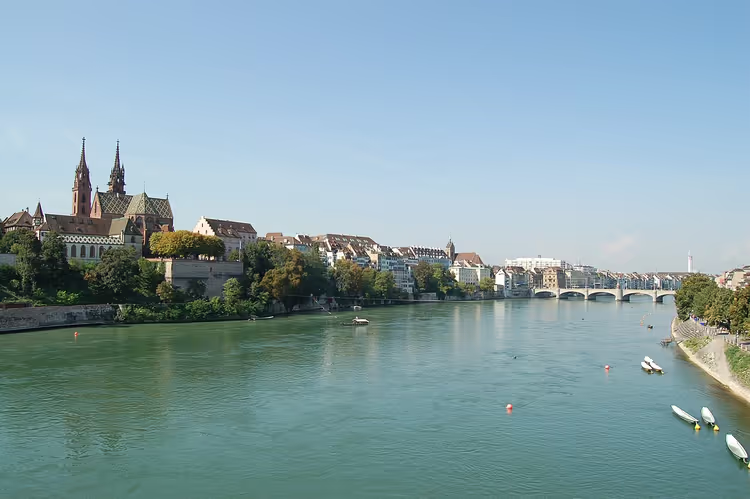
Basel is Switzerland's third-largest city, sitting where Germany, France and Switzerland meet. The old town lies right on the Rhine, and Basel Minster defines the skyline. From Düsseldorf you get there in roughly four hours, with no changes at that (as of 09/2026, the SBB website). It is a handy option for a long weekend with a comfortable journey: with no changes you save time, and you can cover the whole old town in half a day.
- Getting there: about 4 hours from Düsseldorf with no changes.
- What to see: Basel Minster, the old town on the Rhine.
- Where to stay: Hotels in Basel on Trip.com.
Lugano: the lakes and mountains of Ticino
 © Aconcagua · CC BY-SAPhoto: Aconcagua, CC BY-SA (https://creativecommons.org/licenses/by-sa/3.0), Wikimedia Commons
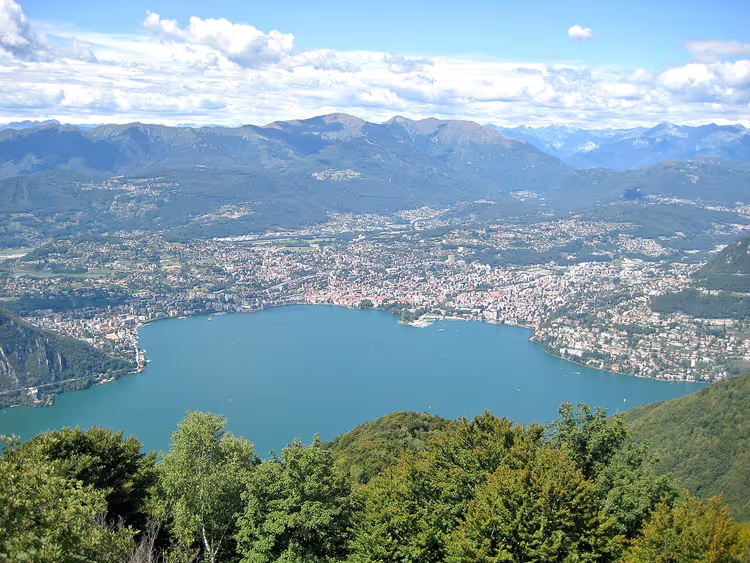
From Munich you reach Lugano in roughly six hours with a change in Zurich, swapping a Bavarian autumn for warm Ticino (as of 09/2026, the SBB timetable). Lugano stretches along the lakeshore between two mountains, Monte Brè and San Salvatore, and greets you with elegant palazzi. Each summit gives you a view of the city, the lake and the surrounding mountains.
A lovely walk follows the olive trail along the lake to the former fishing village of Gandria, where the houses climb one above the other. A separate stop for literature lovers is a trip to Montagnola, served by a bus from the centre: Hermann Hesse spent his later years there. Visitors to Ticino will find the Ticino Ticket useful, and it is included with your accommodation: with it, city and intercity buses and trains are free, and there are discounts on boats and mountain railways. Plan at least two days for Lugano and Ticino: one will go on the city and Gandria, the second on Montagnola and a trip up to a summit.
- Getting there: about 6 hours from Munich via Zurich.
- What to see: Monte Brè, San Salvatore, the olive trail to Gandria, the Hesse museum in Montagnola.
- Where to stay: Hotels in Lugano on Trip.com.
Turin: museums and a huge market
 © Pierre5018 · CC BY-SAPhoto: Pierre5018, CC BY-SA (https://creativecommons.org/licenses/by-sa/4.0), Wikimedia Commons
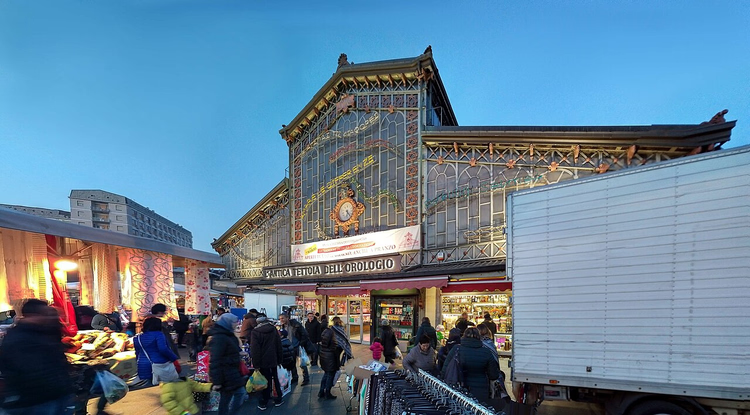
Turin stays in Milan's shadow, even though it was Italy's first capital and has the largest open-air market in Europe. It is home to the Cinema Museum and the Egyptian Museum, among the most interesting in the country. You will find historic houses, palaces and churches along the inner avenues, and you can relax on the high embankment of the river Po with a view of the Alps.
Getting here by train is harder because of the Alps: from Frankfurt the journey takes about nine hours with changes in Bern or Zurich and Milan (as of 09/2026, Trenitalia). From Munich it is easier to travel about seven hours to Bologna, and from there another two hours to Turin. Almost all northern routes pass through Milano Centrale, from where trains to Turin run roughly every half hour. The city has two stations: the old Torino Porta Nuova in the centre and the new Torino Porta Susa in the west. They are one and a half kilometres apart, which is five minutes by metro or about twenty minutes on foot.
- Getting there: about 9 hours from Frankfurt, from Munich via Bologna.
- What to see: the Cinema Museum, the Egyptian Museum, the market, the Po embankment.
- Where to stay: Hotels in Turin on Trip.com.
Milan: the night train and the cathedral
 © 2alessio8 · CC BYPhoto: 2alessio8, CC BY (https://creativecommons.org/licenses/by/3.0), Wikimedia Commons
Milan is easy to reach from Germany, and you arrive at Milano Centrale right in the centre instead of spending almost an hour getting in from Malpensa or Bergamo airport. The ÖBB night train from Munich takes exactly 12 hours and departs at 20:10 (as of 09/2026, the Nightjet route). So you sleep soundly on the way and are out exploring the city by morning.
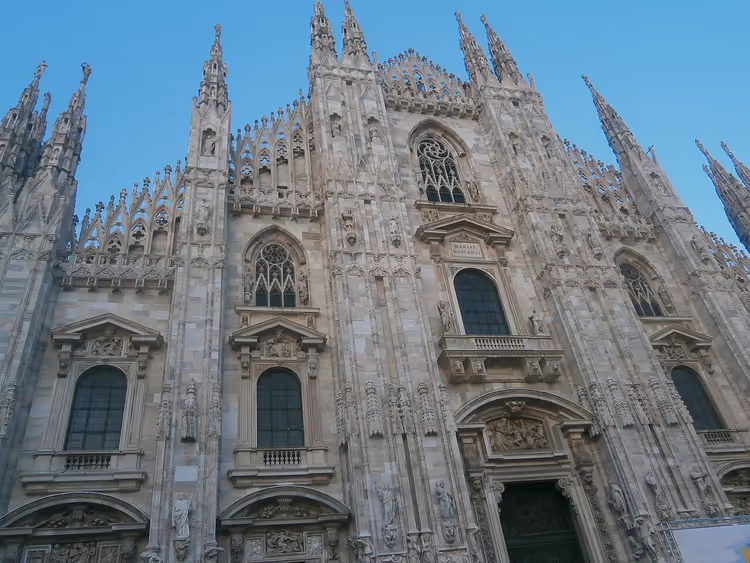
The walk starts right from the station. The Duomo stands next to the Galleria Vittorio Emanuele II, and the climb to the cathedral roof is something you will certainly remember. Another striking place is the Cimitero Monumentale with its enormous tombs, and fans of the unusual will like the church of San Bernardino alle Ossa, decorated with bones. None of this is far from the station. Milan is also known as a capital of design: it hosts the Triennale exhibitions, there are murals to look for on the walls, and in the evening do not miss aperitivo with snacks.
- Getting there: night train from Munich in 12 hours, with the station in the centre.
- What to see: the Duomo and its roof, Cimitero Monumentale, San Bernardino alle Ossa.
- Where to stay: Hotels near Milano Centrale on Trip.com.
Trieste: port of the Habsburgs
 © Nick Savchenko from Kiev, Ukraine · CC BY-SAPhoto: Nick Savchenko from Kiev, Ukraine, CC BY-SA (https://creativecommons.org/licenses/by-sa/2.0), Wikimedia Commons
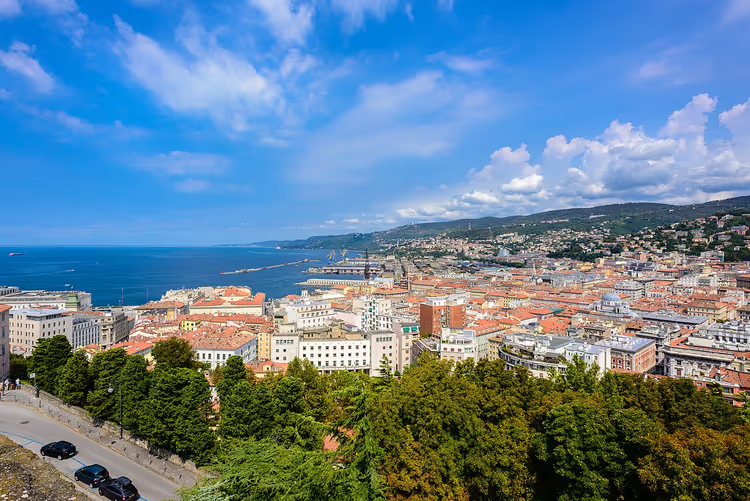
Trieste was the main port of the Habsburg Empire, which is why the station sits in the centre next to the historic Borgo Teresiano. From here it is only a couple of minutes on foot to Piazza Unità, the largest square in Europe opening directly onto the sea. From the Roman amphitheatre it is an easy walk to the basilica of San Giusto on the hill, the church of St Spyridon by the Canal Grande, the Arco di Riccardo arch and the Molo Audace pier.
By day Trenitalia runs between Trieste and Venice almost every hour, and from Munich the night train is a convenient way to get here (as of 09/2026, the Trenitalia website). Allow half a day for the city: all the key sights by the sea are packed into a compact area.
- Getting there: by night train from Munich, by train every hour from Venice.
- What to see: Piazza Unità, the basilica of San Giusto, Molo Audace.
- Where to stay: Hotels in Trieste on Trip.com.
Venice: the Nightjet
 © Jorge Franganillo · CC BYPhoto: Jorge Franganillo, CC BY (https://creativecommons.org/licenses/by/2.0), Wikimedia Commons
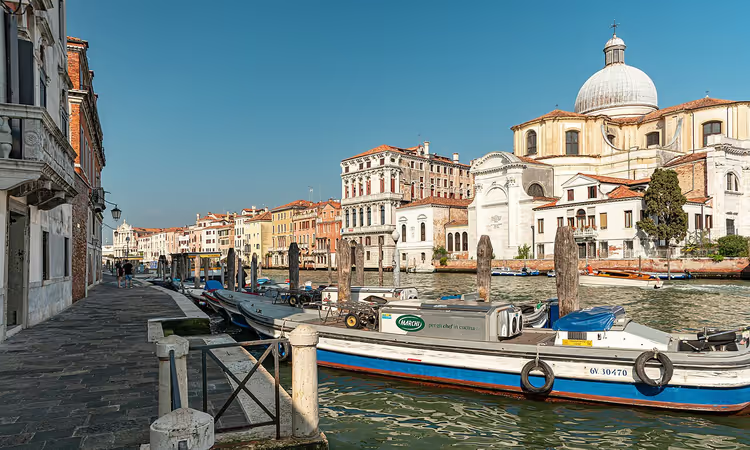
Venice is one of the most visited cities in the world, and in summer it is especially crowded. The journey itself, though, can be peaceful: the ÖBB Nightjet night train NJ40463 runs from Munich and gets you to the city in roughly nine hours via Rosenheim, Udine and Treviso (as of 09/2026, the Nightjet website). The views of the Alps from the window alone are enough to make the trip memorable.
Once there, see the Doge's Palace and St Mark's Square, and take a trip out to colourful Burano and to the Lido, Europe's first seaside resort. The Lido makes particular sense in summer, when the centre gets hot.
- Getting there: night train from Munich in 9 hours.
- What to see: the Doge's Palace, St Mark's Square, Burano, the Lido.
- Where to stay: Hotels in Venice on Trip.com.
Florence: a convenient stop by train
 © Wikibusters · CC BY-SAPhoto: Wikibusters, CC BY-SA (https://creativecommons.org/licenses/by-sa/4.0), Wikimedia Commons
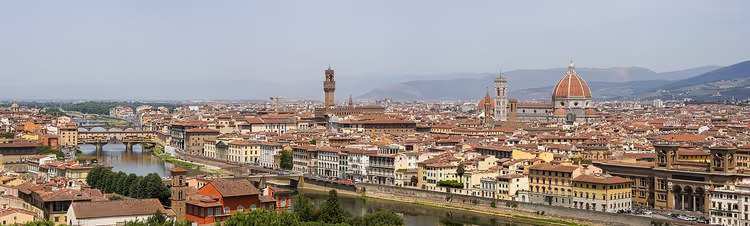
Florence is well suited to train travel, especially from Germany and Austria. The Nightjet from Munich passes right through the city and arrives early in the morning. By day you need to change in Bologna (as of 09/2026, the Trenitalia timetable). The main station, Santa Maria Novella, is a few minutes' walk from the Duomo.
The capital of the Italian Renaissance is full of sights and art treasures in itself. It is also a convenient base for exploring other Tuscan towns by train and bus: there are connections to both large and small ones.
- Getting there: night train from Munich, or by day with a change in Bologna.
- What to see: the Duomo, Santa Maria Novella station, trips around Tuscany.
- Where to stay: Hotels in Florence on Trip.com.
Rome: night train or daytime connection
 © Luigi Guerrieri4 · CC BY-SAPhoto: Luigi Guerrieri4, CC BY-SA (https://creativecommons.org/licenses/by-sa/4.0), Wikimedia Commons
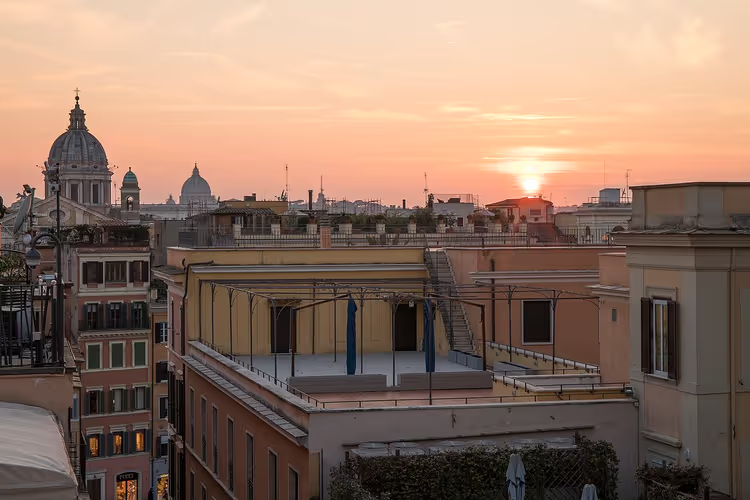
All roads lead to Rome, and the railway does too. The night train used to run from Munich to Rome with no changes, but now it is easier to travel by day, in about ten hours (as of 09/2026, Italian railways). Depending on the connection, you will need at least one change, for example at Bologna Centrale or Verona Porta Nuova.
The fastest weekday connection sets off at 9:28 on the EC 83 to Bologna, where you have 18 minutes to change onto the FR 9643 towards Naples. The train pulls into Roma Termini at 18:40, just in time for dinner (as of 09/2026, the Trenitalia route). In Rome it is worth planning a pizza-making class in the centre and the Sunday Angelus prayer in St Peter's Square. A fitting end to the trip is a week-long cruise from Civitavecchia, Rome's cruise port.
- Getting there: by day in about 10 hours with a change.
- What to see: Roma Termini, St Peter's Square, Civitavecchia.
- Where to stay: Hotels in Rome on Trip.com.
Palermo: the long journey as part of the trip
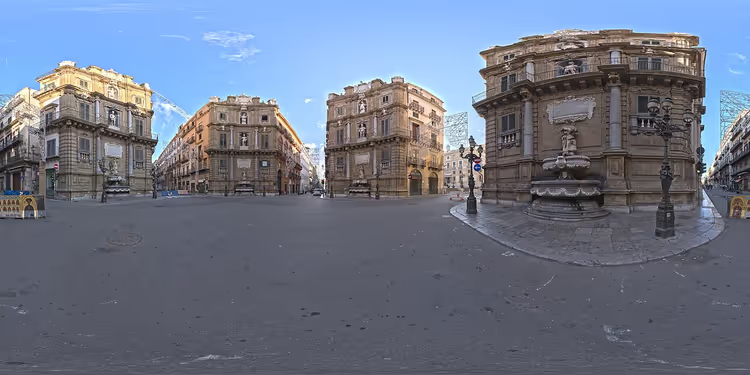
If a long journey does not put you off, it is worth going all the way to Palermo. From Munich the route involves one change in Bologna, from Frankfurt one change in Basel. You can cover the whole distance in a single day, in roughly 26 hours, or break it into scenic stages: here the journey itself becomes part of the trip (as of 09/2026, Trenitalia in Sicily).
Along the way you do not just pass through Bologna, Florence, Rome, Naples and Salerno, you can stop in them too. Palermo holds its own against them: Sicily's capital is a fusion of cultures. It has the beach and seafront of the fishing village of Mondello, and in the mountains inland stands Monreale Cathedral, with a magnificent cloister and a garden overlooking Palermo.
- Getting there: from Munich via Bologna, from Frankfurt via Basel, about 26 hours.
- What to see: Mondello, Monreale Cathedral, stops along the way.
- Where to stay: Hotels in Palermo on Trip.com.
In summer, pleasure boats sail on Lake Lugano. Compare tickets for Italian routes on Italy's Trenitalia, and for Austrian ones on the ÖBB timetables: prices for neighbouring dates sometimes differ noticeably.
If this is your first time in Italy, pick one or two cities and stay there for two days: journeys between Rome, Florence and Venice take just a couple of hours. Night trains from Munich save both time and money, so it is best to book places on them in advance. For Switzerland, take direct trains from Germany: that way you avoid changes and pay for a single ticket. Warm clothes come in handy in the south even in spring, since Ticino and the lake area are warmer than the Alps.
West of Germany: 6 cities by train
To the west, beyond Benelux and France, the real dream destinations begin. Instead of clogged motorways with speed limits and toll sections, you can board a high-speed TGV and get to the cities of Western Europe quickly.
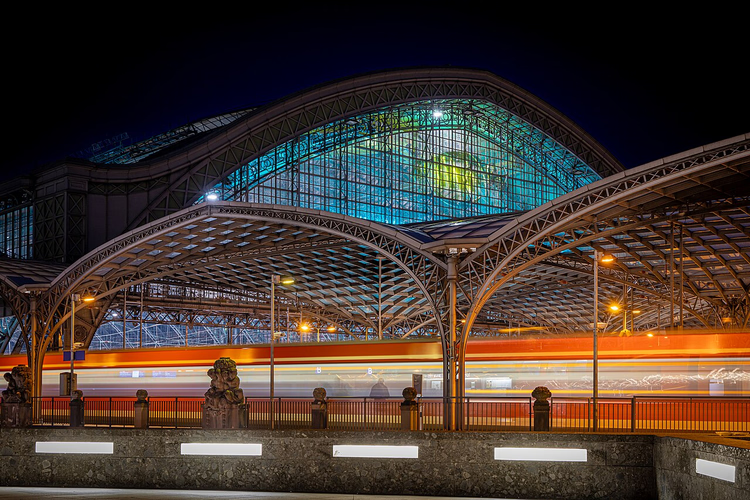 © Superbass · CC BY-SAPhoto: Superbass, CC BY-SA (https://creativecommons.org/licenses/by-sa/4.0), Wikimedia Commons
Utrecht: a quiet alternative to Amsterdam
 © Adamboluu · CC BYPhoto: Adamboluu, CC BY (https://creativecommons.org/licenses/by/4.0), Wikimedia Commons
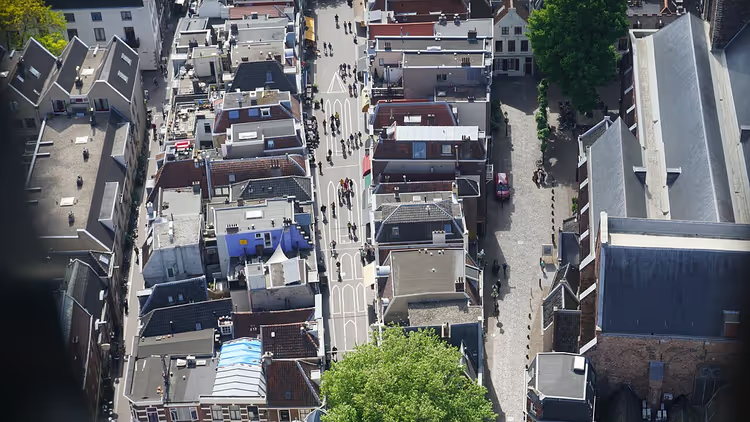
If Amsterdam is all you know and you want an alternative, take a look at Utrecht. It is a student city of canals, neat gabled houses, cosy cafés and trendy shops. And yet Utrecht, the fourth-largest city in the Netherlands, sees hardly any tourist crowds.
From Hamburg you get there in roughly five hours with a change in Duisburg or Oberhausen, and from Cologne in just two and a half hours with no changes (as of 09/2026, NS). Utrecht Centraal station is in the centre. Modern architecture greets you first: a translucent canopy links the station to the Hoog Catharijne shopping centre. Beneath the station is the world's largest bicycle park, and it is worth hiring a bike straight away.
- Getting there: about 2.5 hours direct from Cologne, about 5 hours from Hamburg.
- What to see: the old town canals, Hoog Catharijne, the bicycle park.
- Where to stay: Hotels in Utrecht on Trip.com.
Brussels: comics and the old town
 © Ank Kumar · CC BY-SAPhoto: Ank Kumar, CC BY-SA (https://creativecommons.org/licenses/by-sa/4.0), Wikimedia Commons
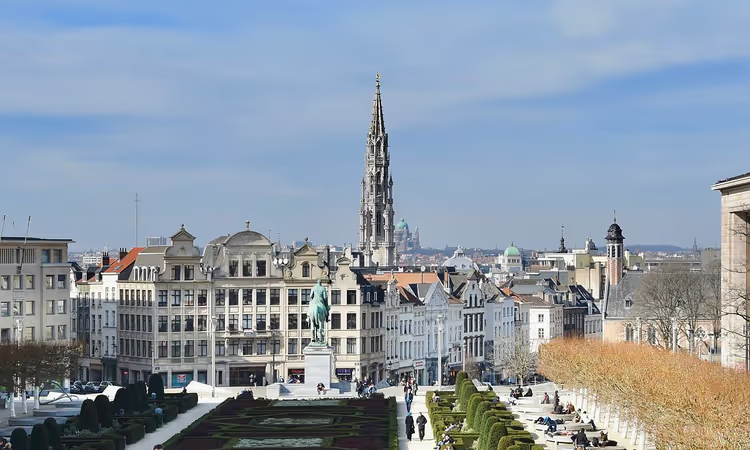
Brussels is good for both a day trip and a weekend. There is more to see here than the European Parliament: the old town has the Grand-Place and the Saint-Hubert galleries. Comic fans will find their heroes, Tintin and Lucky Luke, on house walls along the Comic Route. Besides the famous Manneken Pis, the city also has figures of a peeing girl, Janneke Pis, and a peeing dog, Zinneken Pis.
From Cologne the journey to Brussel Midi takes under two hours on a Eurostar train (as of 09/2026, SNCB). From there you either walk through the Marolles district to the old town or ride a few stops on the metro, which also goes out to the Atomium. An ICE train also runs from Frankfurt via Cologne. Tickets on this short route are often inexpensive, so Brussels suits a spontaneous trip as well.
- Getting there: under 2 hours from Cologne, from Frankfurt via Cologne on the ICE.
- What to see: the Grand-Place, the Saint-Hubert galleries, the Comic Route, the Atomium.
- Where to stay: Hotels in Brussels on Trip.com.
Liège: Calatrava's station and an old staircase
 © Frans Berkelaar · CC BYPhoto: Frans Berkelaar, CC BY (https://creativecommons.org/licenses/by/2.0), Wikimedia Commons
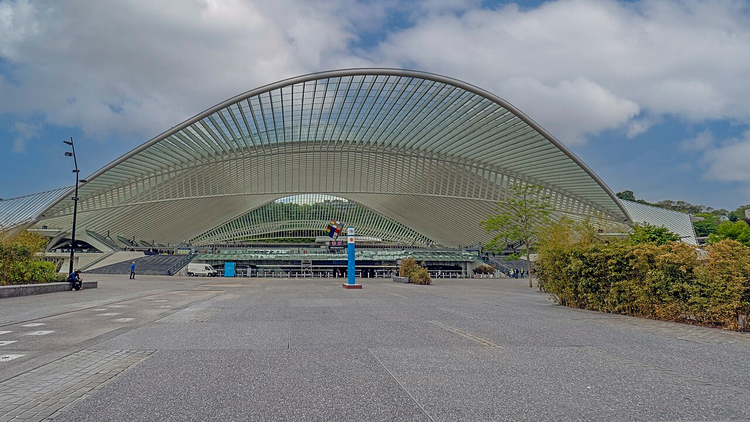
Liège is still little known as a short-break destination. It is easy to reach from North Rhine-Westphalia: first an RE train to Aachen, then about twenty minutes on the ICE to your destination (as of 09/2026, the SNCB website). Liège-Guillemins station was built by the architect Santiago Calatrava, who designed the Oculus main hall at the World Trade Center in New York. From the station you can walk to the Meuse and carry on to the centre by river shuttle.
In town it is worth stopping by the Saint-Pholien flea market, held every Friday from 6 am to 1 pm. Another landmark is the Montagne de Bueren staircase with its 374 steps: the climb is tough, but the top gives you a panorama of the city and the river (as of 09/2026, SNCB). One more tip: Cité Miroir, a cultural centre in a former swimming pool building.
- Getting there: from NRW via Aachen, then 20 minutes on the ICE.
- What to see: Liège-Guillemins station, the Montagne de Bueren staircase, Cité Miroir.
- Where to stay: Hotels in Liège on Trip.com.
Paris: a classic of European travel
 © Armin Hornung · CC BY-SAPhoto: Armin Hornung, CC BY-SA (https://creativecommons.org/licenses/by-sa/3.0), Wikimedia Commons
Paris is a classic of European travel. Even from Dresden the journey takes about eight hours, because the TGV you board in Frankfurt or Karlsruhe is noticeably faster than the German ICE (as of 09/2026, SNCF Connect). Paris Est station is right in the centre, so look for a hotel nearby. The metro is a convenient way to get around the city.
A good option is the Sparpreis Europa ticket, which makes a trip to Paris especially good value. Book early: prices rise closer to the date.
- Getting there: about 8 hours from Dresden, TGV from Frankfurt or Karlsruhe.
- What to see: Paris Est station, the city centre, rides on the metro.
- Where to stay: Hotels in Paris on Trip.com.
La Rochelle: an old port on the Atlantic
 © Remi Jouan · CC BY-SAPhoto: Remi Jouan, CC BY-SA (http://creativecommons.org/licenses/by-sa/3.0/), Wikimedia Commons
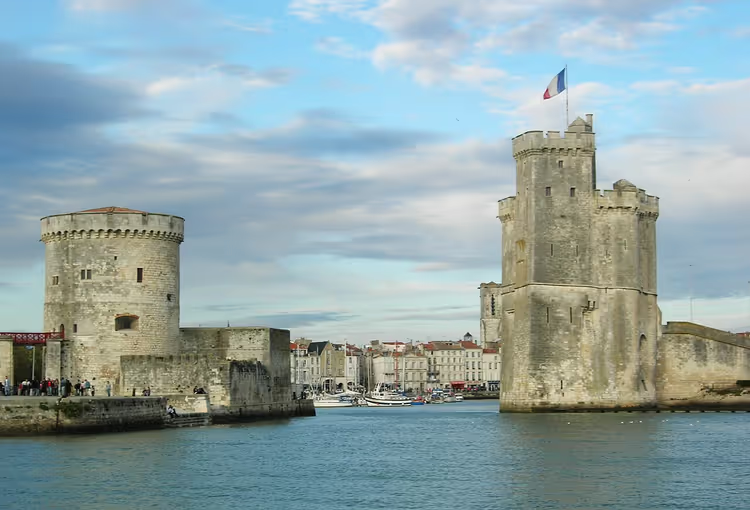
If you arrive on a Eurostar train from Cologne at Paris-Nord, you face a transfer across Paris to another station: the TGV to La Rochelle leaves from Paris-Montparnasse. La Rochelle is a port city in south-western France, in the Nouvelle-Aquitaine region. The historic Old Port (Vieux-Port) ranks among the most beautiful places in the country: three prominent towers and the city walls give it the look of an old fortress. La Rochelle is at its best in the evening, when the harbour and the façades of the old houses are bathed in light.
Be sure to walk down Avenue de la Monnaie: the best restaurants are here, and at the end of the street the path leads into a park where market traders grow organic produce. The TGV from Montparnasse runs several times a day and takes just over three hours with no changes; the fastest connection, on Monday at 13:42, takes 2 hours 39 minutes (as of 09/2026, the SNCF Connect timetable). There are no convenient overnight connections from Paris, so plan to travel by day.
- Getting there: TGV from Paris-Montparnasse in about 3 hours, no overnight connections.
- What to see: the Old Port and its towers, Avenue de la Monnaie.
- Where to stay: Hotels in La Rochelle on Trip.com.
Poitiers: a quiet city in Nouvelle-Aquitaine
 © Lamelune · CC BY-SAPhoto: Lamelune, CC BY-SA (https://creativecommons.org/licenses/by-sa/4.0), Wikimedia Commons
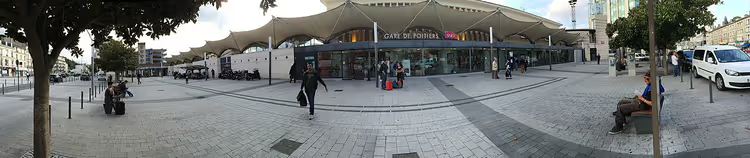
There are still little-known but pleasant destinations you can reach by train. Poitiers, in the Nouvelle-Aquitaine region, is one of them. In the historic centre you will lose yourself in lively alleyways and come across unusual places: a host of churches and the palace of the dukes. For a relaxed evening outdoors, try Guinguette Pictave on Îlot Tison.
Poitiers lies on the Paris-Bordeaux line, and the high-speed TGV is a convenient way to get here (as of 09/2026, SNCF). From Germany you can change in Strasbourg and travel straight to Poitiers: that way you bypass Paris, and the change in Strasbourg is simpler. Via Paris the route leaves from Montparnasse station, and it is worth allowing plenty of time for the transfer between the Paris stations.
- Getting there: TGV on the Paris-Bordeaux line, from Germany via Strasbourg.
- What to see: the historic centre, the palace of the dukes, Guinguette Pictave.
- Where to stay: Hotels in Poitiers on Trip.com.
It is best to book TGVs in France in advance: seats on popular services sell out, and the price rises closer to the date (on SNCF Connect).
Allow at least three or four days for the western direction: only then will you manage to see two or three cities without spending the whole trip in transit. Utrecht and Brussels are good as short weekend destinations, while Paris and La Rochelle are worth combining into one long route via Paris.
⁉️🤔 Frequently asked questions
How long does the train journey from Germany to Copenhagen take?
Direct trains from Hamburg take about four and a half hours, and from Berlin the night train is a convenient choice: it sets off in the evening and arrives in central Copenhagen in the morning. From south-eastern Germany the journey is longer, and a daytime trip can easily take a whole day.
Which European cities can you reach by night train from Germany?
Night routes link Germany with Vienna, Budapest, Zagreb, Ljubljana, Milan, Venice and Florence. Some trains start from Berlin, Munich or Cologne. You sleep on the way, arrive right in the city centre in the morning and save one hotel night.
When is the best time to buy train tickets?
Tickets are cheapest two to three months before the trip. Sparpreis and Sparpreis Europa give noticeably lower prices than buying at the last minute, and on popular routes seats sell out well in advance. If your dates are flexible, compare neighbouring days: the price difference can be substantial.
Is it realistic to get from Munich to Italy by train?
Yes. By day it is convenient to travel to Bologna and on to Rome, Milan, Venice or Turin, and direct night trains run to Milan and Venice. Trains from Milan to Turin leave roughly every half hour, so Italy is easy to string together into one long route.
How much does a trip around Europe by train cost?
The price depends heavily on the route, the date and when you buy, so check the exact cost with the operator. Booking early and a Sparpreis ticket bring costs down, and a night train saves a hotel night, which also reduces the overall cost of the trip.
If you want a fresh look at Europe's night trains, watch the short video about the new Nightjets.
At a glance: what to book
Here is how the choice breaks down. If you want a short weekend in the north, go for Aarhus or Copenhagen. For a rich dose of history, Prague or Budapest fit the bill. Gdańsk, Trieste or La Rochelle give you a day or two by the sea. Skiing and mountains mean Innsbruck and Hall in Tirol. For museums, choose Vienna, Milan, Turin or Florence. And if you fancy a long route, the train will take you all the way to Palermo.
Whatever you choose, it is best to book your hotel in advance: see hotels for your dates on Trip.com.

A small editorial team writing guides for independent travel. We travel ourselves, but we haven’t been everywhere, so we check prices, opening hours and how to get there against official sources.