
















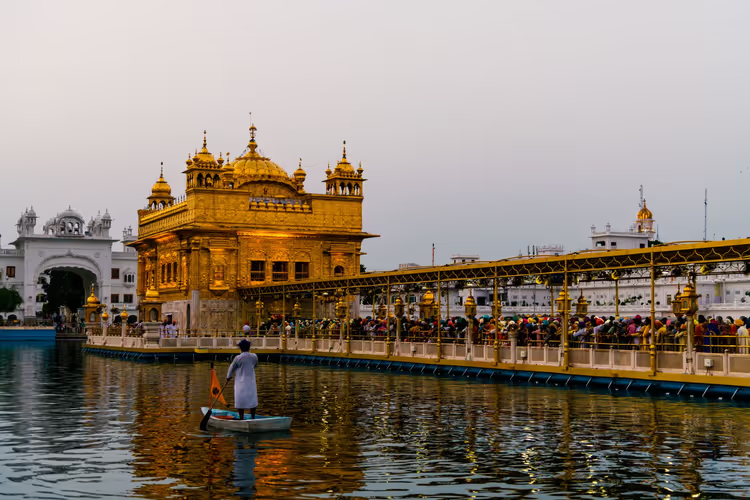
10 Places of power on the planet: where to go for a reset
Some places on the planet recharge you, others drain you. People come back from them either with new ideas or with a headache, and the line between the two is thinner than we tend to think.
We've put together ten spots on six continents that people call places of power. The climb up Uluru was closed to tourists back in 2019 (as of 09/2026, official park website), while the Pyramids of Giza are open to visitors every day. Some of the legends about such places can be verified, others remain myth.
Places of power are divided into natural and man-made. The first lie at nodes of the geomagnetic field and in faults between lithospheric plates, while the second gained their power over centuries through rituals. For a trip, the practical side matters more: how to get there and how much entry costs. You'll find the answers below.
Ad: this article contains affiliate links, we earn a commission if you book through them, at no extra cost to you.
What places of power are
Natural places of power include nodes of the geomagnetic field and faults between lithospheric plates. Instruments register anomalies there, and people talk about vibrations and a surge of energy. The second type includes man-made "prayed-over" places: temples, pyramids, and altars where rituals were performed for centuries. They were often built directly on natural nodes to deliberately amplify the effect.
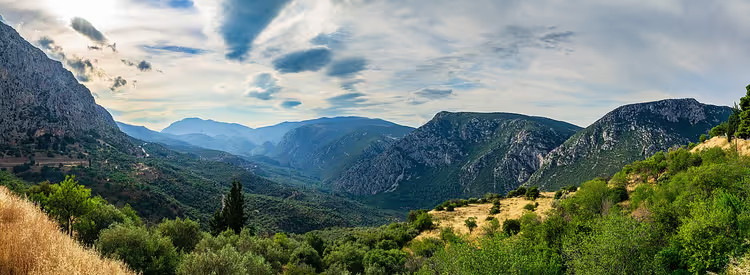 © Andrew Parlette from Elkridge,MD, US · CC BYPhoto: Andrew Parlette from Elkridge,MD, US, CC BY (https://creativecommons.org/licenses/by/4.0), Wikimedia Commons
The phenomenon also has a flip side. In the Kursk Magnetic Anomaly, field intensity is noticeably above background levels, while over the South Atlantic it is, on the contrary, weakened: satellite electronics fail there more often. Humans tolerate such zones poorly, up to the point of nausea and dizziness. They didn't make our list because they aren't tourist routes.
Below are ten sites you can actually visit. We checked entry and access on the official websites of the sites and tourist offices.
💡 In short:
- The list goes from natural sites to man-made ones and covers six continents.
- For each place, practical details and the main catch are given.
- Entry: 09/2026, verified on the Vatican Museums website and the Uluru park website.
1. Mount Shasta, California, USA
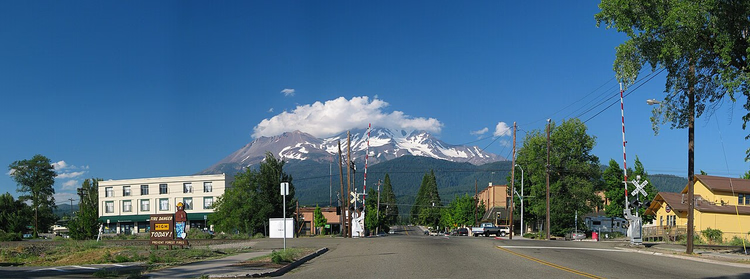 © Daniel Schwen · CC BY-SAPhoto: Daniel Schwen, CC BY-SA (https://creativecommons.org/licenses/by-sa/2.5), Wikimedia Commons
Shasta, a dormant volcano 4,317 m high, rises above the Cascade Range and is visible for hundreds of kilometers around (as of 09/2026, US Forest Service). Dozens of legends are tied to the mountain, and its devotees consider it the planet's main energy source. People come here for a sense of protection and health restoration.
- How to get there: the town of Mount Shasta sits at the foot, with several nature reserves and lakes nearby.
- Who it's for: for those ready for long climbs and wanting quiet without crowds.
- The catch: there are no marked trails to the summit itself, mountaineering experience is required (according to the Forest Service report).
2. Isla del Sol, Lake Titicaca, Bolivia
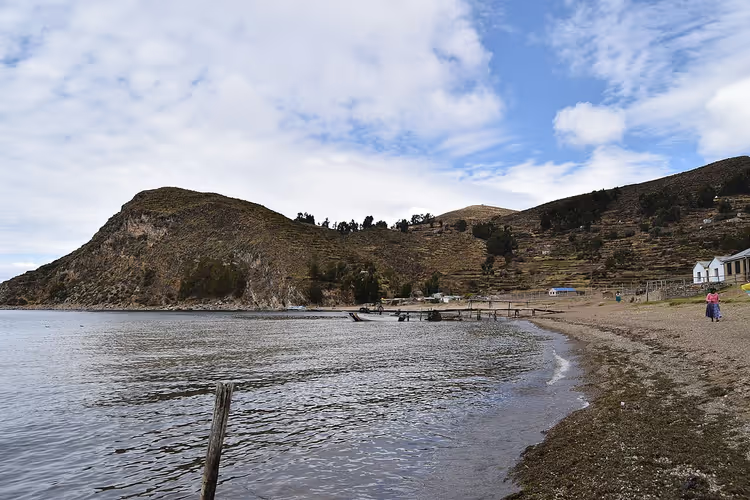 © SaraWayra · CC BY-SAPhoto: SaraWayra, CC BY-SA (https://creativecommons.org/licenses/by-sa/4.0), Wikimedia Commons
Lake Titicaca lies on the Altiplano plateau on the border between Peru and Bolivia, and it's called the world's highest navigable lake. It was once part of the ocean, and the Incas believed that life on Earth began right here. One of the islands, Isla del Sol or Island of the Sun, is considered a place of creative and sensual energy.
- Getting there: boats to the island run from Copacabana on the Bolivian shore of the lake.
- Tours: find Lake Titicaca tours on GetYourGuide.
- The catch: at this altitude you tire quickly, so take it easy for the first few days.
3. Uluru monolith and Kata Tjuta rocks, Australia
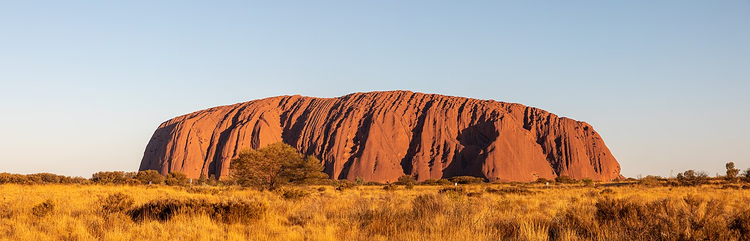 © Dietmar Rabich · CC BY-SAPhoto: Dietmar Rabich, CC BY-SA (https://creativecommons.org/licenses/by-sa/4.0), Wikimedia Commons
Uluru-Kata Tjuta National Park is a World Heritage site. Here you get to know the culture of the Anangu Aboriginal people and one of the largest monoliths on the planet. According to tribal legends, Uluru serves as a portal between the world of people and the world of spirits. To the west lies the Kata Tjuta complex, which means "many heads" in the Aboriginal language.
- Cost: a park pass costs about AU$38 per adult (as of 09/2026, Parks Australia), children enter free.
- Hotels: find hotels in Alice Springs on Trip.com.
- The catch: climbing to the top of the monolith has been prohibited since 2019 (according to park rules), and tourists are limited to designated trails.
4. Glastonbury Tor and the town of Glastonbury, England
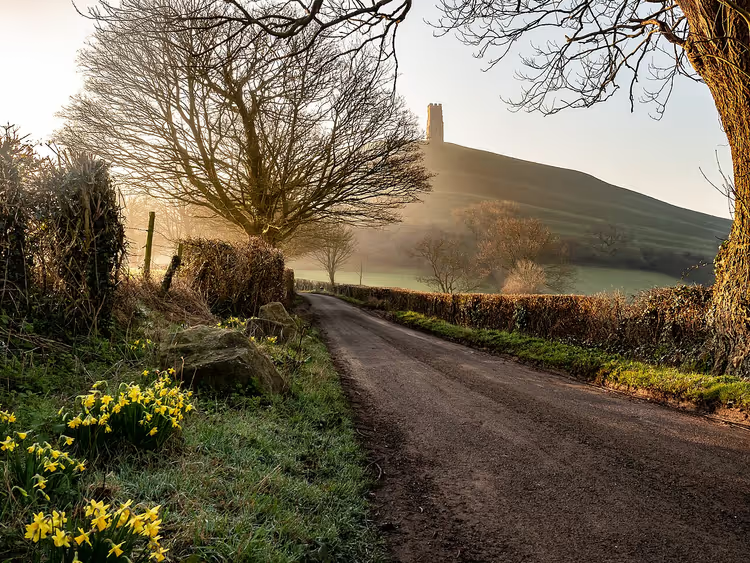 © Glastomichelle · CC BY-SAPhoto: Glastomichelle, CC BY-SA (https://creativecommons.org/licenses/by-sa/4.0), Wikimedia Commons
Europe has its own places of power too. Above the town of Glastonbury in Somerset rises Glastonbury Tor, with a spiral path and the ruins of St. Michael's Tower. The site is linked to King Arthur and the Holy Grail, and Celtic myths place a portal to Avalon here. Walking up the spiral is part of the ritual itself.
- Getting there: a walking trail leads from the center of Glastonbury to the top.
- Cost: entry is free, and the hill is open year-round (as of 09/2026, National Trust).
- Who it's for: for those who care less about infrastructure and more about the atmosphere and the view over the Somerset Levels.
5. Mount Kailash, Tibet
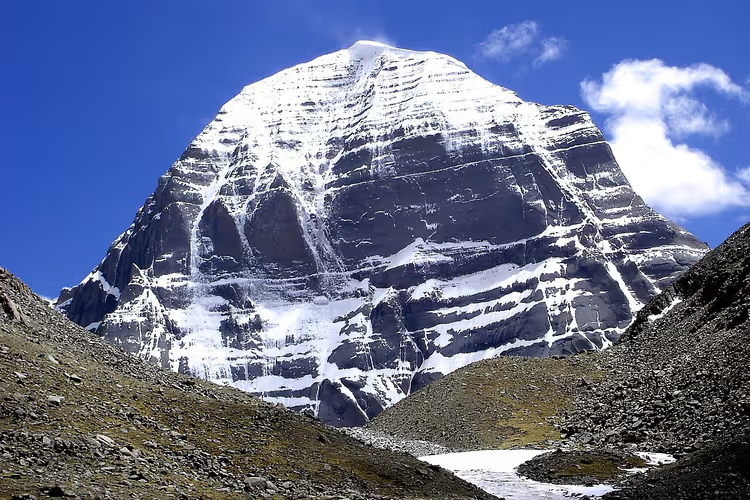 © Ondřej Žváček · CC BYPhoto: Ondřej Žváček, CC BY (https://creativecommons.org/licenses/by/2.5), Wikimedia Commons
Kailash remains a sacred peak for several Eastern religions. The mountain surprises with its pyramid shape: its faces point toward the four cardinal directions. Climbing to the top is not allowed, and pilgrims walk around it clockwise. This circumambulation is called a kora, and it is believed that one hundred and eight circuits lead to nirvana.
- Access: foreigners need a permit and a guide, so the trip must be arranged in advance.
- When to go: the best season runs from late spring to early fall.
- The catch: there are no independent trips; without a group you cannot do the kora.
6. Pyramids of Giza, Egypt
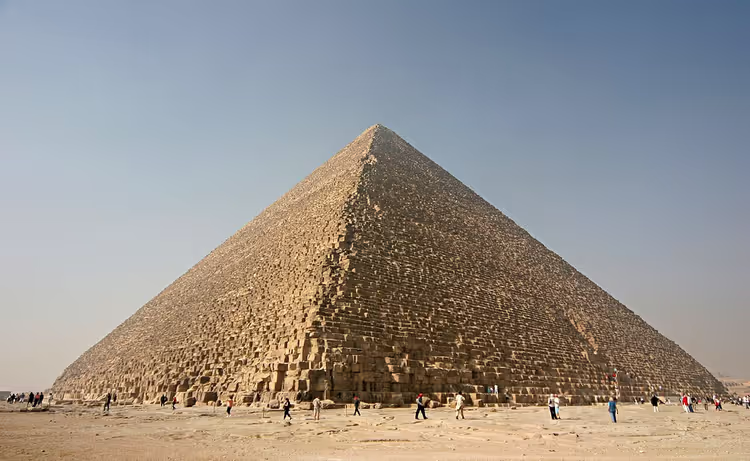 © Nina · CC BYPhoto: Nina, CC BY (https://creativecommons.org/licenses/by/2.5), Wikimedia Commons
The Giza complex includes the only surviving wonder of the seven wonders of the ancient world. The Great Pyramid was built from limestone as a pharaoh's tomb. One hypothesis suggests the builders knew the principle of the golden ratio. Another hypothesis links the layout of the pyramids to the stars of Orion's Belt. Such theories fuel speculation about the site's hidden energy.
- Tickets: an entrance ticket to the plateau is sold at the gate and online; entering the pyramid costs extra.
- Tours: find Giza pyramid tickets on Tiqets.
- The catch: there are many pushy vendors and unlicensed "guides" near the entrance.
7. St. Peter's Basilica, Vatican
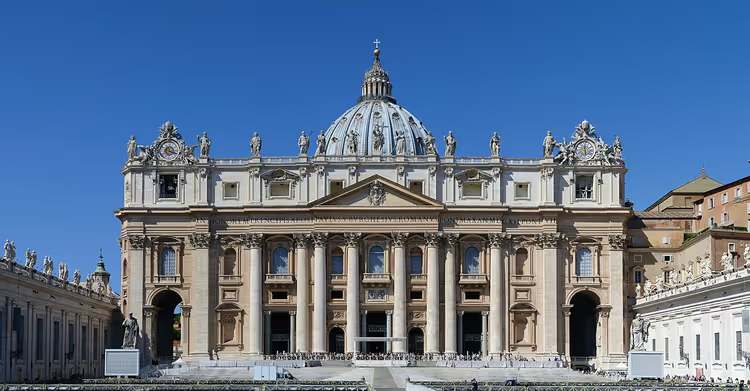 © Alvesgaspar · CC BY-SAPhoto: Alvesgaspar, CC BY-SA (https://creativecommons.org/licenses/by-sa/4.0), Wikimedia Commons
St. Peter's Basilica remains the principal church of the Catholic world. According to tradition, the Apostle Peter was executed in Rome and buried on Vatican Hill, and a basilica grew over his grave. One of the church's symbols, the statue of Peter by Arnolfo di Cambio, is rubbed by pilgrims to make a wish come true.
- Cost: entry to the basilica is free, climbing the dome is paid, a ticket to the Vatican Museums starts at €20 (as of 09/2026, official website).
- Hotels: find hotels near the Vatican on Trip.com.
- The catch: the security line stretches for hours, arrive at opening time.
8. Church of the Nativity, Bethlehem
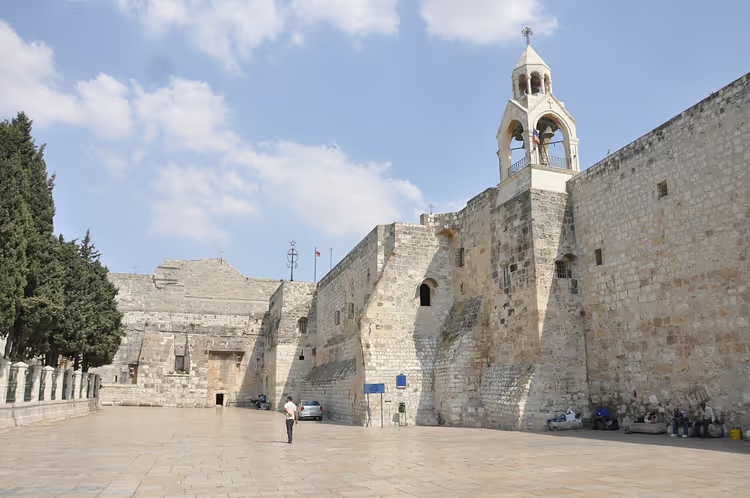 © Neil Ward · CC BYPhoto: Neil Ward, CC BY (https://creativecommons.org/licenses/by/2.0), Wikimedia Commons
In Bethlehem, above the cave where Jesus is believed to have been born, stands the Church of the Nativity. The shrine is considered one of the oldest surviving in Palestine. Two side entrances were walled up for security, and the central one was made so low that you have to stoop before it. That is why it is called the Door of Humility. Pilgrims also come here to see the Miraculous Icon of the Most Holy Theotokos, donated to the church by the House of Romanov.
- Getting there: buses and shared minibuses run from Jerusalem, the trip takes about half an hour.
- Who it's for: pilgrims and those traveling with an organized group.
- The catch: the route depends on the situation in the region, check current advisories before setting out.
9. Masjid al-Haram, Mecca
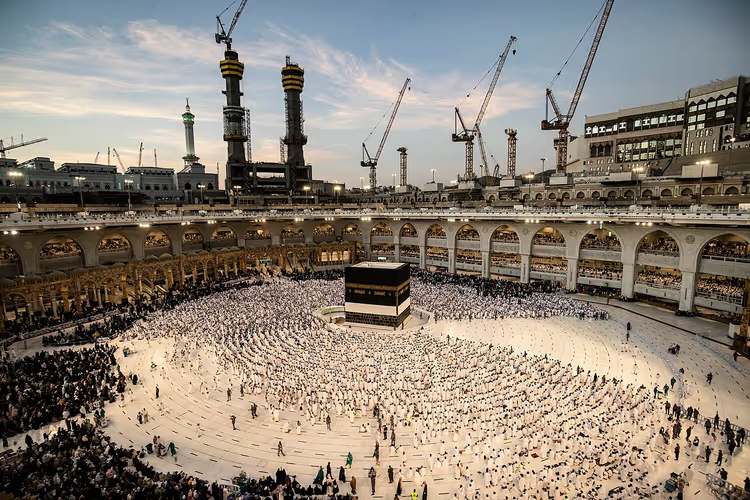
In the 6th century, the Prophet Muhammad was born in Mecca, and he later turned the city into the religious center of Islam. In the city center stands the world's largest mosque, Masjid al-Haram, with Islam's holiest shrine, the Kaaba. Every Muslim tries to make the Hajj here at least once in a lifetime. Only Muslims may enter the holy city of Mecca.
- When to go: Hajj dates shift every year, the pilgrimage must be arranged in advance.
- Who it's for: Muslims planning the Hajj or Umrah.
- The catch: without a pilgrimage permit, entry to the city is closed.
10. Machu Picchu, Peru
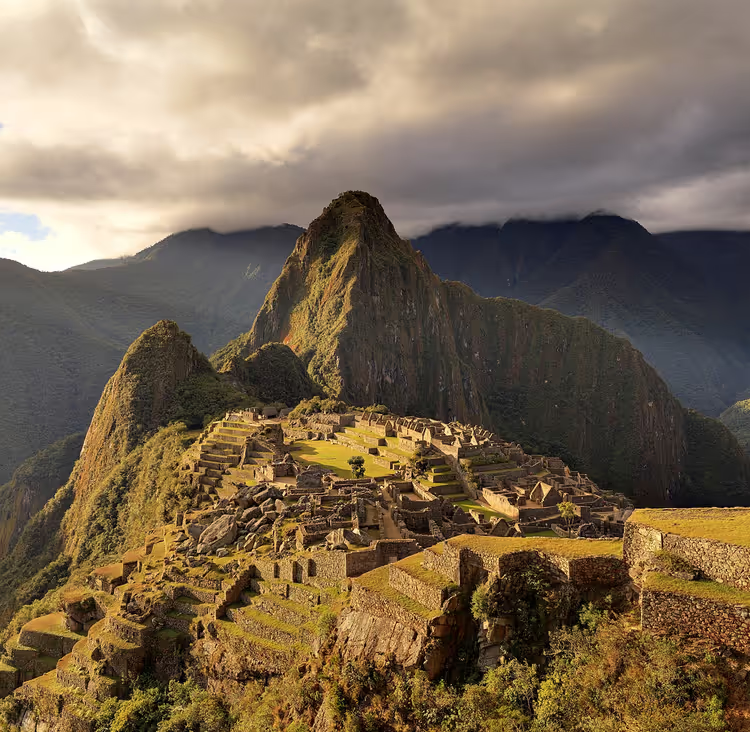 © Martin St-Amant ( S23678 ) · CC BY-SAPhoto: Martin St-Amant ( S23678 ), CC BY-SA (https://creativecommons.org/licenses/by-sa/3.0), Wikimedia Commons
Machu Picchu sits above two thousand meters in the Peruvian Andes and is considered one of the most powerful places on Earth. The Inca city with its temples and sacrificial altar has not been fully understood to this day. People come here for a sense of scale and for that very reset.
- Tickets: sold on Peru's official platform, slots are limited and issued for a specific date.
- Tours: find tours to Machu Picchu on GetYourGuide.
- The catch: popular slots sell out months in advance, so plan your date early.
⁉️🤔 Frequently asked questions
Can you visit these places on your own?
Yes, most sites are open to individual visitors. There are exceptions: Mecca is accessible only to Muslims, and Kailash requires a permit and a group escort (as of 09/2026). For Machu Picchu you need a named ticket for a specific date, which is issued online in advance. Check the country's entry rules a month before your trip.
When is the best time to visit places of power?
Natural sites are more comfortable in the shoulder season: Uluru is too hot in summer, and Shasta is avalanche-prone in winter. Temples and cathedrals can be visited comfortably year-round, weather is not a factor there. For the Hajj and the Tibetan kora, dates are tied to the calendar, so plan such trips six months in advance.
Do you need insurance for trips to places like these?
Yes, especially for high-altitude areas and active climbs. A standard policy covers medical treatment, but does not always include mountaineering and ascents above a certain altitude. Compare terms in advance so you are not looking for the right option at the airport right before departure.
How much does entry to the places on the list cost?
Some sites are free: Glastonbury Tor is always open, and St. Peter's Basilica admits visitors freely. Paid ones include: the Uluru park pass at around AU$38 (as of 09/2026) and the Vatican Museums from €20, while Machu Picchu requires a named ticket for a specific date. Check prices on official websites before your trip, they change every season.
Is there a scientific explanation for these places?
Some of the effects can be explained. Shasta is linked to volcanism, Uluru is made of sandstone, and "prayed-in" temples work more like psychological anchors. We do not present legends as facts: where there is no evidence, we talk about people's beliefs, not proven properties.
In short: what to book
A trip to places like these is best planned in advance: slots and tours for popular dates sell out quickly. Below is a short matrix to help you get started.
- If you have a couple of days in Europe: Rome and the Vatican, entry to the basilica is free.
- If you want mountains and legends: Uluru or Kailash, both require preparation.
- If you are after striking views: Machu Picchu and Titicaca, book your slots online.
Tours and excursions are easy to find on GetYourGuide, and hotels on Trip.com.

A small editorial team writing guides for independent travel. We travel ourselves, but we haven’t been everywhere, so we check prices, opening hours and how to get there against official sources.