















Autumn holidays in mainland Spain: 9 destinations from Costa Brava to Rioja
September and October on mainland Spain are a season of their own. The summer heat has eased, but the sea still holds its warmth: in October the water off the Costa Brava is around 20 °C (as of 10/2025, tagliches-wetter.de). The crowds have gone, the beaches have emptied, and hotel prices have dropped from their peak.
Many people fly to the Canary Islands in the fall and forget that the mainland offers a cheaper and more varied vacation. Here you get a warm sea, cities with museums, and mountains for hiking. In a single trip you can both swim and wander through old quarters.
Below are nine mainland Spain destinations with transport options and seasonal events. We have gathered regions from the Costa Brava to La Rioja and will tell you what to check before booking.
Where to go in Spain in the fall: 9 destinations
💡 In short:
- September and October bring a warm sea in the east and south. In the Pyrenees the weather is comfortably cool for hiking at this time.
- In October Zaragoza hosts the Fiestas del Pilar city festival, and La Rioja is in the middle of the grape harvest.
In the fall, mainland Spain splits into three scenarios: the sea in the east and south, cities with museums in the center, and hiking in the Pyrenees in the north. The most convenient way to travel between them is the AVE high-speed train. It connects Madrid, Barcelona, Valencia, and Seville, while the Alvia train runs to Bilbao.
Rent a car only for rural regions such as Extremadura or La Rioja. Buses are often not a good option for reaching wineries and natural parks. Book hotels for Fiestas del Pilar and wine festivals in advance: rooms are scarce on those dates.
Ad: this article contains affiliate links, we earn a commission if you book through them, at no extra cost to you.
1. Catalonia: Costa Brava, Barcelona, and the Pyrenees
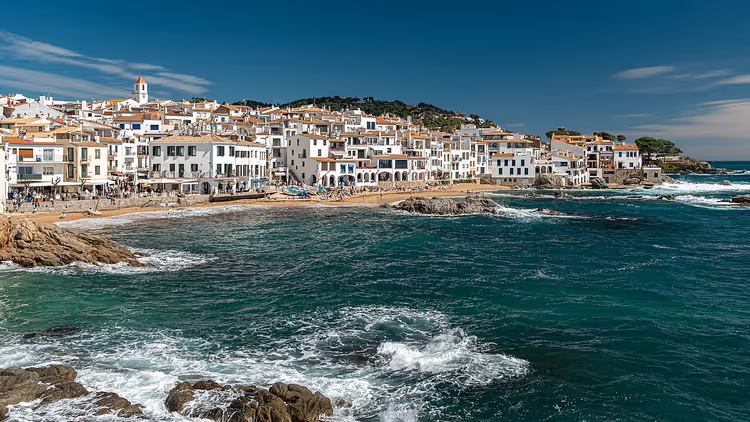
The Costa Brava has survived the summer rush, and by September things get calmer here. In the towns of Blanes, Calella de Palafrugell, and Llafranc you can swim until early November. The water stays around 20 degrees, and the beaches hide between cliffs, so there are few large hotel complexes here.
 © Jorge Franganillo · CC BYPhoto: Jorge Franganillo, CC BY (https://creativecommons.org/licenses/by/2.0), Wikimedia Commons
For museums and city life, Barcelona is a good fit: in the fall it is milder than in July, and museum lines are shorter. From Barcelona it is easy to take a trip to Girona and Figueres or to small towns such as Begur, Pals, and Castelló d'Empúries.
In the eastern Pyrenees, a rack railway leads up to the Nuria mountain valley. From there the old pilgrimage route Camí Vell descends back down. Further west lies the Aigüestortes i Estany de Sant Maurici National Park with trails of varying difficulty. Near the town of Olot spreads the La Garrotxa Volcanic Zone Natural Park.
Hotels in Catalonia on Trip.com
2. Valencia: modern architecture and the old town
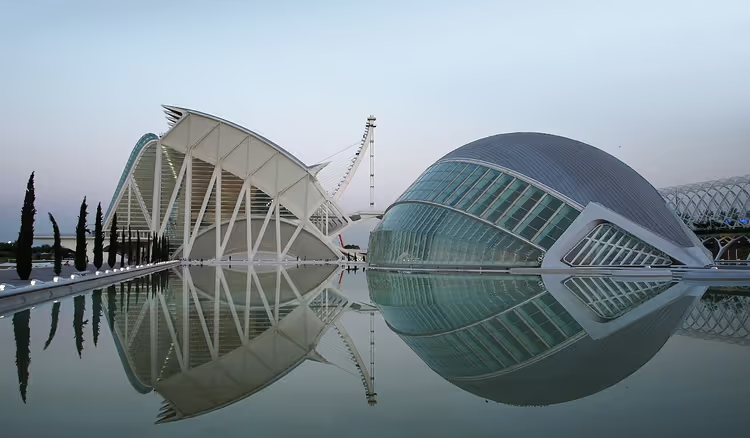
Valencia has long been one of Spain's top city destinations. Here the futuristic City of Arts and Sciences complex (Ciudad de las Artes y las Ciencias) stands right next to the historic center with its Mercado Central market. In the fall the city is mild, with daytime temperatures usually above 20 degrees.
 © Elemaki , modifications by Alvaro qc · CC BY-SAPhoto: Elemaki , modifications by Alvaro qc, CC BY-SA (https://creativecommons.org/licenses/by-sa/3.0), Wikimedia Commons
You can still swim in the sea, and a stroll along the city beaches of Las Arenas and Malvarrosa with their bars is part of the program. If there is no sun, head to museums, such as the Museum of Fine Arts. Check accommodation in the center in advance: options are fewer in October.
Hotels in Valencia on Trip.com
3. Andalusia: cities and natural parks
After the summer heat, fall makes traveling around the south pleasant again. The classic route runs from Malaga through Cadiz, Seville, and Cordoba to Granada. Those who want the sea add a stop in Conil de la Frontera at the start and in Salobreña on the way back.
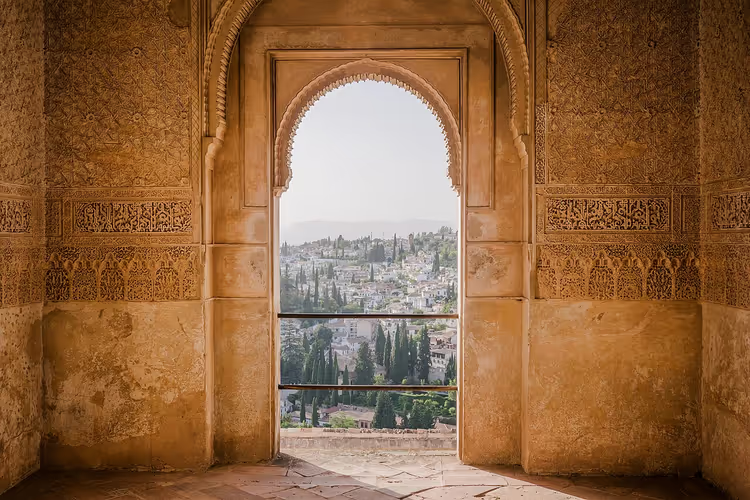
Andalusia gets the most sunshine on the mainland in the fall. It is also a hiking region: the natural parks of Sierra de Grazalema, Sierra Nevada, and Sierras de Cazorla offer trails for every level.
A separate reason to come here is the white villages, Pueblos Blancos. In the autumn light they look brighter than in summer. You also get to try the local cuisine and see the Moorish heritage in rural Andalusia.
Hotels in Andalusia on Trip.com
4. Madrid: art and museums
After the summer heat in central Spain, Madrid is comfortable for walking again. The city is compact, and you can cover the main sights on foot. The Prado Museum and the Reina Sofia Museum are among Europe's leading art collections. In the evening, life does not slow down: tapas bars in the La Latina neighborhood stay full until late.
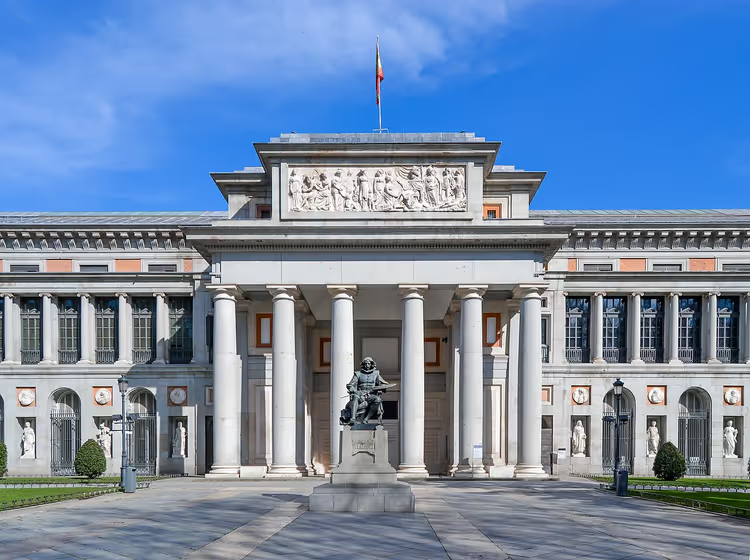 © Emilio J. Rodríguez Posada · CC BY-SAPhoto: Emilio J. Rodríguez Posada, CC BY-SA (https://creativecommons.org/licenses/by-sa/2.0), Wikimedia Commons
The Prado is open Monday through Saturday from 10:00 to 20:00, and until 19:00 on Sundays (verified 09/12/2026 on the official website). On weekday evenings there are free entry windows.
Use Madrid as a base for day trips. Toledo, Segovia, and Avila are reachable by train: Toledo takes 33 minutes, Segovia 27 to 30 minutes (as of 09/2026, madrid-trip.com).
5. Extremadura: lesser-known Spain
If you have time and enjoy discovering new places, a trip through the west of the country is a good fit. Extremadura draws visitors with its medieval towns and natural parks along the Tagus and Guadiana rivers. There is no mass tourism here, and that is its main appeal.
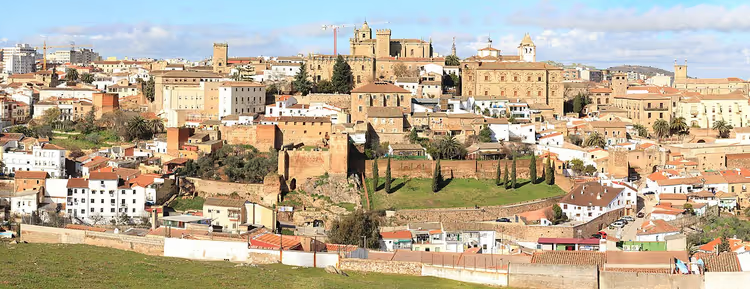 © Lorenzo Vallés · CC BY-SAPhoto: Lorenzo Vallés, CC BY-SA (https://creativecommons.org/licenses/by-sa/3.0), Wikimedia Commons
The main stop on the route is the old Roman city of Merida. Its Roman theater and amphitheater are UNESCO listed. Allow at least half a day to see the city, then continue toward the natural parks along the border with Portugal.
Hotels in Extremadura on Trip.com
6. Bilbao: the Guggenheim Museum and surroundings
The weather on the Basque coast of the Bay of Biscay is more changeable in the fall, but more stable than in spring. In September and October the sun often shines, and the summer tourist crowds have thinned out.
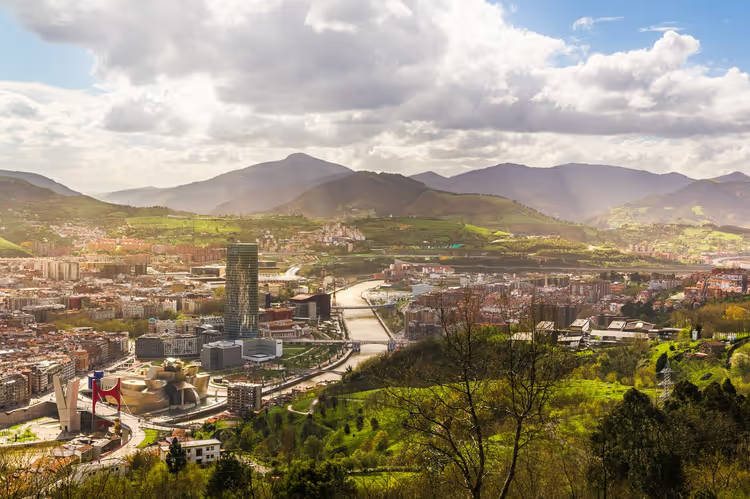 © Tommie Hansen · CC BYPhoto: Tommie Hansen, CC BY (https://creativecommons.org/licenses/by/3.0), Wikimedia Commons
The Basque port city offers more than the Guggenheim Museum. The historic Casco Viejo with its old bars deserves a separate evening. Check current hours and museum tickets on the official website.
Use Bilbao as a base for trips along the Basque coast and to towns in the mountainous part of the Basque Country. The city is small, and in two days you can fit in both the museum and the old quarter.
7. Navarre: autumn landscapes of the north
If landscapes and small towns matter to you, a trip through Navarre is a good fit. Autumn here is one of the best seasons: dense forests in the north, vineyards in the center. The foliage changes color and turns the region into a sea of shades.
 © JLVwiki · CC BY-SAPhoto: JLVwiki, CC BY-SA (https://creativecommons.org/licenses/by-sa/4.0), Wikimedia Commons
Navarre lies between the Pyrenees and the Ebro River valley. From the high mountains in the north it stretches through rolling foothills down to a fertile valley below.
Along the pilgrimage route of the Way of St. James stand Pamplona and Estella. Plan an independent trip through northern Spain for autumn: in summer it is crowded here, while in September you travel without lines.
8. Aragon: the Pyrenees and a festival in Zaragoza
The highest peaks of the Pyrenees lie in Aragon. In autumn, the deciduous forests on the southern slopes change color. Autumn is good for hiking in the province of Huesca: with Ordesa y Monte Perdido National Park and natural parks far from the crowds.
In October, the capital of Aragon, Zaragoza, holds the big city festival Fiestas del Pilar. The festival is known for its flower offering and parade in traditional costumes. If you are going to the festival, book accommodation in advance.
9. La Rioja: harvest time
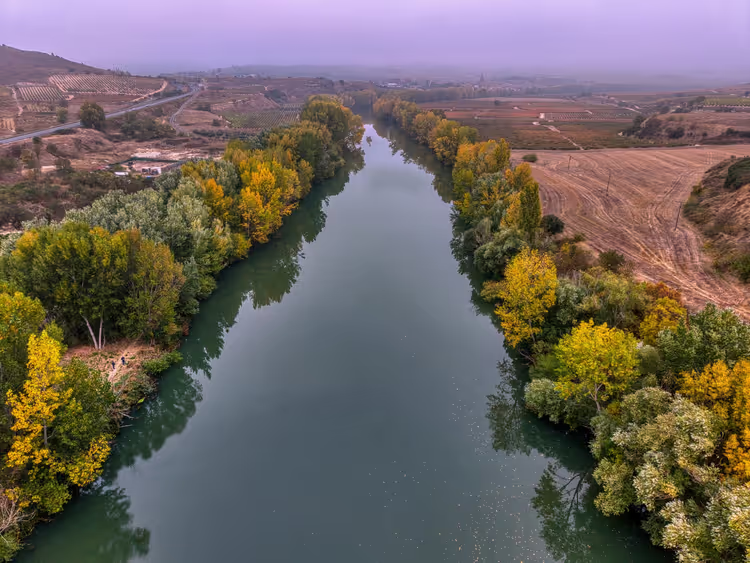
In mid-September, the grape harvest begins in La Rioja. La Rioja is a well-known wine region in northern Spain on both sides of the Ebro River. The hilly area is famous not only for red wines, but also for good cuisine.
With the harvest comes the season of local wine festivals. Plan your trip to La Rioja for late September or October, when the wineries are open. This is a destination for those who love wine and a quiet autumn.
Hotels in La Rioja on Trip.com
⁉️🤔 Frequently asked questions
What is the weather like in Spain in October?
The Mediterranean coast is still warm in October. On the Costa Brava the water stays around 20 °C (as of 10/2025, tagliches-wetter.de). Daytime air temperatures are usually above 20 degrees. The north and the mountains are cooler with more rain, while Andalusia and Madrid get plenty of sun, but you will need a jacket in the evening.
Where can you still swim in the fall?
The warmth lasts longest in the south and east. On the Costa Brava and in Andalusia people swim until early November. The sea is most comfortable to enter in the first half of the day, when there is less wind. In the north, near Bilbao, swimming is no longer for everyone.
Do you need a car to travel around Spain?
For cities you do not need a car: the AVE runs between Madrid, Barcelona, Valencia and Seville, the Alvia goes to Bilbao, and Toledo, Segovia and Avila are short trips away. A rental car makes sense in rural regions such as Extremadura or La Rioja. There, public transport barely reaches wineries and nature parks.
When does the grape harvest start in La Rioja?
The main grape harvest in La Rioja starts in mid-September. With it comes the season of local wine festivals held in the region's towns. Late September and October are good times to visit wineries. Check exact festival dates locally, as they change from year to year.
Where to go for a weekend from Madrid?
From Madrid you can easily take a day trip to Toledo, Segovia or Avila. The train to Toledo takes 33 minutes, to Segovia 27-30 minutes (as of 09/2026, madrid-trip.com). All three cities are UNESCO listed. Book tickets in advance: trains fill up on weekend mornings.
In short: what to book
If you have a week and want the sea, choose Catalonia or Andalusia. If you are interested in museums and cities, go for Madrid and Valencia. For quiet and scenery, head to Extremadura, Navarre or Aragon. For wine and fall festivals, La Rioja is a good fit.
Whatever you choose, check prices and schedules in advance. Book hotels in each region before your trip; links are in the sections above.

A small editorial team writing guides for independent travel. We travel ourselves, but we haven’t been everywhere, so we check prices, opening hours and how to get there against official sources.