













Lavender in Provence: when to go for full fields
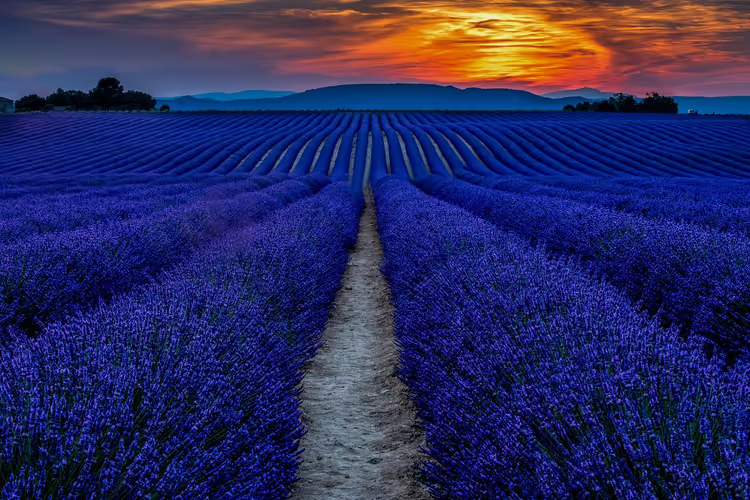
Lavender in Provence blooms not by the calendar, but by altitude.
While the fields near Valensole are already purple, on the Sault plateau they are only just gaining color. The same vacation week gives a completely different picture, so choosing the region in advance matters more than guessing one general date.
Below is a breakdown of when to go for full fields, how the regions differ, and in which weeks lavender cutting begins. The exact window depends on altitude, weather, and variety, so you choose a backup range of several days, not a single date.
Ad: this article contains affiliate links. Through them we earn a commission, at no extra cost to you.
When lavender blooms in Provence
💡 In short:
- The most reliable window for full fields: late June and the first half of July.
- Valensole and lower Luberon bloom earliest, Sault and the Albion plateau latest.
- Visible blooming lasts roughly four to six weeks, but regions bloom in sequence.
- Blooming dates by region: 09/2026, verified on the Provence Tourisme website.
The exact peak depends on weather, altitude, variety, and the start of harvesting, so make the final decision one to two weeks before departure.
The official Provence tourism portal describes blooming from mid-June in the lowest zones to late July in the high ones. In some high-altitude areas you will still find lavender in bloom in early August (as of 09/2026, map and dates from Provence Tourisme).
Region | Blooming window | What to keep in mind |
|---|---|---|
Valensole | late June - mid-July | the earliest and densest blooming |
Senanque and Luberon | late June - early July | the most famous postcard view, lots of people |
Sault and the Albion plateau | July - early August | late blooming due to altitude |
Forcalquier and Upper Verdon | July - early August | calmer alternatives |
The table is convenient to read top to bottom, like the movement of color across the province. The lower warm zones open the season earlier, the high plateaus close it later. If you are tied to a specific week, first find the right row in the table, and only then choose a town and accommodation.
Lavender by month: June, July, or August
The month alone does not decide much. A cool spring pushes blooming back, intense heat speeds it up, so the same date in different years looks different. It is more useful to think not in months, but in travel windows and the altitude of the area.
June gives early fields and fewer people. July brings the richest colors and high season. August leaves lavender at altitude, but adds festivals and markets.
Lavender blooming in June
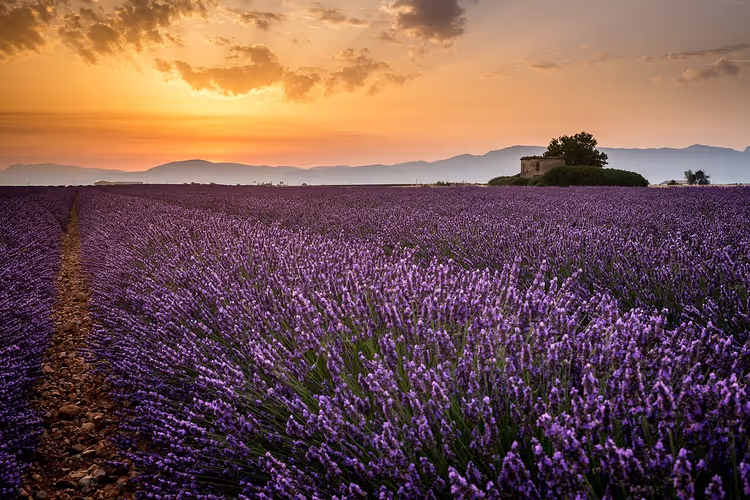
In June, the warmest and lowest zones bloom first: the Valensole plateau, lower Luberon, and part of the Rhone Valley.
 © Nuno Alves · CC BY-SAPhoto: Nuno Alves, CC BY-SA (https://creativecommons.org/licenses/by-sa/4.0), Wikimedia Commons
In mid-June, the rows still hold a delicate shade. The saturation is lower than in July, but you get calm fields where you can stand by every bush without a queue. The days are long, and the evening light stays soft almost until dark, so you have enough time for both the drive and the shoot.
From late June, Valensole usually becomes noticeably brighter. If you are looking for less hustle, this window works best: high season has not started yet, and there is already enough color for a shot. Housing is also cheaper and the roads are freer.
For Senanque, the second half of June is especially interesting, the fields gain color before your eyes. Still check the weather and local reports before heading out, heat or rain changes the rhythm. Allow a buffer of days, so you do not have to rework your entire route because of one weather whim.
Why July gives the main phase
Most regions stand in full bloom at the same time precisely in July.
By the first half of July, Valensole, Luberon, and almost all the classic routes are gaining color. Hence the peak demand for accommodation, so check hotels in the Valensole region on Trip.com in advance.
The flip side is a dense flow of tourists. Valensole, Senanque, and the famous viewpoints are packed from early morning, and you risk standing in line at every little spot. Plan for sunrise, weekdays, and secondary roads, and leave the popular points for the evening.
At midday it can be very hot. Lavender fields are best combined then with cool villages, markets, or Lake Sainte-Croix so you do not burn out under the open sun.
Where lavender blooms in August
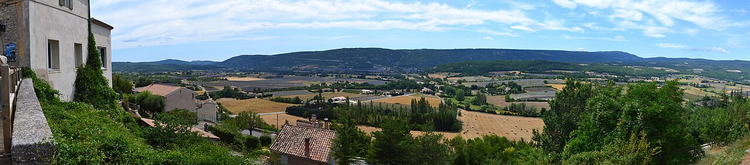
In August, the fields in the lowlands are already cut, but at altitude around Sault lavender is still worth seeing.
 © MartinD · CC BY-SAPhoto: MartinD, CC BY-SA (https://creativecommons.org/licenses/by-sa/4.0), Wikimedia Commons
If you are going in August, do not make Valensole your main goal. Some fields there are already mowed, and the surviving patches look more modest than in July. Look to Sault, the Albion plateau, and the upper sections of the lavender route.
August has its own value: golden fields, remnants of sunflowers, clean mountain air, and lavender festivals. At the same time, there is intense heat, so early starts and nearby accommodation matter more than usual. You will need water, sunscreen, and a calm pace without long midday drives.
August is especially good for connecting nature and tradition. The lavender festival in Sault coincides with the late blooming of the plateau, when the lowlands are already empty.
How the regions of Provence differ
Blooming shifts primarily because of altitude, location, and variety. Warm lowlands start earlier, high plateaus last longer but open later, so the difference between two locations can reach three weeks.
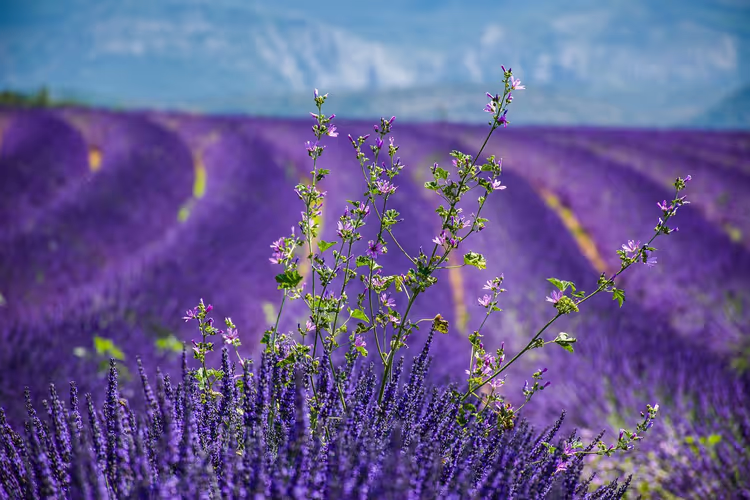
For a trip, this means a simple thing. You stretch the season by matching the region to your date. In late June choose Valensole, in mid-July almost everything is blooming, by late summer Sault and the high plateaus remain.
Valensole: when the plateau blooms
Valensole blooms early and usually holds its best look from late June to mid-July.
 © holadeejay for Panor… · CC BY-SAPhoto: holadeejay for Panor…, CC BY-SA (https://creativecommons.org/licenses/by-sa/3.0), Wikimedia Commons
The plateau accumulates sun and warmth, so the fields gain strength faster than the high areas. For long even rows and classic shots, Valensole remains the first choice in most years.
By mid-July, harvesting may start, and individual fields differ from one another. So plan several days and backup spots instead of one field, otherwise you risk arriving at an already mowed patch.
As a route, Valensole connects well with the Verdon Gorge, Moustiers-Sainte-Marie, and Manosque. Purple rows, limestone, and turquoise water give one of the strongest summer days in the region, so feel free to set aside a full day here.
Sault: why blooming lasts longer here
Sault lies higher and therefore works best for late blooming.
The altitude around Sault gives cool nights and slowed plant growth. Often you can still see lavender here when Valensole and lower Luberon are already mowed, and you get whole purple slopes at the end of the season.
For trips in late July and early August, Sault becomes the main anchor. The roads with views of Mont Ventoux, the small trails across the plateau, and the markets with lavender products are especially good. Two days are enough to calmly cover the main points and not rush the car through the heat.
Luberon and Senanque: the famous photo zone
In Luberon, the strong phase usually falls on late June and early July. At Senanque, the period from June 20 to July 10 is especially valued (as of 09/2026, abbey data on blooming).
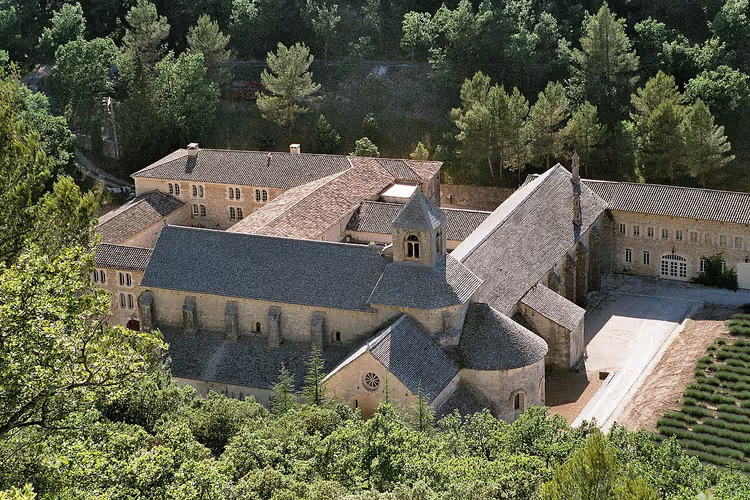
Sénanque Abbey is known for its classic monastery view with lavender on the slope. The abbey itself is a reminder to respect the fields: stay on the designated paths and shoot in morning or evening light so you don't damage other people's plantings.
Elsewhere in the Luberon, the bloom pairs well with Gordes, Roussillon, and the ochre cliffs. That way a day in the fields turns into a full route through the villages, and you don't have to drive across the whole region for a single shot.
Lavender bloom map of Provence
The areas of Provence bloom in sequence, some earlier, others later.
A simple rule: early zones are lower and warmer, late zones are higher or deeper in the foothills.
The low, warm zones bloom first, and the high plateaus bloom last. The color moves through the province from bottom to top. So you can plan a route that catches the bloom even if you arrive late.
Lavender harvest: when fields are cut
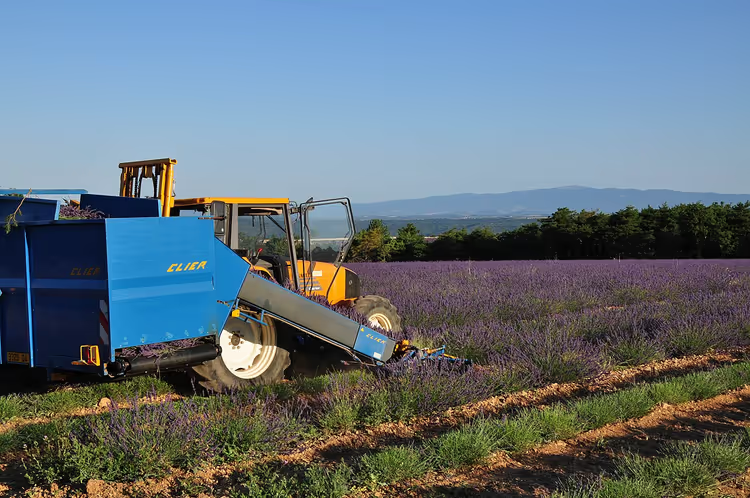
Harvesting usually starts in July depending on the region and shifts later at higher elevations. Ripeness, weather, variety, and the intended use of the plants, for oil or for other products, all play a role.
 © Alpes de Haute Provence · CC BYPhoto: Alpes de Haute Provence, CC BY (https://creativecommons.org/licenses/by/2.0), Wikimedia Commons
For a tourist, the harvest matters because a cut field looks bare and loses all visual appeal. If you are traveling after mid-July, always keep several regions in your plan rather than one famous photo spot.
When harvesting starts in Valensole
In Valensole, harvesting can start in mid-July, but individual fields are not cut at the same time.
The plateau has many producers, varieties, and plots. Some fields ripen early, others stay purple longer, so even at the height of the harvest you will find several untouched plots if you are willing to drive away from the main road.
For shots of the harvest, distillation, and products, the period from mid-July is more interesting, because that is when the real work of the plantations begins.
What happens during lavender distillation
During distillation, the flowers are treated with steam to extract the essential oil.
In summer, many distilleries are open to visitors. You can see how lavender and lavandin are processed, compare the aromas directly, and also buy oil from the producer without intermediaries.
This is especially interesting near Valensole and Forcalquier. It becomes clear that lavender here is not a photo prop but an agricultural and cultural product of Provence, on which the livelihoods of entire families depend.
Lavender festivals in 2026
Lavender festivals combine blooming, harvesting, markets, and Provençal traditions.
The lavender festival in Valensole is scheduled for July 19, 2026 (as of 09/2026, Valensole tourist office). The date coincides with the late main phase of the plateau and with the start of the harvest, so that week is especially crowded.
In Sault, the big festival takes place on August 15 at the racecourse about two kilometers from the village (as of 09/2026, Ventoux tourist office program). It is one of the most famous lavender fairs in Provence, with a scything competition and a producers' market that draws visitors from all over Europe.
Digne-les-Bains and other towns also celebrate lavender, sometimes over several days. Check the program and times before your trip, as they change by season. For a full itinerary, look at lavender field tours.
Weather, light, and photography during the bloom
Lavender blooming falls during hot, bright summer weeks. Plan to head out to the fields in the morning or evening, and give the midday hours to villages, markets, shade, and water.
June is usually more pleasant, in July the heat intensifies, and in August high-altitude spots like Sault are especially valuable. Sunscreen, water, and flexible breaks are not minor details but part of a good route, because there is almost no shade on the open plateau.
When the best light for lavender photos occurs
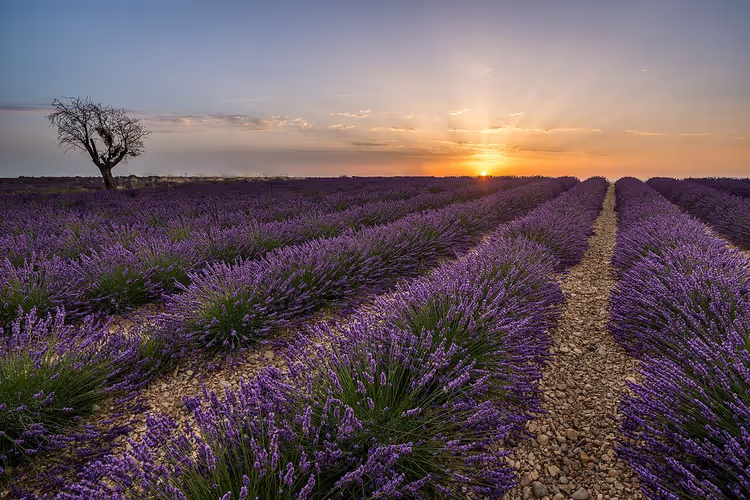
The most beautiful light comes in the short window after sunrise and before sunset.
 © Nuno Alves · CC BY-SAPhoto: Nuno Alves, CC BY-SA (https://creativecommons.org/licenses/by-sa/4.0), Wikimedia Commons
In the morning, the fields are calmer and the air is usually clearer, so distant views look cleaner. In the evening, the purple tone is warmer and the rows gain depth. Both options are noticeably better than the harsh midday light, which washes out the color.
If you are visiting the fields only once, take one evening field and a second short stop in the morning. That way you get two different images without a long extra drive and without rushing.
Drones over lavender fields: what is allowed
Drone flights over lavender are not automatically permitted; you need to check in advance.
In France, hobby drones are subject to open category rules. Service-public describes registration and no-fly zones, and you can check specific areas on the official Géoportail map (as of 09/2026, Service-public).
Do not fly over people, villages, private yards, or sensitive areas. Even a field that looks open may have legal and local restrictions. Before heading out, you should check your model and the zone on the map, otherwise you risk a fine right in the field.
Practical planning: which region fits your dates
Planning starts with your date, not with a single photo spot. If you are traveling in late June, you can use Valensole and the Luberon as your base. If you are traveling in late summer, you should plan for Sault and high-altitude areas, otherwise you risk seeing only cut fields.
Good bases include Aix-en-Provence, Avignon, Marseille, Manosque, or Luberon villages. For late-season trips, Sault, Carpentras, and the area around Mont Ventoux are convenient, with easy access to the upper plots.
A rental car makes things much easier. Many fields are far from bus stops, and the best light rarely lines up with bus schedules. Allow extra time for driving between locations, and compare car rental options in advance, as availability drops quickly in summer.
⁉️🤔 Frequently asked questions
When does lavender bloom in Provence?
Lavender in Provence usually blooms from mid-June to late July, and at higher elevations in places until early August. The exact timing depends on altitude, weather, and variety, but the most reliable window for full fields is late June and the first half of July. Valensole blooms first, and Sault holds on the longest.
What is the best time for a lavender trip?
The best time for full fields is late June and the first half of July. During this period, Valensole and the Luberon are in full bloom, while Sault remains attractive for longer. If you want fewer people, choose early mornings and weekdays, when there are almost no crowds.
How long does lavender bloom last?
Depending on the region, visible blooming lasts roughly four to six weeks. Regions do not bloom at the same time, so the whole season stretches noticeably longer. Lowlands start earlier, high plateaus later, and a trip can almost always be adjusted to fit your available dates.
When does lavender bloom in Valensole?
Valensole usually looks its best from late June to mid-July. Harvesting can start in mid-July, and individual fields differ from one another. To see dense rows, the first half of July is usually more reliable than the end of the month, when some plots have already been cut.
When does lavender bloom in Sault?
Sault blooms later than Valensole and often looks good until early August. The altitude delays blooming, so Sault is better suited for late trips and for tying in with the lavender festival in August. For the end of the season, this is the most reliable region.
Can you combine lavender and sunflowers?
Yes, especially in July, lavender and sunflowers in Provence can often be combined. On the Valensole plateau and in neighboring areas, lavender, grain, and sunflower fields lie side by side. Mid-July is usually convenient for such a route, and one day covers two blooms at once.
In short: what to book
For late blooming, look around Sault and the high plateaus.
Plan by date. For June, accommodation in the Valensole region on Trip.com works well; for late summer, rely on Sault and the upper areas, where fields last until August.
If you want a ready-made itinerary through the fields, check out lavender tours.

A small editorial team writing guides for independent travel. We travel ourselves, but we haven’t been everywhere, so we check prices, opening hours and how to get there against official sources.