
















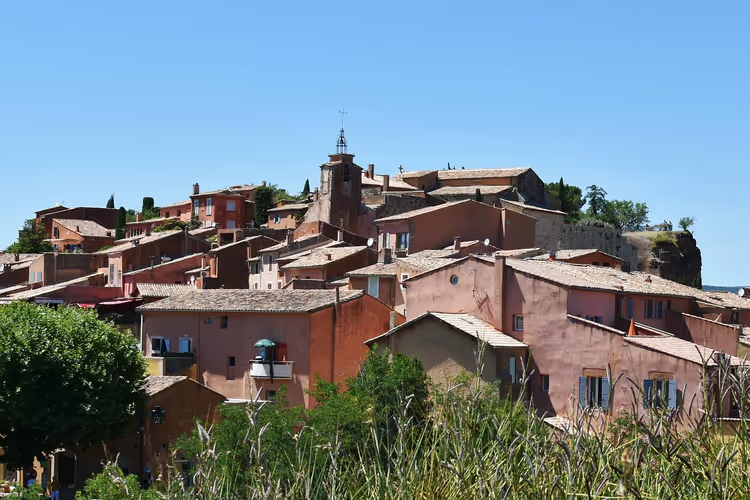
Luberon by car: three days, markets and the orange cliffs of Roussillon
Provence is easy to picture from postcards, but getting around it without a car is hard. The villages of the Luberon are scattered across the hills, buses between them run rarely, and the best views open up right from the road. We put together a route through the most beautiful places in the Vaucluse department.
For the first night, L'Isle-sur-la-Sorgue is a convenient base. From here you can reach the source of the Sorgue in fifteen minutes. After that, the road climbs into the Luberon hills, toward Gordes, Roussillon, and Lourmarin. Three days is enough for all the stops.
Below you'll find the order of stops, prices and opening hours for September 2026, and the honest catches.
Ad: this article contains affiliate links, we earn a commission if you book through them, at no extra cost to you.
Luberon route plan
💡 In short:
- A three-day, two-night route: first night in L'Isle-sur-la-Sorgue, second in Lourmarin.
- A car is essential: there is no convenient train to the Luberon villages.
- Buy tickets for the underground galleries and castles in advance; in summer, groups fill up fast.
- Prices and opening hours: 09/2026, verified on the official website.
The route runs from west to east through the Vaucluse department. You start in L'Isle-sur-la-Sorgue, climb to Gordes, pass through orange Roussillon, and finish in Lourmarin. The roads here are narrow and winding, so it's better not to plan more than three villages in a day.
Without a car, the route makes no sense. Buses between villages run rarely, and some viewpoints sit away from the settlements. Parking near the villages is paid and fills up by morning in summer. Arrive by nine in the morning or after five in the evening, and you'll catch fewer people.
You spend more time driving between villages than the navigator shows. Don't get behind the wheel tired; rushing on hairpin turns here is pointless.
L'Isle-sur-la-Sorgue: water, markets, and antiques
L'Isle-sur-la-Sorgue is called the "Venice of Provence." The old town sits on an island embraced on all sides by the Sorgue river, and more than a dozen bridges lead to the center. Some bridges are private, so it's best not to touch closed gates and signs.
 © Marianne Casamance · CC BY-SAPhoto: Marianne Casamance, CC BY-SA (https://creativecommons.org/licenses/by-sa/4.0), Wikimedia Commons
Old wheels and mills stand along the water, and plane trees grow on the banks. Walking here is easy: the center is small, and you'll cover it in an hour and a half.
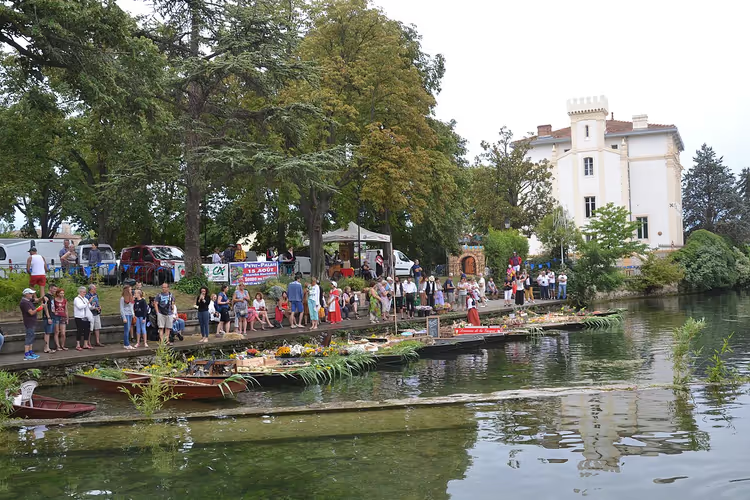
The Sorgue is visible from almost every street. The farmers' market and the antiques market run right next to each other, so you can do both in one morning.
Markets in L'Isle-sur-la-Sorgue
The main day of the week here is Sunday. In the morning, the old town turns into one big market that stretches through the streets and along the river. The whole center lives for trade for a few hours.
At the farmers' market you can buy vegetables, fruit, cheese, olives, and honey. The antiques market unfolds nearby, along Avenue des 4 Otages, and runs noticeably longer.
Twice a year, at Easter and in August, the town hosts one of the largest flea markets in the country. If you're hunting for furniture or tableware, plan your trip around those dates.
- Farmers' market: town center, Sunday morning and first half of the day.
- Antiques market: Avenue des 4 Otages, Sunday until evening.
 © Marianne Casamance · CC BY-SAPhoto: Marianne Casamance, CC BY-SA (https://creativecommons.org/licenses/by-sa/4.0), Wikimedia Commons
Come at opening time, otherwise you'll be moving through dense crowds in the narrow aisles. Market produce is more expensive than the supermarket, but it's fresh and local.
Fondation Villa Datris
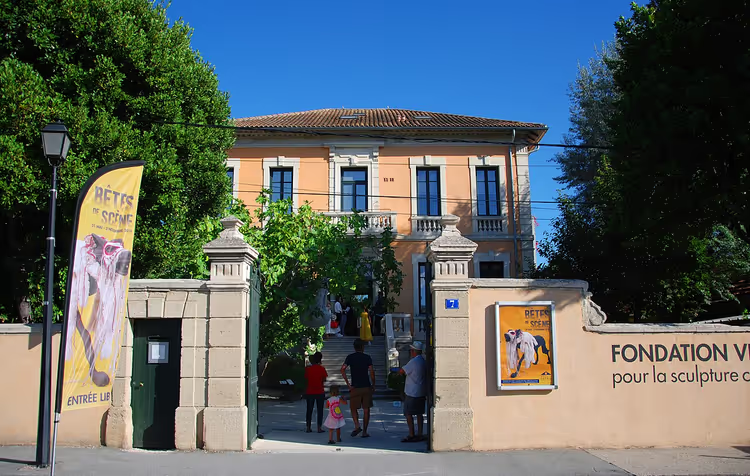
One museum in town is still worth visiting. The Fondation Villa Datris, a museum of contemporary sculpture, operates in a historic villa on Avenue des 4 Otages. The garden around it is also filled with works, and the themed exhibitions change every year and run from May to November.
- Address: 7 Avenue des 4 Otages, 84800 L'Isle-sur-la-Sorgue.
- Admission: free.
- Opening hours: check the foundation's official website before your trip.
 © Fondation Villa Datris · CC BY-SAPhoto: Fondation Villa Datris, CC BY-SA (https://creativecommons.org/licenses/by-sa/4.0), Wikimedia Commons
Pâtisserie Jouvaud
French pastry deserves a separate visit. At the Jouvaud patisserie on the same avenue you'll find éclairs and lemon tart. Next to the display case they sell home decor, so the shop also works as an interior store.
- Address: 5 Avenue des 4 Otages, 84800 L'Isle-sur-la-Sorgue.
Dinner at L'Atelier du Jardin
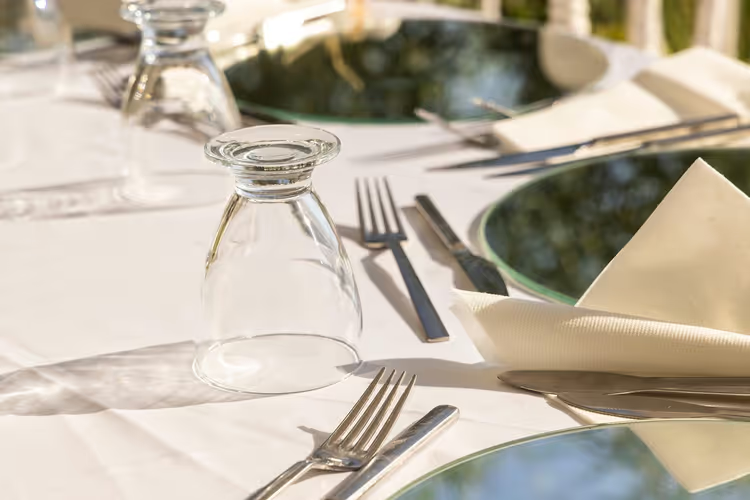
For dinner in L'Isle-sur-la-Sorgue, L'Atelier du Jardin is a convenient choice. The restaurant belongs to the pricier Le Jardin du Quai, but it's simpler itself and closer to a bistro. Tables are set in the garden, so on a warm evening you sit outdoors.
The menu is small, but there's a dish for every taste, and they're willing to accommodate special requests. Order the vegetarian quiche from the menu without hesitation. Prices stay at the average level for the town.
- Address: 91 Avenue Julien Guigue, 84800 L'Isle-sur-la-Sorgue.
- Who it's for: for a quiet dinner in the garden after the market.
Fontaine-de-Vaucluse
The most popular outing from L'Isle-sur-la-Sorgue leads to Fontaine-de-Vaucluse. Near the village springs the source of the Sorgue, the largest in all of France. You walk to the water itself along the river, and the path is genuinely beautiful.
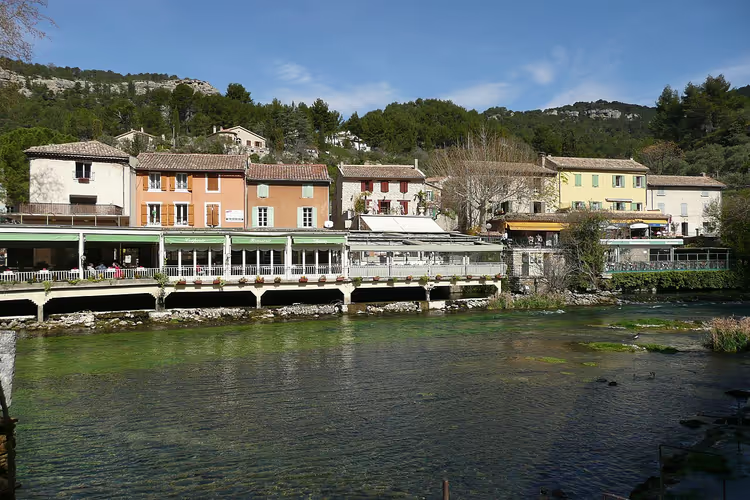 © Vi..Cult... · CC BY-SAPhoto: Vi..Cult..., CC BY-SA (http://creativecommons.org/licenses/by-sa/3.0/), Wikimedia Commons
Expect crowds. Souvenir shops line the trail, and on weekends it's packed, especially toward midday. Early morning will be easiest for you.
The water in the spring depends heavily on the season. After the snow melts in spring, the level is high and the river roars. In late summer the water recedes deep into the grotto, and the sight becomes more modest.
- How to get there: about 15 minutes by car from L'Isle-sur-la-Sorgue (on the map).
- Admission: free.
- Parking: paid, at the village entrance.
- Who it's for: for those willing to walk to the spring for the view.
Where to stay: La Sorguette campsite
For the first night, it's convenient to set up at the La Sorguette campsite. The campsite itself has been operating for a long time, and the wooden lodges appeared here in 2018. Inside it smells of wood, there's enough space, and everything you need is there.
A separate plus: an outdoor soaking tub. A bottle of wine at the campsite reception is sold at a low price, so you'll definitely remember an evening in warm water.
- Location: about 5 minutes by car from the center of L'Isle-sur-la-Sorgue (on the map).
- The catch: you can't get here without a car; you won't walk to town.
- Prices and availability: find a hotel near L'Isle-sur-la-Sorgue on Trip.com.
Luberon villages: from Gordes to Lourmarin
After that, the most scenic part of the trip begins. The Luberon lies in the south of the Vaucluse department and comes closest to the Provence you picture from postcards. Vineyards, olive groves, stone villages, and lavender fields all meet along a single ridge.
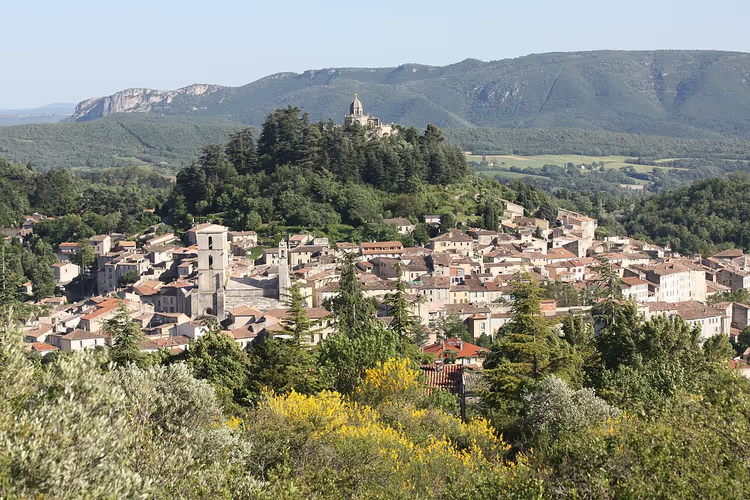 © Forcalquier · CC BY-SAPhoto: Forcalquier, CC BY-SA (https://creativecommons.org/licenses/by-sa/3.0), Wikimedia Commons
The title of "most beautiful villages" here is not an editorial invention. France has an official classification, "Les plus beaux villages de France," and some Luberon villages are on it. Below is the order of stops with prices and times.
Village | Main attraction | Admission |
|---|---|---|
Gordes | Castle above the cliff | €6 for adults (as of 09/2026, Gordes castle website) |
Roussillon | Sentier des Ocres ochre trail | paid, a few euros (as of 09/2026, tourist office page about the trail) |
Saignon | Rocher de Bellevue viewpoint | free |
Bonnieux | Église haute church at the top | free |
Lourmarin | Château de Lourmarin | €8 for adults (as of 09/2026, castle listing at the tourist office) |
Gordes
Make your first stop in Gordes. The village sits on a rocky outcrop, and its silhouette has long been a postcard image. The best shot is not in the center but on the approach: from the road you see all of Gordes at once. From L'Isle-sur-la-Sorgue, take the D2, then turn onto the D15.
In high season, Gordes is crowded and the village feels very touristy. If you want to walk the stone streets in peace, come in the morning. The main attraction in the center, Château de Gordes, is open to visitors and operates as an exhibition space. Gordes' silhouette has been appearing in guidebooks and on postcards for decades, which is why it comes first on the list of stops.
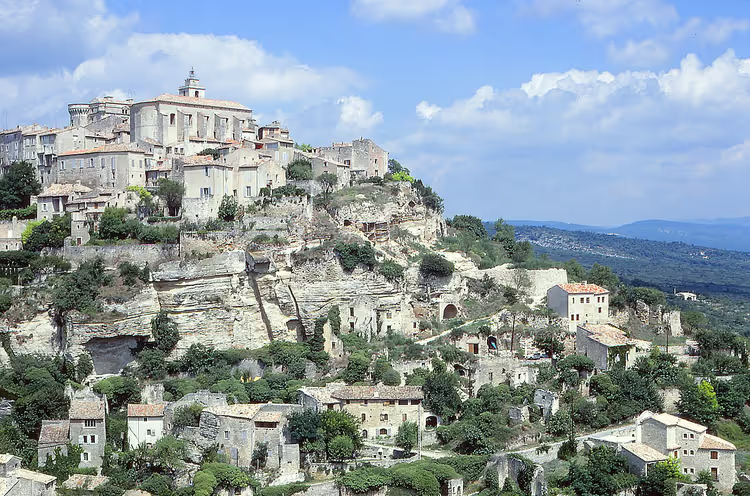 © Jean-Pol GRANDMONT · CC BYPhoto: Jean-Pol GRANDMONT, CC BY (https://creativecommons.org/licenses/by/4.0), Wikimedia Commons
- Castle admission: €6 for adults, €4 for students and teenagers (as of 09/2026, official website).
- Hours: the castle is open daily, times vary by season (as of 09/2026, schedule on the castle website).
- Nearby: the Cistercian abbey of Notre-Dame de Sénanque. In lavender season, the fields reach right up to its walls, and it is the most photographed spot in the region.
- The catch: in high season, groups gather in front of the castle and on the streets.
Roussillon
Roussillon stands out from the rest because of its color. The village is built on ochre cliffs, and they give a reddish tint to the streets and facades. The shade changes throughout the day: in the morning the cliffs are paler, and by sunset they glow orange.
The Sentier des Ocres trail leads through the ochre landscape. In high season it gets crowded, so arrive at opening time. If you want fewer people, go to the Colorado provençal: this second ochre site lies away from Roussillon and is noticeably quieter.
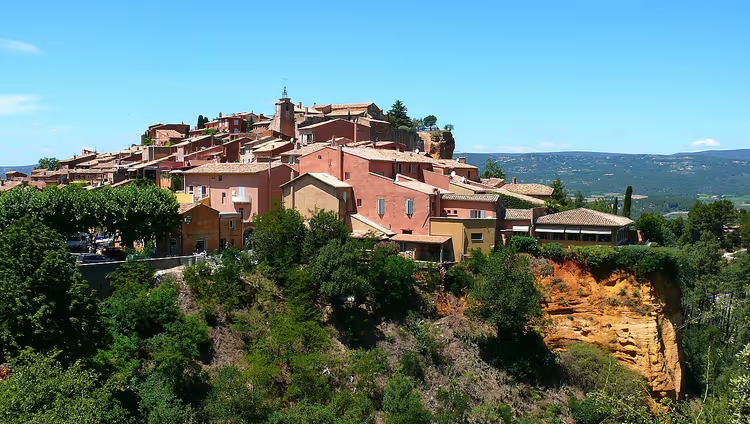 © Hawobo at German Wikipedia · CC BY-SAPhoto: Hawobo at German Wikipedia, CC BY-SA (https://creativecommons.org/licenses/by-sa/2.0/de/deed.en), Wikimedia Commons
- Sentier des Ocres admission: paid, a few euros (as of 09/2026, Luberon tourist office).
- How to get there: by car from Gordes, the road passes through the ochre massif.
- Who it's for: those who want to see the most unusual color of Provence.
Saint-Saturnin-lès-Apt
Next, the route leads to Saint-Saturnin-lès-Apt. This is farming country, and it is worth staying longer here. Provence Hipposervices, a family-run horse business, operates in this area. It was founded by Olivier and Brune, and Virginie now runs it (as of 09/2026, company website).
Olivier traveled around the world on a tandem bicycle in three years, three months, and three days, then returned to his parents' organic farm. Horses have been part of his life since childhood, and during his round-the-world trip he sought out wild horses to study their behavior. Together with his horse Coquet, he takes guests through little-known corners of Provence. Animal welfare comes first here: if Coquet gets spooked by something, they pause.
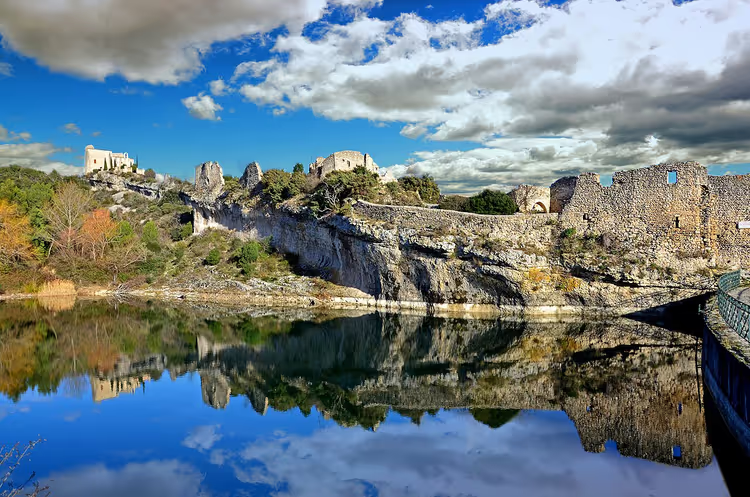 © Alkonyat · CC BY-SAPhoto: Alkonyat, CC BY-SA (https://creativecommons.org/licenses/by-sa/3.0), Wikimedia Commons
The carriage fits a small group, and you ride along dirt roads through the vineyards. This format also works for people who have difficulty walking: the company has a carriage designed for guests in wheelchairs.
- Duration: the ride takes from two hours to a full day.
- Departure address: Domaine de seoule, 84490 Saint-Saturnin-lès-Apt, beyond the village.
- Excursions and tours in the Luberon: see options on GetYourGuide.
Mines de Bruoux
Along the way, stop at Mines de Bruoux near the village of Gargas. Underground lies a labyrinth of ochre galleries stretching about 40 kilometers. With a guide, you walk an underground route and learn how pigment for paints was mined here.
- Season: from March 7 to October 31, 2026, tours run in timed sessions (as of 09/2026, official website).
- Important: the galleries are cold, around 10 °C, so bring a warm sweater.
- The tour lasts about an hour and is usually in French; German groups are less frequent, so ask when booking.
- Photography is not allowed inside.
- Address: 1434 Route de Croagnes, 84400 Gargas.
Lunch at Château Perreal winery
Lunch is easy to combine with a tasting at Château Perreal winery. They welcome guests for wine tastings, and chef Neige Mestre prepares lunch for them. Lunch is not organized every day, so book a table in advance.
- Tastings: Monday through Saturday, with a midday break.
- Accommodation: the winery has rooms, details on the estate's official website.
Carriage ride: what to know
Book the ride in advance, especially in summer. The route depends on the weather and the condition of the horses, so the exact time will be confirmed the day before. Bring a hat and water: part of the route is in the open sun.
Saignon
The road then heads south to Saignon. The medieval fortress is visible even on the approach, and it is one of the best photo subjects on the route. Be sure to go into the village itself as well.
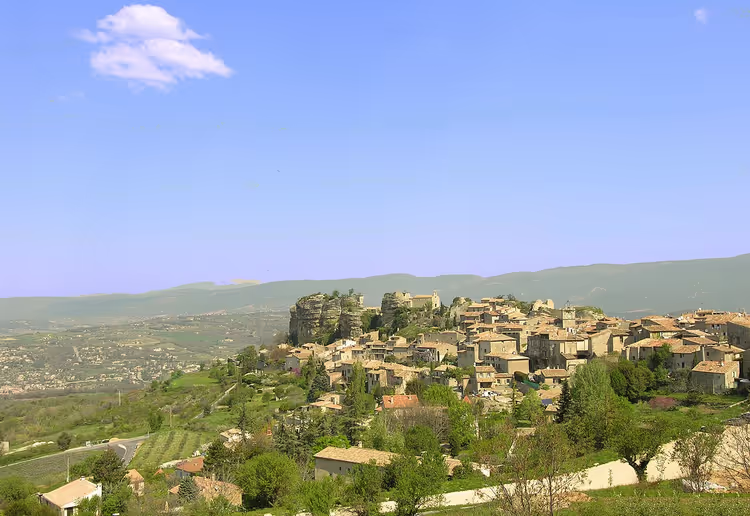
Hidden behind the houses is the Rocher de Bellevue viewpoint. The climb from the center takes about 10 minutes on foot. There are few people here even in high season, and from the viewpoint you will see the Luberon almost without tourists.
- How to get there: by car from Saint-Saturnin-lès-Apt, the road heads south.
- Who it's for: those who want a view of the valley without the crowds.
Bonnieux
Via Buoux, the road leads to Bonnieux on the Luberon plateau. The village is popular, but the lanes turned out to be calmer than expected. Here it is worth climbing to the upper church, Église haute, at the top of the hill.
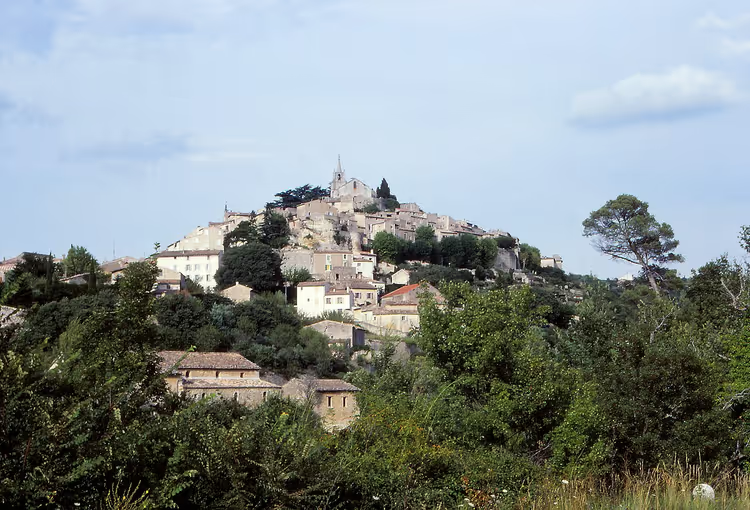 © Jean-Pol GRANDMONT · CC BYPhoto: Jean-Pol GRANDMONT, CC BY (https://creativecommons.org/licenses/by/4.0), Wikimedia Commons
The road up passes through the tree canopy. Along the way, you get a view of the northern Luberon all the way to Mont Ventoux. In the heat, the climb is harder, so bring water.
- How to get there: by car from Saignon, about half an hour on mountain roads.
- Who it's for: those willing to walk uphill for the panorama.
Lourmarin
Make the final stop of the route in Lourmarin. The village silhouette in the evening light looks flawless, and the center with its lanes is well kept. At the same time, this is the most touristy point of the trip: there are always groups in front of Château de Lourmarin.
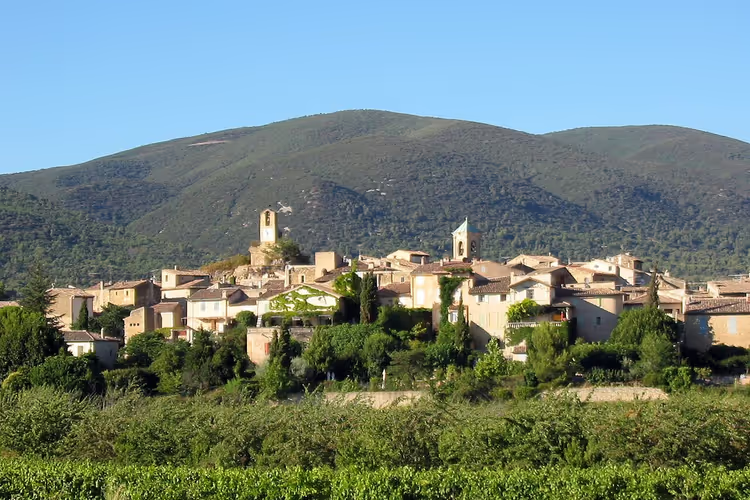 © ArjenW at Dutch Wikipedia · CC BY-SAPhoto: ArjenW at Dutch Wikipedia, CC BY-SA (http://creativecommons.org/licenses/by-sa/3.0/), Wikimedia Commons
It is worth arriving right at sunset: the stone turns warm, and the village looks exactly like the postcards.
- Castle admission: €8 for adults, €6.50 reduced rate, €3.50 for children 6-16 (as of 09/2026, Luberon tourist office data).
- Opening hours: the castle is open daily, closed December 25 and January 1 (as of 09/2026, official website).
- The catch: it is always crowded in front of the main attraction.
- Who it's for: for the second night on the route.
Accommodation in Lourmarin: Mas la Cheneraie
For the second night, we recommend staying at the guesthouse Mas la Cheneraie. It sits in a quiet spot beyond the center, and you can walk to the village in about 15 minutes. The owners run the house with care: cozy rooms, a good breakfast, and a pool.
- Location: 15 minutes on foot from the center of Lourmarin (on the map).
- Prices and availability: prices at Mas la Cheneraie on Trip.com.
When to go and how many days
The season decides almost everything in Provence: it affects the color of the fields, the crowds, and hotel prices. Below we briefly cover lavender, the best months, and trip length.
When lavender blooms
Lavender blooms roughly from mid-June to early August, with the peak usually falling in July (as of 09/2026, Route de la Lavande). Exact timing depends on the weather: the earlier spring warms up, the earlier the fields come into bloom.
It helps to distinguish between two types. True narrow-leaved lavender is rarer and grows higher up, in the mountains. Industrial lavandin blooms later and produces the neat rows that most often show up in photos.
By mid-August the bloom fades. By September the fields are usually already harvested, and you won't see the purple carpet.
Best season to go
Lavender coincides with high season, so in July and August the villages of the Luberon are crowded. You pay for the purple fields with crowds and high accommodation prices.
September offers a compromise. The heat eases, the sea on the coast is still warm, and hotels cost less than in summer. The catch is that the lavender is already gone.
In spring, in April and May, everything is in bloom and prices stay below summer levels, except around the Easter holidays.
- July: peak lavender and peak tourists.
- September: mild weather and fewer people, but no lavender fields.
- April and May: flowers in bloom and low prices outside Easter.
How many days to plan for
Three days and two nights are enough for the village route. If you have time, stretch the trip: you'll want to linger in every village.
Provence is bigger than one mountain range. Before the Luberon, it's worth spending two nights in the Gard department, near the Pont du Gard and in the Camargue. After Lourmarin, it makes sense to continue to Aix-en-Provence.
The Verdon Gorge and Avignon often don't fit into the route, and each deserves a full day of its own. For a relaxed road trip through Provence, plan at least a week.
Check the weather before you set off. In spring and autumn Provence gets rain, and in summer the Luberon is hot, so schedule underground galleries and shady canyons for the middle of the day. It's more convenient to stay overnight inside the villages or nearby: that way you catch both the market and the evening light. Rooms in Lourmarin and L'Isle-sur-la-Sorgue get booked up quickly, especially on weekends, so reserve ahead.
Route on the map
All the stops fit neatly into one route: L'Isle-sur-la-Sorgue, Gordes, Roussillon, Saint-Saturnin-lès-Apt, Saignon, Bonnieux, and Lourmarin. Build it in advance so you don't have to hunt for turns on the spot. The map shows that the villages sit close to each other, but the roads between them wind a lot. Download an offline map: in the mountains, cell service drops out in places.
Find hotels
Compare prices across booking sites and filter for rooms with free cancellation.
Compare prices on Discover CarsThe widget loads once you give your consent.
⁉️🤔 Frequently asked questions
How many days do you need for the Luberon village route?
Three days and two nights are enough for the classic village loop. The first night's base, L'Isle-sur-la-Sorgue, sits away from the mountains, so you spend half a day on the market and the spring. After that, the villages come one after another. For a relaxed trip through all of Provence, plan at least a week.
Do you need a car to travel around the Luberon?
Yes, without a car the route barely works. There is no frequent transport between the Luberon villages, and the viewpoints sit away from the settlements. With a car you can cover Gordes, Roussillon, and Saignon in one day. Keep in mind that parking near the villages is paid, and in summer the lots fill up by morning.
When is the best time to go to Provence for lavender?
The fields bloom roughly from mid-June to early August, with the peak most often falling in July. Exact timing depends on spring weather. If you want both lavender and fewer people, choose late June. By September the fields are usually already harvested, but the weather is milder and hotels are cheaper.
How much does it cost to enter the ochre trail in Roussillon and the castles?
Entry to the Sentier des Ocres in Roussillon is paid, around a few euros. Gordes Castle costs 6 € for adults (as of 09/2026, Gordes Castle website), Lourmarin Castle costs 8 €, with a reduced rate of 6.50 € (as of 09/2026, official Lourmarin Castle website). The Mines de Bruoux underground galleries are also paid; check the exact price on the official website before your trip.
Can you see Provence in one day?
One day only gives you a taste of the region. Realistically you can manage two stops, for example the market in L'Isle-sur-la-Sorgue and the view of Gordes. The rest of the time goes to driving. To see the villages and the ochre cliffs, plan at least two days with an overnight stay.
In short: what to book
The Luberon route comes together easily if you pick two bases in advance.
- If you have three days: stay overnight in L'Isle-sur-la-Sorgue and Lourmarin.
- If you're going for lavender: plan the trip for late June or July.
- If you're traveling with kids: keep drives short and include the Sentier des Ocres trail.
It's best to book accommodation in spring; by summer, available rooms in the villages run out. find a hotel in the Luberon on Trip.com.

A small editorial team writing guides for independent travel. We travel ourselves, but we haven’t been everywhere, so we check prices, opening hours and how to get there against official sources.