
















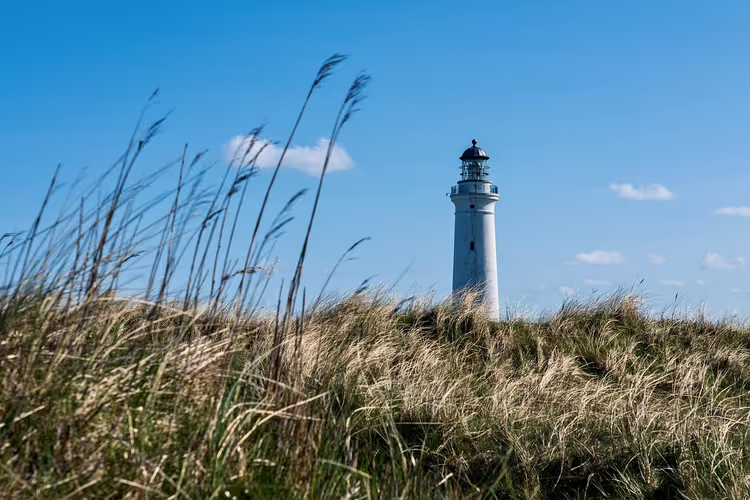
Danish island Læsø: beaches, horses and seaweed roofs
The island of Læsø lies in the Kattegat strait, away from mainland Denmark. A ferry runs there from Frederikshavn (as of 09/2026, Læsøfærgen). It will take you to an island with sandy beaches, forest plantations, and houses roofed with seaweed.
The question of what to see on Læsø is easy to answer. The island is small, and almost all points are reachable by bike or on foot. We have gathered verified facts: how to get there, where to swim, where to ride horses, and what to bring home.
People come here for quiet, dunes, and northern nature without the crowds. Some stay for a couple of days, others for a week for the spa and hiking.
How to get to Læsø
💡 In short:
- From Frederikshavn to Vesterø Havn the ferry takes about 90 minutes, with 4 to 8 departures per day (as of 09/2026, ferry operator).
- The vessel carries 500 passengers and 75 cars, so book your ticket in advance.
- Schedule and route: 09/2026, verified on the operator's website.
You reach the island by ferry. It connects Læsø with Frederikshavn in northern Jutland.
In summer there are more departures than in the off-season. In July popular sailings sell out in advance, so book your ticket online.
EU and Swiss citizens need a passport or ID card to travel to Denmark. Everyone else should check Denmark's entry rules before buying a ticket. Læsø is part of the Schengen area along with the rest of the country.
If you are driving, arrive at the port with time to spare. Check-in for the sailing closes before departure. On foot or by bike, you board among the first. From Vesterø Havn, local roads lead across the island to beaches and campsites.
Danzigmann beach near Østerby
Danzigmann beach lies east of Østerby harbor. It was named after a ship from Danzig that once ran aground here. It is one of the quiet spots on the island, easy to reach on foot.
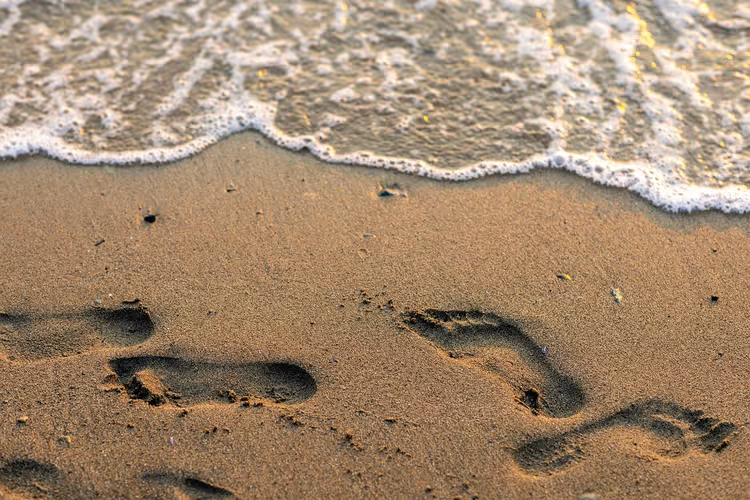
If you continue north along the shore, you will reach the headland and the open Kattegat. There are fewer people here, but you feel the wind. Bring a windbreaker even on a warm day.
Come here in the morning: the light is softer and the sand is almost empty. By midday more visitors arrive, especially on weekends. An hour is enough for a walk along the water.
Hiking through Læsø Klitplantage
Bring hiking boots: walking around the island is a pleasure. Near the harbor lies Læsø Klitplantage: a forest plantation with trails among pines and heather. Here you can easily cover several kilometers without going far from the port.
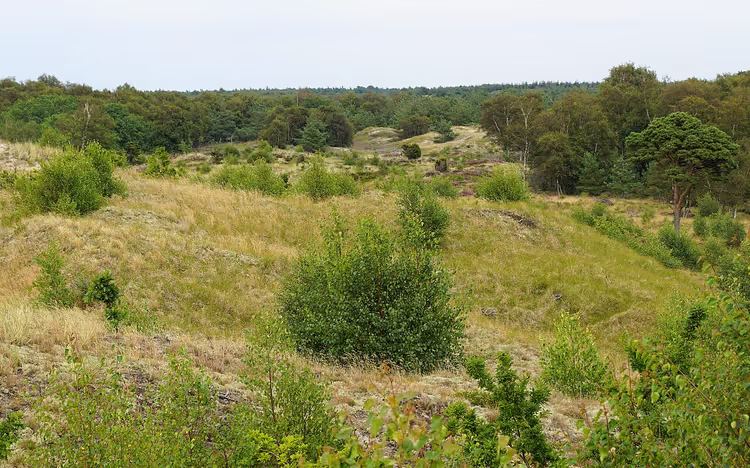 © Nils Jepsen /User:Nico · CC BY-SAPhoto: Nils Jepsen /User:Nico, CC BY-SA (https://creativecommons.org/licenses/by-sa/4.0), Wikimedia Commons
For a full day, a loop route around the entire island works well. It can be cycled in a day (according to the Læsø tourist office). Along the way you pass beaches, farmsteads, and viewpoints over the Kattegat.
Choose a route that matches your fitness. For a short walk, two to three hours is enough. For the full loop, allow a day. Bring water and food with you.
Riding Icelandic horses
Icelandic horses have lived on Læsø for a long time and cope well with the local climate. You do not need riding experience: calm rides are offered for beginners. The instructor keeps the group under control.

The ride goes along the beach and along trails through the dunes. This way you will see the island from the height of a saddle and also get to know the animals. Wear comfortable clothes and closed-toe shoes.
Book in advance: groups are small, and in season spots go quickly. Check prices and ride times with local stables.
Seaweed roofs and the Hedvigs Hus museum
Seaweed roofs have become the signature of Læsø. The tradition dates back to the 17th century, when logging and salt boiling stripped the island of wood (according to Wikipedia). Roofs then began to be made from sea grass.
Historically, Læsø was called the "island of women." Men went to sea, while women built and repaired the roofs. Their skills with ropes and fabrics made these roofs durable.
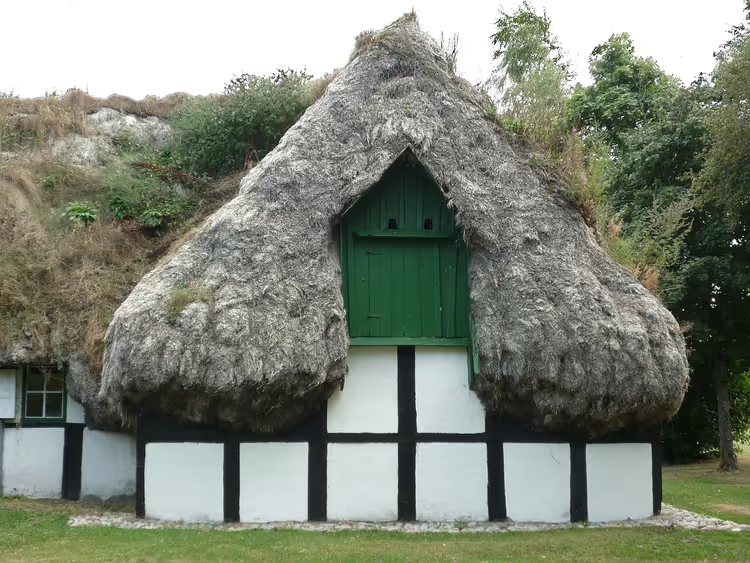 © Hartmut Schmidt Heidelberg · CC BY-SAPhoto: Hartmut Schmidt Heidelberg, CC BY-SA (https://creativecommons.org/licenses/by-sa/4.0), Wikimedia Commons
Stop by the Hedvigs Hus museum: under a seaweed roof you will see everyday life on the island. Some of the houses have been restored, others are still awaiting repair. Many buildings are private and can only be viewed from the outside (according to the Læsø tourist office).
Seafood in Vesterø Havn
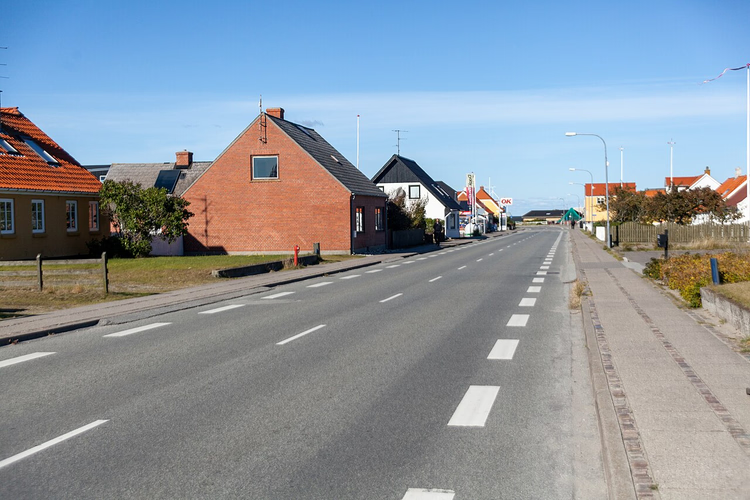
Vesterø Havn serves as the island's port and your first stop after the ferry. Fresh seafood is prepared here, including langoustines. They are served simply, and it is worth staying on the island for that.
 © L-BBE · CC BYPhoto: L-BBE, CC BY (https://creativecommons.org/licenses/by/3.0), Wikimedia Commons
The port lives from fishing, and the catch goes straight to the kitchens of local restaurants. Besides langoustines, go for shrimp and mussels. In season, book waterside tables in advance.
A couple of hours is enough for an evening in the port. The ferry also leaves from here, so dinner is easy to combine with the return trip.
Læsø Kur spa with salt pools
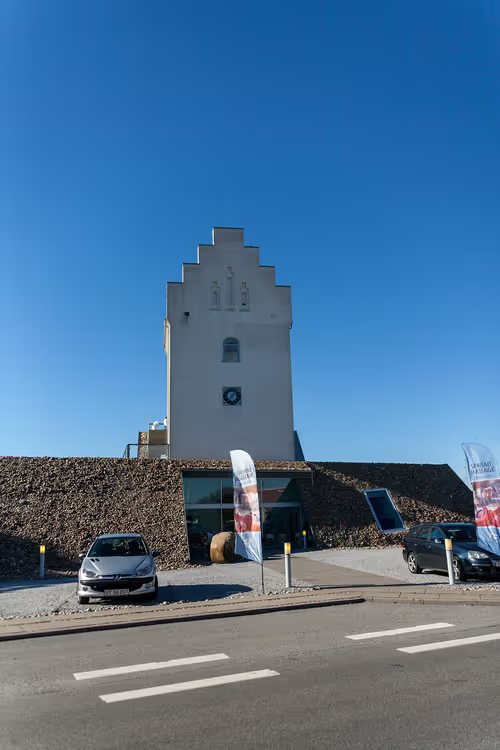
The Læsø Kur spa operates in a former church building. The bell tower was kept as a landmark, and the nave was rebuilt as a center (according to the Læsø tourist office).
 © L-BBE · CC BYPhoto: L-BBE, CC BY (https://creativecommons.org/licenses/by/3.0), Wikimedia Commons
The programs are based on the island's salt, clay, and seaweed. There are pools with water of different salinity and a sauna. Læsø Kur is known as a treatment center for psoriasis: the salt water helps the skin.
Besides the pools, you can book massages and seaweed wraps. Address: Vesterø Havnegade 28 (as of 09/2026, Læsø Kur). Book in advance, especially in summer.
Wool from Læsø: what to bring home
From Læsø people bring items made from the wool of local sheep and goats. In the shops you will find blankets, socks, scarves, mittens, hats, and sweaters. These things are warm and last a long time.
See the full range on the store's website. The selection there is wider than in ordinary souvenir shops, because the workshops work specifically with island wool.
You will find items useful for fall and winter. A compact scarf or mittens are easy to bring home in your luggage.
⁉️🤔 Frequently asked questions
Can you visit Læsø without a car?
Yes. The ferry takes foot passengers and bicycles, and from Vesterø Havn you can get around the island on a rental bike. You can walk from the harbor to Læsø Kur. The Danzigmann beach near Østerby is not within walking distance, so go there by bike. A car is not necessary if you are not planning long trips.
How much does the crossing to Læsø cost?
The fare depends on the season, type of vehicle, and date. See exact prices for 2026 on the fares page. Bicycles and children are usually cheaper, a car is more expensive. Buy your ticket online in advance: in July the first departures sell out quickly.
Do I need a visa to travel to Læsø?
Læsø is part of Denmark, so the general Schengen rules apply here. EU and Swiss citizens only need a passport or ID card. Everyone else should check the entry rules for Denmark before buying a ferry ticket. No separate permit for the island is required.
When is the best time to visit Læsø?
In summer the island has the most ferry departures and everything is open. July and August are warmest for swimming, but also the most crowded. In the off-season it is quieter, but there are fewer departures. Choose based on your own comfort.
Can you bike around Læsø in one day?
Yes. The island is small, and the loop route can be ridden in a day (according to the Læsø cycling route map). Bring water, food, and extra time for stops at the beaches. Wind on open stretches can slow you down.
What to see on Læsø in one day?
From Vesterø Havn, bike to Danzigmann beach and Østerby harbor. You can't walk there. In the afternoon, see the seaweed roofs and the Hedvigs Hus museum. In the evening, return to Vesterø Havn and stop by Læsø Kur. Order dinner in the port where the ferry departs back.
In short: what to book
What to choose on Læsø depends on your pace. Here's a quick matrix.
- If you're visiting for the first time and for a couple of days, take a morning ferry: you'll have time for Danzigmann beach and the Hedvigs Hus museum.
- If you need to recharge, plan a day at Læsø Kur with its saltwater pools.
- If you're new to horseback riding, gentle walks on Icelandic horses are a good fit.
- If you love northern nature, take a bike and ride the loop around the island.
Book the ferry, spa, and stables in advance: demand is higher in summer. Start with the crossing on the ferry company's website, then plan your days at a relaxed pace.

A small editorial team writing guides for independent travel. We travel ourselves, but we haven’t been everywhere, so we check prices, opening hours and how to get there against official sources.