














Galicia and Asturias: islands, lighthouses and caves with ancient drawings
Galicia and Asturias cover the entire northwest of Spain. This is the greenest part of the country: almost 1,200 km of bay-indented coastline (on the map), the cold Atlantic Ocean, and fishing villages instead of hotel complexes.
People come here for the Cathedral of Santiago de Compostela, Roman walls, and caves with rock art. We've put together the places worth including in a route through the two regions, and added lodging options for each leg of the trip: from city hotels to camping on a green peninsula.
Ad: this article contains affiliate links, we earn a commission if you book through them, at no extra cost to you.
Northwest Spain: two regions and one route
💡 In short:
- Regions: Galicia in the northwest, Asturias to the east, they border each other, and the Cantabrian Sea lies to the north.
- Best time: May through October, in July and August the coast is full of Spanish vacationers.
- A car is more convenient: buses between villages run infrequently, and schedules are tied to the school year.
- Tickets and opening hours: 09/2026, verified on the official website of the Santiago cathedral.
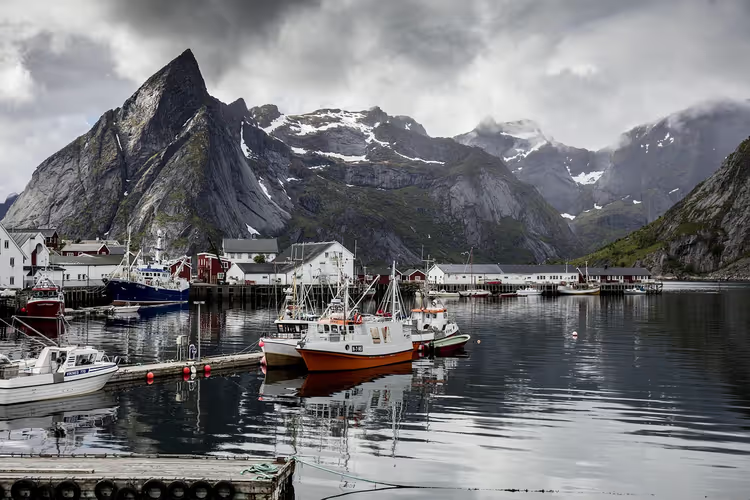
Galicia looks more rugged than the rest of Spain. The coast is cut by bays, lighthouses stand on the cliffs, and inland the region hides vineyards, monasteries, and the quiet cities of A Coruña, Vigo, and Lugo. The main draw here is Santiago de Compostela, the endpoint of all Camino routes.
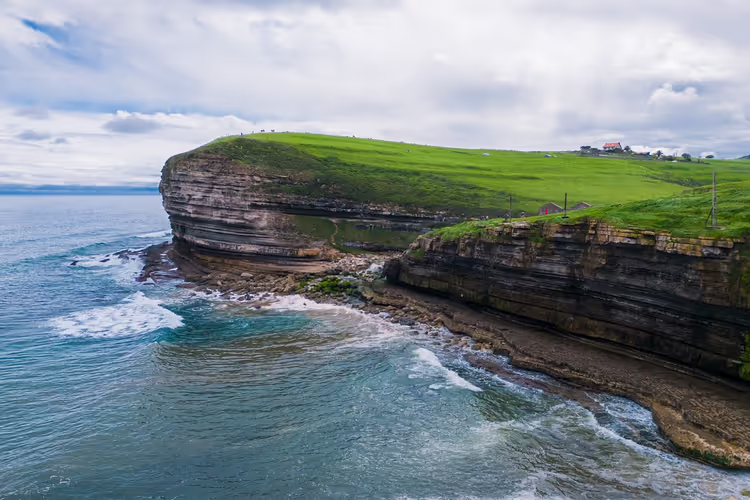
In Asturias the landscape shifts abruptly to mountains. The region has hundreds of beaches, but the water in the Cantabrian Sea stays cool even in August. Inland, however, rise the Cantabrian Mountains and part of Picos de Europa National Park, where hiking trails open in summer.
The regions are compact, so one trip can fit in both the ocean and the mountains. From A Coruña to Oviedo you can drive in about three hours (on the map), and between Santiago de Compostela and the coast half an hour is enough. Plan the route as a loop: that way you won't retrace the same highway.
Galicia: cities and coast
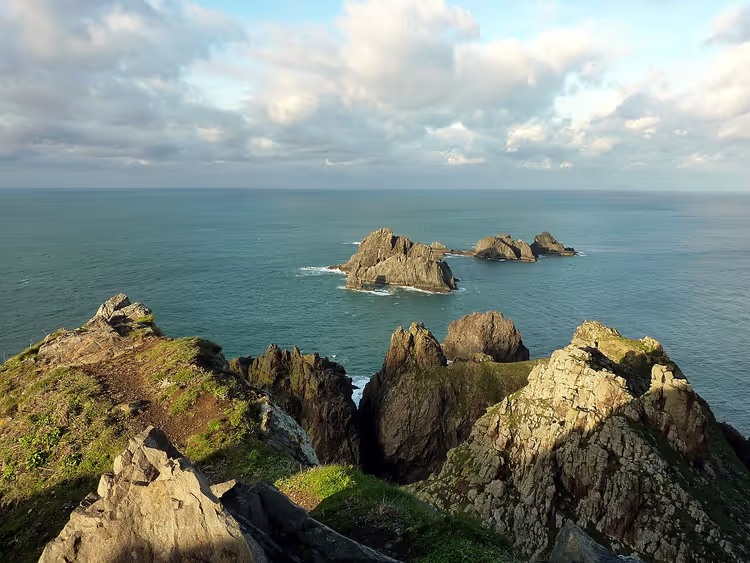 © Adbar · CC BY-SAPhoto: Adbar, CC BY-SA (https://creativecommons.org/licenses/by-sa/3.0), Wikimedia Commons
Santiago de Compostela
Santiago de Compostela grew up around the cathedral on Praza do Obradoiro. Even if you're not walking the Camino, the city deserves a full day: it's one of the most beautiful historic parts of Spain, with palaces, monasteries, and granite streets.
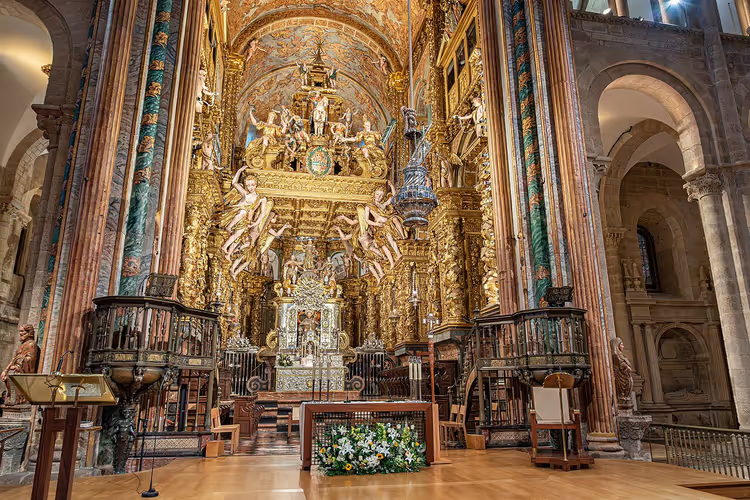 © Jorge Franganillo · CC BYPhoto: Jorge Franganillo, CC BY (https://creativecommons.org/licenses/by/4.0), Wikimedia Commons
The Cathedral of St. James is open every day from 7:00 to 21:00, in summer on Saturdays it closes at 20:30, admission is free through the Puerta de Platerías. Opening hours verified on 12.09.2026 on the cathedral's hours page. Pilgrim masses start at 7:30, 9:30, 12:00, and 19:30. Backpacks are not allowed inside, so leave your things in the luggage storage. The cathedral museum is open from 10:00 to 20:00.
The temple's main relic is the crypt of St. James beneath the high altar. Nearby stands Palacio de Rajoy, an 18th-century palace with a statue of the apostle on the roof, today it houses the city hall. A stone's throw away are the monasteries of Convento de San Francisco and San Martiño Pinario, the university founded in 1495, and Museo de las Peregrinaciones, a museum of pilgrimage history. Go on a Tuesday or Wednesday morning. Groups arrive at Praza do Obradoiro after ten, and before that hour you can explore the center in peace.
Tours and tickets in Santiago de Compostela
Guided tours, skip-the-line tickets and activities — most offers can be cancelled free of charge.
See offers on TiqetsThe widget loads once you give your consent.
Staying in the historic center is more expensive, but everything is close by. Check hotel prices in Santiago de Compostela in advance on Trip.com (as of 09/2026, hotels in Santiago de Compostela), and the city's hotel catalog is available from the Galicia tourism office. In July there are almost no rooms left.
- How to get there: from the bus station and train station to the cathedral it's about a twenty-minute walk (on the map).
- Who it's for: for those walking the Camino or wanting one packed city day.
- The catch: in summer Praza do Obradoiro fills with pilgrim groups, by midday it's already noisy.
A Coruña
A Coruña sits on a rocky headland and is considered the most urban place in Galicia. The center is compact and easy to walk around, and on the main street Rua Real you'll find shops and cafes.
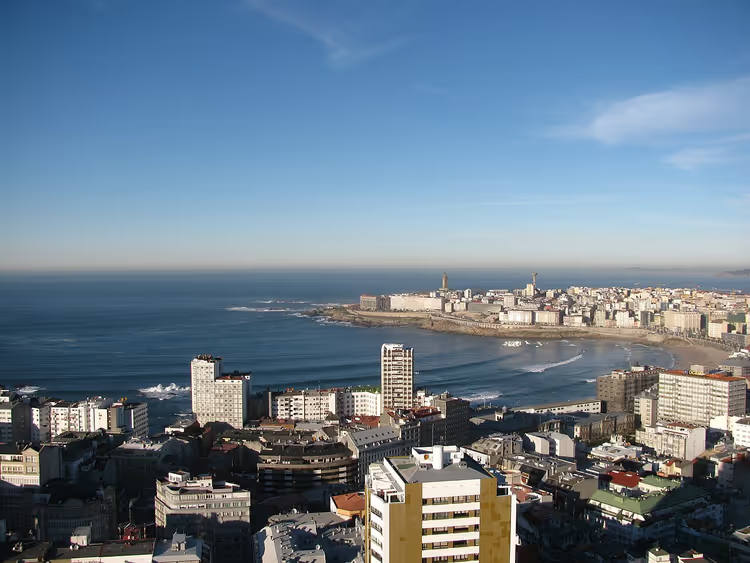 © Pablo Herrero from LA CORUÑA, Spain · CC BYPhoto: Pablo Herrero from LA CORUÑA, Spain, CC BY (https://creativecommons.org/licenses/by/2.0), Wikimedia Commons
On the headland near the center stands Castillo de San Antón, which houses an archaeological museum. On the other side of the headland rises the Tower of Hercules (Torre de Hércules), an old Roman lighthouse. Among the churches worth seeing are Santa María del Campo from the 13th century and Iglesia Santiago, probably the oldest church in the city.
- How to get there: from Santiago de Compostela the train takes just over an hour (on the map).
- Who it's for: for those who want to combine sea, city, and lighthouse in one day.
- The catch: the beaches within the city are open to the ocean, the water is cool even in summer.
Lugo
Lugo's main attraction is the ancient city wall, the best-preserved of all Roman walls in Spain. Inside you'll find yourself in a labyrinth of narrow streets and small squares where cars are almost entirely absent.
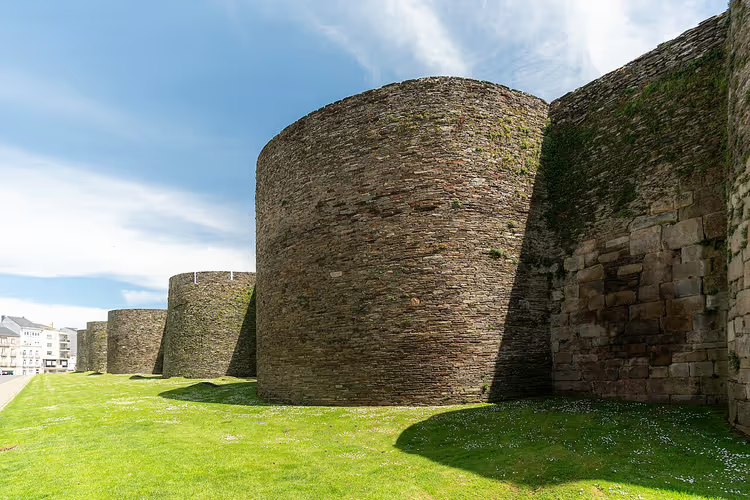 © Fernando Pascullo · CC BY-SAPhoto: Fernando Pascullo, CC BY-SA (https://creativecommons.org/licenses/by-sa/4.0), Wikimedia Commons
The wall is a UNESCO World Heritage Site, and you can walk its entire length and look down at the city. Lugo is full of tapas bars, which make a convenient pause in the middle of a walk.
- Cost: access to the wall is free.
- Who it's for: anyone interested in Roman history and food.
- The catch: it's easy to lose your bearings in the old town's narrow streets, so keep a map on your phone.
Vigo
Vigo lives by the sea: it's home to Europe's largest fishing fleet. The port looks industrial, but the old center is lively and well suited to a walking tour.
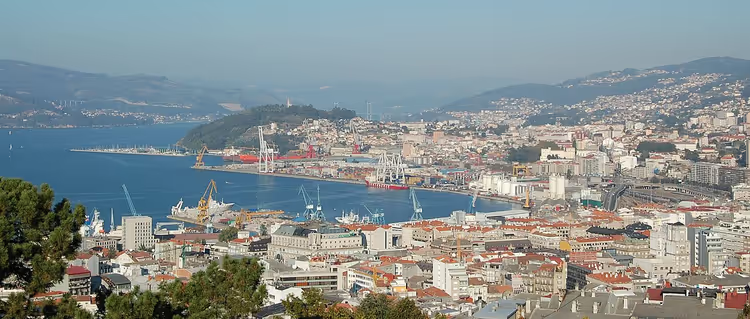 © derivative work: Kanchelskis ( talk ) Centro_e_porto_de_Vigo.jpg : User:Dantadd · CC BY-SAPhoto: derivative work: Kanchelskis ( talk ) Centro_e_porto_de_Vigo.jpg : User:Dantadd, CC BY-SA (https://creativecommons.org/licenses/by-sa/2.5), Wikimedia Commons
Ferries to the Cíes Islands leave from Vigo, so the city works well as a base for two or three days. In the evening, head up to the viewpoints above the bay and look out at the islands from the mainland.
- Getting there: from Santiago de Compostela, the bus takes about an hour (by card).
- Who it's for: anyone planning a trip to the islands.
- The catch: the industrial port takes up part of the waterfront, and the view of it isn't the most attractive.
Galicia: islands and wild coastline
 © Caos · CC BY-SAPhoto: Caos, CC BY-SA (http://creativecommons.org/licenses/by-sa/3.0/), Wikimedia Commons
Cies Islands
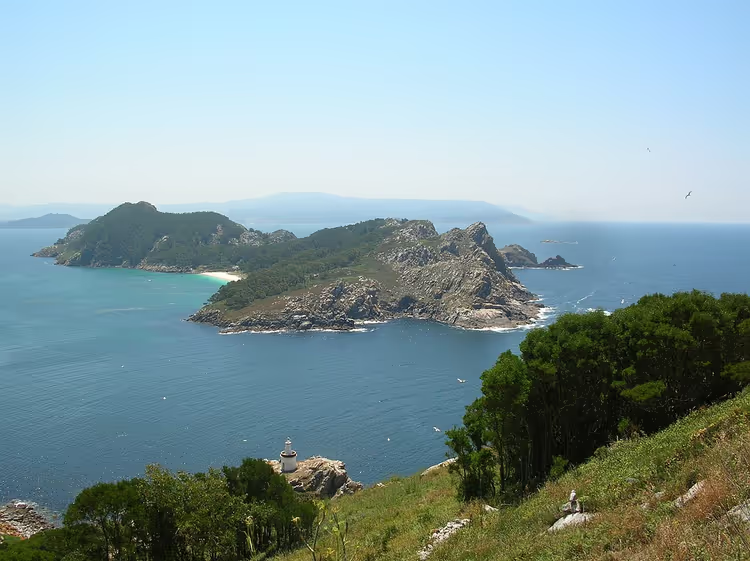
The Cies Islands are three islands in the Atlantic at the entrance to Vigo Bay. Seabirds nest here, and the beaches are considered the best in Galicia: white sand and clear blue water.
In high season, from May 15 to September 15, you first need to get a permit from the Xunta de Galicia and only then buy a ferry ticket (as of 09/2026, official park website). The permit is free. The number of spots per day is limited, so apply several weeks before your trip, and tours to the Cies Islands already include transport and the ticket.
Hiking trails run along the coast of the islands. They pass beaches, viewpoints, and the old lighthouse, so you'll see the islands in full.
- How to get there: the ferry from Vigo takes under an hour (according to carriers, 09/2026).
- Who it's for: those willing to plan ahead for the region's best beach.
- The catch: in season you can't get to the island without a permit, and weekend spots run out fast.
Costa da Morte
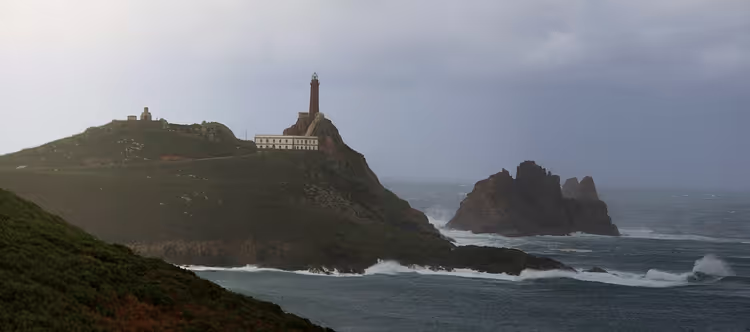
Costa da Morte stretches from Muros almost to A Coruña. High cliffs, wide bays, and empty beaches alternate with lighthouses here, and thick Atlantic fog often covers the water and shore.
 © Ramon Piñeiro · CC BY-SAPhoto: Ramon Piñeiro, CC BY-SA (https://creativecommons.org/licenses/by-sa/2.0), Wikimedia Commons
The coast got its name from shipwrecks: dozens of vessels have been lost on these cliffs over the centuries. The most famous landmark is the Faro de Fisterra lighthouse, built in 1853. It stands 138 meters above the ocean, and its light is visible for 57 kilometers (as of 09/2026, Costa da Morte tourism portal).
- How to get there: you'll need a car, scheduled buses stop only in larger towns.
- Who it's for: those who want ocean views and don't mind the wind.
- The catch: the weather here changes within an hour, fog and rain are possible any day.
Ribeira Sacra
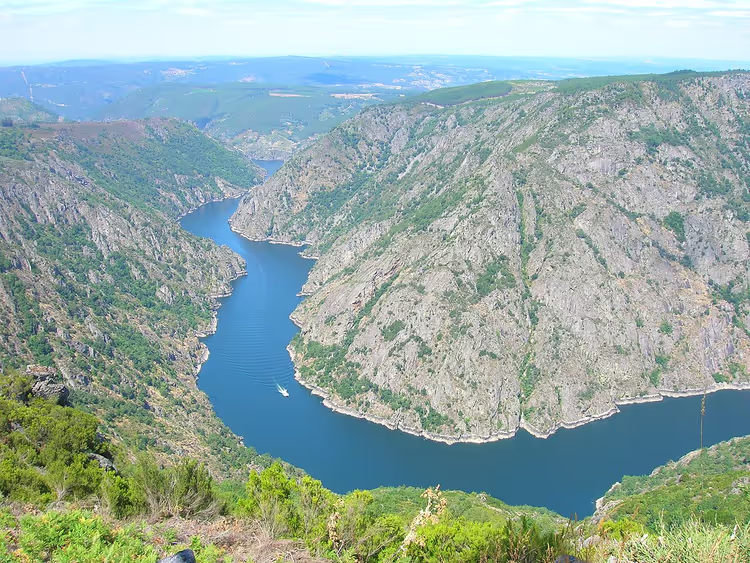
Ribeira Sacra lies northeast of Ourense and translates as "sacred riverbank." Nature and heritage come together here: medieval monasteries stand on the slopes, and vineyard terraces descend right to the water.
 © SanchoPanzaXXI · CC BY-SAPhoto: SanchoPanzaXXI, CC BY-SA (https://creativecommons.org/licenses/by-sa/3.0), Wikimedia Commons
The strongest impressions await you in the Cañón do Sil canyon. Hiking and cycling routes run through the area, and a wine route operates: Ribeira Sacra is considered one of Galicia's main wine regions.
The canyon is easiest to explore by car: viewpoints are scattered along winding roads, and public transport barely reaches here. Book a rental car in advance if you want to cover both the canyon and the coast in one trip.
- Who it's for: those who love wine, views, and winding roads.
- The catch: the mountain roads are narrow, and without a car you can't reach the viewpoints.
Where to stay in Galicia and Asturias
Accommodation in this region should be planned in advance: in summer, hotels in Santiago de Compostela and on the coast sell out quickly. Below are four options from our selection, from a city hotel to a campsite.
Hotel Balcón de la Cuesta
This hotel with a heated pool is located in the village of Andrín near Llanes, five minutes from the beach and a golf course. It's a convenient base for those who want to alternate swimming and golf.
- Location: Andrín, eastern Asturias, five minutes' walk to the beach.
- Who it's for: couples and families with a car who value a pool.
- Price: check area price levels on Trip.com (as of 09/2026, prices at Hotel Balcón de la Cuesta), description and reviews are in the Asturias hotel catalog.
- The catch: it's a quiet village location, you need to drive for restaurants and tours.
Hotel Rural Valleoscuru
A small rural hotel ten minutes' drive from Playa de la Franca beach. The terrace overlooks the surrounding hills, and the owners maintain a homey atmosphere.
- Location: rural area near Playa de la Franca, eastern Asturias.
- Who it's for: those looking for peace and nature instead of resort bustle.
- Price: check area price levels on Trip.com (as of 09/2026, rates at Hotel Rural Valleoscuru), rural guesthouses in the region are listed in the Asturias tourism office catalog.
- The catch: you can't reach the beach or shops without a car.
Pensión Artilleiro
A family-run guesthouse near the University of Santiago de Compostela campus. A simple option for one or two nights if you want to stay within walking distance of the center.
- Location: a neighborhood by the University of Santiago de Compostela.
- Who it's for: those who need a base near the historic center without paying hotel prices.
- Price: check area price levels on Trip.com (as of 09/2026, rates at Pensión Artilleiro), other guesthouses in the city are listed in the Galicia accommodation catalog.
- The catch: it's a guesthouse, not a hotel, so don't expect hotel-style service.
Camping Ria de Arosa 2
A campground on the green Barbanza peninsula with spacious tent pitches and RV spots. The area's best beaches and dunes are nearby and easy to reach on foot.
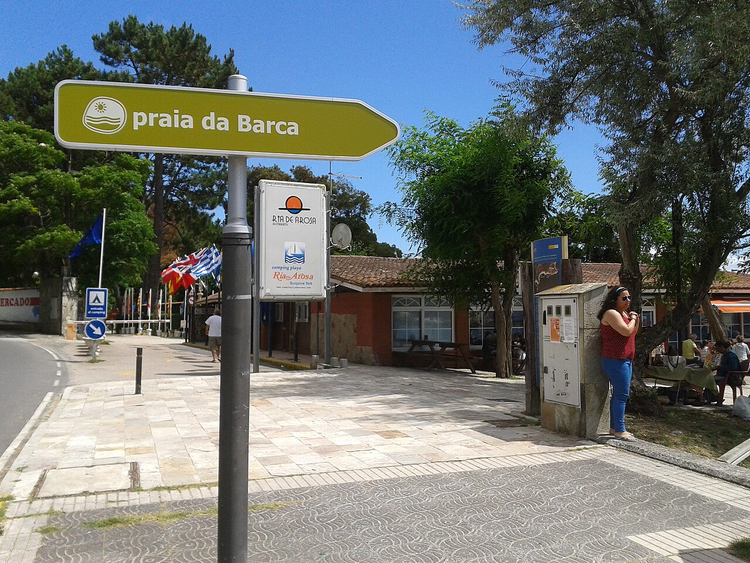 © Fernando Losada Rodríguez · CC BY-SAPhoto: Fernando Losada Rodríguez, CC BY-SA (https://creativecommons.org/licenses/by-sa/4.0), Wikimedia Commons
- Location: Barbanza peninsula, southwestern Galicia.
- Who it's for: travelers with an RV or a tent.
- Price: check area price levels on Trip.com (as of 09/2026, accommodation options on the Barbanza peninsula), campgrounds in the region are listed in the Galicia tourism office catalog.
- The catch: it's a campground, facilities are shared, and comfort depends on your gear.
Asturias: cities, mountains and caves
Asturias is smaller than Galicia, but more varied. From the sea to the mountains is less than an hour's drive, so you can fit a fishing village and alpine meadows into a single day. The regional capital Oviedo sits in the center, and a cave with ancient paintings awaits you in Ribadesella.
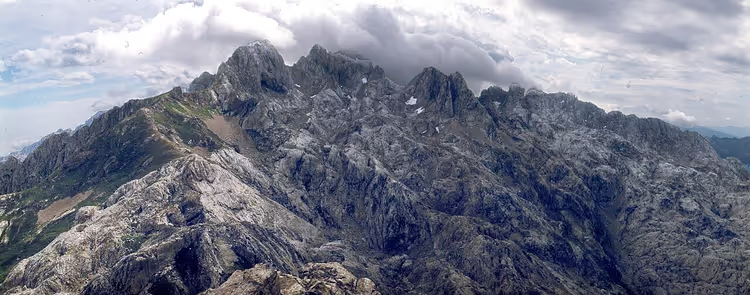 © LBM1948 · CC BY-SAPhoto: LBM1948, CC BY-SA (https://creativecommons.org/licenses/by-sa/4.0), Wikimedia Commons
Oviedo
Oviedo is the capital of Asturias and the most urban city in the region. The historic center is surrounded by parks and shopping streets to the north and west, dozens of restaurants are open in the evenings, and the city is full of students all year round.
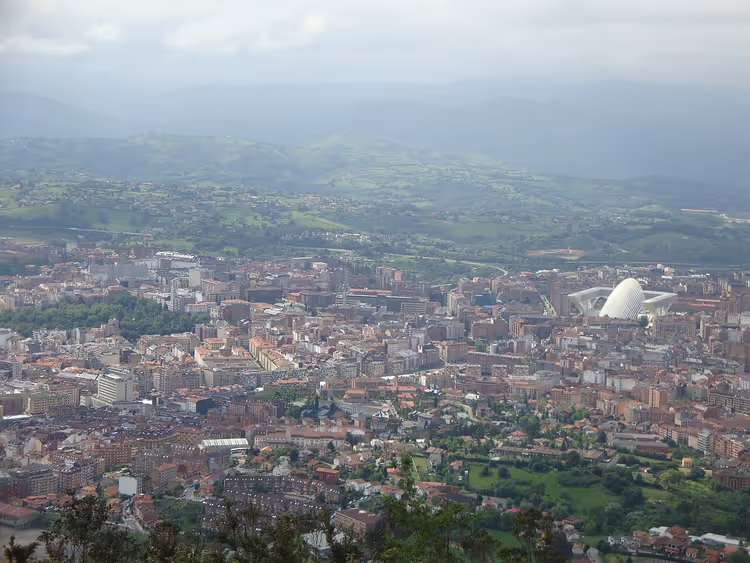 © Frobles · CC BY-SAPhoto: Frobles, CC BY-SA (https://creativecommons.org/licenses/by-sa/4.0), Wikimedia Commons
- Who it's for: those who want a European city with restaurants, not a beach day.
- The catch: the ocean is a half-hour drive away, not at your hotel doorstep.
Somiedo Natural Park
Somiedo Natural Park lies on the northern side of the Cantabrian Mountains and is protected by UNESCO as a biosphere reserve. Dense forests, cliffs, green meadows and abandoned shepherds' huts come together here.
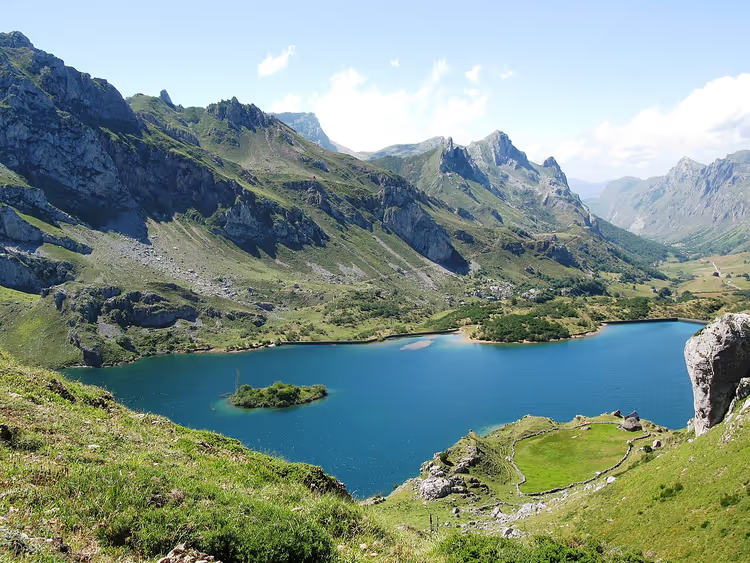 © ALusitana · CC BY-SAPhoto: ALusitana, CC BY-SA (https://creativecommons.org/licenses/by-sa/3.0/es/deed.en), Wikimedia Commons
Somiedo remains one of the few places in Europe where brown bears live in the wild. There are few tourists here even in August, and the trails are easy to start from Pola de Somiedo and Valle de Lago.
- Who it's for: hikers and lovers of wild nature.
- The catch: without a car, getting to the trailheads is almost impossible.
Cudillero
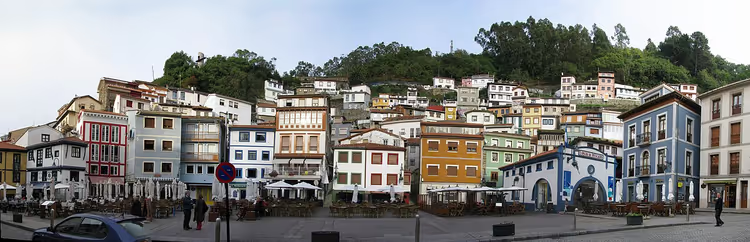
Cudillero lies about sixty kilometers from Oviedo (as the crow flies) and is considered the most picturesque village in Asturias. Colorful houses cascade down the slope to a small harbor.
 © charles lecompte · CC BY-SAPhoto: charles lecompte, CC BY-SA (https://creativecommons.org/licenses/by-sa/3.0), Wikimedia Commons
The village is touristy, but that hasn't spoiled its relaxed atmosphere. Cliffs and good beaches stretch all around, so it's worth arriving in Cudillero in the morning and leaving time for a walk along the coast. Get there by nine, before the tour groups arrive.
- Who it's for: couples and photographers who care more about the view than the infrastructure.
- The catch: in summer, the narrow alleys and viewpoints get crowded.
Tito Bustillo Cave
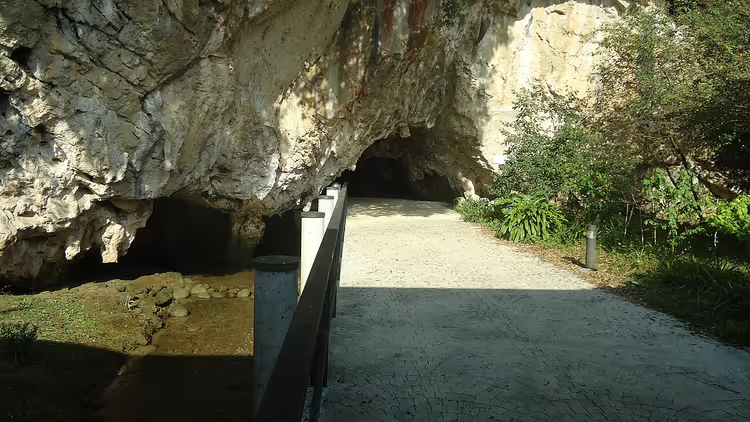
The Tito Bustillo Cave contains some of the oldest cave paintings in Spain: the oldest are about 43,000 years old, the youngest about 11,000. A ticket costs €4.14, reduced €2.12, and groups are limited to fifteen people (as of 09/2026, official ticket sales for Tito Bustillo Cave). The cave is open from March 4 to October 30, 2026, Wednesday through Sunday, with sessions from 10:15 to 17:00, closed on Mondays and Tuesdays (as of 09/2026, official ticket sales on the Asturias tourism office website).
 © Falconaumanni · CC BYPhoto: Falconaumanni, CC BY (https://creativecommons.org/licenses/by/3.0), Wikimedia Commons
That's why you should book entry online in advance, especially for weekends. If sessions are sold out, go to the Centro de Arte Rupestre Tito Bustillo: replicas, videos and displays give you a good sense of the cave.
- Who it's for: those interested in ancient art who are willing to book entry.
- The catch: fifteen people per session and being closed on Mondays and Tuesdays severely limit your date options.
How to get to Galicia and Asturias
By car from Germany to Asturias is about 1,650 km, to Galicia about 1,900 km (as the crow flies). That's two long days behind the wheel with an overnight stop in France, but you have complete freedom in your route.
Flying is faster. The main gateway to Galicia is Santiago de Compostela Airport, while Asturias is served by Asturias Airport between Oviedo, Gijon, and Aviles (as of Aena, 09/2026). There are almost no direct flights from Germany to Asturias, so tickets usually involve a connection in Madrid or Barcelona. Compare flight prices on Kiwi.com in advance: tickets for August typically get more expensive.
Within the region, trains and buses connect the major cities, but they don't get you to beaches, lighthouses, or mountain villages. If you're flying with luggage and continuing to the coast, calculate your transfer in advance.
Tours and tickets in Santiago de Compostela
Guided tours, skip-the-line tickets and activities — most offers can be cancelled free of charge.
See offers on KiwitaxiThe widget loads once you give your consent.
Climate of Galicia and Asturias
Northern Spain has a mild maritime climate. Daytime temperatures rarely exceed twenty-five degrees, but it rains more often than in Andalusia. The Atlantic brings humid air, which is why Galicia and Asturias are greener than the rest of the country.
The swimming season is short. The weather here is changeable. Bring a windbreaker and an umbrella: in any month, the weather can turn within a couple of hours.
Best time to visit
The best months for a trip are May through October: warm during the day and less rain than in other months. Spanish vacationers love the northern coast, so in August hotels get more expensive and beaches fill up.
If you're looking for quiet, come in late September or in June. In May and September, walking the Camino is comfortable: fewer crowds and milder weather. In winter, the north is lively and cheap, but only the hardiest will swim in the ocean. Book in advance.
⁉️🤔 Frequently asked questions
Do I need a permit to visit the Cies Islands?
Yes, from May 15 to September 15 you need a permit from the Xunta de Galicia (as of 09/2026, island visit rules). For the 2026 season, permits were issued almost 21,000 times (as of Faro de Vigo, 05/2026).
How much does it cost to enter Tito Bustillo Cave?
A regular ticket costs 4.14 EUR, a reduced ticket 2.12 EUR (as of 09/2026, tickets and schedule).
Is entry to Santiago de Compostela Cathedral paid?
No, entry to the cathedral is free (as of 09/2026, opening hours and tickets on the cathedral website). In summer, the cathedral closes earlier on Saturdays due to evening mass.
How many days should I plan for Galicia and Asturias?
A week is optimal: two to three days for Galicia with Santiago de Compostela and the islands, the same for Asturias, and one day for travel between the regions. If you want to walk part of the Camino and see the Costa da Morte, plan for ten days. The regions are small, so extra days are better spent on the coast.
Should I travel around northern Spain by car or by train?
A car is more convenient. Trains connect A Coruna, Vigo, and Oviedo, but they don't reach the lighthouses, Ribeira Sacra, or the Somiedo mountains. Pick up a car at the airport if you plan to visit more than two stops on your route. Without a car, choose one base and get around by bus.
In short: what to book
Northern Spain requires planning: accommodation and cave entries get booked up in advance. Choose the option that fits your scenario.
- If you're going for the cathedral and the Camino, book a hotel in central Santiago de Compostela in advance.
- If you're planning a route through lighthouses and canyons, rent a car at the airport.
Book accommodation and tickets in advance: in August, prices on the northern coast go up, and permits for the Cies Islands run out the fastest.

A small editorial team writing guides for independent travel. We travel ourselves, but we haven’t been everywhere, so we check prices, opening hours and how to get there against official sources.