








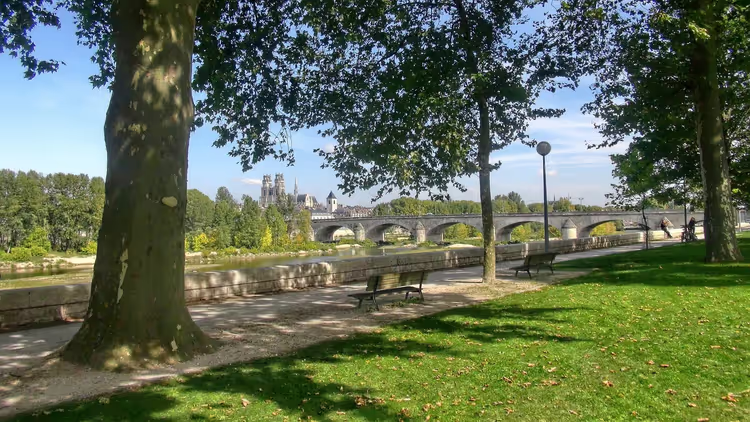
Loire à Vélo: 6 days and 330 km from Tours to the Atlantic
From the center of France to the Atlantic runs one of Europe's most relaxed bike routes. La Loire à Vélo follows the Loire, the continent's last great wild river, almost the entire way on a gentle downhill grade toward the sea. The section from Tours to Saint-Nazaire is about 330 km of flat riding, typically done in six days (according to the official La Loire à Vélo website, 09/2026).
Here you'll find a stage-by-stage route, the châteaux along the way, and practical tips: when to go, how to get there by train, and what to do at the Saint-Nazaire bridge.
Ad: this article contains affiliate links, we earn a commission if you book through them, at no extra cost to you.
Loire à Vélo: the route along the Loire to the Atlantic
💡 In short:
- The section from Tours to Saint-Nazaire: about 330 km over 6 days, almost the entire way on a gentle downhill grade toward the sea.
- The route is signed as La Loire à Vélo (part of EuroVelo 6) and runs mostly on dedicated bike paths.
- Best time: late spring and early fall; in high summer it's hot and crowded.
- Don't ride across the Saint-Nazaire bridge on a bike: there's a shuttle and a bus with bike spaces.
- Route, trains, and river crossing: 09/2026, according to the official La Loire à Vélo guide.
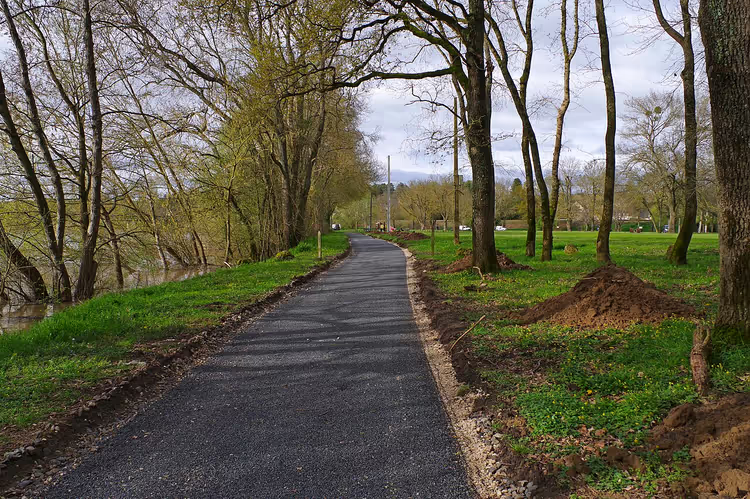 © Daniel Jolivet · CC BYPhoto: Daniel Jolivet, CC BY (https://creativecommons.org/licenses/by/2.0), Wikimedia Commons
The Loire is France's longest river: about 1,012 km from the Massif Central in the southeast to the Atlantic. The bike route follows its course, which is why it's almost entirely flat. The whole way, you stay close to the water.
The middle Loire is a UNESCO site known as the "Valley of the Kings." The name comes from the hundreds of châteaux along the river. Estimates range from 300 to 400. Some sit right on the route.
Between rivers, the route dips into small villages away from main roads. Here you see everyday rural life in France. Houses with roses on their facades and quiet streets are one of the trip's real strengths.
The pace here is unhurried. You're not chasing speed; average numbers don't matter. Many people cover a stage in half a day and spend the rest walking around small towns and stopping in villages along the way.
The route also passes through cities, each with its own character. The journey starts in Tours, in the heart of the Loire Valley, easy to reach by direct train from Paris. Next comes Angers with its famous medieval tapestry. At the end stands Nantes, an old port city that has been noticeably revitalized. In between are smaller centers like Chinon and Saumur, known for winemaking.
The finale waits at the sea. The Loire meets the Atlantic in historic Brittany. Few bike routes end right at the ocean, and that contrast stays with you.
If you add one more day to the six-day route, you can ride to the salt gardens on the Guérande peninsula. Salt is still harvested there by hand.
Now about the route itself. The entire La Loire à Vélo stretches roughly 900 km from Nevers to the Atlantic (according to the official website, 09/2026). It's the western segment of EuroVelo 6, the long route from the Atlantic to the Black Sea. The official start is in Nevers, but many people join the route in Tours: from there it's about 330 km to the sea, and the whole way follows the current. The La Loire à Vélo and EuroVelo 6 signage overlaps, so getting lost on the main line is nearly impossible.
The ride from Tours to the coast is about 330 km. A loop through Nantes adds roughly 15 km more. The route is flat. You roll almost the entire time on a gentle downhill grade, following the river.
The route suits a relaxed pace. Stages range from 38 to 70 km, and you decide how far to ride each day. There are almost no climbs: you follow the river to the sea the whole way. Most of the route runs on dedicated bike paths. You share the road with cars rarely, and only on quiet sections. The gravel stretches are well packed and easy to ride.
La Loire à Vélo signs appear the entire way, so getting lost is hard. Only on a few kilometers of the final stage is it worth checking a bike navigation app. The official route website publishes current conditions for each section.
Before setting off, it's handy to download GPX tracks and keep a map on your handlebars. That way you don't waste time at junctions and you can see points of interest near the road.
The full route map with stages, elevation profiles, and GPX files is published on the same official website. It's also the best place to check schedules and river crossings before your trip.
How an organized Loire bike tour works
A long-distance bike trip abroad can be done two ways. Put everything together yourself, or take an organized tour. With a package tour, the route is already planned, accommodations are booked, and your luggage is transported from hotel to hotel. For a trip in a foreign country, that takes a real load off.
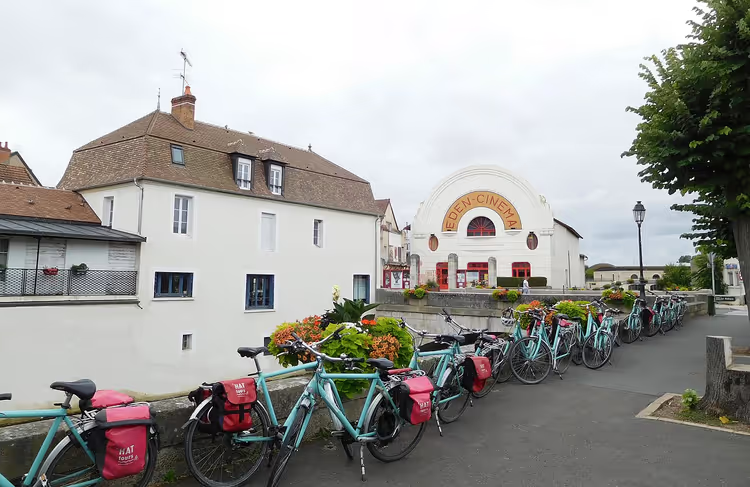 © Cjp24 · CC BY-SAPhoto: Cjp24, CC BY-SA (https://creativecommons.org/licenses/by-sa/4.0), Wikimedia Commons
The first question abroad: where to get a bike. Bringing your own across half a country is inconvenient. The operator provides a reliable rental bike at the start, so you don't have to find one on the spot. That matters: you want to be able to fully count on the rental.
The second question: how to get the bike back to the starting point. On a linear route from Tours to the sea, this isn't obvious. Bringing your own bike on a linear trip like this is tricky: you'd have to return it to Tours from Saint-Nazaire. On a package tour, you simply leave the bike at the last hotel, and the operator handles the return logistics.
It's useful to have a local contact. If something goes wrong in a foreign country, phone support is a lifesaver. Bike tour operators usually have a network of partners along the route.
A separate task is the route itself. Finding a detailed description of La Loire à Vélo outside of French can be hard. A package tour gives you a stage-by-stage guidebook with points of interest and GPX files in advance. That's convenient when you don't have time to plan it yourself.
It's handy to keep a printed guide or an app with a map on your handlebars. That way you can see what kind of landscape you're riding through. And you won't miss turns at junctions.
The comfort of a trip like this also comes down to lodging. With a package tour, hotels are right on the bike path or in the city center. Some of them are small, stylish places that are hard to find on your own.
Luggage transfer between hotels removes the last worry. You ride light, and your things are waiting at the next overnight stop. You get used to that service quickly.
You can put together a similar trip on your own or through bike tour operators. Ready-made bike tours and day trips to the Loire castles are easy to compare in advance: Loire bike tours and excursions on GetYourGuide.
Route stages: 6 days from Tours to Saint-Nazaire
The classic plan is six days from Tours to Saint-Nazaire. With travel there and back, the total comes to about eight days. Below are the main stages with distances so you can gauge your daily load.
 © User:Rama - Stitching done by esby · CC BYPhoto: User:Rama - Stitching done by esby, CC BY (https://creativecommons.org/licenses/by/2.0), Wikimedia Commons
Stage 1: from Tours to Chinon (61 km)
The first day is 61 km from Tours to Chinon. Near the start stands the Château de Villandry with its geometric gardens. The road quickly drops down to the river and then follows the water. Getting up to speed on the first day is no problem.
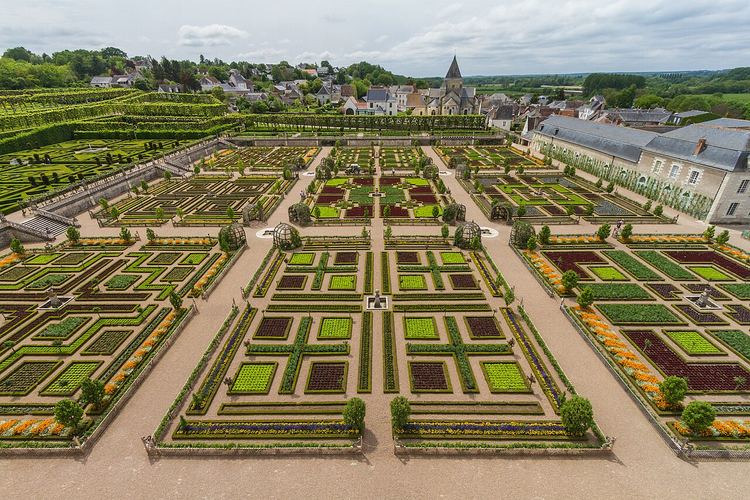 © Benh LIEU SONG · CC BY-SAPhoto: Benh LIEU SONG, CC BY-SA (https://creativecommons.org/licenses/by-sa/4.0), Wikimedia Commons
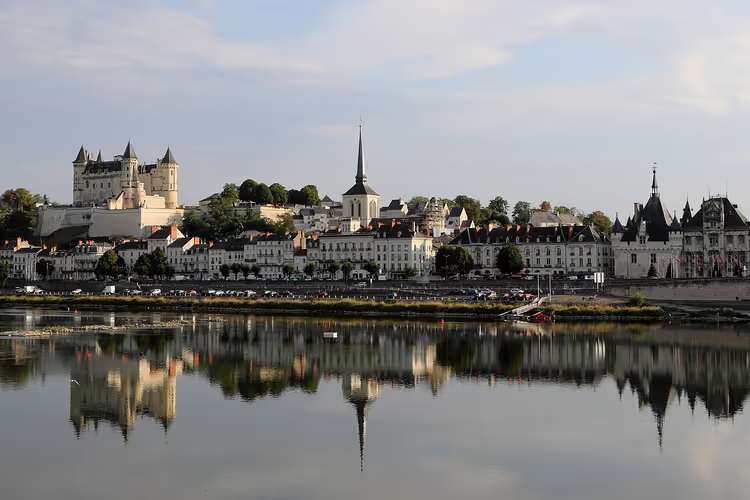
Stage 2: from Chinon to Saumur (38 km)
The shortest day: just 38 km to Saumur. Chinon and Saumur are small towns with half-timbered houses and wine cellars. Here winemaking shapes the look of the area: cellars are dug directly into the tuff cliffs. The short stage leaves time for a walk through the old town.
 © Martin Falbisoner · CC BY-SAPhoto: Martin Falbisoner, CC BY-SA (https://creativecommons.org/licenses/by-sa/3.0), Wikimedia Commons
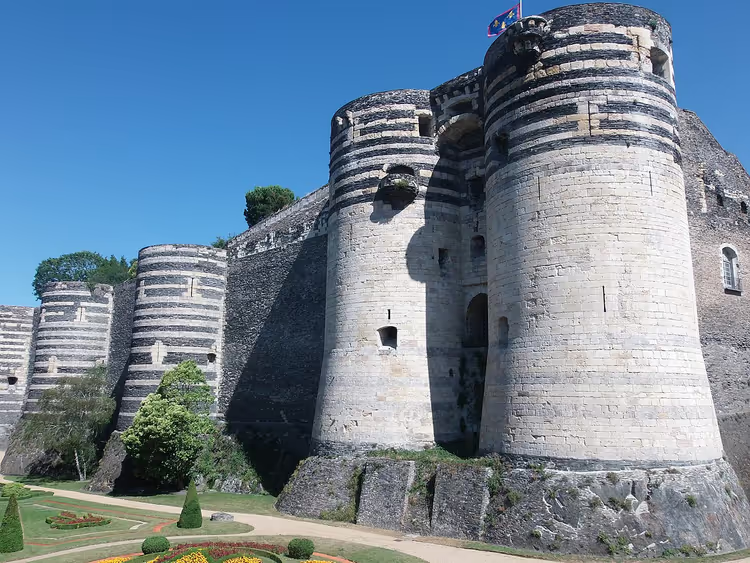
Stage 3: from Saumur to Angers (59 km)
The third day is 59 km to Angers. The city is home to a massive castle with one of the most famous medieval tapestries in France. Angers is full of life and makes a good stop. It is a comfortable place to catch your breath.
 © Nataloche · CC BY-SAPhoto: Nataloche, CC BY-SA (https://creativecommons.org/licenses/by-sa/4.0), Wikimedia Commons
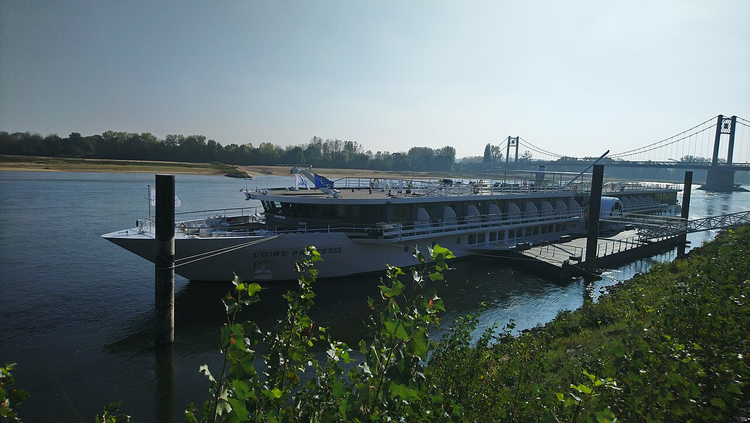
Stage 4: from Angers to Ancenis (70 km)
The longest stage: 70 km to Ancenis. The road runs along the wide Loire past small villages. Ancenis is a quiet little town on the riverbank, a convenient overnight stop before Nantes. Plan your energy for this day in advance. Bring extra water and food.
 © Llann Wé² · CC BY-SAPhoto: Llann Wé², CC BY-SA (https://creativecommons.org/licenses/by-sa/4.0), Wikimedia Commons
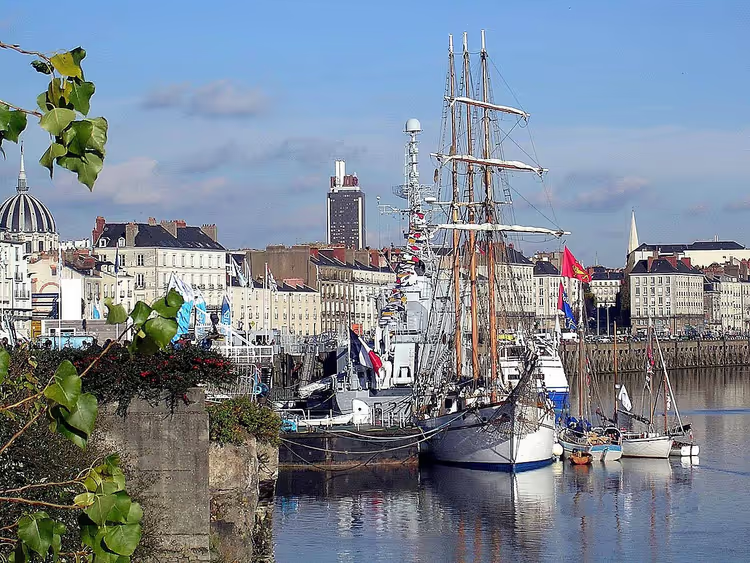
Stage 5: from Ancenis to Nantes (42 km)
The fifth day is 42 km to Nantes, plus about 15 km if you ride around the city itself. Nantes is an old port center that has been noticeably revitalized. It is a good place to linger for a day. The city deserves a separate walk.
 © Jibi44 · CC BYPhoto: Jibi44, CC BY (https://creativecommons.org/licenses/by/2.5), Wikimedia Commons
Stage 6: from Nantes to Saint-Nazaire (61 km)
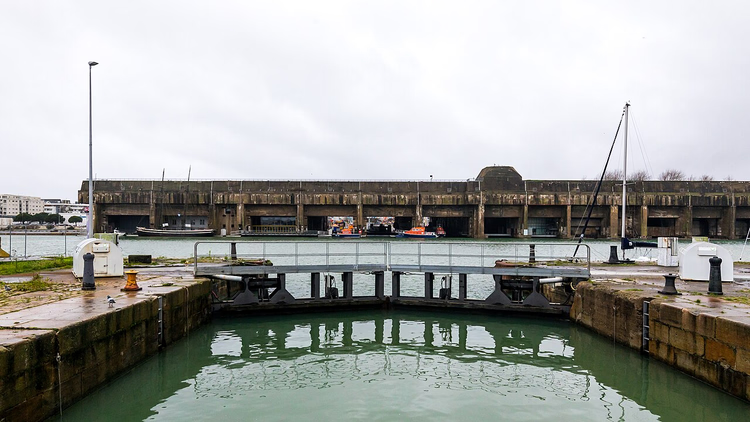
The final 61 km lead to the Atlantic. Over a few kilometers the signage is weaker, so keep your navigation ready. Saint-Nazaire sits right at the ocean, at the mouth of the Loire. Near the very end comes the question of crossing the Saint-Nazaire Bridge. More on that separately below.
 © Raimond Spekking · CC BY-SAPhoto: Raimond Spekking, CC BY-SA (https://creativecommons.org/licenses/by-sa/4.0), Wikimedia Commons
Sights along the route
Over six days in the saddle, you collect a lot of impressions. The route stays near the water almost the whole time, but the surrounding area is interesting too: castles, old towns, and the open ocean at the end. Here is what is worth seeing along the way and not missing.
 © papou37 · CC BYPhoto: papou37, CC BY (https://creativecommons.org/licenses/by/3.0), Wikimedia Commons
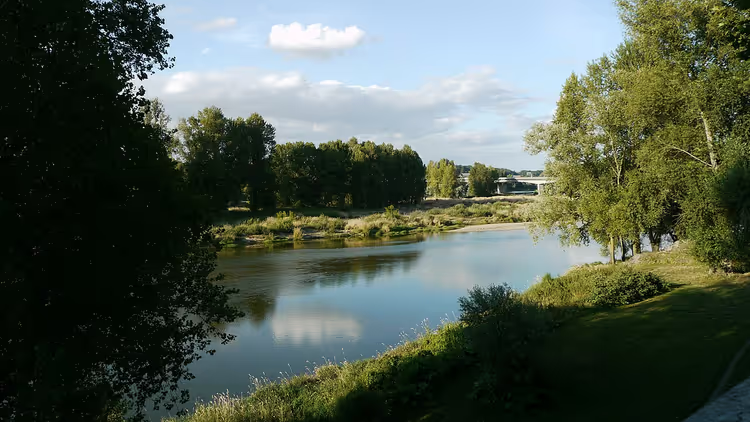
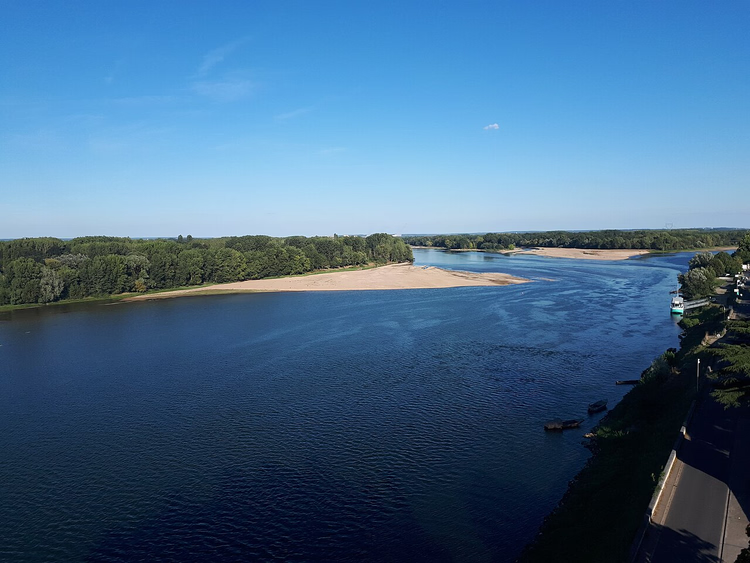
First of all, there is the Loire itself. The river spreads freely across a wide bed with sandbars and islands. You rarely see a sight like this today. On the route it opens up constantly.
Then there is the nature along the road. The bike route runs along the water or through floodplain meadows and forests, with the tributaries Cher, Vienne, and Maine flowing nearby. Birds hold to the banks, and in spring you can hear frogs. If you like calm natural scenery, you will feel at home here every day. There is no need to look for a separate park; the landscape changes on its own.
The châteaux of the Loire are a reason for the trip in their own right. At first they stand among fields, then they appear in town centers. First near the start comes the Château de Villandry, known for its geometric gardens on several levels. In Angers stands a massive city castle with the famous medieval tapestry. In Nantes it is the Château des Ducs de Bretagne right in the center of the old town. These are all different eras and styles, so even a couple of stops is enough for contrast. If you want more castles, the Loire has a separate loop route built entirely around them.
The cities and towns hold your attention too. Angers and Nantes are full of life. Chinon and Saumur in the heart of the valley greet you with old half-timbered quarters. Here wine sets the tone: the light tuff used for the houses also goes into the wine cellars in the cliffs. Nantes at the end of the route looks different. The former port city has been noticeably revitalized and lives by modern culture. This shift between the quiet valley and the big city makes the finale more interesting. It is a piece of real France without extra polish.
Along the way you come across small settlements from the Petites Cités de Caractère list. Roses climb the tuff house walls, old boats sit by the water. There are few tourists, and the places keep their ordinary rhythm.
Here people still greet each other on the road. A short "Bonjour" rings out several times a day; in the big cities it no longer does. This simplicity is noticeable both on the road and at stops.
A reward awaits at the end. A resident of Central Europe does not often see the Atlantic, especially in historic Brittany. On the Côte Sauvage, a walk along the shore helps settle the impressions of the last few days. Breton fishing towns stand here, old boats lie at the docks, and a path runs along the cliff above the ocean. After the valley and the river, the sharp change of scenery is especially striking.
Ready-made excursions and bike tours of the Loire castles and towns can be found in the selection below.
Tours and tickets
Guided tours, skip-the-line tickets and activities — most offers can be cancelled free of charge.
See offers on GetYourGuideThe widget loads once you give your consent.
Practical planning tips
Even on an organized tour, a few questions come up before a long bike trip. Here are the main pointers for planning a route along the Loire.
 © Suavemarimagno · CC BY-SAPhoto: Suavemarimagno, CC BY-SA (https://creativecommons.org/licenses/by-sa/4.0), Wikimedia Commons
Best time to go
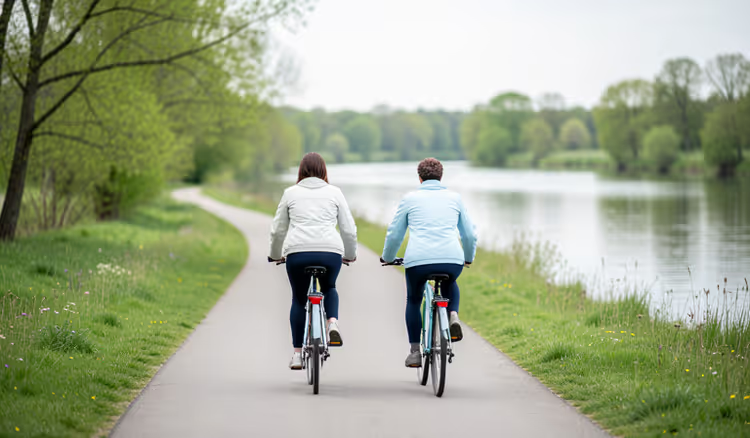
Do not go in the middle of summer. La Loire à Vélo is a popular long-distance route, and in the heat it gets packed. Late spring and early fall are more comfortable: the weather is milder and there are fewer people. Even in early May the season is just opening and the trail is empty. Though on open stretches with no shade it can already feel stuffy then. The loop route through the Loire chateaux is usually more crowded than the path to the Atlantic, so heading toward the sea is quieter even in peak season.
 AIIllustrative image: AI-generated
Getting there by train
Tours is easy to reach by train from Paris, and on the way back a TGV runs from Saint-Nazaire. Along the route there are stations in Saumur, Angers, Ancenis, Nantes, and Saint-Nazaire, so in bad weather you can shorten a stage. A dedicated Loire à Vélo train with bike spaces runs on the Orléans, Tours, Nantes, Le Croisic line, mostly on weekends. From May 1 to September 27, 2026, booking a bike space is mandatory, and you can reserve it online in advance (according to the official La Loire à Vélo route guide, 09/2026). Compare schedules and tickets ahead of time: see train ticket options.
Headwinds on the route
The main challenge of the route is the wind from the Atlantic. Many French riders go the other way precisely because of it. The slight downhill toward the sea does not make up for a headwind. But from east to west the wind is usually light and only noticeable in the final days. On the straight 11-kilometer stretch along the Martinière canal it gets the most annoying. Before setting out, check the forecast in the Windy app.
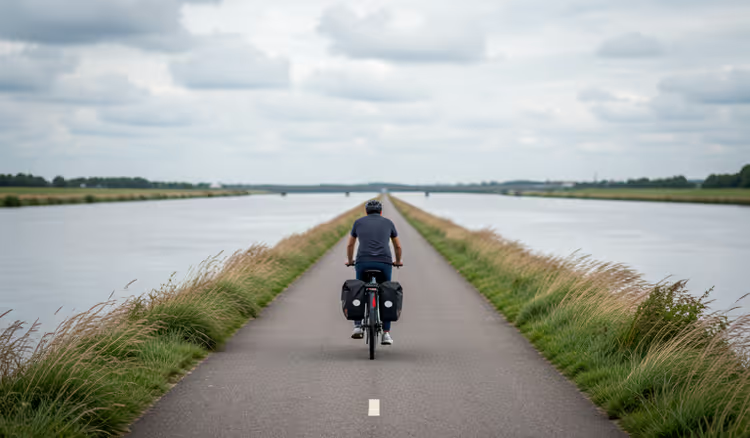 AIIllustrative image: AI-generated
Midday heat and water
More than the wind, the midday sun is what wears you down. On stretches away from the river, among fields and on dikes, there is almost no shade and nowhere to stop. Bring enough water. Supermarkets along the road are rare, and in rural areas they keep their own hours. Stock up on water and food before each day of riding. A hat and sunscreen are also worth having: on the dikes you ride through open terrain for hours.

Chateaux on this route
There are fewer chateaux here than on the separate loop route through the Loire chateaux. But the path from Tours to the sea still has some highlights. The most impressive are Villandry near the start and the city chateaux in Angers and Nantes. The Villandry gardens are open almost year-round; check hours and prices on the chateau's official website (as of 09/2026).
Where to take a break
The usual bike stops with cafes, like in Austria or Germany, are almost nonexistent on the first part of the route. Further on you start to come across guinguettes, simple seasonal spots by the water where you can grab a bite and sit under the trees. Watch the hours: many open only from lunchtime, and in spring not all of them are running yet. There are few cafes along the road, so keep water and snacks with you and plan breaks ahead.

Crossing the Saint-Nazaire bridge
At the end of the route a question comes up: how to cross the Saint-Nazaire bridge. Riding a bike across it is not recommended because of strong winds and heavy traffic. In summer, in July and August, a shuttle minibus runs for cyclists for a small fee (according to the official La Loire à Vélo page on the crossing, 09/2026). Year-round, a regular bus runs between Saint-Brevin and Saint-Nazaire: the trip takes about 15 to 20 minutes, and there are only a few bike spaces inside. Tandems and cargo bikes are not accepted.
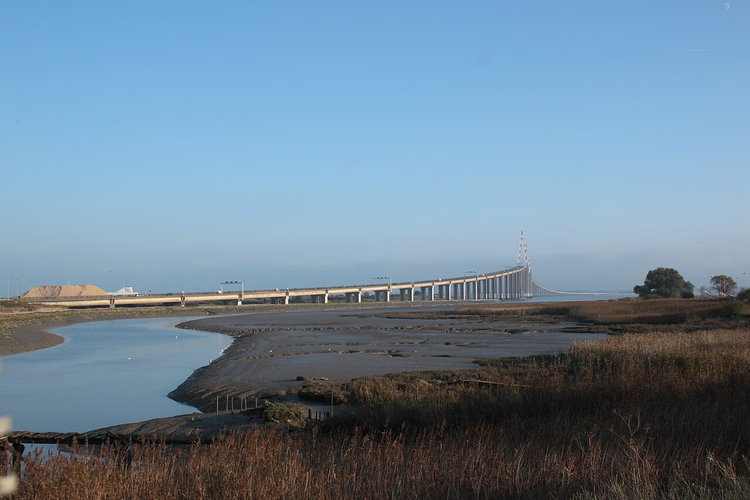 © Llann Wé² · CC BY-SAPhoto: Llann Wé², CC BY-SA (https://creativecommons.org/licenses/by-sa/4.0), Wikimedia Commons
Bus and shuttle seats need to be booked in advance. Check the crossing schedule right up to the last day. It determines what time you leave your final overnight stop.
Accommodation along the route
It is easier to look for hotels right on the bike path or in city centers. That way you avoid riding extra kilometers at the end of the day. Cities like Tours, Saumur, Angers, and Nantes have the widest selection, while small villages offer few options. Book ahead in season: places right by the path go fast, especially on weekends. If you are on an organized tour, accommodation is arranged for you and is usually located at a convenient point in the stage.
Language on the route
English generally works. But in small towns like Chinon or Saumur, it does not always save you. A few phrases in French definitely will not hurt. Simple "bonjour", "merci", and "s'il vous plaît" make communication noticeably easier in cafes and at markets. Locals welcome cyclists warmly and are attentive on the road.
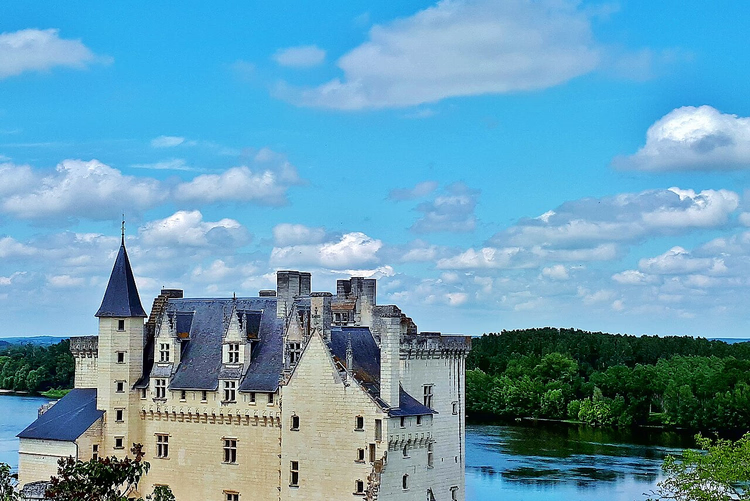 © Philippe49730 · CC BY-SAPhoto: Philippe49730, CC BY-SA (https://creativecommons.org/licenses/by-sa/4.0), Wikimedia Commons
France is the country of the Tour de France, so cyclists are treated with respect here. On narrow roads, drivers usually pass you carefully. That adds peace of mind to the trip.
⁉️🤔 Frequently asked questions
How many days does the route from Tours to Saint-Nazaire take?
The classic plan is six days in the saddle, about 330 km. With travel from Paris and back, allow about eight days. The stages are short, from 38 to 70 km, so the pace stays relaxed even with stops in towns.
When is the best time to ride La Loire à Vélo?
Late spring and early fall are optimal. In high summer the route is crowded, and open sections without shade are tough in the midday heat. In early May the season is just starting: the weather is mild and the trail is still free of crowds.
Can you cross the Saint-Nazaire bridge by bike?
Riding across the bridge is not recommended because of wind and traffic. In summer a shuttle operates for cyclists, and year-round a bus with bike spaces runs between Saint-Brevin and Saint-Nazaire. You need to book a spot in advance, so check the schedule right up to the last day.
How physically demanding is the route?
The trail is almost flat: you roll gently downhill all the way, following the river. There are almost no climbs, and most of the route runs on dedicated bike paths. Headwinds are noticeable only on the final stages near the coast, so the pace suits even leisurely cyclists.
Do you need to know French?
Basic English is usually enough, but in small towns it does not always save you. A few French phrases make communication noticeably easier. Locals are friendly toward cyclists and happy to help on the road.
In short: what to book
The La Loire à Vélo route from Tours to the Atlantic is six relaxed days along Europe's last wild river. The flat road, castles along the way, and a finish at the ocean make it easy even for leisurely cyclists. The stages are short and the terrain is almost flat, so the pace stays comfortable. Decide two things in advance: accommodation near the path and the crossing over the Saint-Nazaire bridge.
- If you want a ready-made route: an organized bike tour with luggage transfer and hotel bookings.
- If you are planning on your own: download GPX tracks in advance, look for accommodation near the bike path, and book a bike space on the train.
- If you are heading to the sea: check the Saint-Nazaire bridge crossing schedule right up to the last day.
It is easier to plan the trip in advance. Compare hotels along the route on Trip.com and ready-made bike tours on GetYourGuide in the cities that suit you.
Also check train tickets with bike spaces separately: in season they get booked up in advance.

A small editorial team writing guides for independent travel. We travel ourselves, but we haven’t been everywhere, so we check prices, opening hours and how to get there against official sources.