















Pushkar Fair 2026: dates, camel market and bathing at the ghats
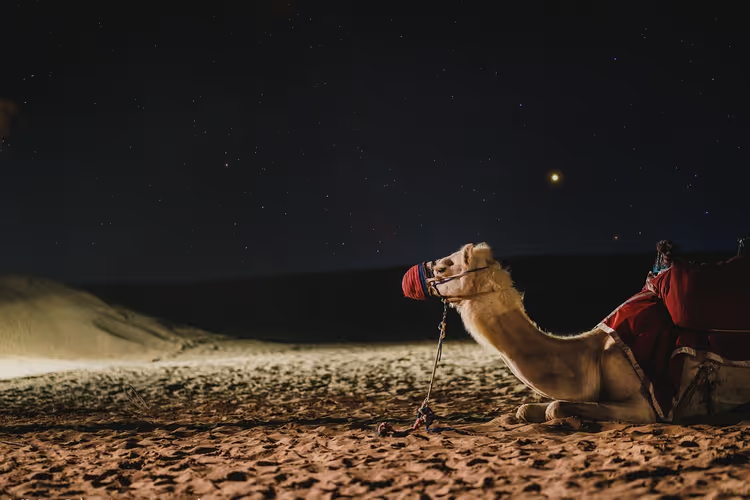
The Pushkar Fair begins with the creak of wheels. First, caravans arrive at the dunes: camels, horses, carts carrying families, and artisans' tents. A few days later, a tent city springs up beside them, and pilgrims from all over India stream toward the lake.
The fair's dates are tied to the lunar calendar, so they shift every year. In 2026, the fair runs from November 17 to 24, with the climax falling on the Kartik Purnima full moon on November 24 (As of 09/2026, fair calendar). For 2027, organizers are citing November 6-14.
The biggest mistake visitors make is arriving exactly for the official festivities. The camel trading happens in the first days, while the ceremonial part with dancing, music, and competitions starts later, after some of the herds have already headed back into the desert. If you want to see camel grooming and decoration, plan to arrive before the opening. If you want the stage and folklore, the official week is right for you.
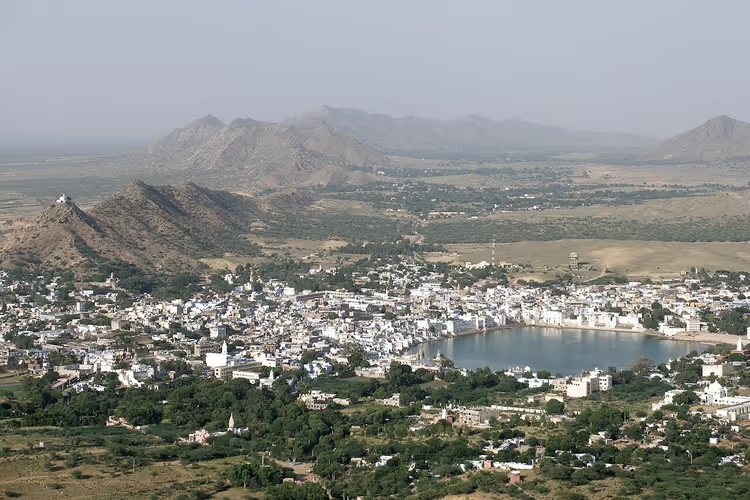
Pushkar sits in Rajasthan, three hours from Jaipur and half an hour from Ajmer. Dozens of ghats line the holy lake, the Brahma Temple rises above the town, and during the fair, hot air balloons lift into the sky. Below, we break down the calendar for two years, the order of days, the lake, competitions, logistics, accommodation, and safety.
Ad: this article contains affiliate links, we earn a commission if you book through them, at no extra cost to you.
Pushkar Fair: what kind of fair it is
💡 In short:
- Want the camel trading: arrive a few days before the official opening, while the herds and camps are still there.
- Want dancing, music, and competitions: go for the official week, when the town takes the stage.
- See the bathing and Maha Aarti at the ghats in the last two days, around the full moon.
- Book accommodation in Pushkar three to six months ahead: the center sells out first.
- The 2026 and 2027 dates were verified on 12.09.2026 on the fair calendar
 © Immanuelle · CC BYPhoto: Immanuelle, CC BY (https://creativecommons.org/licenses/by/4.0), Wikimedia Commons
The Pushkar Fair is held once a year, in November, on the dunes around the small town. Over the course of a week, India's largest camel market gathers here: livestock traders, pilgrims, and visitors from different countries.
The first half of the fair is devoted to animals. Livestock traders bring camels, horses, and cows, haggle, groom and decorate the animals before the competitions. The second half is more about people: dancing in saris, folk songs, drums and flutes, a town stage where everyone who came performs.
The fair's organizer, the Rajasthan Tourism Department, publishes the official dates and program. The calendar should be checked before your trip, because the dates depend on the full moon. According to the fair calendar, November in this area is dry and mild: warm during the day, cold in the desert at night.
For a visitor, the fair divides into three layers: the livestock market on the dunes, the spiritual part at the lake's ghats, and the entertainment program in town. All three are close together, because the town is small and the center is walkable.
On the same days, Pushkar also hosts a hot air balloon festival. We'll cover that later, in a separate section.
When to go: 2026 and 2027 dates
The fair runs for about eight days around the Kartik full moon, so it has no fixed date. In 2026, the fair runs from November 17 to 24, with the climax on November 24 (As of 09/2026, confirmed schedule).
 © Vyacheslav Argenberg · CC BYPhoto: Vyacheslav Argenberg, CC BY (https://creativecommons.org/licenses/by/4.0), Wikimedia Commons
For 2027, a different window is cited: November 6-14, with the Kartik Purnima full moon shifting to November 13 (As of 09/2026, fair calendar). Note that the difference from 2026 is almost a week and a half. So calculate tickets and accommodation from the specific dates, not from last year's experience.
The holiest day of the fair falls on Kartik Purnima. In the morning, pilgrims head to the lake, and in the evening, the Maha Aarti takes place at the ghats. The crowds at these hours are enormous, and the water's edge gets packed even on the approach. Come early or watch the ceremony from the far shore.
The full moon coincides with Dev Diwali in Varanasi, the festival of lights on the Ganges. If you're planning Rajasthan and Uttar Pradesh in one trip, check the dates of both events separately.
One more detail from the program: the trading and the cultural part overlap only partially. By the end of the week, most traders are already packing up their camps and heading into the desert. The cultural program, meanwhile, continues in town, and some hotels put on their own shows for guests.
When | What happens | Who it suits |
|---|---|---|
First days | Caravans arrive, camps grow, trading picks up | Those who want to calmly look over the animals and take photos |
Middle of the week | Trading at its peak, camel, horse, and cart competitions | Those who come for the market and the overall atmosphere |
Last two days | Pilgrims at the ghats, bathing, Maha Aarti | Those who come for the spiritual part |
Plan your arrival around your interests, not the opening date. A few days before the start, you'll see camels without the crowds, and at the full moon you'll catch the year's main ceremony.
Why you should arrive before the official opening
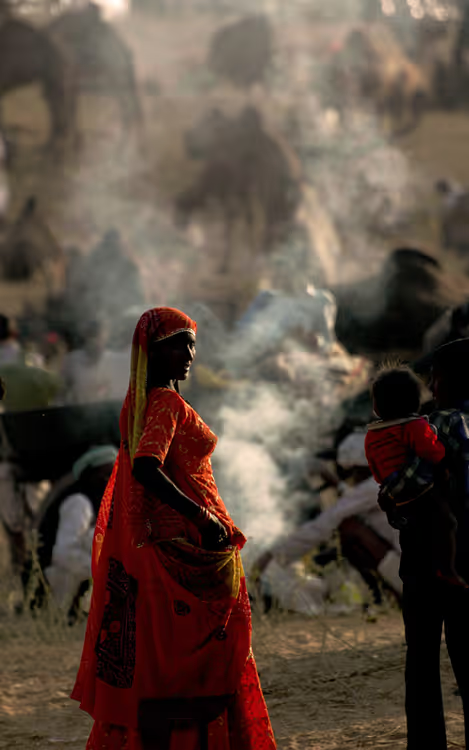
Livestock traders come to the dunes several days before the official opening. At this point, the camps are still growing, there's plenty of space, and the animals stand calmly. It's in these first days that you can see how the fair works from the inside.
 © Koshy Koshy from Faridabad, Haryana, India · CC BYPhoto: Koshy Koshy from Faridabad, Haryana, India, CC BY (https://creativecommons.org/licenses/by/2.0), Wikimedia Commons
Walk through the tent city. Vendors here sell crafts, fabrics, and jewelry you won't find in the town's shops, and many items are made right in front of you. This is how the fair looks before the buses of organized tours fill it up.
Take photos in the morning: the light is soft, and by midday the dunes are hot and dusty. In the first days, you can freely pick your spot and barely wait for the frame to clear.
For guests from Europe, organizers recommend booking a guided tour in advance. Groups get different terms at hotels and sites than solo travelers. If you try to book a good hotel in the center on your own, the price during the fair often turns out to be unexpectedly high.
Budget guesthouses remain an honest alternative: simpler conditions, an atmosphere closer to the city. There is still plenty of comfort. Tent camps on the outskirts offer a restaurant area, a reception desk and a private bathroom, and the price includes three meals and a desert safari.
 © Jakub Hałun · CC BY-SAPhoto: Jakub Hałun, CC BY-SA (https://creativecommons.org/licenses/by-sa/4.0), Wikimedia Commons
How caravans take over the dunes
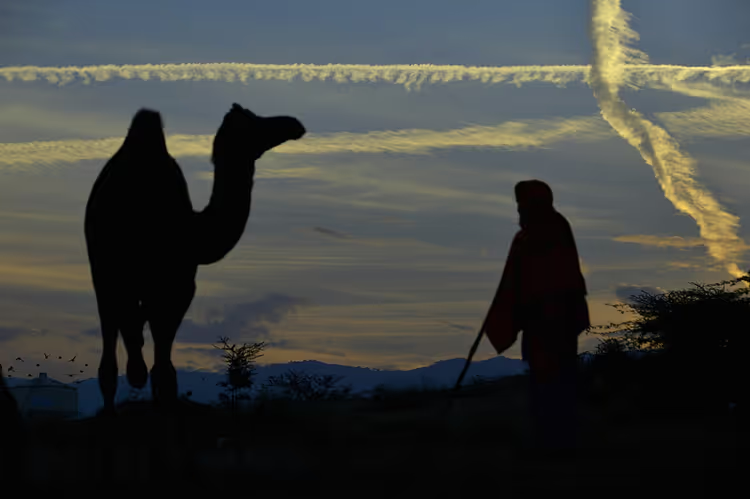
A few days before the start, the dunes stop being empty. Camels, herders and traders set up camps, the tent city grows every day, and new herds arrive at the edge of the fairground.
 © Rohit Kumar Batra · CC BY-SAPhoto: Rohit Kumar Batra, CC BY-SA (https://creativecommons.org/licenses/by-sa/4.0), Wikimedia Commons
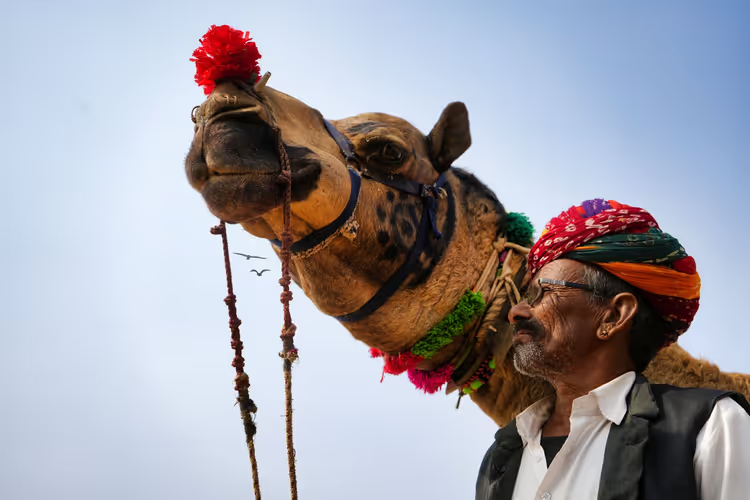
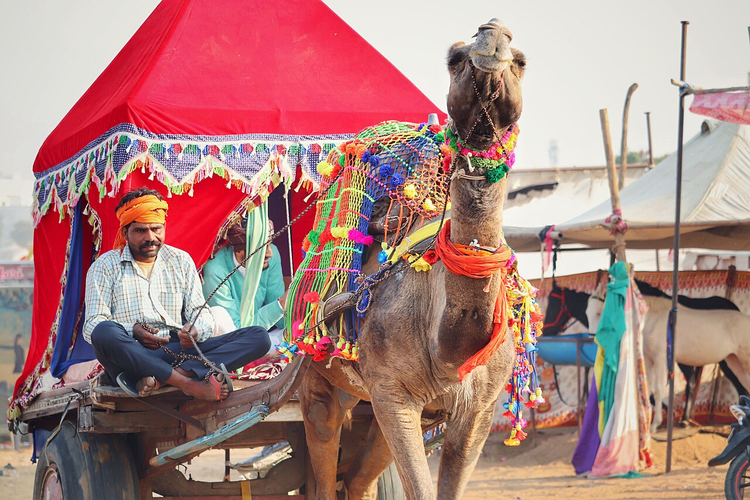
At this time you can walk freely between the camps. Herders react calmly to curious looks, camels stand in decorations, and food is being cooked over open fires nearby. The shots come out lively and without queues.
By midweek the picture changes. The crowd arrives, and the sound becomes dense: the roar of camels, the voices of traders, music and drums. From this point on, the fair runs at full speed, chaotic and very crowded.
Around the same time, some herders pack up and head into the desert to their families as soon as trading peaks. If you specifically want the animals and the market, arriving before the official opening solves everything.
 © V.K wikimats · CC BY-SAPhoto: V.K wikimats, CC BY-SA (https://creativecommons.org/licenses/by-sa/4.0), Wikimedia Commons
Contests and entertainment for visitors
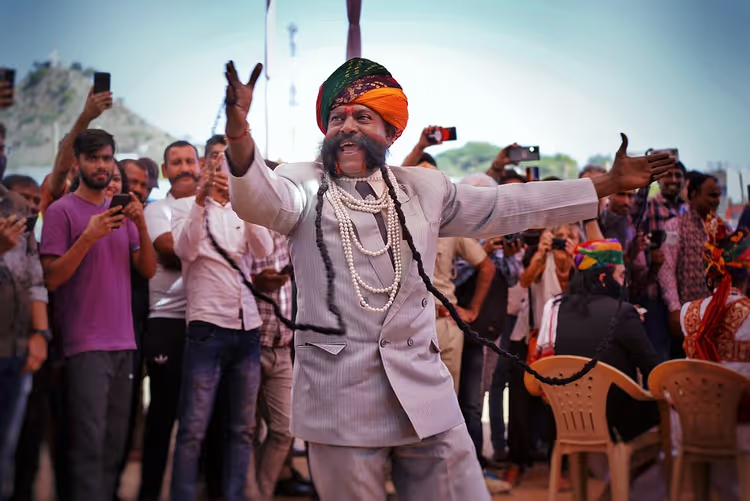
The program gets busier every day. The grounds host camel races, a bride contest, a competition for the longest mustache, and camel cart races. In between, craft stalls operate and wandering musicians perform.
 © Prajeshdutta · CC BY-SAPhoto: Prajeshdutta, CC BY-SA (https://creativecommons.org/licenses/by-sa/4.0), Wikimedia Commons
There is also classic fairground entertainment for visitors: carousels, music shows, folk dances and a best turban-tying contest. Both locals and visitors take part, so the grounds are noisy from morning to evening.
These days, pilgrims head to the temples and the lake: they perform ablutions, recite prayers and bring offerings. The crowd around the temple complexes grows with each day of the fair.
The grounds are huge, and shade is hard to find. In the heat, visitors rent carts and ride around the site under a canopy, looking at the stalls, camps and musicians. This way you see more and do not wear yourself out in half a day.
If you want to see the fair and Rajasthan with commentary, book tours and excursions on GetYourGuide in advance. A guide helps with both haggling and getting around the grounds.
Tours and tickets in Pushkar
Guided tours, skip-the-line tickets and activities — most offers can be cancelled free of charge.
See offers on GetYourGuideThe widget loads once you give your consent.
Sadhu and the Brahma Temple
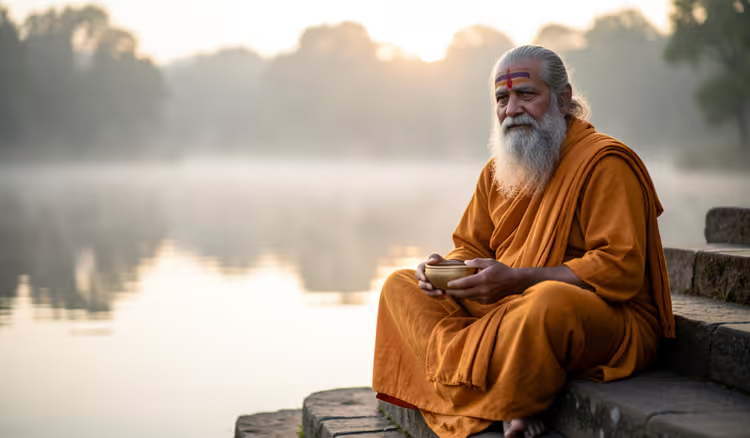
The city's spiritual life is visible at every turn. Sadhu and Baba, holy men of Hinduism, walk the streets and circle the lake. They have long beards, painted faces, and ochre robes, and often carry a small begging bowl in their hands.
 AIIllustrative image: AI-generated
Many strike up conversations with visitors and ask for a coin. Whether to give or not is up to you, and it is not an obligation. A couple of coins helps someone buy food, but no transaction is being made here.
The life of a Sadhu is hard. A person who chooses this path severs family ties and spends the rest of his life on pilgrimage: from city to city, from temple to temple. For a visitor, meeting them often becomes the defining impression of the trip.
Above the city stands the Brahma Temple, one of the few active temples in India dedicated to the creator god. It is the main site of its kind in the country, and during the fair there are lines to get in. Remove your shoes at the entrance, and it is best to put your camera away.
Near the temples you will meet performers dressed as gods. These figures are part of street life here, not a separate show for visitors. Ask permission if you want to photograph someone.
The sacred lake and ritual bathing
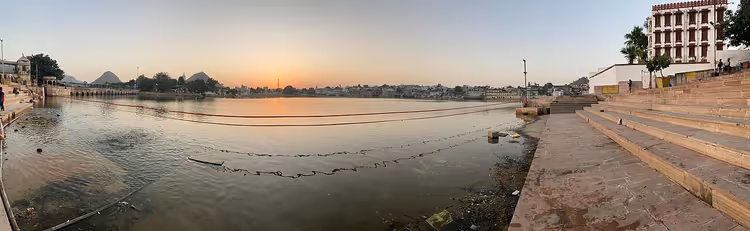
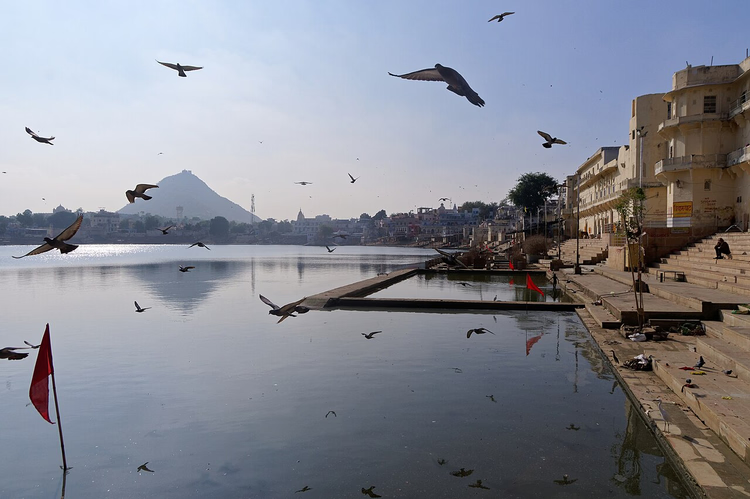
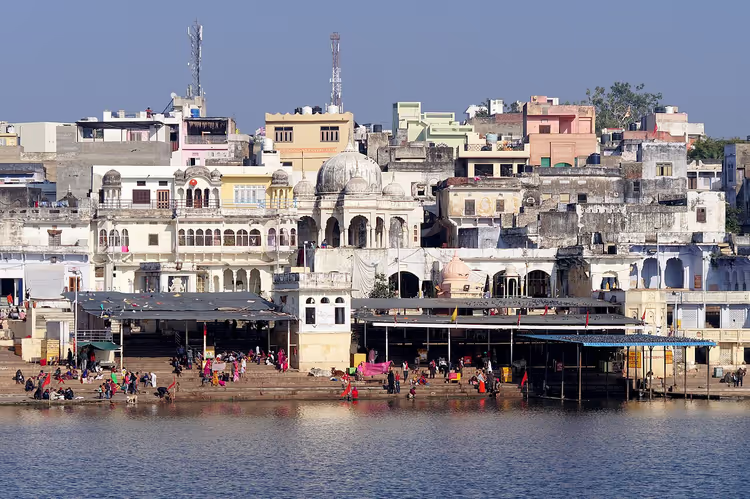
Pushkar Lake is considered one of the holiest sites in Hinduism. According to legend, a lotus flower fell from the hands of the god Brahma here, and a body of water appeared on that spot. Dozens of ghats, stone steps leading down to the water, line the shore, and each has its own significance.
During the fair, spiritual life reaches its peak on Kartik Purnima. Thousands of pilgrims enter the water to perform the sacred bath. Believers hold that the lake's water washes away sins and leads to moksha, final liberation.
The ritual's power on these days is considered exceptional: a single bath on the full moon is equated with hundreds of years of ascetic practice. That is why long lines form at the ghats, and people wait for hours to enter the water.
The best time to watch the ceremony is the two days around the full moon. In the evening, aarti takes place on the lake, a service with fire and chanting: lamps reflect on the water, and the air is filled with prayers and the ringing of bells. On the full moon, Maha Aarti is held, and pilgrims from all over India come to the ghats.
 © Jakub Hałun · CC BY-SAPhoto: Jakub Hałun, CC BY-SA (https://creativecommons.org/licenses/by-sa/4.0), Wikimedia Commons
Arrive at the service early and keep away from the steps down to the water. On the full moon the crowd is enormous, and spots near the steps are taken from the morning.
For believers, bathing in Pushkar becomes the main culmination of the pilgrimage, and for visitors a rare chance to see the ritual in its authentic form.
Hot air balloon flight over the fair
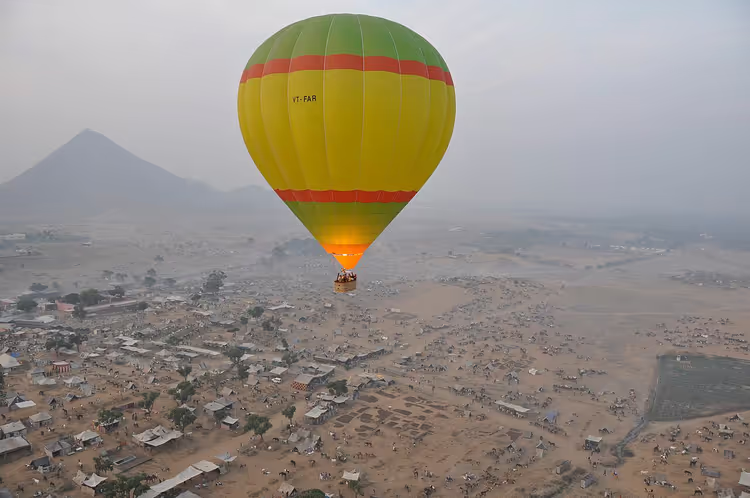
During the fair, Pushkar hosts a hot air balloon festival. Launches take place in the morning and evening, when the air is calm. The flight lasts about an hour, and it is best to book in advance because there are few baskets.
From above you see what is not visible from the ground. Dunes covered with camps, roads to the fairgrounds, herds of camels on the sand, and the city around the lake. The basket offers the best view of the entire trip, and photographers come here precisely for that.
Keep two things in mind. A morning flight means getting up before dawn, while an evening flight depends on the wind and may be canceled. Bring a windbreaker: it is colder at altitude than on the ground.
Kalbelia: dancers who imitate the cobra
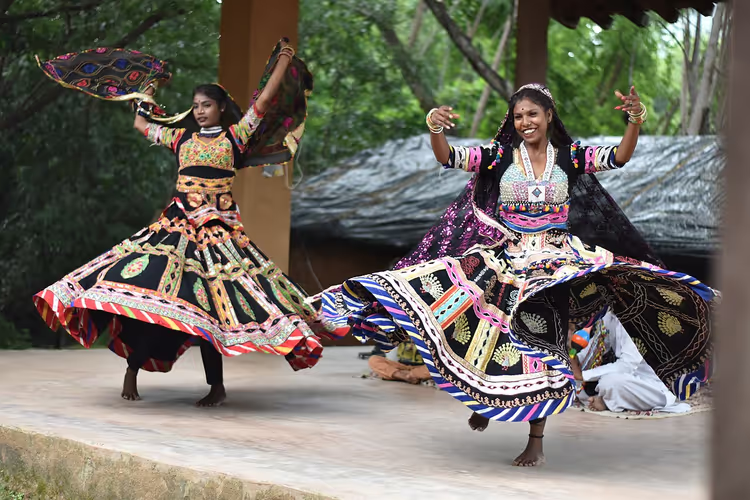
Among the pilgrims, traders, and visitors, a special group of performers stands out. The Kalbelia, known as the "snake people," bring color, rhythm, and music to the fair: their dances are known far beyond Rajasthan.
The Kalbelia were once a nomadic people who earned their living charming snakes. After bans and changes in the law, that trade disappeared, but the art survived in music and dance. Today their performances are recognized as part of the state's cultural heritage.
Most Kalbelia now live settled lives, often on the outskirts of cities, but the nomadic spirit is still felt in their daily life.
The dance imitates the movements of a cobra. To the sound of the pungi flute, the same one used in snake charming, dancers in saris move fluidly, while drums and voice keep the rhythm. The most famous element of the performance is called the backbend, and it requires years of training.
Stop for a couple of minutes by the stage, and the heat and the crowd will stop distracting you.
 © Kenneth Lewis · CC BY-SAPhoto: Kenneth Lewis, CC BY-SA (https://creativecommons.org/licenses/by-sa/4.0), Wikimedia Commons
Practical tips: accommodation, food, money
Accommodation in Pushkar gets booked up months in advance. It is advisable to book rooms and tent camps three to six months before the fair: hotels in the center of the small town sell out completely, and camps on the outskirts take the remaining guests (as of 09/2026, fair calendar).
There are two options. In the center there are guesthouses and small hotels within walking distance of the lake and the fairgrounds. On the outskirts there are tent camps with a restaurant area, reception, private bathrooms, and meals, often with a desert safari included in the program.
Compare options and check accommodation prices in Pushkar on Trip.com before your trip: on the ground, choices are already limited.
At the fair, street food is the norm: flatbreads, vegetable curries, samosas, sweets, and tea. Drink bottled water and choose stalls where food is cooked in front of you.
Try spicy dishes gradually, especially in the first days. If your stomach is not used to it, start with rice and vegetables, and save the exotic dishes for the middle of your trip.
Keep your money in two places, and carry small bills at the fairgrounds. Cash is useful for food, crafts, and cart rides, but you should not carry a large sum with you.
Safety rules are simple. Do not walk through the camps alone in the dark, keep your belongings close, and ask permission before photographing people. On the full moon there is a huge crush at the ghats, and during those hours it is best to stay away from the water.
If you are traveling alone, hire a guide or a companion. The fair is large, and Indian daily life takes getting used to: with a local escort you will sort out food, accommodation, and bargaining much faster.
How to get to Pushkar
The nearest airport is in Jaipur (JAI), about three hours by car from Pushkar. The second option involves a train to Ajmer station, and from there it is half an hour to the city (as of 09/2026, fair logistics).
Trains and buses run from Delhi and Jaipur to Ajmer, and it is convenient to check schedules in advance, for example trains to Ajmer on Trip.com. Book November tickets early: the fair coincides with the high season in Rajasthan.
Within the city you will hardly need transport. The fairgrounds, dunes, and lake ghats are within walking distance of the center, so you will cover most of the route on foot.
November in this area is dry and pleasant: warm during the day, cool in the desert at night. Bring long-sleeved clothing, high-SPF sunscreen, a hat, and shoes that are easy to take off: at temples and ghats, shoes are left at the entrance.
⁉️🤔 Frequently asked questions
When is the best time to go to the fair?
If you want camels and bargaining, come a few days before the official opening. The animals and camps are already on the dunes, and the crowd is still small. If concerts and competitions matter more to you, choose the second half of the week, when the program is running at full speed.
How do the first days differ from the official week?
In the first days you see the fair itself: caravans, bargaining, camel grooming, and quiet camps. The official week is more about the stage: dances, music, competitions, and shows at hotels. These two parts overlap only partially, so choose based on your interests and travel time.
Do I need to book accommodation in advance?
Yes, and the earlier the better. The city center sells out first, camps on the outskirts last longer, but even there almost no rooms are available on the full moon.
What happens on the full moon?
On Kartik Purnima, pilgrims perform the sacred bath in the lake, and in the evening Maha Aarti takes place on the ghats with fire and chanting. During those hours the water's edge is extremely crowded, so arrive early and keep away from the steps down to the water.
Do I need a guide at the fair?
If you are traveling alone, a guide or local companion will make the trip much easier. He helps with bargaining, accommodation, and food, and groups get different terms at hotels than solo travelers. On your first visit to India, this option makes sense.
Can I take photos?
Photography is allowed at the fair, but ask people for permission. Holy men and performers often ask for a coin for a photo. At the lake, do not photograph the bathing up close: for pilgrims it is a personal ritual, not part of a show.
In short: what to book
Pushkar Fair is worth planning ahead. Accommodation and trains around the full moon dates sell out first.
If you are short on time, come for the first two days for the camels and the market. If you are going for the atmosphere, take the official week with dancing and music. If you want the spiritual side, plan your days around Kartik Purnima.
The choice matrix is simple: for animals and bargaining, go in the first days; for the stage and folklore, go during the official week; for the holy dip and aarti, go on the full moon. Check the dates before you travel, because the fair is tied to the full moon and falls on different dates every year.
Book accommodation in Pushkar on Trip.com in advance while there are still options in the center and in camps on the outskirts.

A small editorial team writing guides for independent travel. We travel ourselves, but we haven’t been everywhere, so we check prices, opening hours and how to get there against official sources.