
















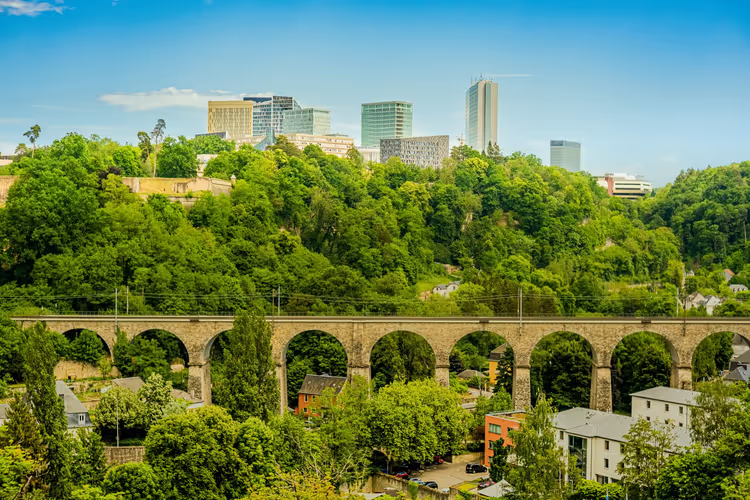
Rocky Luxembourg: casemates, lift and Grund quarter
Luxembourg can be covered in one day. The capital of the duchy sits on cliffs between the Alzette and Pétrusse rivers, and the entire historic center fits within a few blocks. The Upper Town stands on a plateau, the Grund quarter lies by the water, and between them are dozens of meters of sheer drop.
Public transport across the country is free. Buses, trams, and trains have been free since March 1, 2020, and this applies to tourists (according to the Luxembourg government). You don't need a ticket either in the city or when traveling to the border with Germany.
Below is a one-day itinerary: casemates in the cliff, the cathedral, palaces, the abbey in Grund, the philharmonic hall, and the fortress on the other bank. Allow two days for a relaxed visit with museums.
Ad: this article contains affiliate links, we earn a commission if you book through them, at no extra cost to you.
Upper Town: starting the route
💡 In short:
- Start at the top: the Upper Town gives you the overview, and you'll explore the Grund quarter from below later.
- Book your casemates ticket in advance and allow an hour for them.
- Public transport across the country has been free since March 1, 2020 (verified on the government website).
- Prices and opening hours: 09/2026, verified on the tourist office website.
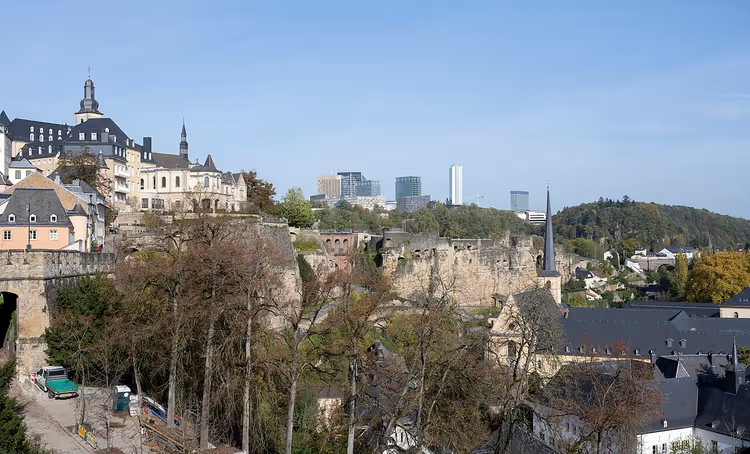
The Upper Town stands on a rocky plateau. It's the historic center and a free viewing platform: from the edge of the boulevard you can see the Grund quarter with its houses by the water.
Plan to start here. From Place d'Armes to the Grand Ducal Palace it's about a five-minute walk (per the map), and from there the cathedral and St. Michael's Church are just a stone's throw away. Then you head down to the river.
Half a day is more than enough for the Upper Town. Give the second half to the Lower Town and the fortress on the other bank.
 © Cayambe · CC BY-SAPhoto: Cayambe, CC BY-SA (https://creativecommons.org/licenses/by-sa/4.0), Wikimedia Commons
Notre-Dame Cathedral
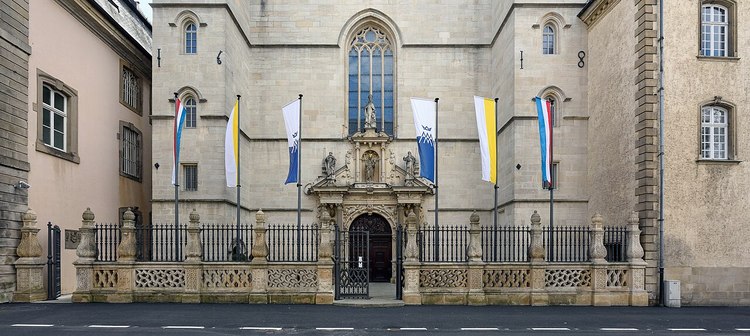
The cathedral combines late Gothic and Renaissance styles. On the facade, pointed Gothic windows sit alongside Renaissance portals, and inside you'll find two organs, marble columns, and stained glass.
 © Cayambe · CC BY-SAPhoto: Cayambe, CC BY-SA (https://creativecommons.org/licenses/by-sa/4.0), Wikimedia Commons
The cathedral houses the icon of the Virgin Mary "Comforter of the Afflicted." She is considered the patroness of the city, and during the Octave celebrations pilgrims walk to her in procession. Members of the ducal family rest in the crypt beneath the church.
Admission is free (according to the Luxembourg national tourist office, 09/2026). Opening hours vary by season, so check the schedule on the website before your visit.
St. Michael's Church
St. Michael's Church stands on the same hill, slightly below the cathedral. It's the oldest church in the city, and it got its current Baroque appearance after reconstructions in the 17th century.
The French Revolution left the building untouched.
The interior is modest. There are only two striking details: the stained glass and the chandeliers. Stop in for ten minutes on your way to the casemates.
 © Diego Delso · CC BY-SAPhoto: Diego Delso, CC BY-SA (https://creativecommons.org/licenses/by-sa/4.0), Wikimedia Commons
Casemates in the cliff beneath the city
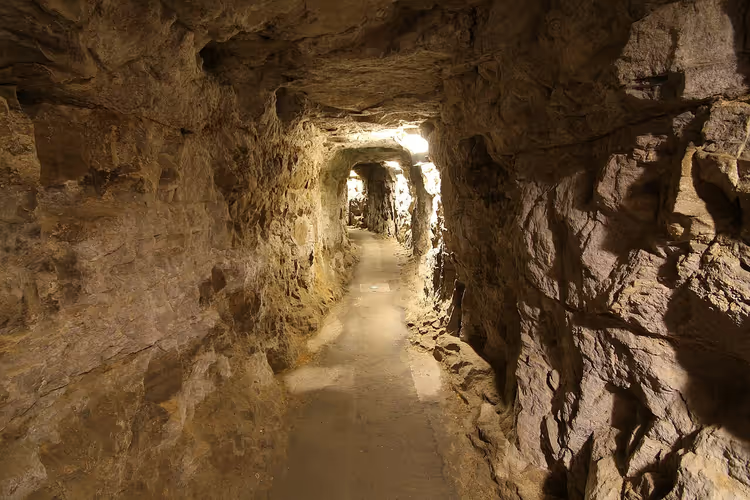
The casemates are carved directly into the rock beneath the Upper Town. Luxembourg's defenses relied on 23 kilometers of underground galleries (according to the tourist office), and part of the route is now open to visitors.
 © de_vald · CC BY-SAPhoto: de_vald, CC BY-SA (https://creativecommons.org/licenses/by-sa/3.0), Wikimedia Commons
Go there for the views. Several exits lead to the surface of the rock, opening onto the Alzette gorge and the Lower Town. Bring a jacket: it is cool underground even in hot weather.
Entry is paid, an adult ticket costs in the lower part of the ten-euro range (as of 09/2026, official website). The season is short, the casemates are closed in winter, check the exact dates on the website. Book casemates tickets on GetYourGuide in advance, slots sell out by midday.
Boulevard de la Corniche
Between the Upper Town and the cliff runs the Corniche promenade. It is called the "balcony of Europe," and for good reason: from here you can see all of Grund, the old bridges, and the valley in both directions.
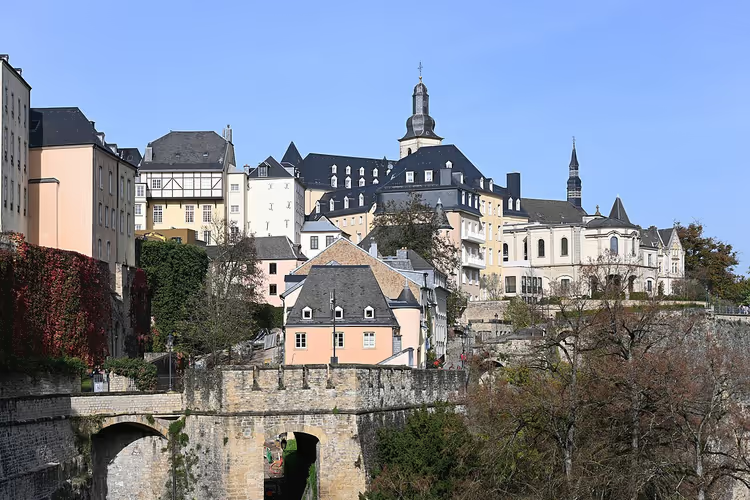 © Cayambe · CC BY-SAPhoto: Cayambe, CC BY-SA (https://creativecommons.org/licenses/by-sa/4.0), Wikimedia Commons
The best plan is simple. Walk the Corniche from above, take note of the angles, then go down to the river and look at the same wall from below. The view changes beyond recognition.
Lower Town and the Grund district
The Lower Town is the Grund district on the banks of the Alzette. Craftsmen once lived here, now it is the most expensive district of the capital with a restaurant street.
The houses stand so close to the water that they seem to grow out of it. Michelin-starred restaurants operate here too, so book a table for dinner in advance.
You can go down on foot via the stairs or by the elevator in the rock. Start from above anyway: the contrast between the two levels is the city's main attraction.
Grand Ducal Palace
The palace on Place Guillaume II began as a town hall. It was built in the 17th century after a fire that destroyed almost the entire Upper Town. The building later changed owners several times until it became the duke's residence in the 19th century.
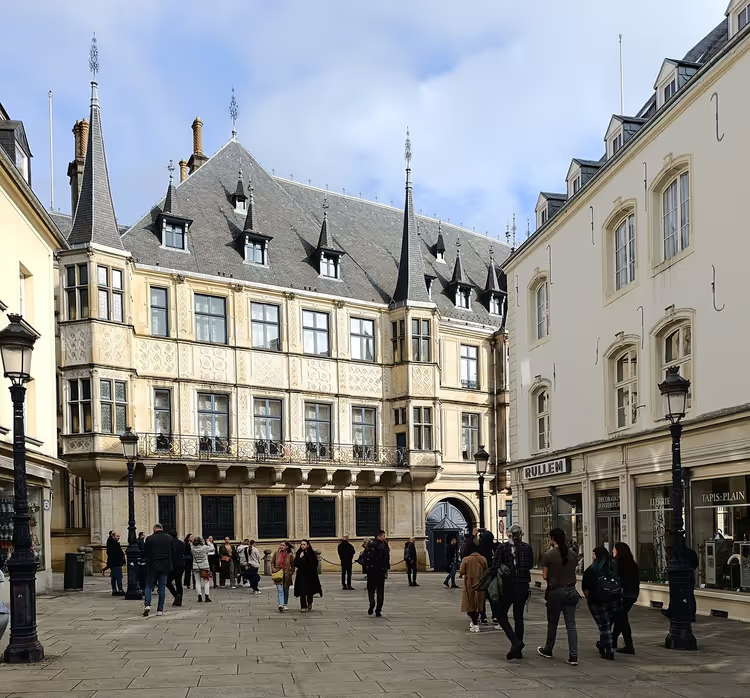 © CARLOS TEIXIDOR CADENAS · CC BYPhoto: CARLOS TEIXIDOR CADENAS, CC BY (https://creativecommons.org/licenses/by/4.0), Wikimedia Commons
Today it is a working palace: receptions, meetings of monarchs and diplomats take place here. The architecture is mixed, Flemish and French details stand alongside Renaissance elements.
The interior is open to visitors only in summer, when the ducal family leaves the city. Tours run in small groups, tickets should be booked in advance (according to the official tourism portal, 09/2026).
Adolphe Bridge between two cities
The Adolphe Bridge connects the Upper Town with the Gare district and is considered the symbol of the capital. It is also a viewing platform: from the sidewalk you can see the valley in both directions and the stone arches.
The bridge was named after Grand Duke Adolphe, who ruled at the turn of the 19th and 20th centuries. A single span crosses the gorge.
The best photos are taken from the Grund embankment. From there, the bridge, the rock, and the houses by the water all fit into the frame.
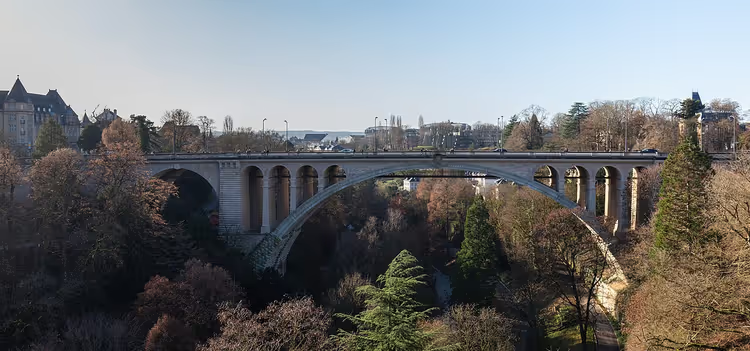 © Diego Delso · CC BY-SAPhoto: Diego Delso, CC BY-SA (https://creativecommons.org/licenses/by-sa/4.0), Wikimedia Commons
Neumünster Abbey: a cultural center in Grund
Neumünster Abbey stands in the Lower Town by the river. Over its history it has served as a barracks, a police station, and even a prison.
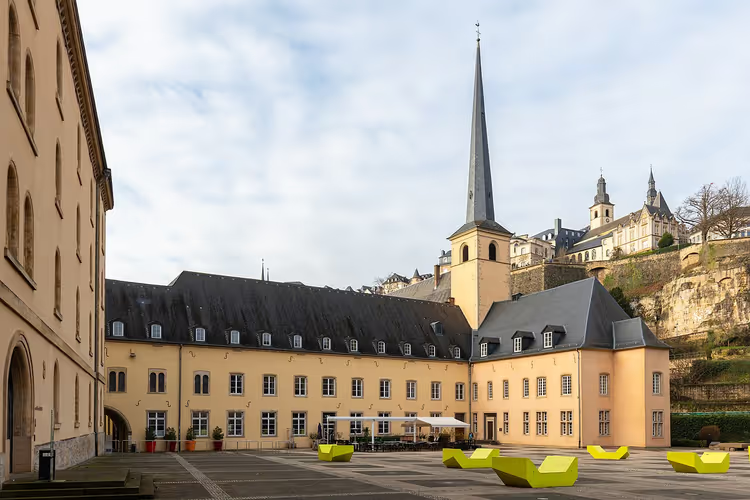 © Diego Delso · CC BY-SAPhoto: Diego Delso, CC BY-SA (https://creativecommons.org/licenses/by-sa/4.0), Wikimedia Commons
Today the complex houses the Neimënster cultural center. Exhibitions, concerts, and workshops take place here, and some of the halls are given to artists who live and work right in the abbey.
Entry to many events is free (according to the tourism portal website, 09/2026). Check the program on site: posters are displayed at the entrance.
Philharmonie on the Kirchberg plateau
The Philharmonie bears the name of Grand Duchess Joséphine-Charlotte. The building is modern, made of white stone and glass, and stands apart from the old quarters.
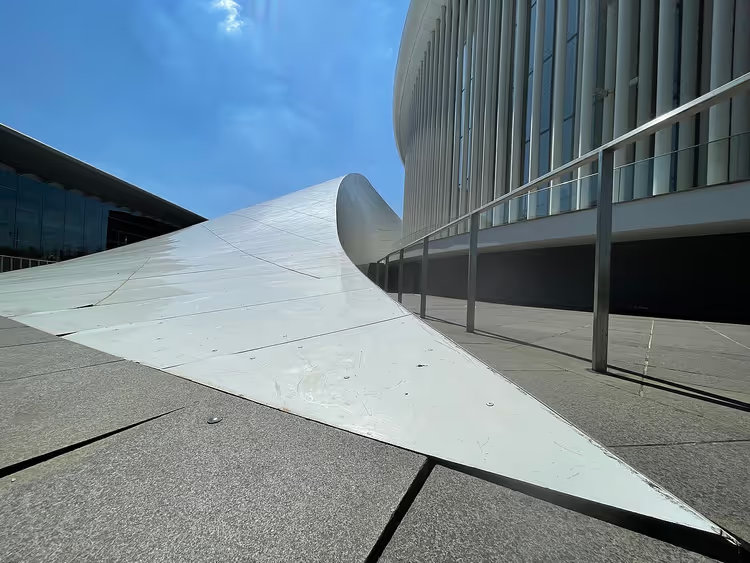
The concert hall was built for classical music and jazz, and the main hall received its own acoustic tuning. The building stands out in the city panorama: the white volume is visible from the Corniche.
The Philharmonie sits on the Kirchberg plateau, where the European Union institutions are concentrated. The easiest way to get there is by tram from the center, with a stop right at the entrance.
Panoramic elevator in Pfaffenthal
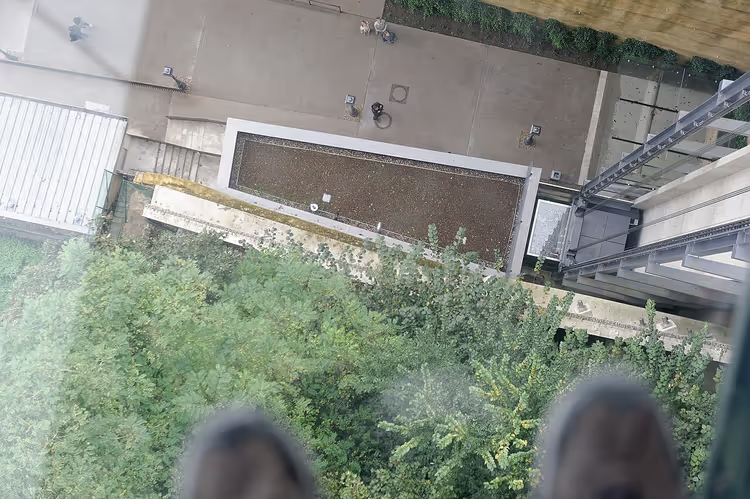
A glass panoramic elevator connects the Pfaffenthal district to the center. It links the lower district with the upper city and saves you the climb up the stairs.
 © Michael Kramer · CC BY-SAPhoto: Michael Kramer, CC BY-SA (https://creativecommons.org/licenses/by-sa/3.0), Wikimedia Commons
A pedestrian bridge spans the top of the elevator. From it you get a view over the Alzette valley and the riverside neighborhoods.
The elevator is free and part of the city's public transport system (as of the country's tourism portal, 09/2026). It is the fastest way to get up from the valley and see the cliffs from above.
Fortress "Three Acorns"
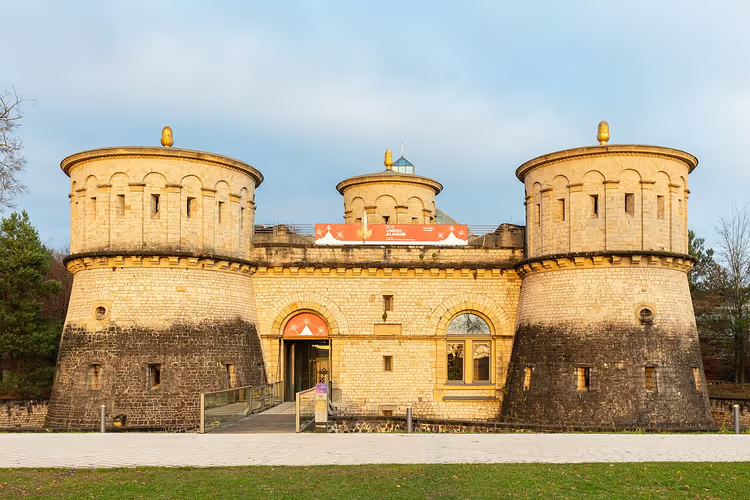
The "Three Acorns" fortress consists of three towers of Fort Thüngen. They were built in the 18th century to defend the city, and today they are the only part of the fortifications visible almost in their original form.
 © Diego Delso · CC BY-SAPhoto: Diego Delso, CC BY-SA (https://creativecommons.org/licenses/by-sa/4.0), Wikimedia Commons
The fortress has a short and unfortunate history. After the Treaty of London, which established the country's neutral status, most of the fort was dismantled. Three round towers survived, and even those were restored only in this century.
The complex is now open to tourists. Inside, the Dräi Eechelen fortification museum operates, and next to it stands Mudam, the Grand Duke Jean Museum of Modern Art.
Allow two hours for the whole complex. The towers are interesting both outside and inside, and from the viewing platforms you can see the Kirchberg plateau and the valley. Tickets to Luxembourg museums on Tiqets will come in handy if you want to visit Mudam as well.
If you have a free day left, head out of the city: national parks, Luxembourg's Little Switzerland, fortresses, and the Moselle vineyards. Public transport across the country is free, so this is the cheapest way to get beyond the capital.
Tours and tickets in Luxembourg
Guided tours, skip-the-line tickets and activities — most offers can be cancelled free of charge.
See offers on GetYourGuideThe widget loads once you give your consent.
⁉️🤔 Frequently asked questions
Is one day enough for Luxembourg?
In one day you can cover the Upper Town, go down to Grund, and climb up to the fortress. Allow an hour for the casemates and keep in mind that they are closed in winter. If you also want museums, the Philharmonie, and the Alzette valley, plan for two days so you can keep a relaxed pace.
How much does it cost to go up to the Upper Town?
The city on the cliff itself is free: the elevator from Pfaffenthal, the Corniche promenade, and the viewpoints cost nothing. You only pay for the casemates and museums. Public transport across the country has also been free since March 1, 2020, so getting from the airport will not add to your expenses.
Can you visit the Grand Ducal Palace?
Only in summer, when the ducal family leaves the city. The rest of the year the palace is closed, and you will only see the facade from Place Guillaume II. Tours run in small groups, so book your ticket in advance, otherwise you will have to wait for the next slot.
Is it worth going down to the Lower Town?
Yes, the Grund district gives you the main contrast of the trip. Craftsmen's houses sit right by the water, and the restaurant street is considered the most expensive in the capital. Walk down the stairs and come back up by elevator: that way you will see both the wall and the valley from two levels.
What to see near the capital?
It is easy to take a day trip from Luxembourg: trains and buses across the country are free, and distances are short. For the fortresses and rocky gorges of Luxembourg's Little Switzerland, head toward the German border; for wine, go to the Moselle valley. Check the schedule in advance, as rural lines do not run every hour.
In short: what to book
In one day you get a city on two levels: the cliff plateau, the Grund district by the water, and the underground galleries between them. The only things worth booking in advance are casemate tickets and a table in Grund.
If you have one day: book a morning casemate slot and make it to the Corniche before the tour groups arrive.
If you have two days: add the Grand Ducal Palace in summer and a concert at the Philharmonie.
If you are traveling with children: start with the elevator in Pfaffenthal and the pedestrian bridge over the valley.
If you want some quiet: head to Neumünster Abbey and the Alzette embankment in the evening.
Accommodation in the capital is expensive, and prices in the center are above the national average. Compare hotels in advance on Trip.com: that way you will see the difference between the center and Kirchberg and can choose a quieter area.

A small editorial team writing guides for independent travel. We travel ourselves, but we haven’t been everywhere, so we check prices, opening hours and how to get there against official sources.