
















What to see in Hamburg: 29 places with prices and opening hours
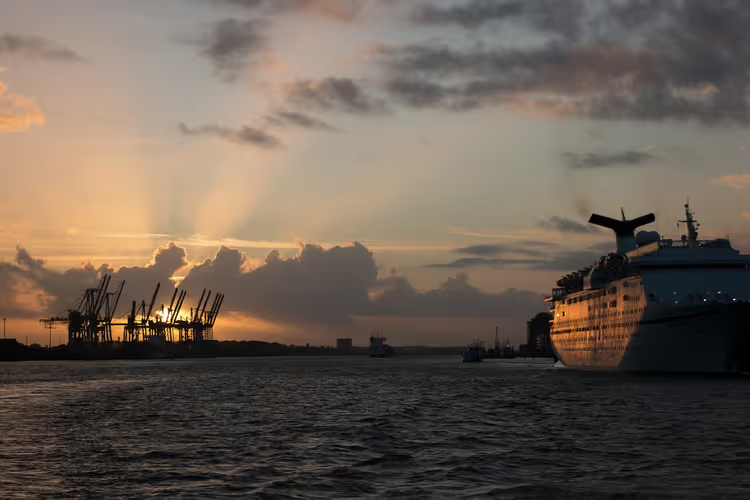
Hamburg sits on the water: the Elbe, the Alster, and the canals divide the city into parts. In two or three days you can fit in the museums, the old churches, and a walk along the lake. The port rhythm here coexists with quiet parks, and that makes it convenient for walking routes.
We gathered the places guests are most often advised to visit and added opening hours, the price, and an honest catch for each. The order in the list is flexible: first museums and galleries, then churches, ships, and parks.
Ad: this article contains affiliate links, we earn a commission if you book through them, at no extra cost to you.
What to see in Hamburg
💡 In short:
- Start with the Kunsthalle gallery and the Landungsbrücken area to understand the city's layout.
- Book tickets for Miniatur Wunderland and the Elbphilharmonie Plaza in advance, they are often sold out at the ticket office.
- Set aside one day for the churches and Stadtpark, and a second for the museum ships at the port.
- Prices and opening hours: 09/2026, verified on the official Kunsthalle website.
A short table will help you choose among the main sights.
Place | What to see | Who it's for |
|---|---|---|
Hamburger Kunsthalle | old masters, impressionists | lovers of the classics |
Museum für Kunst und Gewerbe | design and applied art | those who like fashion and everyday life |
Miniatur Wunderland | miniature cities and model railways | families with children |
Elbphilharmonie | architecture and the panorama from the Plaza | those who want a view of the harbor |
Tierpark Hagenbeck | animals in open enclosures | children and adults |
We'll go through the remaining sights in order, with tickets, directions, and catches. We'll start with the gallery by the Alster, then move on to the churches, ships, and parks.
 © Fred Romero from Paris, France · CC BYPhoto: Fred Romero from Paris, France, CC BY (https://creativecommons.org/licenses/by/2.0), Wikimedia Commons
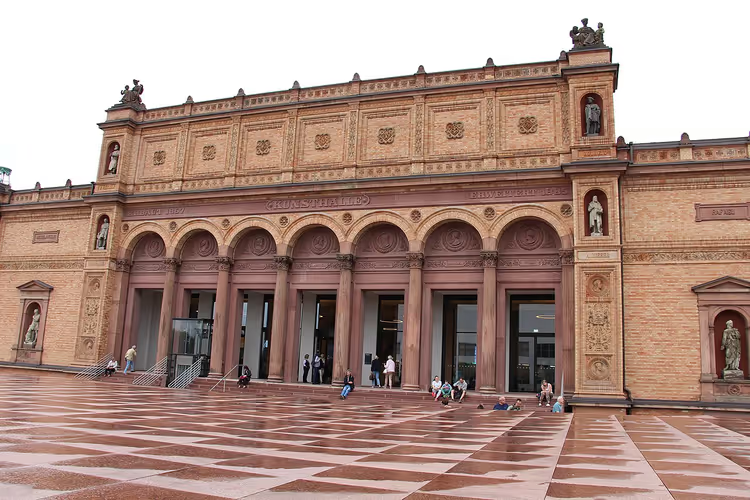
The Kunsthalle stands by the Alster and occupies three buildings connected by passageways. It is one of the main public collections in Germany: eight centuries of painting and sculpture in one place (official website). Here you'll find old masters, Edvard Munch, Toulouse-Lautrec, and German impressionists, and temporary exhibitions change several times a year.
The gallery is open Tuesday through Sunday, and on Thursdays it stays open until 9:00 PM. An adult ticket costs 18 euros, children and teenagers under 18 get free admission (as of: 09/2026, Hamburger Kunsthalle). On the first Thursday of the month, evening admission is free, and that's a good moment for a short visit. Ticket office lines are shorter on weekday mornings.
You should allow two to three hours for the visit. Start with the main building, then move to the new halls with modern art, they are connected by an underground passage. The ticket office staff will tell you where the current exhibitions are and give you a floor plan. Photography is allowed without flash.
- How to get there: from Hauptbahnhof on foot along the Alster, about ten minutes.
- The catch: the museum is closed on Mondays, like many others in the city.
Johannes Brahms Museum
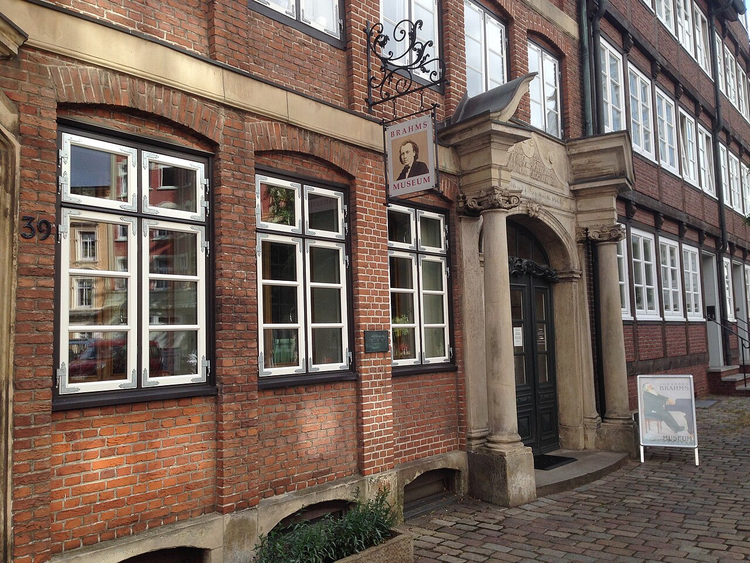
The museum occupies a baroque house in the center, where the composer lived and worked. The exhibition is small but dense: manuscripts, letters, monographs, and recordings of Brahms's music (Brahms-Museum). You'll see sheet music and personal belongings that make it easy to imagine his character and taste.
 © Ymnes · CC BYPhoto: Ymnes, CC BY (https://creativecommons.org/licenses/by/4.0), Wikimedia Commons
The easiest way to get there is by U-Bahn: the first three lines work, you need the stations Stephansplatz, Messehallen, or St. Pauli. The house looks austere, dark brick and white window frames emphasize the baroque facade. Inside, concert programs and memoirs are collected, and the music is played from disc recordings.
The ticket costs about five euros, children and teenagers under 14 enter free (museum's official website). It's open Tuesday through Sunday, from 10:00 to 17:00. The museum is often empty, so you can read the labels without crowds. An hour is enough for a visit, and it's easy to fit into a walk through the center.
- How to get there: U-Bahn stations Stephansplatz, Messehallen, or St. Pauli.
- The catch: closed on Mondays and closes early in the evening.
Doll museum in Blankenese
The Falkenstein Museum lives in a small villa in Sven-Simon-Park. The dolls are arranged by era, and they show how ideas about beauty have changed over the past three centuries (Falkenstein doll museum). The exhibits aren't behind glass but in small rooms with exact replicas of old interiors.
The curator says the collection was assembled not by price or age but by time periods. That's why dolls from different countries and schools stand side by side, and the difference between them is striking. Some rooms resemble theater stages: dolls act out everyday scenes from past centuries.
You can get there on buses 189 and 286 to the S-Bahn station Blankenese. The museum welcomes guests Tuesday through Sunday, from 11:00 to 17:00, tickets cost three to five euros (museum in Blankenese). Allow about forty minutes for the trip from the center.
- How to get there: buses 189 and 286 to the S-Bahn station Blankenese.
- The catch: open only until 17:00 and located far from the center.
Lake Alster and boat trips
 © Carsten Steger · CC BY-SAPhoto: Carsten Steger, CC BY-SA (https://creativecommons.org/licenses/by-sa/4.0), Wikimedia Commons
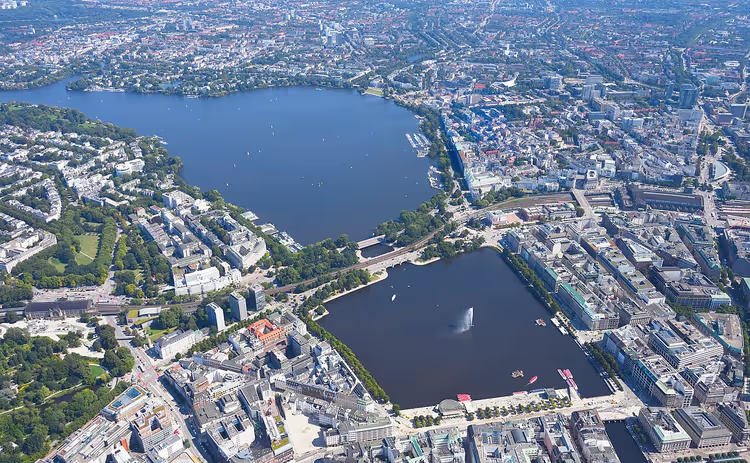
The Alster came into being after a dam was built on a tributary of the Elbe. Today it's a large body of water in the city center, with parks laid out around it (Hamburg Tourismus).
The lake is divided into two parts: inside the city lies a smaller body of water right by the center, and further on stretches a large one. Boats, rowboats, and ferries travel across the water. A trip usually costs ten to fifteen euros (Hamburg city tourism office). Go in the morning or evening, when there are fewer people on the embankment, and grab a spot on the open deck.
Paths several kilometers long run along both shores, easy to walk or bike. Cafes and boat rental stations line the water. Over nearly eight centuries the lake has been kept clean, and you can feel it: in summer swans swim near the shore, and in the city center you can relax on the lawn.
- How to get there: U-Bahn stations on both shores, then walk to the piers.
- The catch: in rain the open decks are closed, and the view from the water is lost.
Museum of Arts and Crafts
 © UweRohwedder · CC BY-SAPhoto: UweRohwedder, CC BY-SA (https://creativecommons.org/licenses/by-sa/4.0), Wikimedia Commons
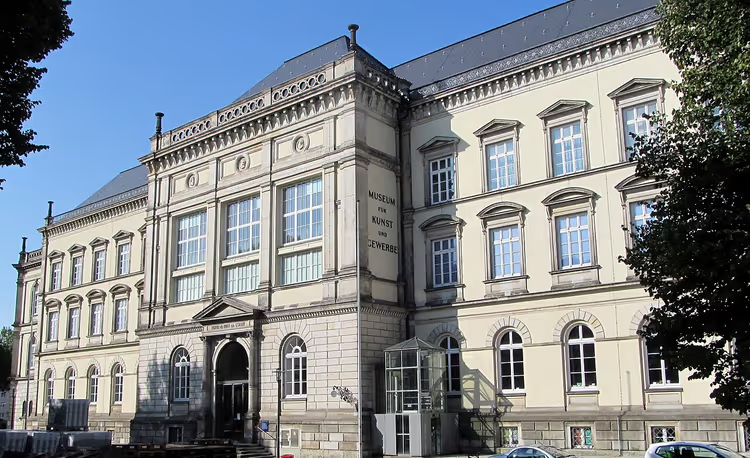
The Museum für Kunst und Gewerbe holds one of the most complete collections of applied art. The rooms show everyday life from ancient cultures to the present: clothing from Egyptian tombs, Chinese silk, Flemish lace, Issey Miyake fabrics (official website). The museum occupies a three-story neoclassical building near the train station.
The collection is truly universal. Separate rooms are dedicated to fashion, musical instruments, and design, so each time you'll find something new. The exhibition on keyboard instruments opened recently and is worth seeing on its own. There's a cafe inside, a good place to pause between floors.
Exhibitions here change often, and no two visits are alike. If you love fashion, start with the clothing rooms, where ancient fabrics stand next to works by modern designers. Children usually enjoy the sections with household objects. A visit takes two hours, and with a temporary exhibition add another hour.
The easiest option is to get off at Hauptbahnhof Süd or Hauptbahnhof Nord and walk a couple of minutes. Children and teenagers under 18 enter free (Museum für Kunst und Gewerbe). The exhibition schedule is very fluid, so check the hours on the website before your trip.
- The catch: the schedule changes often, some rooms are closed between exhibitions.
- Who it's for: for those who love design, fashion, and the history of objects.
Gallery of contemporary art
 © Razvan Orendovici from United States · CC BYPhoto: Razvan Orendovici from United States, CC BY (https://creativecommons.org/licenses/by/2.0), Wikimedia Commons
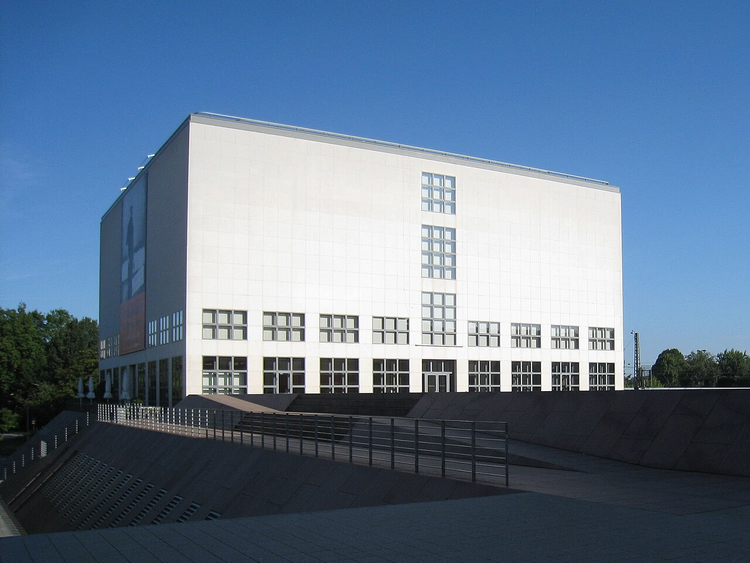
The gallery split off from the Kunsthalle and moved into its own cube-shaped building in the constructivist style (gallery website). It shows modernism and postmodernism: paintings, sculptures, and installations from the 21st century. The exhibitions are deliberately avant-garde, so they don't appeal to everyone.
A good landmark for your walk is the Lombardsbrücke bridge near the old town; you can also take the U-Bahn to Hauptbahnhof Nord. The gallery is open on Tuesday, Wednesday, and Friday until 6:00 PM, and on Thursdays until 9:00 PM (official Kunsthalle website). The ticket is sold separately from the main collection.
Before visiting, it's worth reading up on the exhibits, otherwise some of the rooms will remain hard to understand. The bright cube on the outside is deceptive: inside there are many dark rooms and large objects. If you don't like avant-garde art, it's better to stay in the old part of the Kunsthalle and skip this building.
- The catch: without explanations, some rooms are hard to understand, so read about the exhibits first.
- Who it's for: for those interested in 20th and 21st century art.
Museum of Hamburg history
 © Staro1 · CC BY-SAPhoto: Staro1, CC BY-SA (http://creativecommons.org/licenses/by-sa/3.0/), Wikimedia Commons
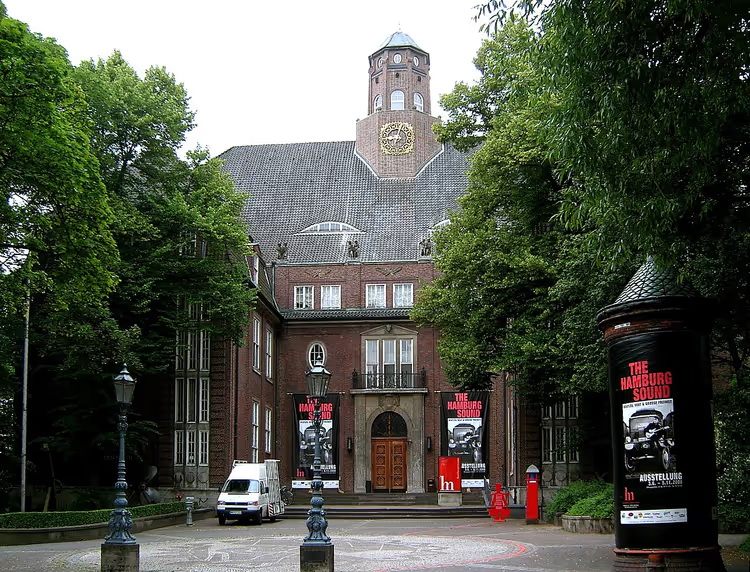
The Museum of Hamburg history occupies a building made from bricks salvaged from demolished neighborhoods. The exhibition is interactive: most objects can be touched, and some can even be tried on (Museum für Hamburgische Geschichte). You'll see models of pirate ships and reconstructions of everyday life in the old port.
The building was assembled from bricks of houses demolished during the construction of the free port in the early 20th century. This gave the old material a second life, and the museum was conceived as a story about the city from a small fortress to a major port. Separate rooms are dedicated to fires, floods, and wars.
You can get there by bus 112 to the stop of the same name (Museum of Hamburg history). Photography inside is allowed, but only without flash, which is rare for museums. The doors are closed on Mondays, so plan your visit from midweek onward.
- Time to visit: about two hours, slightly more with children.
- The catch: closed on Mondays.
Museum ship Cap San Diego
 © Peter Haas · CC BY-SAPhoto: Peter Haas, CC BY-SA (https://creativecommons.org/licenses/by-sa/3.0), Wikimedia Commons
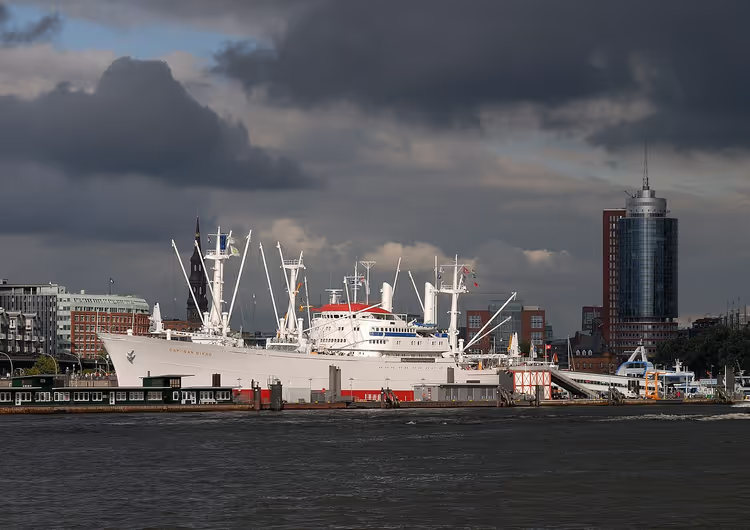
Cap San Diego is a cargo ship that sailed between Germany and South America for nineteen years. Today the ship is docked at the Landungsbrücken pier as a floating museum (Cap San Diego). The main exhibit is the ship itself, and you go down inside, to the engines and holds.
The ship is open every day from 10:00 AM to 6:00 PM, and the ticket costs no more than seven euros (official website). A couple of times a year the ship goes to sea with passengers, but those trips are booked well in advance. Formal events are held on board, so renting it is not cheap.
Inside you can see how the crew lived: cabins, the engine room, and cargo holds are open for viewing. The exhibition tells the story of maritime shipping, while the ship itself remains the most interesting object. Tickets are sold right at the gangway, no separate booking is required. You'll spend about an hour here, not counting the climb up to the decks.
- How to get there: S-Bahn and U-Bahn to Landungsbrücken, the pier is nearby.
- The catch: narrow gangways and stairs, inconvenient with a stroller.
Hamburg State Opera
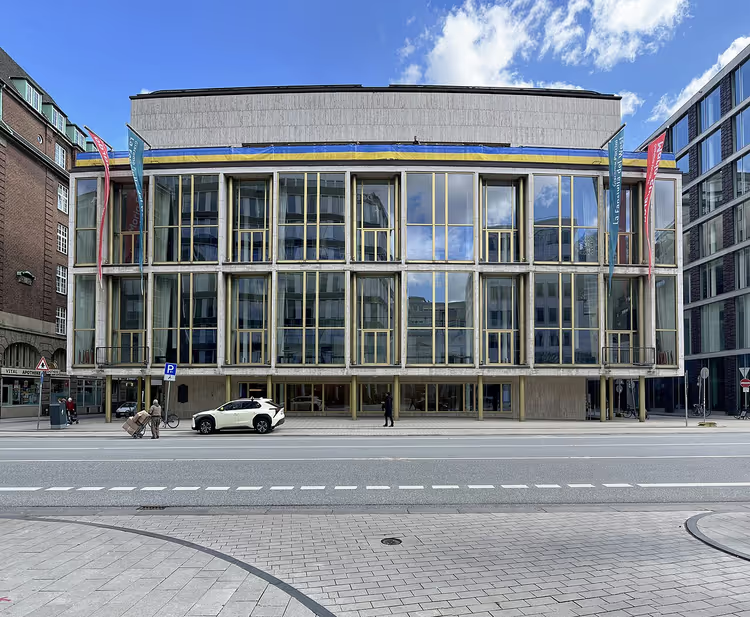
The Hamburg State Opera stages opera and ballet and has never been a court theater. The building burned twice and was destroyed in the war, but the theater was restored (Staatsoper Hamburg). The season runs year-round, so you can catch a production in any month.
 © Gunnar Klack · CC BY-SAPhoto: Gunnar Klack, CC BY-SA (https://creativecommons.org/licenses/by-sa/4.0), Wikimedia Commons
Tickets start at around eleven euros, but popular productions sell out quickly (official website). After the war, the theater took about ten years to rebuild before it returned to the city's cultural life. The repertoire includes both classics and contemporary works.
You can get there by bus to the Stephansplatz stop; routes 603, 112, 109, 36, 34, 5, and 4 all work. If you want an evening out, book tickets in advance and arrive a little early to see the foyer. For cheaper seats, choose weekdays.
- Who it's for: those ready for an evening at the theater.
- The catch: cheap seats disappear fast, so book ahead.
Planten un blomen botanical garden
 © Pedro from Maia (Porto), Portugal · CC BYPhoto: Pedro from Maia (Porto), Portugal, CC BY (https://creativecommons.org/licenses/by/2.0), Wikimedia Commons
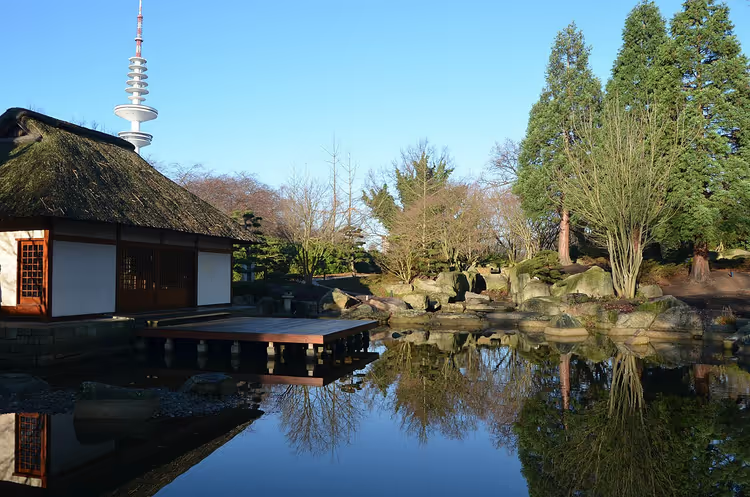
Planten un Blomen grew from a small apothecary garden into a large park with themed areas (Hamburg Tourismus). The garden's pride is the Japanese garden with a pond, stone paths, and pavilions. Admission is free, which makes the park popular with locals.
The park is open from seven in the morning to eleven at night; in summer it hosts free concerts and light shows by the water (Hamburg tourism portal). The northern and southern parts are divided into themed zones, so a walk easily turns into a mini journey through different corners of the world.
You can walk from the St. Pauli U-Bahn station or take buses 112 and 688 to the Handwerkskammer stop. Bring food with you: the park has plenty of lawns and benches, and cafes don't operate everywhere. On summer evenings the water features are lit up, and that's the best moment for a stroll.
- Time to visit: one to two hours; see the Japanese garden first.
- The catch: late in the evening, some paths are unlit.
Erotic Art Museum
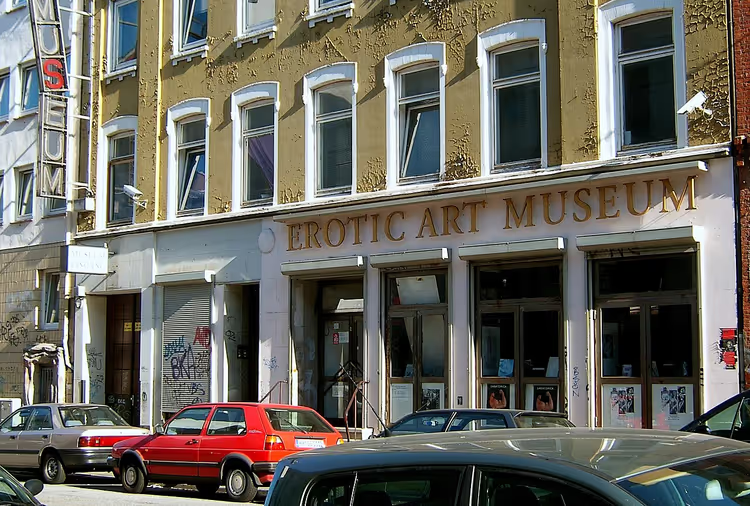
The Erotic Art Museum has assembled art related to eroticism, from 16th-century Japanese prints to European Art Nouveau (museum on the Reeperbahn). The museum stands on the Reeperbahn, a street with a freewheeling entertainment character. The exhibition began as a private initiative and quickly grew.
 © Staro1 at German Wikipedia · CC BY-SAPhoto: Staro1 at German Wikipedia, CC BY-SA (http://creativecommons.org/licenses/by-sa/3.0/), Wikimedia Commons
The museum and bookshop are open all year. Doors open after midday, and a ticket rarely exceeds eight euros (museum exhibition). The collection includes woodblock prints, lithographs, and images on silk, so this is more of a cultural visit than an entertainment one.
The location is convenient: the Beatles' first Hamburg concerts took place nearby, and today the area is full of clubs and bars. In the evening the street is loud; during the day it's calmer. For an adult audience, this is an unusual look at urban culture and the history of morals.
- The catch: the subject matter is niche, not for families with children.
- How to get there: St. Pauli U-Bahn, then walk along the Reeperbahn.
Zoological Museum
The Hamburg Zoological Museum grew out of the collections of an old 19th-century natural history museum (Leibniz-Institut). Here you'll see fossils, preserved animals, and reconstructions of species going back to the age of dinosaurs. Some exhibits were destroyed in bombing raids, but the display cases are far from empty.
Admission is free; the museum is open from 10:00 to 17:00 and closed on Sundays and major public holidays (Leibniz-Institut für Biodiversität). The nearest U-Bahn station is Schlump; from the exit to the building is about a ten-minute walk.
The collection is interesting not only to specialists. The reconstructions of ancient animals are highly detailed, and the displays explain how species changed over time. For children, it's a good reason to dig into biology; for adults, it's a quiet, free museum away from the tourist crowds.
- How to get there: Schlump U-Bahn, then walk.
- The catch: closed on Sundays, when many visitors have a free day.
Hagenbeck Zoo
 © An-d · CC BY-SAPhoto: An-d, CC BY-SA (https://creativecommons.org/licenses/by-sa/3.0), Wikimedia Commons
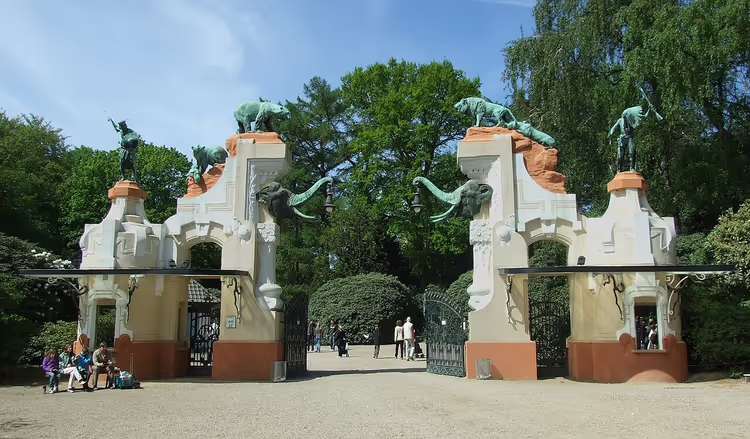
Hagenbeck Zoo was founded by Carl Hagenbeck, who was the first to keep animals not in cages but in open enclosures (Tierpark Hagenbeck). The park opened in 1907, and today it is owned by the founder's descendants. It covers about nineteen hectares, with pedestrian paths stretching for seven kilometers.
Over sixteen thousand animals live here, and a large tropical aquarium stands at the entrance (official website). A separate section is dedicated to dinosaurs, with life-size sculptures. Feeding shows take place daily, and the Hagenbeck family continues its work on rare species conservation.
Open enclosures without bars appeared here earlier than in other zoos and became a model for colleagues. Animals are displayed against a backdrop of moats and embankments, and viewing paths are arranged so that animals can be seen from several vantage points. Cafes, playgrounds, and souvenir shops operate on the grounds, so you can easily spend a whole day here.
The park welcomes about one million seven hundred thousand visitors annually, so it gets crowded on weekends. Come at opening time, and you'll make it to the feedings and cover the far enclosures without waiting in line.
- Time to allow: half a day, the park is large.
- The catch: lots of walking, wear comfortable shoes.
St. Nicholas' Church
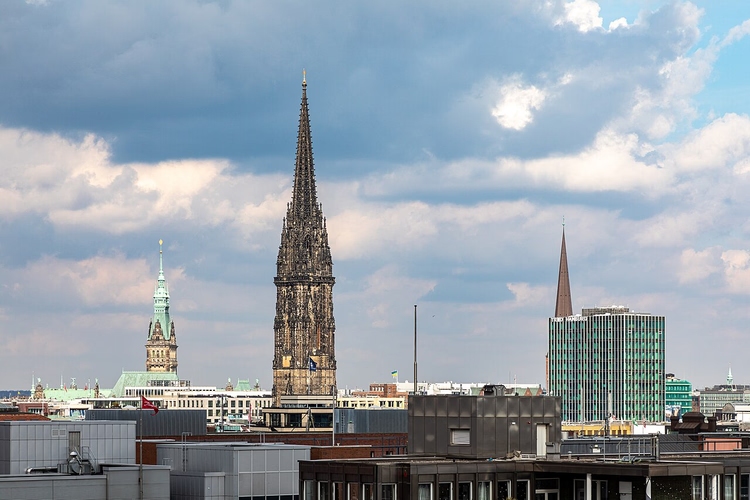 © Dietmar Rabich · CC BY-SAPhoto: Dietmar Rabich, CC BY-SA (https://creativecommons.org/licenses/by-sa/4.0), Wikimedia Commons
St. Nicholas' Church was left in ruins as a memorial to the victims of war. After the bombings of 1943, only the tower, one hundred forty-seven meters high, survived (Mahnmal St. Nikolai). A glass elevator takes you to the top, and the observation deck is at a height of seventy-six meters.
A ticket costs six euros, and for children under eighteen it's four euros (official memorial website). A small museum nearby tells the story of the church and of Operation Gomorrah, during which a significant part of the city was destroyed. The exhibition explains why the church was deliberately not rebuilt but preserved as a reminder.
The church dates back to the 11th century, and its tower was long the tallest building in the world. Today the observation deck offers views of the harbor, the town hall, and Speicherstadt. Both the tower itself and the ride to the top help you grasp the scale of the destruction.
- How to get there: U-Bahn to Rathaus or Rödingsmarkt, then walk.
- The catch: in summer it's windy on the observation deck even in the heat.
St. Michael's Church
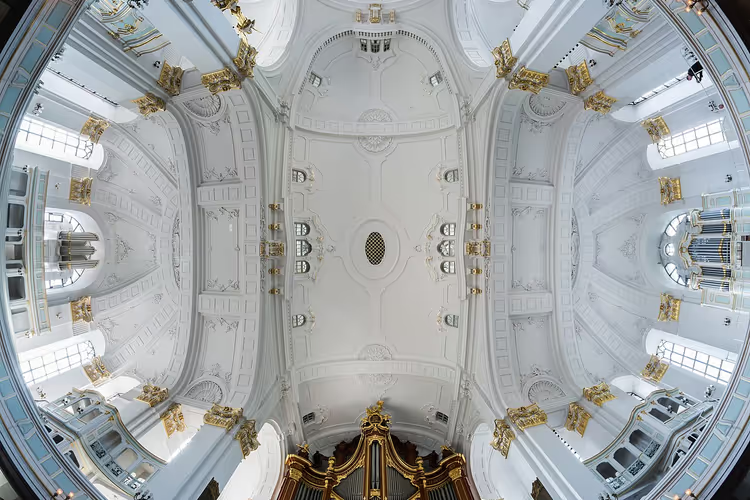 © Ajepbah · CC BY-SAPhoto: Ajepbah, CC BY-SA (https://creativecommons.org/licenses/by-sa/3.0/de/deed.en), Wikimedia Commons
St. Michael's Church stands in the quarter between the port and the city center. It combines Baroque and Neoclassical styles and was rebuilt according to the original plans in 1912 (St. Michaelis). The bell tower is one hundred thirty-two meters high and holds the largest clock in Germany.
You can reach the observation deck by elevator or on foot via a staircase of more than four hundred steps (Hauptkirche St. Michaelis). Inside, you'll see a marble altar twenty meters high. The church is the burial place of composer Johann Mattheson and Bach's son Carl Philipp Emanuel.
The church's history is complicated: it burned after a lightning strike, and the tower collapsed and was rebuilt from scratch. Citizens demanded the original appearance be restored, so the design was taken from old drawings but built in reinforced concrete. The view from the tower takes in the harbor, Speicherstadt, and the Elbphilharmonie.
- How to get there: U-Bahn Stadthausbrücke, then a five-minute walk.
- The catch: on clear days the elevator line is long.
St. Catherine's Church
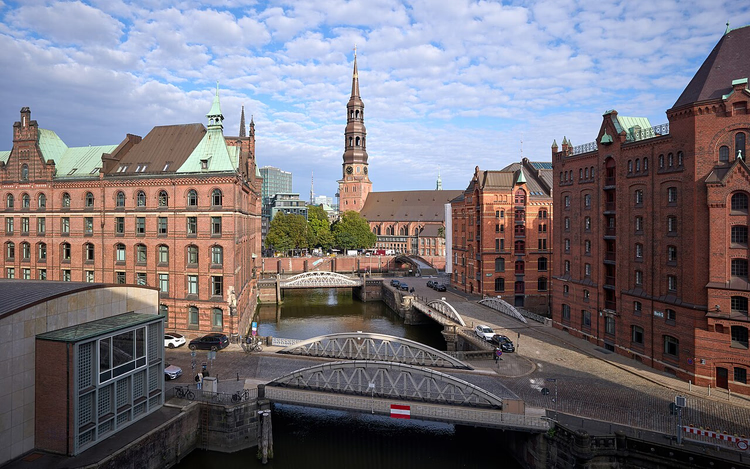 © Frank Schulenburg · CC BY-SAPhoto: Frank Schulenburg, CC BY-SA (https://creativecommons.org/licenses/by-sa/4.0), Wikimedia Commons
St. Catherine's Church is one of the oldest in the city. Johann Sebastian Bach played its organ, and beneath the foundation lies a pad of one thousand one hundred larch logs (St. Katharinen). The wood resists water, so this base has held the building for centuries and recalls the sailors and shipbuilders who constructed it.
After the war, the one hundred fifteen meter tower was rebuilt by 1956 (St. Catherine's Church). Inside you'll see stained glass from the second half of the 20th century, statues of St. Catherine, and two medieval altar paintings depicting Christ.
The parish raised money for the restoration on its own, and some relics were lost in a fire after a bomb hit. Today the church is open to visitors again. Stop by on your way to Speicherstadt: the church stands close to the harbor warehouses.
- Who it's for: anyone interested in church architecture and music.
- The catch: it's not open all day, so check the hours on the website.
St. Jacob's Church
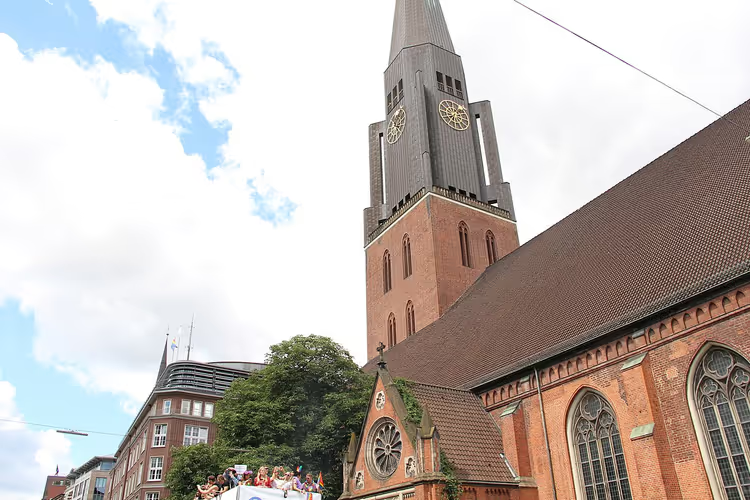 © Fred Romero from Paris, France · CC BYPhoto: Fred Romero from Paris, France, CC BY (https://creativecommons.org/licenses/by/2.0), Wikimedia Commons
St. Jacob's Church is known for the organ Bach played (St. Jacob's Church). The church was rebuilt several times, and during the Napoleonic Wars the French turned it into a stable. After the destruction of World War II, the church was reconstructed by 1962, with a changed spire shape.
A cafe operates in the bell tower at a height of eighty four meters, and its profits go to charity (St. Jacobi). The church's main treasures are medieval altars honoring the Trinity and the apostles Peter and Luke. The observation deck offers a view of the old town.
The building stands in the center, near the town hall and canals, so it's easy to combine with a walk through the old town. It's quiet inside even during the day, and choir and organ concerts draw a full house. Check the schedule if you want to catch some music.
- The catch: the cafe and bell tower are not open every day.
- Who it's for: anyone who wants to go up for the view without a long line.
Beatles-Platz
Beatles-Platz is round, about twenty nine meters in diameter, and it resembles a vinyl record (Beatles-Platz). Metal figures of the musicians stand along the edge. The square opened in 2008 after a scandal over its budget and errors on the memorial plaques.
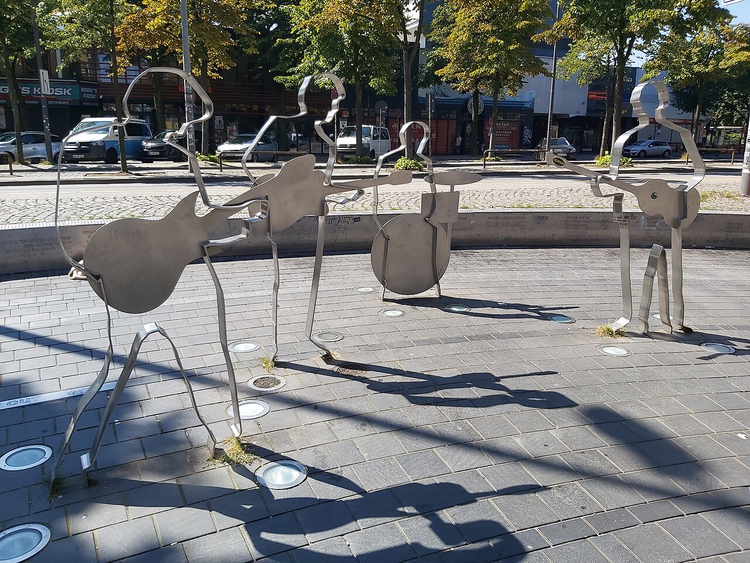
Although five people played in the band in Hamburg, only four are immortalized here (Beatles Square). The initial project promised to stay within a small budget, but materials and labor became several times more expensive, so part of the money was raised through private donations.
It's a popular photo spot, especially in the evening when the club lights on the Reeperbahn come on. The musicians performed here illegally, and some of them were once deported from Germany. During the day the square is usually crowded with tour groups. If you want a calm shot, come late in the evening when the crowds thin out.
- How to get there: U-Bahn St. Pauli, the square is a two minute walk away.
- The catch: it's noisy and crowded in the evening.
Hamburg Dungeon
 © HamburgDungeon2000 · CC BY-SAPhoto: HamburgDungeon2000, CC BY-SA (https://creativecommons.org/licenses/by-sa/4.0), Wikimedia Commons
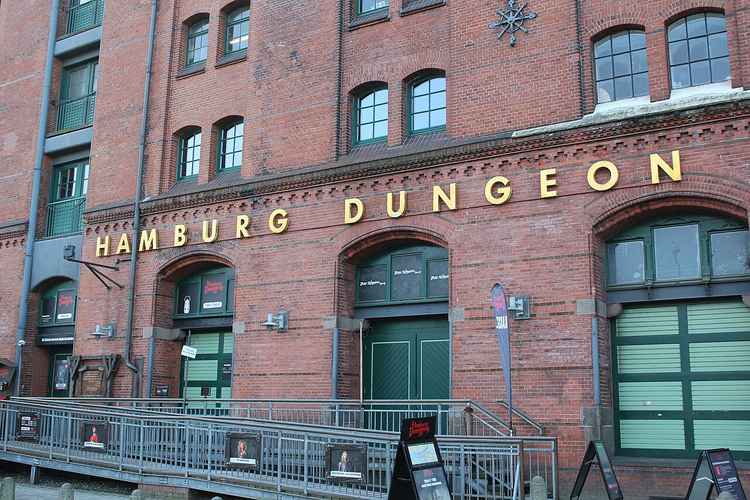
Hamburg Dungeon is an interactive show about the port's dark history (Hamburg Dungeon). Actors perform scenes from the lives of smugglers, the Inquisition, and the city's disasters. Each program lasts ninety minutes, and the venue has eleven routes in total, including programs for school groups.
The sets include an exact replica of a torture chamber, and individual rooms are dedicated to a pirate raid, the plague, a fire, and a flood (The Dungeons Hamburg). Guests are led through dark corridors, so there are plenty of sudden sounds and shadows along the way. The show features the Executioner, the Judge, and the Plague Doctor, and it even has its own White Lady.
The museum is open daily except Christmas. It's better to book a ticket for a specific time, so you don't stand in line at the entrance. The program is designed for teenagers and adults who enjoy stories about urban horrors.
- Who it's for: teenagers and adults who like a good scare.
- The catch: not suitable for young children or easily impressionable guests.
Chilehaus office building
 © Virtual-Pano · CC BY-SAPhoto: Virtual-Pano, CC BY-SA (https://creativecommons.org/licenses/by-sa/4.0), Wikimedia Commons
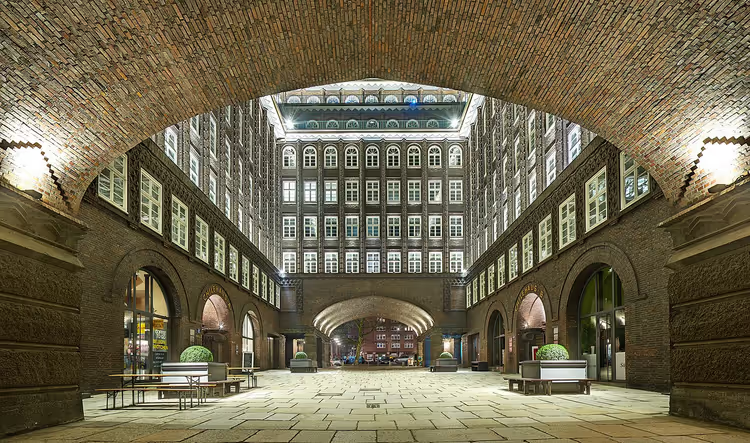
Chilehaus is an eleven-story office building constructed in the 1920s (Chilehaus). The building stands on a narrow, long plot, and its sharp corner resembles a ship's bow. It is classified as Brick Expressionism, combining Gothic and rationalist motifs.
The building was named after Chile, where its owner Henry Sloman made his fortune (Chilehaus office building). The building later passed to his heirs, and it is now under state protection. Chilehaus is a UNESCO World Heritage Site as part of the Speicherstadt district.
It is best viewed from the outside while walking through the harbor warehouses. Approach from the street where the building's corner is especially thin and take in the brickwork. The facade is enough to appreciate the architect's vision.
- Getting there: U-Bahn Meßberg, then a few minutes on foot.
- The catch: it is a working office building, with no separate exhibition for visitors.
Panoptikum wax museum

Panoptikum is Germany's oldest wax museum, opened in 1879 (Panoptikum). From the very beginning, it displayed topical subjects, including figures of embezzling officials and scandalous celebrities. After the war, only nineteen of the original one hundred and forty figures survived, and the collection took five years to rebuild.
The modern figures move and "talk," and each one costs the museum eighteen to twenty thousand euros (Panoptikum wax museum). The collection includes Chaplin, Romy Schneider, Goethe, and Michael Jackson, and it is periodically expanded with controversial characters. The museum is located on the Reeperbahn, next to Beatles-Platz.
The museum thrives on contrast: naive historical figures stand alongside very recent ones. Each sculpture is made by hand, so materials and techniques have changed considerably over more than a century. A visit is easy to combine with a walk through the neighborhood. Tickets are sold at the entrance, and there are rarely lines.
- Time needed: about an hour.
- The catch: the rooms are small, and it can get crowded on weekends.
Rickmer Rickmers museum ship
 © Karlheinz Klingbeil · CC BYPhoto: Karlheinz Klingbeil, CC BY (https://creativecommons.org/licenses/by/4.0), Wikimedia Commons
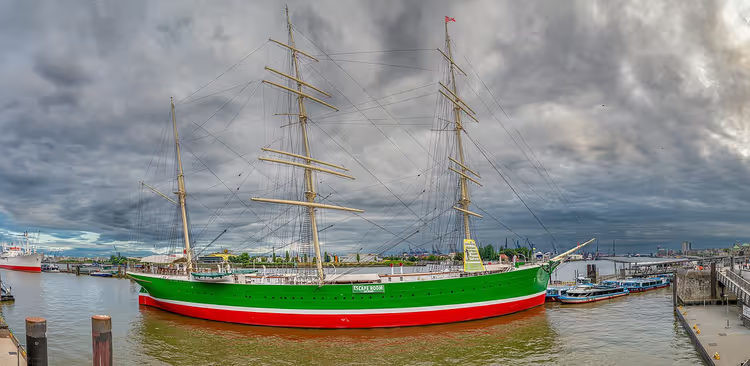
Rickmer Rickmers is a three-masted sailing ship measuring ninety-seven meters in length (Rickmer Rickmers). Its history began in the late 19th century, when the vessel was built for voyages to the Far East. Later, Great Britain and Latin America were added to its routes. In 1987, the ship was turned into a museum.
Inside, you will see sailors' everyday items, ship models, and historical relics (Rickmer Rickmers museum ship). When the ship's service life ended, it was not scrapped but restored: engines were installed and its sailing performance was improved. There is a seafood restaurant on board.
The gallery regularly hosts exhibitions by marine artists. If you are visiting with children, start with the decks and models.
- Getting there: S-Bahn or U-Bahn to Landungsbrücken, the berth is nearby.
Miniatur Wunderland
 © Gulp · CC BY-SAPhoto: Gulp, CC BY-SA (http://creativecommons.org/licenses/by-sa/3.0/), Wikimedia Commons
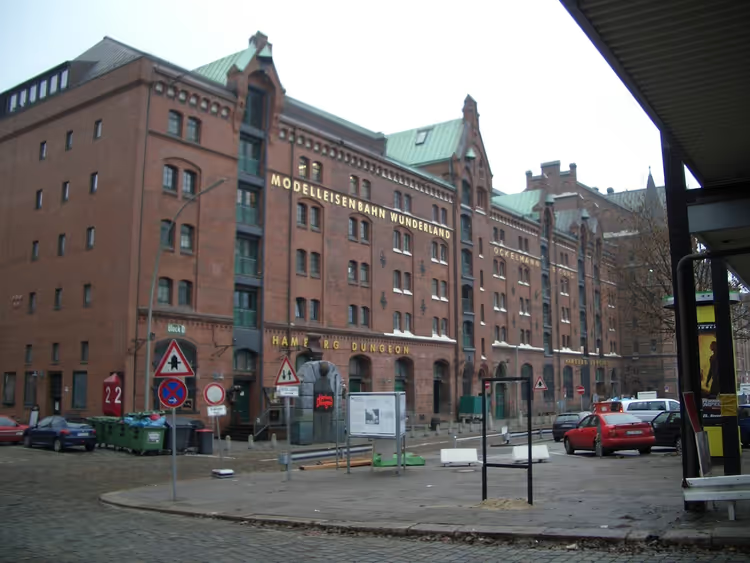
Miniatur Wunderland is the world's largest operating model railway (Miniatur Wunderland). The Braun brothers opened it in Speicherstadt, and the project paid for itself in its first year. Today it has ten sections and around three hundred employees.
The total track length exceeds fifteen thousand meters, more than a thousand trains run through the layouts, and there are around two hundred and fifty thousand human and animal figures (Preise und Tickets). A miniature day lasts thirty minutes, fifteen for daytime and the same for night. The Hamburg section covers a large area, with hundreds of cars moving along its roads.
Tickets start at twenty-two euros, so it's more convenient to get Miniatur Wunderland tickets on Tiqets in advance. The ticket office often has no available slots, especially on weekends and during school holidays.
- Time to allow: two to three hours, more on weekends.
- The catch: the ticket office often has no available slots, buy online.
Elbphilharmonie
 © Burkhard Mücke · CC BY-SAPhoto: Burkhard Mücke, CC BY-SA (https://creativecommons.org/licenses/by-sa/4.0), Wikimedia Commons
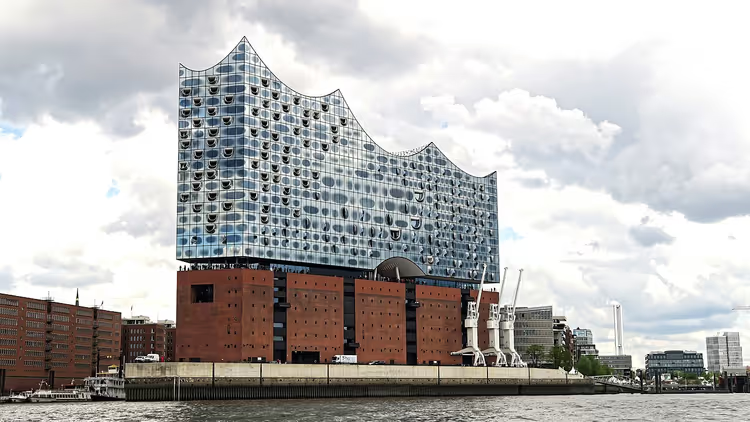
The Elbphilharmonie rose from an old warehouse and became one of the city's main symbols (Elbphilharmonie). Construction took about ten years and cost over seven hundred eighty million euros. The building's total height is one hundred ten meters, and its glass facade reflects the sky and water.
Inside there are two concert halls with two thousand one hundred and five hundred fifty seats, a hotel, and restaurants (Plaza der Elbphilharmonie). The Plaza observation deck at a height of thirty-seven meters is open daily from 10:00 to 24:00. Currently entry is by a free same-day ticket or three euros with advance booking, and from October 5, 2026 it will become paid and cost five euros.
The building's base is a former 1963 warehouse, while the modern superstructure resembles a crystal. To reach the Plaza, take the long escalator. From here you get the best view of the port, and it's worth coming at sunset.
- How to get there: U-Bahn Baumwall, then walk along the Elbe.
- The catch: the escalator and Plaza are sometimes closed for private events.
Submarine museum U-434
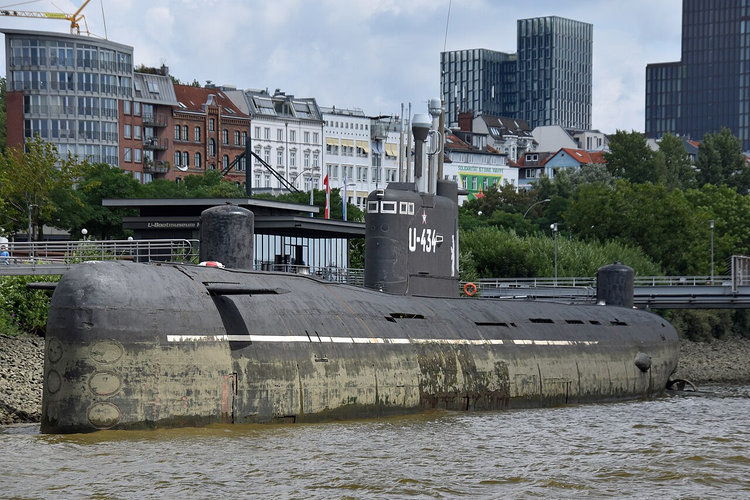
The submarine museum B-515 stands near the fish market; German guidebooks call it U-434 (U-Boot Museum). The Soviet diesel-electric submarine was launched in 1976 and later bought by entrepreneurs. Inside, the atmosphere of crew life has been recreated.
 © Thomas Dahlstrøm Nielsen · CC BY-SAPhoto: Thomas Dahlstrøm Nielsen, CC BY-SA (https://creativecommons.org/licenses/by-sa/4.0), Wikimedia Commons
You'll walk through narrow compartments where everything recalls the submariners' service (U-Boot Museum Hamburg). Most items on board are authentic, and the organizers found some at flea markets. Here you can see how cramped the crew quarters were and how mechanics worked in the engine room.
People with claustrophobia and tall visitors will find it challenging here. On the other hand, it's a rare chance to look inside a military submarine and understand the conditions in which sailors served.
- How to get there: U-Bahn Landungsbrücken, then along the port.
- The catch: low ceilings and narrow passageways.
International Maritime Museum
 © Matti Blume · CC BY-SAPhoto: Matti Blume, CC BY-SA (https://creativecommons.org/licenses/by-sa/4.0), Wikimedia Commons
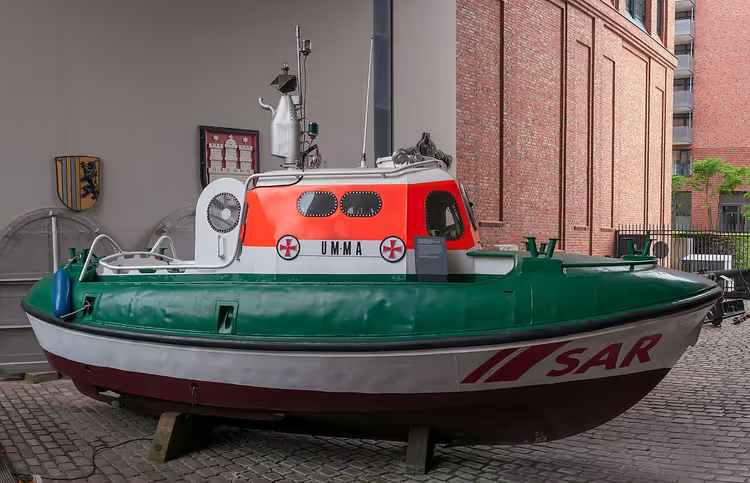
Internationales Maritimes Museum opened in 2008 in the Kaispeicher B port warehouse building (Internationales Maritimes Museum). The museum's founder Peter Tamm assembled a huge collection and donated it to the city. The collection is valued at over one hundred million euros.
The exhibition is divided into nine themed decks: shipbuilding, the Age of Discovery, maritime treasures and art (IMM Hamburg). The main relic is a small tin ship, a gift from the founder's mother when he was a child. That is where his life's work began.
The museum is now run by one of Tamm's sons, who continues his father's work. The decks are designed for both adults and children, so it's a convenient place to visit with the whole family. It takes two to three hours to see everything, so plan your visit for half a day.
- Time needed: two to three hours, the decks go from top to bottom.
- The catch: a lot of text on the displays, you get tired by the end of the day.
Chocoversum chocolate museum
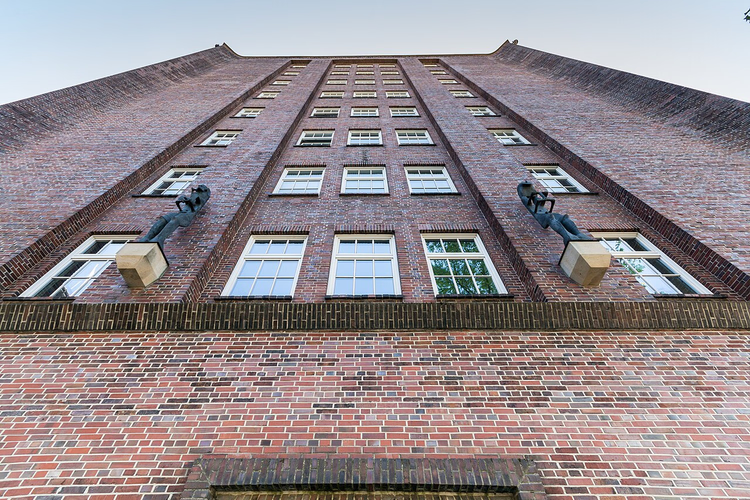 © Ajepbah · CC BY-SAPhoto: Ajepbah, CC BY-SA (https://creativecommons.org/licenses/by-sa/3.0/de/deed.en), Wikimedia Commons
Chocoversum opened in 2012, founded by the Hachez chocolate factory from Bremen (Chocoversum). Here you learn how cocoa beans become chocolate and how sweets were made in the past. Guided tours last ninety minutes.
The museum is open seven days a week, and at the end of the visit you make your own chocolate bar (Chocoversum Hamburg). The guide explains the journey from plantation to finished bar, and tastings are included in the program. There is a Hachez shop nearby with shaped bars and large gift sets.
For children and anyone with a sweet tooth, this place is almost a must. You can smell the cocoa already at the entrance, and you take your finished bar home as a souvenir. Tickets for popular time slots sell out in advance, so book your time online.
- Getting there: U-Bahn Meßberg, then walk through Speicherstadt.
- The catch: tickets for popular time slots sell out in advance.
Prototyp Automobile Museum
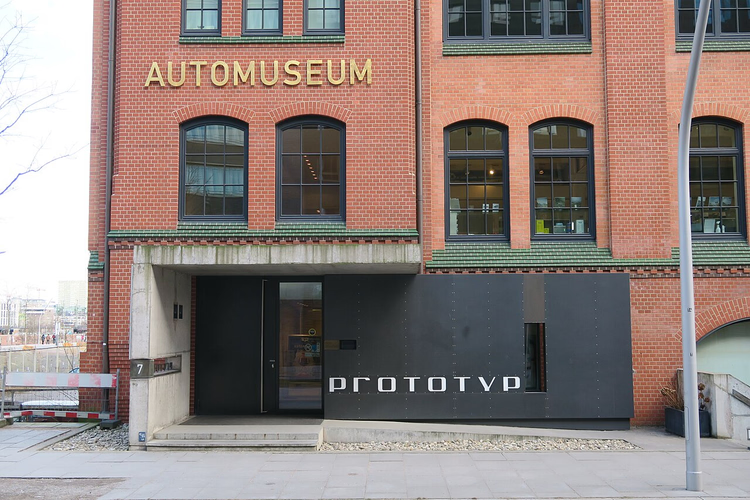 © NordNordWest · CC BY-SAPhoto: NordNordWest, CC BY-SA (https://creativecommons.org/licenses/by-sa/3.0/de/deed.en), Wikimedia Commons
Prototyp is an automobile museum in a former factory building (Prototyp Automuseum). The core of the collection is fifty racing cars from the last century, many of which exist in a single copy. Through the glass you can see how vehicles are being restored.
The collection includes not only cars, but also sleds, motorcycles, and boats from different eras (Prototyp Hamburg). The hall has a racing simulator built from real parts, and a cinema shows films. The museum's pride is a race car driven by Michael Schumacher.
The museum appeals to both adults and teenagers. The number of female visitors is growing, so the stereotype of a male hobby doesn't hold up here.
The museum preserves rare models and spare parts. For technology enthusiasts, this place is more interesting than a regular car dealership. The halls display both the first rear-engine sports cars and endurance racing cars, so even people far from the automotive world find something curious.
- Time to visit: about two hours.
- The catch: some cars are behind barriers.
Stadtpark
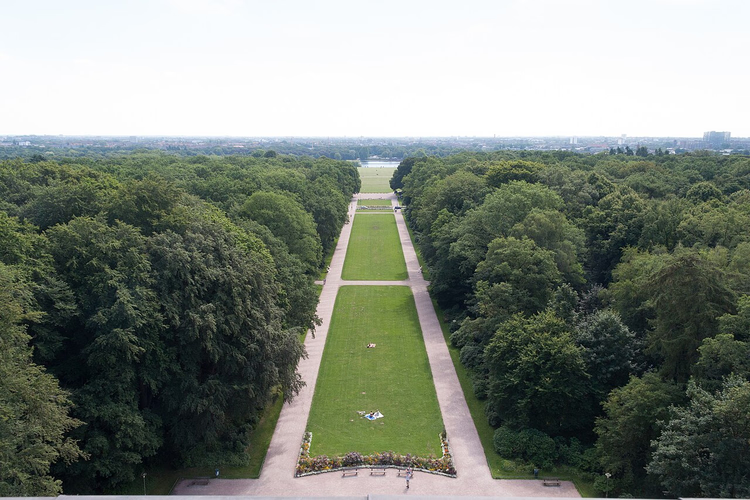 © Ajepbah · CC BY-SAPhoto: Ajepbah, CC BY-SA (https://creativecommons.org/licenses/by-sa/3.0/de/deed.en), Wikimedia Commons
Stadtpark dates back to 1914 and covers one hundred forty-eight hectares (Stadtpark). The park was conceived as a recreation area for all social classes, which seemed new at the time. Today it is called the green heart of Hamburg.
Twenty-two sculptures installed before World War II have survived to this day (Stadtpark Hamburg). The sixty-four-meter water tower building houses Germany's largest planetarium. There are stadiums, a swimming pool, a rose garden, and a concert stage. Admission is free year-round.
The park was rebuilt before and after the war, and some sculptures were removed for ideological reasons and later returned. Pre-war sculptures are scattered across different corners: some stand by fountains, others in playgrounds.
- Who it's for: for walks and picnics on a warm day.
- The catch: the park is about three kilometers from the center, so it's better to take transport.
Hamburg on the map
To combine the points into one route, open the map. It shows all the places from the list, and you can easily plan a day or two with it.
Hamburg Attractions
Places on the map
- 1Kunsthalle Hamburg Eight centuries of painting in three buildings by the Alster, open until 9pm on Thursdays
- 2Johannes Brahms Museum The composer's baroque house: manuscripts, letters and recordings, ticket about five euros
- 3Falkenstein Doll Museum A villa in Blankenese park, dolls arranged by era in replica period interiors
- 4Lake Alster A lake in the city center with boats and pedal boats, a cruise costs from ten euros
- 5Museum of Arts and Crafts Applied arts from Egyptian textiles to design, free for under-18s
- 6Gallery of Contemporary Art A cube-shaped building with 21st-century modernism and installations, separate ticket from the Kunsthalle
- 7Hamburg History Museum An interactive exhibition in a brick house from demolished quarters, about two hours
- 8Cap San Diego Museum Ship A cargo ship at the Landungsbrücken, open daily, ticket no more than seven euros
- 9Hamburg State Opera Opera and ballet year-round, tickets from about eleven euros
- 10Planten un Blomen Botanical Garden A free park with a Japanese garden, open from 7am to 11pm
- 11Erotic Art Museum Engravings and lithographs on the Reeperbahn, ticket rarely exceeds eight euros
- 12Zoological Museum A free museum with fossils and species reconstructions, closed on Sundays
- 13Hagenbeck Zoo Open enclosures without bars, a tropical aquarium and feeding shows, half a day needed
- 14St. Nicholas' Church Ruins-memorial with a lift to the viewing platform, ticket six euros
- 15St. Michael's Church Baroque and classicism, a 132-metre bell tower with views of the harbour and Speicherstadt
- 16St. Catherine's Church One of the city's oldest, Bach played its organ, the tower was rebuilt by 1956
- 17St. Jacobi Church Medieval altars and a cafe in the bell tower at 84 metres
- 18Beatles Square A round record-shaped square with musician figures, opened in 2008
- 19Hamburg Dungeon An interactive show about the port's dark history, the programme lasts ninety minutes
- 20Chilehaus A brick expressionist office building with a corner shaped like a ship's bow
- 21Panoptikum Wax Museum Germany's oldest wax museum on the Reeperbahn, about an hour to see
- 22Rickmer Rickmers Museum Ship A three-masted 97-metre sailing ship, you can climb the mast in good weather
- 23Miniatur Wunderland The world's largest model railway, tickets from twenty-two euros
- 24Elbphilharmonie The city's symbol on an old warehouse, the Plaza platform at 37 metres open until midnight
- 25U-434 Submarine Museum A diesel-electric submarine by the fish market, narrow compartments and low ceilings
- 26International Maritime Museum Nine themed decks in the Kaispeicher B warehouse, two to three hours to see
- 27Chocoversum Chocolate Museum A ninety-minute tour with tasting, ending with making your own bar
- 28Prototyp Car Museum Fifty racing cars in a former factory, a racing simulator and workshop
- 29Stadtpark 148 hectares with a planetarium in a water tower, free entry year-round
Museum tickets and observation deck tickets are convenient to buy online. This way you don't stand in line at the ticket office and choose a free time slot in advance.
Tours and tickets in Hamburg
Guided tours, skip-the-line tickets and activities — most offers can be cancelled free of charge.
See offers on TiqetsThe widget loads once you give your consent.
⁉️🤔 Frequently asked questions
How many days do you need for Hamburg?
Two or three days are enough for Hamburg. On the first day, take the Kunsthalle gallery and a walk along the Alster, on the second the museum ships at Landungsbrücken, on the third the churches and Stadtpark. That's enough to see the main sights without rushing.
What to see in Hamburg for the first time?
First of all, the Elbphilharmonie and Speicherstadt, these are the face of the city. Add Miniatur Wunderland and the observation deck of St. Michael's Church. If you still have energy, stop by St. Nicholas' Church and Beatles-Platz.
When is the best time to visit Hamburg?
The warm months are June and September, when ferries run and all parks are open. In winter the city is also nice, but some observation decks close due to wind. Museum tickets are worth booking in advance at any time of year.
Do you need to book tickets in advance?
For popular museums, yes, especially Miniatur Wunderland, Chocoversum, and observation decks. You can visit the Kunsthalle gallery and most churches without a reservation. Online tickets are often cheaper and save you from waiting in line.
How much does admission to Hamburg's museums cost?
Exact prices change, so check them on the official websites. Some places are free, such as Planten un Blomen, Stadtpark, and the Zoological Museum. For paid attractions, it's easier to buy tickets online so you don't have to wait in line.
Can you see Hamburg in one day?
In one day you can realistically see only the center: Speicherstadt, the Elbphilharmonie, the Alster, and one or two churches. Museums and the zoo are better left for the next day. If you're really short on time, take a boat tour, it covers the city's main sights.
How do you get around the city?
The center is easy to explore on foot, and the U-Bahn and S-Bahn help you reach places farther apart. Landungsbrücken and Speicherstadt are easy to get to by metro. Keep a map handy, and you can put together the route from this list in one evening.
Where to eat in Hamburg?
During the day it's convenient to grab a bite in Speicherstadt or near the Alster, and in the evening people head to the Reeperbahn and the Sternschanze district. The center has plenty of cafes serving fish and local cuisine, but prices are higher. Go for lunch on weekdays, when daytime specials are available, and book a table for the weekend in advance.
What to do in Hamburg when it rains?
In bad weather, museums and indoor attractions come to the rescue. The Kunsthalle, Museum für Kunst und Gewerbe, Hamburg Dungeon, and Chocoversum are good options. For a panorama in the rain, choose the Elbphilharmonie Plaza, where the glass facade and harbor views work even under clouds. Keep an umbrella handy.
Is a harbor tour worth it?
Yes, if it's your first time in the city. From the water you see the port, Speicherstadt, and the Elbphilharmonie from a different angle. Boats and ferries depart from Landungsbrücken and the Alster, and tickets are sold at the pier. Take an evening cruise, and you'll catch the lights and the sunset.
What to see in Hamburg with kids?
With kids, Miniatur Wunderland, Hagenbeck Zoo, and Chocoversum almost always work well. The Dungeon is better for teenagers. Between museums, take breaks in parks such as Planten un Blomen or Stadtpark, where there's plenty of room to run around. Buy tickets in advance so you don't have to wait in line.
Where to take great photos?
For shots, head to the Elbphilharmonie Plaza, the Speicherstadt warehouse district, and Beatles-Platz. St. Michael's Church offers a panorama from above. The best light is in the morning and at sunset, while at midday shadows are harsh. In the Kunsthalle and churches, shoot without flash.
What to bring to Hamburg?
Comfortable shoes: you'll cover the center on foot. Bring a windbreaker even in summer, as the weather near the water changes quickly. An umbrella and cash for small cafes and the market will come in handy. A phone charger is also worth bringing, since tickets and maps live on your smartphone.
In short: what to book
Hamburg packs in dozens of different places, and in a couple of days you can easily put together a route that suits you. Art lovers will enjoy the Kunsthalle and Museum für Kunst und Gewerbe, families with kids will like Miniatur Wunderland and Hagenbeck Zoo, and those who want a panorama should head to the Elbphilharmonie observation deck.
If you're short on time, start with the Elbphilharmonie and Speicherstadt. Buy tickets to the most popular museums in advance: Hamburg museum tickets on Tiqets or find a tour on GetYourGuide.

A small editorial team writing guides for independent travel. We travel ourselves, but we haven’t been everywhere, so we check prices, opening hours and how to get there against official sources.