
















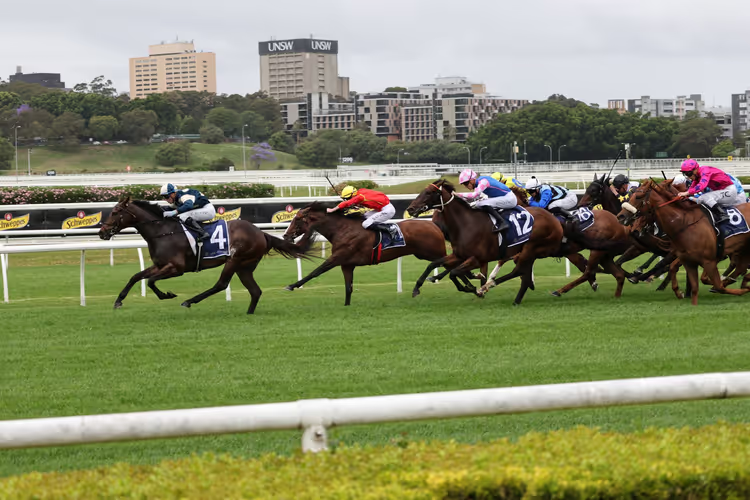
Melbourne Cup 2026: date, prize money and Flemington tickets
The first Tuesday of November is a public holiday in the state of Victoria. In 2026, the Melbourne Cup will be held on November 3 at Flemington Racecourse (As of 09/2026, carnival calendar). This 3,200 m race brings the entire country to a standstill for a few minutes.
Around 120,000 spectators come to the Flemington stands, and the race itself is considered the richest handicap in the world, so tickets sell out long before the start (As of 09/2026, Austadiums). Below you will find the carnival calendar, horse selection rules, how ticketing works, and practical tips on how to plan a trip to Australia in November.
Ad: this article contains affiliate links, we earn a commission if you book through them, at no extra cost to you.
Where and when the Melbourne Cup takes place
💡 In short:
- The Melbourne Cup takes place on the first Tuesday of November; in 2026, that is November 3.
- The race is hosted by Flemington Racecourse, over a distance of 3,200 m.
The Melbourne Cup Carnival lasts four days: Derby Day, Melbourne Cup Day, Oaks Day, and Stakes Day. In 2026, the carnival runs from October 31 to November 7, and there is only one main day on that list (As of 09/2026, four-day schedule).
The start is given in the afternoon local time. The VRC publishes the exact race time in the day's program, and by that hour the whole country is glued to screens: for three minutes of racing, Australians reschedule meetings and cancel plans.
The date moves. The race always falls on the first Tuesday of November, so from year to year the start shifts by 1 to 7 days. Keep this in mind if you are planning a trip to Australia well in advance.
The Cup's attendance record has stood since 2003: 122,736 spectators (VRC report, As of 09/2026). Regular days are more modest, but the racecourse still fills up long before the first race.
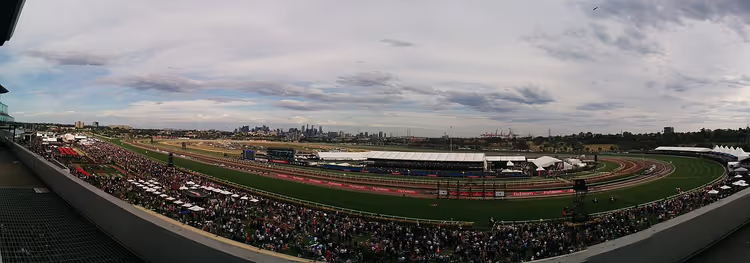
Flemington Racecourse lies about 6 km from Melbourne's city center. The racecourse has wide lawns and rose beds, and some of the stands look directly onto the home straight.
 © Fozzybronze · CC BY-SAPhoto: Fozzybronze, CC BY-SA (https://creativecommons.org/licenses/by-sa/4.0), Wikimedia Commons
How long the race lasts and its history
The first Melbourne Cup was held in 1861 (As of 09/2026, racecourse page). Back then, a few thousand people came to the racecourse, and the winner received money that is modest by today's standards and a gold watch.
The sums are different now. In 2026, the Melbourne Cup prize pool is around 10 million Australian dollars, and the winner receives 4.5 million (As of 09/2026, Racenet). The trophy is special too. It is a three-handled cup that the winner keeps.
The race distance is 3,200 m, exactly two classic miles. Thoroughbreds cover it in under four minutes. It is this combination of speed and stamina that is valued most here.
The distance figures explain why the Cup is considered a test for stayers rather than fast sprinters: the horse must hold its pace from start to finish and keep its position in a tightly packed group.
The race has a huge audience. The broadcast is watched in dozens of countries, and the total number of viewers is measured in the hundreds of millions. But for Melbourne, something else matters more: here the Cup has long become a city festival, not just a sporting event.
Which horses are eligible for the Cup
The field has a maximum of 24 horses (As of 09/2026, Wikipedia). All of them are thoroughbreds, and horses aged three and older are allowed to start. Young horses are not entered over the 3,200 m distance: the load is too great for them.
The Melbourne Cup is run as a handicap. Each horse carries the jockey's weight plus an additional load assigned by the Victoria Racing Club handicapper. The higher the horse's class and rating, the heavier its burden.
This weight difference is what creates the intrigue. The lowest-rated horse gets the minimum load and can theoretically beat the favorite. You will find it interesting to follow not only the finish but also the starting weights.
The weigh-in is held openly, and it draws no less attention than the race itself. Weights are announced in advance, so trainers build their tactics before the race and select a jockey to match the required weight.
If there are more than 24 entries, the extras are cut based on rating. A low-rated horse risks missing out on the main field. For trainers, this is a separate headache.
 © Flickr user Jeff Kubina · CC BY-SAPhoto: Flickr user Jeff Kubina, CC BY-SA (https://creativecommons.org/licenses/by-sa/2.0), Wikimedia Commons
How spectators prepare for the Melbourne Cup
The gates at Flemington open in the morning, and the first guests arrive long before the race. There are more people than seats in the stands, so the best spots near the finish line get taken right away.
The racecourse looks like a huge oval: the track runs around the outside, with picnic lawns inside and along the edges. Near the entrance stands a building with two sections and private boxes. The upper tiers are open to club members and invited guests, while the lower tiers are available to anyone with a ticket.
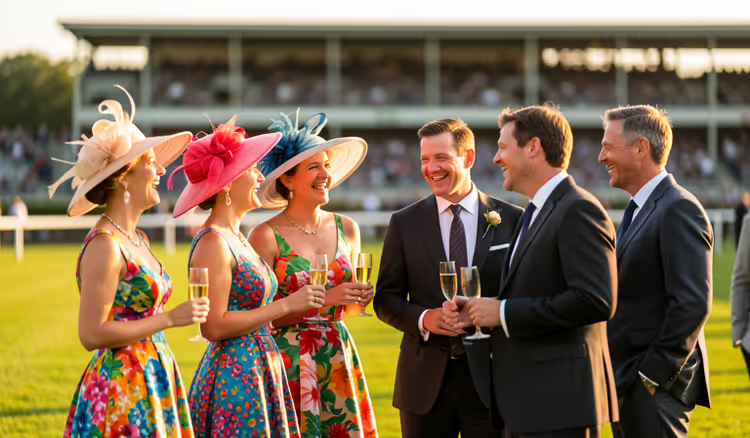
The dress code for members' areas is strict: suit, tie, hat. In the general stands the rules are more relaxed, but the crowd still dresses up. Outfits at the Cup have become part of the show rather than a formality.
A few months before the race, Melbourne boutiques see a surge in sales of dresses, suits, hats, and expensive shoes, and some guests spend thousands of dollars on their look to make it into the competition's top ten.
The Fashions on the Field competition is held every year. The judges pick the best men's and women's outfits, and the winners receive prizes, sometimes including a car. Occasionally, costumes inspired by movie and comic book characters make the shortlist.
If you're going for the first time, choose an outfit with a long day in mind: there's only one race, but the carnival around it lasts for hours. Bring comfortable shoes, you'll be on your feet a lot.
 AIIllustrative image: AI-generated
Tickets and opening hours
Tickets for Melbourne Cup Day are sold through the official channels of the Victoria Racing Club and Ticketek. The price depends on the area: general admission is cheaper, while stands and restaurants cost more. Exact prices for 2026 are published before sales open.
Spots near the finish line sell out first. If you want to see the final seconds up close, buy your ticket well in advance, not a week before your trip.
Opening hours for the carnival vary from day to day. Gates usually open in the morning, and the last race goes off in the afternoon. Check the current day's program on the official VRC website.
The easiest way to reach the racecourse is by train. During carnival days, extra services run to Flemington Racecourse, so you won't need a car or taxi.
Tours of Melbourne and activities around the carnival are best booked in advance: tickets and tours on GetYourGuide.
Tours and tickets in Melbourne
Guided tours, skip-the-line tickets and activities — most offers can be cancelled free of charge.
See offers on GetYourGuideThe widget loads once you give your consent.
What to do in Australia in November
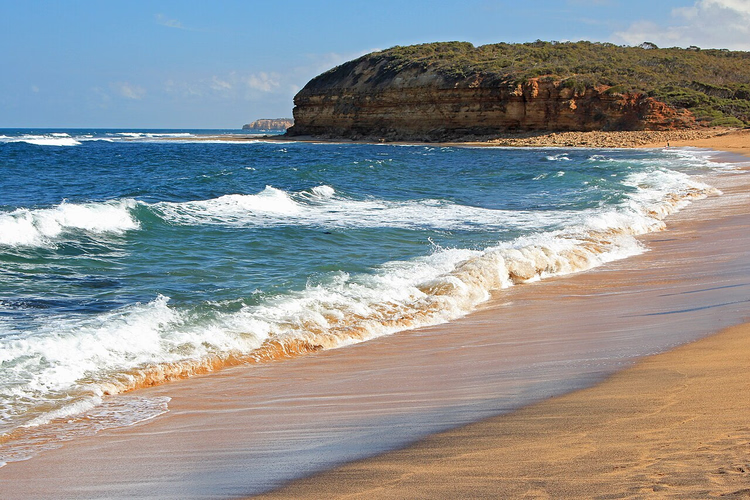
November in Australia falls at the end of spring. In the state of Victoria it's already warm, the ocean is heating up, and surf season begins along the coast. Beaches are busy even on weekdays at this time of year.
Surfing here isn't exotic, it's a way of life. Both beginners with an instructor and experienced riders at ocean spots catch waves. We already have a rundown of the best surf spots: where to go for waves.
The second option is Aboriginal culture. Australia has many significant sites tied to the history of the First Nations peoples, and tours with local guides show the country from a different angle, not just the beach side.
The third option is the vineyards around Melbourne. Tastings, terrace lunches, and visits to wineries take up a whole day, and we covered that route in a separate article.
If you're going to the Cup, add two or three days to your trip for Melbourne and the coast. One day isn't enough for the city, and the distances between the beaches and the center here are short.
 © Mickydee2066 · CC BY-SAPhoto: Mickydee2066, CC BY-SA (https://creativecommons.org/licenses/by-sa/4.0), Wikimedia Commons
How to get to Australia
There are no direct flights from Europe to Melbourne, so the trip involves one connection, and total travel time including airport layovers is measured in days. Convenient connections are offered by airports in the Middle East and Southeast Asia.
This is a long-haul destination, so it is worth looking for tickets in advance: flights to Melbourne on Kiwi.com help you compare options by dates and connections, including flights around carnival days.
A bus runs from the airport to central Melbourne, and the trip takes under an hour. In the city, it is easier to get around by tram and train using a single myki card, so you do not need a car.
Plan your trip with some buffer: around Cup days, hotels and tickets get more expensive, and availability shrinks. The earlier you book accommodation, the smoother your trip will be.
⁉️🤔 Frequently asked questions
When will the Melbourne Cup take place in 2026?
The race is always held on the first Tuesday of November. In 2026, that is November 3, and the whole carnival runs from October 31 to November 7 (as of 09/2026, Racenet). The exact race time is published by the VRC in the day's program.
How many horses run and what is the distance?
The field has a maximum of 24 thoroughbred horses aged three and older, over a distance of 3,200 m (as of 09/2026, Cup rules). The race itself lasts under four minutes, but horses are prepared for it for months.
How do I buy tickets for the racecourse?
Tickets are sold through the official channels of the Victoria Racing Club and Ticketek.
What should I wear to the Melbourne Cup?
Members' areas require a strict dress code: suit, tie, hat.
What is worth seeing in Australia in November?
The state of Victoria is warm, beaches and surfing are in season, and wineries around Melbourne are open.
In short: what is worth booking
The Melbourne Cup takes place on a single day, but the trip around it is worth putting together in advance.
If you are going for the race: get a ticket in the finishing straight area several months ahead, and keep general admission as a backup option.
If you want the city and the coast: plan two to three days for Melbourne and a separate day for wineries or ocean beaches.
If it is a long trip: compare flights by dates, so tickets around the carnival work out cheaper.
Accommodation in central Melbourne is best booked in advance: see Melbourne hotels on Trip.com.

A small editorial team writing guides for independent travel. We travel ourselves, but we haven’t been everywhere, so we check prices, opening hours and how to get there against official sources.