








Madrid by season: when to go and what to pack
The best time to visit Madrid is spring or fall. During these months, temperatures stay in a comfortable range and museum lines are shorter. In summer, the capital of Spain gets hit with heat above 30 °C, while winter can be chilly and damp. Below you'll find a month-by-month climate table, a breakdown of each season, and a list of what to pack.
Madrid sits in the very center of Spain, far from the sea. That's why the climate here is continental: hot, dry summers and noticeably cool winters. This changes the whole logic of your trip. You come here for the city, museums, and plazas, not for the beach.
Ad: this article contains affiliate links. We earn a commission if you book through them, at no extra cost to you.
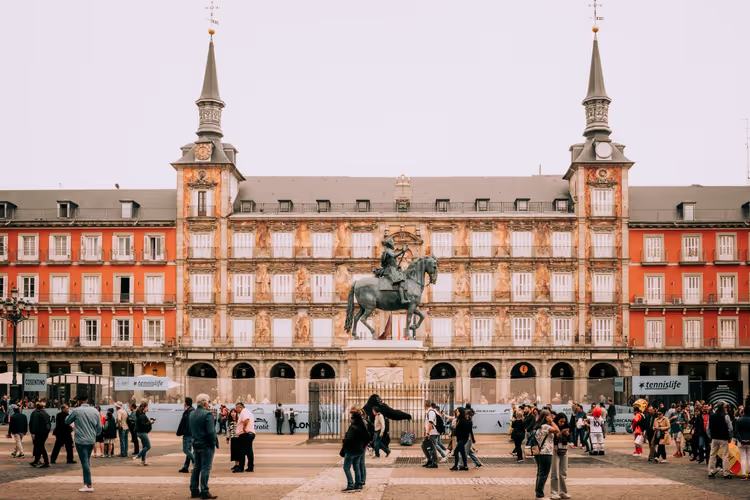
The weather in Madrid is more predictable than on the coast. Rain is rare here, and there are plenty of sunny days all year round. The difference between seasons is mostly about temperature, not precipitation.
When to visit Madrid: in short
💡 In short:
- Best months: April, May, September, and October. The weather is mild and daylight hours are long.
- Summer, July and August: heat of 30-35 °C and dry air. Only suitable for a short trip.
- Winter, November-March: daytime temperatures are usually 10-16 °C, nighttime 1-5 °C, rain is rare, snow almost never falls.
- Climate and temperatures: 09/2026, according to AEMET data, Spain's meteorological service.
Madrid climate by month
Madrid's climate is classified as temperate continental. In summer, the sun shines up to 12 hours a day, and the thermometer confidently climbs past 30 °C. In winter, the air cools to single digits, but frosts are rare. Precipitation is unevenly distributed throughout the year: the most rain falls in spring and fall, while in July and August it almost disappears.
The table below shows monthly averages. Treat it as a guide, not an exact forecast. Actual weather in any given week may differ.
Month | Temperature, °C | Sunny hours | Rainy days |
|---|---|---|---|
January | 1-10 | 5 | 6 |
February | 3-12 | 6 | 6 |
March | 4-16 | 7 | 5 |
April | 6-18 | 8 | 7 |
May | 10-22 | 9 | 8 |
June | 14-28 | 11 | 4 |
July | 18-32 | 12 | 2 |
August | 17-32 | 11 | 2 |
September | 14-27 | 8 | 3 |
October | 9-20 | 7 | 6 |
November | 5-14 | 5 | 7 |
December | 3-11 | 4 | 7 |
As of: average climate normals from the Retiro observatory, 09/2026, Spain's meteorological service AEMET.
Spring and fall: the best time to visit
April, May, September, and October offer the best balance of warmth and comfort. It's warm during the day, cool in the evening, and the oppressive heat hasn't arrived yet or has already passed. You can walk around the city without hiding from the sun. That's exactly why these months are considered the best for a trip.
 © Javier Perez Montes · CC BY-SAPhoto: Javier Perez Montes, CC BY-SA (https://creativecommons.org/licenses/by-sa/4.0), Wikimedia Commons
In spring, the city blooms and cafe terraces fill up again. In mid-May, San Isidro takes place, the festival of Madrid's patron saint. The main program runs from May 8 to 17, with the peak on May 15 (as of: 09/2026, esmadrid). Expect open-air concerts, dancing, and crowds in the plazas.
In fall, the heat subsides and there are fewer tourists. September and October are especially pleasant. The air is clear, and for allergy sufferers this is almost a pollen-free season. It drizzles occasionally. An umbrella in your suitcase won't hurt.
Summer in Madrid: heat and dry air
Summer in Madrid is hot and very sunny. In July and August, the thermometer often shows above 30 °C, and on the hottest days it can reach 35 °C. Rain is rare in these months. For many tourists, this kind of heat is tough.
 © Dmitry Dzhus from London · CC BYPhoto: Dmitry Dzhus from London, CC BY (https://creativecommons.org/licenses/by/2.0), Wikimedia Commons
There's an upside. The air is dry, so the heat is easier to bear than on the humid coast. You can escape the heat at the city's public pools, and Madrid has plenty of them.
The takeaway is simple. Don't plan a long vacation in July or August. A short two- or three-day trip is manageable if you schedule walks for the morning and evening. During the day, take refuge in museums and air-conditioned cafes.
Winter in Madrid: cool but no snow
Winter surprises with its chill. From November to March, daytime temperatures are usually 10 to 16 °C, and at night around 1-5 °C. At the same time, temperatures rarely drop below freezing and only briefly, and snow is a big rarity.
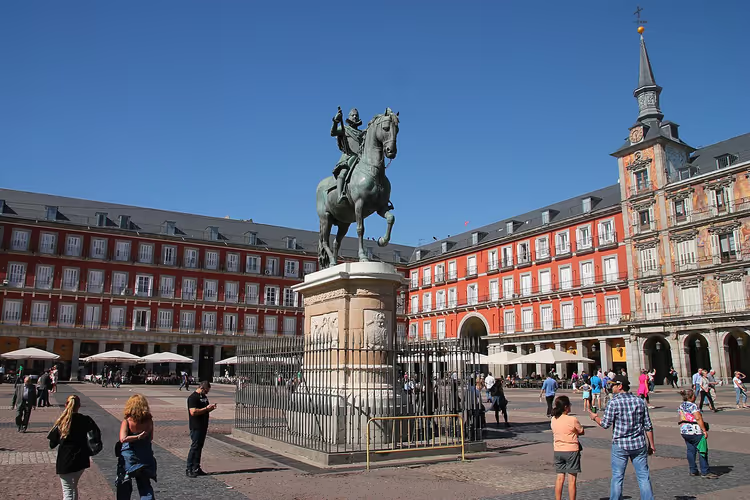 © Draceane · CC BY-SAPhoto: Draceane, CC BY-SA (https://creativecommons.org/licenses/by-sa/4.0), Wikimedia Commons
Dress warmly and bring a waterproof jacket. Light rain falls from time to time, so keep an umbrella handy. But winter has a trump card. Those who don't mind the cold can visit museums and sights with almost no lines.
In December and January, the city is decorated for Christmas, and on January 6 the Three Kings parade (Cabalgata de Reyes) takes place. That's a good reason to come in winter, despite the chill.
What to pack by season
Pack for the weather, not the calendar. One warm layer and an umbrella will save you in Madrid almost always.
- Spring and fall: several layers of clothing, a light jacket, an umbrella. Warm during the day, cool in the evening.
- Summer: sunscreen, a hat, a water bottle, and light clothing. Shoes for long walks.
- Winter: a warm coat, a scarf, a waterproof jacket, and an umbrella. A beanie is rarely needed.
In practice, this means one thing. Check the forecast a couple of days before departure and add one spare layer. Weather in the shoulder seasons changes quickly.
⁉️🤔 Frequently asked questions
When is the most pleasant weather in Madrid?
It's mildest in April, May, September, and October. Daytime temperatures are around 18-27 °C, evenings are cool, and there's no oppressive heat. This is the best time for walking around the city and visiting museums. In fall, there are also fewer tourists than in spring.
Is it worth going to Madrid in summer?
For a short trip, yes; for a long vacation, no. In July and August it's often above 30 °C, sometimes up to 35 °C.
Does it snow in Madrid?
Snow in Madrid is a big rarity. In winter, daytime temperatures are usually 10 to 16 °C, at night around 1-5 °C. Temperatures rarely drop below freezing and only briefly. A warm jacket and an umbrella are more useful than winter boots.
Do I need an umbrella in Madrid?
Yes, an umbrella comes in handy in almost any season except July and August. The most rainy days fall in spring, fall, and early winter. In summer, rain falls only a couple of days a month.
Is there a beach near Madrid?
No, Madrid has no sea. The nearest sea is in Valencia, about 2 hours away by AVE train. That's why people choose Madrid for the city itself: museums, plazas, and parks, not for a beach vacation.
In short: what to book
Madrid is good all year round, but it's most comfortable in spring and fall. If your dates are flexible, aim for April, May, September, or October. In summer, book accommodation with air conditioning. In winter, prepare for the chill but enjoy the empty museums.
If you have allergies: choose September or October, the pollen-free season. If you want a festival: plan for mid-May for San Isidro. If you're looking for quiet: come in winter, when there are almost no lines.
Have you settled on your dates? Then it's time to look at accommodation: check hotel prices in Madrid on Trip.com.

A small editorial team writing guides for independent travel. We travel ourselves, but we haven’t been everywhere, so we check prices, opening hours and how to get there against official sources.