
















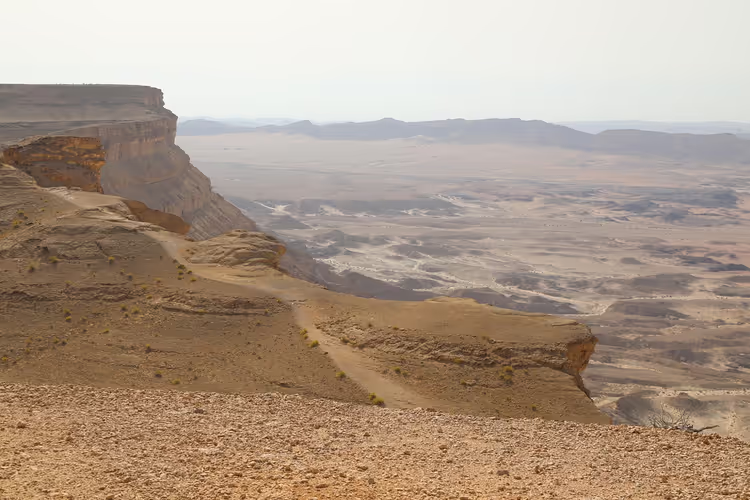
Masada, the Dead Sea and Jerusalem: how many days you need and what to book
Israel packs the desert, the salt sea, and the holy city into a single bus route. From Tel Aviv you board a morning bus and two hours later step out into a lunar landscape at the foot of Masada. Along the way, in the Judean Mountains, there's a roadside diner called Elvis Inn: a fan opened it back in the seventies, and it has been a meeting place for Elvis fans from around the world ever since.
After that, everything is close by. The Dead Sea is a half-hour drive from Masada, and Jerusalem is about an hour and a half away. The Masada plateau rises roughly 400-450 meters above the Dead Sea, and from the cliff edge you can see turquoise water all the way to the horizon (as of 09/2026, Israel Nature and Parks Authority official website). It makes sense to spend the night in Jerusalem: the city gives you transport, lodging, and the main holy sites, while you can do the sea and the desert as a day trip.
Below is just the practical side: where you pay for entry, how long to stay in the salt water, what to fit in in the Old City, and how not to ruin your trip on a Saturday.
Ad: this article contains affiliate links, we earn a commission if you book through them, at no extra cost to you.
How to combine Masada, the Dead Sea, and Jerusalem
The route forms a loop in one day: Masada early in the morning, swimming and mud at the sea in the afternoon, and back to the city in the evening. The Old City takes a separate day, and museums and the newer neighborhoods take two more. Without a car, you rely on buses and group tours. With a car, you get freedom but pay for parking, gas, and your nerves in traffic.
💡 In short:
- Masada: national park entry and the cable car are paid separately, go up at opening time.
- Dead Sea: choose the northern beaches and stay in the water no longer than fifteen to twenty minutes.
- Jerusalem: plan at least three full days, leave the Old City for the morning.
- Day trips: Masada and the sea are easy to cover in one day with a guide.
- Prices and opening hours: 09/2026, verified on the Israel Nature and Parks Authority official website.
Masada: the fortress and sunrise over the sea
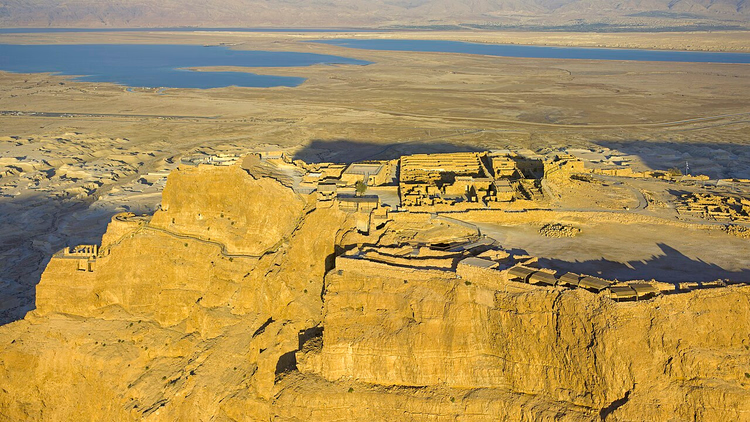
Masada sits on a bare plateau about 400-450 meters above the Dead Sea. Herod built a palace fortress here in the first century BC, and in 73 AD about 950 defenders held out against the Roman legions (history of the fortress). When the walls fell, the rebels took their own lives rather than be captured. For Israelis, it is a symbol of resistance, and school classes come here every year.
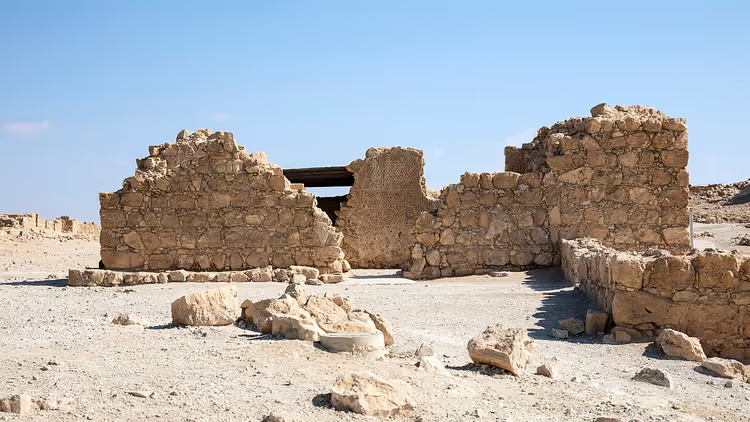 © Godot13 · CC BY-SAPhoto: Godot13, CC BY-SA (https://creativecommons.org/licenses/by-sa/4.0), Wikimedia Commons
The strongest impression comes from climbing up for sunrise. The Snake Path hiking route opens before dawn, and you can catch the sun at the edge of the plateau as the water below turns red. Get to the gate early: at dawn the light changes literally within minutes.
If you don't want to hike up in the heat, the cable car takes you from the eastern complex to the Snake Path gate. According to the Israel Nature and Parks Authority, the ride takes about three minutes each way. The line is shortest before nine in the morning.
There is no shade and almost no water on the plateau, so bring a hat, plenty of water, and closed shoes. Some sites are closed for safety reasons: for example, the Tanners' Tower is promised to reopen only after repairs, check the park news for its status.
- How to get there: bus from Jerusalem, about an hour and a half, or drive along the Dead Sea highway.
- Cost: park entry is paid, the cable car is charged separately, check the current prices on the Nature and Parks Authority website.
- Who it's for: those willing to get up before dawn for the light and the empty ruins.
- Not for: those who find it hard to walk in the heat without shade.
- The catch: by ten in the morning there is nowhere on the plateau to hide from the sun, and the last cable car leaves long before sunset.
The Dead Sea is shrinking by a meter a year
The Dead Sea only looks lifeless. In the salt-saturated water live microorganisms and algae that need neither fish nearby nor waves. But the sea itself is slowly disappearing: the water level is dropping, and the shoreline is retreating before your eyes.
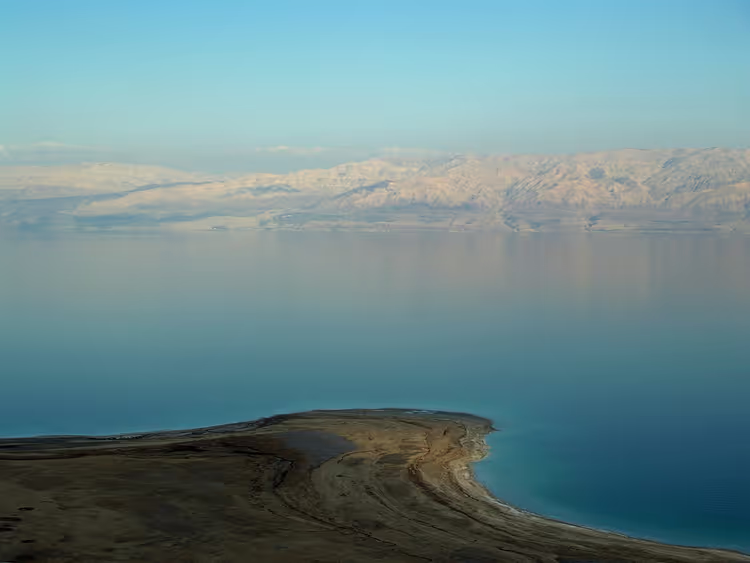 © David Shankbone · CC BY-SAPhoto: David Shankbone, CC BY-SA (http://creativecommons.org/licenses/by-sa/3.0/), Wikimedia Commons
On August 31, 2026, the sea level held at minus 441.33 meters, reports the Water Authority of Israel (as of: 08/2026). In recent decades, the sea has been losing about a meter per year, and over the years it has lost roughly a third of its surface area. Sinkholes and salt flats are spreading along the shore where beaches used to be (as of: 09/2026).
The reason is simple: Israel, Jordan, and Syria diverted the Jordan River and its tributaries for drinking water, and the sea's only inflow dropped sharply. Beaches that sat at the water's edge ten years ago now hang over a cliff.
- How to get there: from Jerusalem by car or bus, about forty minutes to the northern beaches.
- Cost: entry to developed beaches is paid, private beaches set their own prices.
- Not for: anyone expecting a classic sandy shore right at the water.
- The catch: at the developed northern beaches, the water keeps receding, and the stairs down to it get longer every year.
Mud baths: Kalia Beach and Ein Gedi
The easiest place to start is Kalia Beach on the northern shore: it's the closest developed beach to Jerusalem. There are changing rooms, showers, and barrels of black mud. You smear the mud on, wait for it to dry, then rinse it off in the sea.
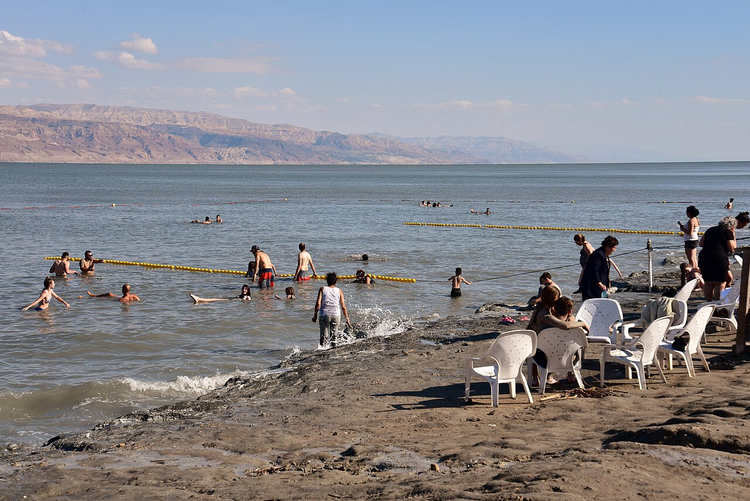 © Bahnfrend · CC BY-SAPhoto: Bahnfrend, CC BY-SA (https://creativecommons.org/licenses/by-sa/4.0), Wikimedia Commons
The logic of swimming here is simple. The water is denser than a human body, so you lie on your back and float without any effort. Staying in this water for a long time dehydrates you and irritates your skin, so don't stay in longer than fifteen to twenty minutes.
Three rules that can save your trip. Don't shave on the day you swim: fresh nicks sting. Don't get your face wet and don't dive, because getting this water in your eyes is dangerous. Bring water shoes, since the bottom is covered in salt and sharp crystals do occur.
Further south is the Ein Gedi nature reserve. Part of the shore there has been closed due to sinkholes, so check the current status on the Parks Authority website before heading out. The best time to swim is late in the day, when the heat eases and the light turns soft.
- How to get there: car or guided tour, about forty minutes from Jerusalem.
- Cost: beach entry costs roughly a two-digit amount, check the exact price on site.
- Who it's for: anyone who wants to float without knowing how to swim.
- The catch: any scratch in this water stings so badly that you'll get out within a minute.
Jerusalem: the Old City on a first visit
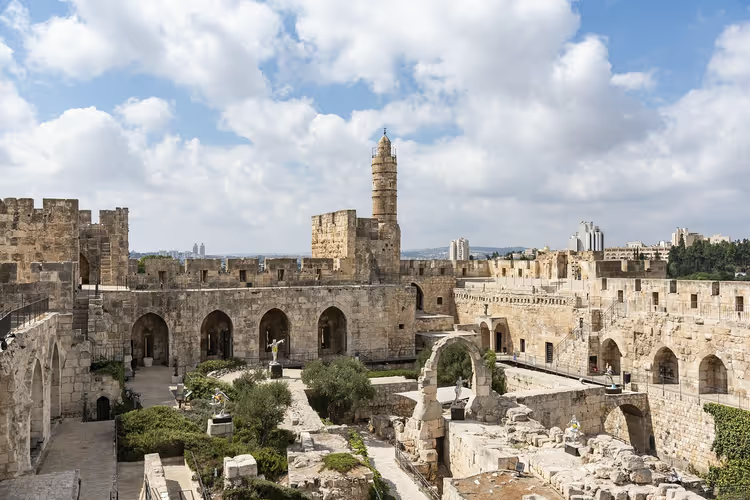
The Old City greets you right past Jaffa Gate: narrow alleys, spice stalls, groups of pilgrims, and the shouts of merchants. Four quarters, Muslim, Christian, Armenian, and Jewish, flow into one another. You'll sense the boundary between them rather than see it.
 © שלמה רודד · CC BYPhoto: שלמה רודד, CC BY (https://creativecommons.org/licenses/by/2.5), Wikimedia Commons
First rule: come in the morning. Before the shops open and before the first tour groups arrive, the streets are almost empty, and you have time to take in the 16th-century Ottoman walls.
That's not enough for everyone. For impressionable pilgrims, the concentration of holy sites can trigger what doctors call Jerusalem syndrome: a person loses touch with reality right in the alleys. The city really does get on your nerves.
Second rule: check the calendar. On Friday afternoon, the Muslim Quarter is packed with worshippers, and on Saturday, Shabbat, the Jewish Quarter goes quiet and shops close. If you arrive on such a day, rework your plan around a walk along the walls and the views from the Mount of Olives.
- The catch: in summer, the narrow alleys turn into a stifling corridor, and after midday you get carried along with the crowd.
Dome of the Rock, the Western Wall, and hummus
Above the Muslim Quarter stands the Temple Mount with the Al-Aqsa Mosque and the Dome of the Rock. The platform is closed to non-Muslims on Friday, Saturday, and Islamic holidays, and on regular days visitors are allowed in the morning and during a short window after lunch (as of 09/2026, visiting hours). Enter through the Mughrabi Gate from the side of the Western Wall, with shoulders and knees covered. Religious items and books are best left at the hotel, because security turns people away with them at the entrance.
 © שלמה רודד · CC BYPhoto: שלמה רודד, CC BY (https://creativecommons.org/licenses/by/2.5), Wikimedia Commons
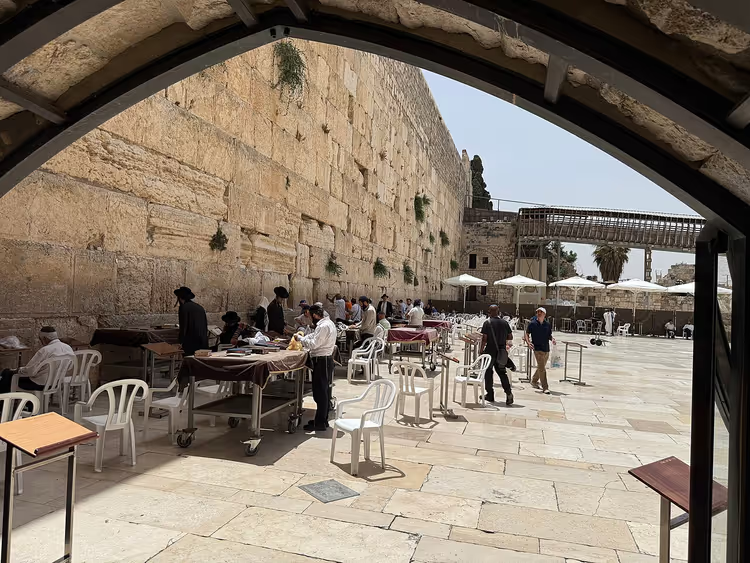
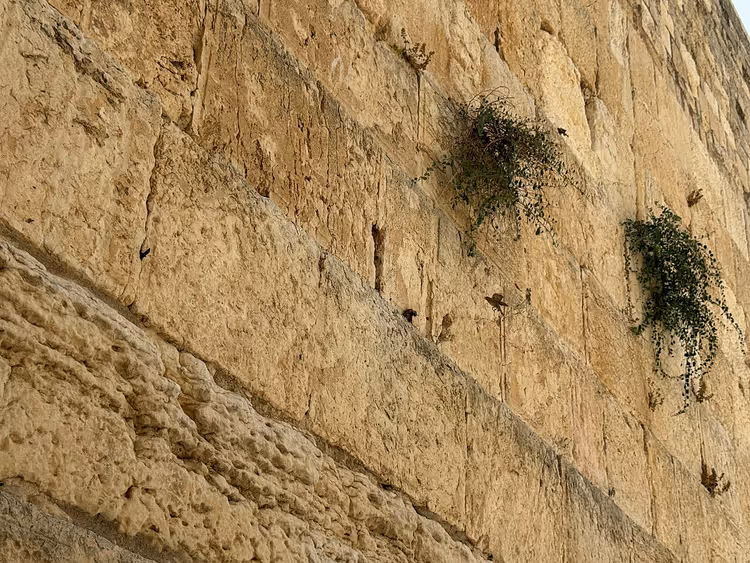
Right below the mount stands the Western Wall, all that remains of the ancient temple. People pray here around the clock, men and women separately. Everyone leaves notes in the cracks between the stones, regardless of faith.
Further on begins the Christian Quarter and the Via Dolorosa, the Way of the Cross. People walk it in prayer, while nearby vendors sell spices and grill shashlik. Lunch helps you switch gears: the Abu Shukri eatery serves hummus that people have been coming back for for decades. If you want something calmer, pick the Eucalyptus restaurant right under the wall; for noise and bustle, head to Machneyuda.
- How to get to the Temple Mount: line up at the Mughrabi Gate, security screening at the entrance, sometimes an hour of waiting.
- The catch: the window for non-Muslims can close without warning, and you get turned away right at the gates.
New City: Mamilla and Ben Yehuda
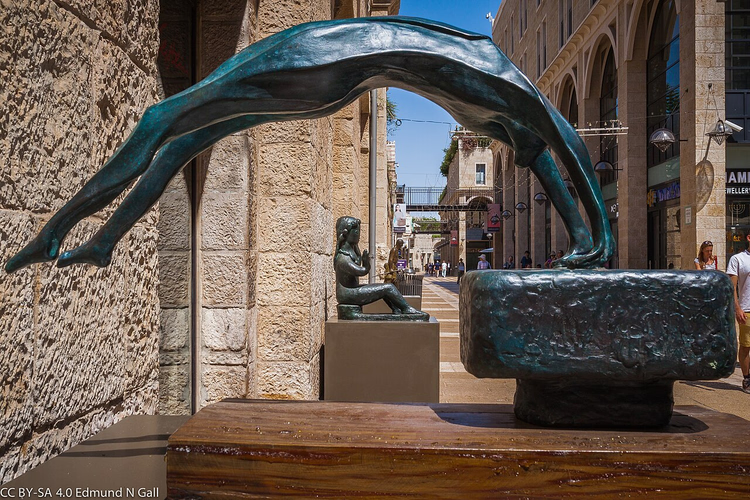
The Old City is not all of Jerusalem. From Jaffa Gate it's a few minutes to Mamilla Street: a modern shopping strip with storefronts, coffee shops, and lighting that could just as easily be in Paris. Further on is Ben Yehuda Street, pedestrian-only and car-free: people meet up here and families come for a stroll.
 © Edmund Gall · CC BY-SAPhoto: Edmund Gall, CC BY-SA (https://creativecommons.org/licenses/by-sa/2.0), Wikimedia Commons
The contrast with the eastern bazaar is striking. The new neighborhoods live at a Western pace: work, sports, cafes.
- The catch: on Shabbat only some spots on Mamilla are open, and public transport stops running.
Museums and markets of Jerusalem: what else to fit in
There's plenty to see outside the Old City too, and some spots should be planned in advance.
Place | Admission | Closed |
|---|---|---|
Yad Vashem | free, time slot required | Saturday |
Israel Museum | paid, prices on the museum website | none |
Mahane Yehuda | free | Saturday |
Knesset | free, by reservation only | Friday and Saturday |
The Yad Vashem memorial makes the heaviest impression of the entire trip. Entry to the grounds is free, but the history museum requires a free timed slot, so book it in advance on the memorial's website.
At the Israel Museum, the main draws are the Shrine of the Book, home to the Dead Sea Scrolls, and the model of Jerusalem from the Second Temple period. Tickets cost more than at the city's other museums, but the collection is enormous, so check prices and hours on the museum's website.
The Mahane Yehuda market fills the alleys between Jaffa and Agropas streets: several hundred stalls with vegetables, fish, spices, and baked goods. Come in the morning before Shabbat, when vendors are still laying out their goods and you can sample things at a relaxed pace. At the Knesset, the parliament building, the mosaics and Marc Chagall tapestries are worth seeing, but you can only get inside on a free guided tour by reservation.
- The catch: on Saturday both the market and most museums are closed, so save that day for a walk.
Day trips from Jerusalem
Masada and the Dead Sea are easy to cover in one day from Jerusalem. Group tours leave before dawn to catch the sunrise and return by evening. On your own, you take a bus to Masada, swim along the way, and come back on the last departure.
 © Godot13 · CC BY-SAPhoto: Godot13, CC BY-SA (https://creativecommons.org/licenses/by-sa/4.0), Wikimedia Commons
Further south lie Ein Gedi and other beaches, which add a couple of hours to the route. Bethlehem is very close, but before traveling to the Palestinian territories of the West Bank check the political situation, because it changes quickly. If you're on a longer trip, people also head from the city to Jordan: Petra and the Wadi Rum desert take two to three days.
If you're short on time, book a ready-made Masada and Dead Sea tour on GetYourGuide.
Tours and tickets in Jerusalem
Guided tours, skip-the-line tickets and activities — most offers can be cancelled free of charge.
See offers on GetYourGuideThe widget loads once you give your consent.
Where to stay in Jerusalem
You'll have to choose between the old city and the newer neighborhoods. In the old city you're steps away from the holy sites, but you pay for it with noise until late at night. In the newer neighborhoods it's cheaper, quieter, and easier to get around.
Here are some budget benchmarks. Hotel Allegra sits away from the center and works as a quiet oasis after a hot day. Biazi is a boutique hotel in the very heart of the city, if you want to step straight out to the sights. Jeru Caps is aimed at budget travelers who want to be central: you'll sleep in a capsule rather than a room.
Prices depend heavily on the date, so compare for your own days: find a hotel in Jerusalem on Trip.com.
- The catch: in religious neighborhoods on Shabbat, the elevator stops at every floor, so getting upstairs takes a while.
Practicalities: how many days, when to go, safety
Three full days are needed just for Jerusalem, and that's without any day trips. If you want Masada, the Dead Sea, and Bethlehem, add two more days. It's best to walk the old city in the morning, and save museums for the afternoon heat.
The best months are March to May and September to November. In winter the city is mild, but the weather changes every day, and in summer the heat wears you down even in the shade. In spring the hills are green; in autumn the sea is still warm.
On safety, go by official warnings, not rumors. Before your trip, check the German Foreign Office (Auswärtiges Amt) travel advice for Israel. Security checks at the entrances to shopping malls, train stations, and holy sites are standard practice here, and the screening takes a couple of minutes.
A direct train runs from Ben Gurion Airport to Jerusalem, and the city has trams and buses. Train schedules for Israel on Trip.com are useful if you're planning longer journeys.
The main constraint is Shabbat. From Friday evening to Saturday evening, public transport nearly stops, shops are closed, and some cafes only operate in the Arab quarters. Plan that day on foot or by taxi.
Drink water and wear a hat: in the sun you lose energy faster than you think. Keep a backup plan for the day in your bag, because on holidays plans fall apart on their own.
- The catch: on Shabbat and holidays, half your plans won't work out, so decide in advance what you'll do on foot.
⁉️🤔 Frequently asked questions
How many days do I need for Jerusalem, Masada, and the Dead Sea?
Plan three full days for Jerusalem, and one more day for Masada and the Dead Sea. If you add Bethlehem and Ein Gedi, allow five days.
When is the best time to go to Jerusalem and the Dead Sea?
The most comfortable months are March to May and September to November. In summer the heat wears you down, so swim early in the morning or at sunset.
Can a non-Muslim visit the Temple Mount?
Yes, Sunday through Thursday, in the morning and during a short window in the afternoon. Hours change, so check them on the day of your visit.
What's the right way to swim in the Dead Sea?
Enter the water slowly, lie on your back, and don't try to swim. Stay in the water no longer than fifteen to twenty minutes, then rinse the salt off under a fresh-water shower.
Is Jerusalem safe right now?
The old city is patrolled, but clashes are possible on holidays, so stay away from large crowds. Before your trip, check the German Foreign Office travel advice for Israel and decide based on your own situation.
In short: what's worth booking
If you have one day and plenty of energy: Masada at sunrise and a swim in the Dead Sea. If you have three days and a relaxed pace: the old city in the morning, museums in the afternoon, Shabbat on foot through the newer neighborhoods. If you're traveling with children: choose the northern beaches and don't go up to the plateau at midday.
Book hotels in Jerusalem in advance, especially for holidays, when rooms are scarce and prices rise. Compare options for your dates: see Jerusalem hotels on Trip.com.

A small editorial team writing guides for independent travel. We travel ourselves, but we haven’t been everywhere, so we check prices, opening hours and how to get there against official sources.