
















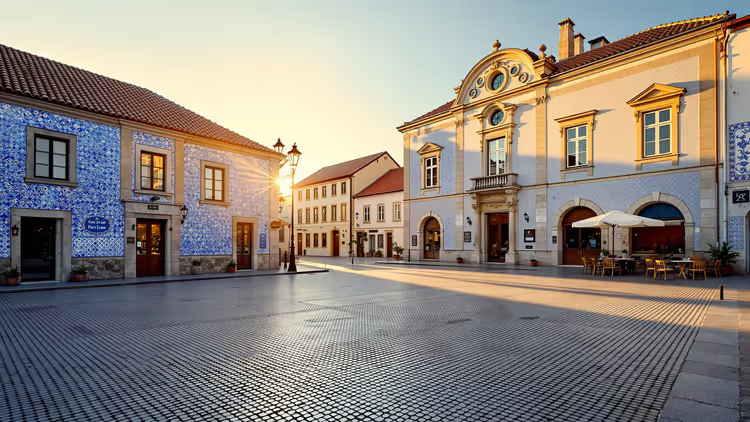
 AIIllustrative image: AI-generated
Mangualde: how life works in a small town in Portugal
Mangualde is easy to miss on the map. It is a small town in central Portugal, between Viseu and the Serra da Estrela mountain range. It is 300 km from Lisbon, 150 km from Porto, and about 100 km from the Atlantic (as the crow flies). Many people consider places like this for a move: quiet, cheaper than the capital, and everything you need is nearby.
But can someone from a big city handle that much quiet? And how much does life actually cost here? We looked into rent, transport, healthcare, shops, and leisure in Mangualde and checked every figure against a source.
Ad: this article contains affiliate links, we earn a commission if you book through them, at no extra cost to you.
Are small towns beautiful?
💡 In short:
- Renting a T1 here costs several times less than in the capital.
- Without a car, a town like this is tough: buses are infrequent, and the railway line is periodically closed for repairs.
- Breakfast at a local cafe costs a couple of euros, and lunch is noticeably cheaper than in the capital.
The center of Mangualde is built up with low-rise stone houses. The facades are clad in bright tiles or plastered and painted in light tones. The roofs are almost always terracotta, which makes the town look warm even on a cloudy day.
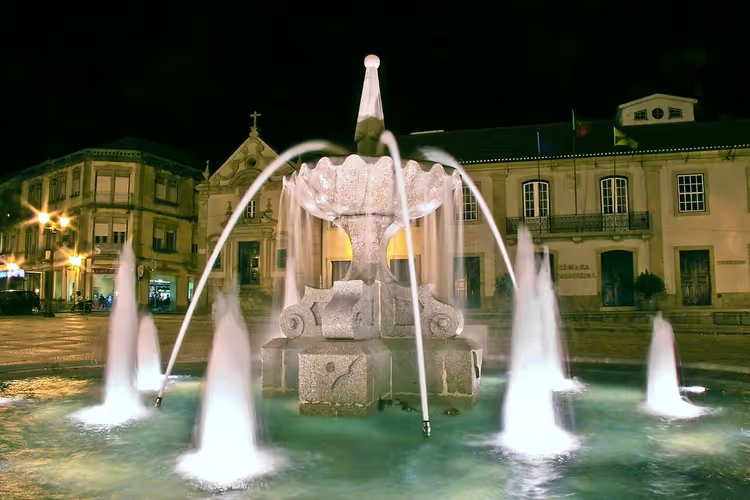 © Vitor Oliveira from Torres Vedras, PORTUGAL · CC BY-SAPhoto: Vitor Oliveira from Torres Vedras, PORTUGAL, CC BY-SA (https://creativecommons.org/licenses/by-sa/2.0), Wikimedia Commons
The main square sits right next to the town hall. Town festivals take place here, and banks, shops, and small restaurants line the square. You will reach it almost immediately if you walk up from the bus stop.
The town has several churches from the 17th and 18th centuries that look like gingerbread houses. One of them was once attached to a monastery where they invented their own bean pastries. They are still made here today.
Some churches in Portugal have survived since the Middle Ages. In Mangualde, a 13th-century church stands next to residential neighborhoods.
Alleys lined with camellias and plane trees and small green squares are called parks and gardens in Portugal. Such rest areas exist in every town in the region, and you will always find a bench in the shade.
Mangualde also has a large park, but it is private. It belongs to an estate from the second half of the 18th century, and entry to the "pink" palace and garden is paid. Neighboring towns have equally beautiful parks that are free to enter.
The town sits on high ground. If you climb to the highest point, you will see a sunset over the rolling valleys.
Closer to the outskirts, areas of modern high-rise development appear. But from the historic center, villas and townhouses stretch out in different directions, almost all with local character.
What about renting?
Portugal is considered one of the most affordable countries in Western Europe. But salaries here are also low, and rent is rising faster than incomes. People from former colonies, IT professionals, and entrepreneurs are moving to the larger cities.
You will feel the price level in Lisbon right away. A one-bedroom T1 apartment in the capital costs on average about €2,700 per month (as of 09/2026, Imovirtual data). Utilities are often paid separately, and heating in winter is expensive.
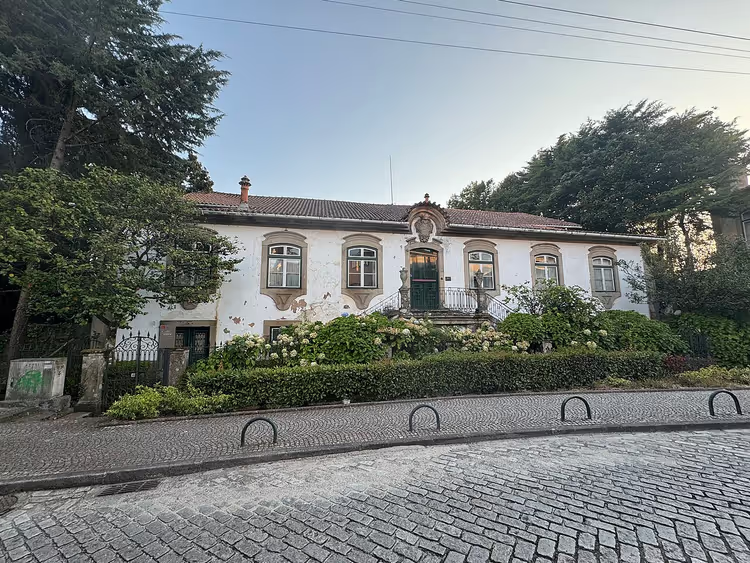 © Marcelo · CC BY-SAPhoto: Marcelo, CC BY-SA (https://creativecommons.org/licenses/by-sa/4.0), Wikimedia Commons
With a long-term rental, you leave a deposit in case of property damage. It is usually one or two months' rent. Plus, landlords ask for several months' rent in advance, so you need a large sum upfront.
In small towns, prices are different. The same T1 in Mangualde costs several times less than in the capital, in the hundreds rather than thousands of euros. Finding available apartments and houses far from the big cities is also not easy; some villas simply sit empty.
City | T1 rent, € per month |
|---|---|
Lisbon | about 2,700 (as of 09/2026, Imovirtual) |
Mangualde | several times lower, in the hundreds of euros |
If you want to come and get a feel for the town, find a hotel in central Portugal.
Transport: do you need a car
You can walk from one end of Mangualde to the other in about forty minutes. So a town like this hardly needs its own public transport. It is a different story when you have to drive kids to school across town.
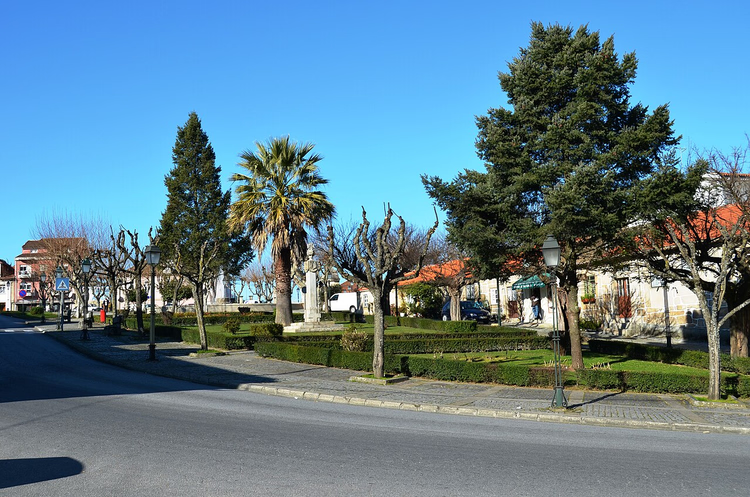 © Pedro from Maia (Porto), Portugal · CC BYPhoto: Pedro from Maia (Porto), Portugal, CC BY (https://creativecommons.org/licenses/by/2.0), Wikimedia Commons
Bus connections to other towns exist, but they run infrequently. The railway line to Mangualde is periodically closed for repairs, and trains do not always run here. Without a car, life in the countryside is genuinely hard to imagine.
Roads are in good condition, and some highways are toll roads. To pay, you get a Via Verde transponder: annual maintenance costs about €12 (as of 2026, Via Verde official website). There are highways you cannot enter without a transponder, as they only have electronic gates.
Fuel prices fluctuate with the market, and a liter of 95 stays within the range typical for Western Europe. You will see the exact price at the station on the board before you enter.
If you do not have your own car, check out car rental options in Portugal.
How healthcare works
The public healthcare system in Portugal is open to everyone, and you will have an assigned general practitioner. Getting to a specialist is harder: referrals are not always given. A response like "come back if it gets worse" is something you can hear from a doctor here.
The Portuguese use free healthcare but complain about queues, tickets for tests, and waiting for elective surgeries. Private clinics work faster: an appointment starts at a few dozen euros, and with insurance it comes out cheaper. Read the policy terms carefully.
In small towns, there may be no local clinic. Mangualde has one, but for some specialists you will have to go to Viseu, about 20 km away (on the map). The nearest major hospital is also in Viseu.
Emergency cases are handled in the emergency department. Patients are given bracelets of different colors: with green, the lowest category, the wait can stretch for the whole day. Bring water and food with you.
Shops and groceries
Municipal centers usually have several large supermarkets. Here there are small shops, a Saturday market, and a couple of big stores with all sorts of things. You will find everything for daily life without leaving for a larger city.
A big grocery shop for several days for a family of two costs about a hundred euros. Different chains have different prices, so you will save money if you keep an eye on promotions.

The quality and selection of goods in stores are usually satisfactory. If you do not want store-bought meat, eggs, and vegetables, you can find farm products nearby.
Entertainment: festivals and cafes
The Portuguese love celebrations. Town halls in small cities organize festivals for their residents: the marathon of events runs from June to November. A food festival, a saint's day, a parade, a concert, a theater performance.
The rest of the time, the town is quiet. Cafes are always full: locals do not much like cooking and often eat at restaurants that resemble canteens. You will notice this from the lunchtime queue.
Prices and portions in the countryside are pleasing. Breakfast costs a couple of euros per person, and lunch and dinner are also noticeably cheaper than in the capital. In Lisbon and Porto these amounts are roughly twice as high.
It is worth keeping local opening hours in mind. You can leave an empty restaurant with an empty stomach: between lunch and dinner, the kitchen closes.
In summer, outdoor pools operate in Mangualde. There are basic gyms, billiard and ping-pong tables, football and basketball courts, and a modest nightclub. For more extensive services, locals go to Viseu.
Every year, Mangualde hosts Feira dos Santos, a fair that attracts the most visitors to the district (according to the Centro de Portugal tourism office). People come from other regions for it.
To see the surrounding area, find tours in Portugal.
Can you find work
Locals work in services, manufacturing, and agriculture. In municipal bodies, incomes are higher. For ordinary employees, salaries rarely exceed the minimum threshold, which in 2026 is €920 gross per month (as of 2026, data from the Emprego em Portugal portal).
For migrants without the language, finding work is difficult. More often it is hard labor in a kitchen: chopping food, washing dishes and floors for a small salary. Many are saved by remote work for a foreign client.
⁉️🤔 Frequently asked questions
Where is Mangualde?
The town lies in central Portugal, between Viseu and the Serra da Estrela mountain range. The nearest larger city with a hospital and train station, Viseu, is about 20 km away.
How much does it cost to rent in Mangualde?
A one-bedroom T1 apartment here costs several times less than in the capital, in the range of a few hundred euros a month. For comparison, a T1 in Lisbon averages around €2,700 (as of 09/2026, Imovirtual price data). When moving in, be ready for a deposit and several months of rent in advance.
Do you need a car in Mangualde?
Yes, it is hard to get by without a car here. Intercity buses run infrequently, and the railway line is periodically closed for repairs. Roads are in good condition, and some highways are tolled.
Is there work in Mangualde for a foreigner?
Without Portuguese, finding work is difficult. Most jobs are in services, manufacturing, and agriculture with modest pay, and migrants without the language usually earn close to the minimum wage. Many people get by with remote work.
When do festivals take place in Mangualde?
The festival season runs from June to November: food festivals, saints' days, parades, and concerts. The main event, the Feira dos Santos fair, is hosted by the town itself (according to the municipal tourism office). The rest of the year the town is quiet.
In short: what to book
Mangualde suits those looking for a calm and affordable corner of Portugal away from the capital's bustle: pretty small towns, accessible rents, and a lively festival season.
- If you are going to check out the town: book a hotel in the region.
- If you plan to travel around the country: compare car rental prices.
- If you want to see the region with a guide: browse tours on GetYourGuide.
Start with one trip: rent a place for a couple of days and walk around the town.

A small editorial team writing guides for independent travel. We travel ourselves, but we haven’t been everywhere, so we check prices, opening hours and how to get there against official sources.