
















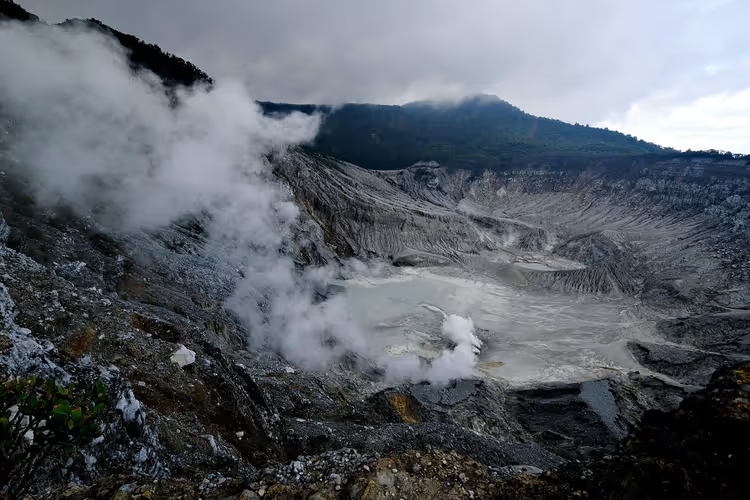
Trip to Indonesia in 2026: visa, budget, transport and what is important to know
Indonesia is impossible to cover in a single trip. The country consists of thousands of islands, and even in a month you will comfortably see only Java, Bali, and Lombok. The rest is better left for next time.
The challenge is not just the distances. Before you fly, you need to sort out the visa on arrival, the Bali tourist levy, the electronic arrival card, the rainy season, ferries, and a budget that differs significantly between Bali and Java.
Below is a practical guide for 2026: when to go, which documents to complete online, how to get between islands, how much to budget per day, and how to avoid getting sick. Next to each price is the date it was checked and the source.
Ad: this article contains affiliate links, we earn a commission if you book through them, at no extra cost to you.
Season, islands, and trip preparation
💡 In short:
- The dry season runs roughly from April to October; for a first trip, April, May, and September are the most convenient.
- The visa on arrival (e-VoA) can be paid for in advance on the official website; the stay is 30 days.
- Bali additionally charges a tourist levy, and the All Indonesia card is filled out online before arrival.
- Install Grab and Gojek while still at home: the ride price is shown before you order.
- Visas, levies, and entry rules: 09/2026, checked on the official website of Indonesia's immigration service
What awaits you in Indonesia
Java, Bali, and Lombok cover the country's three main themes: volcanoes, beaches, and temples. These islands take two to three weeks if you don't rush. Add other regions when you have more than a month.
- Nature: the country has dozens of volcanoes, some of them active. Sumatra and Kalimantan still have tropical forests where wild orangutans live.
- Beaches and water: surfing on Bali and Lombok, diving off the Maluku Islands and in Komodo National Park.
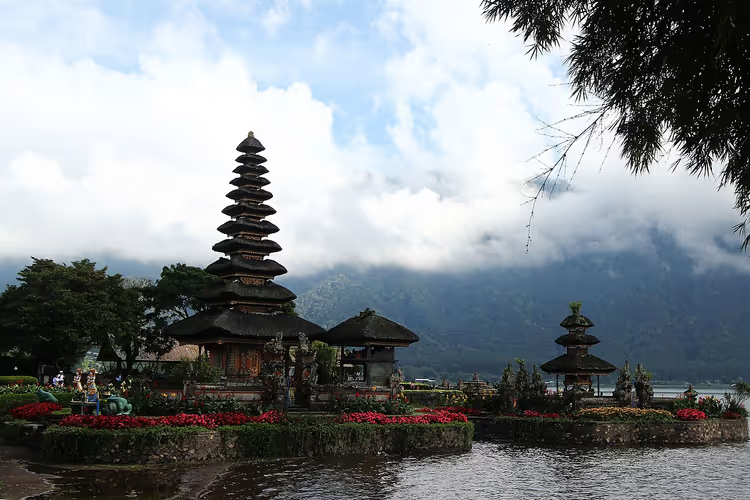
- Culture: Hindu temples of Bali and large Javanese complexes. Borobudur near Yogyakarta is considered the largest Buddhist temple complex in the world.
Don't try to mix everything into one trip. Flights between islands eat up days, and roads on Java turn out to be noticeably slower than they look on the map. Better to cover fewer regions, but with time to spare.
When to go: dry and rainy season
Indonesia essentially has two seasons, and they determine the weather, the prices, and the reliability of boats between islands.
Season | Pros | Cons |
|---|---|---|
Dry (roughly April-October) | Little rain, stable roads and crossings | Peak prices and tourist numbers in July and August |
Rainy (roughly November-March) | Cheaper accommodation, green nature, fewer people | Downpours lasting from half an hour to several days, boat cancellations |
Short downpours happen year-round, so take a light rain jacket even in the dry season. In the rainy season you win on price: hotels are cheaper, there are fewer tourists. But some boats between islands are cancelled because of waves, and plans have to be shifted.
There are exceptions to the general rule. The weather on Sumatra is less predictable, and on parts of the Maluku Islands and in West Papua the rainy season falls in the middle of the year. If you are going to these regions, check the climate separately.
We recommend April, May, and September. Nature is still green, roads are dry, and the tourist flow is smaller than at the height of summer. July and August give the most stable weather and the highest accommodation prices.
Rain in the rainy season behaves differently. Sometimes it is a nighttime downpour you simply won't notice. Sometimes it rains for several days in a row: boats don't run, trails to waterfalls get washed out. So keep one free day for every transfer between islands.
Three regions for a first trip
Java works well for culture and volcanoes. Trains run between cities, Borobudur and Prambanan stand near Yogyakarta, and people drive to Bromo by jeep for sunrise. Logistics here are simple, but roads are slow.
Bali offers the densest infrastructure: beaches, surfing, diving, yoga, cafes, and vegan cuisine. Prices here are higher than on Java, and in July and August the island is crowded.
Lombok is next door to Bali: a short flight or ferry, different beaches, mountains, and its own, calmer rhythm. The Gili Islands lie nearby. If you have two weeks, combine Java and one beach island rather than all three regions at once.
What to decide before booking
First determine the order of regions, and only then buy tickets. Between islands it is usually cheaper to fly; within an island it is cheaper to travel overland. Book trains and accommodation for holidays in advance, otherwise only expensive options will remain.
Check your passport, bank cards, and insurance. Ask your bank whether your cards work outside Europe, and enable such payments in the app. Without this, the first payment at the airport may not go through.
A paper or offline guidebook is still useful: in remote areas the internet is unstable. Take a current edition, not old print runs with outdated prices. A compact alternative: download an island map to your phone and mark points in advance. More on this in the section on connectivity.
Entry in 2026: e-VoA, Bali levy and All Indonesia
For a short tourist trip you need three things: a visa on arrival, an electronic arrival card and, if you are flying to Bali, a paid tourist levy. All of this can be arranged online before departure.
Visa on arrival and e-VoA
Your passport must be valid for at least six months from the date of arrival. The visa on arrival fee is 500,000 IDR, about 28 USD (as of 09/2026, visa on arrival page on evisa.imigrasi.go.id; exchange rate from the ECB). The visa gives you 30 days of stay, and the border officer may ask for a return ticket.
You can pay for it in two ways. First: an e-VoA electronic visa on the official website evisa.imigrasi.go.id before departure, which gets you through passport control faster at the airport. Second: a payment counter at the arrival airport. According to the UK Foreign Office, on arrival the visa can be paid in cash or by card, and it can be extended once, for another 30 days (as of 09/2026, entry requirements on GOV.UK).
Buy the e-VoA only on a website with the imigrasi.go.id domain. Intermediary sites with similar names charge an extra fee and do not speed up the process. When paying by card, your bank may add its own fee.
Extension and overstay fine
The extension is done online; after payment you usually need to visit an immigration office for a photo. Apply well in advance, not on the last day. An overstay costs 1,000,000 IDR per day (according to the Indonesian immigration service, 09/2026).
If you already know you will stay longer, look at 60-day electronic visas: they are issued online at least a week before the trip (as of 09/2026, UK Foreign Office visa section). Visa conditions and indexes change, so check the current type on the official portal.
All Indonesia arrival card
Paper forms and separate declarations have been replaced by a single electronic All Indonesia form. It includes passport details, flight, accommodation address, customs declaration and health questions. You need to complete it within 72 hours before arrival (as of 09/2026, Indonesia entry requirements on GOV.UK).
Official portal: All Indonesia. After submitting, you receive a QR code, which you show at the border together with your passport. Save the code offline on your phone: internet in the arrivals area can be weak.
Bali tourist levy
In Bali, foreign tourists pay a separate levy to protect the island's culture and nature. It costs 150,000 IDR per person (as of 09/2026, official Love Bali portal). Pay it in advance on the provincial portal and keep the confirmation.
Similar-looking sites in com and org domain zones are not government-run. If you travel to Bali after Java or Lombok, the levy is still required: it is tied to entering the island, not to an international flight.
What to check | Details |
|---|---|
Passport | at least 6 months from the date of arrival |
Visa on arrival / e-VoA | 500,000 IDR, 30 days |
Extension | once, for another 30 days |
Overstay fine | 1,000,000 IDR per day |
All Indonesia card | within 72 hours before arrival, only on the official portal |
Bali levy | 150,000 IDR per person |
If you are staying not in a hotel but in a private house or villa, ask the host about police registration. According to the UK Foreign Office, failing to register can lead to a fine of up to 5,000,000 IDR (as of 09/2026, UK Foreign Office entry advice). Hotels usually handle registration themselves.
Transport: Grab, Gojek, trains, ferries, and flights
Transport in Indonesia depends on the island. Java has a rail network, Bali and Lombok have no trains at all, and between islands you choose between a ferry, a fast boat, and a plane. Train tickets and some ferry tickets are easier to check online: train schedules and tickets. That way you see your options in advance and don't have to haggle at the station.
Transport | When to use it | What to expect |
|---|---|---|
Grab and Gojek | Cities and tourist areas | Price shown before booking, coverage is not everywhere |
Taxi | Evening, airport, luggage | Choose companies with a meter |
Train | Java, medium distances | Punctual, three classes |
Bus | Where there is no train | Traffic jams, long trips |
Bemo | Short stretches, like locals | Opaque pricing |
Ferry | Between neighboring islands | Slow, but cheap and relaxed |
Fast boat | Bali, Gili, Lombok | Fast, pricier, depends on waves |
Scooter | Flexible day trips | High risk of injury |
Plane | Long distances between islands | Prices fluctuate a lot |
From the airport: taxis, apps, and transfers
Major airports, including Bali, have official taxi counters. You find out the price before the ride, so there is no need to haggle with a driver at the exit. After a long flight, this is the simplest option.
Grab and Gojek are also available in the arrivals area, but pickup points for app cars are sometimes separate from the exit. If you arrive at night or with kids, a transfer booked in advance saves you from hunting for a car. The driver meets you with a sign in the arrivals hall.
Grab and Gojek: the main apps on the ground
Grab and Gojek work like a local Uber. You enter an address, see the price before confirming, and pay by card or cash. Besides cars, the apps offer motorbike taxis, food delivery, and couriers. Lonely Planet recommends installing both apps before you leave home so you pay the local rate and don't have to haggle (as of 09/2026, Lonely Planet on apps).
The catch is coverage. Outside major cities and on some islands, there are no drivers in the apps. In some tourist spots, an app driver may ask you to walk to a pickup point a bit farther from the entrance, and that is normal.
The UK Foreign Office recommends using registered taxi companies such as Bluebird, Silverbird, or Express. When booking through an app, check that the driver behind the wheel is the same one listed in the booking (as of 09/2026, safety section on GOV.UK).
- Who it's for: apps are a lifesaver in cities, in the evening, and when you don't want to haggle.
- The catch: in remote areas you won't be able to find a car through the app.
Trains on Java
On Java, the train remains the most predictable form of transport. Three classes run between major cities: Ekonomi, Bisnis, and Eksekutif. In Eksekutif class you get air conditioning and wide seats; in Ekonomi you sit more tightly packed and pay noticeably less.
According to Lonely Planet, a train seat costs roughly 25,000 IDR for each hour of travel (as of 09/2026, Lonely Planet on trains). The exact price depends on the class, route, and date, and you see it when buying on the KAI railway website. The main advantage of the train is that it sticks to the schedule, whereas buses are regularly delayed.
On stations, vendors walk through the cars with food and drinks, so you won't go hungry. Still, bring your own water.
- Who it's for: if you are traveling on Java between two cities, the train saves both time and nerves.
- The catch: tickets for Friday, weekends, and holidays sell out in advance, so buy them a few days ahead.
Buses and bemos
The bus sits at the bottom of Indonesia's comfort ranking. On large islands, intercity buses connect all the main cities, but traffic jams stretch the journey by hours. At the bus station, ticket sellers and guesthouse touts approach you, and it gets tiring.
A bemo is a minibus for locals, something between a taxi and a bus. There are no stops in the usual sense: you flag the vehicle down with a wave of your hand, and it departs when enough passengers have gathered. Inside it is cramped, music is playing, and locals ride next to you with bags and boxes.
Bemo prices are opaque, and a tourist easily pays more than the person next to them. In tourist areas, drivers sometimes talk you out of taking a bemo and offer a taxi instead. If you want to try it, ask your accommodation about the price in advance and keep small bills handy.
- The catch: a bus trip drags on because of traffic, and bemo prices are hard to verify.
Ferries and fast boats
Sooner or later you will hit water and have to decide how to cross it. The UK Foreign Office warns that sea travel can be dangerous because conditions at sea change quickly. Before boarding, check that there are life jackets and lifeboats (as of 09/2026, UK Foreign Office on sea travel).
Fast boats are heavily marketed between Bali, Gili, and Lombok. They are fast and pricier than the ferry, and there are almost no locals on board. In a storm or heavy waves, you should not go out to sea: postpone the trip without regret, even if the ticket is already paid for.
The large ferry takes longer and does not always dock where it is convenient for you. But the deck is calm and the price is low. For scale, Lonely Planet gives an example: the ferry from Labuan Bajo to Bali costs under 330,000 IDR but takes about 33 hours, while the flight takes about an hour and costs about 1,570,000 IDR (as of 09/2026, Lonely Planet on trains).
- The catch: evening ferries are often overcrowded, and some departures are canceled without warning.
Flights between islands
For long distances, a plane saves days. Prices fluctuate a lot, and booking early is almost always cheaper. Also check fares on the airline's own website: aggregators don't show all options and not all low-cost carriers.
Domestic flights are operated by the state-owned Garuda Indonesia, the Lion Air group, and AirAsia Indonesia. Before buying, check the baggage rules: on low-cost carriers, a surfboard or a second suitcase can cost more than the ticket itself. Compare the final price, not just the fare.
- The catch: flights to small islands are canceled and rescheduled more often than you would like, so on the day of the flight don't plan a connection with a ferry.
Scooter: fast, cheap, and dangerous
The scooter remains the most popular way to get around locally. On Bali, it seems like every other tourist has rented a bike. According to Lonely Planet, when renting for a week or longer, a scooter costs about 30,000-50,000 IDR per day (as of 09/2026, Lonely Planet on scooter rental). For short periods and in tourist areas, the price is higher.
The danger, however, is real. The UK Foreign Office notes a sharp rise in moped and motorcycle accidents on Bali, including fatal ones, and requires an international driving permit (as of 09/2026, UK Foreign Office on sea travel). Here are the basic rules.
- Always wear a helmet. In the heat you want to take it off, but don't.
- Sand on the road. In a turn it drops the bike instantly, so slow down in advance.
- No riding in the dark. Visibility drops, and potholes are invisible.
- The exhaust pipe. Keep your leg away from it; burns happen often.
When renting, they don't always ask for a license. But the police have the right to demand one, and the insurance company may refuse to pay out if you rode without an international driving permit of the correct category. Get it sorted at home.
Many people overestimate their skills. At home you rode on smooth asphalt, but here you face sand, potholes, and dense traffic. If you feel unsure on a scooter, hire a car with a driver: according to Lonely Planet, about 500,000 IDR per day (as of 09/2026, Lonely Planet on scooter rental).
- Who it's for: a scooter suits experienced riders for short trips in daylight.
- The catch: an accident almost always ends in injury, and insurance doesn't cover everything.
How to choose transport for your route
- Java, between cities: train in Eksekutif class. Buy weekend tickets a few days in advance.
- Bali and Lombok for a day: Grab, Gojek, or a car with a driver. A scooter only if you have experience.
- Between distant islands: plane. Between neighboring islands, a ferry, it's cheaper and more relaxed.
- Bali, Gili, and Lombok: speedboat, and only in good weather.
- Evening, airport, luggage: official taxi or a pre-booked transfer.
Buy tickets in two steps: first the long legs between islands, then local transfers. Long-distance flights are harder to reschedule, so leave a one-day buffer. Cut down on overnight bus and ferry trips: in the dark, driver fatigue and poor visibility add to the risks.
Tours and tickets in Bali
Guided tours, skip-the-line tickets and activities — most offers can be cancelled free of charge.
See offers on KiwitaxiThe widget loads once you give your consent.
Budget for 2026: budget and mid-range
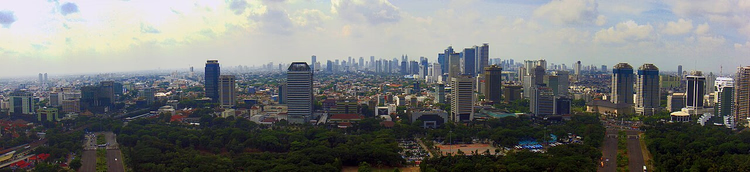 © musnahterinjak · CC BY-SAPhoto: musnahterinjak, CC BY-SA (https://creativecommons.org/licenses/by-sa/3.0), Wikimedia Commons
Currency and payments
Indonesia uses rupiah (IDR). Withdraw cash from bank ATMs, not from standalone machines on the street. The largest banknote, 100,000 IDR, is worth less than €5 (as of 09/2026, ECB exchange rate), so a stack of bills in your wallet gets thick fast.
The UK Foreign Office warns that card fraud is common. Exchange money only at licensed money changers with the Bank Indonesia logo (as of 09/2026, GOV.UK on card fraud and currency exchange). Small warungs and markets don't take cards, so keep small bills on hand.
How much to budget per day
Indonesia remains an inexpensive destination, but Bali is noticeably pricier than Java, Sumatra, and Lombok. Below are Lonely Planet benchmarks, which are a good starting point for your calculations (as of 09/2026, Lonely Planet on budget).
Item | Budget | Mid-range |
|---|---|---|
Beach life without extra spending | around 1,000,000 IDR per week | depends on accommodation |
A day on Bali for two (room, food, scooter) | around 400,000 IDR | higher, with cafes and tours |
Air-conditioned room on Bali | around 130,000 IDR per night | hotels and villas cost more |
Fried rice or noodles | around 16,000 IDR at a warung | around 65,000 IDR at a tourist cafe |
Car with driver | not needed | around 500,000 IDR per day |
A bottle of Bintang at the supermarket | around 33,000 IDR | roughly three times more at a bar |
The budget level is built on warungs, simple guesthouses, and public transport. The mid-range level adds tourist cafes, better rooms, a car with driver, and domestic flights. Lonely Planet prices are converted from other currencies and heavily rounded, so double-check the total on the day you pay.
Gasoline remains cheap: a liter of Pertalite costs 10,000 IDR (as of 09/2026, ANTARA). Add one-off expenses to your budget: the visa on arrival, the Bali levy, and insurance. Alcohol and flights are what blow up a budget the most.
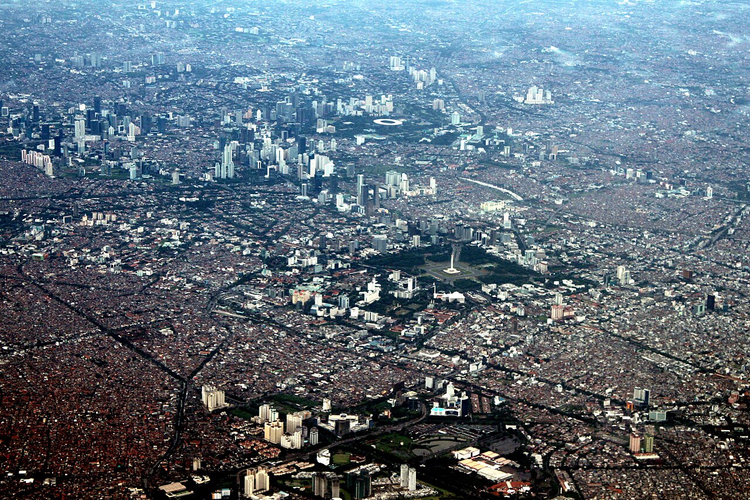 © Thank You (25 Millions ) views from Fresno, USA · CC BYPhoto: Thank You (25 Millions ) views from Fresno, USA, CC BY (https://creativecommons.org/licenses/by/2.0), Wikimedia Commons
Bali is full of trendy cafes and restaurants where the bill is almost European. If you're going in July or August, book accommodation in advance: good options go fast in high season. You can compare options in this selection of hotels in Indonesia on Trip.com.
For a long stay, renting a bungalow or villa by the month is cheaper than paying per night at a hotel. Book the first one or two nights in advance, then choose on the ground once you've seen the area with your own eyes.
Food and drinks: warungs and classics
The foundation of Indonesian cuisine is rice, "nasi" in Indonesian. It's served with almost every dish. The menu has plenty of meat and fish, but vegetarians won't have to search long either: tofu, tempeh, and vegetables are available in every region, and Bali has an especially large number of vegan cafes.
After a week, many people start finding traditional cuisine repetitive. Peanut sauce, chili, and coconut milk show up almost everywhere, and the set of dishes at simple cafes repeats. That doesn't mean the food is bad: you just need to make a conscious effort to find variety.
Warung: where locals eat
For a traditional meal, people go to a warung. It's a small family kitchen or street stall where some dishes are ready-made and others are cooked in front of you. According to Lonely Planet, a plate of fried rice or noodles outside tourist centers costs around 16,000 IDR (as of 09/2026, Lonely Planet on warung food).
Warungs come in three types. The first form: a street stall with ready dishes, where you point and get a plate in a minute. The second: a family kitchen with a few tables. The third: a cafe attached to a guesthouse or hotel, where prices are higher and the menu is adapted for tourists.
Padang restaurants stand apart and can be found in almost every city. You get a plate of rice, and you choose additional dishes from the display. A filling lunch at such a place costs around 33,000 IDR (as of 09/2026, Lonely Planet on warung food). Pick places that are constantly busy: the food there doesn't sit around.
For a wider range of flavors, people go to tourist cafes, which are especially numerous on Bali. There you'll find vegan menus, bowls, coffee, and familiar breakfasts. Prices, however, are closer to European levels, and your daily food budget grows several times over.
Buy bottled water: tap water is not for drinking. Large bottles are cheaper, and many guesthouses have coolers for refilling. That way you save money and avoid piling up plastic.
Classics: what to order
- Nasi goreng: fried rice, the most common dish on the menu. Served with chicken (ayam), shrimp, or vegetarian, often topped with a fried egg. The same dish with noodles instead of rice is called mi goreng.
- Nasi campur: rice plus a mix of meat, tofu, vegetables, and sauces. It's often assembled in front of you, so you choose some of the ingredients yourself.
- Gado-gado: the country's main vegetarian dish. Boiled and blanched vegetables, peanut sauce, and a boiled egg.
- Tempeh: fermented soybeans, dense in texture, with a mild nutty flavor. It's fried on its own or added to other dishes.
- Satay: grilled skewers of chicken or other meat, usually with peanut sauce.
Cooking class: half a day in the kitchen
If you want to get a real understanding of the local cuisine, take a cooking class. It usually takes half a day and often starts at the market: you buy ingredients, then cook several dishes under the chef's guidance.
There are many classes in Bali and Yogyakarta. A popular format in Ubud takes place on an organic farm, where you first pick herbs and then cook. See the program and reviews here: cooking class in Bali.
- Who it's for: the class is a good fit if you have a free day and are curious about what goes into local dishes.
- The catch: after several hours in the kitchen, it's best to keep your evening free.
Religion and culture: clothing, Ramadan and Nyepi
Indonesia is considered the country with the largest Muslim population in the world, and Islam is practiced by the majority of its people. Bali is the exception: most Balinese are Hindu. On Java, Lombok and Sumatra, mosques and the call to prayer are part of everyday life, so dress modestly and respect local customs.
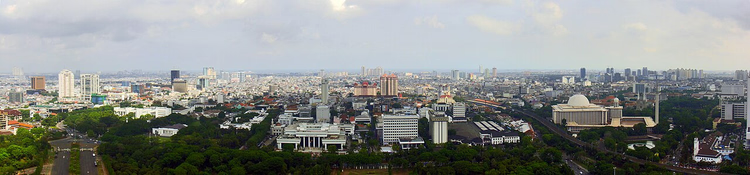 © musnahterinjak · CC BY-SAPhoto: musnahterinjak, CC BY-SA (https://creativecommons.org/licenses/by-sa/3.0), Wikimedia Commons
Clothing: what to pack
In Muslim regions, dress conservatively. Many local women wear a headscarf, and religion is openly respected here. You just need to cover your shoulders, and in mosques and temples also your knees.
On Bali the rules are more relaxed: in tourist areas both locals and visitors wear light clothing. But you enter any Hindu temple with covered shoulders and wearing a sarong. It is often provided at the entrance, but your own sarong takes up little space and comes in handy every day.
At the beach a swimsuit is fine, but in town and at the market it is better to put on a T-shirt. This is especially important on Lombok and in rural areas of Java.
Ramadan: what changes during your trip
Ramadan shifts every year according to the lunar calendar. During this time, believers do not eat or drink until sunset, and some cafes are closed during the day and open in the evening. You should not eat or drink conspicuously on the street in Muslim areas.
In tourist areas you will find food without any problems. In remote places it can be harder, so ask your accommodation where to eat during the day.
The end of Ramadan is celebrated with the holiday of Idul Fitri. During these days, millions of people travel to see their families, and buses, trains and planes are booked out weeks in advance. Some restaurants and shops are closed, and transport prices go up.
Nyepi: the day of silence on Bali
Nyepi, the Balinese New Year, remains the island's main Hindu holiday. The date is determined by the Balinese calendar, so it shifts every year and usually falls in March. Check it before booking.
For 24 hours on Bali, everything stops. You cannot work, go outside, light lamps or fire, or make noise. The rules apply to tourists too, and the airport is closed on that day. Guests spend the day on hotel grounds, and many hotels offer quiet programs.
On the eve of the holiday, however, villages hold processions with huge ogoh-ogoh figures. Temple ceremonies take place on Bali all year round, so ask at your guesthouse about the nearest one.
Hospitality and attention toward tourists
Indonesians are generally very hospitable, and tourists are genuinely welcomed here. A short chat at the market or a question about directions often turns into a long conversation and smiles.
Fair-skinned foreigners are called "bule." On Java you will often be asked for a photo together, especially by schoolchildren and students. A visit to a popular temple sometimes takes twice as long because of this.
A few words in Indonesian help a lot: "terima kasih" (thank you), "selamat pagi" (good morning), "berapa?" (how much?). The language uses the Latin alphabet, so reading signs is not difficult.
Holidays: what they change during your trip
Holiday | When | What changes |
|---|---|---|
Ramadan | according to the lunar calendar, the date is different every year | Some cafes are closed during the day, food is available in tourist areas |
Idul Fitri | at the end of Ramadan | Transport and accommodation are booked out in advance, prices rise |
Nyepi | usually in March, the date changes | Everything on Bali is closed for 24 hours, the airport does not operate |
The general rule is simple. For major holidays, book transport in advance, and ask your accommodation about daytime food options. In a remote area during a holiday, everything may be closed, including shops, so keep a supply of water and snacks.
How to behave in a temple
You enter a temple with covered shoulders, wearing a sarong and a sash, and you leave your shoes at the entrance in a mosque.
Ceremonies are open to guests, but the rules are simple. Do not block the procession, stay behind, and do not take flash photos. Do not stand higher than the priest and do not step on offerings on the ground. If you want to photograph people up close, ask permission first.
 © G. Ken Prama · CC BY-SAPhoto: G. Ken Prama, CC BY-SA (https://creativecommons.org/licenses/by-sa/4.0), Wikimedia Commons
If you are asked for a photo together, agree when you are not in a hurry: it is a sign of friendliness. When you are running late, a polite apology and a step aside work best.
- Who it's for: you will easily connect with locals even without the language, smiles and gestures are enough.
- The catch: in popular places you are constantly asked to take a photo or buy something, and it gets tiring.
Health and safety: vaccinations, mosquitoes, volcanoes
Doctor consultation before the trip
Before your trip, book a consultation with a tropical medicine doctor or a travel vaccination clinic. It's best to do this about a month before departure: some vaccines are given in several stages.
The doctor selects the set of vaccinations individually, based on your route, season, and trip length. Some people only need the basic minimum, while others are advised to get rabies or Japanese encephalitis shots. There is no universal recommendation here. If you couldn't book an appointment in advance, a short visit before departure is still useful: the doctor will suggest medications for your first aid kit.
Malaria and dengue
Both diseases are transmitted by mosquitoes. An important detail: mosquitoes that carry dengue are active during the day, while malaria mosquitoes bite at dusk and at night. You need protection from bites around the clock.
Malaria risk depends on the region: it's different in Bali and Java than on the eastern islands. Whether you need preventive medication is decided only by a doctor based on your route. Dengue occurs in tourist areas too, including Bali.
Mosquito protection
Wear long, light-colored clothing, especially in the evening. In risk areas, you can additionally treat the fabric with a special clothing spray: mosquitoes easily bite through thin fabric.
Protect your skin with a repellent containing a high percentage of DEET or icaridin. Buy it at a pharmacy before your trip; the selection on the ground may be worse. Apply it after sunscreen, not before.
At night, sleep under a mosquito net. If there isn't one, turn on the air conditioning and close the windows. Some guesthouses already have a net over the bed, but not all of them, so check when booking.
If you develop a high fever after or during your trip, don't wait. See a doctor immediately and tell them where you've been: dengue and malaria are treated differently.
Stomach issues and "Bali belly"
The chance of catching an intestinal infection in Indonesia is high, even if you're careful. In Bali, the condition even has its own nickname: Bali belly.
Only take street food that is freshly cooked and hot. Choose fruits that you can peel. Don't drink tap water or brush your teeth with it if you're unsure about the quality. Ice in tourist cafes is usually made from purified water, but at street stalls it's better to skip it.
Put together your first aid kit in advance: rehydration salts, fever reducers, stomach medications, band-aids, and antiseptic. If the upset lasts more than a couple of days or you develop a fever, see a doctor. Tourist areas have clinics with English-speaking staff.
Safety: alcohol, drugs, nature
The British Foreign Office reports fatal alcohol poisonings involving methanol contamination in Indonesia. Watch how your drink is prepared and don't accept drinks from strangers (as of 09/2026, British Foreign Office on methanol). Cheap cocktails and unlabeled local moonshine are best avoided.
Drug laws in Indonesia are among the strictest in the world. According to the British Foreign Office, possession carries long prison sentences or the death penalty, and cannabis is banned in all forms, including CBD (as of 09/2026, GOV.UK on drug laws). Don't even bring oils or medications containing such components with you.
Indonesia lies in a seismically active zone. Volcanoes can start erupting without warning, earthquakes occur regularly, and a tsunami can arrive within minutes. Follow local authority announcements and check volcano status before trekking (as of 09/2026, British Foreign Office on volcanoes and tsunamis).
Rabies occurs in Bali and other islands. Don't feed or touch dogs and monkeys, and if you're bitten or scratched, wash the wound immediately and see a doctor. In temples with monkeys, keep glasses, earrings, and food in your backpack.
Get medical insurance before departure and check whether it covers evacuation and scooter riding: compare insurance options. Treatment at a private clinic without a policy is expensive, so keep your policy handy from day one.
Connectivity: SIM card, eSIM, and apps
Local SIM card
With mobile internet, you can plan your route, order Grab and Gojek, and stay in touch on messengers. Wi-Fi is available in most hotels and cafes, but relying on it is inconvenient, especially on the road.
Local SIM cards are sold at airports, carrier stores, and convenience stores. At a carrier store, they'll insert it into your phone and activate it within minutes. A tourist card requires a passport, and your phone must be unlocked for any network.
The largest operator, Telkomsel, is considered more expensive than competitors, but its coverage is usually better outside cities. The price depends on the data volume; current packages are listed on the operator's website. At the airport, tourist packages are more expensive than at a city store.
ESIM: connectivity right after landing
If your phone supports eSIM, you can buy and install it before you even leave home. Then internet works immediately after landing, and you don't need to find a store on your first day. For a short trip, this is the most convenient option: eSIM for Indonesia.
For a long trip with heavy data usage, a local card is usually cheaper. Some travelers combine both options: eSIM for the first days, then a local SIM card.
Apps for the trip
- Grab and Gojek: taxis, motorbike taxis, and food delivery with the price shown before you confirm the order.
- Google Maps or Apple Maps: navigation, including walking routes. Download offline maps of the islands in advance.
- maps.me: offline maps with marked trails, waterfalls, and viewpoints.
- HappyCow: search for vegetarian and vegan cafes nearby; on Bali you'll use it every day.
- Google Translate: download the Indonesian language pack for offline translation.
Save offline maps, the translator, and the All Indonesia card QR code before you leave home. In the first hour after landing, you may not have internet, and you'll need your hotel address right away.
- The catch: in remote areas and on small islands, connectivity can drop for long periods, so keep your route and tickets offline.
⁉️🤔 Frequently asked questions
How much does an Indonesia visa cost in 2026?
The visa on arrival and the electronic e-VoA cost 500,000 IDR and allow 30 days of stay (as of 09/2026, official Indonesian e-visa portal). You can extend the visa once, for another 30 days. Pay for it only on the official portal or at the airport counter.
Do I need to pay the tourist levy in Bali?
Yes, foreign tourists pay a levy of 150,000 IDR per person (as of 09/2026, Love Bali). It's more convenient to pay in advance on the province's official portal and save the confirmation. Intermediary sites on other domains charge extra fees, so check the address.
What is the All Indonesia card and when do I fill it out?
It's a unified electronic arrival form: passport details, flight, address, customs declaration, and health questions. Fill it out on the immigration service portal within 72 hours before arrival (as of 09/2026, GOV.UK: entry documents) and save the QR code offline.
How much money do I need per day in Indonesia?
Outside Bali, the budget level is modest: warungs, simple guesthouses, and public transport. According to Lonely Planet, a day in Bali for two with a room, food, and a scooter costs about 400,000 IDR (as of 09/2026, Lonely Planet cost overview). A mid-range level with cafes and a driver costs noticeably more.
Can I ride a scooter without an international driving permit?
Formally, no: the British Foreign Office states that you need an international driving permit (as of 09/2026, GOV.UK on motorcycle licenses). Without it, the police can issue a fine, and your insurance will refuse to pay out. Always wear a helmet and don't ride in the dark.
Is an eSIM enough, or do I need a local SIM card?
Both options work. An eSIM is more convenient on the first day: you connect right after landing and don't need to find a store. A local card is usually cheaper for a long trip with heavy data usage. The only requirement: your phone must be unlocked for any network.
In short: what's worth booking
If you have ten days and this is your first trip: go with Java plus Borobudur and one beach island. If moving around isn't for you: stay on Bali and take a trip to the Gilis. If you're traveling in July or August: book accommodation, trains, and domestic flights in advance, prices rise fast.
Before departure, get your e-VoA, pay the Bali levy, fill out the All Indonesia card, and install Grab and Gojek. Put together insurance, a first aid kit, and offline maps at home, it's more expensive and slower on the ground.
Once your route is set, pick what to do there: tours and activities across Indonesia.

A small editorial team writing guides for independent travel. We travel ourselves, but we haven’t been everywhere, so we check prices, opening hours and how to get there against official sources.