
















Netherlands by month: when to go for the beach, the city and the tulips
You don't plan a trip to the Netherlands based on a single forecast. The weather here changes every hour: fog over the canals in the morning, a t-shirt by lunch, and a cold downpour by evening. You choose the season based on your travel goals, not the calendar.
If you want to swim, come in summer. For cities and museums, April and May are best, when the year's rainfall is at its lowest. Tulips bloom from late March to early May. The Keukenhof opening dates are in the tulips section.
Ad: this article contains affiliate links, we earn a commission if you book through them, at no extra cost to you.
Climate of the Netherlands: mild winters and cool summers
💡 In short:
- Swimming: in summer, the water is warmest in August.
- Cities and museums: April and May, the lowest rainfall of the year.
- Tulips: from late March to early May, the fields bloom around the same weeks as Keukenhof park.
- A shell jacket is needed in any month, even in July.
The Netherlands lies in a temperate maritime climate zone. Winters here are mild, summers are cool, and the seasonal temperature swing is smaller than in Germany or Poland. Humidity is high year-round, so the temperature on the thermometer feels colder than you expect.
Official national statistics are collected at the De Bilt station in the center of the Netherlands. Its KNMI climate normals for 1991-2020 look like this (as of 09/2026):
Month | Average, °C | Daytime, °C | Precipitation, mm | Sun, h |
|---|---|---|---|---|
January | 3.6 | 6.1 | 71 | 67 |
February | 3.9 | 7.0 | 63 | 90 |
March | 6.5 | 10.5 | 58 | 139 |
April | 9.9 | 14.8 | 42 | 189 |
May | 13.4 | 18.3 | 59 | 218 |
June | 16.1 | 20.9 | 71 | 207 |
July | 18.2 | 23.1 | 85 | 214 |
August | 17.8 | 22.9 | 84 | 196 |
September | 14.7 | 19.5 | 78 | 153 |
October | 10.9 | 14.8 | 81 | 119 |
November | 7.0 | 9.9 | 80 | 67 |
December | 4.2 | 6.7 | 84 | 56 |
July holds two records at once: it is the warmest and the wettest month of the year, with 85 mm of precipitation. April, on the other hand, has the least rain, 42 mm, and almost 190 hours of sunshine according to the same normals. May takes the sunshine maximum, 218 hours, which is why mid-spring is often more pleasant than August.
Heat waves are rare in the Netherlands. The country's all-time high, 40.7 °C, was recorded on July 25, 2019 in Gilze-Rijen (as of KNMI normals, 09/2026). A typical summer stays in the 20-23 °C range during the day, and even in July you sleep under a blanket.
Bring warm clothes in any season. After sunset near the water you will get cold quickly, and the North Sea wind takes off a few more degrees.
Regions: where the weather is warmer and where it's windier
The farther you travel from the coast, the more noticeable the difference between seasons. In the southeast, near the border with Germany and Belgium, summers are warmer, there is more sun, and winter can bring frost and snow. On the coast it is always cooler because of the wind, even on a sunny day.
Precipitation is spread evenly throughout the year, with no completely dry months. Humidity stays high year-round, so the sky in winter is more often gray than blue.
For planning, this means one simple thing. Beach accommodation is best found in the southwest and on the islands, while a city trip can easily be scheduled for spring. The temperature difference between Delft and Groningen is small, but you will feel the coastal wind immediately.
When to go to the beach: the North Sea and the IJsselmeer
The beach season in the Netherlands is shorter than in the Mediterranean, but the sea is right next to the city. People swim from mid-June to late August, when daytime temperatures stay at 20-23 °C (as of KNMI climate data, 09/2026).
 © Txllxt TxllxT · CC BY-SAPhoto: Txllxt TxllxT, CC BY-SA (https://creativecommons.org/licenses/by-sa/4.0), Wikimedia Commons
You have plenty of options: Zandvoort and Bloemendaal near Amsterdam, Scheveningen by The Hague, the islands of Texel, Ameland and Terschelling in the Wadden Sea, and the calm IJsselmeer in inland waters.
- What to do: swimming, long walks on the sand, cycling through the dunes, surfing and kitesurfing. There is plenty of wind here, so surf schools operate all along the coast.
- Water: even in August it stays cool; current readings by station are published by Rijkswaterstaat. The IJsselmeer is shallow, which makes it a good place for beginners to learn.
- Wadden Sea: at low tide you can walk across the seabed with a guide; doing this on your own is dangerous because of the incoming tide.
- The catch: July brings the highest rainfall of the year, so keep your beach plans flexible.
- Who it's for: people who want the sea within walking distance and don't want to pay for the Mediterranean.
- Not for: if you expect warm water and hotel sun loungers, pick another region of Europe.
Spring and autumn on the coast are also good. You're unlikely to swim, but for walking, cycling and photographing the dunes these are the best months: fewer people, lower prices.
When to visit the cities: Amsterdam, Rotterdam and The Hague
The cities of the Netherlands are open year-round, but comfort depends on the month. For canal walks, choose April and May: minimal rainfall, daytime temperatures of 14-18 °C, and shorter museum lines than in summer (as of De Bilt climate statistics, 09/2026).
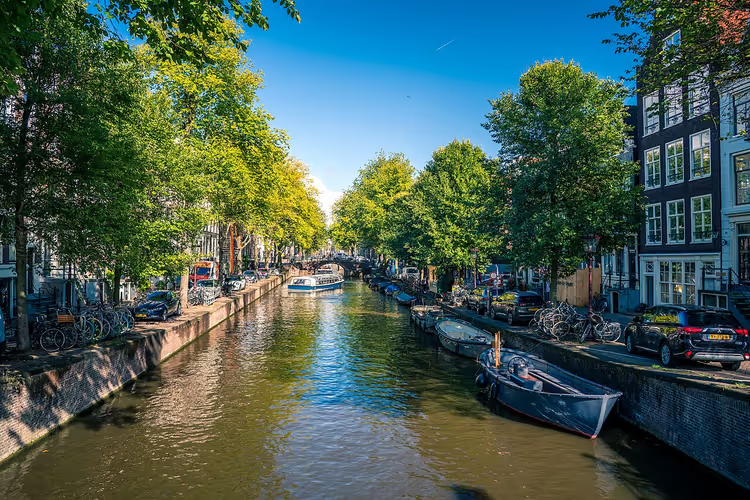 © Nan Palmero from San Antonio, TX, USA · CC BYPhoto: Nan Palmero from San Antonio, TX, USA, CC BY (https://creativecommons.org/licenses/by/2.0), Wikimedia Commons
Spring and summer
In April and May the country is awash in flowers: parks, gardens and canal banks in Amsterdam turn pink and yellow. From May through September you get the highest temperatures and the most sun, but summer is also when strong thunderstorms arrive.
The small town of Giethoorn (Giethoorn), with canals instead of streets, and Utrecht with its waterfronts are worth a separate trip. You can reach Utrecht from Amsterdam, Rotterdam and The Hague by train in a day. There is no train to Giethoorn. Take the train to Steenwijk, then switch to a bus.

Autumn and winter
In autumn humidity rises, and fog and gray skies move in. But a warm September often delivers the best days for a trip: the water still holds heat, and there are fewer tourists. Bring a windproof jacket and you can comfortably walk the entire waterfront along the canals.
In winter the cities change. Christmas markets open in Amsterdam, and on freezing days locals take to the canals on skates. There is no guarantee of ice, so plan New Year's in the city without counting on a rink. Museums, cafes and concert halls stay open all season.
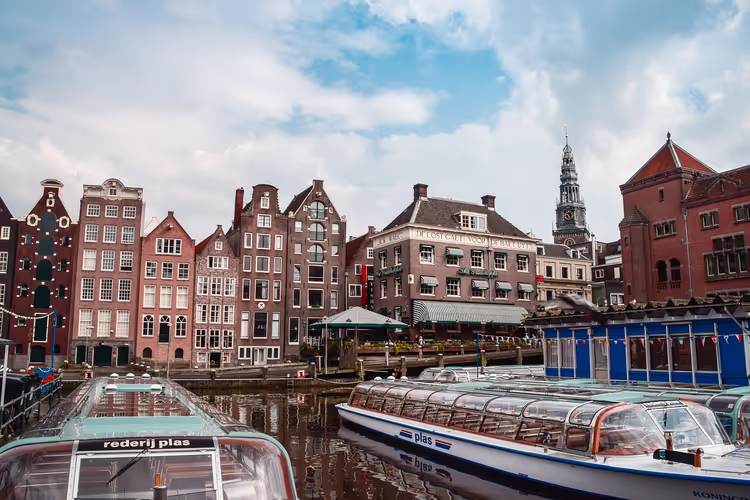
Tulip season: Keukenhof and the Bollenstreek
The main event of the Dutch spring is all about tulips. The fields of the Bollenstreek region between Haarlem and Leiden bloom from late March and hold their color until early May. At the center of this area, in Lisse, is Keukenhof park.
In 2027 the park is open from March 18 to May 9, and season tickets go on sale online from mid-October (checked 12.09.2026 on the Keukenhof website). The exact blooming weeks depend on the weather: a cold spring delays them, a warm one speeds them up.
The advice is simple: choose a weekday morning. In April, groups gather at the entrance on weekends, and the paths between the flower beds get crowded. For tours to the fields and the park, check GetYourGuide.
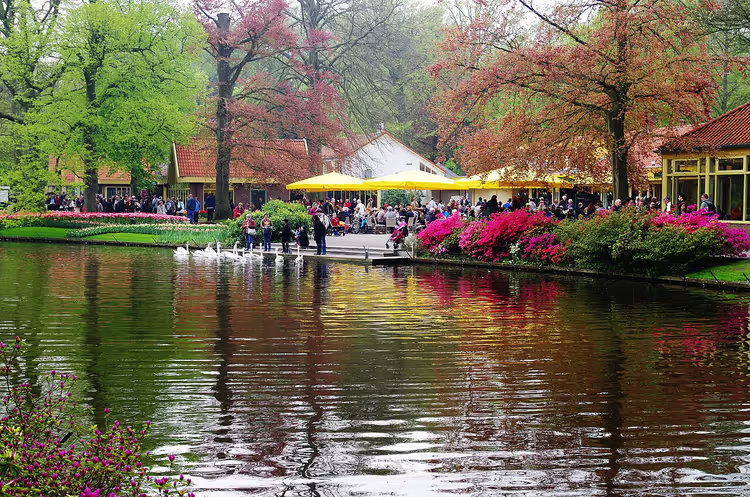 © Balou46 · CC BY-SAPhoto: Balou46, CC BY-SA (https://creativecommons.org/licenses/by-sa/3.0), Wikimedia Commons
Practical tips for traveling in any weather
- Paying for transit: OVpay works on trains, trams, buses, and the metro. Tap your bank card or phone when you enter and when you exit, no separate ticket needed.
- Clothing: a jacket with a membrane, non-slip shoes, a scarf. Wet cobblestones on the embankments are slippery, and the wind near the water makes the cold worse.
- Bicycle: it's the main form of transport in the cities, and bike lanes are separated from the roadway. In the dark, you need a working headlight.
- Islands: a ferry to Texel runs from Den Helder, and it's easier to leave your car in the parking lot by the pier.
- Museums: in high season, buy tickets for popular museums online in advance, you'll lose an hour at the ticket office.
⁉️🤔 Frequently asked questions
When is the best time to go to the beach in the Netherlands?
The swimming season dates and summer temperatures are in the beach section above. The water stays cool, so many people come for walks, cycling, and surfing rather than long swims.
When do tulips bloom and when is Keukenhof open?
The blooming dates for the Bollenstreek fields and Keukenhof's 2027 opening dates are in the tulip section above. The exact weeks depend on spring weather. Keep an eye on the park's calendar and come on a weekday, so you can see the flower beds without the crowds.
When should you go to Amsterdam to avoid getting rained on?
April and May have the least rain. Monthly figures are in the climate table above. Daytime temperatures in these months are 14-18 °C, rain showers are short, and museum lines are noticeably shorter than in July. If you're okay with gray skies, Dutch cities are accessible year-round.
Is it cold to swim in the North Sea?
The water along the Dutch coast warms up slowly, so even in August it's cooler than in southern Europe. Current readings by station are published by Rijkswaterstaat. For swimming, pick a spot with a gradual entry into the water and keep an eye on children: the wind quickly carries inflatable rings away.
What should you bring on a trip in any season?
A jacket with a membrane, comfortable shoes, and an umbrella. Rain can start in the morning and end by lunchtime, and evenings are cold even in July. For documents, a passport and a bank card are enough: in cities you can pay for almost everything by card, including tram and metro rides.
In short: what's worth booking
If you're going swimming, look for accommodation in Zandvoort, Scheveningen, or Zeeland: the sea is close, and a train will get you to Amsterdam. If the goal of your trip is cities, stay by a canal in Amsterdam or in the center of Utrecht. For tulips, it's most convenient to stay in Haarlem or Leiden, close to the fields and the park. Keep in mind that July and August are busy: coastal accommodation gets booked up early.

A small editorial team writing guides for independent travel. We travel ourselves, but we haven’t been everywhere, so we check prices, opening hours and how to get there against official sources.