
















New 7 wonders of the world: tickets, hours and what to see
Of the seven ancient wonders of the world, only the Pyramid of Cheops has survived. The rest we know from descriptions and drawings. But the planet has a new list: in 2007, the New Open World Corporation foundation announced the results of a worldwide vote (according to New7Wonders). Below are the seven sites on that list. You'll learn what to see at each one, how much admission costs, and when it's best to visit. Tickets are sold in advance almost everywhere with fixed entry times, and that part of the trip is worth planning from home.
How the new list was compiled
💡 In short:
- Exactly seven sites: from the Colosseum in Rome to Chichen Itza in Mexico.
- Admission is paid at each one, and at some sites tickets are sold in time slots.
- Colosseum admission price: 09/2026, verified on the official Colosseum website. Check prices for the other sites on their official websites.
The vote was launched after a simple calculation: of the ancient wonders, only one site has survived to our day. The organizers put together a list of candidates and asked people to choose seven. The Pyramid of Cheops received honorary status and remained a symbol of the ancient world.
The new sites are spread across four continents. You can't see them all in a single trip, but each place is ready for tourists: ticket offices, museums, and transportation are all in place. Below is one section per site.
Site | Country | Known for |
|---|---|---|
Colosseum | Italy | the largest amphitheater of antiquity |
Petra | Jordan | a city carved into rock |
Taj Mahal | India | a white marble mausoleum |
Great Wall of China | China | a fortress thousands of kilometers long |
Christ the Redeemer | Brazil | a statue above Rio de Janeiro |
Machu Picchu | Peru | an Inca city in the mountains |
Chichen Itza | Mexico | the El Castillo pyramid |
1. Colosseum
 © Jon Gudorf Photography · CC BY-SAPhoto: Jon Gudorf Photography, CC BY-SA (https://creativecommons.org/licenses/by-sa/2.0), Wikimedia Commons
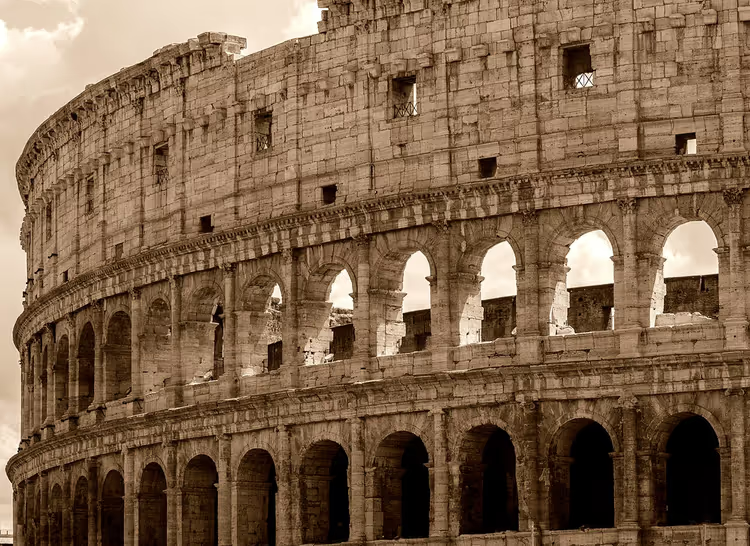
The Colosseum in Rome remains the largest amphitheater of antiquity. It was founded in the first century AD, and construction took nine years. The stands held about 50,000 spectators (as of 09/2026, official Colosseum park). Seating was assigned by social standing: the emperor and nobility sat at the bottom, while common people climbed to the upper tiers.
Gladiator fights and animal hunts were staged here. The ticket gives you entry at a fixed time, so you won't stand at the gates in a general queue. The arena is partially preserved, and the surviving tiers show what the structure looked like.
- Location: central Rome, next to the Colosseo metro station (on the map).
- Admission: €18 (as of 09/2026, official Colosseum website).
- Who it's for / Not for: for those who want to see the arena from the inside; it will be tough for those who don't handle crowds and heat well.
2. Petra
 © Davidchocron · CC BY-SAPhoto: Davidchocron, CC BY-SA (https://creativecommons.org/licenses/by-sa/4.0), Wikimedia Commons
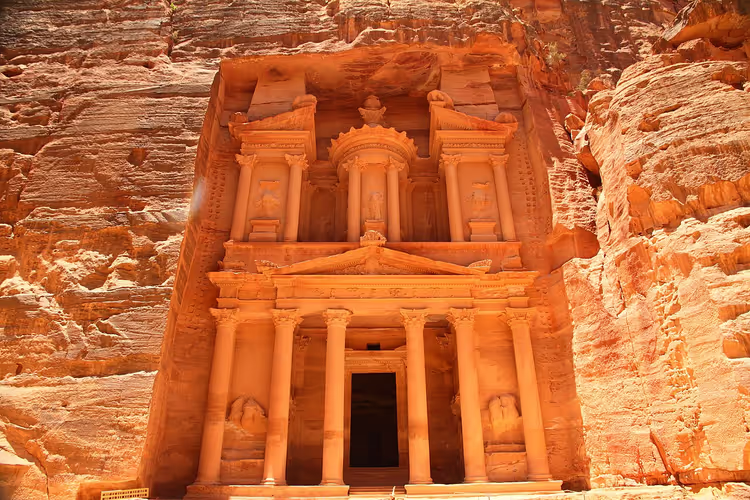
Petra in Jordan was the capital of the Nabataeans and later became lost in the sands. The city was carved directly into rock: the amphitheater, sanctuary, monastery, and tombs stand without a single construction seam. Until the early nineteenth century, only local Bedouins knew about Petra. Excavations have been underway here for about a hundred years, but according to archaeologists' estimates, less than a fifth of the city has been studied.
The route through Petra involves climbs and descents and requires stamina. But here you'll see an entire city, not just scattered ruins. The best time to visit is in autumn: the heat has already subsided, and the rains haven't started yet.
- Getting there: about 260 km from Amman by highway (on the map); people go by tour, bus, or rental car.
- Admission: 50 Jordanian dinars for one day for visitors who stay overnight in the country (as of 09/2026, PetraPass rates).
- Not for: if you find it hard to walk up and down stairs for long periods, the route will be a challenge.
3. Taj Mahal
 © Yann ; edited by Jim Carter · CC BY-SAPhoto: Yann ; edited by Jim Carter, CC BY-SA (https://creativecommons.org/licenses/by-sa/4.0), Wikimedia Commons
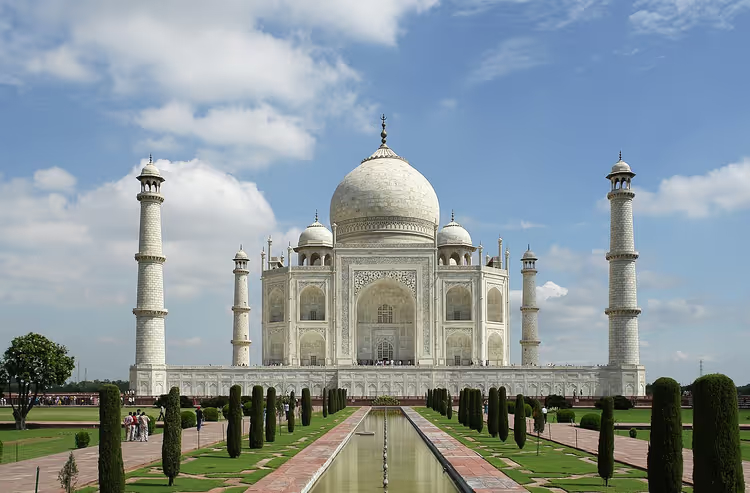
The white marble Taj Mahal mausoleum in Agra was built by Emperor Shah Jahan in memory of his wife, who died in childbirth. Construction took more than twenty years and required the labor of tens of thousands of workers. The marble here is alive: at dawn it's milky white, during the day pinkish, at sunset golden.
The city still fights to keep the facade white. Agra is among the most polluted cities in the world, so a sanitary zone was created around the mausoleum, coal plants were shut down, and diesel transport was banned nearby. You'll avoid the exhausting heat if you come between October and March.
- Cost: foreign tourists pay several times more for admission than locals; tickets are sold online in advance.
- Hours: the mausoleum is open from dawn to dusk; check the closing day on site.
- Who it's for / Not for: for those willing to get up before dawn to see the marble change color; not suitable for those who can't handle heat and dust.
4. Great Wall of China
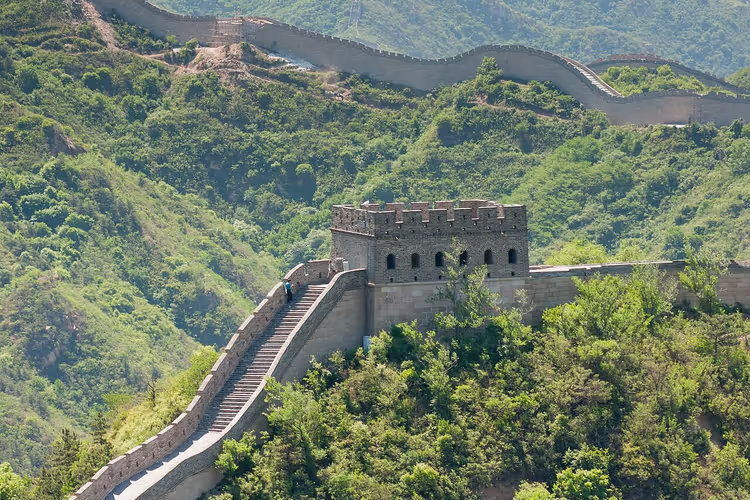 © CEphoto, Uwe Aranas · CC BY-SAPhoto: CEphoto, Uwe Aranas, CC BY-SA (https://creativecommons.org/licenses/by-sa/3.0), Wikimedia Commons
The Great Wall of China stretches for thousands of kilometers across northern China. The first sections were built before our era, and the wall was extended under several dynasties. By various estimates, millions of people worked on the construction, and many died there.
You can climb the wall at different points, and the experiences differ. At Badaling you'll find yourself in a dense flow of tourists, while on remote sections you'll be almost alone for kilometers around. The claim that the wall is visible from space remains a beautiful myth.
- Getting there: buses run from Beijing to the popular sections (on the map).
- Cost: there is no single ticket; admission is purchased separately at each section.
- Tip: arrive at opening time, otherwise the cable car ride turns into a queue.
- The catch: by midday, the nearby sections are packed with organized groups.
5. Christ the Redeemer
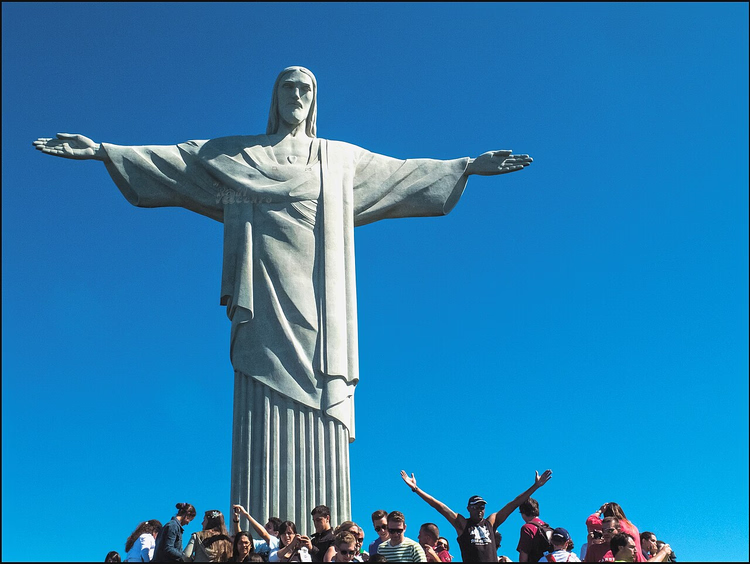 © Raul Vaccaro · CC BY-SAPhoto: Raul Vaccaro, CC BY-SA (https://creativecommons.org/licenses/by-sa/3.0), Wikimedia Commons
The Christ the Redeemer statue stands above Rio de Janeiro on a mountaintop. Its parts were manufactured in France: Brazil didn't have craftsmen with the necessary skills at the time. The height of the statue including the pedestal is about 38 meters. Lightning strikes it often, so restoration takes place almost every year.
The ascent is simple. An electric railway takes you almost to the base, and from there you ride an escalator. From the top, you get a panorama of the city, beaches, and ocean.
- Ascent: railway and escalator, almost no walking required.
- Cost: tickets are sold by entry time; check the price on the park's official website.
- Who it's for: for those who want to see all of Rio from a single observation deck.
6. Machu Picchu
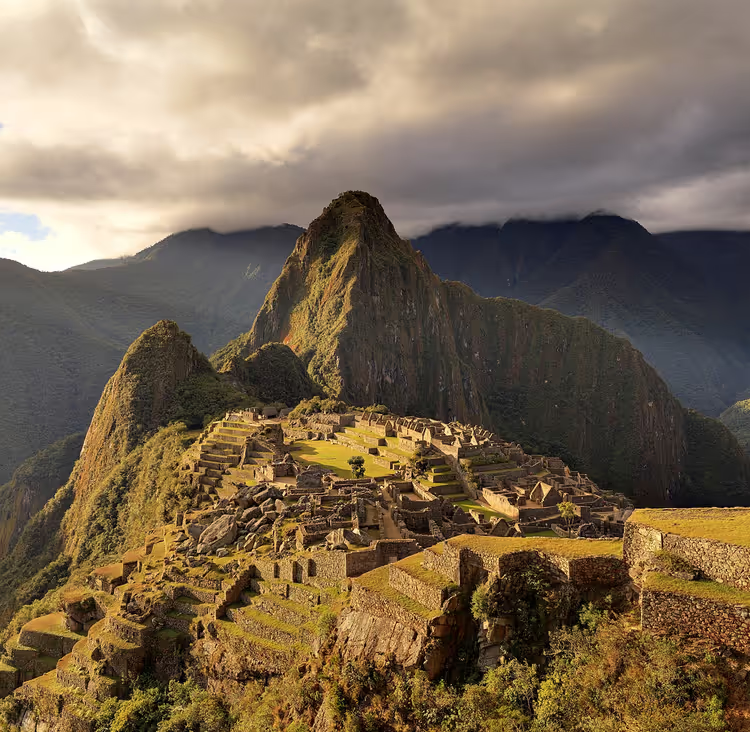 © Martin St-Amant ( S23678 ) · CC BY-SAPhoto: Martin St-Amant ( S23678 ), CC BY-SA (https://creativecommons.org/licenses/by-sa/3.0), Wikimedia Commons
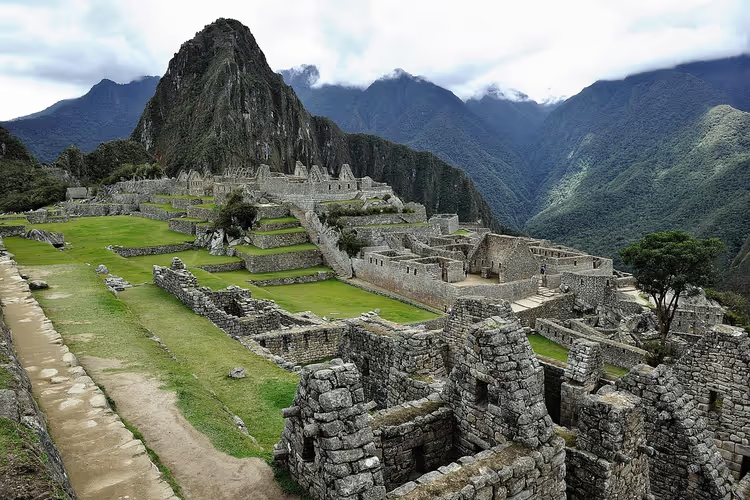
The Inca city of Machu Picchu was found in Peru in the early twentieth century. It sits in the Andes at an altitude of about two and a half thousand meters. The settlement was built around the fifteenth century. The stones here are laid without cement or mortar.
The blocks were cut so precisely that they fit together without gaps. Underground rooms with a secret passage were found by archaeologists only in our day. It's believed that Inca gold may have been stored there. Tickets are sold in slots in advance; you can't buy them at the entrance.
- Getting there: a train takes you to Aguas Calientes, and from there a bus climbs to the entrance; walking isn't necessary (on the map).
- Admission: online in advance, at a fixed time.
- Not for: the altitude and early start won't suit everyone; people with heart problems should be cautious.
7. Chichen Itza
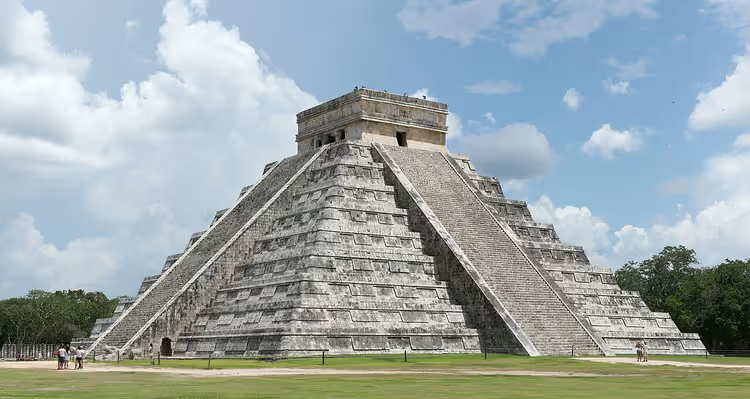 © Daniel Schwen · CC BY-SAPhoto: Daniel Schwen, CC BY-SA (https://creativecommons.org/licenses/by-sa/4.0), Wikimedia Commons
The Maya city of Chichen Itza stands on the Yucatan Peninsula in Mexico. Today it's an open-air museum: a ball court, an observatory, and the stepped El Castillo pyramid are preserved here. The number of steps on the pyramid matches the number of days in a year, which is why it's considered a stone calendar.
Through openings in the round tower, priests tracked the stars. These observations determined the dates of sacred rituals and the agricultural cycle. Arrive at opening time: that way you'll beat the heat and the crowds.
- Location: Yucatan, about two hours' drive from Cancun (on the map).
- Cost: foreign tourists pay more than locals.
- Who it's for / Not for: for those interested in Maya culture; it will be tough for those who don't handle heat and direct sun well.
⁉️🤔 Frequently asked questions
How much does it cost to visit all seven wonders of the world?
There is no combined ticket: you pay separately for each site, in local currency. Rome and Petra accept euros and dinars, while India, Mexico, and China work only with their own currencies. Budget for flights and overnight stays as well, and check admission prices on official websites before your trip.
Can you see all the new wonders of the world in one trip?
Practically no. The sites are spread across four continents: Italy, Jordan, India, China, Brazil, Peru, and Mexico. One trip usually covers one or two sites. It makes more sense to choose by continent and combine a wonder of the world with neighboring cities.
Which of the new wonders of the world is the oldest?
The Great Wall of China is the oldest: its first sections appeared before our era. Petra as a Nabataean city is older than the Colosseum. The youngest are the Taj Mahal and the Christ the Redeemer statue (1931). The Colosseum sits in the middle of the list.
Do you need to book tickets in advance?
Yes, almost everywhere. At the Colosseum, admission is sold at fixed times; at Machu Picchu, tickets are online only and in slots. Online booking is cheaper than going through intermediaries and removes the risk of leaving without a visit. Take a morning slot: the queue is shorter and the heat is milder.
What time of year is best to visit the new wonders of the world?
For Petra and the Taj Mahal, autumn and winter are optimal, when there's no exhausting heat. Mexico and Peru are more comfortable to see in the dry season, while Rome and China are easier to handle in spring and early autumn. In summer, the sites have many tourists and high temperatures.
In short: what's worth booking
Start with the Colosseum and Petra: they're the easiest to reach from Europe and simple to plan a route around.
- If you have five days in Rome and Jordan: take a Colosseum slot and set aside a full day for Petra.
- If you're visiting Asian cities: see the Taj Mahal at dawn, and climb the wall in Beijing on your first day.
- If you're drawn to pre-Columbian cultures: plan Machu Picchu for the dry season and Chichen Itza for winter.
Buy tickets only on the official websites of the sites and take morning slots: that way you pay less to intermediaries and spend less time in queues.

A small editorial team writing guides for independent travel. We travel ourselves, but we haven’t been everywhere, so we check prices, opening hours and how to get there against official sources.