
















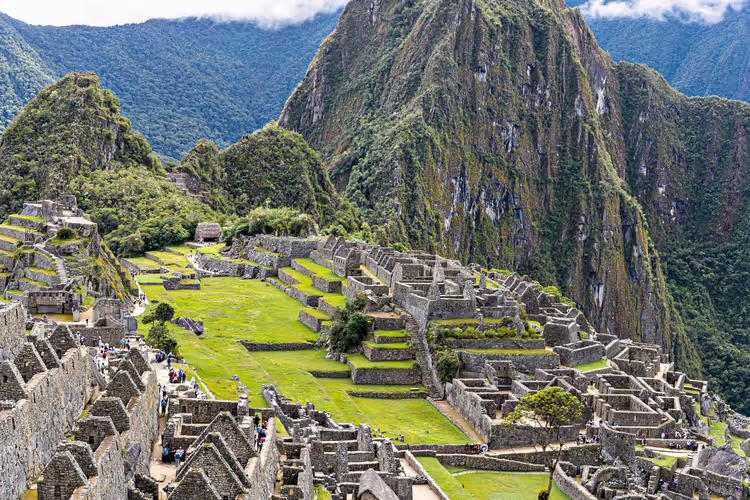
Machu Picchu: tickets, routes and how to get there on your own
Machu Picchu lies high in the Peruvian Andes, about a hundred kilometers from Cusco. Getting there is not easy: first a flight to Lima or Cusco, then a train, then a bus up a winding mountain road. The conquistadors never found this city, so the stone walls and terraces have survived almost in their original form.
In 1983, UNESCO added Machu Picchu to the World Heritage list, and later it was recognized as one of the New Seven Wonders of the World (as of 09/2026, whc.unesco.org). Today, entry is available in fixed time slots, and tickets sell out well in advance. Below you will find the history of the city, a look at its architecture, and a practical travel plan: tickets, trains, the best season, and the climb up Huayna Picchu.
Ad: this article contains affiliate links. We earn a commission if you book through them, at no extra cost to you.
Machu Picchu: the lost city of the Incas
💡 In short:
- Tickets are sold only online and in fixed time slots; for the high season they sell out weeks ahead.
- The easiest way to get there is by train to Aguas Calientes, then by bus or on foot up the hill.
- Climbing Huayna Picchu requires a separate quota and good physical fitness.
- Train schedule to Aguas Calientes: 09/2026, verified on perurail.com.
The name Machu Picchu translates from Quechua as "Old Mountain." The Incas built the city in the mid-15th century on a narrow ridge between two peaks. The location was not chosen by chance: from here the Urubamba River valley and all approaches to it were clearly visible.
For the Incas, the main goal was to be closer to the gods and to the sky: they worshipped the Sun, the Moon, and mountain spirits, and priests read the will of the gods from the positions of the stars. That is why sanctuaries were built at the highest and most open points.
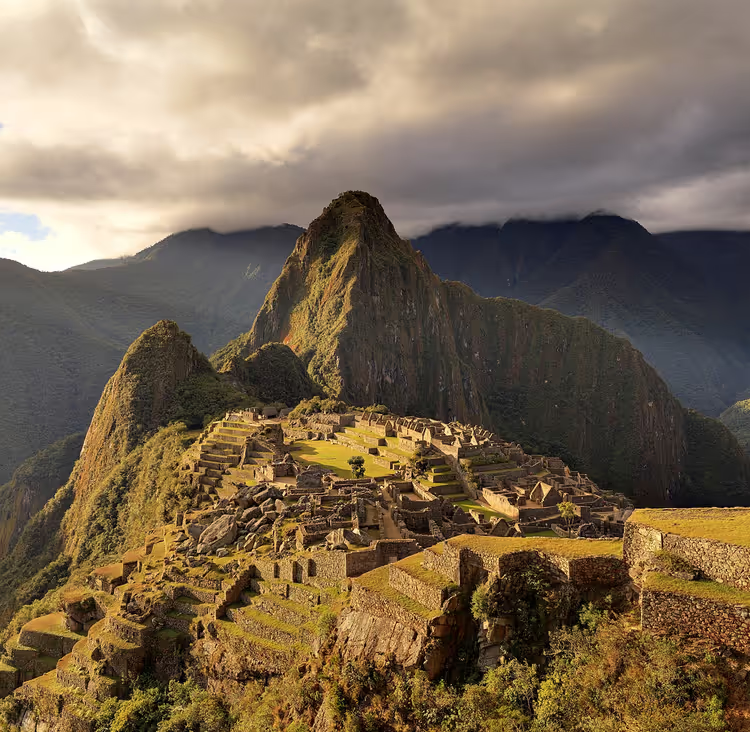 © Martin St-Amant ( S23678 ) · CC BY-SAPhoto: Martin St-Amant ( S23678 ), CC BY-SA (https://creativecommons.org/licenses/by-sa/3.0), Wikimedia Commons
That is exactly why history lovers and fans of ancient tales and legends are drawn here. If you appreciate such places, the city is worth the trip.
The Inca capital was Cusco, and Machu Picchu stands about a hundred kilometers to the northwest of it. Local people knew about the city long before scholars arrived and kept its location secret from outsiders.
The story of its discovery: Hiram Bingham and Vilcabamba
The first person to describe Machu Picchu for science was the American Hiram Bingham. He was not looking for this city, but for the mythical Vilcabamba, the last refuge of the Incas after the Spanish arrived. According to legend, the treasures of the nobility and the mummies of several generations of rulers were taken there.
Bingham wandered through the mountains for a long time with no result. One day he met a local boy carrying an unusual jug. The boy showed the scholar the path to the ruins. That is how, in 1911, the world learned about a city that had been silent for almost four centuries (as of 09/2026, official UNESCO page).
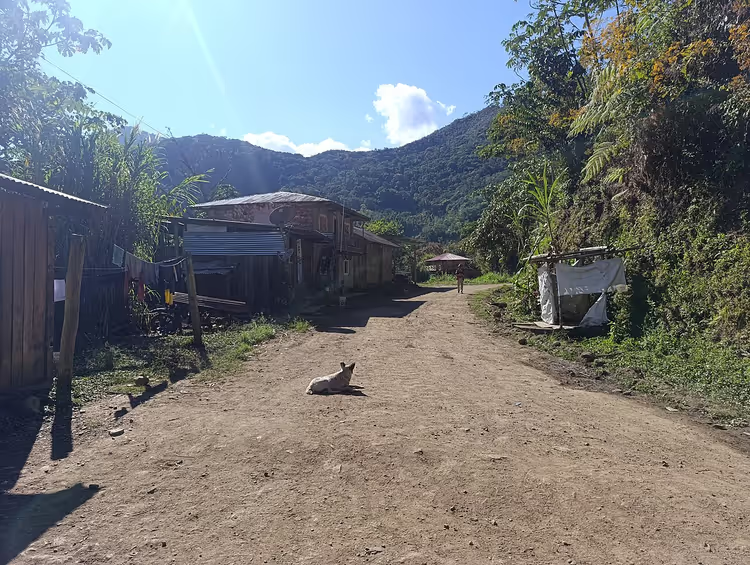 © Ordzonhyd Rudyard Tarco Palomino · CC BYPhoto: Ordzonhyd Rudyard Tarco Palomino, CC BY (https://creativecommons.org/licenses/by/4.0), Wikimedia Commons
From that moment on, Machu Picchu became both a site for excavations and one of the most visited places in South America. Later, UNESCO recognized it as cultural heritage, and the New Seven Wonders list cemented the city's global status.
There is no consensus on the city's purpose, and you should know all three versions. Most often it is considered the property of the supreme Inca ruler Pachacuti. According to another version, it was a winter residence for the nobility, and later a center for educating young people.
Children of the nobility were indeed sent here to study. Boys were taught astronomy and arithmetic, while girls were apprenticed to weavers. Astronomy was considered the most important science, because priests used the sky to determine the time for planting and rituals.
There is also a more down-to-earth explanation. Some archaeologists believe the city was built high in the mountains for defense and control over the valleys where tropical fruit grew. The debate over its exact purpose continues to this day.
Why the Incas left Machu Picchu
The city lasted just over a century and then emptied out. The voices in the streets fell silent, the ceremonial altar was left empty. Historians still argue about where the inhabitants went: no traces of war or mass death have been found here, and you will not see any either.
The simplest version is connected to Cusco. The capital was captured and looted by the Spanish, and it was from there that supplies reached the city. Without deliveries, the Incas were forced to leave in search of food and a new place to live.
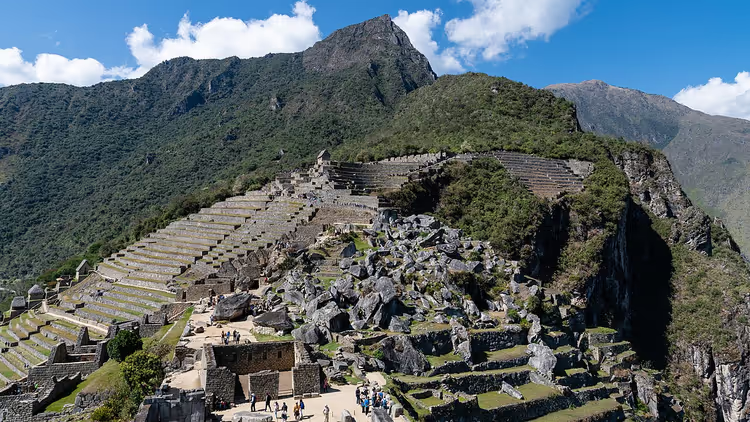 © Christoph Strässler · CC BY-SAPhoto: Christoph Strässler, CC BY-SA (https://creativecommons.org/licenses/by-sa/2.0), Wikimedia Commons
Proponents of the Vilcabamba legend offer their own version. According to it, the nobility took the treasures and artifacts deep into the jungle, while ordinary communities went off to fight the colonizers. There are also openly fantastical theories, up to and including intervention by otherworldly forces.
One fact remains: the city stood forgotten for nearly four centuries. Houses slowly became overgrown, and temple walls developed cracks.
The ruins are covered in lush greenery here and there, and a gray-blue haze almost always hangs over the terraces. It is this contrast of stone and mist that attracts photographers from all over the world.
Architecture and city layout
Machu Picchu is not large: it has several hundred structures of various purposes. Most of them are temples, storehouses, and rooms for public use. The stones for them are cut so precisely that a blade cannot fit between the slabs.
The Incas produced this kind of masonry without iron tools or wheels. Stones were fitted to each other by hand and laid without mortar. Even modern researchers cannot explain exactly how they achieved such geometry.
The city was built with a clear division into zones, and you will notice that the palaces and houses of the nobility in the southeast are laid more carefully than the rest. Ordinary quarters are more cramped, while temples and shrines occupy the western part.
The Incas skillfully used natural cavities in the rocks. Cave walls were dressed, and the niches themselves served different purposes: some were altars, others worked as cold storage for food. Interestingly, similar masonry is found in Turkish Alaca Höyük, although there is no direct connection between the cultures.
The main deity of the city was the sun god Inti. Rituals were dedicated to him, and priests tracked the movement of the sun. That is why many structures are oriented to the east, toward the sunrise.
Opposite the temple with the altar is a quarter with dense residential development. Two-story houses are found here, which probably belonged to the middle strata of the population. This layout helps us understand how the daily life of the city's residents was organized.
The most expressive part of the city is considered to be the semicircular Torreón tower and the adjoining building. Their form and masonry are noticeably more complex than those of residential houses, so the project clearly involved the best craftsmen. The tower echoes the outline of the Temple of the Sun in Cusco and served both for rituals and for defense.
The walls of the Torreón were built around a rock left in its original state. Beneath it is a grotto. At first it was thought that mummies of rulers were kept there, but later scholars leaned toward the version of a religious purpose for the underground chamber.
The sacred plaza and the temple of the three windows
The Sacred Plaza is considered the religious center of Machu Picchu. In its northern part stands a building of three walls, made of large white marble slabs. To the east is the "Temple of the Three Windows": its trapezoidal openings face the sunrise.
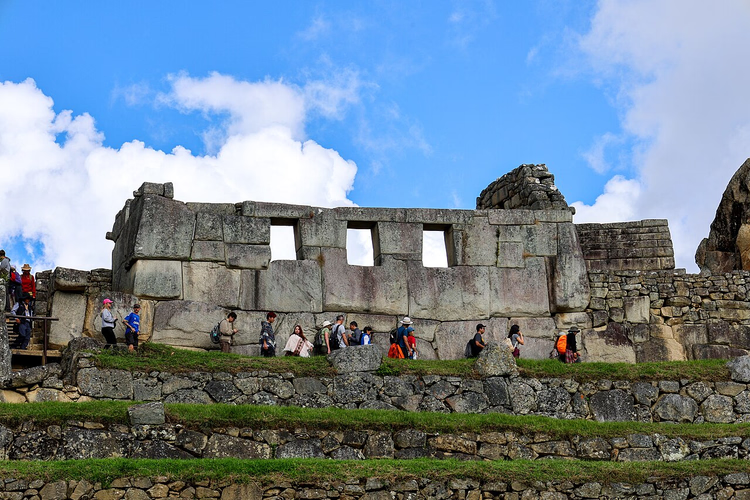 © flowcomm · CC BYPhoto: flowcomm, CC BY (https://creativecommons.org/licenses/by/2.0), Wikimedia Commons
On a rock in the middle of the plaza you will find the polygonal Intihuatana stone. Priests used it to determine the timing of planting and harvest. It is believed to have been one of the city's main observatories.
Inca roads and master builders
The skill of the local architects is shown not only by the city itself, but also by the roads around it. One of them connected Machu Picchu with Cusco. It has survived to this day and impresses with the scale of its masonry.
The Incas built most roads in the form of steps. Special attention was paid to drainage and preparing the base, so even in the rainy season they were not washed out. Here you will see how evenly the stones are laid underfoot.
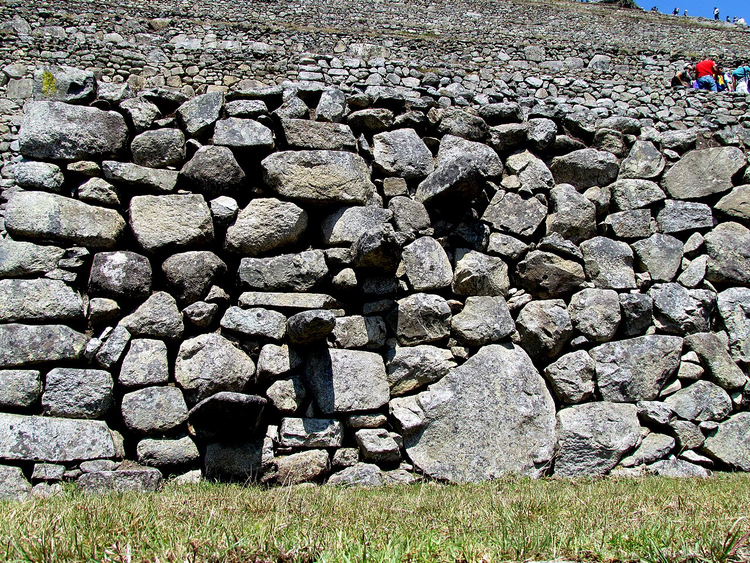 © bobistraveling · CC BYPhoto: bobistraveling, CC BY (https://creativecommons.org/licenses/by/2.0), Wikimedia Commons
Huayna Picchu: the climb to the viewpoint
Just beyond the city rises Huayna Picchu mountain. The climb to its summit is difficult and requires good fitness. But from the top you get the very view you have seen on thousands of postcards.
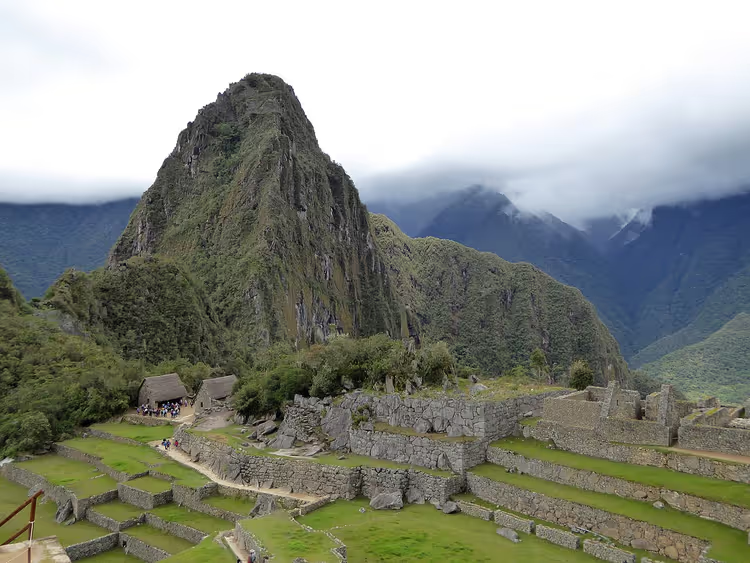 © Arabsalam · CC BY-SAPhoto: Arabsalam, CC BY-SA (https://creativecommons.org/licenses/by-sa/4.0), Wikimedia Commons
At the summit you will see several more Inca structures and take the best shots of the city.
Tickets and opening hours
Tickets to Machu Picchu are sold only online and only for a specific date and time slot. In high season, quotas sell out weeks in advance, so don't put off buying until the last day. Tickets with a fixed time slot on Tiqets are convenient to compare ahead of time.
Check the exact price and the right route on the official portal before buying. Children, students, and residents of Andean countries pay less, but you need to confirm the discount with a document.
A separate quota is required for the climb to Huayna Picchu and the neighboring peak. These tickets cost more than the basic entrance and sell out first. Choose a slot with extra time so you can complete the whole route calmly and not rush at the gate.
Tours and tickets in Machu Picchu
Guided tours, skip-the-line tickets and activities — most offers can be cancelled free of charge.
See offers on TiqetsThe widget loads once you give your consent.
How to get to Machu Picchu
The journey starts in Cusco or in the Urubamba Valley. Trains to Aguas Calientes depart from Ollantaytambo and Poroy stations. We checked the schedule and train types on 09/13/2026 on the official PeruRail website; it's best to buy tickets in advance.
Aguas Calientes remains the closest town to the site with hotels and cafes. From there, you go up to the entrance by bus along a winding road or walk. The bus takes about half an hour; the uphill walk on the stairs takes over an hour and requires stamina.
The budget option starts with a bus to Urubamba, then to Ollantaytambo, and an evening train to Aguas Calientes. This route takes most of the day. If you're short on time, take the direct train from Cusco: it saves several hours but costs more.
For those who are fit, there's the Inca Trail. The hiking route takes about four days, and permits are limited and sell out several months in advance. In February, the trail is closed for maintenance. It's convenient to compare trains ahead of time: see trains to Aguas Calientes.
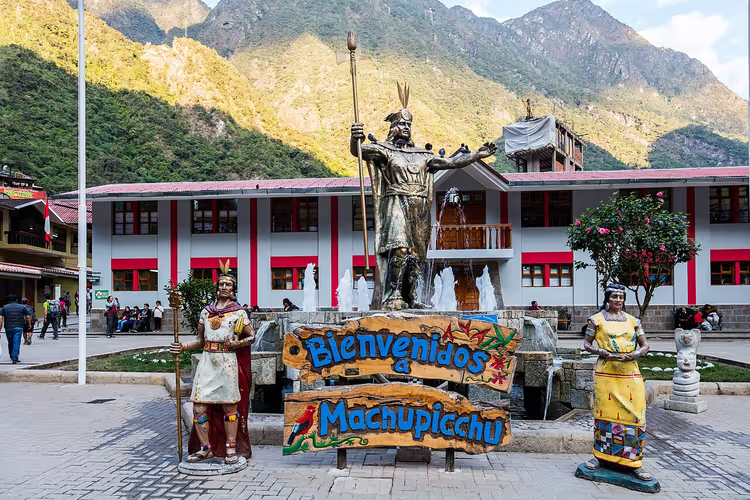 © Diego Delso · CC BY-SAPhoto: Diego Delso, CC BY-SA (https://creativecommons.org/licenses/by-sa/4.0), Wikimedia Commons
One last important note: the site admits a limited number of visitors per day, so book your ticket and train at the same time. Plan your visit program in advance, otherwise the dates simply won't line up.
When to go and how much time to allow
The dry season runs from May to September, and it's the best time to visit. During these months there's less rain and more clear sunrises, but also the most tourists. The wet season runs from November to March: cheaper, greener, but more fog and rain.
Allow at least half a day for the site itself. The slot is for a specific time, and routes differ in length and the number of features. You can complete the short route in a couple of hours; the long one takes almost the whole day.
Acclimatization matters: Cusco sits higher than Machu Picchu, and it's best to spend the first day on a relaxed walk. Drink water, don't rush on the climbs, and don't plan a strenuous trek right after you land.
Machu Picchu on the map
See the site's location between the peaks and the nearby town of Aguas Calientes. This map makes it easy to estimate the route from the station to the entrance and get a sense of the scale of the terraces.
⁉️🤔 Frequently asked questions
How much does a ticket to Machu Picchu cost?
Admission for a foreign adult costs several dozen dollars; check the exact price on the official portal of Peru's Ministry of Culture.
How do I get to Machu Picchu from Cusco?
The most convenient way is to take the train to Aguas Calientes from Ollantaytambo or Poroy stations. From the town, a bus takes you up to the entrance, or you can walk up the stairs. There's also a cheaper route with transfers through the Urubamba Valley, but it takes most of the day. For those who are fit, there's the multi-day Inca Trail, but it requires permits.
Do I need a guide at Machu Picchu?
There's no mandatory guide requirement, but with one you'll understand the history and purpose of the buildings better. Many people take a group tour from Cusco or Aguas Calientes. A guide helps you figure out the routes and avoid wasting time at the entrance. If the architectural details matter to you, a tour is worth it.
When is the best time to go to Machu Picchu?
The best time to go is during the dry season, from May to September. Be prepared for both rain and bright sun on the same day.
Can I climb Huayna Picchu?
Yes, but the route is steep and requires good fitness, and the steps get slippery in the rain. Start the climb in the morning, before the heat and the crowds at the viewpoint.
In short: what to book
Machu Picchu requires planning: book your ticket, train, and accommodation at the same time, otherwise the dates won't line up. If you're going in the dry season, book everything several months in advance.
- If you need basic admission: get a ticket for the classic route with a morning slot.
- If you want views from above: add the Huayna Picchu climb, but only if you're in good shape.
- If you're staying overnight: look for hotels in Aguas Calientes so you can catch the first bus.
Compare options ahead of time: hotels in Aguas Calientes and guided tours of Machu Picchu.

A small editorial team writing guides for independent travel. We travel ourselves, but we haven’t been everywhere, so we check prices, opening hours and how to get there against official sources.