
















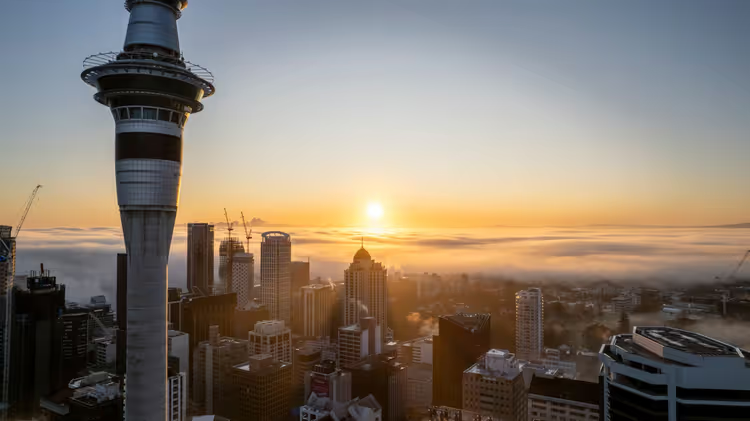
11 Places in Auckland and beyond: what to see
Auckland is often the first point of contact with New Zealand. Most international flights land here, and the city is a convenient starting point for trips to volcanoes, fjords, and thermal parks. The city sits on an isthmus between two harbors, so water and greenery are close by from almost anywhere. Below are the places worth your time, with prices, opening hours, and honest catches.
Ad: this article contains affiliate links, we earn a commission if you book through them, at no extra cost to you.
What to see in Auckland and nearby
💡 In short:
- Auckland is best explored on foot: the main sights lie within a couple of kilometers of Queen Street.
- Book timed tickets for paid attractions in advance: the Maritime Museum, the aquarium, Hobbiton, Wai-O-Tapu.
- Prices and opening hours: 09/2026, verified on the official websites of the attractions.
Auckland is convenient because urban sights sit right next to access to nature. You can walk through half of this list in a day, and reach the rest by bus, ferry, or car. Allow at least three days: one for the center, one for the volcano and the garden, and one more for a longer trip. Without a car you can still cover the essentials if you pick two or three paid attractions in advance and fill the rest with free sights.
Place | Region | Entry | When to go |
|---|---|---|---|
Auckland Harbour Bridge | Auckland, center | free | year-round |
Golden Mile | Queen Street | free | in the evening |
Auckland Botanic Gardens | Manurewa | free | in the morning |
Maungawhau (Mount Eden) | Auckland, center | free | at sunset |
New Zealand Maritime Museum | Viaduct Harbour | paid | on weekdays |
Kelly Tarlton's | Orakei | paid | on weekdays |
Milford Sound | South Island | paid | in season |
North Island | north of the country | depends | in summer |
Hobbiton | Matamata | paid | by session |
Franz Josef Glacier | West Coast | paid | in season |
Wai-O-Tapu | Rotorua | paid | in the morning |
Plan transport separately: sights in the center are easy to reach on foot, but the aquarium and the Botanic Gardens require a ride. Keep half a day in reserve for the unexpected, because Auckland weather changes several times a day. Below, each attraction has its own section with details.
1. Auckland Harbour Bridge
The bridge opened in 1959 and still connects central Auckland with the northern suburbs (according to Wikipedia). Traffic on it is heavy for most of the day, and the crossing is just over a kilometer long. There is no pedestrian walkway, so you cannot walk across the bridge.
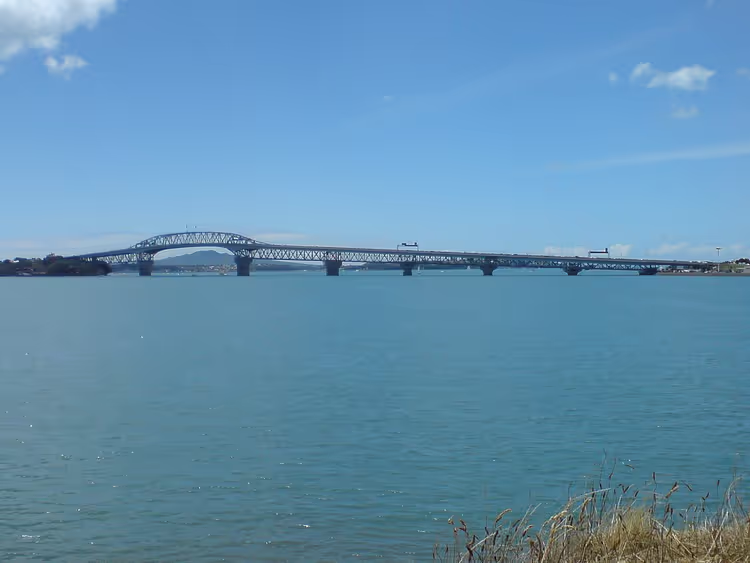
From the shore, the bridge is visible from the waterfront and from ferries in Waitematā Harbour. During the day it is easy to view from the volcanic peaks of the North Shore, and at night the lights come on. Viewing from the ground is free at any time, and there are several lookout points. The best light at the bridge comes an hour before sunset, when the lights are not yet on but the sky already has color. For an adrenaline rush, there is a bungee jump from the bridge, but you need to book in advance. The catch: pedestrians and cyclists are not allowed across, so you can only reach the other side by bus or ferry.
2. Golden mile and queen street
The Golden Mile business district runs along Queen Street in the very center of Auckland. Life buzzes here around the clock: offices and shopping centers operate during the day, and bars, restaurants, and clubs open in the evening. People come here from all over the city for shopping.
 © Sleeps-Darkly · CC BY-SAPhoto: Sleeps-Darkly, CC BY-SA (https://creativecommons.org/licenses/by-sa/4.0), Wikimedia Commons
The area was developed back in the mid-19th century, when building here was cheaper than in other parts of the city. The Auckland Ferry Building with its ferry terminal, the Chief Post Office, and Auckland Town Hall are reminders of that past. Everything else has been built up with glass skyscrapers that attract fans of urban landscapes.
Your landmark is Britomart station, where buses and trains arrive. Walking around the area is free at any time of day or night. Most city routes pass through Britomart, and from there you can reach Queen Street in minutes. How much you leave in cafes and shops depends only on your plans.
3. Auckland Botanic Gardens
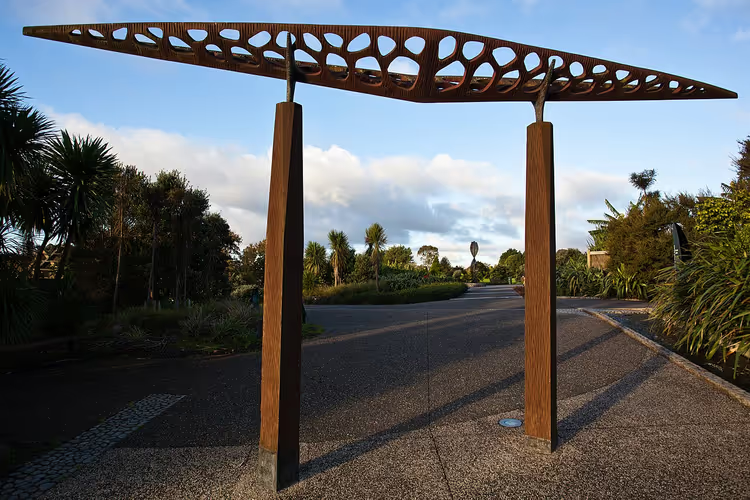
The Botanic Gardens cover 64 hectares and hold more than 9,000 plant species, including rare New Zealand natives (as of 09/2026, official website). There are flower collections, the Potter Children's Garden, and areas of native forest. The trails are marked, so getting lost is unlikely. The main collections are concentrated near the entrance, and beyond that long walking trails lead to the native woodland.
 © russellstreet · CC BY-SAPhoto: russellstreet, CC BY-SA (https://creativecommons.org/licenses/by-sa/2.0), Wikimedia Commons
The gardens are in Manurewa, south of the center, about a half-hour drive. Entry is free, and the gates are open daily. There is a Miko cafe on site, and on weekdays there are free guided walks.
Two hours is enough for the main collections, but with kids it is easy to stay longer. The catch: getting there by public transport takes a long time, as the bus requires a transfer.
4. Maungawhau and Mount Eden
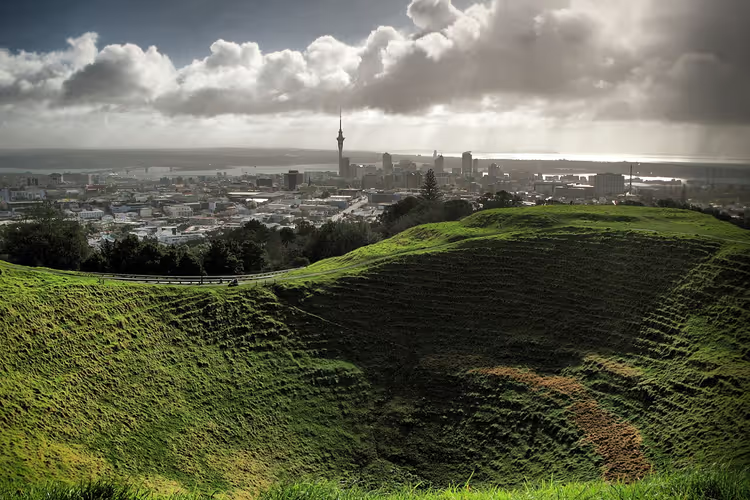
Maungawhau, known as Mount Eden, rises 196 meters above sea level (according to Wikipedia). It is the highest natural point on the Auckland isthmus and an old volcanic cone. From the summit you get a panorama of both harbors and the city. Come at sunset: the crater is lit by the low sun, and the city below fades into haze.
 © Etherbug , Alan Collins · CC BYPhoto: Etherbug , Alan Collins, CC BY (https://creativecommons.org/licenses/by/3.0), Wikimedia Commons
The volcano's slopes were once covered with orchards, and in the 19th century the land was parceled out for villas. Some of the mansions were turned into museums, while the rest remain residential. Nearby stand an old prison that looks like a castle and a large sports stadium.
The walk up takes about half an hour, and there is no transport to the summit. Entry is free at any time of day or night. The catch: it is always windy at the top, so bring a jacket even in summer.
5. New Zealand maritime museum
The New Zealand Maritime Museum is located in Viaduct Harbour, at the corner of Quay and Hobson streets. It is open daily from 10:00 to 16:00, last entry at 15:00, closed only on December 25 (as of 09/2026, verified 14.09.2026 on the official website). Adult tickets start at 12 NZD when purchased online.
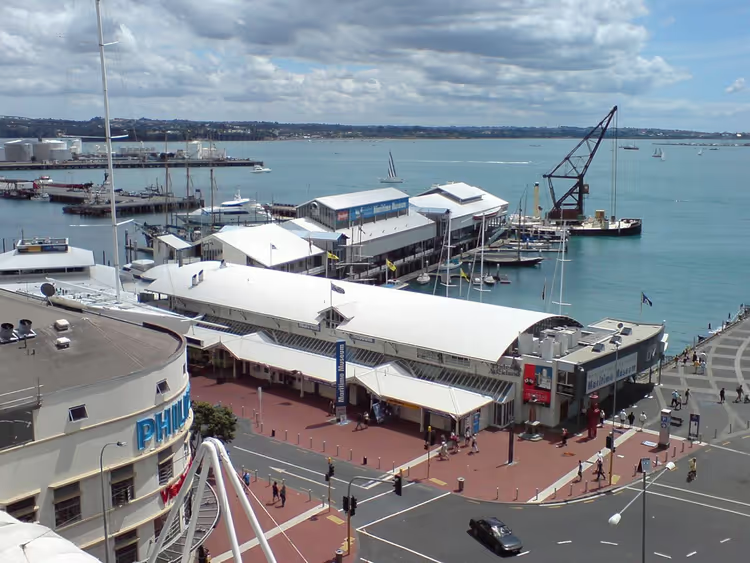
The exhibition is built around the country's maritime history. At the start, a short film about the settlement of the islands is shown, then you walk through four themed galleries. Separate displays are dedicated to the first European voyages, emigrants, yachtsman Peter Blake, and local marine artists.
For children, there are tactile ship models and a realistic replica of a 19th-century trading sailing ship. It is convenient to compare Auckland museum tickets on Tiqets in advance.
6. Kelly Tarlton's Aquarium
Kelly Tarlton's Aquarium was founded by diver Kelly Tarlton, the creator of the first transparent underwater tunnel. The address is simple: 23 Tamaki Drive, Orakei. The aquarium is open daily; check exact hours and sessions on the official website.
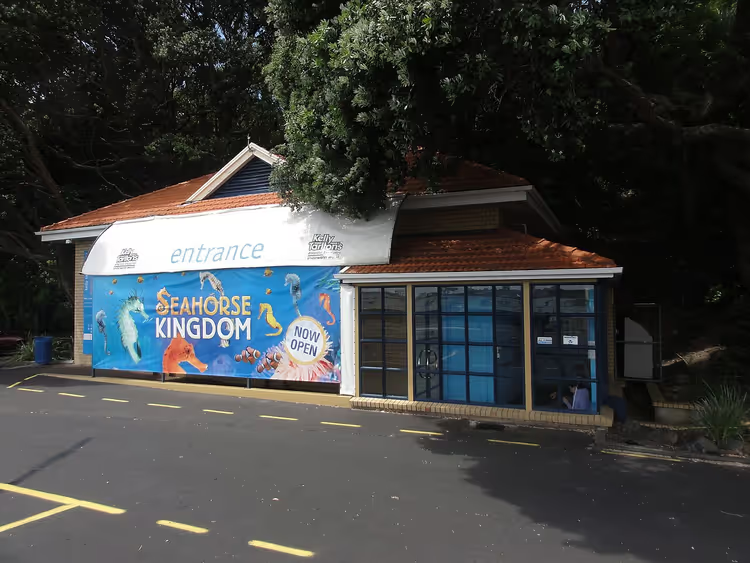 © Andy king50 · CC BY-SAPhoto: Andy king50, CC BY-SA (https://creativecommons.org/licenses/by-sa/3.0), Wikimedia Commons
The tunnels are designed so that fish and rays swimming past appear larger than their actual size. A separate area is dedicated to Antarctic penguins, and it is always cool there.
From the city center, a free "shark shuttle" will take you there, or you can take a regular bus from Britomart to the stop near Tyler Street. Tickets are sold at the counter and online, with discounts more often available when purchased in advance.
7. Milford Sound
Milford Sound (Piopiotahi) is a fjord about 15 kilometers long in Fiordland National Park (according to Wikipedia). Sheer cliffs, waterfalls, and clear water have made this place a signature landmark of New Zealand. The area is a World Heritage site.
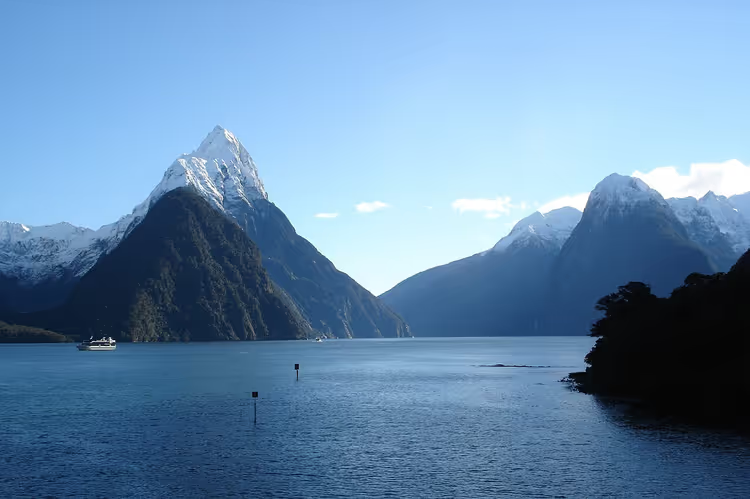
The name Piopiotahi in the Maori language is tied to a legend about the hero Maui and the extinct piopio thrush that mourned its friend. This area gets some of the most frequent rainfall on the planet, so bring a waterproof jacket.
The fjord lies on the South Island, so it does not fit into a three-day Auckland itinerary. From Auckland, you first fly to Queenstown, then drive or take a bus from there. Day cruises should be booked in advance; schedules change by season. Boats depart from the pier near the village, and some pass under waterfalls, so take a raincoat. On board, guides usually talk about the fjord's geology and why it rains here so often. The catch: the journey eats up almost the entire day, leaving only a few hours for the fjord itself.
8. North Island
New Zealand spans multiple islands, and the North Island attracts the most travelers. It is home to the country's major cities, including Auckland, and most of its volcanic zones. The island's most active volcano, Ruapehu, rises to 2,797 meters (according to Wikipedia).
 © KennyOMG · CC BY-SAPhoto: KennyOMG, CC BY-SA (https://creativecommons.org/licenses/by-sa/4.0), Wikimedia Commons
The coastline is cut by bays and inlets, so sea lovers have plenty of options here. Cliffs, waterfalls, and black-sand beaches sit alongside geysers and lakes. Thrill-seekers will find bungee jumping and water sports.
You can get there by domestic flights: the country has several airports with regular service. Ticket prices depend on the route and season. The catch: distances are long, and without a car or an organized tour you will not cover much.
9. Hobbiton
Hobbiton was created on the Alexander family farm, where Peter Jackson filmed The Lord of the Rings. New Zealand Army soldiers were brought in for construction, and the sets were built to look natural. Today it is a tourist attraction with nearly four dozen hobbit holes.
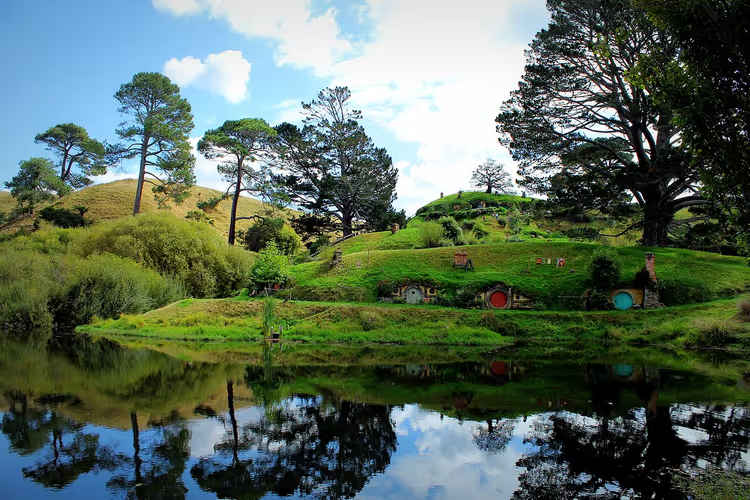 © Jackie.lck ( photos · photo sets ) · CC BYPhoto: Jackie.lck ( photos · photo sets ), CC BY (https://creativecommons.org/licenses/by/2.0), Wikimedia Commons
An adult Signature Tour ticket costs 130 NZD; the tour lasts 2.5 hours and includes a drink at the Green Dragon pub (as of 09/2026, official website). Most hobbit holes are viewed from the outside, but you can enter one fully furnished interior. You can also stop by the famous cafe. Arrive for the first sessions: before noon the village has fewer groups, and the light on the hills is softer.
The easiest option is to take an organized tour: going on your own requires a car to Matamata. Hobbiton tours on GetYourGuide depart from Auckland and Rotorua. The catch: you cannot get onto the grounds without a ticket, and sessions sell out quickly.
10. Franz Josef Glacier
Franz Josef Glacier descends 12 kilometers from the Southern Alps and is considered one of the fastest-moving glaciers in the country (according to Franz Josef Glacier Guides). In its upper section, it moves at up to five meters per day. In Maori it is called Kā Roimata o Hine Hukatere.
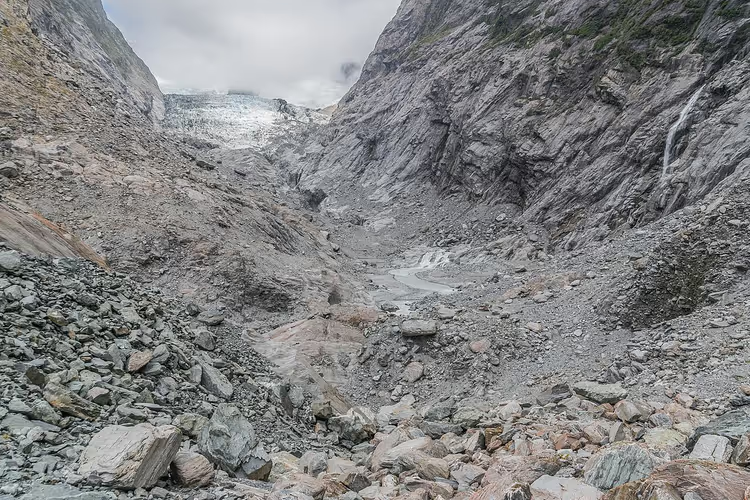 © Krzysztof Golik · CC BY-SAPhoto: Krzysztof Golik, CC BY-SA (https://creativecommons.org/licenses/by-sa/4.0), Wikimedia Commons
The glacier lies in Westland Tai Poutini National Park, which is managed jointly with local Maori iwi. For them, this area remains sacred. Nearby is the village of Franz Josef with cafes and family-run lodges. The glacier is on the South Island, so getting here from Auckland requires a flight. This trip does not fit into a three-day Auckland itinerary.
You can see the glacier from the air on a helicopter, on a hiking trip, or on a walk through the ice tunnels. The trail to the viewing platform is open, and you can walk it without a guide. Prices depend on the operator's program, so check them when booking.
11. Wai-O-Tapu
Wai-O-Tapu near Rotorua covers about three square kilometers and combines geysers, mineral springs, and colored lakes. The park is open daily from 8:30 AM to 4:30 PM, with the last entry at 3:00 PM (as of 09/2026, official website).
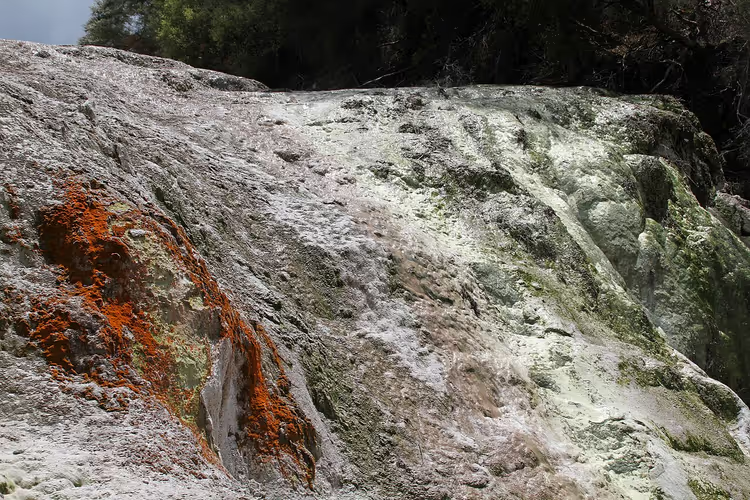 © Tony Hisgett from Birmingham, UK · CC BYPhoto: Tony Hisgett from Birmingham, UK, CC BY (https://creativecommons.org/licenses/by/2.0), Wikimedia Commons
The main stop on the route is called the Champagne Pool: carbon dioxide bubbles give the water the look of a sparkling drink. Another stop, the Lady Knox Geyser, erupts daily at 10:15 AM on schedule. Three trails of different lengths run through the area. Wear waterproof shoes, as the air near some lakes is hot and humid.
From Auckland, you get to Wai-O-Tapu via Rotorua: first by bus, then by tourist shuttle. The trip takes several hours each way. The catch: without a rental car, the trip turns into a long day, and staying overnight in Rotorua works out better.
Auckland attractions on the map
All the points from the list are collected on the map below. Use it to plan your route around the city.
⁉️🤔 Frequently asked questions
How many days are enough for Auckland?
Three days cover the essentials: the city center, Mount Eden, and the botanical garden, plus a day for a longer trip. If you want to add Hobbiton or Wai-O-Tapu, plan for four or five days, since getting there takes several hours each way.
What can you see in Auckland for free?
The Auckland Harbour Bridge from the shore, the Golden Mile, the Auckland Botanic Gardens, and Mount Eden are all free. You'll only pay for transport and food. These spots are enough for a full day of exploring the city without a single ticket.
Do you need a car in Auckland?
Within the city, a car isn't necessary: bus, train, and ferry all work. For trips to Milford Sound, Franz Josef Glacier, or Wai-O-Tapu, a tour or car rental is more convenient. Choose based on your route and the number of free days you have.
When is the best time to go to New Zealand?
The seasons here are reversed: it's warmest from December to February, which is also when prices are highest. In the shoulder season, it's cheaper and less crowded, but the weather changes more often. For the glacier and the fjord, bring a warm jacket in any month of the year.
Is it worth booking tickets in advance?
Yes, for the paid attractions on the list. Hobbiton, the aquarium, and the Maritime Museum sell timed entry, and in summer the remaining slots sell out weeks ahead. Online tickets are usually cheaper than at the gate and save you from waiting in line.
In short: what's worth booking
If you have one day, go for the city center, Mount Eden, and the waterfront. If you have three days, add the botanical garden and the museum. If you have a week, plan for Hobbiton and Wai-O-Tapu. The glacier and the fjord on the South Island require a flight and separate days.
If you're traveling with kids, keep the aquarium and Hobbiton on your list. If you're into nature, prioritize the fjord and the volcanoes. If you want to save money, choose the free spots and skip the extra tours.
One final action: Auckland hotels on Trip.com are worth checking before the season, since prices in the center rise closer to December.

A small editorial team writing guides for independent travel. We travel ourselves, but we haven’t been everywhere, so we check prices, opening hours and how to get there against official sources.