
















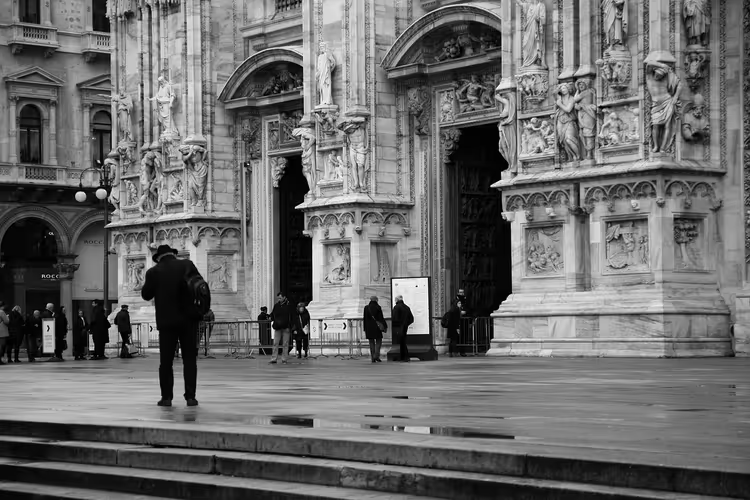
Milan on your own: transport, tickets and main places of the city
A trip to Milan is easy to plan on your own. The city is compact, and the main sights in the center are easy to cover on foot. You only need to decide three things: how to get from the airport, where to stay, and what to see.
Below is practical information about the city. You will find transport and ticket prices, neighborhoods for staying, Milanese cuisine, and a list of the main sights. We will also look separately at where you can actually save money.
Ad: this article contains affiliate links, we earn a commission if you book through them, at no extra cost to you.
How to get to Milan
💡 In short:
- Milan has several airports: Malpensa, Linate, and Orio al Serio near Bergamo.
- From Malpensa to the center, the Malpensa Express train and buses to Centrale station run.
- Prices and operating hours: 09/2026, checked on the official ATM website.
Milan receives flights through three airports. The largest, Malpensa, serves long-haul destinations. Linate is located closest to the center, and Orio al Serio is in Bergamo. Lufthansa, Eurowings, and Ryanair fly here from Germany, Austria, and Switzerland, among others.
The cheapest tickets are sold in November, February, and March. In July and September, flights cost the most. A connecting flight is usually cheaper than a direct one, but adds several hours to the journey. Buy in advance: a month out, the price is almost always lower than a week out.
Visa and documents
EU, EEA, and Swiss citizens do not need a visa for Italy. An ID card or passport is enough. Third-country nationals need a Schengen visa, and the application is submitted to the Italian consulate or visa center in their place of residence.
Submit your documents in advance, ideally several weeks before the trip. The consular fee for an adult is 90 € (as of: 09/2026, official Italian visa portal). Processing usually takes from two to several weeks.
The standard document package looks like this:
- a valid passport and copies of the pages;
- a completed application form;
- a recent photo;
- health insurance for the entire duration of the trip;
- proof of accommodation booking;
- proof of financial means, such as a bank statement.
If you are coming from an EU country, this list is not necessary, but it is worth putting your European Health Insurance Card (EHIC) in your bag. Separately, compare insurance options if you want coverage beyond the basic level.
How to get from the airport to the center
From Malpensa to the center, you can take a train, a bus, or a taxi. These options differ greatly in price and time.
Buses to Centrale station cost less than the train. At night there are fewer services, and during the morning rush hour the bus gets stuck in traffic. A Malpensa Express train ticket costs 15 € for an adult, children under 3 travel free (as of: 09/2026, official Malpensa Express website). Trains run every 15 minutes between the terminals and Centrale, Cadorna, and Porta Garibaldi stations.
A taxi from the airport costs more than the train. It is justified if you are traveling with a family or with a lot of luggage. A private transfer is convenient to book in advance: airport transfer with Kiwitaxi.
From Linate to the center, it is easy to get there by bus, taxi, or metro. From Orio al Serio, a bus will take you to Centrale station.
Which neighborhood to stay in
Staying in the center saves time and money on transport. The Duomo, the Galleria Vittorio Emanuele II, and Sforza Castle are close together, and you can visit them on foot. Hotels on the outskirts are cheaper, but you will pay extra for the journey with a taxi or several ATM tickets.
Three neighborhoods are convenient for tourists: around the Duomo, Brera with its museums, and Navigli with its canals and bars. If you arrive by train, it makes sense to stay near Centrale station. The city center also offers a range of price levels, from hostels to five-star hotels.
When choosing a hotel, look at location and reviews: hotels in Milan on Trip.com. Check how far the hotel is from the nearest metro station, and getting around the city will not take much time.
What to try from the food
Milanese cuisine is built on meat, rice, and corn. Some dishes you will not find in other regions of Italy, and they are worth visiting a trattoria for.
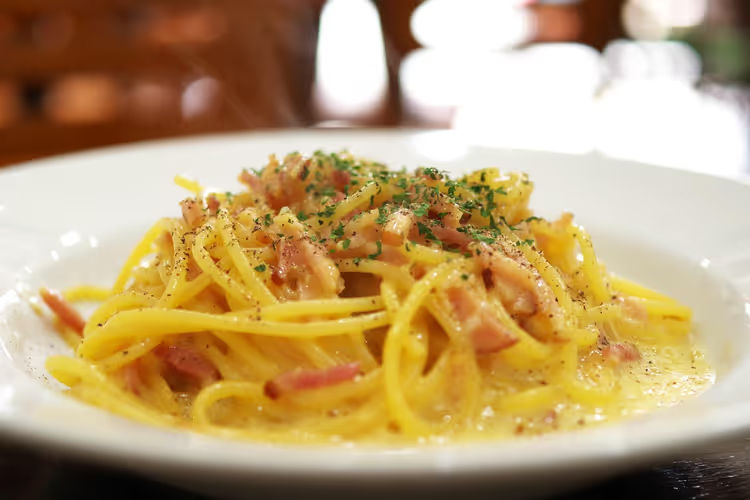
Start with this short list:
Dish | What it is |
|---|---|
Busecca | tripe soup with beans and tomatoes |
Ossobuco | braised veal shank with marrow bone |
Risotto alla Milanese | rice with saffron and butter |
Cotoletta alla Milanese | breaded veal cutlet |
Polenta | cornmeal porridge, often with cheese or cod |
Cassoeula | pork with braised cabbage |
Minestrone | thick vegetable soup with beans |
Panettone | Christmas bread with candied fruit and raisins |
Barbajada | hot drink made from chocolate, coffee, and milk |
Prices in trattorias stay in the lower double-digit euro range for a main course. Ossobuco and cassoeula cost more, in the mid double-digit range. Portions are large, so one dish and a salad will be enough for lunch.
Look for trattorias in the Navigli and Brera neighborhoods. Restaurants on the square by the Duomo cater to tourists and will be noticeably more expensive. Panettone and cheese are cheaper to buy at the market than in a boutique next to the cathedral.
Transport in Milan
A single ATM ticket costs €2.20 and is valid for 90 minutes (as of 09/2026, ATM tickets and passes). During that time you can transfer between the metro, tram, and bus at no extra charge.
Milan's metro has five lines, and trains run from early morning until around midnight. The tram network is considered one of the largest in Europe, and it's a pleasant way to see the city from the window.
Tickets are sold at machines in metro stations, at newsstands, and in the ATM app. You can also pay for your ride with a contactless bank card right at the turnstile. Keep your ticket until the end of your trip: without it, a fare inspector will issue a fine.
Daily, weekly, and monthly passes are worth it if you plan to take many trips. Do the math in advance: with several rides a day, single tickets end up costing more. Young children ride free; check the age threshold on the ATM website.
The suburbs are easy to explore using suburban trains. They depart from Centrale, Cadorna, and Porta Garibaldi stations, and trains run frequently. This is how you can reach Bergamo, Como, or Varese without renting a car.
What to see in Milan
It is easy to spend three days in Milan and still not see everything. It is worth planning your itinerary in advance, especially if you are visiting for just a few days and want to fit in as much as possible. Below are the city's main sights, from the cathedral to museums and a cemetery that doubles as a sculpture park.
Duomo (cathedral)
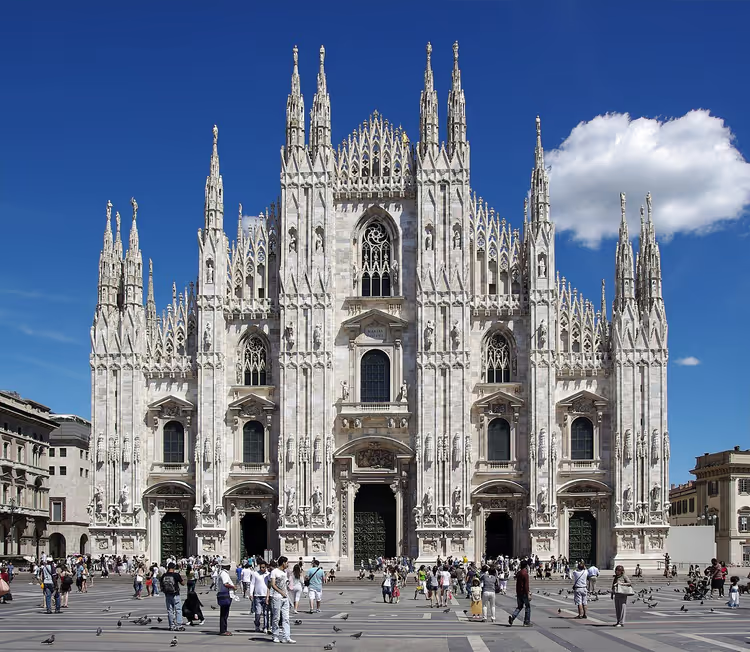
The Duomo was built from the late 14th to the 19th century, and several architects changed over that time. The building is made of white marble and decorated with numerous sculptures. A gilded statue of the Virgin Mary stands on the spire.
 © Jakub Hałun · CC BY-SAPhoto: Jakub Hałun, CC BY-SA (https://creativecommons.org/licenses/by-sa/4.0), Wikimedia Commons
The cathedral is considered an example of Flamboyant Gothic, although over the centuries Renaissance features were added to its appearance. During services up to several thousand people gather inside, and tourists are admitted only outside worship times.
Inside, it is worth seeing the nail from the cross of Christ, the Medici mausoleum by Leone Leoni, and the statue of Saint Bartholomew. You can go up to the cathedral terraces by elevator or stairs: from there you get a view over the entire center.
Book your ticket in advance: Duomo ticket with terraces. Without a time slot, the line in summer becomes very long.
Galleria Vittorio Emanuele II
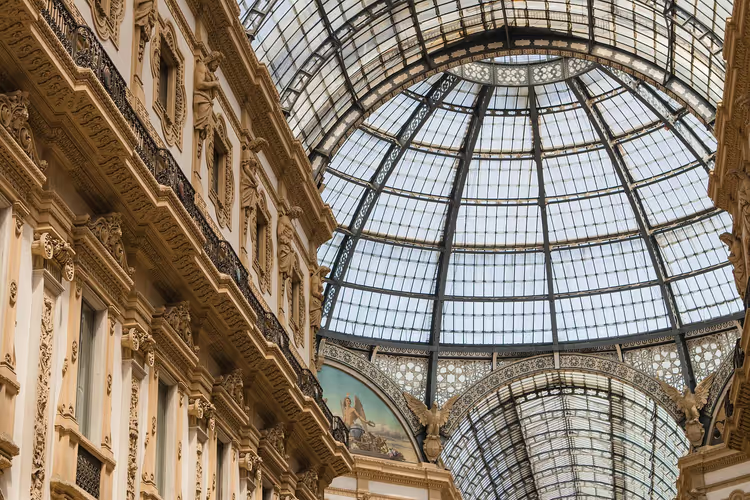
The Galleria Vittorio Emanuele II connects the square by the Duomo with the square by La Scala. It was built in the second half of the 19th century in honor of King Victor Emmanuel II.
 © Paolobon140 · CC BY-SAPhoto: Paolobon140, CC BY-SA (https://creativecommons.org/licenses/by-sa/4.0), Wikimedia Commons
The arch on the Cathedral Square side alone took about ten years to build. The shape of the galleria resembles a Latin cross, and a glass dome rises above the center.
Under the dome there are Gucci and Prada boutiques, cafes and restaurants, and exhibitions and concerts take place. Souvenirs here are expensive, but the mosaics and architecture can be admired for free. Go in the morning, when there are fewer tourists.
Sforza Castle
Sforza Castle was founded in the 14th century by the Visconti family, and it got its name from the military leader Francesco Sforza. Over the centuries the castle was rebuilt and restored, and today it is a whole museum complex.
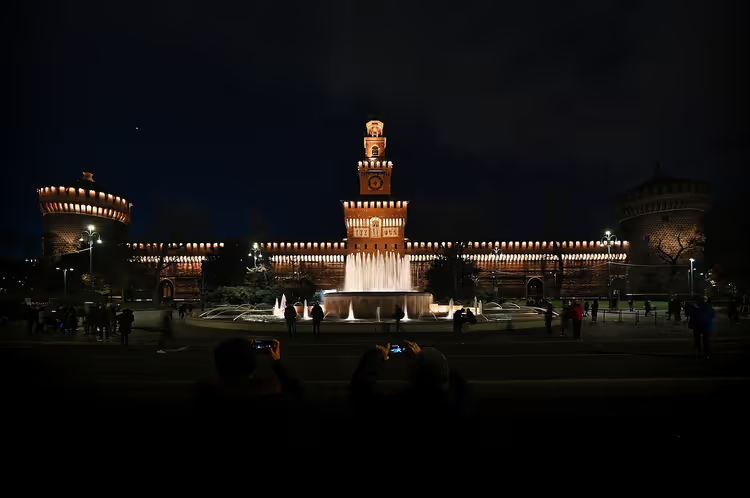 © TeKappa · CC BY-SAPhoto: TeKappa, CC BY-SA (https://creativecommons.org/licenses/by-sa/4.0), Wikimedia Commons
Several museums operate inside: it houses Michelangelo's "Rondanini Pietà", and there are collections of paintings, weapons, and everyday objects from the Middle Ages. The halls display the legacy of Leonardo da Vinci.
The museums are open from Tuesday to Sunday, closed on Mondays. The grounds are large, so allow at least half a day for your visit. The open courtyards of the castle are free to enter. Stop by here on your way to Parco Sempione: it begins right outside the gates.
Church of Santa Maria delle Grazie
The Church of Santa Maria delle Grazie was built in the 15th century for a Dominican monastery. It is made of red brick, and the facade is faced with white marble.
The interior was painted by Donato Montorfano and Gaudenzio Ferrari, and you can make out scenes from the Bible on the walls. Between viewing sessions, take a look at the church's inner courtyard with its small fountain.
People come here for Leonardo da Vinci's fresco "The Last Supper" in the former refectory. Viewing is allowed only by timed entry, in small groups, and by reservation.
Time slots sell out quickly, so book your ticket in advance on the official Cenacolo Vinciano website. Without a reservation, you risk not getting in.
Parco Sempione
Parco Sempione was laid out in the 19th century next to Sforza Castle, and it has kept its original layout. There are ponds with swans, fountains, bike paths, and playgrounds.
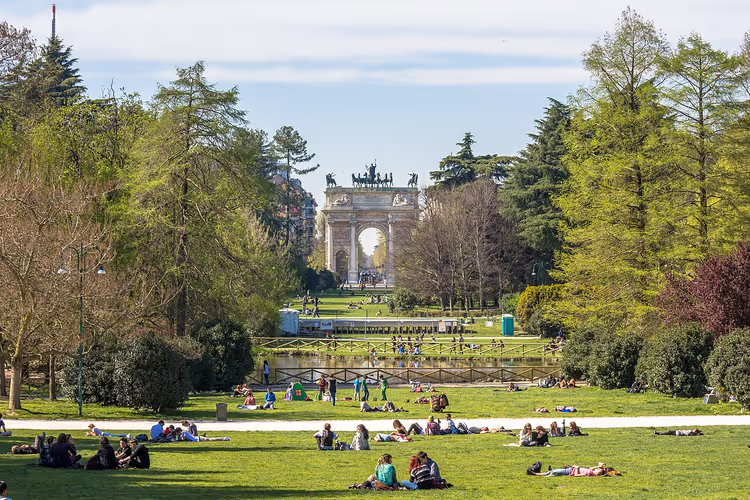 © Alessandro Perazzoli · CC BY-SAPhoto: Alessandro Perazzoli, CC BY-SA (https://creativecommons.org/licenses/by-sa/4.0), Wikimedia Commons
The Arch of Peace (Arco della Pace) runs through the park. It was built in the 19th century, and the idea is attributed to Napoleon. In the central part there is the Palace of Art, where exhibitions are held.
The park occupies a large area between the castle and the Arch of Peace, and it is easy to spend half a day here. Nearby is the oldest aquarium in Europe, which also admits visitors. Entry to the park is free, and it is a convenient place to take a break between museums. The catch: on summer evenings the main paths get crowded.
Pinacoteca di Brera
The Pinacoteca di Brera occupies a historic palace in the Brera district. The gallery was opened in 1809 under Napoleon for students of the Academy of Fine Arts.
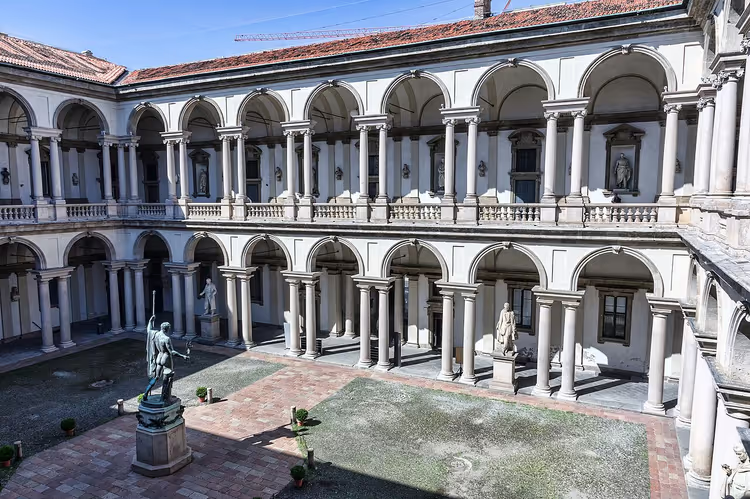 © Jean-Christophe BENOIST · CC BYPhoto: Jean-Christophe BENOIST, CC BY (https://creativecommons.org/licenses/by/3.0), Wikimedia Commons
It displays Raphael's "The Marriage of the Virgin", works by Caravaggio, Mantegna, Rembrandt, and El Greco. In addition to Italians, the gallery shows European masters, and a separate room is dedicated to modern art.
The museum is open from Tuesday to Sunday, closed on Mondays. Check opening hours and ticket sales on the official Pinacoteca website.
Basilica of Sant'Ambrogio
The Basilica of Sant'Ambrogio was founded as early as the 4th century, and it is called the "basilica of the martyrs". Bishop Ambrose served here for many years and was buried nearby.
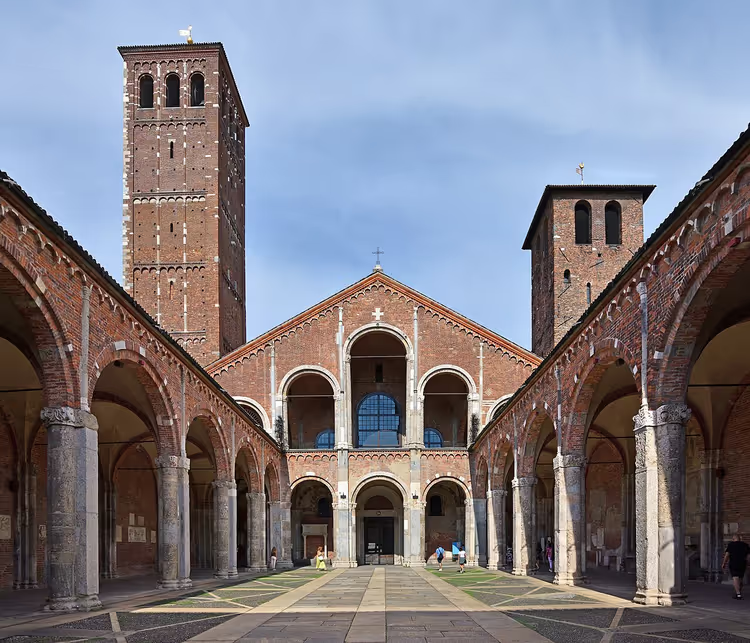 © Ludvig14 · CC BY-SAPhoto: Ludvig14, CC BY-SA (https://creativecommons.org/licenses/by-sa/4.0), Wikimedia Commons
Ambrose originally built not a basilica but a chapel next to the cemetery. It was later expanded, restored in the 19th century to its Romanesque appearance, and rebuilt after the bombing of World War II.
Two bell towers stand above the basilica, the Monks' Tower and the Canons' Tower. Inside, the mosaics and sarcophagi are worth seeing. It is an active place of worship, so keep quiet during services.
Teatro alla Scala
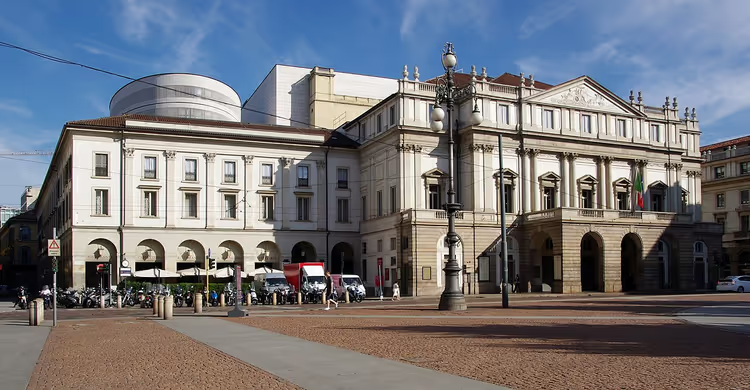
Teatro alla Scala opened in the 18th century on the site of the church of Santa Maria alla Scala. The design was prepared by architect Giuseppe Piermarini.
 © Jakub Hałun · CC BY-SAPhoto: Jakub Hałun, CC BY-SA (https://creativecommons.org/licenses/by-sa/4.0), Wikimedia Commons
The auditorium is horseshoe-shaped, with boxes arranged in several tiers holding nearly two hundred seats. The austere exterior combined with the lavish interior has long been the theater's calling card.
You can attend a performance with a ticket, and the theater museum is open for tours. La Scala is considered one of the world's leading opera stages, and tickets for popular productions sell out well in advance.
Museo Poldi Pezzoli
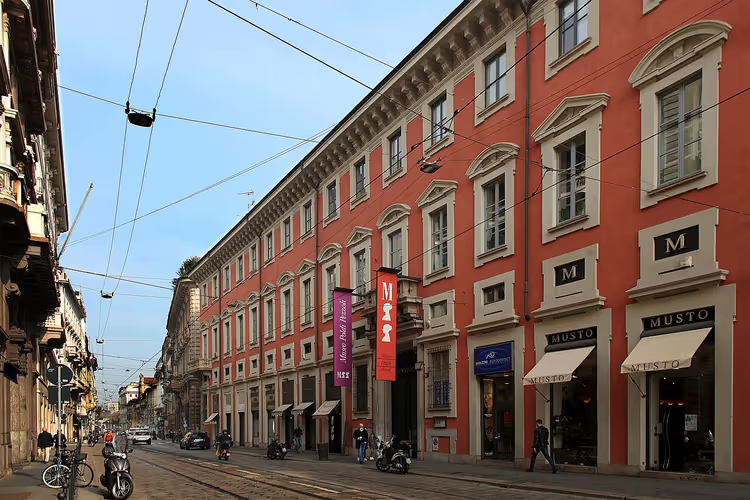
The Museo Poldi Pezzoli grew out of the private collection of Milanese aristocrat Gian Giacomo Poldi Pezzoli. He bequeathed his collection to the city.
 © Paolobon140 · CC BY-SAPhoto: Paolobon140, CC BY-SA (https://creativecommons.org/licenses/by-sa/4.0), Wikimedia Commons
It displays paintings, weapons, jewelry, furniture, and antiques. The building itself combines Gothic, Rococo, and Renaissance features, and it is worth examining separately from the collection.
The museum is open Tuesday through Sunday and takes less time than the Pinacoteca di Brera. It is a convenient option if you only have a couple of hours to spare.
Basilica of San Lorenzo
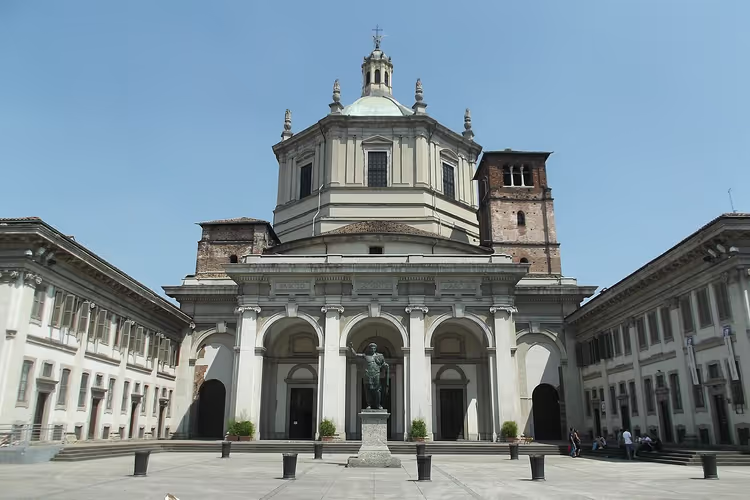
The Basilica of San Lorenzo is considered the city's second-largest church. It was built in the 4th century, and the architect's name remains unknown.
 © Blackcat · CC BY-SAPhoto: Blackcat, CC BY-SA (https://creativecommons.org/licenses/by-sa/3.0/it/deed.en), Wikimedia Commons
The church was consecrated in honor of Saint Lawrence. The building's plan resembles a quatrefoil, and a 12th-century Romanesque bell tower survives nearby. The Chapel of Sant'Aquilino, with the martyr's tomb, is open separately.
Ancient columns stand in front of the basilica, so people come here for the view as well. It is a quiet spot, and on the way to the Duomo you can reach it with almost no detour.
Monumental Cemetery
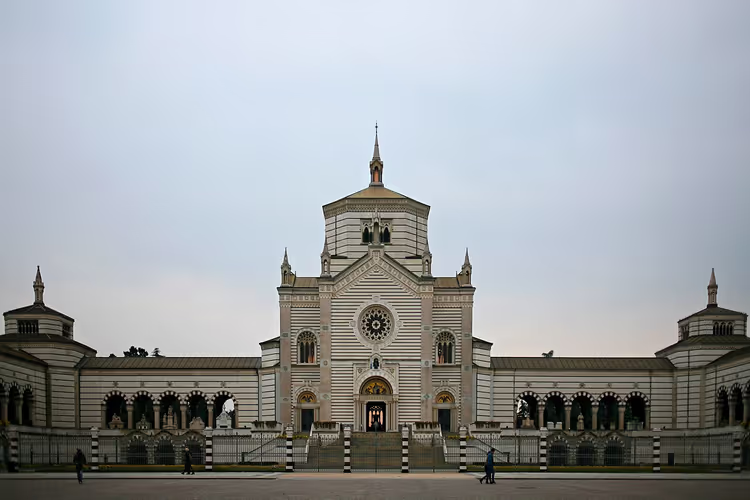
The Monumental Cemetery was founded in the second half of the 19th century, and today it is an open-air sculpture museum. Conductor Arturo Toscanini and many prominent Milanese are buried here.
 © Paolobon140 · CC BY-SAPhoto: Paolobon140, CC BY-SA (https://creativecommons.org/licenses/by-sa/4.0), Wikimedia Commons
The gravestones were created by leading sculptors of their time, so a walk along the avenues feels like touring a gallery. The complex's main building serves as a memorial to notable citizens. Admission is free, and it is easy to reach by metro.
If you are interested in sculpture and want to see Milan without the tourist crowds, set aside at least an hour for this place.
Tours and tickets in Milan
Guided tours, skip-the-line tickets and activities — most offers can be cancelled free of charge.
See offers on TiqetsThe widget loads once you give your consent.
How to save on transport and food
Milan is not the cheapest city in Italy, but a few habits noticeably cut your costs. The main rule is simple: plan ahead and don't buy everything on the spot.
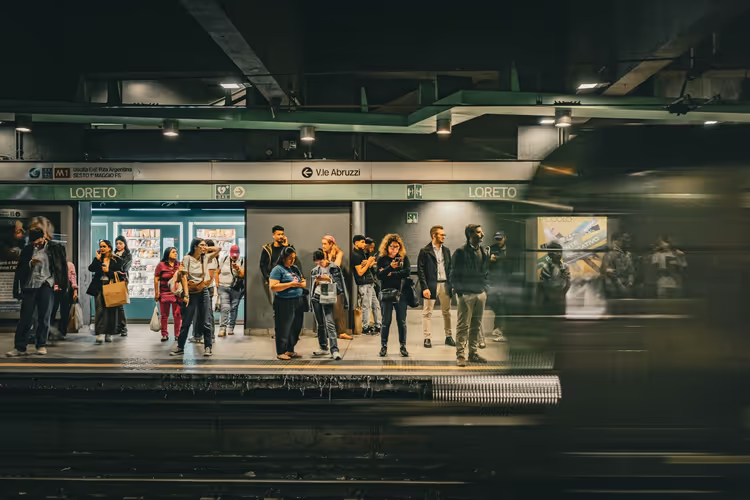
On transport, savings start with a single ATM ticket that includes free transfers. A taxi makes sense late at night or for a group with luggage; in other cases it costs noticeably more. Tickets are sold in the metro, at kiosks, and in the app, so you don't have to wait in line at the machine.
For food, the aperitivo helps. In many bars from early evening, a drink and a light snack are served for one price, and that's enough to replace a full dinner. During the day, look for Menù del giorno: a set lunch is often cheaper than ordering dishes separately. If you pick a small family-run trattoria, over time they'll start offering you the daily specials and house wine.
Drinking water in Milan comes from street fountains, and the water is safe to drink. You don't need to buy bottled water, which saves you a few euros every day.
Accommodation remains the biggest expense. Calculate the nightly rate together with transport, and the choice becomes obvious.
Museum tickets are sold both online and at the ticket office. Official museum websites often have discounts for students and seniors, so check them before buying. Some museums offer free entry once a month, but on those days the galleries are crowded.
Another way to save time and money is a city pass. It combines transit and museum discounts, and we cover two such cards below.
Finally, choose the off-season. In November, February, and March, both flights and hotels are cheaper, and museum lines are shorter.
Is MilanoCard worth buying
MilanoCard combines a city transit pass with discounts on museums, tours, and cafes (description on the official MilanoCard website). The card is issued for one, two, or three days.
The cardholder gets free transit, discounts at a number of museums, and a discount on trains across Italy. Separate discounts apply to bike rentals and luggage storage. The list includes the city's most popular museums, including the Museum of Science and Technology and the Poldi Pezzoli Museum.
The pass pays off if you plan to visit several museums and take many trips in a day. If you walk around the center, the card won't justify itself, and a single ticket is simpler.
Milan Pass: when it pays off
Milan Pass works differently. It gives two days of free transit and entry to the city's main museums, plus discounts at shops and restaurants.
The package includes the La Scala Theatre Museum, the Duomo, the Museum of Science and Technology, and the interactive Leonardo museum. You get a city map and an events calendar. Some versions of the pass include a ride on a double-decker sightseeing bus with an audio guide.
A separate option is the full package, where both offers are combined. The pass is convenient if you want to see several paid museums in a short time. At a relaxed pace, it's cheaper to buy tickets individually.
Shopping in Milan
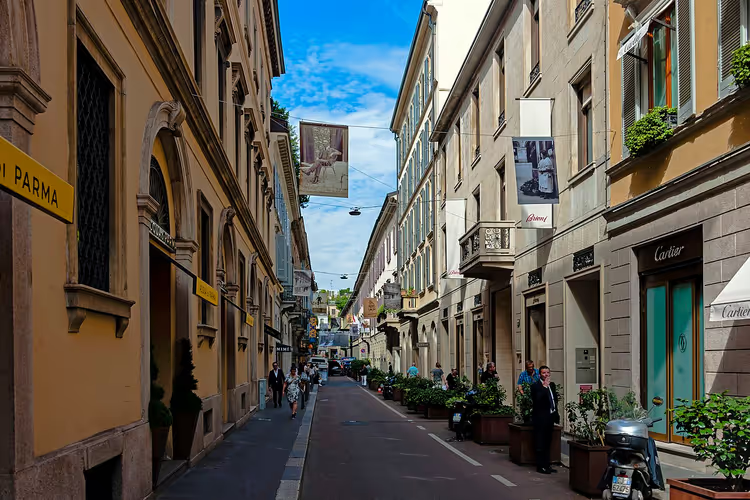
Milan is known as a fashion city, and people travel here specifically to shop. Prices depend on whether you're looking for well-known brands or something affordable.
 © Daniel Case · CC BY-SAPhoto: Daniel Case, CC BY-SA (https://creativecommons.org/licenses/by-sa/3.0), Wikimedia Commons
Products from Italian manufacturers are cheaper to buy locally: leather, shoes, textiles, perfume, and designer furniture. Outlets on the outskirts offer branded clothing at a discount, and they're worth a separate day trip.
The main sales happen twice a year, in winter after New Year's and in summer from July. The best time is the second and third week of the sales; after that, popular sizes run out. During this period, prices on shoes and bags are cut roughly in half.
Stores in the center are more popular than large shopping malls on the outskirts, and during sales they draw big crowds. If your size isn't on the shelf, ask a salesperson: they can check the stockroom or call a nearby store.
Tax is already included in the price. Stores with a Tax Free sign refund it when you take goods outside the EU: you show your passport and fill out a form. The large Serravalle outlet is on the way to Genoa, and it's easy to get there by bus.
bus to Serravalle Designer Outlet
Paying by card is more convenient in stores. Keep cash in euros, because exchange offices in the center often offer poor rates.
Milan tours
You can see the sights on your own or with a guide. With a guide, you'll understand the city's history faster and get inside without a long wait.
Themed walks are popular in Milan: Leonardo da Vinci sites, galleries, the city at night, and food tours. There are also bike tours and street photo sessions. Pick a theme that matches your interests: an architect will prefer one route, a shopping enthusiast another.
Group tours are cheaper but follow a fixed plan. A private guide adapts the route to your interests and can adjust it as you go. If a specific museum matters to you, book a tour that includes the entry ticket, so the time slot is already covered.
Interesting places in Milan on the map
Below is a map of the city center. The Duomo, the gallery, Sforza Castle, and La Scala are within walking distance of each other, and it's easy to move between them without transport. Open the map on your phone and build a day-by-day route: that way you'll plan the order of places and avoid backtracking.
⁉️🤔 Frequently asked questions
How many days do you need for Milan?
For the main sights, two days is enough. The Duomo, Galleria Vittorio Emanuele II, Sforza Castle, and La Scala are close together, and you can cover them on foot. Add a third day for museums, the Serravalle outlet, or a trip to Bergamo and Como. If you're in a hurry, it's possible to see the center in one day, but you'll be exhausted and miss the details.
How much does transport cost in Milan?
A single ATM ticket costs €2.20 and is valid for 90 minutes (as of 09/2026, current ATM fares). During that time you can transfer between metro, tram, and bus at no extra charge. For many trips, a day, week, or month pass is a better deal. Keep your ticket until the end of your trip, otherwise a fare inspector will fine you.
Do you need a visa to travel to Milan?
Citizens of the EU, EEA, and Switzerland don't need a visa; an ID card or passport is enough. Citizens of other countries need a Schengen visa, and applications are submitted to the Italian consulate or visa center in your country of residence. Apply early, because processing takes at least two weeks.
How to get from Malpensa to the center?
The Malpensa Express train costs €15 for an adult and runs every 15 minutes to Centrale, Cadorna, and Porta Garibaldi stations (as of 09/2026, official website). Buses to Centrale are cheaper, but they get stuck in traffic during the morning rush hour. A taxi or private transfer makes sense for a family with a lot of luggage.
Where is the best place to stay in Milan?
The most convenient option is in the center, around the Duomo, or in the Brera and Navigli neighborhoods. From there you can walk to the main sights and save on transportation. Hotels on the outskirts are cheaper, but they require extra trips. If you arrive by train, it makes sense to choose a place near Centrale station.
What Milanese dishes should you definitely try?
Start with ossobuco and risotto alla Milanese: these are the city's two signature dishes. Add busecca or polenta to go with them, and have panettone for dessert. Look for trattorias in the Navigli and Brera areas, because restaurants on the square by the Duomo are more expensive. In the evening, try an aperitivo.
In short: what to book
You can put together a trip to Milan in one evening if you immediately take care of three things: accommodation, transportation, and museum tickets.
- If you're flying into Malpensa: choose the Malpensa Express train or a transfer.
- If museums matter to you: compare MilanoCard and Milan Pass.
- If you're coming for shopping: plan a day at the Serravalle outlet.
- If you're going to the opera: book La Scala tickets in advance.
Start with accommodation and activities: Milan hotels on Trip.com and tours on GetYourGuide.

A small editorial team writing guides for independent travel. We travel ourselves, but we haven’t been everywhere, so we check prices, opening hours and how to get there against official sources.