
















Hong Kong on your own: visa, airport transport and main places
Hong Kong is genuinely easy to explore on your own, without a tour company. The city is compact, public transport runs almost around the clock, and English is understood almost everywhere. The main questions vary from person to person: whether you need a visa, how to get from the airport, and where to stay.
One of the main trips outside the center takes you to the Big Buddha via the Ngong Ping 360 cable car. Below you'll find visa rules, transport, hotels at different levels, and the city's main sights worth seeing.
💡 In short:
- The Airport Express train, buses, and taxis connect Chek Lap Kok Airport to the city.
- The Big Buddha, Victoria Peak, and the Avenue of Stars offer the city's main views.
- Prices and opening hours: as of 09/2026, verified on the Ngong Ping 360 ticket page.
Ad: this article contains affiliate links. We earn a commission if you book through them, at no extra cost to you.
Visa and visa-free entry to Hong Kong
For a short trip, you don't need a visa for Hong Kong. Citizens of the EU, US, Canada, Australia, and most Western countries can enter visa-free for up to 90 days (as of 09/2026, Immigration Department). For some nationalities the permitted stay is shorter, so check your country on the same list before buying a ticket.
Hong Kong has entry rules separate from mainland China. Even if you're flying on to China, the requirements for the two territories are different, and you need to check them separately. A return ticket and hotel booking may be requested at the border, so keep them handy.
How to get from the airport to the city
Hong Kong's airport sits on the reclaimed island of Chek Lap Kok. It's one of the most convenient airports in Asia: clear signage and several transport options to the city. From here you can reach the center without transfers.
The most predictable option is the Airport Express train. It runs nonstop to Kowloon and Hong Kong stations and isn't affected by traffic. If your hotel is on the island, take it. Taxis are more convenient for Kowloon and for late-night arrivals: the driver will take you right to the door. A-series buses are cheaper than the train but take longer.
How to get around the city
Within the city you'll get around by MTR metro, trams, buses, and ferries. The metro covers almost the entire center, and signs and maps are easy to follow without knowing Chinese. Get an Octopus card at the airport or any station: you can use it to pay for transport and at small cafes.
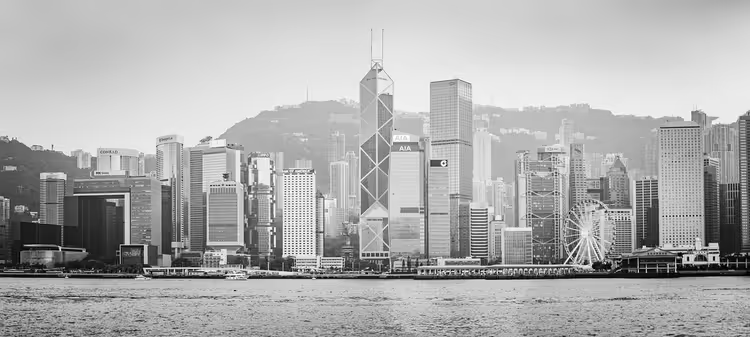
The Star Ferry across Victoria Harbour connects Tsim Sha Tsui with the Central Pier on the island. It's the cheapest ride with a view of the skyline and a full-fledged attraction in its own right. Plan it for the evening, when the skyscraper lights come on.
Where to stay in Hong Kong
Accommodation prices in Hong Kong are higher than in most European cities. The difference between the island and Kowloon is noticeable: for the same money you'll get a different neighborhood and a different room size. Below are options by level.
Royal Plaza Hotel. A large hotel with spacious rooms: minibar, panoramic city views, and a buffet breakfast. The windows look out over skyscrapers, and city attractions are nearby.
- Who it's for: if you want a large room and a view, and your budget allows it.
Hotel ICON. One of the city's most distinguished hotels. Rooms face the harbor, the hotel has a pool, spa, and fitness club, and the metro is just a few dozen steps away. Chinese cuisine is served at the Above and Beyond restaurant on the top floor, with views over the city.
- Who it's for: if harbor views and metro proximity matter to you.
Oi Suen Guesthouse. A budget option for sleeping in the center: air conditioning, free internet, and free local calls. The room is simple, but you'll get the essentials here.
- Who it's for: if you're looking for the lowest price for a place in the city.
Delta Hotel. A small hotel with clean rooms and free Wi-Fi. A good compromise between price and comfort for a multi-night stay.
Hostels. The cheapest options in the city: Hong Kong Budget Hostel and Kamal Traveller Hostel. Don't expect space: these are small rooms with a bed, and internet and phone aren't available everywhere.
The general rule is simple: the closer the hotel is to the island's waterfront, the higher the price. In Kowloon, near markets and metro stations, you'll get more space for the same money. Check exact prices for your dates in advance: Hong Kong hotels on Trip.com. In high season, book several weeks ahead, otherwise your options will narrow to expensive ones.
What to see on Hong Kong island
The island is home to two of the city's strongest experiences: the panorama from Victoria Peak and the large park in the south. Victoria Peak takes half a day, while Ocean Park requires a full day, so don't schedule them on the same day as transfers.
Victoria Peak
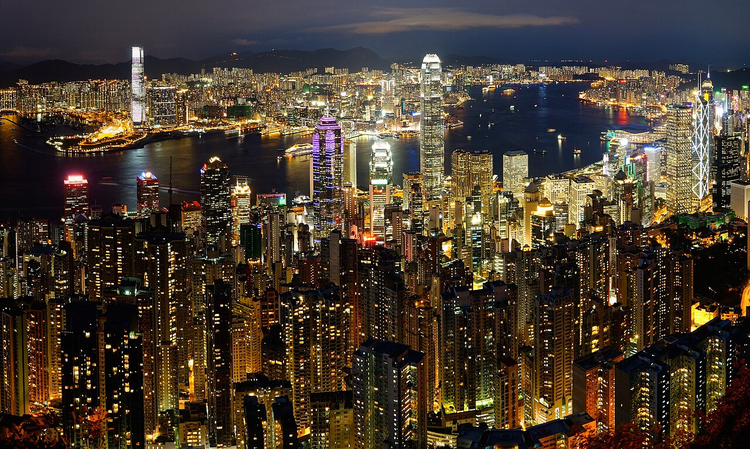
Victoria Peak is the highest point on Hong Kong Island and a must-see, even if you're short on time. The city's elite once lived here, drawn by the clean sea air. Today you'll see skyscrapers, mountain ridges, and all of Victoria Harbour from the peak.
The historic Peak Tram funicular takes you to the top: from the window, skyscrapers appear at unusual angles. Tickets for the Peak Tram and the Sky Terrace 428 observation deck are sold on the official website, where opening hours are also listed. Book a time before sunset: that way you'll see both the daytime city and the evening lights.
 © Romain Pontida · CC BY-SAPhoto: Romain Pontida, CC BY-SA (https://creativecommons.org/licenses/by-sa/2.0), Wikimedia Commons
Ocean Park
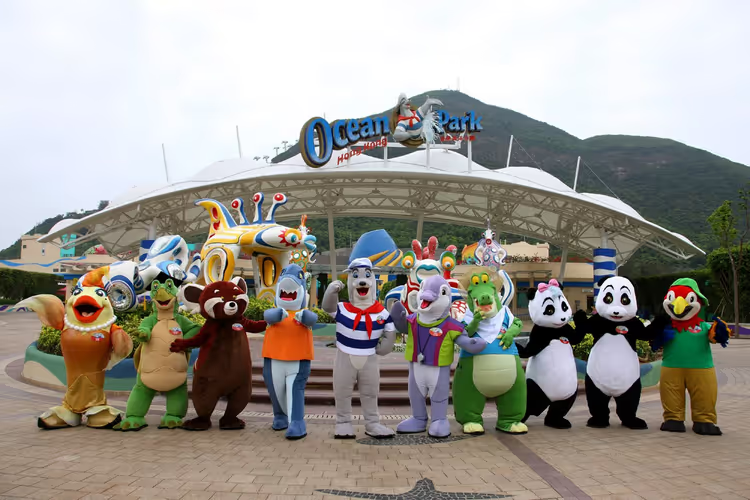
Ocean Park is one of Asia's largest theme parks, occupying a large area in the south of the island. Here you'll see North and South Pole zones: sledding, king penguins, snowy owls, seals, and walruses. Lunch is easy to combine with penguin watching, because a restaurant operates right next to the enclosure.
 © Anniewongw · CC BY-SAPhoto: Anniewongw, CC BY-SA (https://creativecommons.org/licenses/by-sa/3.0), Wikimedia Commons
A separate zone takes you back to old Hong Kong. Riding the Heritage Tram, you watch recreations of old streets and scenes from the city's past life. In the rainforest zone, a raft takes you to rare animals, and in the water city you'll find a large aquarium and a panoramic-screen show.
The Asian animals exhibit features giant pandas and Chinese alligators, and part of the route is interactive. Plan a full day and arrive at opening time: the park is large, and you won't be able to cover it in half a day.
What to do on Lantau Island
People go to Lantau for the Big Buddha and Disneyland. Getting there takes time, so set aside a separate day for the island.
Big Buddha and the Ngong Ping 360 cable car
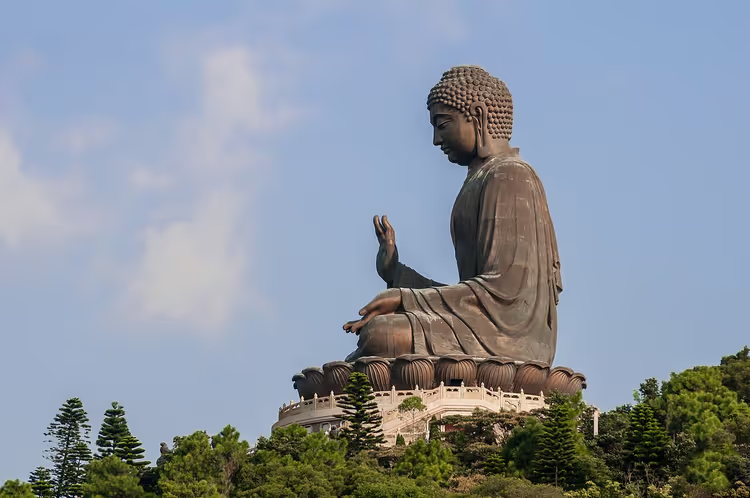
A trip to the Big Buddha is easy to combine with the Ngong Ping 360 cable car. It takes 25 minutes between Tung Chung and Ngong Ping and is considered one of the best cable cars in the world (as of 09/2026, Ngong Ping 360). A round-trip ticket costs HK$295 for an adult in a standard cabin and HK$365 in a glass cabin (as of 09/2026, ticket page with prices).
 © Béria Lima de Rodríguez · CC BY-SAPhoto: Béria Lima de Rodríguez, CC BY-SA (https://creativecommons.org/licenses/by-sa/3.0), Wikimedia Commons
The statue sits on a lotus flower, with a temple beneath it. A long staircase leads up to the sculpture, and the climb takes longer than it looks from the ground. But from the top you'll see the sea, the islands, and Po Lin Monastery, which you visit after the climb.
Bring water and wear comfortable shoes: there's little shade on the stairs. Mornings here are quieter than afternoons, when tour groups arrive.
Disneyland
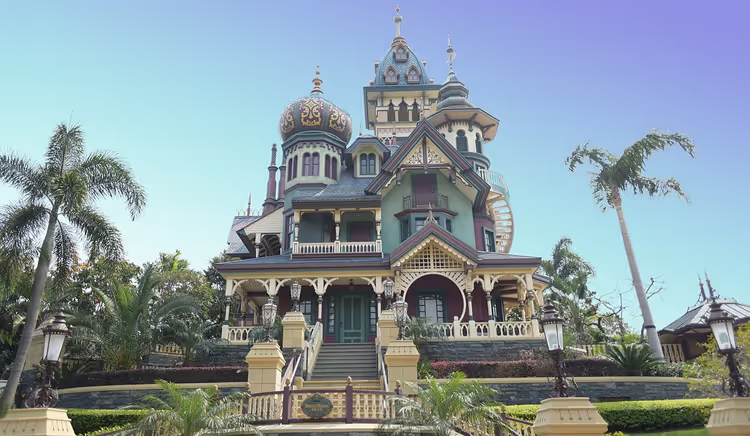
Hong Kong Disneyland works for both kids and adults. The park is divided into themed zones, including Tomorrowland and Adventureland, and operates from morning to evening. You'll walk through fairytale neighborhoods, watch a 3D show with Mickey, and catch a Broadway-style musical featuring him.
 © Сидней シドニー · CC BY-SAPhoto: Сидней シドニー, CC BY-SA (https://creativecommons.org/licenses/by-sa/2.0), Wikimedia Commons
The rides suit different ages, so get a full-day ticket. Lines get shorter toward evening, and the parade and nighttime show give the park a second life.
What to see in Kowloon
Kowloon is denser and noisier than the island, and it is also where the markets and the waterfront are concentrated. Below are the places that fit into a convenient walking route.
Avenue of Stars
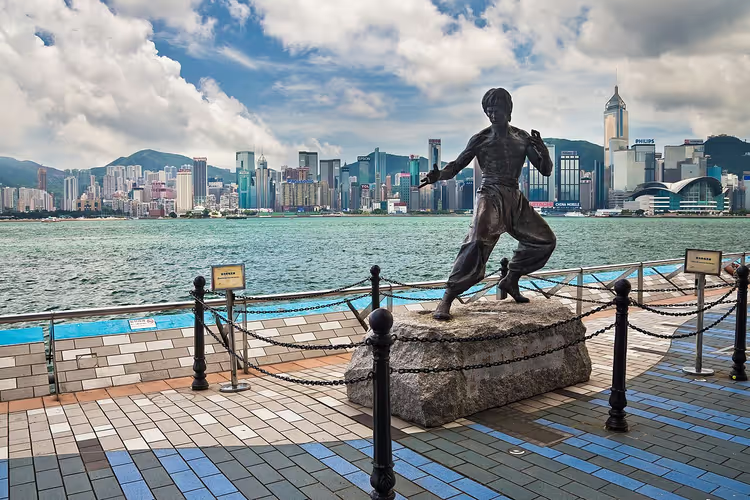
The Avenue of Stars runs along the Tsim Sha Tsui waterfront. The walkway is paved with stars bearing handprints, with sculptures of Bruce Lee and Jackie Chan nearby and memorial plaques honoring local actors and directors. Hong Kong is the birthplace of several generations of Asian cinema.
 © [2] · CC BY-SAPhoto: [2], CC BY-SA (https://creativecommons.org/licenses/by-sa/2.0), Wikimedia Commons
Both tourists and locals love this place. In the evening people come here to stroll along the water, with a panorama of the bay and skyscrapers opening up in front of you. The walk stretches out for a long time if you follow the entire waterfront. Small souvenir shops operate nearby.
Ladies' Market
The Ladies' Market occupies Tung Choi Street in Kowloon. The aisles are tightly packed with stalls: clothing, cosmetics, watches, bags, and household items. Bargaining is expected here, and you will almost always get a discount if you do not accept the first price.
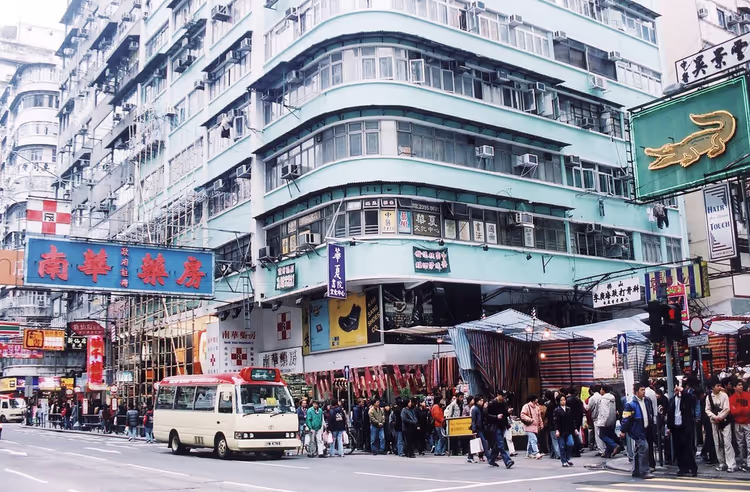
If a seller will not budge, move on to the next stall: the selection is large and prices vary. Come in the morning on a weekday, because by evening there are more people and bargaining is harder.
Temple street night market
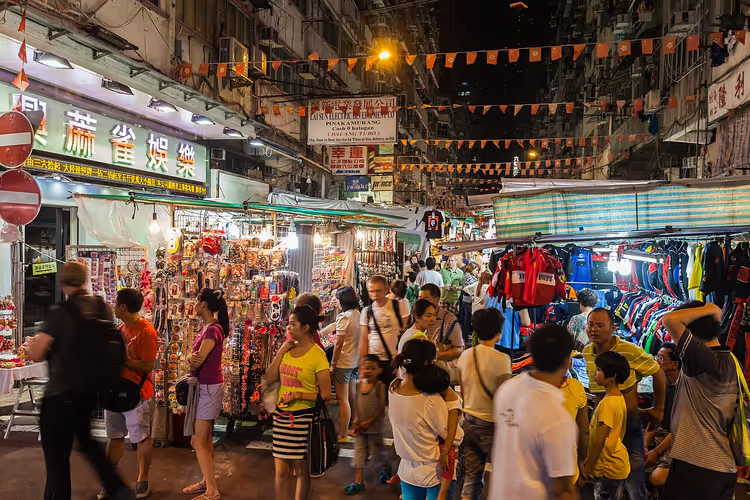
The night market in Kowloon is named after the Tin Hau Temple that stands right at its center. It is lively here every night: noodles, rice, and seafood are cooked, and tea, clothing, watches, and antiques are sold. The street food atmosphere is best experienced in the evening, when the lights come on.
 © Diego Delso · CC BY-SAPhoto: Diego Delso, CC BY-SA (https://creativecommons.org/licenses/by-sa/3.0), Wikimedia Commons
Look for the market on Temple Street between the Jordan and Yau Ma Tei MTR stations. Come hungry and with cash: some stalls do not accept cards.
Tsim Sha Tsui
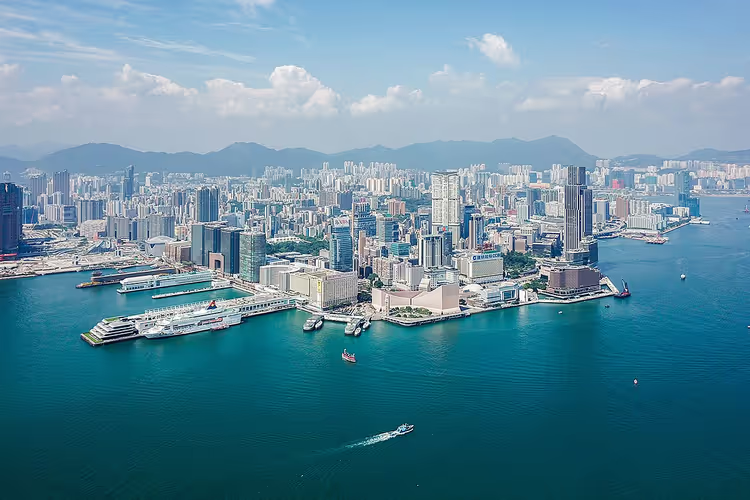
Tsim Sha Tsui brings the main waterfront points together into one route. It starts at the Clock Tower, passes the Hong Kong Cultural Centre and museums, and ends at the Avenue of Stars. You can walk it on foot in one relaxed evening.
 © Wpcpey · CC BY-SAPhoto: Wpcpey, CC BY-SA (https://creativecommons.org/licenses/by-sa/4.0), Wikimedia Commons
Each point here deserves a separate look, and together they show the city from the water and from land. If time is limited, start with the waterfront: from here you can see both the island and Kowloon at the same time.
Tours and tickets
Guided tours, skip-the-line tickets and activities — most offers can be cancelled free of charge.
See offers on GetYourGuideThe widget loads once you give your consent.
⁉️🤔 Frequently asked questions
Do I need a visa for Hong Kong?
Citizens of the EU, the US, and most Western countries do not need a visa: visa-free entry is allowed for up to 90 days (as of 09/2026, official Immigration Department list).
How do I get to the Big Buddha?
The Ngong Ping 360 cable car from Tung Chung MTR station takes you to the Big Buddha. The ride takes 25 minutes, and a round-trip ticket in a standard cabin costs HK$295 for an adult (as of 09/2026, official cable car website). A staircase leads from Ngong Ping village to the statue.
Where can I stay in Hong Kong on a budget?
The most budget-friendly options are hostels and guesthouses in Kowloon: Hong Kong Budget Hostel, Kamal Traveller Hostel, and Oi Suen Guesthouse. Rooms are small, and not all hostels have internet. Prices are higher than the Asian average: Hong Kong is an expensive city.
What should I see in Hong Kong in the evening?
The best evening route is Victoria Peak and the Avenue of Stars. From the Sky Terrace 428 you can watch the bay turn into a scattering of lights, and from the Tsim Sha Tsui waterfront you get a view of the skyscrapers across the water. You can finish at the Temple street night market with street food.
How should I split up my days in Hong Kong?
Divide your trip by area: Hong Kong Island and Victoria Peak, Kowloon with the Avenue of Stars and markets, Lantau with the Big Buddha and Disneyland. Parks and observation decks take a full day, so do not put them on the same day as transfers. A spare day is useful for the waterfront and markets.
In short: what to book
Hong Kong is an expensive city, so accommodation and tickets are best booked in advance. Below is a simple matrix for what to choose for your scenario.
- If you are short on time: take a hotel near an MTR station on the island and go up to Victoria Peak on the very first evening.
- If you are traveling with children: plan a full day for Disneyland or Ocean Park.
- If you want to save money: look for a hostel or guesthouse in Kowloon and use the MTR and the Star Ferry.
- If views matter to you: choose a hotel with a harbor view and be sure to visit the Big Buddha.
Book tickets and accommodation in advance: observation deck and park tickets on Tiqets and city tours on GetYourGuide.

A small editorial team writing guides for independent travel. We travel ourselves, but we haven’t been everywhere, so we check prices, opening hours and how to get there against official sources.