
















Pantheon in Rome: how to buy tickets, opening hours and what to see inside
The Pantheon has stood on Piazza della Rotonda for almost two thousand years. It is the best-preserved ancient building in Rome, where the concrete dome, bronze doors, and marble have survived fires, floods, and looting. In summer, the line at the ticket office stretches for over an hour.
We have put together practical information for an independent visit: opening hours, how to get there from the train station and metro, what to see inside, and where to stay nearby. Below you will find tickets with time slots, rules of conduct in an active church, and the honest catches of visiting.
Ad: this article contains affiliate links, we earn a commission if you book through them, at no extra cost to you.
The Pantheon: the temple of all gods in the center of Rome
💡 In short:
- The Pantheon is open every day, entry is by paid ticket.
- Half an hour is enough to see the interior, and there are noticeably fewer people in the morning.
- Prices and opening hours: 09/2026, verified on the official Pantheon website.
 © Nils Holle · CC BY-SAPhoto: Nils Holle, CC BY-SA (https://creativecommons.org/licenses/by-sa/4.0), Wikimedia Commons
The Pantheon was built as a temple to all gods, and today it is an active basilica, Santa Maria ad Martyres. The building stands in the historic center, between Piazza Navona and the Trevi Fountain, and you can enter with a standard ticket, without a mandatory guided tour.
What impresses most people is the dome. Its diameter is 43.5 m (according to the Rome tourist office), and it remains the largest concrete vault of antiquity. Through the oculus in the center of the dome, a column of light pours in at midday, visible even from the square right at the entrance.
History of the Pantheon in Rome
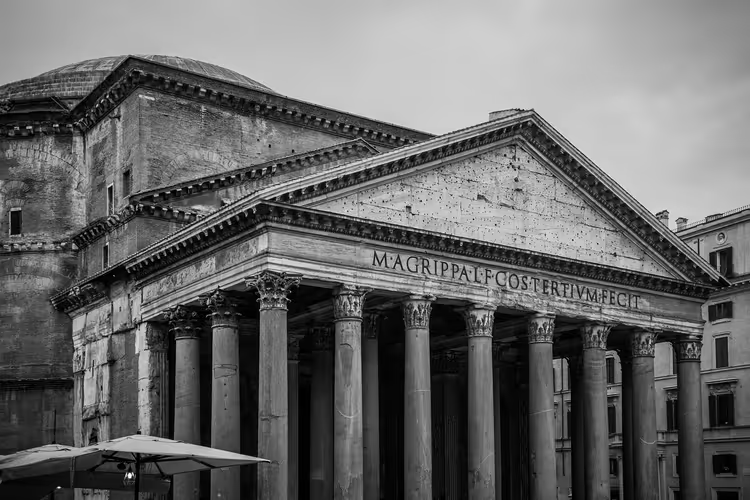
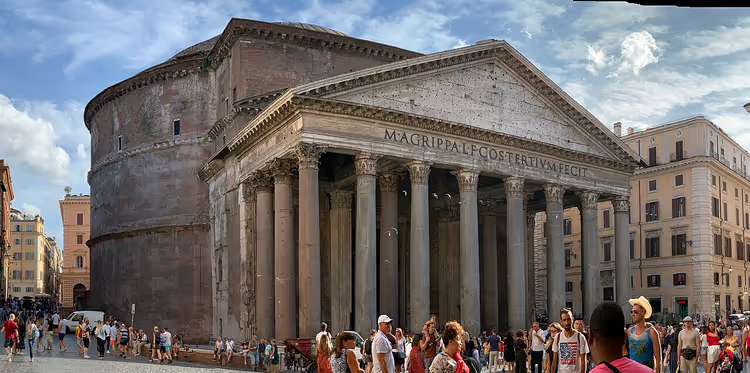
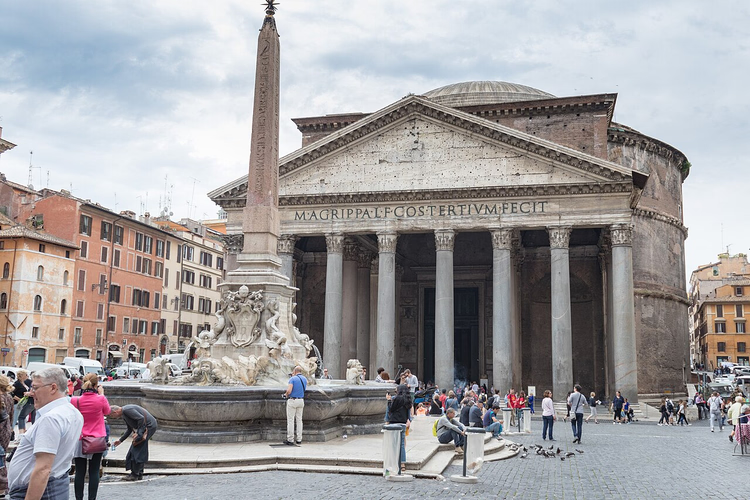
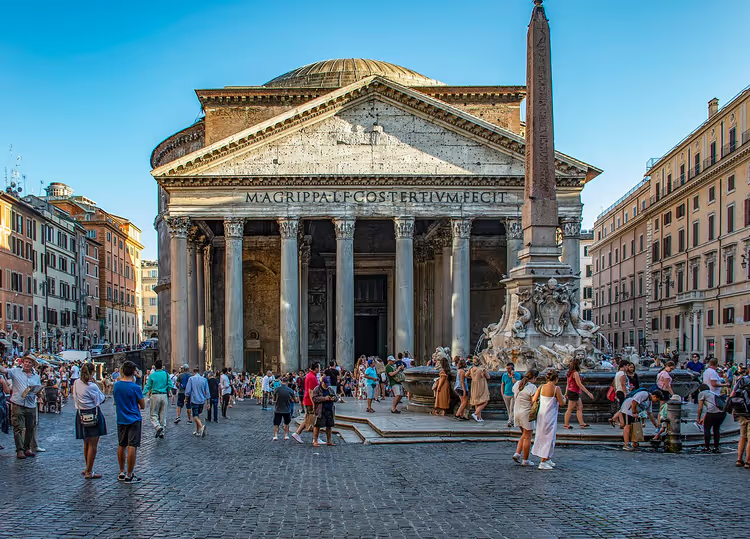
The first temple on this site was built by Marcus Agrippa around 27 BC (according to the Pantheon page on the Rome tourist office website). The inscription M. AGRIPPA L. F. COS. TERTIVM FECIT can still be read on the pediment, a reminder of the patron, although almost nothing remains of that original structure.
 © NikonZ7II · CC BY-SAPhoto: NikonZ7II, CC BY-SA (https://creativecommons.org/licenses/by-sa/4.0), Wikimedia Commons
The current building was erected under Emperor Hadrian around 126 AD (according to the description of the Pantheon's history). In 202, under Septimius Severus, the temple was restored and its cladding renewed. Hadrian kept Agrippa's name on the pediment to emphasize continuity and a connection with the founder.
In 608, Pope Boniface IV consecrated the pagan temple as the Christian church Santa Maria ad Martyres (as of 09/2026, museum website). From that point on, Mass has been celebrated here, and the building survived precisely because it remained in constant use. Sacrifices to the gods gave way to the liturgy, and the altar was placed opposite the opening in the dome.
The construction was overseen by Apollodorus of Damascus, the court architect of that era (according to the Pantheon website). Over two centuries, the temple twice suffered from fires after lightning strikes, which is why a complete rebuild was needed. The rotunda form, however, remained atypical for Greco-Roman temples, since instead of the usual rectangle, the architects chose a central-plan composition.
Architecture of the Pantheon
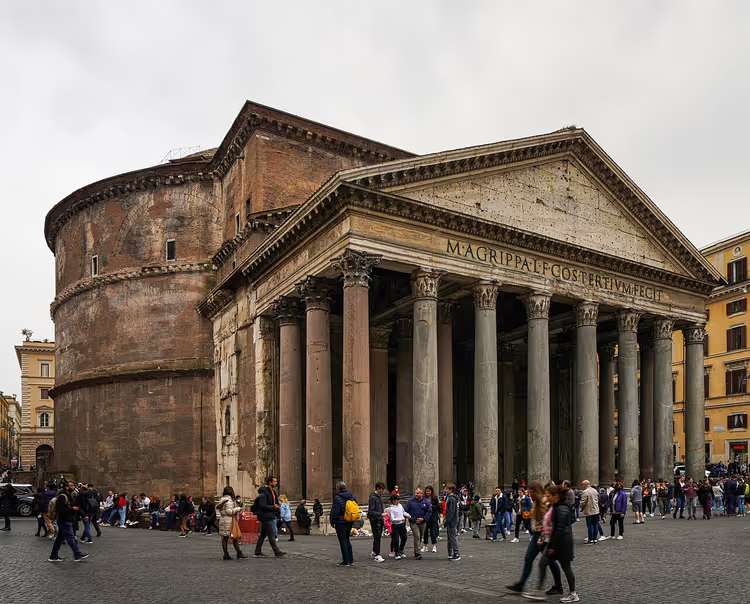
The Pantheon consists of three parts: a rectangular portico, a cylindrical rotunda, and a hemispherical dome. The portico, with its two rows of columns, completely encloses the square in front of the entrance. From the outside it looks massive, while the tall columns seem to float and mask the heavy cylinder of the temple.
 © Bert Kaufmann from Roermond, Netherlands · CC BY-SAPhoto: Bert Kaufmann from Roermond, Netherlands, CC BY-SA (https://creativecommons.org/licenses/by-sa/2.0), Wikimedia Commons
Greek marble and Egyptian granite were used for the 16 portico columns (according to the Rome tourist office). The rotunda walls, more than 6 m thick, stand on a foundation 4.5 m deep, which is why this mass supports the dome without external buttresses.
The cylindrical wall is supported by eight piers connected by arches. The ancient architects made the diameter and height of the rotunda equal, so that a sphere could fit neatly inside the space. The circle and the sphere symbolized peace and eternity, and this reflects engineering logic, not just decoration.
In the lower tier of the rotunda, you will see 7 symmetrical niches (according to the Rome tourism office website). The deep semicircular and rectangular recesses lighten the structure and break up the enclosed space, while the columns and pilasters draw the eye upward to the dome.
The dome and the oculus
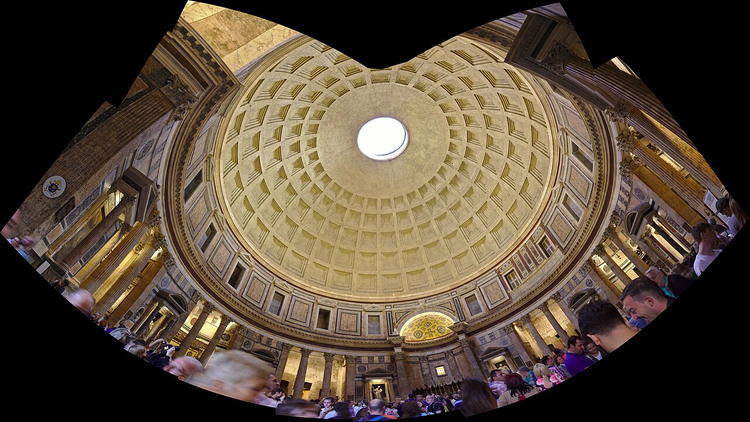
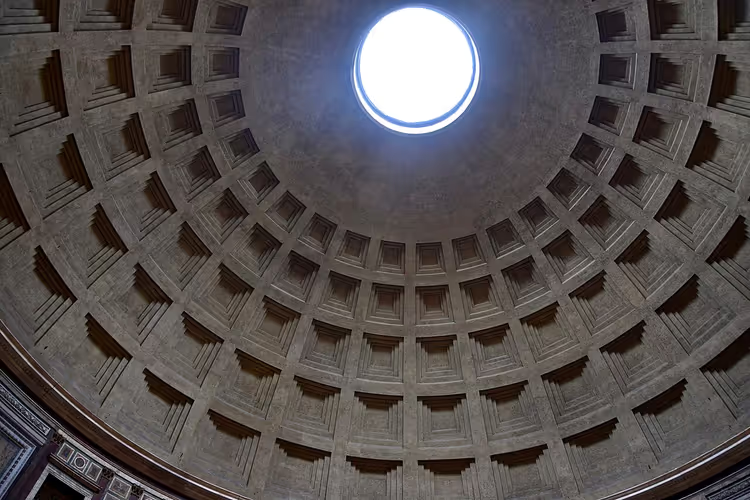
The Pantheon's dome is a hemisphere 43.5 m in diameter, exactly matching the width of the rotunda. Until the 19th century it remained the largest in Europe, and the vault weighs about 5,000 tons (according to the Pantheon page on the city website).
 © Ank Kumar · CC BY-SAPhoto: Ank Kumar, CC BY-SA (https://creativecommons.org/licenses/by-sa/4.0), Wikimedia Commons
The dome's concrete was laid in layers: hard travertine chips at the bottom, light pumice and tuff at the top. Inside, the vault is divided into 140 coffers in five rows (according to the Musei Italiani portal), and these recesses reduce the mass while also serving as decoration.
In the center of the dome gapes the oculus, an opening 9 m in diameter (according to the tourism office website). There is no other window in the building, so all the light comes from above. At noon, the rays form a glowing column in the air, and this is the best time for photography inside.
The oculus is open to the sky, so when it rains, water falls directly onto the rotunda floor. Drainage channels are built into the floor beneath the opening for downpours. According to legend, the oculus was left open so that sacrificial smoke could rise to the gods.
What to see inside the Pantheon
The interior decoration is richer than the exterior: the marble wall cladding and porphyry floor have survived since ancient times. The walls are divided into two tiers, with niches and altars in the lower one.
 © Paolo Villa · CC BY-SAPhoto: Paolo Villa, CC BY-SA (https://creativecommons.org/licenses/by-sa/4.0), Wikimedia Commons
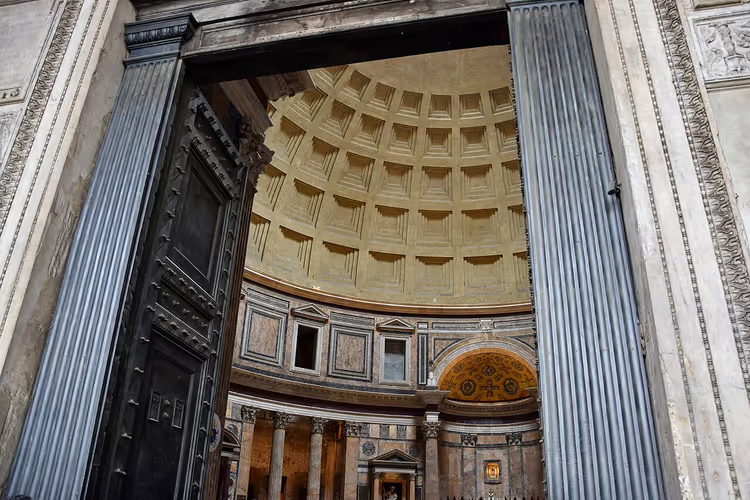
The bronze doors, 7 meters high, have survived from antiquity (according to the official Pantheon page). You enter through them into a rectangular vestibule, and from there into the rotunda. The dome was once covered on the outside with gilded plates, which have long been lost.
Who is buried in the Pantheon
The Pantheon became a burial place for artists and kings. The first to be buried here was Raphael, who asked to be laid to rest in this very temple. Later, the walls received the tombs of the architect Baldassare Peruzzi, the musician Arcangelo Corelli, and the sculptor Flaminio Vacca.
 © Luigi Guerrieri4 · CC BY-SAPhoto: Luigi Guerrieri4, CC BY-SA (https://creativecommons.org/licenses/by-sa/4.0), Wikimedia Commons
Among the crowned heads resting here are Queen Margherita, King Umberto I, and King Victor Emmanuel II. The tombs stand in niches along the walls, and you can walk right up to each one. Michelangelo called this temple the work of angels, and Raphael dreamed of being buried here.
Interesting facts and legends
There is a legend that the dome was built on a huge pile of rubble inside the building, and gold was hidden in it so that the Romans would haul away the debris faster. Historians treat this story with skepticism.
 © Nicholas Hartmann · CC BY-SAPhoto: Nicholas Hartmann, CC BY-SA (https://creativecommons.org/licenses/by-sa/4.0), Wikimedia Commons
Scholars believe the temple served as a sundial: on the day Rome was founded, light falls directly on the entrance (according to the basilica's official website). The ideal shape of the dome, according to one theory, helped push Nicolaus Copernicus toward the idea of heliocentrism. The Pantheon became the first Roman temple open not only to priests but to everyone.
Visiting rules for the Pantheon
The Pantheon remains an active church, so it has its own rules (according to the Orari e info section). They are easy to follow, but you may be asked to leave if you break them.
- Be quiet and respectful, and turn off your phone's sound.
- Do not eat, drink, or smoke inside.
- Wear clothing that covers your shoulders and knees.
- No animals allowed, with the exception of guide dogs.
- Large backpacks and tripods are not allowed; a light bag and camera are fine.
 © Ank Kumar · CC BY-SAPhoto: Ank Kumar, CC BY-SA (https://creativecommons.org/licenses/by-sa/4.0), Wikimedia Commons
You can take photos and shoot video without restrictions. You pay once to enter, and the ticket is valid for a single visit. Playing loud music inside is not allowed, and during Mass it is best to avoid filming near the altar.
Tickets and hours
The Pantheon is open every day from 9:00 to 19:00, with the last entry at 18:30 (as of 09/2026, official website). It is closed only on January 1 and December 25, and on the first Sunday of the month entry is free, with tickets handed out right on site.
A full ticket costs 7 € (as of 09/2026, Direzione Musei Nazionali di Roma). From July 1, 2026, the price was raised from 5 € to 7 €. The ticket is personal, so buy it in your own name and keep an ID with you. EU citizens aged 18 to 25 pay 2 €, and visitors under 18 enter free.
What matters | As of (09/2026) |
|---|---|
Hours | daily 9:00-19:00, last entry 18:30 |
Closed | January 1 and December 25 |
Full ticket | 7 € (after 07/01/2026), reduced 2 € for EU citizens 18-25 |
Free entry | first Sunday of the month |
Time to visit | about 30-40 minutes |
Sources for the table: official Pantheon website and Direzione Musei Nazionali di Roma.
In summer, without a time slot you will stand in line for over an hour, so book a timed-entry ticket in advance: Pantheon tickets with time slots on Tiqets. We recommend choosing a morning slot before 10:00 or an evening slot after 17:00.
Tours and tickets in Pantheon
Guided tours, skip-the-line tickets and activities — most offers can be cancelled free of charge.
See offers on TiqetsThe widget loads once you give your consent.
How to get to the Pantheon
The nearest metro station is Barberini, line A, about 1 km on foot to the entrance (according to the official Pantheon website). From Termini station to Barberini it is only two stops, and from the station walk along Via del Tritone toward the center.
 © Pierre Goiffon · CC BY-SAPhoto: Pierre Goiffon, CC BY-SA (https://creativecommons.org/licenses/by-sa/4.0), Wikimedia Commons
Buses 30, 40, 62, 64, 81, 87, and 492 stop at Largo di Torre Argentina, leaving 400 m to the entrance (according to the website of the Basilica of Santa Maria ad Martyres). From the station, the metro is convenient, while within the center it is better to walk.
A direct train runs from Fiumicino Airport to Termini station, so if you are traveling with luggage, a transfer is convenient: transfer from Rome airport. The driver will meet you in the arrivals hall with a sign.
The Pantheon's address is Piazza della Rotonda, 00186 Roma (according to the official Pantheon website). From the Trevi Fountain to the temple is a short walk, from Piazza Navona the route is even shorter, and both paths take you through the old alleys of the center.
What to see near the Pantheon
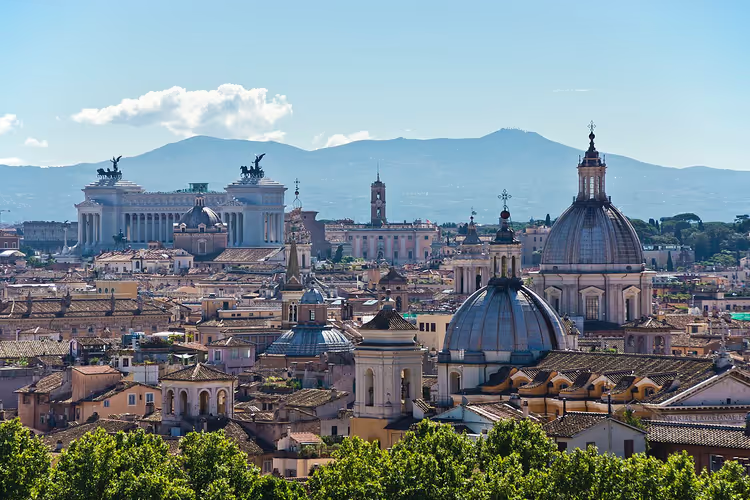
Rome's center is compact, so in one day you can combine the Pantheon with neighboring sights. On Piazza Navona stands the baroque Fountain of the Four Rivers, and you can walk to the Trevi Fountain. Further along the route are the Roman Forum, the Colosseum, St. Peter's Basilica and the Vatican Museums.
A Colosseum ticket and the Roman Forum are best booked in advance with a time slot: Colosseum ticket on GetYourGuide. In summer the line to the Colosseum is longer than to the Pantheon, so a timed entry saves you half a day.
Where to stay near the Pantheon
Hotels right on Piazza della Rotonda are expensive, but you get a view of the dome from your window. In the alleys around Via del Corso the selection is wider and prices are lower. Hotel Pantheon is almost at the entrance, on the same square (according to the map), one of the closest options.
 © ASaber91 · CC BY-SAPhoto: ASaber91, CC BY-SA (https://creativecommons.org/licenses/by-sa/4.0), Wikimedia Commons
If you want to stay in the center and walk to the sights, look at hotels in the Pantheon area: hotels in central Rome on Trip.com. That puts you close to the Pantheon, Piazza Navona and the Trevi Fountain, with no daily metro rides.
Pantheon on the map
The temple stands in the very center, on Piazza della Rotonda, and it's easy to find on a map.
The Pantheon in Rome and what's nearby
Places on the map
- Pantheon Piazza della Rotonda, a 43.5-metre dome and oculus, ticket 7 €
- Barberini Station Metro line A, about 700 metres on foot to the entrance
- Largo di Torre Argentina Bus stop for lines 30, 40, 62, 64, 81, 87 and 492, 400 metres to the entrance
- Piazza Navona Baroque Fountain of the Four Rivers, a short walk from the Pantheon
- Trevi Fountain Reachable on foot through the old lanes of the centre
- Roman Forum Next stop of the day's route through the centre
- Colosseum In summer the queue is longer than at the Pantheon, book a timed ticket
- St. Peter's Basilica Further along the route together with the Vatican Museums
- Vatican Museums Closing point of the route through the main sights of the centre
⁉️🤔 Frequently asked questions
How much does a Pantheon ticket cost?
A full ticket costs 7 € (as of 09/2026, Directorate of National Museums of Rome). A reduced ticket for EU citizens aged 18-25 costs 2 €, children under 18 enter free. On the first Sunday of the month entry is free.
Is the Pantheon open on Sunday?
Yes, the Pantheon is open every day, including Sunday. Opening hours are 9:00-19:00, last entry at 18:30 (as of 09/2026, official website with opening hours). On the first Sunday of the month, entry is free, so it is usually more crowded.
How much time do you need to visit?
About half an hour is enough for the Pantheon. There is no long route inside: you walk around the rotunda, look at the niches with tombs, and raise your eyes to the dome with the oculus. With an audio guide, the visit takes longer. Allow an hour for the whole visit, including the line.
Can you take photos inside?
Yes, photos and videos are allowed inside (according to the official Pantheon website). Tripods and large backpacks are not allowed; a light camera and a phone are fine. The best light comes from the beam through the oculus at noon. It is better to turn off the flash so you do not disturb other visitors and the service.
How to get there from Termini station?
From Termini to the Pantheon, the easiest way is to take metro line A to Barberini station, then walk about 1 km (as of 09/2026, official Pantheon website). Buses 40, 64, and 492 to the Largo di Torre Argentina stop also work. From there it is 400 m to the entrance.
In short: what is worth booking
At the Pantheon, it is worth seeing the huge dome, the oculus, and Raphael's tomb. A ticket here costs pennies compared with other Roman monuments, and the impression is stronger than at many museums.
If you have only one day: get a ticket with a time slot and come at opening. If you are on vacation for several days: choose a hotel in the center so you can walk. Both options save you time in lines and on the road.
Pantheon tickets with time slots and nearby hotels on Trip.com.

A small editorial team writing guides for independent travel. We travel ourselves, but we haven’t been everywhere, so we check prices, opening hours and how to get there against official sources.