
















Petra in one day: tickets, the road from Amman and a route through the rock city
Petra begins behind a narrow crack in the rock, and it is worth every penny. The entrance ticket here is one of the most expensive in the world. Let's break down how to get there, how much to pay, and what you can fit into one day.
The main rule is simple: the ticket price depends on whether you stay overnight in Jordan. The price difference is significant, so it is better to plan your route in advance.
Ahead of you: the road from Amman and Aqaba, a breakdown of ticket options, practical tips for dealing with thirst, and a complete walking route through the rock city. We will also show you where you definitely won't go wrong with your time.
Ad: this article contains affiliate links. We earn a commission if you book through them, at no extra cost to you.
A man-made phenomenon in a harsh environment
💡 In short:
- Getting there: the JETT bus from Amman costs 11 JOD, and there are daily departures from Aqaba as well (as of 09/2026, jett.com.jo).
- Ticket: 50 JOD if you stay overnight in Jordan and 90 JOD for a day visit (as of 09/2026, PDTRA ticket office).
- Time: the Siq, Al-Khazneh, and the climb to the Monastery take a full day.
- Prices and opening hours: 09/2026, verified on the official PetraPass website.
Why was the city carved out here, of all places? The first settlement occupied a crossroads of trade routes between East and West as far back as ten thousand years ago. Caravans brought money to the local tribes. And money demanded stone: tombs, temples, and palaces.
By the first century AD, the capital of the Nabataean Kingdom had grown out of the cliffs. Rock walls up to sixty meters high served as both material and protection. The city needed no separate walls. Later, Petra became a Roman province and lost its independence.
 © Papierdrache · CC BY-SAPhoto: Papierdrache, CC BY-SA (https://creativecommons.org/licenses/by-sa/3.0), Wikimedia Commons
Oblivion began after an earthquake in the fourth century. The inhabitants left, and the city disappeared from maps for nearly fifteen centuries. It was rediscovered for Europe by the Swiss traveler Johann Burckhardt in 1812. He entered Petra disguised as a Bedouin (according to the official Petra website). Today, the rock city is listed among the New Seven Wonders of the World.
Getting to Petra
Three routes lead to Petra: an organized tour, a scheduled bus, and a rental car. Each option has its own conditions.
Tour
Ready-made day tours depart from Amman, Aqaba, and even from Israel. The price usually includes entry to the complex. For a short trip, this is a hassle-free option with no transfers or hunting for transport. book a day tour on GetYourGuide
From Israel, tours depart from Eilat, Jerusalem, and Tel Aviv. The journey takes a full day, and the price is higher than from Jordan. This option is chosen by those vacationing on the Red Sea.
Bus
The country's most reliable carrier is called JETT. The trip from Amman costs 11 JOD, and buses run daily (as of 09/2026, JETT website). There is also service from Aqaba, but you will have to leave early in the morning.
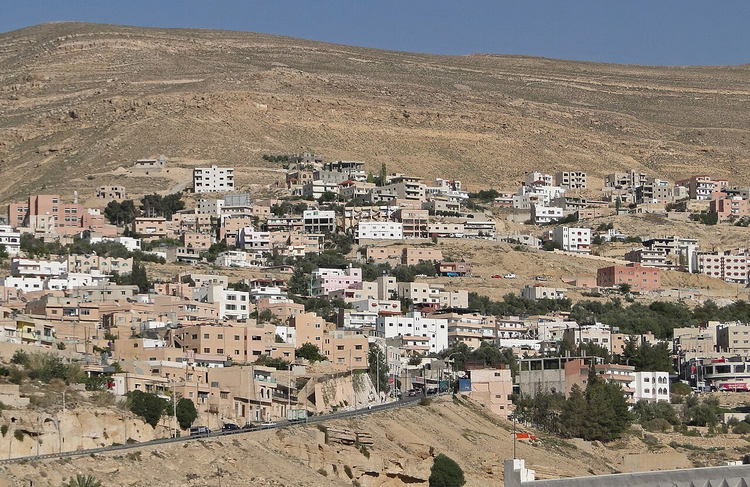
Keep one important detail in mind. Some buses do not go to the complex itself but to Wadi Musa. This is a town a few kilometers from the entrance. For locals, Wadi Musa effectively means Petra. Check the final stop with the driver.
Rental car
If you want to explore all of Jordan, get a car. Rental services are well developed, and the cost of a passenger car is measured in tens of dollars per day. An aggregator will show you the exact price for your dates.
Assess your fitness honestly. Locals drive aggressively and interpret traffic rules loosely. Gas stations outside cities are rare. Do not head into the desert with an empty tank.
Tickets to the complex
Entry to Petra is expensive, and that is a deliberate policy. Jordan encourages visitors who stay in the country overnight. A one-day ticket for such a traveler costs 50 JOD, a two-day ticket costs 55 JOD, and a three-day ticket costs 60 JOD (as of 09/2026, PDTRA rates).
A different rate applies to day-trippers. If you enter Jordan and go straight to Petra, entry will cost 90 JOD (as of 09/2026, PetraPass website). In this case, it is more cost-effective to book a tour with the ticket included.
The alternative for unhurried travelers is called Jordan Pass. The combined pass starts at 70 JOD (as of 09/2026, jordanpass.jo). It takes care of the visa issue when staying overnight in the country and grants entry to roughly forty of Jordan's main sites.
Children under 12 enter free during daytime hours (as of 09/2026, PetraPass children's tickets). The night show is paid separately for them.
 © Bernard Gagnon · CC BY-SAPhoto: Bernard Gagnon, CC BY-SA (https://creativecommons.org/licenses/by-sa/3.0), Wikimedia Commons
In the evening on Mondays, Wednesdays, and Thursdays, Petra by Night takes place in Petra. The path to Al-Khazneh is lit with candles in paper bags. It starts at 8:30 PM and ends around 10:30 PM (as of 09/2026, Petra website). The ticket costs 17 JOD and is purchased in addition to the daytime ticket (as of 09/2026, PetraPass ticket office).
Tours and tickets in Petra
Guided tours, skip-the-line tickets and activities — most offers can be cancelled free of charge.
See offers on GetYourGuideThe widget loads once you give your consent.
Practical tips: water, trails, and safety
The main challenge in Petra is not the climb, but thirst. Bring a supply of water from Wadi Musa. Inside the complex, a bottle costs a couple of dinars and runs out within an hour.
 © Alexey Komarov · CC BYPhoto: Alexey Komarov, CC BY (https://creativecommons.org/licenses/by/3.0), Wikimedia Commons
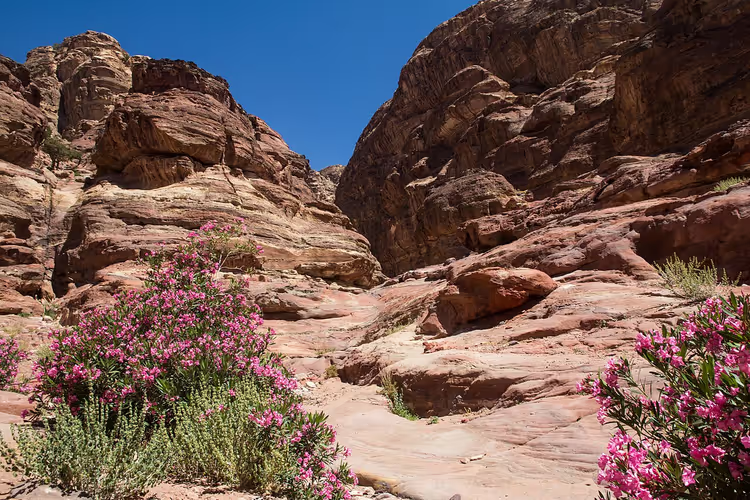
There are several trails in the complex, and they vary in difficulty (as of 09/2026, visitpetra.jo). The full loop includes climbing a staircase of eight hundred steps and an equally steep descent. Bring broken-in shoes with non-slip soles.
A shemagh, the local headscarf, protects you from the sun. They are sold right by the trail for a few dinars. Back home it will become a souvenir.
Haggling at the bazaar is appropriate almost always. Just know your limits: for the Bedouin, this is their main source of income.
Do not forget about safety. Maintained trails run alongside cliffs, and venomous snakes hide among the rocks. Watch your step and do not sit near crevices.
What to see in Petra
The city's name translates from Ancient Greek as "stone." The pink hue of the cliffs gave Petra its second name. Nabataean craftsmen turned this stone into facades, tombs, and temples. Below are the main points of the route; choose the order of the walk based on your stamina.
 © Qais E. Tweissi · CC BY-SAPhoto: Qais E. Tweissi, CC BY-SA (https://creativecommons.org/licenses/by-sa/4.0), Wikimedia Commons
The dam
The first stop awaits you right after the visitor center. You can walk there or ride a horse. Agree on the horse price before you get on, otherwise the conversation will not go in your favor.
The dam showcases the engineering talent of the Nabataeans. They cut a tunnel of almost one hundred meters to divert flash floods. In the desert, that happens. Without protection, the city would flood every rainy season.
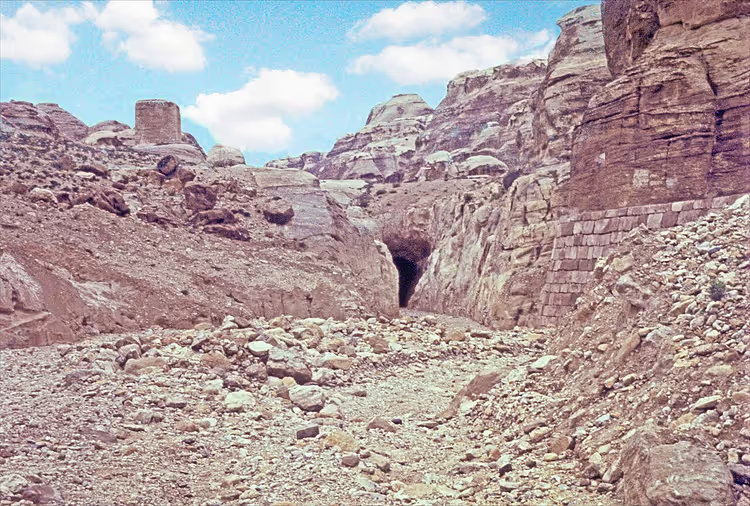 © {{unknown|author · CC BY-SAPhoto: {{unknown|author, CC BY-SA (https://creativecommons.org/licenses/by-sa/4.0), Wikimedia Commons
Water was valued more than gold here. The Nabataeans collected it into a system of terracotta pipes and channels. About two hundred reservoirs were spread across the city. The pipes carried water from springs within a radius of twenty-five kilometers.
The Siq canyon
Petra does not reveal itself right away. First you enter the Siq gorge. The walls rise close together, and the sky turns into a narrow ribbon.
 © Vyacheslav Argenberg · CC BYPhoto: Vyacheslav Argenberg, CC BY (https://creativecommons.org/licenses/by/4.0), Wikimedia Commons
The one-kilometer passage stretches like a corridor. Traces of the water supply and reliefs with caravans remain in the walls. Toward the end of the gorge, the walls open up, and you come face to face with the city's main facade.
Al-Khazneh
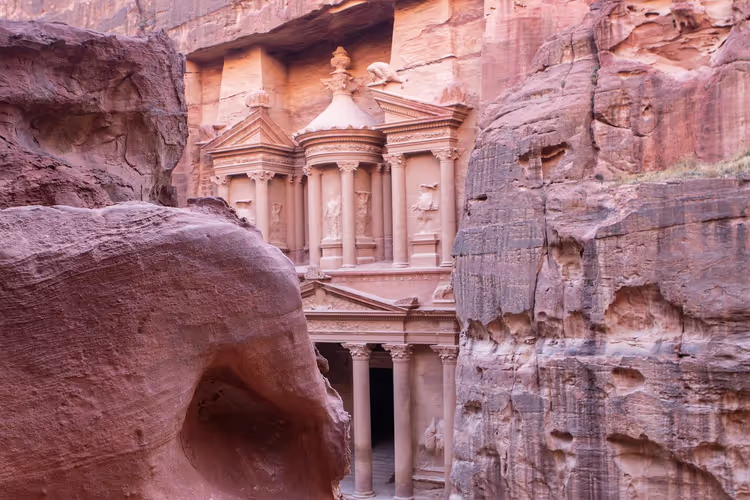
The first thing you see as you exit the Siq. The facade of Al-Khazneh is carved entirely into the cliff and rises forty meters.
 © Dosseman · CC BY-SAPhoto: Dosseman, CC BY-SA (https://creativecommons.org/licenses/by-sa/4.0), Wikimedia Commons
The building's purpose is debated. It is called a temple, a mausoleum, and a treasury. The name "Al-Khazneh" translates as "treasury," hence the stories about hidden gold.
You cannot go inside, so all the attention goes to the facade. The columns, pediment, and urn on top appeared in the Indiana Jones film.
Go in the morning, when the sun lights up the stone. During the day the light fades, and the facade becomes dull.
- Cost: included in the general site ticket.
- The catch: you cannot go inside; viewing is from outside only.
The high place of sacrifice
At the Theater, turn onto the staircase to the High Place. The climb is long, but this is where the best view of the rock city opens up.
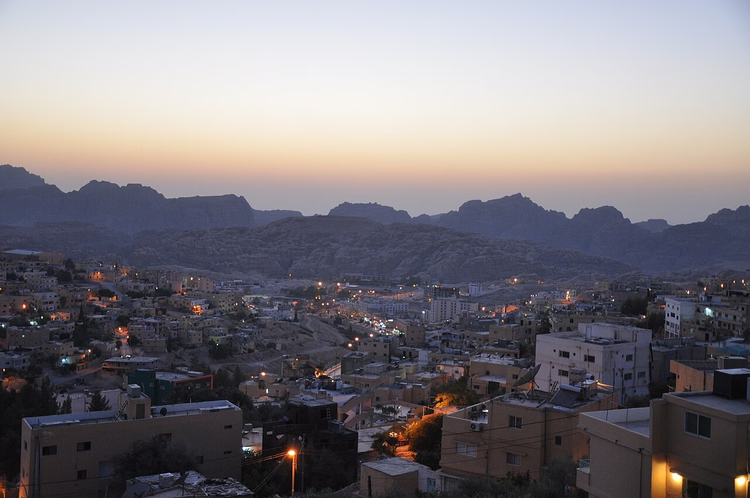 © Jorge Láscar from Australia · CC BYPhoto: Jorge Láscar from Australia, CC BY (https://creativecommons.org/licenses/by/2.0), Wikimedia Commons
Along the way you will pass ruins and notice how the color of the sandstone changes. At the top, altars and sacrificial platforms carved directly into the rock remain.
- How to get there: the trail starts at the Theater and goes up the slope.
- The catch: the climb is long; bring water in the heat.
The tombs and the Great Temple
The descent leads past tombs in varying states of preservation. Further on, the route reaches the Great Temple, the city's main archaeological monument.
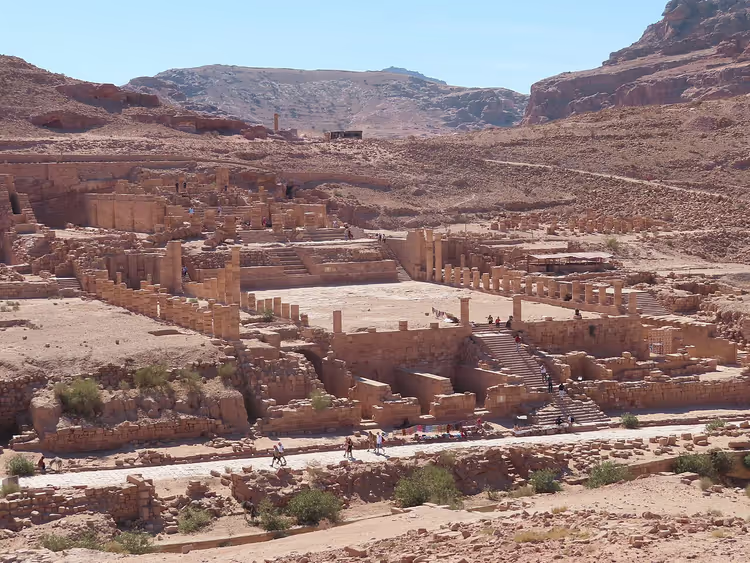 © Fallaner · CC BY-SAPhoto: Fallaner, CC BY-SA (https://creativecommons.org/licenses/by-sa/4.0), Wikimedia Commons
You can spend hours walking through the excavations. Colonnades, altars, and an inner courtyard cover a huge area. If you are interested in the details of the cult, allow at least an hour for this section.
Ad-Deir
The Ad-Deir Monastery stands farthest away and requires a separate climb. The trail goes uphill for about an hour. But the facade of about fifty meters high is worth the effort.
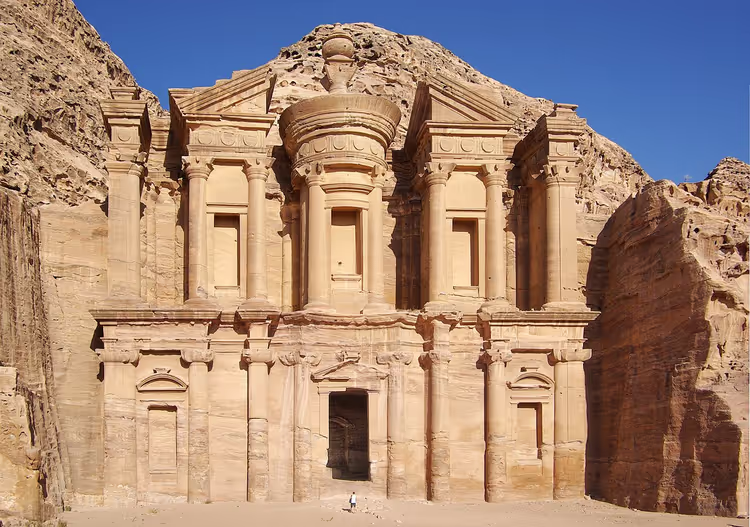
The building's history began as a Nabataean tomb. Later it was used as a Byzantine monastery. The nearby platform offers a view of the valley, and there are noticeably fewer people here than at Al-Khazneh.
- The catch: the climb is long, and the way back is also over stone.
The colonnaded street and the nymphaeum
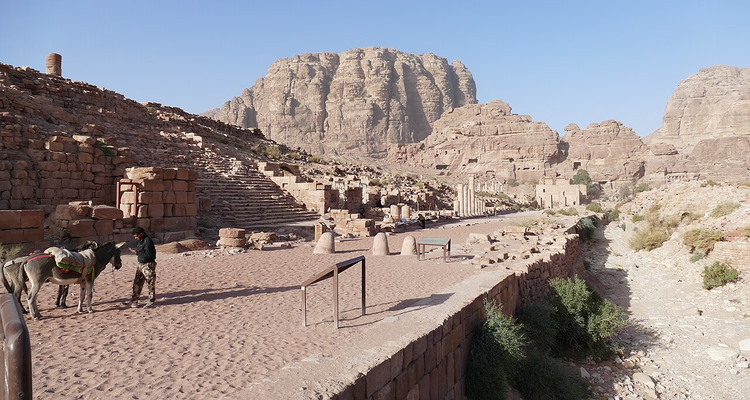
On the way back you reach the main commercial street of the ancient city. Today it is called the Colonnaded Street because of the row of columns on both sides.
 © Ankur P · CC BYPhoto: Ankur P, CC BY (https://creativecommons.org/licenses/by/2.0), Wikimedia Commons
Nearby stands the Nymphaeum, a public fountain. It was once filled with water from the city's water supply. You can rest in the shade of a pistachio tree that is more than four hundred and fifty years old.
The Royal Tombs
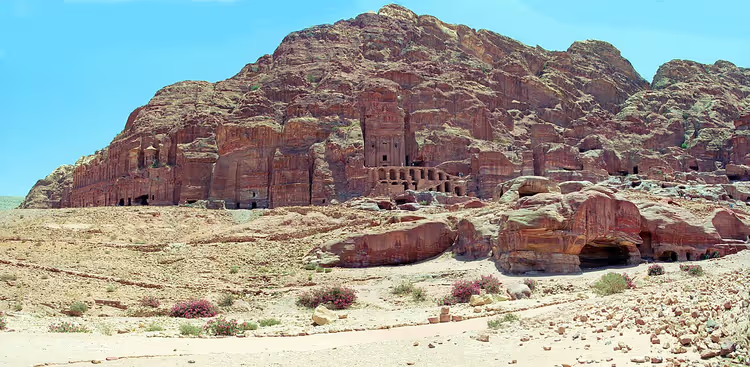
The Royal Tombs stand on the slope before the Colonnaded Street. If the walk seems too easy, turn onto the Al-Khubtha trail. It starts before you reach the Theater and leads to the Royal Tombs.
 © Jerzy Strzelecki · CC BYPhoto: Jerzy Strzelecki, CC BY (https://creativecommons.org/licenses/by/3.0), Wikimedia Commons
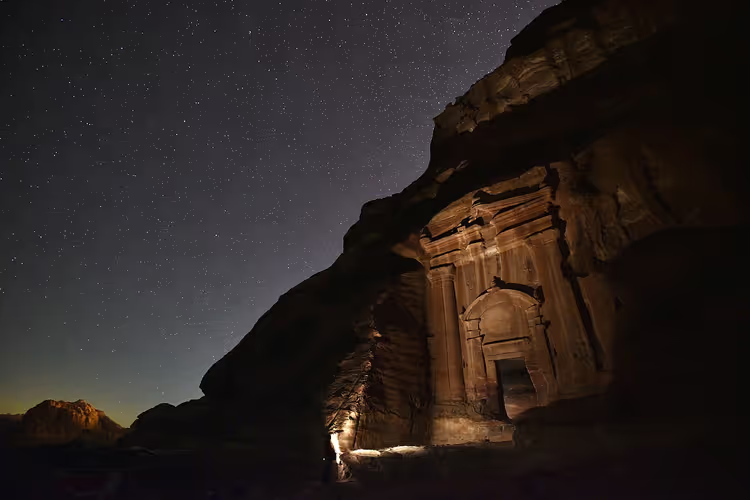
The tombs are easy to recognize by their four carved facades. The first belongs to the Urn Tomb, and the most recognizable facade is the Silk Tomb. Stone streaks form an intricate pattern on it.
- The catch: the Al-Khubtha trail adds an hour of walking to the route.
⁉️🤔 Frequently asked questions
How much does a ticket to Petra cost?
From 50 JOD if you stay overnight in Jordan and 90 JOD for a day visit. Two- and three-day rates and child conditions are listed in the "Site tickets" section.
How do I get to Petra without a car?
By JETT bus from Amman or Aqaba. Buses arrive in Wadi Musa, not at the entrance itself. You will cover the last kilometers by taxi or on foot. Price and details are in the "Getting to Petra" section.
Does Petra by Night run every day?
No, the show runs on Mondays, Wednesdays, and Thursdays. Time and ticket price are listed in the "Site tickets" section. In high season, buy tickets in advance.
Is one day enough for Petra?
Yes, if you start early. One day covers the Siq, Al-Khazneh, the Colonnaded Street, and the climb to Ad-Deir. Ad-Deir takes about three hours of walking there and back. For a relaxed pace, get a two-day ticket and stay overnight in Wadi Musa. Then you can leave the High Place for the second day.
What to bring with you to Petra?
Water, a hat, sunscreen, and broken-in shoes. The complex is hot even in spring, and shade is rare. A bottle of water inside costs a couple of dinars, so stocking up in Wadi Musa is cheaper. Also bring cash, as some vendors do not accept cards.
In short: what is worth booking
Petra does not forgive improvisation. The ticket, the journey, and the climb to the Monastery take up a whole day.
If you have one day and are based in Amman, a ready-made tour with admission included will work. If you are traveling around the country on your own, get a two-day ticket and stay overnight in Wadi Musa. For a trip around Jordan, compare car rental prices in advance, as the selection of cars drops in high season.
Buy your ticket online, arrive at opening time, and start the climb to Ad-Deir before the midday heat.

A small editorial team writing guides for independent travel. We travel ourselves, but we haven’t been everywhere, so we check prices, opening hours and how to get there against official sources.