


When grapes are harvested in Europe: windows by region and wine festivals
Grape harvest looks like a celebration from the outside. Inside the region, these weeks are all hands on deck.
There is no exact date for it. The decision is made based on sugar, acidity, and the weather forecast, so in warm years everything shifts one to two weeks earlier, and in cold years, conversely, later. Only in Champagne is the start of harvest officially fixed, by commune and by variety.
Wine festivals give you a planning reference point. They are tied to the end or beginning of the harvest, so the dates are known in advance, and you can build your trip around them. One example: Fête des Vendanges de Montmartre in Paris takes place in early October (as of 09/2026, official festival website).
Ad: this article contains affiliate links, we earn a commission if you book through them, at no extra cost to you.
Harvest calendar: windows by region
💡 In short:
- Check the harvest window first, then the festival date: they do not always coincide.
- In a warm year, harvest starts earlier, so book your trip with some buffer.
- On a weekday in the vineyards you will see more than on a festival Saturday.
- Harvest windows and festival dates: 09/2026, verified on Pfalz.de and Vinea Wachau.
The periods below are typical but not guaranteed: warm years shift them one to two weeks earlier, cool years by the same amount later. Check exact dates for a specific season with wineries and tourist offices.
Region | Typical harvest window | Leading variety | Reference point |
|---|---|---|---|
Mosel | late September and all of October | Riesling | Weinfest der Mittelmosel in Bernkastel-Kues |
Rheingau | mid-September and October | Riesling | Rheingauer Weinwoche in Wiesbaden |
Pfalz | September and first half of October | Riesling, Dornfelder | Dürkheimer Wurstmarkt |
Alsace | mid-September and October | Riesling, Gewürztraminer | Winzerfeste in Barr and Eguisheim |
Champagne | late August and first half of September | Chardonnay, Pinot Noir, Meunier | date set for each commune |
Wachau | October, Smaragd until November | Grüner Veltliner, Riesling | Wachauer Weinherbst |
Tuscany | mid-September and early October | Sangiovese | Expo del Chianti Classico in Greve in Chianti |
Piedmont | late August for Moscato, October for Nebbiolo | Nebbiolo, Barbera | truffle fair in Alba |
Rioja | September and October | Tempranillo | Fiesta de San Mateo in Logroño |
Douro | mid-September and first half of October | Touriga Nacional | Vindima at Quintas |
Montmartre, Paris | early October | Gamay, Pinot Noir | Fête des Vendanges |
The spread between the extreme regions reaches two months. Champagne and Moscato in Piedmont start earliest of all; Riesling on the Mosel and in the Wachau ripens latest of all. You can use both extremes as the basis for your own itinerary.
Mosel, Rheingau and Pfalz: different rhythms
The Mosel yields its crop later than anywhere else in Germany. While the Pfalz is picking the first bunches, Riesling on the steep slopes between Trittenheim and Ürzig often hangs until late October, and for Auslese and Beerenauslese it goes into November. The vineyards change color at this time, and monorail carts with crates climb the terraces.
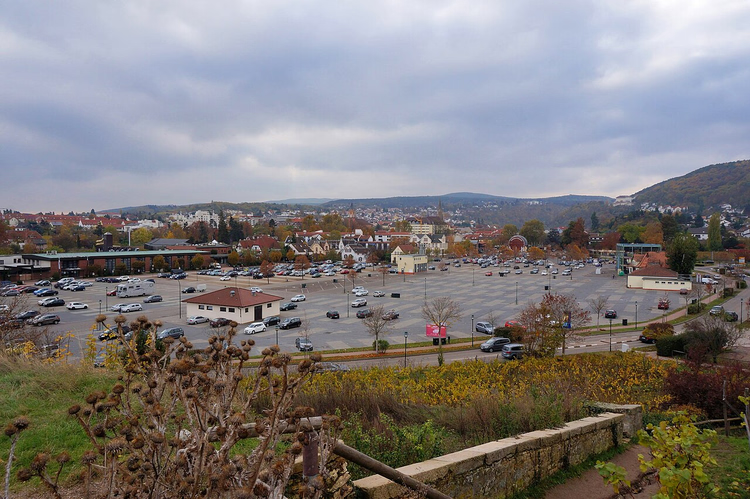 © Kmtextor · CC BYPhoto: Kmtextor, CC BY (https://creativecommons.org/licenses/by/4.0), Wikimedia Commons
The region's main festival takes place before the harvest itself. Weinfest der Mittelmosel in Bernkastel-Kues runs for five days around the first Sunday in September and feels more like a folk fair than a gathering of winemakers. If you want quiet, it is better to steer clear of that weekend.
The Rheingau runs a week to a week and a half ahead of the Mosel. The slopes here are gentler, the roads better, and the wineries in Eltville, Oestrich-Winkel and Johannisberg have long been used to visitors. In October, the harvest here is easy to watch from above, from the Rheinsteig above the vineyards.
The Pfalz starts first and celebrates loudest of all. Dürkheimer Wurstmarkt is considered the largest wine festival in the world, and in 2027 it will take place in two blocks, from September 10 to 14 and from September 17 to 20 (verified on 12.09.2026 on the official Pfalz website, Wurstmarkt 2027 dates). Fireworks are scheduled for September 14 and 20, 2027 (according to the city of Bad Dürkheim). Along the Deutsche Weinstraße between Bockenheim and Schweigen, wine celebration goes on almost every weekend.
Wachau: late harvest by design
In the Wachau, harvest begins on average in early or mid-October. The reason for the late start is the local quality system: Vinea Wachau divides wines into three tiers, Steinfeder up to 11.5% alcohol, Federspiel from 11.5 to 12.5%, and Smaragd from 12.5% (as of 09/2026, description of quality tiers). For Smaragd, the grapes hang longer, and Riesling in this category is regularly picked in early November.
 © Wolfgang Glock · CC BY-SAPhoto: Wolfgang Glock, CC BY-SA (https://creativecommons.org/licenses/by-sa/3.0), Wikimedia Commons
For a trip, October here is advantageous because two events coincide: the harvest on the terraces between Spitz, Weißenkirchen and Dürnstein, and Wachauer Weinherbst with celebrations in the Kellergassen and open Heurigen. From Vienna you can get there in about an hour; the train goes to Krems.
Champagne and Alsace
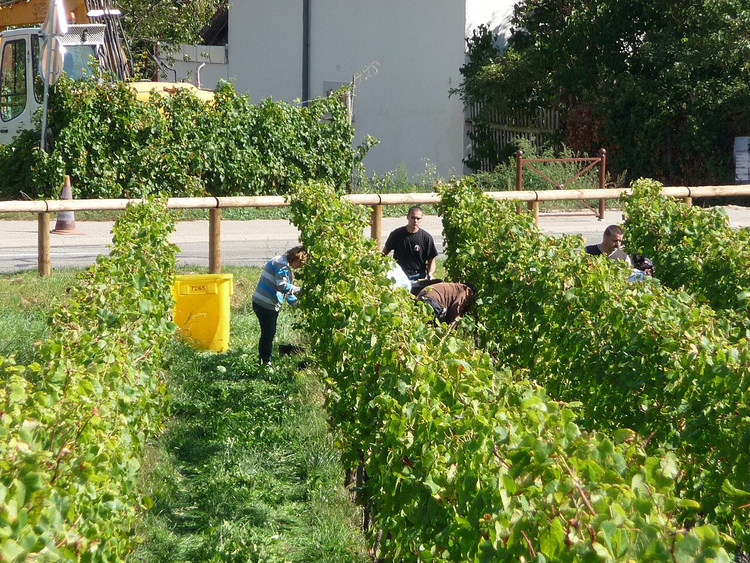
Champagne is the only one of these regions where the start of harvest is officially fixed. For each commune and each variety, the earliest permitted date is announced annually, along with the maximum yield per hectare. In 2026, the decree was issued on August 12, and harvest began at record-early dates (as of 09/2026, France 3 Grand Est). Picking here is done only by hand: machines are not allowed in the appellation.
 © JopkeB · CC BY-SAPhoto: JopkeB, CC BY-SA (https://creativecommons.org/licenses/by-sa/4.0), Wikimedia Commons
If you are coming from Frankfurt or Stuttgart, it takes five to six hours to drive to Champagne, and from Paris the TGV to Reims takes just over an hour. The major houses in Reims and Epernay welcome guests even at the height of harvest, but tasting schedules are reduced during these weeks.
In Alsace, harvest usually starts in mid-September with grapes for Cremant, followed by Riesling, Pinot Gris, and finally Gewurztraminer, which can hang until late October. The Route des Vins between Marlenheim and Thann is busy during these weeks, but well organized. Winzerfeste in Barr, Eguisheim, and Ribeauville are usually held on the first weekend of October.
Tuscany and Piedmont
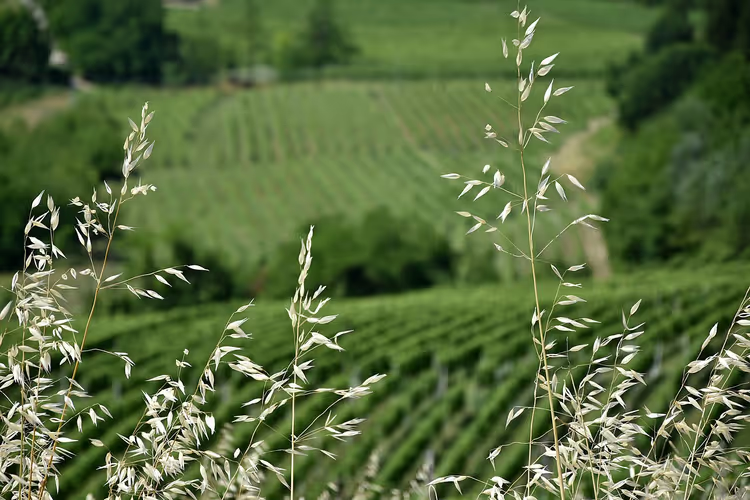
In Tuscany, Sangiovese for Chianti Classico is usually picked from mid-September to early October. In hot years, everything starts earlier. It is convenient to time your trip around Expo del Chianti Classico in Greve in Chianti: a wine market on the piazza with producers from the entire zone. If you are going for the harvest, choose a weekday, when the roads are clear.
 © Phyrexian · CC BY-SAPhoto: Phyrexian, CC BY-SA (https://creativecommons.org/licenses/by-sa/4.0), Wikimedia Commons
Piedmont has the widest spread of harvest dates in Europe. Moscato for Asti is picked as early as late August, Barbera in September, and Nebbiolo for Barolo and Barbaresco only in October. The classic autumn image of the Langhe, with fog over the hills and full cellars, comes in October, which is also when the international truffle fair in Alba takes place on weekends.
Hotels in La Morra, Barolo, and Neive for October are booked almost a year in advance, so looking for accommodation on the spot is too late: see options in Piedmont on Trip.com.
Rioja and Douro
In Rioja, harvest usually runs in September and October. The southern Rioja Oriental starts first, and the cooler Rioja Alavesa last. The reference point for a trip: Fiesta de San Mateo in Logrono, which is also celebrated as Fiesta de la Vendimia Riojana, with a parade, grape stomping by the cathedral walls, and a week of programming.
 © Bernt Rostad · CC BYPhoto: Bernt Rostad, CC BY (https://creativecommons.org/licenses/by/2.0/), Flickr
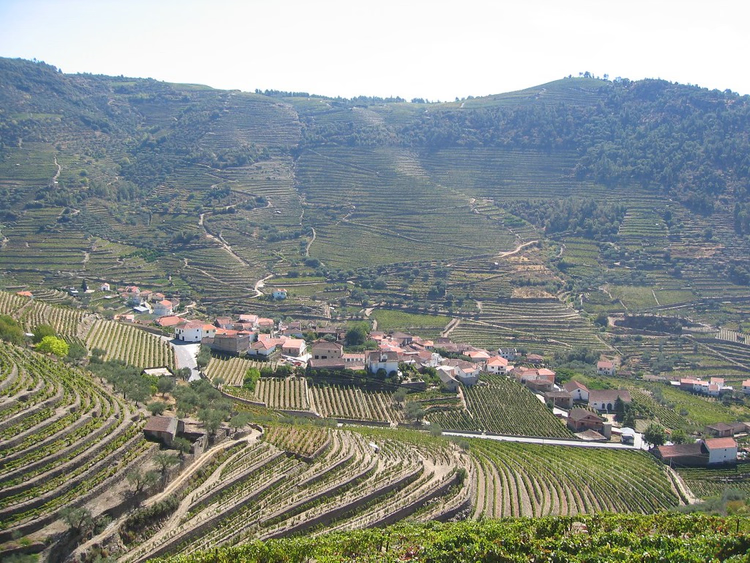
In the Douro Valley, Vindima usually runs from mid-September to mid-October. Guests are regularly taken into the work only here: many Quintas sell packages with morning picking and evening grape stomping in stone lagares. For port wine, this foot treading is still practiced, so the folklore here has a real basis.
You fly to Porto, then take the train along the river to Pinhao. This route is considered one of the most beautiful railway lines in Europe. Wine tours in the Douro Valley on GetYourGuide.
What awaits you during harvest
Three things that are usually missing from glossy reports.
First: taking part in the harvest itself is a rare exception. Most estates do not need inexperienced helpers, crews have to work as a team, and occupational safety requirements here are strict. Where guest harvest programs are offered, in the Douro, in parts of the Wachau and Pfalz, they are paid and last a few hours, not a full shift.
Second: tastings during peak harvest are cut back. Many wineries close the tasting room for two to four weeks or switch it to fixed hours. An email or call a week ahead will save you the disappointment.
Third: the roads. In tight vineyard areas like the Mosel, Wachau or Loire, tractors get priority, and some roads are closed. If you are driving, allow extra time, and where possible switch to train and bus.
Practical tips for the trip
A few things worth deciding before you book.
- Dates shift every year. In warm seasons everything starts one to two weeks earlier, and southern Europe runs ahead of the average pace here.
- Fixed dates for planning: Dürkheimer Wurstmarkt September 10-14 and 17-20, 2027 (Pfalz festival calendar), Fiesta de San Mateo in Logroño in the third week of September, Fête des Vendanges in Montmartre in early October (Fête des Vendanges program).
- Accommodation in Piedmont and the Wachau for October gets booked six to twelve months out, so reserve early.
- You will see the real harvest on a weekday morning in the vineyards, not in the village on a festival Saturday.
- Bring sturdy shoes and a waterproof jacket: October on steep slopes means wet leaves and slippery paths.
- Contact the winery in advance. During harvest, an unplanned visit becomes the worst plan of the year.
⁉️🤔 Frequently asked questions
When exactly does the grape harvest start in Europe?
Nobody can name the exact date, except in Champagne, where the start is fixed by decree per commune. In other regions, look at the windows in the table: Mosel and Wachau harvest in October, Tuscany in September, Rioja in September and October, and Piedmont stretches from late August to October. A warm year shifts everything earlier.
Can I take part in the harvest myself?
As a rule, no. Paid programs lasting a few hours exist in the Douro Valley, in parts of the Wachau and Pfalz. It is more of an experience for tourists than real work in the vineyard.
Do I need to book accommodation in advance?
Yes, especially for October in Piedmont and the Wachau. In the Mosel and Pfalz there is more choice, but festival weekends also fill up early. If you are going to a specific festival, book as soon as the dates are published, not a couple of weeks before.
What happens to tastings during harvest?
They are often reduced or switched to fixed hours. Check the window with the winery in advance, and this also applies to the big houses in Reims and Épernay.
Which festival dates are known in advance?
Wine festival dates are published in advance, so it is worth planning the trip around them. These are the Dürkheimer Wurstmarkt in the Pfalz, Fête des Vendanges in Montmartre and Fiesta de San Mateo in Logroño. For exact dates for the current season, check the official festival websites: they depend on the organizers' decisions and change every year.
In short: what to book
The grape harvest is not sold as a ticket, so what you should book is not the event but the trip around it.
If you only have a long weekend: choose the Pfalz or Rioja, where festival dates are known in advance. If you want the process itself in the vineyard: look at the Douro Valley and the Quintas programs. If terraces and wine architecture matter: choose the Wachau in October. If you want to combine harvest with gastronomy: plan for Piedmont, where October coincides with the truffle fair in Alba.

A small editorial team writing guides for independent travel. We travel ourselves, but we haven’t been everywhere, so we check prices, opening hours and how to get there against official sources.