
















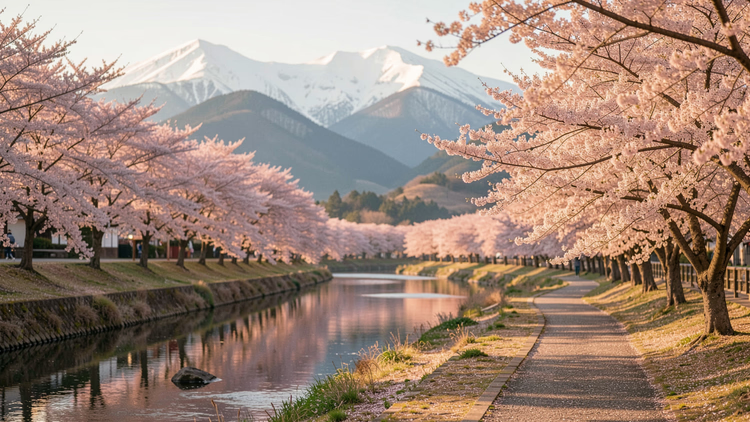
 AIIllustrative image: AI-generated
When to go to Japan: seasons by region and months without typhoons
Japan is open year-round, but the season changes a trip more than the choice of city. In Tokyo, spring lasts from mid-March to mid-May, with average temperatures in the 10-20 °C range (as of 09/2026, JMA climate normals).
The best time for a trip to Japan depends on the region. Hokkaido and the north open up from May through August. Central Japan, including Tokyo, is good in March-May and October-November, while the south is good in November-December and March-April. Below, we break down the seasons by region, the typhoon period, and the months when a trip costs less.
When to go to Japan: in short
💡 In short:
- The country welcomes visitors in any season; the only difference is weather and prices.
- Spring, March-May: cherry blossom season and the highest demand for accommodation.
- Summer, June-August: pleasant in Hokkaido, hot and humid in the south.
- Autumn, October-November: mild weather and golden foliage.
- The cheapest months: January and February, followed by June and September.
Japan's climate: three zones
The Japanese islands stretch from north to south, so weather varies greatly by region. Climatologists divide the country into three zones (according to the Japan tourism office on climate).
- Humid continental climate with cold winters in the north.
- Humid subtropical climate in the central part.
- Subtropical climate in the south.
In practice, the rule is simple: on the same day, it can be snowing in Sapporo while Okinawa is sweltering. If your route crosses several islands, pack clothes for different temperatures.
Best time by region: table
Region | Best time to visit |
|---|---|
Hokkaido and the north of the country | May-August |
Central Japan | March-May, October and November |
Southern Japan | November-December, March-April |
Typhoons deserve a separate mention. Their season runs roughly from July through October, with the peak in August and September. The southern islands are hit hardest (according to the JMA typhoon center, 09/2026). In June and July, the tsuyu rainy season takes place.
Check JMA warnings in advance if your dates fall in this period. One buffer day in your plan eliminates most problems with flights and ferries.
Hokkaido: northern Japan
The north follows a continental climate, so the weather shifts sharply from season to season. Winters here are cold and snowy. From November through March, nighttime temperatures drop below freezing, while daytime readings stay between -1 and +4 °C (as of 09/2026, JMA normals).
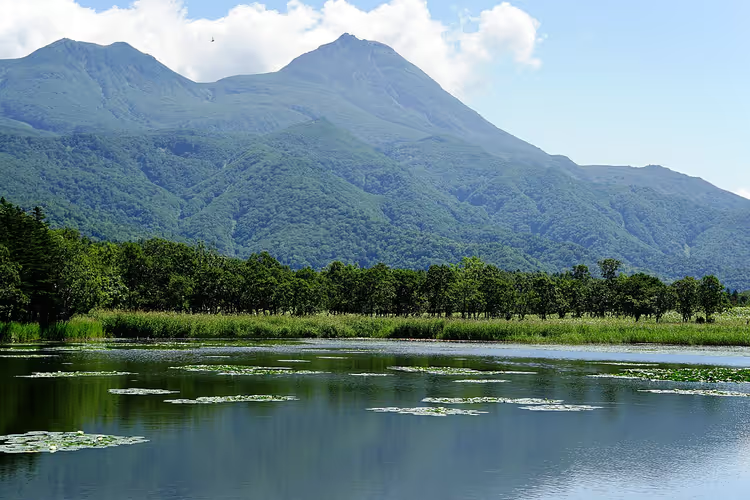 © 663highland · CC BYPhoto: 663highland, CC BY (https://creativecommons.org/licenses/by/2.5), Wikimedia Commons
For a trip to the north, choose summer: from May through August, you can expect warm days with temperatures around 20 °C (as of 09/2026, Hokkaido climate). In spring and autumn, temperatures hold at 10-15 °C, but both seasons can be wet.
The most precipitation falls from August through February, from 100 to 150 mm per month (as of 09/2026, JMA data). From late October, it mostly comes as snow, so the ski season here is long.
Honshu and Tokyo
Central Japan and Tokyo are the most visited parts of the country. Spring and autumn are the best times to go here. March, April, May, as well as October and November, offer ideal daytime temperatures. In May the high stays around 20 °C (as of 09/2026, JMA), and the parks are in full bloom.
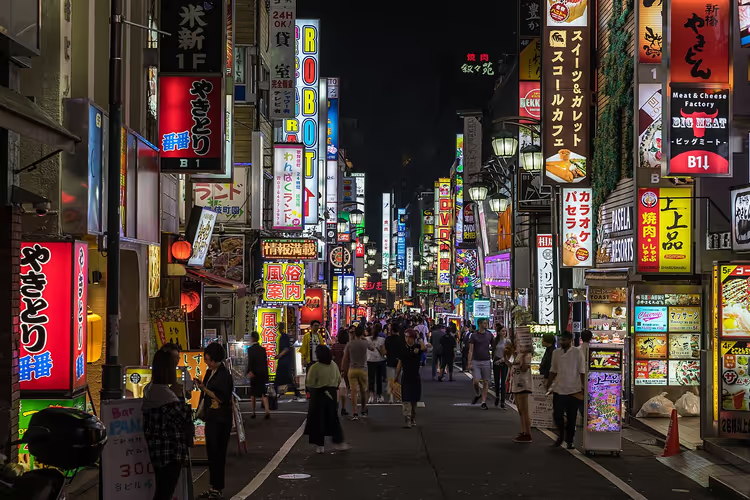 © Basile Morin · CC BY-SAPhoto: Basile Morin, CC BY-SA (https://creativecommons.org/licenses/by-sa/4.0), Wikimedia Commons
In the height of summer it becomes not only hot but also humid. Rain falls often, but most of the time as short, heavy downpours. Autumn brings back the bright colors: maples and ginkgo trees change color.
In winter, northern Honshu is cold and snow falls heavily. The same snowy winter awaits you in Hokkaido.
Southern Japan and Okinawa
In the south, daytime temperatures rise quickly toward summer. The mercury climbs to 25-30 °C, and high humidity makes the heat feel oppressive (according to JMA, 09/2026).
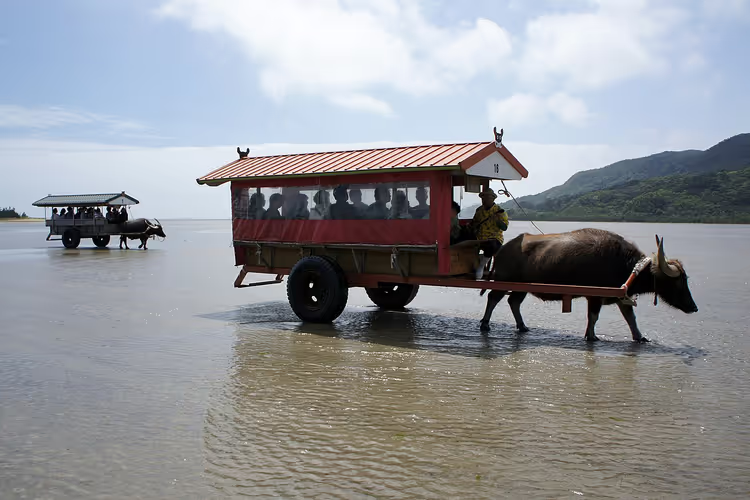 © 663highland · CC BYPhoto: 663highland, CC BY (https://creativecommons.org/licenses/by/2.5), Wikimedia Commons
The shoulder seasons are the most comfortable here. In November-December and March-April, Okinawa stays around 21-24 °C with light rainfall and moderate humidity (as of 09/2026, shoulder season in the south). The early or late months of the year will suit you best.
The south is exactly where sakura blooms first. In Okinawa the trees are already covered in blossoms in January-February, while the rest of Japan is still in winter mode (according to JNTO, 09/2026).
When a trip to Japan costs less
Sakura draws crowds. During hanami season, hotels and flights get more expensive, and popular parks are packed. Another price peak falls on the Golden Week holiday period. If you want a calmer experience, choose dates outside these windows.
Autumn is just as good. In many places the fall foliage is no less impressive than spring, and there are fewer tourists. October and November are especially good in central Japan and around Fukuoka.
The lowest prices for flights and accommodation most often fall in January and February. June and September are also good value. June brings the tsuyu rainy season, and September falls during the peak of typhoon season.
⁉️🤔 Frequently asked questions
When is the best time to visit Japan for the first time?
For a first trip, late March and April or October and November are most often recommended. During these months the weather in central Japan is mild, and cities and temples are easy to explore on foot. In spring demand is higher because of sakura; in autumn it is calmer and cheaper. If you are not tied to the blossoms, choose autumn.
When does sakura bloom in Japan?
In Okinawa, blooming starts as early as January and February. On the main island of Honshu, the trees blossom in late March and last until mid-April. The peak falls in late March and early April (according to JNTO, 09/2026). During hanami season, prices and tourist numbers rise.
When is typhoon season in Japan?
Typhoon season runs roughly from July through October, with the peak in August and September. The southern islands, including Okinawa, are at the highest risk. During this period, keep an eye on JMA warnings (As of 09/2026, typhoon forecast). Build a spare day into your itinerary in advance in case a flight or ferry is canceled.
Hokkaido in winter: is it worth going?
Yes, if you want snow: from November through March it is cold and snowy here (As of 09/2026, Sapporo winter norms). For skiing and winter walks, this is the best season. Hokkaido also works in summer, but that will be a completely different trip.
When is a trip to Japan cheaper?
The cheapest time to go is January and February, followed by June and September. Cherry blossom season and autumn school holidays push prices up.
In short: what is worth booking
We have mapped the seasons by region, and the conclusion is simple. There is no single best time for all of Japan. There is a suitable time for your route.
- If you want cherry blossoms: late March and early April, book accommodation in advance.
- If you dislike heat: head for Hokkaido in summer.
- If you are going south: November-December and March-April.
- If you want mild weather and color: October and November in central Japan.
Before your trip, check dates against the forecast and warnings on the JNTO website and on JMA resources. That way you will avoid the typhoon peak and will not overpay for cherry blossom season.

A small editorial team writing guides for independent travel. We travel ourselves, but we haven’t been everywhere, so we check prices, opening hours and how to get there against official sources.