
















Plitvice lakes 2026: how to plan a day in the park without crowds
The water here changes color every few hundred meters. Blue, green, dark navy: you can never guess the next shade. Plitvice Lakes lie between Zagreb and Zadar, and most travelers come here for a single day, from the capital or from the coast.
Without a plan, you risk arriving after ticket sales have closed or picking an entrance that is far from the cascade you want to see.
Ad: this article contains affiliate links, we earn a commission if you book through them, at no extra cost to you.
The essentials of Plitvice Lakes
💡 In short:
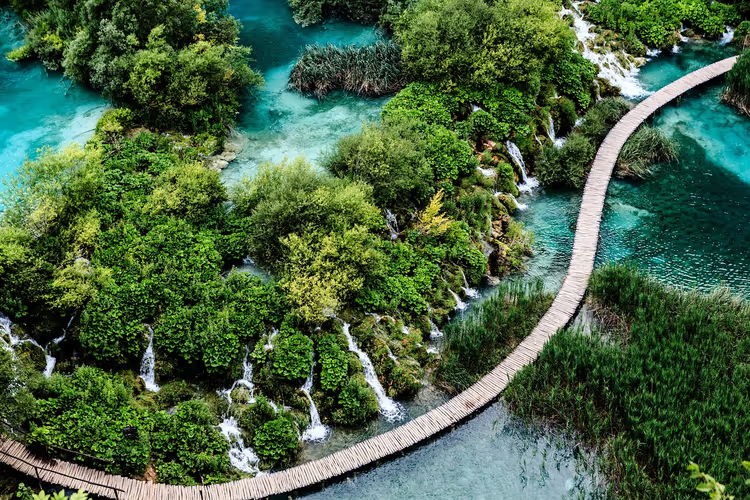
- Plitvice Lakes form a cascade of sixteen lakes between Zagreb and Zadar, and wooden boardwalks take you from the upper lakes to the lower ones.
- Buy your ticket in advance: it is tied to a specific entrance and time slot, and in summer the ticket offices stop selling before the park itself closes.
- Prices and opening hours: 09/2026, verified on the official website.
The park has several entrances, and your walking route depends on which one you choose. The main entrances, Entrance 1 and Entrance 2, are about three kilometers apart (according to the park website). It is easiest to plan your route from the entrance where you arrive.
A day in the park takes anywhere from two hours to a full day. The ferry across the large lake and the panoramic train are included in the ticket, so you will cover part of the route by ride rather than on foot.
History: the "Devil's Garden" on old maps
The first written mention of the lakes dates back to the late eighteenth century. Priest Dominik Vukasović from Otočac described an impenetrable forest and water among the rocks. Before that, the place had a bad reputation: on maps of the time, the area was labeled the Devil's Garden, and people avoided it. You will no longer find that name on modern maps.
The Dinaric highlands remained disputed land for centuries. Hungarians, Austrians, and Ottomans fought over it, and in the late seventeenth century the border of the Austrian Empire ran through here. The forests served as a cordon against raids, and people vanished without a trace in those same forests.
 © Pablo BM from London, England · CC BYPhoto: Pablo BM from London, England, CC BY (https://creativecommons.org/licenses/by/2.0), Wikimedia Commons
The twentieth century added its own page. In the early nineties, a road between Serbian communities ran along the lakes, and control of it mattered to both sides of the Yugoslav conflict. The hardest episode of those days is known in the country as the Plitvice Bloody Easter.
After the war, the area was demined and the infrastructure was rebuilt. These places received national park status in the late forties, and they were added to the UNESCO World Heritage list thirty years later. The park handles the load thanks to wooden boardwalks: you walk on the walkways and do not trample the forest.
The park today: water that builds new waterfalls
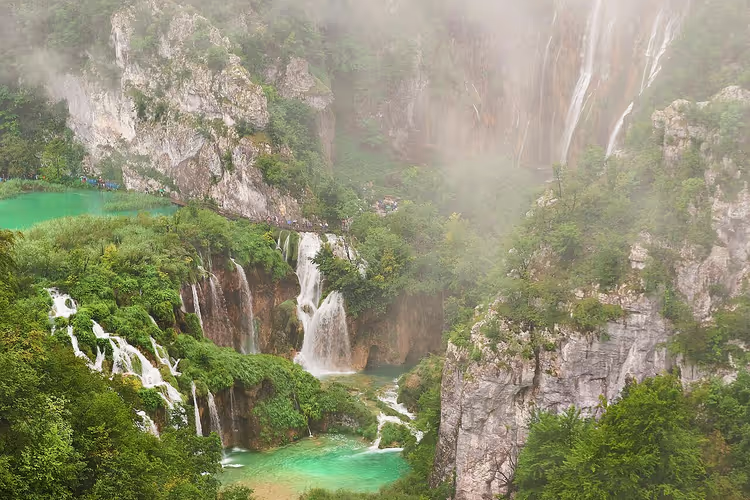
The lakes were born from limestone and water. Rivers carry dissolved calcium, moss holds it on the barriers, and the barriers between the lakes keep growing. That is why the waterfalls in the park change every year, and the shape of the basins slowly shifts.
 © Naval S from Berlin · CC BYPhoto: Naval S from Berlin, CC BY (https://creativecommons.org/licenses/by/2.0), Wikimedia Commons
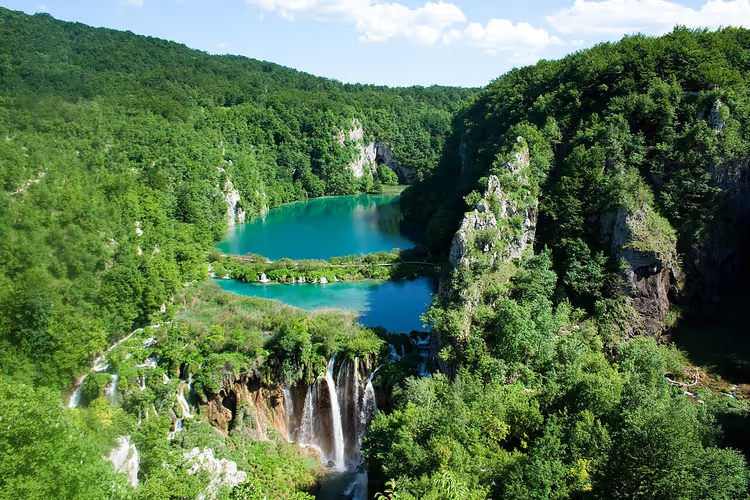
Sixteen lakes are arranged in a cascade and flow into one another. The color of the water depends on depth, light, and the amount of minerals: in the morning the water is clearer, and by evening the shade deepens. The mountains replenish the supply all year round, so the water level changes, and you will notice the difference at the same barriers.
The legend of the Black Queen
An old tale explains where the water in the stone basins came from. Once this land suffered from a severe drought, and the people turned for help to the Black Queen, the ruler of the region. She began to beg the gods for mercy, the gods drove black clouds to the mountains, and the downpour filled the basins.
The legend is not far from the park's mechanics: the lakes are fed by rain and underground springs from the mountains, not by a single river. After heavy rains, you will see the water rise and hear the sound of the waterfalls change at the lower lakes.
 © dronepicr · CC BYPhoto: dronepicr, CC BY (https://creativecommons.org/licenses/by/2.0), Wikimedia Commons
What you can see in the park
From the viewing platforms, you see the whole system at once: the cascades, the green basins, and the forest around them. Relict forests survive here, along with their own "miniature Niagaras" and quiet backwaters between the barriers.
Croats call Plitvice Lakes their natural wonder, and there are two reasons for that: new waterfalls appear here every year, and moss works as a building material for the barriers.
 © Anil Öztas · CC BY-SAPhoto: Anil Öztas, CC BY-SA (https://creativecommons.org/licenses/by-sa/4.0), Wikimedia Commons
Visiting rules: what is not allowed here
The park covers almost thirty thousand hectares, and most of the area is closed to visitors: only rangers and biologists are allowed into the reserve zone. About a third of the park is open for walking, and all of it is threaded with wooden boardwalks.
At the entrance, pick up a tourist map: it is sold at the information points near Entrances 1, 2, and Flora, and it shows the routes and the ferry schedule (according to the park). An electric ferry runs across the large Kozjak Lake. A panoramic train runs parallel to the boardwalks, so you can ride the way back instead of walking.
 © dronepicr · CC BYPhoto: dronepicr, CC BY (https://creativecommons.org/licenses/by/2.0), Wikimedia Commons
There are many restrictions here. Swimming and entering the water are not allowed, nor are lighting fires, littering, feeding the lake wildlife, or leaving the boardwalks for the forest. Dogs are only allowed on a leash, including on the ferry and the train (according to the park rules).
Tourist route and the climb to Medveđak
The standard routes follow the boardwalks along the cascades. If you want more, look toward Medveđak, a mountain massif with three peaks about eight hundred meters high.
Two trails lead to the top, and the climb up and back takes about three hours. The farther you get from the main routes, the more obvious it becomes that nature is in charge here. The remote trails are accessible only with a guide: the park runs paid excursions for organized groups of 15 or more people, and they must be booked in advance (as of 09/2026, park terms).
By evening, the park belongs to the wild animals. In the silence you can hear the flap of a stork's wings and the hooting of owls. The forests are home to brown bears, wolves, foxes, deer, wild boar, and many species of birds and bats. According to local belief, the lakes will exist as long as bears live here. They stay in the remote areas of the reserve, so you will not encounter them on the boardwalks.
In spring and after heavy rains, some sections are closed: parts of the boardwalks and the ferry may not operate. Check the route status on the park website and at the information points before your trip (according to park updates).
Opening hours and how the ticket works
The park is open year-round, but the hours change with the seasons: in summer the park operates from early morning until late evening, while in winter the daylight hours are much shorter. Check the exact opening hours and last entry time on the park website on the day of your visit (as of 09/2026).
 © Dennis G. Jarvis · CC BY-SAPhoto: Dennis G. Jarvis, CC BY-SA (https://creativecommons.org/licenses/by-sa/2.0), Wikimedia Commons
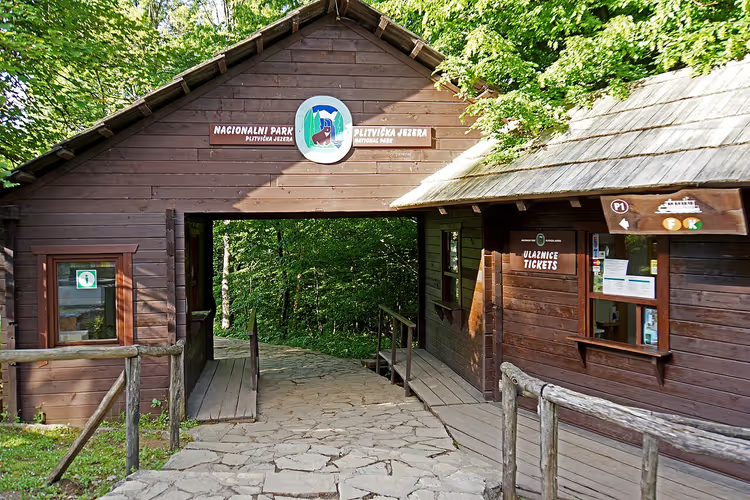
The ticket is not valid all day, but only for the selected time slot and only at the entrance you specified when purchasing. It is checked at the entrance, and you may be checked again inside the park, so keep your ticket with you until you leave (according to the visiting terms). Tickets are sold online and at the ticket offices near Entrance 1, Entrance 2, and the Flora entrance, but only while time slots are still available.
Best time to visit
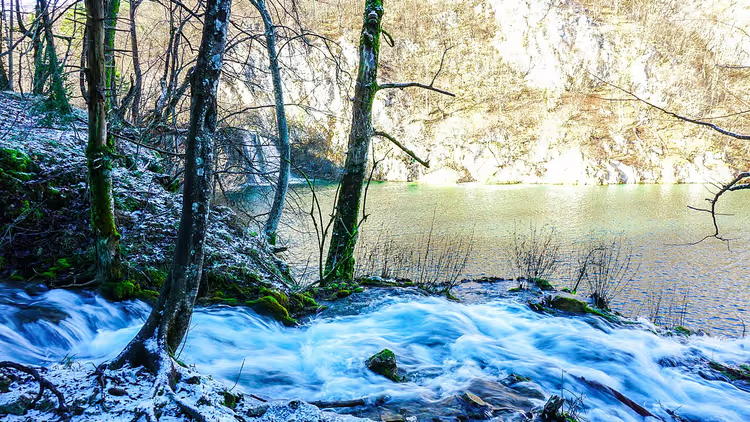
In winter, the park looks completely different. From December to February there is snow on the ground, and the waterfalls stand frozen in a crust of ice. There are few visitors, and you will see the white basins almost without people.
 © Magdalena Miočev · CC BY-SAPhoto: Magdalena Miočev, CC BY-SA (https://creativecommons.org/licenses/by-sa/4.0), Wikimedia Commons
Near the park, in Mukinje, there is a small ski slope. The mountain here is gentle, so the run suits beginners and children: families come to Mukinje to learn to ski, not to find steep descents.
In the warm months, the weather changes several times a day. The park sits on the border between continental and coastal climates, and the wind constantly brings moist air from the sea, so sunshine can turn into a downpour within an hour. Keep a raincoat and an umbrella in your backpack even when the forecast is clear.
For a walk, choose the morning: before the first groups arrive, the boardwalks are quieter and the light falls on the water more beautifully. In summer, the lower lakes get crowded by midday, and if you want calm shots, come at opening time or return after four in the afternoon. In autumn, yellow and red slopes join the water, and October offers the most striking contrast.
Ticket price: 2026 prices
Entry is paid, and the money goes toward maintaining the park grounds. The price depends on the season (as of 09/2026, entry cost).
An adult ticket costs €40 from June through September, €23 in April-May and October, and €10 from November through March (as of 09/2026, seasonal prices). From June 1 through August 31, it is cheaper to arrive after 4:00 PM: the price drops to €25 (as of 09/2026, park price list). From September 1 through 30, the early rate applies until 3:00 PM, after which you pay the same €25 (as of 09/2026, rate terms).
A child ticket for ages 7-18 costs €4 in winter and €15 in high season, students pay from €6 to €25 depending on the season, and children under 7 enter free (as of 09/2026, park prices). A two-day adult ticket costs €15, €39, or €60 depending on the season and is valid for two consecutive days from the purchase date (as of 09/2026, two-day rate).
The ticket already includes the ferry, panoramic train, insurance, and taxes, as well as access to 22 km of boardwalks and 36 km of hiking trails (as of 09/2026, what the ticket includes). Buy online: in high season, entry time slots sell out by midday, and Plitvice Lakes tickets with time selection are delivered to your phone so you will not have to wait in line at the ticket office.
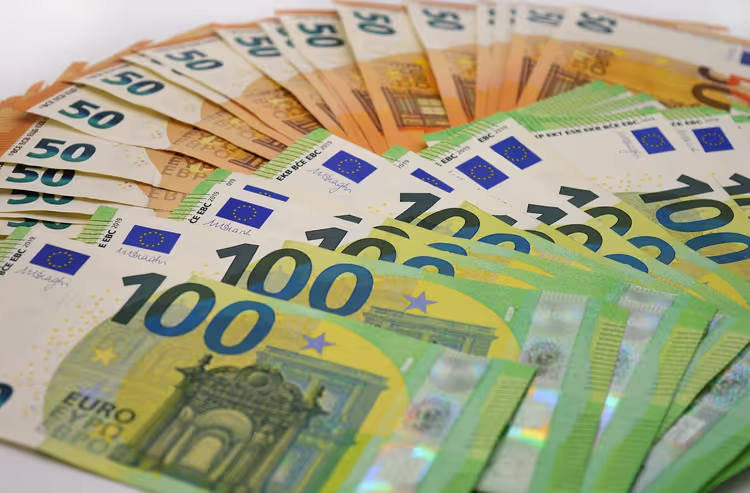
Parking at the entrances is paid, with payment made when leaving the park. A car costs €1.50 per hour in the off-season and €2 per hour from June to September, a motorcycle €5-7 per day, a camper and bus €15-18 per day (as of 09/2026, parking and rates).
Tours and tickets in Plitvice Lakes
Guided tours, skip-the-line tickets and activities — most offers can be cancelled free of charge.
See offers on TiqetsThe widget loads once you give your consent.
Where to stay near the park
Staying overnight near the park saves time and energy: entering early in the morning is calmer, and in the evening you can catch the sunset by the water. Small three- and two-star hotels, two campsites, private houses, and guesthouses geared toward budget travel operate in the area.
Hotel Jezero is located within the park, and if you stay there, you can extend your one-day ticket at the hotel reception (extension terms, as of 09/2026). This option is convenient when you want to return to the lakes on a second day without buying a new ticket.
Hotels near Plitvice Lakes on Trip.com are easy to compare by date: in summer, rooms near the entrances get booked up well in advance.
How to get there from Zagreb and Zadar
The park sits on state road D1, which connects Zagreb with Zadar and continues further into southern Dalmatia (according to the park road network). The road passes by both main entrances, each has paid parking, and the bus stop is located next to the entrance.
By car, the drive takes about two hours from Zagreb and slightly less from Zadar: the distance is comparable from both sides, the road surface is good, but there can be traffic jams in summer (according to the park website). Traveling on your own is more convenient from the capital: regular buses depart from Zagreb bus station and stop at the park. Check schedules and tickets on the Zagreb bus station website and with the local carrier Lika Line.
From Zadar there are fewer services, and the schedule depends on the season, so check departures in advance. With a car you have more freedom: you can stop along the way and leave at a convenient time. If you don't have your own car, car rental in Zagreb gives you the same freedom: pick up the car at the airport or in the city center.
⁉️🤔 Frequently asked questions
Can you swim in Plitvice Lakes?
No. Swimming and any entry into the water are prohibited by park rules. Violators are fined. You can only walk on wooden boardwalks and marked trails.
Do I need to buy a ticket in advance?
Yes, especially from June to September. The ticket is tied to a specific entrance and time slot, so arriving late makes it invalid (purchase rules, as of 09/2026). Ticket offices at the entrances operate while time slots remain available, but in high season they sell out by midday, and you risk being left with closed sales.
How long does the walk take?
From a couple of hours on one cascade to a full day if you want to cover both the upper and lower lakes. Add time for the ferry and train: they are included in the ticket and also move you along the route. A route map is sold at the entrances, and it's easy to choose a path length that suits your fitness.
How do you get to the park without a car?
Regular buses run from Zagreb and stop right at the park entrance. Check the schedule on the Zagreb bus station website and with the carrier Lika Line. There are fewer buses from Zadar and Split, and the winter schedule is shorter, so check both directions in advance and allow extra travel time.
Where to leave your car and how much does parking cost?
There are paid parking lots at Entrance 1 and Entrance 2, and you pay when leaving the park. A car costs 1.50-2 € per hour depending on the season (as of 09/2026, parking rates).
Can you visit with a dog?
Yes, but only on a leash, including on the ferry and the panoramic train (according to the park). Off-leash walking in the park is prohibited, and feeding the animals is not allowed. Bring water for your dog with you; it is not a good idea to let it drink from the lakes.
In short: what is worth booking
If you have one day and are coming from Zagreb, take an early entry time slot and plan a short loop: the lower lakes plus the ferry across Kozjak. If you are traveling with children, choose the shoulder season: spring and autumn are cheaper and quieter, while in summer the boardwalks get crowded by midday. For two days, get a two-day ticket and a hotel near the entrance, so you will not pay the full rate twice.
The main rule is simple: buy your ticket online and choose your entrance based on your hotel. You can compare hotels near Plitvice Lakes in advance, and it is better to buy tickets a few days before your trip if you are arriving between June and September.

A small editorial team writing guides for independent travel. We travel ourselves, but we haven’t been everywhere, so we check prices, opening hours and how to get there against official sources.