
















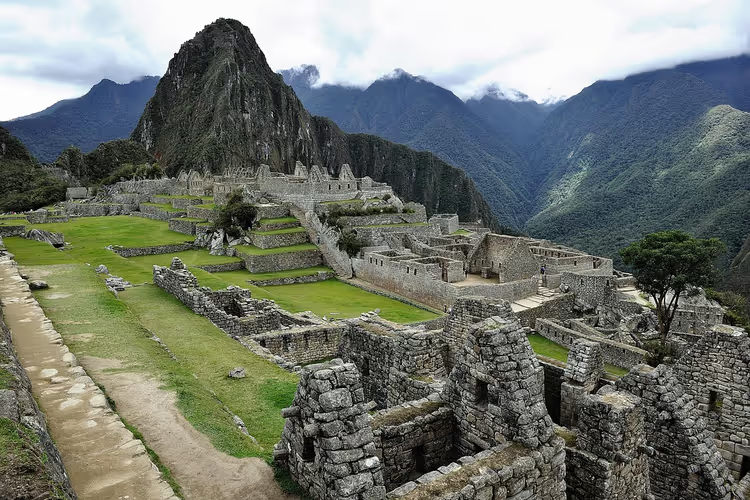
Machu Picchu and Humantay Lagoon: tickets, train and 4,200 meters altitude
Machu Picchu is open to visitors by time slots, and tickets sell out months in advance. The journey to it starts in Cusco and goes through Ollantaytambo.
Below we break down the slots and routes, the train journey, the hike up to Humantay Lake at 4,200 meters, and what to bring with you.
Ad: this article contains affiliate links, we earn a commission if you book through them, at no extra cost to you.
What you need to know about Machu Picchu
💡 In short:
- Machu Picchu was built in the 15th century, rediscovered in 1911, and the city sits at 2,430 meters above sea level.
- Entry is only with tickets that have a fixed time slot; they are not sold at the entrance.
- The easiest way to get there is by PeruRail or IncaRail train through Ollantaytambo to Aguas Calientes.
The mysterious city was built in the 15th century and only discovered in 1911 (according to the historical reference). American archaeologist Hiram Bingham from Yale University was searching for a completely different place where, according to legend, treasures were stored. A local boy showed him the path to the ruins at the top. It seems the locals had known about the "lost city" for a long time but did not share it with outsiders.
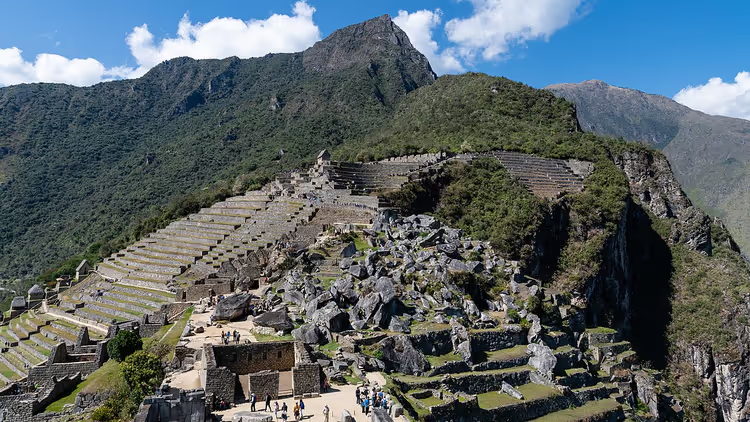
Machu Picchu is the name of the mountain. From Quechua it translates as "old mountain." The city itself sits at 2,430 meters above sea level (according to Wikipedia, 09/2026). Start from Cusco: it lies even higher, at about 3,400 meters. In the first few days you will tire quickly, and that is normal.
 © Christoph Strässler · CC BY-SAPhoto: Christoph Strässler, CC BY-SA (https://creativecommons.org/licenses/by-sa/2.0), Wikimedia Commons
Acclimatization takes 2-3 days. Schedule your Machu Picchu tour no earlier than your third day in Cusco. The city itself is small, but the climb and the altitude drain your energy faster than you expect. Check out our Cusco guide to fill those days.
Tickets and opening hours
Entry to Machu Picchu is not sold at the gates. Tickets are booked in advance on the official portal of Peru's Ministry of Culture (machupicchu.gob.pe). In high season, morning slots sell out 2-3 months ahead. Check available time windows for each date in advance in the booking service.
The price depends on the route. A classic entry ticket for 2026 costs about $62, a child ticket about $39 (as of 09/2026, 2026 rates). Prices went up on May 1, 2026. The climb up Huayna Picchu or Machu Picchu Mountain costs about $78 (as of 09/2026, ticket catalog).
Route | What you will see | Price (2026) |
|---|---|---|
2 (classic) | the main view of the city from the terraces | about $62 |
1 (panoramic) | the upper terraces and the valley | about $62 |
3 (royal) | the Lower City and temples | about $62 |
1A and 3A (with mountain) | the city and a steep climb to the summit | about $78 |
Get route types and prices from the availability calendar (as of 09/2026). The slot fixes your entry time, not your exit time. Allow 2.5 hours for the visit: you will not stay longer than that.
Tickets and group tours are easier to book in advance: timed-entry tickets on Tiqets.
Tours and tickets in Machu Picchu
Guided tours, skip-the-line tickets and activities — most offers can be cancelled free of charge.
See offers on TiqetsThe widget loads once you give your consent.
How to get to Machu Picchu
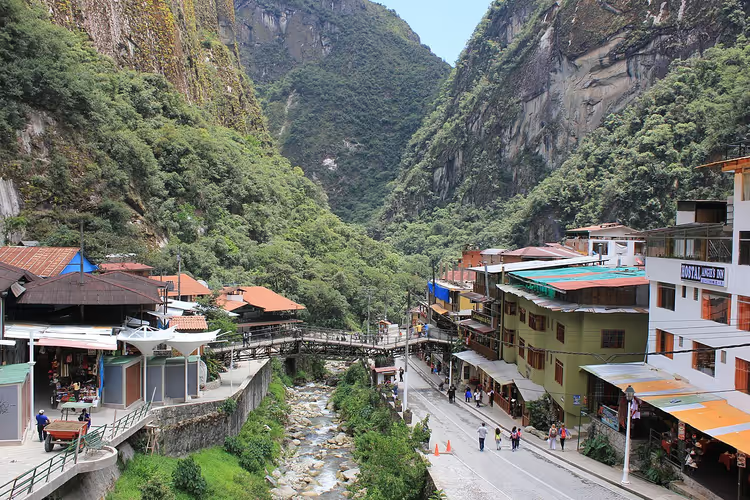
The journey starts in Cusco or directly in Ollantaytambo. The most convenient option is the train: PeruRail and IncaRail carry passengers to Aguas Calientes station, also known as Machu Picchu Pueblo (as of PeruRail, 09/2026). From Ollantaytambo the trip takes about 1.5 hours, from Poroy near Cusco it is longer.
 © Laslovarga · CC BY-SAPhoto: Laslovarga, CC BY-SA (https://creativecommons.org/licenses/by-sa/4.0), Wikimedia Commons
Train tickets and entry slots sell out in advance. In high season, morning departures are the first to fill up. Book the train and the entry ticket together, otherwise you risk arriving outside your time window.
From Aguas Calientes, a bus takes you up to the ruins, and the ride takes just a few minutes. On foot, this route takes hours, and you arrive already tired. Staying overnight in Aguas Calientes is convenient: hotels near the station on Trip.com.
How a trip from Cusco works
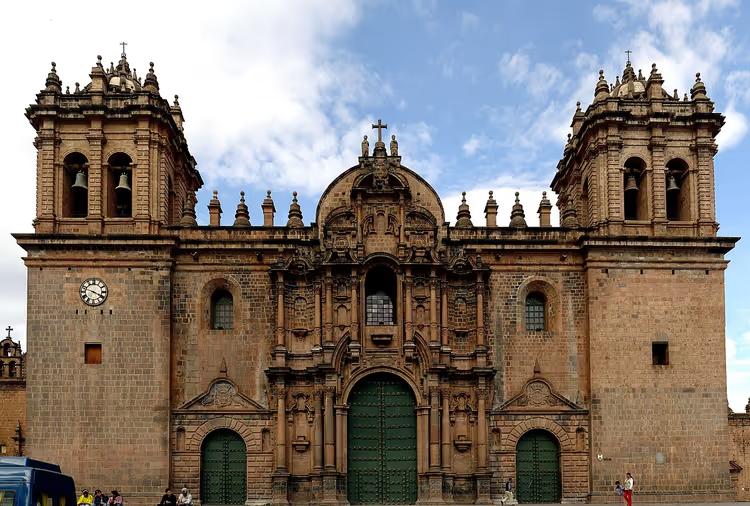
Organized tours from Cusco take all the logistics off your hands. The package usually includes city pickup, a bus to the station, the train, a guide in Aguas Calientes, lunch, and the bus to the ruins. The return trip follows the same route, but without lunch.
 © Martin St-Amant ( S23678 ) · CC BYPhoto: Martin St-Amant ( S23678 ), CC BY (https://creativecommons.org/licenses/by/3.0), Wikimedia Commons
The difference between a "panoramic" and a regular carriage is small in practice. Both have windows, and you are mostly paying for a convenient schedule. If you want to save money, take regular class and an early departure.
Putting the route together on your own is doable, but it requires connections. There is almost no buffer between the bus, the train, and the ascent. That is why most people take a ready-made tour and avoid the risk of missing their slot.
Interesting facts about the Inca city
The city is divided into upper and lower sections. An ancient Inca trail leads to it, and some travelers hike it on foot over several days.
The Incas did not haul stones up from below. They broke them off the mountain right on site.
Why the Incas left this place is not exactly known.
Today llamas and alpacas graze on the terraces. They calmly pose next to tourists and are hardly afraid of people. This is part of a protected area, so keep quiet and do not get too close.
Humantay Lagoon: a lake at 4,200 meters
Humantay Lagoon lies at an altitude of about 4,200 meters, roughly three hours by car from Cusco. It is a turquoise lake at the foot of a glacier, surrounded by snowy peaks. There is almost no shelter around, so the weather changes quickly.
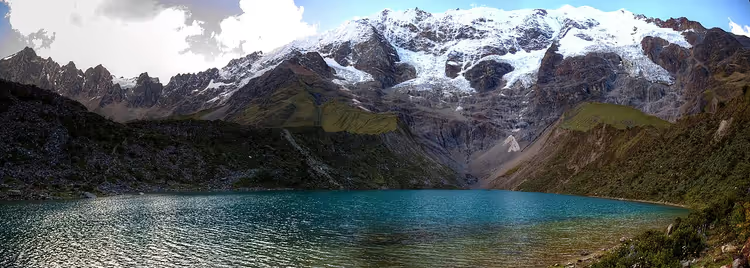 © Nicolas Rénac · CC BY-SAPhoto: Nicolas Rénac, CC BY-SA (https://creativecommons.org/licenses/by-sa/2.0), Wikimedia Commons
Group tours run here from Cusco. A day with transfer, breakfast, and lunch costs a few dozen dollars per person (as of 09/2026, trail guide). You need to leave early: by midday groups arrive at the lake and it gets crowded. Group tours to Humantay Lagoon pick up travelers from central Cusco.
Challenges on the hike to the lagoon
The climb to the lagoon is short but very steep: from the parking lot you gain about 300 meters of elevation (as of Peru Spirit, 09/2026). At 4,200 meters, every step feels harder than it looks.
The trail goes steeply uphill the entire time. Every few steps you want to catch your breath, and that's normal. Some people pay extra to take a horse all the way to the lagoon.
Tours rarely state the difficulty level. If you have no experience with high-altitude climbs, plan extra time and don't push yourself. At the top, the views justify the effort.
What to know before you go
Altitude is everything here. In Cusco you're at 3,400 meters, at Machu Picchu at 2,430, and at Humantay Lagoon at 4,200 (as of Wikipedia, 09/2026). Avoid heavy exertion on your first day.
Pack the basics: sunglasses and sunscreen, a hat, water, a rain jacket. In the Andes, the sun is harsh even on a cloudy day, and rain comes without warning. A warm layer is also a good idea: evenings in Cusco get noticeably chilly.
If you want to pack ahead of time, check out our guide to souvenirs and shopping in Peru. Before your trip, our general Peru checklist will also come in handy.
⁉️🤔 Frequently asked questions
Can you buy a Machu Picchu ticket at the entrance?
No. Tickets are not sold at the gate, and this is the main mistake visitors make. Book your entry in advance on the official portal of Peru's Ministry of Culture (machupicchu.gob.pe). In high season, available slots sell out 2-3 months ahead, so buy your date together with your train.
How much does Machu Picchu entry cost in 2026?
The classic route costs about $62, children's tickets about $39 (as of 09/2026, ticket catalog). Climbing Huayna Picchu or Machu Picchu Mountain costs more, about $78 (as of 09/2026, operator prices). Prices went up on May 1, 2026, so old figures from guidebooks no longer apply.
How to get to Machu Picchu without a car?
By train. PeruRail and IncaRail go to Aguas Calientes station, most often with boarding in Ollantaytambo (according to PeruRail). From the station, a bus takes you up to the ruins, or you can walk. Book train tickets and your entry slot in advance; in high season they sell out quickly.
How hard is the hike to Humantay Lake?
The climb is short but steep, and it takes place at an altitude of 4,200 meters (according to Peru Spirit). You get out of breath within the first few steps. Some tourists hire a horse for an extra fee. If you don't handle altitude well, acclimatize in Cusco first.
Do you need to acclimatize in Cusco?
Yes, and it's best to allow 2-3 days for it. Cusco sits at about 3,400 meters, and Humantay Lake is higher, at 4,200 (according to Wikipedia). In the first few days you tire quickly, so schedule strenuous excursions for day three or later.
In short: what to book
Machu Picchu follows a simple rule: ticket first, then travel. First you lock in your date and slot, then you book your train and accommodation. If you reverse the order, you could end up with a ticket for one day and a train for another.
- If you have 2-3 days in Cusco: take a one-day Machu Picchu tour and a separate day for acclimatization.
- If you want to save money: get a regular ticket with a slot on Tiqets and a standard train car, without the panoramic class.
- If you're looking for a place to stay: check hotels in Aguas Calientes on Trip.com, they're a couple of minutes from the station.
After that, it all comes down to the weather. Mornings on the terraces are almost always clearer than the afternoon, so early-hour slots are worth it.

A small editorial team writing guides for independent travel. We travel ourselves, but we haven’t been everywhere, so we check prices, opening hours and how to get there against official sources.