















San Fermín in Pamplona: the bull run and honest tips for your first visit
At seven in the morning, Pamplona wakes to the thunder of bulls. Hundreds of people dressed in white run ahead of six enraged animals through the narrow streets of the old town. The run itself lasts two to three minutes, while the festival stretches across nine days and nights. San Fermín 2026 runs from July 6 to 14, and these dates never change from year to year (as of: 09/2026, Visit Navarra).
If you are going to San Fermín for the first time, you need to decide three things in advance: whether to watch the run or run yourself, where to stay, and how to avoid getting caught in a crush. We have put together the schedule, the encierro route, safety rules, and the honest catches that glossy guidebooks stay silent about.
Ad: this article contains affiliate links, we earn a commission if you book through them, at no extra cost to you.
When San Fermín takes place in 2026
💡 In short:
- The festival runs from July 6 to 14, and these dates never change from year to year.
- The encierro starts every morning at 8:00 from July 7 to 14, eight runs in total.
- The opening begins with a rocket launch on July 6 at 12:00, and the finale is the Pobre de mí ceremony at midnight on July 14.
- Dates and program: 09/2026, verified on the official tourism portal of Navarra.
Date | Time | Event |
|---|---|---|
July 6 | 12:00 | Chupinazo, opening at the city hall |
July 7-14 | 8:00 | Encierro, eight runs in a row |
July 7-14 | 18:30 | Bullfight at Plaza de Toros |
July 14 | 00:00 | Pobre de mí, farewell to the festival |
At exactly noon on July 6, a rocket launches from the city hall balcony, and the city officially enters festival mode. It all ends nine days later: at midnight on July 14, the crowd at Plaza Consistorial removes the red scarves from their necks and sings the farewell song. Between these two points, life in Pamplona does not stop for a single hour. Every morning the starting rocket booms, and every evening the streets fill with music again.
What San Fermín is and why everyone knows it
San Fermín is dedicated to Saint Fermin, the patron saint of Pamplona. The festival's history goes back to the Middle Ages: it began as a religious celebration with fairs, and later bullfights were added. The animals were driven to the arena from pastures outside the city, and the bravest men ran ahead of the herd. That is how the modern encierro was born, which today draws crowds of spectators from around the world.
Ernest Hemingway brought the festival worldwide fame. He first came here in the mid-twenties and a year later described the festival in his novel "Fiesta" (original title The Sun Also Rises). After its publication, hundreds of thousands of foreigners began flocking to Pamplona every July, and that stream has not dried up since. If you are interested in Pamplona itself, not just the festival, start with its history and cathedral.
The encierro route: 875 meters through the old town
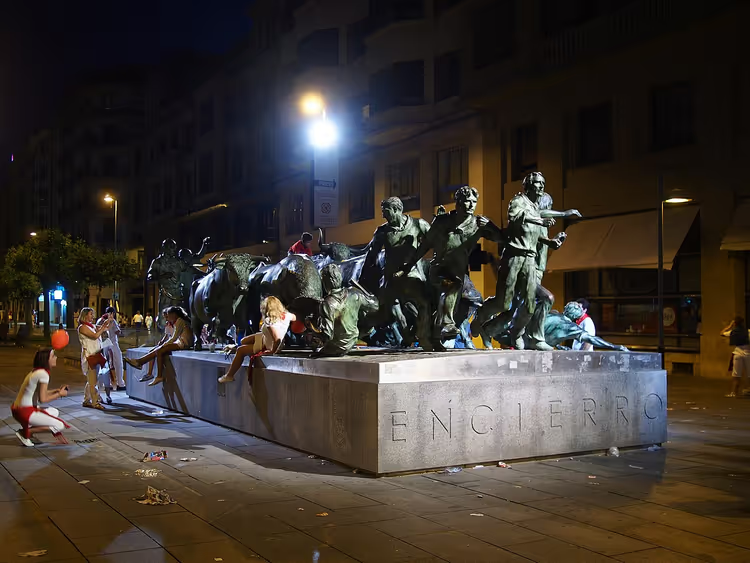
Every morning at 8:00, six fighting bulls and six lead steers are released from the corral at Cuesta de Santo Domingo. The herd runs through the center of the old town to Plaza de Toros, and the route takes two to four minutes. The distance is always the same: 875 meters over cobblestone streets and squares (as of: 09/2026, San Fermín guide).
 © rheins · CC BYPhoto: rheins, CC BY (https://creativecommons.org/licenses/by/3.0), Wikimedia Commons
Section | What happens here |
|---|---|
Cuesta de Santo Domingo | steep climb, slippery cobblestones, and a dense crush at the start |
Plaza Consistorial and Mercaderes | the bulls turn right, and this is where people fall most often |
Calle Estafeta | the longest straight stretch, about 300 meters, where almost all tourists run |
Telefónica turn | a narrow bottleneck before the arena entrance |
Plaza de Toros | the finish, where the gates close behind the last runners |
Experienced participants stay ahead of the herd, and only professionals run close to the bulls. Hundreds of guests bring up the rear, trying to reach the arena with everyone else. For a beginner, the most dangerous part is not the distance but the crush at the entrance, so decide in advance exactly where you will stand and where you will move if panic breaks out.
Taking part in the encierro: what you need to know
Important warning. The encierro is genuinely dangerous. Since 1910, at least 16 people have died during the runs, with the most recent case in 2009 (as of: 09/2026, Cadena SER). Dozens of participants are injured every year, some of them seriously. Make the decision to run soberly and without adrenaline clouding your judgment.
 © Kent Wang from Barcelona, Spain · CC BY-SAPhoto: Kent Wang from Barcelona, Spain, CC BY-SA (https://creativecommons.org/licenses/by-sa/2.0), Wikimedia Commons
Requirements
- Age 18 or older.
- No registration needed, participation is free.
- Sobriety is mandatory: police filter out visibly drunk people before the start.
- You need to be physically fit, because you must be able to sprint and keep your head in a panic.
What to wear
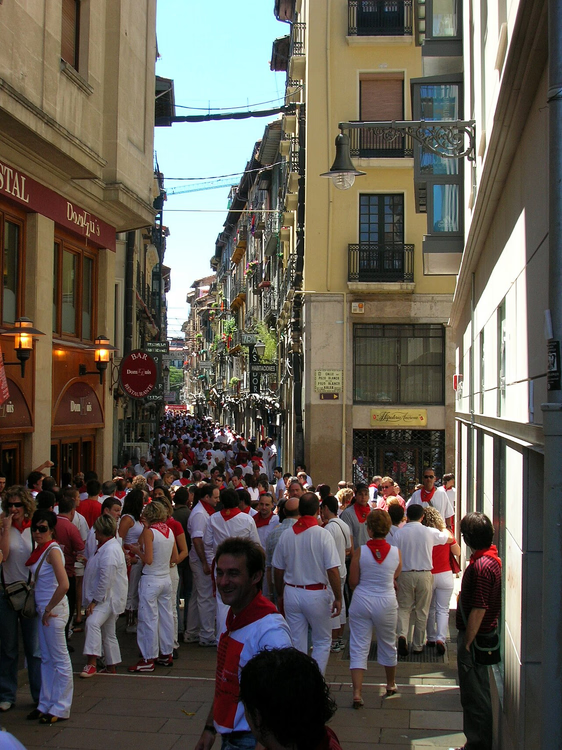
- White pants and a white shirt, the traditional festival outfit.
- A red faja around your waist and a pañuelo around your neck.
- Closed athletic shoes. Sandals, flip-flops, and new sneakers are dangerous on cobblestones.
- A rolled-up newspaper, the traditional item for distracting a bull in case of danger.
- Nothing in your hands except the newspaper. Leave your phone at home rather than filming.
 © SanchoPanzaXXI · CC BY-SAPhoto: SanchoPanzaXXI, CC BY-SA (http://creativecommons.org/licenses/by-sa/3.0/), Wikimedia Commons
Preparation the day before
- Walk the route at least once, slowly and without the crowd.
- Choose your starting point in advance, not on the run in the morning.
- Plan your escape route: where you will duck if a bull turns toward you.
- Go to bed early. The city parties all night, but you still have to get up at six.
- Check your insurance. Many policies explicitly exclude participation in a bull run.
Where to run
- Santo Domingo at the start: only for the experienced, the animals come out at full speed.
- Mercaderes and the turn: the place where people fall most, beginners have no business here.
- Calle Estafeta: the only section suitable for a first time. It is wider, and you can move to the side.
- The entrance to Plaza de Toros: dangerous because of the crush before the gates.
Behavior during the run
- Never turn around to look at the bulls, that is the most common cause of tripping.
- Do not touch the animal. Touching is considered a serious violation and carries a fine.
- If you fall, stay down, cover your head with your hands, and flatten yourself against the ground. Bulls usually jump over people who are lying down.
- A bull that separates from the herd is especially dangerous, it attacks deliberately.
- After the finish, leave the arena immediately. The doors will open, and young bulls with dulled horns will be released.
Where to watch the run: the best spots
Let us be honest: watching is smarter than running, and you actually see more. There are three options, and they differ greatly in price and comfort.
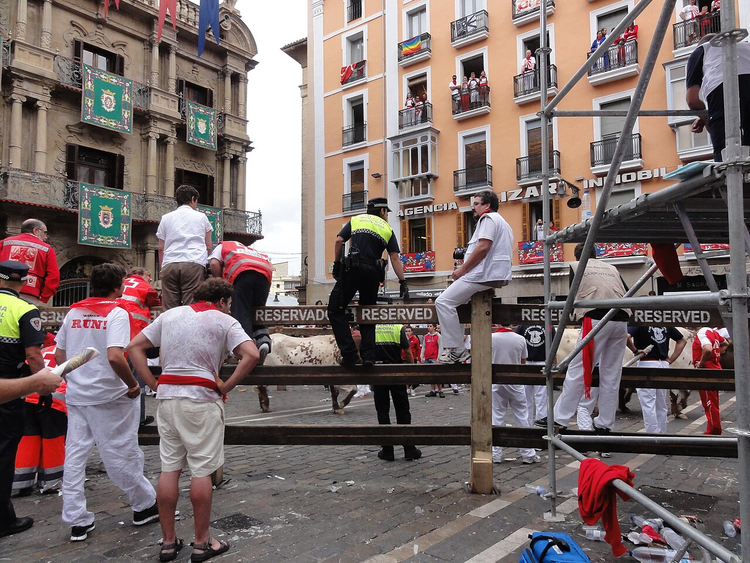
On the route. The wooden barriers along the streets are free, but front-row spots are taken by 5:30. Space is tight, and you will stand shoulder to shoulder with your neighbors. Locals rent out their balconies: prices start at 80 € per person and depend on the section and floor (as of: 09/2026, Hoy Aragón). You need to book months in advance, but the view is the best and breakfast is included.
At the arena. Tickets to Plaza de Toros for the morning run cost around 6-20 € and are sold at the box office (as of: 09/2026, official arena rates). You will only see the final seconds, when the bulls run into the arena. Arrive by six in the morning and take the cheapest seat on the sunny sol side: before eight, the sun is not yet scorching.
On TV. RTVE broadcasts live. The picture is cleaner than from any spot on the street, but you will not feel the atmosphere, so this option works only as a backup.
If you want to add a city tour to the festival, you can check tours and excursions in Pamplona on GetYourGuide in advance.
What else happens at the festival
The encierro takes up only the morning, while the festival itself runs around the clock.
- Gigantes y Cabezudos: daily parades of giants and big-headed figures, a good option for families.
- Bullfight: starts at 18:30, featuring the same bulls that ran in the morning.
- Fireworks: every evening at 23:00 in Ciudadela park.
- Concerts: on the city's main squares, usually free to attend.
- Food: pintxo bars in the old town and Navarra wine, served here at regular prices.
- Procesión de San Fermín: a religious procession on the morning of July 7, which most tourists skip.
If you want a quiet evening, choose concerts on squares farther from the arena.
Where to stay and how to get there
Accommodation during the festival gets three to five times more expensive, and available rooms run out months in advance. If you do not have a booking yet, there is a working approach: look for private lodging 30-60 km from the city and come to Pamplona for the day. Estella, Tafalla, and Tudela are cheaper and connected to the center by bus.
- Plane: Pamplona has a PNA airport, but there are few flights. It is more convenient to fly via Bilbao (BIO) or Madrid (MAD).
- Train: Renfe AVE and Alvia trains run from Madrid, and the trip takes about three hours (Renfe schedule and tickets).
- Car: during the festival, the old town is completely closed to traffic, so leave your car on the outskirts.
Honest advice for a first visit
If you are going to San Fermín for the first time, do not arrive on July 6 or 7. On those two days, the city is packed with foreign tourists, and most of them are drunk. The best window is July 9, 10, and 11: the festival is in full swing, the atmosphere is calmer, and finding accommodation is easier.
You should also avoid running on July 7. The first run attracts beginners and tipsy guests, so injuries are highest on that day. Start on July 9, 10, or 11, when the flow of experienced runners has settled in.
And work on your Spanish before the trip. Pamplona is not a tourist city like Barcelona or Mallorca. Without the language, you will understand less than half of what is happening around you, including a medic's instructions after a fall.
⁉️🤔 Frequently asked questions
Isn't the encierro animal cruelty?
The run itself is not fatal for the bulls: they run 875 meters and arrive at the arena alive. They die in the evening, at the bullfight, where the same animals take part. This is a long-standing controversial practice: Catalonia and the Canary Islands have banned it, while in Navarra the bullfight is still permitted and is part of the official festival program.
Can you attend the festival without going to the bullfight?
Yes, and that is what most guests do. The bullfight takes place only at the arena and requires tickets. You can spend the whole week in Pamplona, listen to concerts, watch parades, eat pintxos, and never set foot in Plaza de Toros. That said, the morning encierro and the evening bullfight are connected. The bullfight features the same bulls that ran in the morning.
How many people come to San Fermín?
Pamplona has a population of about 200,000, and over the entire festival the city hosts around 1.5 million visitors (as of: 09/2026, official Navarra tourism portal). On weekends and on opening day, the old town is so dense that you have to move with the general flow, step by step.
What do the white and red colors mean?
White symbolizes purity, and red recalls the blood of Saint Fermin, who according to tradition was beheaded. In practice, almost everyone wears this combination regardless of the meaning. White clothing with a red scarf has long become the identifying mark of the festival.
How expensive is the trip?
Travel and accommodation are expensive: hotels raise their prices several times over during the festival. But once you are there, everything is modest. Wine and pintxos in old town bars go for normal Spanish prices, with no tourist markup. You will spend the most on lodging and transport.
How noisy is it?
Very noisy. Music, drums, and fireworks barely stop around the clock, and the crowd buzzes without pause. If you have sensitive hearing, bring earplugs. It is best not to take children under six out onto the nighttime streets.
In short: what to book
The logic for a first trip is simple.
- Want to see the run without risk: book a balcony spot along the route.
- Want it free and simple: grab a spot at the wooden barriers at 5:30.
- Want the finish right at the arena: buy a Plaza de Toros ticket in advance.
- Want to save on lodging: look for accommodation 30-60 km away and come by train.
It is convenient to search for available hotel options in advance: check prices on Trip.com.

A small editorial team writing guides for independent travel. We travel ourselves, but we haven’t been everywhere, so we check prices, opening hours and how to get there against official sources.