
















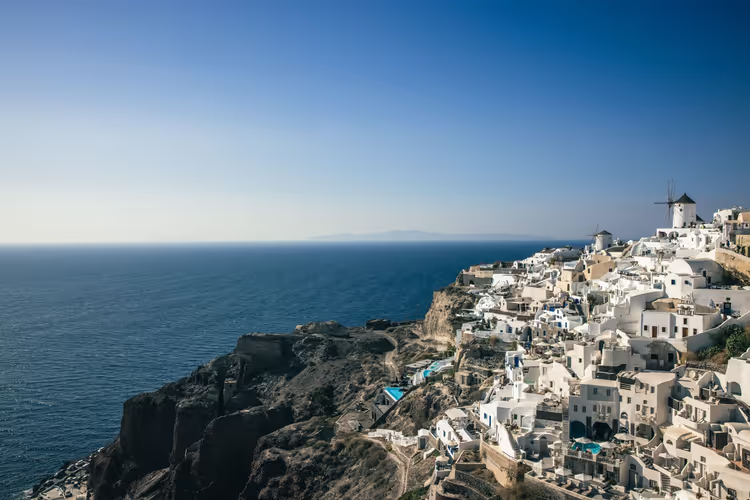
Santorini: what to see, where to swim and how to get there
Santorini is on everyone's radar. But few people know that the island sits on the edge of an underwater volcano. That explains the black beaches, the caldera cliffs, and wine with a hint of ash.
A trip here comes down to three things: the sunset in Oia, volcanic sand beaches, and the ancient city of Akrotiri.
Below you'll find what to see, where to swim, and how to get around without unnecessary transfers.
Ad: this article contains affiliate links, we earn a commission if you book through them, at no extra cost to you.
Why Santorini is special
💡 In short:
- Santorini sits on the edge of a flooded caldera: see Oia and Fira from above, swim on the east coast.
- Visit the main villages in the morning, before the cruise groups arrive.
- The museum and Akrotiri are closed on Tuesdays; tickets and hours: 09/2026, verified on the official website.
Santorini lies in the middle of the Aegean Sea. It's the remnant of a huge volcanic archipelago that curves around a flooded caldera. The west coast drops into the water in sheer cliffs, and Fira and Oia stand right on the edge. The east coast is gentle, with sand, villages, and the port of Athinios.
Around 1600 BC, the volcano erupted and buried a Minoan city under ash. The ash preserved houses, frescoes, and streets, which is why Akrotiri is called the Aegean Pompeii (as of 09/2026, archaeological museums of Greece). The legend of Atlantis is also linked to this eruption. There's no direct evidence, but the theory lives on to this day.
The black and red color of the beaches comes from lava and pumice. Tourists still find pieces of pumice on the shore and take them home as souvenirs.
The swimming season here is long. The water stays warm from late May to late October, and in September the sea is still comfortable. In autumn there are fewer people, and hotels are cheaper than at the height of summer.
What to see: Fira, Oia, and Akrotiri
Fira serves as the island's capital and main transport hub. It's home to the Museum of Prehistoric Thera with its frescoes and the golden goat. A cable car takes you down to the old port, where boats leave for the volcano.
 © Norbert Nagel · CC BY-SAPhoto: Norbert Nagel, CC BY-SA (https://creativecommons.org/licenses/by-sa/3.0), Wikimedia Commons
The museum is open daily except Tuesday, from 08:30 to 15:30. A full ticket costs 10 €, a reduced ticket 5 €, and it's also valid at Akrotiri and Ancient Thera (as of 09/2026, Ministry of Culture). Free admission on March 6, April 18, May 18, the last weekend of September, October 28, and the first Sunday of the month from November to March.
Akrotiri, the excavation of a Minoan city, lies under a layer of ash. Streets, houses, pottery, and Bronze Age wall paintings have survived here. The ticket is the same combined one, and it also gets you into the museum in Fira.
Oia lies at the northern tip of the island. Its houses are carved directly into the caldera cliff. The sunset here draws crowds, so arrive early or watch the sun from Fira.
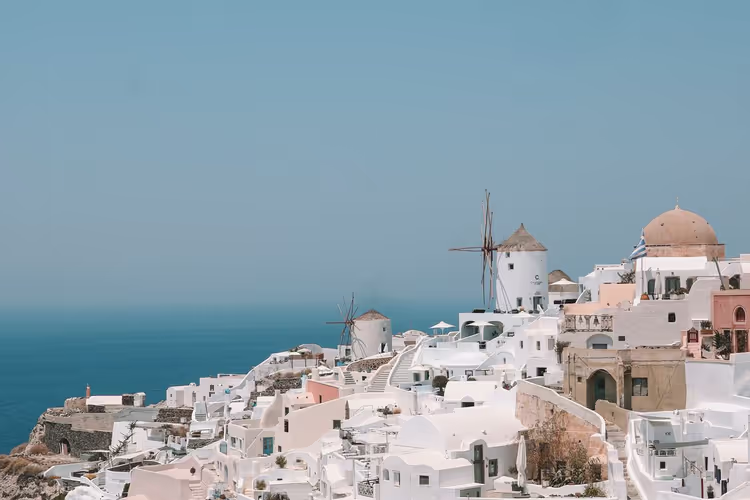
Above Kamari and Perissa rises the Mesa Vouno ridge. At its summit stand the ruins of Ancient Thera with views of both coasts.
Guided tours and skip-the-line tickets are convenient to book in advance: tours and tickets on GetYourGuide.
Beaches: Perissa, Kamari, and Red Beach
The island's east coast is made of black volcanic sand. There are two main resorts here, both at the foot of Mesa Vouno.
Perissa stretches for three kilometers along the shore. It's a beach of gray-black sand, the water entry is gentle, and the cliffs shelter the shore from the wind. That's why families with children come here. Along the shore there are tavernas, sun loungers, and a surf school.
Who it's for: families and anyone looking for calm water.
The catch: the black sand gets very hot during the day, so water shoes are a must.
Kamari is nearby, about 10 km from Fira (on the map). The beach holds a Blue Flag for clean water (as of 09/2026, according to FEE). Along the shore runs a promenade with restaurants and an open-air cinema under the cliff.
Red Beach near Akrotiri stands out for its rusty cliffs caused by iron in the rock. It's narrow, and rocks sometimes fall from above, so it's better to swim at Perissa and come here for photos.
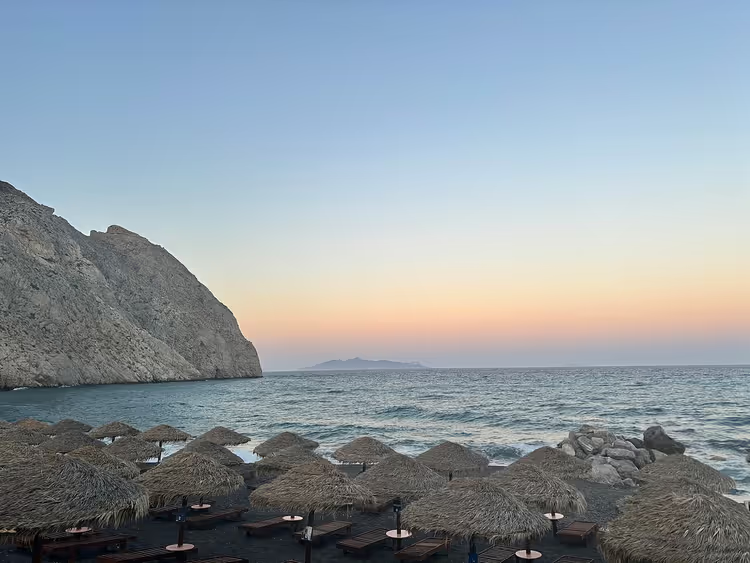 © PCN02WPS · CC BY-SAPhoto: PCN02WPS, CC BY-SA (https://creativecommons.org/licenses/by-sa/4.0), Wikimedia Commons
Wine and cuisine of Santorini
Volcanic soil and constant wind have made the local wines distinctive. The vineyards here are low and woven into baskets to survive the wind.
Assyrtiko, a white grape variety, produces PDO Santorini wine. It's dry, with a mineral taste and citrus notes. The vines grow on their own roots because phylloxera never reached the island (as of 09/2026, SantoWines).
Vinsanto is made as a sweet PDO wine from sun-dried grapes. It uses 70% Assyrtiko and 25% Aidani (as of 09/2026, Venetsanos Winery). The grapes dry in the sun for 7-15 days, and the juice then ferments for more than two months.
From the kitchen, try fava, tomato keftedes, and fresh fish. Get wine by the glass at the winery, so you can appreciate the difference between varieties.
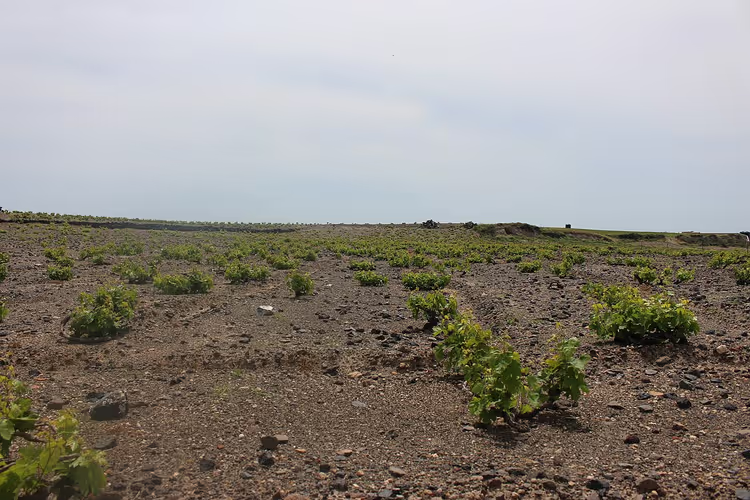 © ArticCynda · CC BY-SAPhoto: ArticCynda, CC BY-SA (https://creativecommons.org/licenses/by-sa/4.0), Wikimedia Commons
When to go and where to stay
Plan your trip for May, June, September, or October. In these months the sea is warm and the heat is milder. In July and August the most tourists arrive, and accommodation prices are higher.
Where to stay depends on your goal. Fira is convenient for everything: buses, museums, and the caldera view. Oia is quieter and more expensive, but it has the best sunset. Kamari and Perissa sit by the sea and suit those who swim every day.
Book caldera hotels in advance: in summer the best views are taken months ahead. You can find an option here: Santorini hotels on Trip.com.
How to get there: ferry, plane, transfer
The island has an airport (JTR), located about five kilometers from Fira (on the map). In summer, direct flights arrive here from Germany, Austria, and other European countries.
Ferries from Athens arrive at the port of Athinios below Fira (on the map). Routes are operated by Blue Star Ferries, Seajets, and Fast Ferries. A fast catamaran takes about five hours from Piraeus, while a regular ferry stretches the journey to eight (as of 09/2026, Blue Star Ferries).
Ferries and catamarans also run from Crete and Rhodes. From Rhodes the ferry takes a long time, so Santorini is easy to add as a day trip only from Crete.
From the airport and port to your hotel, the easiest option is a transfer: airport transfer on Kiwitaxi.
Tours and tickets in Santorini
Guided tours, skip-the-line tickets and activities — most offers can be cancelled free of charge.
See offers on KiwitaxiThe widget loads once you give your consent.
⁉️🤔 Frequently asked questions
How many days do you need on Santorini?
Three full days are enough for Fira, Oia, and Akrotiri. Add one more day for the beaches and a boat trip to the volcano. If you want a relaxed pace, plan for four or five days. The sunset in Oia takes up a whole evening because of the travel and the crowds.
When is the best time to visit Santorini?
The best time to go is May, June, September, and October: the sea is warm and there are fewer people. In July and August it gets hot and the most tourists arrive. In winter some hotels and tavernas are closed, but prices are lower and the island is almost empty.
Which beach to choose: Perissa or Kamari?
Perissa is longer and calmer, with a gentle entry into the water, so it suits families. Kamari is more compact, holds a Blue Flag, and has a promenade with restaurants. Both beaches are black sand, so bring water shoes: the sand gets very hot during the day.
Do you need a car on Santorini?
A car is useful if you want to visit beaches and wineries at your own pace. Buses run between Fira, Oia, and Kamari, but in summer they are overcrowded. Parking near the caldera is almost always full. For a short trip, buses and taxis are enough.
What is in Akrotiri and is it worth going?
Akrotiri is the site of an excavated Minoan city that was buried by ash in the Bronze Age (as of 09/2026, Museum of Prehistoric Thera). Houses, frescoes, and streets survived under a layer of volcanic ash. Look for the pottery and wall paintings.
In short: what to book
Santorini is easy to put together from three parts: a base in Fira or Oia, days at the beaches, and one day for Akrotiri with wine.
If you are going for the sunset, choose Oia. With children, pick Perissa or Kamari. For archaeology, stay in Fira and take a trip to Akrotiri.
Book hotels by the caldera in advance: Santorini hotels on Trip.com. For boat trips and tickets, choose GetYourGuide tours in advance.

A small editorial team writing guides for independent travel. We travel ourselves, but we haven’t been everywhere, so we check prices, opening hours and how to get there against official sources.