
















Shopping in Dubai: what to bring back from gold, perfumery and spices
Dubai sells more than its storefronts show. People come here from all over Asia and Europe for gold and perfume, and haggling in the old quarters has long been part of the trip. Let's break down what's worth bringing back from the Emirates and where to get it without overpaying.
The main shopping is concentrated in two zones: the historic districts of Deira and Bur Dubai along the creek, and the big malls along Sheikh Zayed Road. In the shops you haggle, in the malls you pay a fixed price. The selection in both places is similar, but the price and the rules of the deal are very different, and that determines where exactly it's more profitable for you to make a big purchase.
According to Dubai Mall, the Fashion Avenue gallery alone has more than 200 luxury boutiques (As of: 09/2026, official website). The seasonal Global Village park returns in October 2026 (As of: 09/2026, official website).
Ad: this article contains affiliate links, we earn a commission if you book through them, at no extra cost to you.
What and where to buy in Dubai
💡 In short:
- Gold and jewelry: the Gold Souk quarters in Deira, haggling is a must.
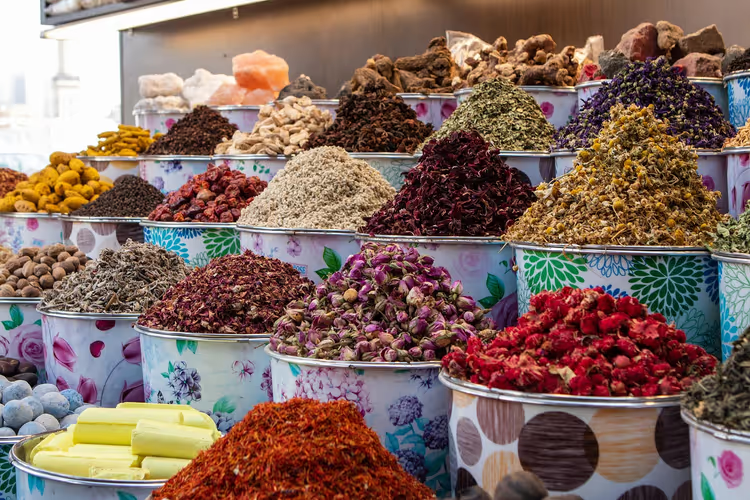
- Perfume, incense, coffee and spices: Spice Souk and private shops.
- Brands and electronics: Dubai Mall and Mall of the Emirates at fixed prices.
Dubai divides trade into two worlds. In the old quarters of Deira and Bur Dubai, everything is built on haggling: you name a price, the seller gives in, and the deal closes at the counter. In the malls the price is fixed, but the brand selection is wider and returns are easier.
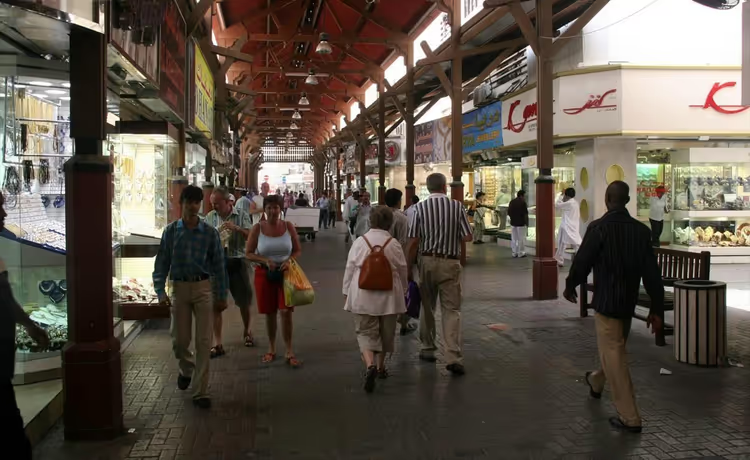
The most famous place for gold is the Gold Souk in Deira. Here hundreds of shops stand in a row, and the weight of an item is calculated in front of you. Nearby is the Spice Souk with saffron, cardamom and incense, and across the creek in Bur Dubai, the Textile Souk operates with fabrics and national clothing.
The big malls solve a different problem. In Dubai Mall you'll find Fashion Avenue, Dubai Aquarium and hundreds of stores at different levels. Mall of the Emirates holds Ski Dubai and brand boutiques, while Global Village opens only for the season, from October to spring.
Gold and jewelry
 © Imre Solt · CC BY-SAPhoto: Imre Solt, CC BY-SA (http://creativecommons.org/licenses/by-sa/3.0/), Wikimedia Commons
Gold consistently ranks first among purchases by Dubai visitors. The selection covers any budget: from thin chains to massive sets. The Gold Souk counters carry both modern designs and pieces with oriental patterns, often inlaid with stones.
The Dubai market is known for honest weight and clear hallmarks. You calculate the price as the cost of the metal plus the craftsman's work, and the seller is required to state these two numbers separately. That's where haggling comes in: the discount usually comes out of the workmanship markup.
Buy from large shops and ask for a certificate for the stones if you're getting diamonds or pearls, and check the hallmark on the piece itself. Keep the receipt, because without it you won't be able to process a return or Tax Free.
Clothing and fabrics in oriental style
 © Iwona Rege · CC BY-SAPhoto: Iwona Rege, CC BY-SA (https://creativecommons.org/licenses/by-sa/4.0), Wikimedia Commons
The national clothing of the Emirates is built on expensive fabrics. The base is sewn from silk, cashmere and cotton. Shawls, abayas and scarves are bought here not only as souvenirs but also as practical items for a hot climate.
Many shops work to order. You choose the fabric and the style, the craftsman takes your measurements, and in a couple of days the item is ready. This is convenient if you need a non-standard size or a gift with personalized embroidery.
In the Textile Souk the selection is wider and prices are lower than in the malls, so go in the morning: before the heat and before tourist groups, the shops are calmer, and the seller is more willing to give in.
Carpets, pillows and daggers
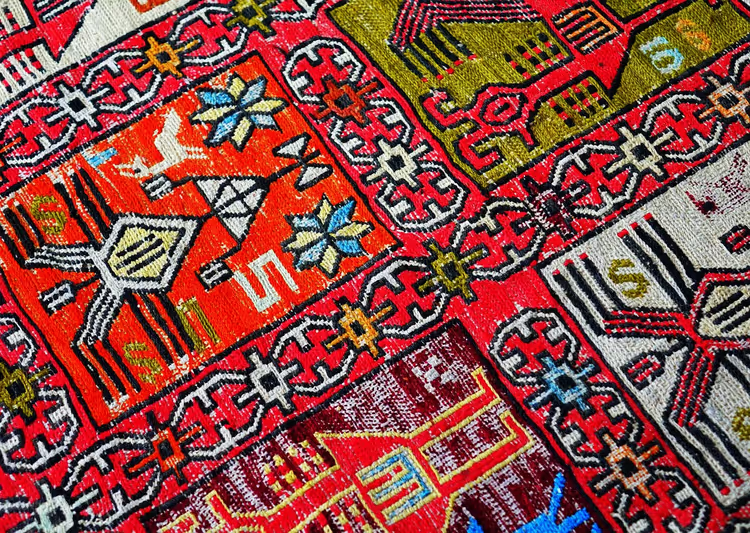
Carpets in Dubai's markets are chosen for quality and pattern. The choice of colors and shapes is huge: from classic rectangular to unusual triangular pillows used to prop doors. A good carpet is unrolled so you can see the pile in the light, because the sheen is how you tell natural wool from synthetics.
A separate story is souvenir daggers. Inlaid edged weapons were considered an ornament of an eastern man for centuries. Today a tourist buys one as a keepsake. Genuine pieces are expensive, while quality copies cost noticeably less, and you'll find them in souvenir and antique shops.
Before buying, check the export rules: edged weapons are inspected at customs. A copy without a sharpened blade passes more often, but it's safer to put it in checked baggage and declare it.
Arabic perfume
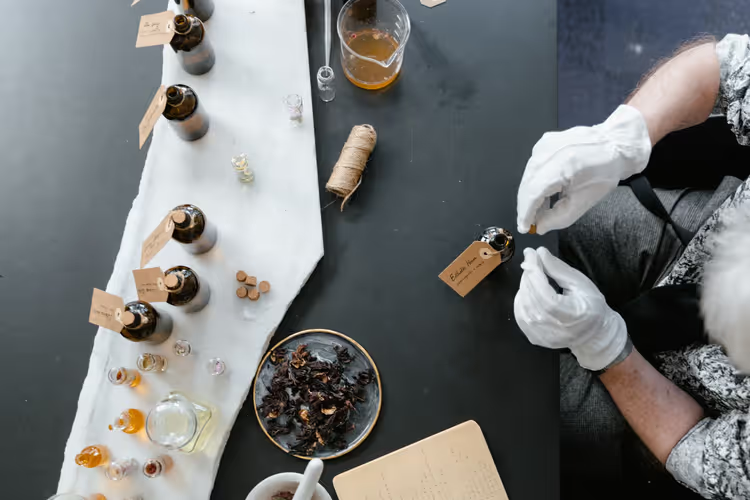
Arabic perfumes are built on oils, not alcohol. Because of the essential oils, they last longer than European ones and unfold on the skin gradually. Apply them to clean skin: on light fabric the oil will leave a stain.
In the market shops you can order a custom fragrance. You describe what you like, the master blends the oils and lets you try it. The finished bottle is filled in front of you, so the composition stays transparent.
Global brands are cheaper to look for in malls and duty-free, not in the market. There the risk of counterfeits is higher, so check the packaging and the serial number on the bottle.
Incense and bakhoor
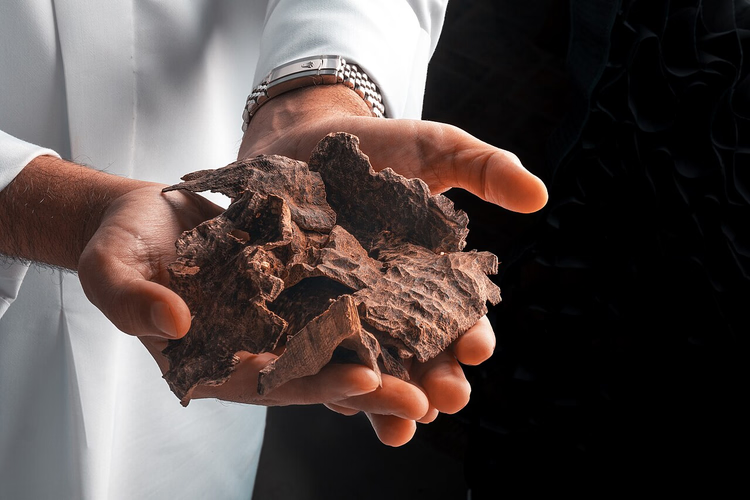 © Di7ane · CC BY-SAPhoto: Di7ane, CC BY-SA (https://creativecommons.org/licenses/by-sa/4.0), Wikimedia Commons
Incense in the Emirates is a ritual of its own. Bakhoor is sold as pieces of aromatic wood or soft balls. The wood is simply left in the room, and the air gradually fills with the scent. The balls are heated in a special burner, which you buy in the same shop.
Ask the seller about the difference between varieties, because they differ noticeably in staying power and price. For home use, take the mid-range; for a gift, a packaged set with a burner.
Store bakhoor in a closed container, otherwise the scent will fade within a couple of weeks.
Qahwa coffee and coffee utensils
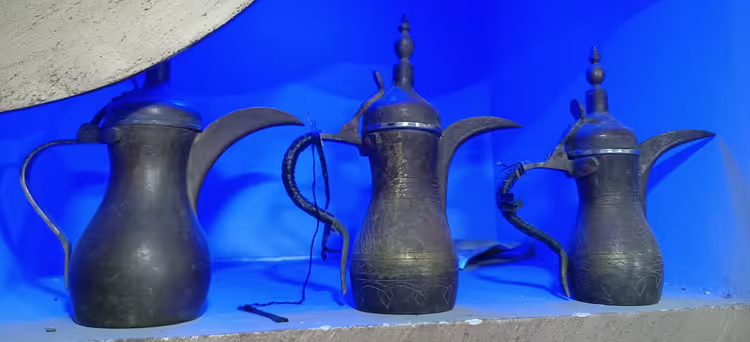
Coffee shops in Dubai are almost never empty. The local coffee is called qahwa, and cardamom is added to almost all varieties. It gives the drink a bitter, spicy taste.
Tourists eagerly buy coffee utensils, especially antique brass coffee pots, which can still be found in shops today. People rarely brew in such a pot; more often it serves as a decorative element in the kitchen.
Buy coffee in beans or freshly ground in small portions, so the aroma lasts until you get home. Ask the seller to let you smell a sample, so you don't buy stale goods.
Hookahs, sweets and souvenirs
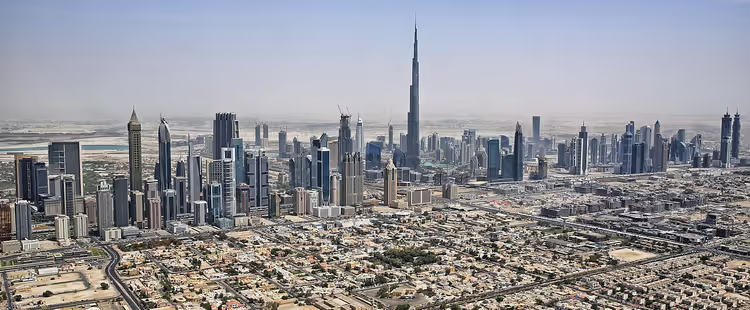 © Tim Reckmann from Hamm, Deutschland · CC BY-SAPhoto: Tim Reckmann from Hamm, Deutschland, CC BY-SA (https://creativecommons.org/licenses/by-sa/3.0), Wikimedia Commons
Hookahs and tobacco blends came to the Emirates from Asia and stayed for good. Buy a hookah in a specialized shop. Check the contents: the hose, bowl and seals should be in the box.
Sweets and souvenirs with views of Dubai are sold on every corner. Figurines are made of wood, sand and even chocolate. For a gift, look for items with local symbols: date candies, Turkish delight and pistachio halva.
Put perishable sweets in your carry-on if the flight is long.
How to haggle and claim VAT back
Haggling works in shops and markets, but not in malls or chain stores. Start by asking about the price per weight for gold and about a discount for textiles. A calm "too expensive" at the counter often lowers the price.
VAT refunds for tourists in the UAE apply to purchases above a certain amount. Process it at the airport before checking your baggage, and keep receipts, passport and goods at hand (As of: 09/2026, official website of the UAE tax authority).
Don't buy electronics in the market without an international warranty. For branded watches and bags, check the serial numbers and get an official receipt.
⁉️🤔 Frequently asked questions
How much money should I bring for shopping in Dubai?
The amount depends on your goal. For souvenirs, spices and incense, a few hundred dirhams is enough. For gold, plan your budget in advance: the price is by weight plus the craftsman's work. Brands are better bought in malls, where the price is fixed and there's an official warranty.
What should I buy in Dubai first?
Gold and jewelry, oil-based Arabic perfume, bakhoor incense and qahwa coffee with cardamom. Add silk shawls, carpets and sweets to that. These goods are hard to find in Europe with such selection and at such prices.
Where in Dubai do people haggle, and where don't they?
Haggling is appropriate in Deira's shops and in the markets: there the seller sets the price. In malls, chain stores and duty-free, the price is fixed, and discounts are only given through promotions. In the market you can bring the price down; in the mall it almost never works.
Can I claim VAT back on purchases in the UAE?
Yes, VAT refunds are available for tourists. How to process it is described above in the section "How to haggle and claim VAT back".
What should I bring from Dubai as a gift?
Date candies, pistachio halva, a bakhoor set with a burner, and coffee with cardamom. For close ones, a silk shawl or a small carpet works well. Souvenirs with city views are made of wood, sand and chocolate.
Tours and tickets in Dubai
Guided tours, skip-the-line tickets and activities — most offers can be cancelled free of charge.
See offers on GetYourGuideThe widget loads once you give your consent.
In short: what to book
Dubai is easiest to divide by the purpose of your trip. If you're going for gold and spices, choose a hotel in Deira: the markets are nearby, and in the evening you can see the creek. If your goal is brands and malls, look at hotels along Sheikh Zayed Road, closer to Dubai Mall.
For families, the area near Dubai Mall works well: the aquarium, the fountain and an amusement park are nearby. For a quiet stay, take beach hotels in Jumeirah.
Before your trip, compare prices and hotel locations: Dubai hotels on Trip.com.

A small editorial team writing guides for independent travel. We travel ourselves, but we haven’t been everywhere, so we check prices, opening hours and how to get there against official sources.